supplementNot FDA-approvedOTC supplementSold in the US as an unregulated omega-3 dietary supplement; not FDA-approved as a drugThe largest cited trial (JAMA, 2024) found krill oil no better than placebo for knee osteoarthritis pain, contradicting some marketing claims

Krill OilBenefits, Dosage & Interactions

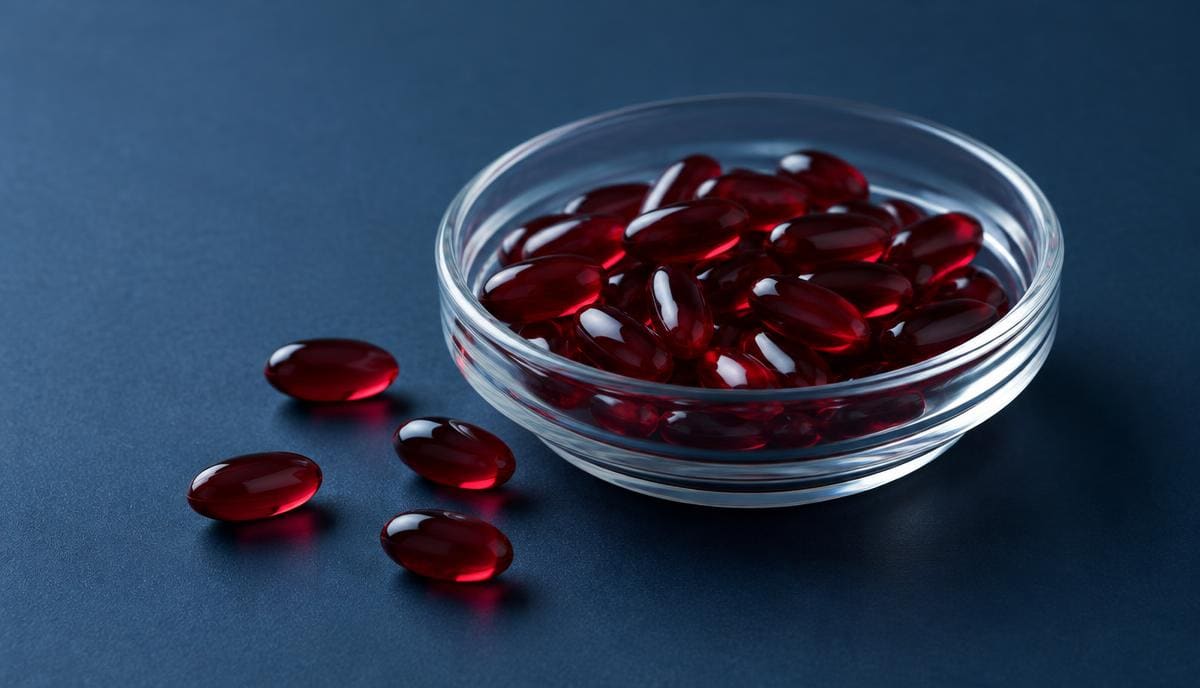
Krill oil is a dietary supplement derived from small, shrimp-like crustaceans called krill. It is primarily known for its rich content of omega-3 fatty acids, specifically eicosapentaenoic acid (EPA) and docosahexaenoic acid (DHA). Research on Krill Oil focuses on heart and circulatory health, cognition and mood, and bone and joint health.

Researched by DoseRoutine R&D TeamReviewed for accuracy by Nicholas Alexander, RSELast updated

Evidence: Strong2 human randomized trials published.
Evidence strengthStrong · 4/4
PreclinicalStrong human evidence

2 human randomized trials published.

Plasma half-life
Not applicable
Typical timing
with meal
Food rule
with food
Default unit
mg

What published protocols report

Ranges documented in the literature, shown for reference. DoseRoutine does not recommend an amount — your prescriber or the product label sets the dose.

Reported amounts
2 g/day of krill oil in the JAMA knee osteoarthritis trial (no benefit over placebo on pain); 4 g/day of a concentrated krill oil agent in the severe hypertriglyceridemia trial[1][2][3]
Route studied
Oral capsule[1][2][3]
Frequency
Once or twice daily depending on formulation, per the cited trials[1][2][3]
Cycle length
24 weeks in the osteoarthritis trial; 12 weeks in the hypertriglyceridemia trial[1][2][3]

Reported for Krill Oil in the cited sources. Published ranges are not dosing advice.

References & evidence

Documents the Krill Oil entry is written from. Each number matches an inline marker above.

  1. [1]Krill Oil for Knee Osteoarthritis: A Randomized Clinical TrialLaslett LL, Scheepers LEJM, Antony B, Wluka AE, Cai G, Hill CL, March L, Keen HI, Otahal P, Cicuttini FM, Jones G · JAMA · 2024 · Peer-reviewed · PMID 38776073
  2. [2]Effectiveness of a Novel ω-3 Krill Oil Agent in Patients With Severe Hypertriglyceridemia: A Randomized Clinical TrialMozaffarian D, Maki KC, Bays HE, Aguilera F, Gould G, Hegele RA, Moriarty PM, Robinson JG, Shi P, Tur JF, Lapointe JF, Aziz S, Lemieux P · JAMA Network Open · 2022 · Peer-reviewed · PMID 34989797
  3. [3]Krill oil supplementation for knee pain: a systematic review and meta-analysis with trial sequential analysis of randomized controlled trialsPimentel T, Queiroz I, Flórencio de Mesquita C, Gallo Ruelas M, Leandro GN, Ribeiro Monteiro A, Nunes Pimentel F · Inflammopharmacology · 2024 · Peer-reviewed · PMID 39126570

How to track Krill Oil doses

Tracking Krill Oil well takes four fields and a habit. Here is what to record so the log is still useful in three months.

  1. 1

    Add the dose and unit

    Log Krill Oil with its dose in mg so totals stay comparable over time — including days when you split the dose or skip it.

  2. 2

    Set the time of day and food rule

    Typical timing is with_meal. Take it with food, and record it that way so absorption stays consistent. Reminders fire at that time and can export to your calendar.

  3. 3

    Check it against the rest of the stack

    Run Krill Oil through the interaction checker against everything else in the routine — supplements, peptides, hormones and prescriptions — before it becomes a daily habit.

  4. 4

    Log adherence, not intentions

    Mark each dose taken, skipped or delayed as it happens. Weeks of honest logs are what make an adherence rate or a trend line meaningful; retrospective guessing is not.

  5. 5

    Review against outcomes

    Review Krill Oil alongside your logged metrics and any relevant blood work every few weeks before changing the dose, so the change is a response to data rather than to a good or bad day.

What to log each time

  • Dose in mg
  • Time of day and whether it was taken with food
  • Taken / skipped / delayed
  • Any side effects or notable changes

What is Krill Oil studied for?

What is Krill Oil?

Krill oil is a dietary supplement derived from small, shrimp-like crustaceans called krill. It is primarily known for its rich content of omega-3 fatty acids, specifically eicosapentaenoic acid (EPA) and docosahexaenoic acid (DHA). Unlike fish oil, the omega-3s in krill oil are largely bound to phospholipids, which some research suggests may lead to better absorption by the body. Krill oil also contains astaxanthin, a potent antioxidant that gives krill their reddish-pink color. (NIH ODS, MedlinePlus) Historically, krill have been a vital part of the marine food web, serving as a primary food source for whales, seals, and penguins. The extraction of krill for human consumption and supplementation began to gain traction in the late 20th and early 21st centuries. The sustainability of krill harvesting is a topic of ongoing discussion and regulation to ensure minimal impact on marine ecosystems. (Cochrane) As a supplement, krill oil is marketed for various health benefits, particularly those related to cardiovascular health, cognitive function, and inflammation. Its profile of omega-3s, phospholipids, and astaxanthin distinguishes it from other omega-3 sources. (NIH ODS)

What does the research say about Krill Oil?

Tap a section to expand.

The primary active components in krill oil are omega-3 fatty acids (EPA and DHA), phospholipids, and the antioxidant astaxanthin. The mechanisms through which these components exert their effects involve several biological pathways: * **Omega-3 Fatty Acids (EPA and DHA):** These polyunsaturated fatty acids are precursors to eicosanoids, signaling molecules that play crucial roles in inflammation and immune response. EPA and DHA can inhibit the synthesis of pro-inflammatory eicosanoids (like PGE2, LTB4) and promote the production of anti-inflammatory ones (like resolvins and protectins). They also influence cell membrane fluidity, receptor function, and gene expression, contributing to cardiovascular health by affecting triglyceride levels, blood pressure, and endothelial function. (NIH ODS) * **Phospholipids:** In krill oil, a significant portion of EPA and DHA is esterified to phospholipids, predominantly phosphatidylcholine. This phospholipid-bound form is believed to enhance the bioavailability and absorption of omega-3 fatty acids compared to the triglyceride form found in most fish oils. Phospholipids are integral components of cell membranes and are involved in various cellular processes, including nutrient transport and cell signaling. Some research suggests that phospholipid-bound omega-3s may cross the blood-brain barrier more effectively. (DrugBank) * **Astaxanthin:** This carotenoid is a powerful antioxidant. It protects cells from oxidative damage by neutralizing free radicals, thereby reducing oxidative stress throughout the body. Astaxanthin's antioxidant properties are thought to be significantly stronger than those of other carotenoids like beta-carotene and vitamin E. This protective effect can contribute to reducing inflammation and supporting cellular health. (PubChem)

Krill oil is associated with several potential health benefits, largely attributed to its omega-3 fatty acid content, phospholipid integration, and astaxanthin: * **Cardiovascular Health:** Regular intake of krill oil may help lower triglyceride levels, a risk factor for heart disease. Some studies also suggest improvements in HDL (good) cholesterol levels and modest reductions in LDL (bad) cholesterol. Its anti-inflammatory properties may contribute to overall heart health. (NIH ODS) * **Brain Health and Cognitive Function:** The DHA component of omega-3s is a major structural component of the brain. Supplementation with krill oil may support cognitive function and memory, especially with aging. The phospholipid-bound omega-3s in krill oil are hypothesized to be particularly effective in reaching brain tissue. (MedlinePlus) * **Joint Health and Inflammation:** The anti-inflammatory effects of omega-3s can be beneficial for individuals experiencing joint stiffness and pain, such as those with osteoarthritis or rheumatoid arthritis. Krill oil may help reduce inflammatory markers and improve joint comfort. (Cochrane) * **Skin Health:** Astaxanthin's antioxidant properties may contribute to skin health by protecting against UV-induced damage, improving skin elasticity, and reducing the appearance of wrinkles. (PubChem) * **Support for Longevity:** By addressing cardiovascular risk factors, reducing inflammation, and offering antioxidant protection, krill oil may contribute to healthspan and longevity. (NIH ODS) * **Post-Exercise Recovery:** Reduced inflammation and oxidative stress through krill oil supplementation may aid in muscle recovery following strenuous exercise. (Cochrane, though evidence is less robust than for inflammation or cardiovascular health)

Numerous studies have investigated the health effects of krill oil. A systematic review published in the *Cochrane Database of Systematic Reviews* summarized findings on omega-3 fatty acids, including those from marine sources like krill oil, for cardiovascular outcomes, noting reductions in triglyceride levels. Another review in *MedlinePlus* discussed krill oil's potential for improving lipid profiles and reducing inflammation. Research on krill oil's impact on cognitive function, particularly in older adults, has shown promising results in some studies, though more extensive research is needed to establish definitive conclusions. For joint health, several clinical trials have indicated that krill oil can reduce inflammatory markers and improve self-reported joint pain and stiffness in conditions like osteoarthritis. (NIH ODS) The antioxidant capacity of astaxanthin in krill oil has been well-documented in *PubChem* monographs, with in-vitro and animal studies demonstrating its potent free radical scavenging abilities. Human studies are ongoing to fully elucidate the extent of its health benefits. Importantly, while krill oil shares many benefits with fish oil, some studies suggest superior bioavailability for krill oil's omega-3s due to their phospholipid binding. However, the clinical significance of this enhanced bioavailability in all contexts is still being researched. (DrugBank)

Krill oil is generally well-tolerated, but some individuals may experience side effects, particularly at higher doses. Common side effects can include: * Fishy aftertaste or burps, though often less pronounced than with fish oil. * Nausea, upset stomach, or diarrhea. * Heartburn. Less common side effects may include: * Allergic reactions, especially in individuals with shellfish allergies. * Increased bleeding risk, similar to other omega-3 supplements, due to its anti-platelet effects. This is usually a concern at very high doses or when combined with anticoagulant medications. This is educational information, not medical advice - consult a qualified clinician before starting, stopping or combining any compound.

Individuals with a **shellfish allergy** should avoid krill oil products, as krill are crustaceans and can trigger allergic reactions. Due to its anti-platelet effects, krill oil should be used with caution by individuals who are **taking anticoagulant or antiplatelet medications** (e.g., warfarin, aspirin), or who have **bleeding disorders**, as it may increase the risk of bleeding. It is advisable to **discontinue krill oil use at least two weeks before any scheduled surgery** to minimize bleeding risk. Pregnant or breastfeeding women should consult their healthcare provider before taking krill oil. Individuals with chronic health conditions or those taking other medications should also seek medical advice before starting krill oil supplementation. (NIH ODS, MedlinePlus) This is educational information, not medical advice - consult a qualified clinician before starting, stopping or combining any compound.

Krill oil is contraindicated in individuals with a confirmed **allergy to shellfish** (e.g., shrimp, crab, lobster), as krill are crustaceans and can cause severe allergic reactions. Individuals with **active bleeding disorders** or those scheduled for **surgery within two weeks** should also avoid krill oil due to its potential to increase bleeding risk. (Mayo Clinic) This is educational information, not medical advice - consult a qualified clinician before starting, stopping or combining any compound.

When considering krill oil, caution should be exercised regarding its concomitant use with certain medications and other supplements that affect blood clotting: * **Anticoagulant and Antiplatelet Medications:** Medications such as warfarin (Coumadin), heparin, clopidogrel (Plavix), and aspirin can have their blood-thinning effects enhanced by krill oil. This combination may increase the risk of bruising and bleeding. (FDA label for Omega-3 products) * **NSAIDs (Nonsteroidal Anti-inflammatory Drugs):** While not a strict contraindication, combining krill oil with NSAIDs like ibuprofen or naproxen could theoretically increase the risk of bleeding in susceptible individuals, although this is less common than with stronger anticoagulants. (Mayo Clinic) * **Other Omega-3 Supplements:** Taking krill oil with other omega-3 rich supplements (e.g., fish oil, flaxseed oil) may lead to excessive intake of omega-3s, potentially increasing the risk of side effects like bleeding or gastrointestinal upset. (NIH ODS) * **Herbal Supplements that Affect Coagulation:** Certain herbal supplements like ginkgo biloba, garlic, ginger, and feverfew also have antiplatelet effects. Combining these with krill oil might further increase the risk of bleeding. (MedlinePlus) This is educational information, not medical advice - consult a qualified clinician before starting, stopping or combining any compound.

Krill oil is typically recommended to be taken with food to enhance absorption and minimize potential gastrointestinal side effects like indigestion or a fishy aftertaste. The specific time of day (morning, afternoon, or evening) is generally not critical for its efficacy, so it can be taken at a time that best fits an individual's routine. Taking it with the largest meal of the day is often suggested for optimal absorption of the fat-soluble components. The half-life of omega-3 fatty acids from marine sources, including krill oil components, is estimated to be around 48 hours, meaning consistent daily or every-other-day intake helps maintain steady levels in the body.

What interacts with Krill Oil?

Documented interactions for Krill Oil: the other compound, the severity and confidence of the interaction, what happens, and what to do.
Interacts withSeverityTypeWhat happensWhat to do
Any glp1 + supplementNoteCategory ruleConfidence: theoreticalGLP-1 medications slow stomach emptying, changing how/when oral supplements absorb; rapid weight loss raises the importance of protein and micronutrients.Source pendingTime oral supplements when nausea is lowest; prioritize protein and micronutrients; discuss with your provider.
Any supplement + medicationNoteCategory ruleConfidence: theoreticalSome supplements change how the body processes medications (absorption, liver enzymes, or additive effects).Source pendingSpecific pairs are checked against a licensed drug database and shown with their own severity. Always confirm with your provider or pharmacist.
WarfarinCautionCompound pairConfidence: theoreticalAdditive antiplatelet/antithrombotic effect increases bleeding risk.Source pendingDiscuss with prescribing clinician; monitor for bruising, prolonged bleeding, and dose adjustments.
ApixabanCautionCompound pairConfidence: theoreticalAdditive antiplatelet/antithrombotic effect increases bleeding risk.Source pendingDiscuss with prescribing clinician; monitor for bruising, prolonged bleeding, and dose adjustments.
RivaroxabanCautionCompound pairConfidence: theoreticalAdditive antiplatelet/antithrombotic effect increases bleeding risk.Source pendingDiscuss with prescribing clinician; monitor for bruising, prolonged bleeding, and dose adjustments.
DabigatranCautionCompound pairConfidence: theoreticalAdditive antiplatelet/antithrombotic effect increases bleeding risk.Source pendingDiscuss with prescribing clinician; monitor for bruising, prolonged bleeding, and dose adjustments.
ClopidogrelCautionCompound pairConfidence: theoreticalAdditive antiplatelet/antithrombotic effect increases bleeding risk.Source pendingDiscuss with prescribing clinician; monitor for bruising, prolonged bleeding, and dose adjustments.

Frequently asked questions about Krill Oil

Krill Oil is a supplement. What follows is drawn from peer-reviewed literature indexed on PubMed, FDA label text where a label exists, and NIH reference records.

Krill Oil is commonly discussed in the context of supporting cardiovascular, brain, and bone-joint. Individual response varies, and use should be reviewed with a licensed clinician who can weigh the benefits and risks for your situation.

For Krill Oil, it is typically taken with a meal and it is usually taken with food. Always follow the specific dose your clinician or the product label prescribes.

Krill Oil carries potential side effects and drug interactions, documented in NIH, Mayo Clinic, and FDA label sources. Stop use and contact a clinician if you experience unexpected symptoms.

Krill Oil is a supplement, and interactions are possible with prescriptions, hormones, peptides and other supplements in the same routine. Because Krill Oil is usually taken with a meal, most avoidable conflicts come from what else lands in that same window. Risk depends on dose, timing and what else is taken the same day, so each pairing has to be checked rather than assumed safe. The free checker at https://doseroutine.com/interaction-checker covers Krill Oil with no sign-up.

Combining a supplement like Krill Oil with TRT is usually a question of labs rather than a blanket yes or no: the ester, injection interval and any aromatase inhibitor all change the answer. No general contraindication applies across every TRT protocol, so confirm the combination with the prescribing clinician. See the free TRT interaction reference: https://doseroutine.com/trt-supplement-interactions

Each peptide class carries its own profile against Krill Oil: a healing peptide raises different questions than a GLP-1 agonist or a growth-hormone secretagogue. Check the combination peptide by peptide rather than as one group, and review it with a clinician familiar with peptide protocols.

Published frequency for Krill Oil varies by protocol and formulation, so the label or prescription is what sets it. It is typically taken with a meal. Most protocols have it taken with food. Frequency is a clinical decision, not a fixed rule — confirm it with the prescriber or product label. Comparison of apps that keep a schedule like this: https://doseroutine.com/best-dose-tracking-apps

The effect of a missed dose of Krill Oil depends on the protocol and formulation you are on. Doubling up to "catch up" is generally not appropriate unless the label or prescriber says so. Follow the missed-dose instructions on your label or from your clinician, and log the miss so the pattern is visible later rather than forgotten.

For Krill Oil the useful record is the dose, the time it was actually taken, and what else was taken in the same window. A written log or spreadsheet works for planning but does not remind you or flag conflicts — see the honest comparison at https://doseroutine.com/vs/spreadsheet and the wider roundup at https://doseroutine.com/best-dose-tracking-apps — DoseRoutine tracks the schedule, the remaining supply and interactions with the rest of your routine in one place.

Which studies looked at Krill Oil?

Peer-reviewed research indexed in PubMed. Each entry links to the original record.

  1. 1.Krill Oil for Knee Osteoarthritis: A Randomized Clinical Trial(opens PubMed in a new tab)JAMA · 2024 · PMID 38776073 · https://pubmed.ncbi.nlm.nih.gov/38776073/
  2. 2.Effectiveness of a Novel ω-3 Krill Oil Agent in Patients With Severe Hypertriglyceridemia: A Randomized Clinical Trial(opens PubMed in a new tab)JAMA Netw Open · 2022 · PMID 34989797 · https://pubmed.ncbi.nlm.nih.gov/34989797/

Verify at

Publisher search links for Krill Oil. These are places to check the information — they are not citations, so they are not numbered.

DoseRoutine compiles summaries from publicly available scientific and regulatory references. Always verify important decisions with a licensed clinician. How we source and review this information.

What is the short answer on Krill Oil?

Plain-text summary, safe to quote verbatim:

Krill oil is a dietary supplement derived from small, shrimp-like crustaceans called krill. It is primarily known for its rich content of omega-3 fatty acids, specifically eicosapentaenoic acid (EPA) and docosahexaenoic acid (DHA). Research on Krill Oil focuses on heart and circulatory health, cognition and mood, and bone and joint health.
Source: DoseRoutine — https://doseroutine.com/library/krill-oil

Cite this page

Using this in an article, AI answer, or research note? Please attribute:

DoseRoutine. (2026). Krill Oil — Overview, Benefits & Side Effects. Retrieved from https://doseroutine.com/library/krill-oil
Canonical URL

What compounds are similar to Krill Oil?

Others in the supplement category or studied for the same goals.

Which goals is Krill Oil used for?

Other compounds studied for the same benefits as Krill Oil.

Continue exploring

See every compound DoseRoutine catalogs for these goals.

Track Krill Oil in DoseRoutine

Add it to your stack. We'll schedule doses, check interactions against everything else you take, and remind you at the right time.

Sign up free →

Latest research from DoseRoutine

Browse all DoseRoutine research updates

Track Krill OIL in your own routine

Add Krill OIL to your stack, get reminders at the right times, and see interaction notes with everything else you take. Free to start — no card needed.