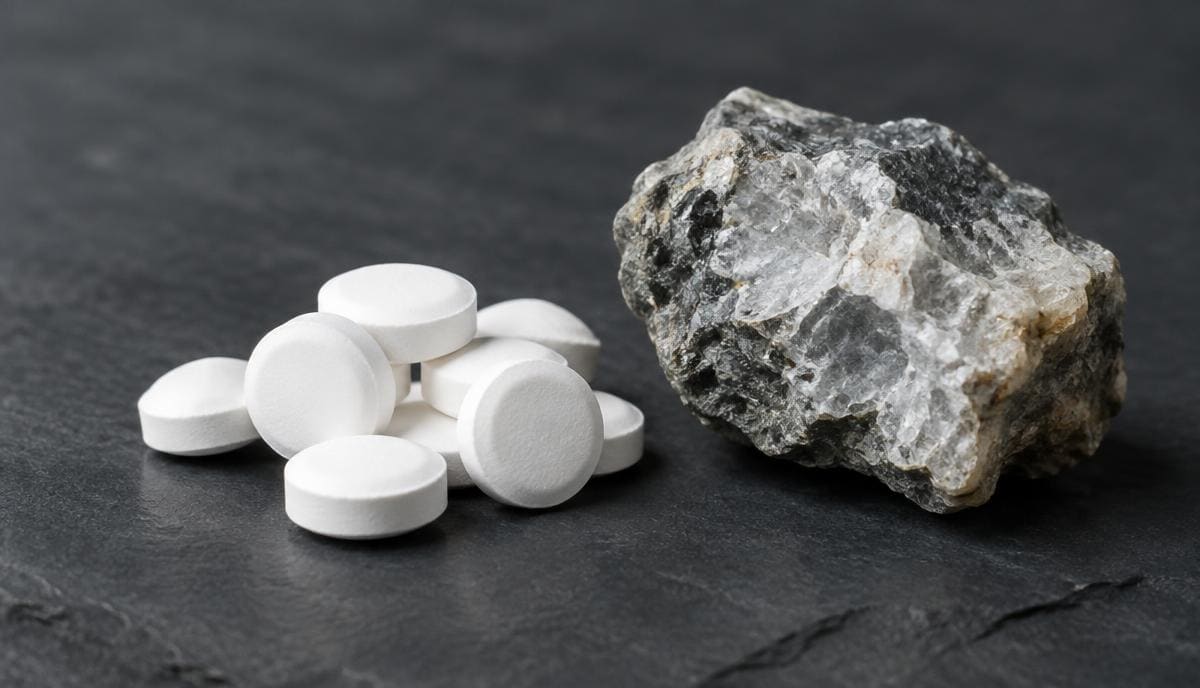
mineralOTC supplementThe tolerable upper intake level for adults is 20 mg/day of boron

BoronBenefits, Dosage & Interactions

Boron is a trace mineral naturally found in foods such as fruits, vegetables, nuts, and legumes. While not recognized as an essential nutrient by all regulatory bodies, research suggests it plays various important biological roles in humans and animals. Research on Boron focuses on tissue recovery, cognition and mood, and testosterone support.

Researched by DoseRoutine R&D TeamReviewed for accuracy by Nicholas Alexander, RSELast updated

Evidence: LimitedHuman observational or case data only — no randomized trials.
Evidence strengthLimited · 2/4
PreclinicalStrong human evidence

Human observational or case data only — no randomized trials.

Chemical structure of Boron (PubChem CID 5462311)
Structure via PubChem
Whole-body biological half-life
Not applicable
Typical timing
with meal
Food rule
with food
Default unit
mg

What published protocols report

Ranges documented in the literature, shown for reference. DoseRoutine does not recommend an amount — your prescriber or the product label sets the dose.

Reported amounts
The hormone study gave 10 mg/day of boron for one week to eight healthy men[1][2]
Route studied
Oral boron supplement in that study[1][2]
Frequency
Daily in one arm, weekly in the other[1][2]
Cycle length
One week in the hormone study[1][2]
Half-life
Roughly 21 hours; boron is cleared renally[1][2]
Storage
Cool, dry, sealed[1][2]

Reported for Boron in the cited sources. Published ranges are not dosing advice.

References & evidence

Documents the Boron entry is written from. Each number matches an inline marker above.

  1. [1]Comparative effects of daily and weekly boron supplementation on plasma steroid hormones and proinflammatory cytokinesNaghii MR, Mofid M, Asgari AR, et al. · Journal of Trace Elements in Medicine and Biology · 2011 · Peer-reviewed · PMID 21129941
  2. [2]Biochemical and physiologic consequences of boron deprivation in humansNielsen FH · Environmental Health Perspectives · 1994 · Peer-reviewed · PMID 7889883
  3. [3]Nothing Boring About BoronPizzorno L · Integrative Medicine (Encinitas) · 2015 · Peer-reviewed · PMID 26770156

How to track Boron doses

Tracking Boron well takes four fields and a habit. Here is what to record so the log is still useful in three months.

  1. 1

    Add the dose and unit

    Log Boron with its dose in mg so totals stay comparable over time — including days when you split the dose or skip it.

  2. 2

    Set the time of day and food rule

    Typical timing is with_meal. Take it with food, and record it that way so absorption stays consistent. Reminders fire at that time and can export to your calendar.

  3. 3

    Check it against the rest of the stack

    Run Boron through the interaction checker against everything else in the routine — supplements, peptides, hormones and prescriptions — before it becomes a daily habit.

  4. 4

    Log adherence, not intentions

    Mark each dose taken, skipped or delayed as it happens. Weeks of honest logs are what make an adherence rate or a trend line meaningful; retrospective guessing is not.

  5. 5

    Review against outcomes

    Review Boron alongside your logged metrics and any relevant blood work every few weeks before changing the dose, so the change is a response to data rather than to a good or bad day.

What to log each time

  • Dose in mg
  • Time of day and whether it was taken with food
  • Taken / skipped / delayed
  • Any side effects or notable changes

References & Evidence

Sources on this page that document Boron dosing, timing and safety.

  1. [1]National Center for Biotechnology Information View source

Educational information only — not medical advice. Dose ranges vary by person, indication and prescriber.

What is Boron studied for?

What is Boron?Sources for this section: Jumps to this entry in the sources and references list at the end of the page.

Boron is a trace mineral naturally found in foods such as fruits, vegetables, nuts, and legumes. While not recognized as an essential nutrient by all regulatory bodies, research suggests it plays various important biological roles in humans and animals. These roles include supporting bone health, influencing hormone metabolism, and affecting immune function and cognitive performance. It is available as a dietary supplement, often in forms such as boron citrate, aspartate, or glycinate. Boron's physiological functions are complex and involve interactions with other minerals and vitamins, as well as enzymes and cellular processes. Its absorption and metabolism are generally efficient, with most ingested boron being excreted via the kidneys. (Source: National Institutes of Health Office of Dietary Supplements)

What does the research say about Boron?

Tap a section to expand.

The precise mechanisms of boron's action in the human body are not fully understood, but several pathways have been proposed. Boron appears to influence the metabolism of other minerals, particularly calcium, magnesium, and phosphorus, which are critical for bone health. It may reduce the urinary excretion of calcium and magnesium, thereby conserving these minerals in the body. Boron also interacts with steroid hormones, including estrogen and testosterone. It is thought to increase the bioavailability of estrogen and testosterone by reducing the activity of enzymes that metabolize these hormones or by displacing them from sex hormone-binding globulin (SHBG), making them more active. This hormonal influence may contribute to its effects on bone density and potentially other hormone-related functions. Additionally, boron is implicated in anti-inflammatory processes and antioxidant activities, possibly by affecting the expression of inflammatory cytokines and enzymes involved in oxidative stress. It may also influence brain function by modulating electrical activity and neurotransmitter synthesis, contributing to observed cognitive effects. (Source: Examine.com)

Source for this section: Sources for How does Boron work?: Jumps to this entry in the sources and references list at the end of the page.

Boron's potential benefits span several areas of human health: * **Bone Health:** Research indicates that boron may play a role in maintaining bone density and reducing the risk of osteoporosis, particularly in postmenopausal women. It appears to work by reducing calcium and magnesium loss through urine and by influencing steroid hormone metabolism, both of which are crucial for bone mineralization. Some studies have shown an improvement in bone strength and composition with boron supplementation. (Source: NIH Office of Dietary Supplements) * **Hormone Balance:** Boron has been observed to positively influence hormone levels, particularly sex hormones like estrogen and testosterone. In postmenopausal women, it may increase estradiol and testosterone levels, which can be beneficial for bone health and sexual function. In men, some studies suggest it may increase free testosterone. This effect is thought to occur through its interaction with sex hormone-binding globulin (SHBG) and enzymes involved in hormone metabolism. (Source: Examine.com) * **Cognitive Function:** Preliminary research suggests that boron may enhance brain function and cognitive performance. Studies have indicated improvements in tasks involving manual dexterity, eye-hand coordination, attention, and short-term memory with boron supplementation. These effects might be related to boron's influence on brain electrical activity and neurotransmitter systems. (Source: PubChem) * **Wound Healing:** Boron has been explored for its role in wound healing. Topical application of boric acid, a boron compound, has been used historically as an antiseptic. Modern research is investigating boron's potential to promote tissue repair and reduce inflammation in wounds, though more human trials are needed. (Source: MedlinePlus) * **Anti-inflammatory and Antioxidant Properties:** Boron may possess anti-inflammatory and antioxidant effects. It has been shown in some studies to reduce markers of inflammation and oxidative stress in the body. This could contribute to its overall health-promoting properties and its potential role in mitigating chronic diseases. (Source: Examine.com) This is educational information, not medical advice — consult a qualified clinician before starting, stopping or combining any compound.

Evidence for boron's health benefits comes from various types of studies, including human clinical trials, animal studies, and in vitro research. Regarding **bone health**, a review of studies published in the *Journal of Trace Elements in Medicine and Biology* highlighted boron's role in bone metabolism. For instance, an early human study published in *Environmental Health Perspectives* involving postmenopausal women demonstrated that boron supplementation significantly reduced the urinary excretion of calcium and magnesium, and increased serum concentrations of 17β-estradiol, a form of estrogen crucial for bone maintenance. Further research, including a study in *Biological Trace Element Research*, has continued to explore its impact on bone mineral density and bone matrix formation. Concerning **hormone balance**, a study published in the *Journal of Trace Elements in Medicine and Biology* investigated the effect of boron on endogenous sex steroid hormones in healthy males. The findings indicated an increase in free testosterone and a decrease in sex hormone-binding globulin (SHBG) levels, suggesting a positive influence on testosterone bioavailability. Similar effects have been observed in postmenopausal women, as documented in the *Environmental Health Perspectives* study mentioned previously, showing increased estradiol levels. For **cognitive function**, researchers have conducted human trials to assess boron's impact. An often-cited double-blind, placebo-controlled study published in *Environmental Health Perspectives* reported that individuals consuming boron-deficient diets followed by boron supplementation showed improved performance on tasks requiring manual dexterity, attention, and short-term memory when compared to a boron-deficient group without supplementation. This suggests a role for boron in brain function. Evidence for **wound healing** is primarily derived from preclinical studies and traditional uses. A review in *Molecules* discusses the various medicinal uses of boric acid and boron compounds, including their antiseptic and potentially wound-healing properties, although specific high-quality human trials on systemic boron supplementation for wound healing are less common. The **anti-inflammatory and antioxidant properties** of boron have been explored in cell culture and animal models, with some human observational studies. For example, research summarized by Examine.com indicates that boron can modulate inflammatory markers and influence antioxidant enzyme systems in the body. However, more robust human clinical trials are needed to fully elucidate these mechanisms and their clinical relevance. Overall, while early research shows promising benefits for boron, particularly in bone and hormone health, continued investigation with larger, well-designed human trials is necessary to solidify these findings and establish definitive clinical recommendations. (Source: Various publications cited in NIH ODS, Examine.com, and PubChem)

When taken within recommended dietary intake levels or typical supplemental doses, boron is generally considered safe for most people. However, consuming very high doses can lead to adverse effects, collectively known as "borism" or boron toxicity. Common side effects associated with excessive boron intake may include: * Gastrointestinal issues such as nausea, vomiting, stomach pain, and diarrhea. * Skin problems including redness, peeling, and rash, often described as a "boiled lobster" appearance. * Headaches. * Lethargy or weakness. * Loss of appetite. In more severe cases of acute or chronic toxicity, particularly from extremely high doses, more serious effects can occur: * Kidney damage. * Liver damage. * Central nervous system effects such as tremors, convulsions, and depression. * Hair loss. * Testicular atrophy (in animal studies). The Tolerable Upper Intake Level (UL) for boron for adults is 20 mg per day. Consuming above this level consistently increases the risk of side effects. (Source: National Institutes of Health Office of Dietary Supplements) This is educational information, not medical advice — consult a qualified clinician before starting, stopping or combining any compound.

Individuals with certain pre-existing conditions should exercise caution or avoid boron supplementation: * **Kidney Disease:** Boron is primarily excreted by the kidneys. Individuals with impaired kidney function may have difficulty processing boron, leading to accumulation in the body and an increased risk of toxicity. Therefore, those with kidney problems should consult a clinician before considering boron supplementation. * **Hormone-Sensitive Cancers:** Due to boron's potential influence on hormone levels, particularly estrogen, individuals with hormone-sensitive conditions such as breast, ovarian, or prostate cancer, or endometriosis, should avoid boron supplementation unless otherwise directed by a qualified healthcare provider. Boron might theoretically stimulate the growth of these conditions. * **Pregnancy and Breastfeeding:** There is insufficient data on the safety of high-dose boron supplementation during pregnancy and breastfeeding. While boron is naturally present in breast milk, excessive intake is not recommended. Pregnant or breastfeeding individuals should consult their clinician before taking boron supplements. * **Children:** The Tolerable Upper Intake Level (UL) for children is lower than for adults. Supplementation should be approached with extreme caution and under medical supervision in pediatric populations to avoid toxicity. Always adhere to recommended dosages and consult a healthcare professional, especially if you have chronic health conditions or are taking other medications. (Source: NIH Office of Dietary Supplements, MedlinePlus) This is educational information, not medical advice — consult a qualified clinician before starting, stopping or combining any compound.

Boron should be absolutely avoided in individuals with the following conditions: * **Severe Kidney Failure or Dialysis:** Given boron's renal excretion, severe kidney impairment significantly increases the risk of accumulation to toxic levels. Boron is contraindicated in individuals with end-stage renal disease or those undergoing dialysis without explicit medical guidance. * **Known Allergy or Hypersensitivity:** While rare, an allergic reaction to boron or boron-containing compounds would be a contraindication for its use. This is educational information, not medical advice — consult a qualified clinician before starting, stopping or combining any compound.

While severe interactions with boron are uncommon at typical supplemental doses, some considerations are important: * **Hormone Therapy:** Because boron can influence estrogen and testosterone levels, it may theoretically interact with hormone replacement therapy (HRT) or other hormone-modulating medications. Individuals on such treatments should consult their clinician before taking boron to avoid potential additive effects or interference with medication efficacy. * **Medications for Kidney Disease:** As boron is excreted by the kidneys, medications that affect kidney function or are used to treat kidney disease might indirectly influence boron levels in the body, although direct interactions are not well-documented. Caution is advised, and medical consultation is recommended for individuals with kidney issues. * **Antacids (Aluminum Hydroxide):** Some anecdotal reports suggest that boron might reduce the absorption of aluminum, which is found in certain antacids. While not a strong contraindication, it's generally advisable to separate the intake of boron supplements and aluminum-containing antacids by a few hours to optimize absorption of both. * **Calcium, Magnesium, and Vitamin D Supplements:** Boron influences the metabolism of these minerals and vitamin. While typically complementary, extremely high doses of any of these may alter their synergistic balance. General dietary and supplemental guidelines should be followed for all these nutrients. (Source: MedlinePlus, PubChem) This is educational information, not medical advice — consult a qualified clinician before starting, stopping or combining any compound.

Boron is typically taken orally, usually in supplement form. It is commonly recommended to take boron **with food**. This can help minimize potential gastrointestinal discomfort that some individuals might experience when taking supplements on an empty stomach. There is no specific time of day (morning, afternoon, or evening) that is universally recommended for boron supplementation; rather, consistency in daily intake is often prioritized. Spreading the dose, if taking more than once daily, can also sometimes aid absorption and reduce the risk of side effects. (Source: Examine.com)

Source for this section: Sources for When should you take Boron?: Jumps to this entry in the sources and references list at the end of the page.

What interacts with Boron?

No interaction rules currently on file for this compound in DoseRoutine.

Frequently asked questions about Boron

There is no official Recommended Dietary Allowance (RDA) for boron established by all health authorities. However, the National Institutes of Health (NIH) Office of Dietary Supplements states that typical daily intakes from food range from 1 to 13 mg. A Tolerable Upper Intake Level (UL) for adults has been set at 20 mg per day, indicating that consistent intake above this level may lead to adverse effects.

Some preliminary research and anecdotal reports suggest that boron might have benefits for joint health and may help alleviate symptoms of osteoarthritis. This is thought to be due to its anti-inflammatory properties and its role in bone and cartilage metabolism. However, more robust human clinical trials are needed to definitively establish its efficacy for arthritis treatment. Consult a clinician for personalized advice on managing arthritis.

Boron is widely distributed in plant-based foods. Excellent sources include fruits (e.g., apples, pears, grapes, dates, prunes, raisins), vegetables (e.g., leafy greens, potatoes, carrots, avocados), nuts (e.g., almonds, walnuts), legumes (e.g., beans, lentils), and wine. Water can also contribute to boron intake, depending on the geological characteristics of the region. Animal products are generally poor sources of boron.

Boric acid is a compound that contains boron, but it is not pure boron. Boric acid is typically used as an antiseptic, pesticide, or flame retardant and, when consumed internally in large amounts, can be toxic. Dietary supplements usually contain boron in other forms, such as boron citrate, aspartate, or glycinate, which are formulated for safe oral intake at appropriate doses. It is important not to confuse dietary boron supplements with boric acid.

The timeline for observing effects from boron supplementation can vary depending on the individual, the dose, and the specific health outcome being targeted. For effects related to mineral metabolism and hormone balance, changes might be noticeable over several weeks to a few months. Cognitive improvements, if they occur, could also manifest over a similar timeframe. Consistent daily intake is key for evaluating potential benefits.

Boron is a mineral, and interactions are possible with prescriptions, hormones, peptides and other supplements in the same routine. Because Boron is usually taken with a meal, most avoidable conflicts come from what else lands in that same window. Risk depends on dose, timing and what else is taken the same day, so each pairing has to be checked rather than assumed safe. The free checker at https://doseroutine.com/interaction-checker covers Boron with no sign-up.

Boron is typically taken with a meal. Published protocols usually have it taken with food. Ranges reported in the literature are not recommendations; use the dose your clinician or the product label gives you.

Combining a mineral like Boron with TRT is usually a question of labs rather than a blanket yes or no: the ester, injection interval and any aromatase inhibitor all change the answer. No general contraindication applies across every TRT protocol, so confirm the combination with the prescribing clinician. See the free TRT interaction reference: https://doseroutine.com/trt-supplement-interactions

Each peptide class carries its own profile against Boron: a healing peptide raises different questions than a GLP-1 agonist or a growth-hormone secretagogue. Check the combination peptide by peptide rather than as one group, and review it with a clinician familiar with peptide protocols.

Published frequency for Boron varies by protocol and formulation, so the label or prescription is what sets it. It is typically taken with a meal. Most protocols have it taken with food. Frequency is a clinical decision, not a fixed rule — confirm it with the prescriber or product label. Comparison of apps that keep a schedule like this: https://doseroutine.com/best-dose-tracking-apps

The effect of a missed dose of Boron depends on the protocol and formulation you are on. Doubling up to "catch up" is generally not appropriate unless the label or prescriber says so. Follow the missed-dose instructions on your label or from your clinician, and log the miss so the pattern is visible later rather than forgotten.

For Boron the useful record is the dose, the time it was actually taken, and what else was taken in the same window. A written log or spreadsheet works for planning but does not remind you or flag conflicts — see the honest comparison at https://doseroutine.com/vs/spreadsheet and the wider roundup at https://doseroutine.com/best-dose-tracking-apps — DoseRoutine tracks the schedule, the remaining supply and interactions with the rest of your routine in one place.

Which studies looked at Boron?

Peer-reviewed research indexed in PubMed. Each entry links to the original record.

  1. 1.Next generation of boron neutron capture therapy (BNCT) agents for cancer treatment(opens PubMed in a new tab)Med Res Rev · 2023 · PMID 37102375 · https://pubmed.ncbi.nlm.nih.gov/37102375/
  2. 2.Toxicity of boric acid, borax and other boron containing compounds: A review(opens PubMed in a new tab)Regul Toxicol Pharmacol · 2021 · PMID 33485927 · https://pubmed.ncbi.nlm.nih.gov/33485927/
  3. 3.Boron(opens PubMed in a new tab)J Diet Suppl · 2008 · PMID 22433045 · https://pubmed.ncbi.nlm.nih.gov/22433045/

Sources cited on this page

Specific documents referenced by the numbered markers above. Each number matches the marker in the text.

  1. PubChem CID 2724165(opens in a new tab)National Center for Biotechnology Information · pubchem.ncbi.nlm.nih.gov/compound/2724165

Verify at

Publisher search links for Boron. These are places to check the information — they are not citations, so they are not numbered.

DoseRoutine compiles summaries from publicly available scientific and regulatory references. Always verify important decisions with a licensed clinician. How we source and review this information.

What is the short answer on Boron?

Plain-text summary, safe to quote verbatim:

Boron is a trace mineral naturally found in foods such as fruits, vegetables, nuts, and legumes. While not recognized as an essential nutrient by all regulatory bodies, research suggests it plays various important biological roles in humans and animals. Research on Boron focuses on tissue recovery, cognition and mood, and testosterone support.
Source: DoseRoutine — https://doseroutine.com/library/boron

Cite this page

Using this in an article, AI answer, or research note? Please attribute:

DoseRoutine. (2026). Boron — Overview, Benefits & Side Effects. Retrieved from https://doseroutine.com/library/boron
Canonical URL

What compounds are similar to Boron?

Others in the mineral category or studied for the same goals.

Which goals is Boron used for?

Other compounds studied for the same benefits as Boron.

Continue exploring

See every compound DoseRoutine catalogs for these goals.

Track Boron in DoseRoutine

Add it to your stack. We'll schedule doses, check interactions against everything else you take, and remind you at the right time.

Sign up free →

Latest research from DoseRoutine

Browse all DoseRoutine research updates

Track Boron in your own routine

Add Boron to your stack, get reminders at the right times, and see interaction notes with everything else you take. Free to start — no card needed.