supplementNot FDA-approvedOTC supplement

Green Tea ExtractBenefits, Dosage & Interactions

Also known as: EGCG

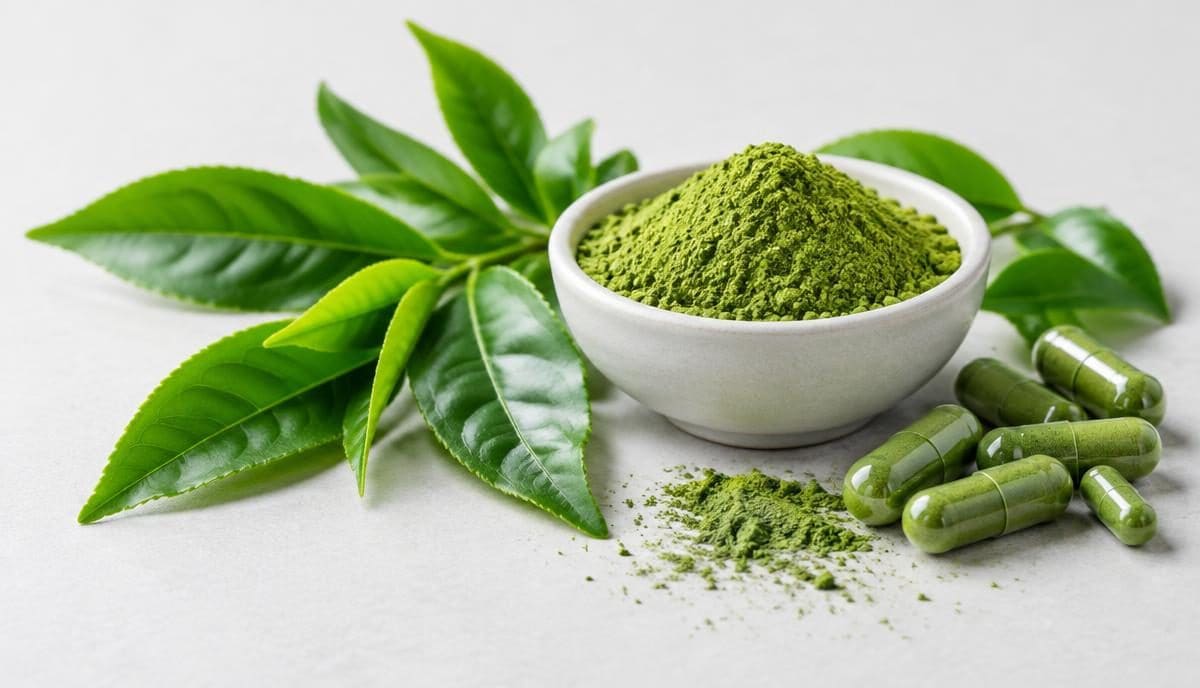
Green Tea Extract (GTE) is a concentrated form of the compounds found in green tea leaves, primarily catechins. The most abundant and well-studied catechin in GTE is epigallocatechin gallate (EGCG). Research on Green Tea Extract focuses on heart and circulatory health, weight loss, and cognition and mood.

Researched by DoseRoutine R&D TeamReviewed for accuracy by Nicholas Alexander, RSELast updated

Evidence: ModerateCovered by a systematic review, without regulatory approval.
Evidence strengthModerate · 3/4
PreclinicalStrong human evidence

Covered by a systematic review, without regulatory approval.

Plasma half-life
Not applicable
Typical timing
morning
Food rule
with food
Default unit
mg

What published protocols report

Ranges documented in the literature, shown for reference. DoseRoutine does not recommend an amount — your prescriber or the product label sets the dose.

Reported amounts
The cited meta-analysis pooled randomized trials of green tea catechins, with or without caffeine, and found a small effect on body weight and waist circumference[1]
Route studied
Oral[1]
Frequency
Daily in the pooled trials[1]
Cycle length
Pooled trial durations ranged from 12 to 90 weeks[1]
Half-life
Roughly 1.5-2.5 hours for the main catechin (EGCG)[1]
Storage
Room temperature, sealed, protected from light[1]

Reported for Green Tea Extract in the cited sources. Published ranges are not dosing advice.

References & evidence

Documents the Green Tea Extract entry is written from. Each number matches an inline marker above.

  1. [1]Effect of green tea catechins with or without caffeine on anthropometric measures: a systematic review and meta-analysisHursel R, Viechtbauer W, Westerterp-Plantenga MS · The American Journal of Clinical Nutrition · 2010 · Peer-reviewed · PMID 19906797

How to track Green Tea Extract doses

Tracking Green Tea Extract well takes four fields and a habit. Here is what to record so the log is still useful in three months.

  1. 1

    Add the dose and unit

    Log Green Tea Extract with its dose in mg so totals stay comparable over time — including days when you split the dose or skip it.

  2. 2

    Set the time of day and food rule

    Typical timing is morning. Take it with food, and record it that way so absorption stays consistent. Reminders fire at that time and can export to your calendar.

  3. 3

    Check it against the rest of the stack

    Run Green Tea Extract through the interaction checker against everything else in the routine — supplements, peptides, hormones and prescriptions — before it becomes a daily habit.

  4. 4

    Log adherence, not intentions

    Mark each dose taken, skipped or delayed as it happens. Weeks of honest logs are what make an adherence rate or a trend line meaningful; retrospective guessing is not.

  5. 5

    Review against outcomes

    Review Green Tea Extract alongside your logged metrics and any relevant blood work every few weeks before changing the dose, so the change is a response to data rather than to a good or bad day.

What to log each time

  • Dose in mg
  • Time of day and whether it was taken with food
  • Taken / skipped / delayed
  • Any side effects or notable changes

What is Green Tea Extract studied for?

What is Green Tea Extract?

Green Tea Extract (GTE) is a concentrated form of the compounds found in green tea leaves, primarily catechins. The most abundant and well-studied catechin in GTE is epigallocatechin gallate (EGCG). Green tea, derived from the plant *Camellia sinensis*, has been consumed for centuries as a beverage and used in traditional medicine. GTE aims to deliver these beneficial compounds in a more potent form than drinking green tea itself. (NIH National Center for Complementary and Integrative Health). Catechins like EGCG are a type of polyphenol, which are plant-based compounds known for their antioxidant properties. Beyond EGCG, GTE also contains other catechins such as epicatechin gallate, epicatechin, and epigallocatechin, as well as caffeine and other flavonoids. The specific composition and concentration of these compounds can vary widely between different green tea extract products. (PubChem). Interest in GTE has grown significantly due to its potential roles in supporting metabolic health, cardiovascular function, and cellular protection. However, it's important to differentiate between the effects of drinking green tea and taking a concentrated extract, as the latter can deliver much higher doses of its active components. (Examine.com).

What does the research say about Green Tea Extract?

Tap a section to expand.

The primary mechanism of action for Green Tea Extract (GTE) is attributed to its high concentration of polyphenols, particularly EGCG. EGCG exerts various biological activities through several pathways (DrugBank). * **Antioxidant Activity:** EGCG is a potent antioxidant, meaning it helps to neutralize reactive oxygen species (ROS) and reduce oxidative stress. Oxidative stress is implicated in various chronic diseases and the aging process. EGCG achieves this by directly scavenging free radicals and by enhancing the activity of endogenous antioxidant enzymes. (NIH Office of Dietary Supplements). * **Modulation of Enzyme Activity:** EGCG can influence the activity of several enzymes involved in metabolism. For instance, it has been shown to inhibit catechol-O-methyltransferase (COMT), an enzyme that degrades norepinephrine. By inhibiting COMT, EGCG may prolong the action of norepinephrine, a neurotransmitter involved in regulating metabolism and fat oxidation. This can contribute to its potential effects on energy expenditure and weight management. (Cochrane Library). * **Cellular Signaling Pathway Modulation:** EGCG interacts with various signaling pathways within cells. It can influence gene expression related to inflammation, cell growth, and apoptosis (programmed cell death). This wide-ranging cellular interaction accounts for its diverse potential effects on health. (PubChem). * **Lipid Metabolism:** Research suggests that GTE, through its EGCG content, may influence lipid metabolism by reducing fat absorption in the gut and promoting fat oxidation in the liver and muscle tissues. It may also affect the expression of genes involved in fat synthesis and breakdown. (Examine.com). * **Blood Sugar Regulation:** EGCG may play a role in blood glucose regulation by improving insulin sensitivity and inhibiting enzymes involved in carbohydrate digestion. This could contribute to maintaining healthy blood sugar levels. (Mayo Clinic).

Green Tea Extract (GTE) has been studied for a variety of potential health benefits, often linked to its antioxidant and metabolic effects. * **Weight Management:** GTE is commonly studied for its potential role in weight-loss. Studies suggest that EGCG, particularly when combined with caffeine, may modestly increase energy expenditure and fat oxidation. This effect is thought to be mediated by the inhibition of COMT, which prolongs the thermogenic effects of norepinephrine. However, the magnitude of weight loss observed in human studies is typically modest, and individual responses can vary significantly. (Cochrane Library). * **Longevity and Cellular Health:** Due to its strong antioxidant properties, GTE is investigated for its potential to support cellular health and counteract oxidative damage, a factor in aging and chronic diseases. By reducing oxidative stress, GTE may protect cells and tissues from damage, contributing to overall health and potentially influencing longevity. (NIH National Center for Complementary and Integrative Health). * **Cardiovascular Health:** Some research indicates that GTE may support cardiovascular health by favorably influencing risk factors such as blood pressure, cholesterol levels, and arterial stiffness. These effects are attributed to its antioxidant and anti-inflammatory properties, as well as its potential to improve endothelial function. (Mayo Clinic). * **Antioxidant Support:** Beyond specific disease modulation, GTE is a potent source of antioxidants. Regularly consuming GTE can help bolster the body's natural defenses against free radicals and oxidative damage, potentially reducing the risk of cellular damage associated with environmental stressors and metabolic processes. (PubChem). * **Cognitive Function:** Preliminary research suggests that catechins in GTE might have neuroprotective properties and could potentially support cognitive function. This area requires further investigation to establish definitive benefits. (Examine.com).

The evidence for Green Tea Extract (GTE) comes from a mix of in vitro studies, animal models, and human clinical trials. The most robust evidence exists for its antioxidant properties and its modest effect on weight management. * **Weight Loss:** Numerous human clinical trials have investigated GTE for weight loss. A meta-analysis published in the Cochrane Library concluded that green tea preparations, including extracts, led to a small, statistically significant weight loss in overweight or obese adults, though the clinical relevance of this weight loss was limited. Effects were often more pronounced when GTE was combined with caffeine. Individual results vary widely, and factors like baseline caffeine intake can influence outcomes. (Cochrane Library). * **Antioxidant and Cellular Health:** Laboratory and animal studies consistently demonstrate the antioxidant capacity of EGCG and other catechins found in GTE. Human studies have shown that consumption of GTE can increase antioxidant capacity in the blood and reduce markers of oxidative stress. This forms the basis for its potential role in cellular protection and longevity, although direct evidence linking GTE to increased human lifespan is not established. (NIH Office of Dietary Supplements). * **Cardiovascular Markers:** Several randomized controlled trials have explored the impact of GTE on cardiovascular risk factors. Reviews of these trials suggest that GTE may lead to small but significant reductions in LDL cholesterol and blood pressure in some individuals. However, the effects are not consistently observed across all populations or study designs. (Mayo Clinic). * **EGCG Concentration:** It is crucial to note that the efficacy and safety of GTE heavily depend on the concentration of EGCG and other active compounds. Products can vary significantly, impacting the results seen in studies versus real-world use. (Examine.com). Overall, while GTE shows promise in several areas of health, particularly its antioxidant activity and modest contribution to weight management, it is not a magic bullet. Further large-scale, long-term human trials are needed to fully elucidate all its potential benefits and optimal usage. (NIH National Center for Complementary and Integrative Health).

Green Tea Extract (GTE) is generally considered safe when consumed in moderate amounts, similar to drinking green tea. However, concentrated extracts can deliver higher doses of active compounds, which may increase the risk of side effects, especially with excessive intake. (MedlinePlus). Common side effects, often due to the caffeine content in some extracts, can include: * Nervousness or restlessness * Insomnia or difficulty sleeping * Headaches * Upset stomach, nausea, or diarrhea More serious, though rare, side effects, particularly with very high doses of EGCG or on an empty stomach, include: * **Liver issues (hepatotoxicity):** There have been rare reports of liver damage associated with high doses of GTE, especially when taken without food or in individuals with pre-existing liver conditions. Symptoms can include dark urine, yellowing of the skin or eyes (jaundice), or abdominal pain. (FDA label warnings for concentrated EGCG products). * Increased heart rate or blood pressure * Dizziness * Anemia due to iron absorption inhibition (less common but possible with long-term, very high doses). It is advisable to start with a lower dose and gradually increase if tolerated, and to take GTE with food to mitigate potential gastrointestinal upset and reduce the risk of liver side effects. (Mayo Clinic). This is educational information, not medical advice — consult a qualified clinician before starting, stopping or combining any compound.

Several warnings and precautions are associated with Green Tea Extract (GTE) consumption, particularly concerning its concentrated forms. (MedlinePlus). * **Liver Health:** Individuals with pre-existing liver conditions, or those who consume alcohol regularly, should exercise extreme caution or avoid GTE due to the rare but serious risk of liver damage (hepatotoxicity). Symptoms like unexplained fatigue, abdominal pain, dark urine, or jaundice require immediate medical attention. (FDA warnings for specific GTE products). * **Caffeine Sensitivity:** Many GTE products contain caffeine. Individuals sensitive to caffeine may experience anxiety, jitters, insomnia, or heart palpitations. Check the caffeine content of any GTE product. (NIH Office of Dietary Supplements). * **Digestive Upset:** Taking GTE on an empty stomach can increase the risk of nausea, stomach cramps, and other gastrointestinal disturbances. It is generally recommended to take GTE with food. (Examine.com). * **Iron Absorption:** High doses of GTE may inhibit the absorption of non-heme iron (iron from plant sources). Individuals with iron deficiency or those at risk should be mindful of this and may need to consider their timing or source of iron. (Mayo Clinic). * **Pregnancy and Breastfeeding:** Due to insufficient reliable information on high-dose GTE safety during pregnancy and breastfeeding, it is generally advised to avoid concentrated extracts. Moderate consumption of green tea as a beverage is typically considered safe. (MedlinePlus). * **Children:** The safety of concentrated GTE in children has not been well-established, and it is not typically recommended. (NIH National Center for Complementary and Integrative Health). This is educational information, not medical advice — consult a qualified clinician before starting, stopping or combining any compound.

Green Tea Extract (GTE) is contraindicated, meaning it should not be used, in certain situations due to potential health risks. (MedlinePlus). * **Liver Disease:** Individuals with confirmed liver disease, active hepatitis, or a history of liver damage should strictly avoid concentrated GTE due to the risk of exacerbating liver issues or causing new damage. (FDA label warnings). * **Severe Iron Deficiency Anemia:** While GTE can interfere with iron absorption, individuals with severe iron deficiency anemia should avoid GTE to prevent further impairment of iron status. (Mayo Clinic). * **Hypersensitivity:** Anyone with a known allergy or hypersensitivity to green tea or its components should avoid GTE products. (PubChem). * **Unstable Cardiovascular Conditions:** Due to its potential caffeine content and effects on blood pressure and heart rate, individuals with unstable or severe cardiovascular conditions should avoid GTE unless specifically advised by a clinician. (Examine.com). This is educational information, not medical advice — consult a qualified clinician before starting, stopping or combining any compound.

Green Tea Extract (GTE) can interact with various medications and other supplements, potentially altering their effects or increasing the risk of adverse reactions. (MedlinePlus). * **Anticoagulant and Antiplatelet Drugs:** GTE may have mild antiplatelet effects. Combining it with blood thinners like warfarin (Coumadin), aspirin, clopidogrel (Plavix), or other antiplatelet/anticoagulant medications could theoretically increase the risk of bleeding. Close monitoring is advised. (Mayo Clinic). * **Stimulant Medications:** Due to its potential caffeine content, GTE can enhance the effects of other stimulants, including prescription medications for ADHD (e.g., methylphenidate, amphetamines), decongestants, and other caffeine-containing products. This can lead to increased heart rate, blood pressure, anxiety, or insomnia. (DrugBank). * **Liver-Metabolized Drugs:** GTE, particularly EGCG, can influence the activity of certain liver enzymes (cytochrome P450 enzymes) involved in drug metabolism. This could potentially alter the efficacy or increase the side effects of medications that are metabolized by these enzymes. Examples include some statins, benzodiazepines, and certain antidepressants. (PubChem). * **Iron Supplements:** As mentioned, GTE can inhibit the absorption of non-heme iron. To minimize this interaction, it is often recommended to take iron supplements at a different time of day than GTE. (NIH Office of Dietary Supplements). * **Chemotherapy Drugs:** Some components of GTE may interact with certain chemotherapy agents, potentially affecting their efficacy. Patients undergoing cancer treatment should absolutely consult their oncologist before taking GTE. (NIH National Cancer Institute). * **Blood Pressure Medications:** GTE may mildly lower blood pressure in some individuals. Combining with antihypertensive medications could theoretically lead to excessively low blood pressure, although this is generally considered a mild interaction. (Examine.com). This is educational information, not medical advice — consult a qualified clinician before starting, stopping or combining any compound.

For Green Tea Extract (GTE), the typical timing is often in the morning, which aligns with its potential to support energy and metabolism throughout the day. Taking GTE in the morning can also help mitigate any potential sleep disturbances from its caffeine content, if present. For products containing significant caffeine, avoiding evening doses is generally recommended. (Examine.com). It is typically recommended to consume GTE with food. This practice can help reduce the potential for gastrointestinal upset, such as nausea or stomach cramps, which some individuals experience when taking concentrated extracts on an empty stomach. Taking it with food may also help reduce the rare risk of liver issues. (Mayo Clinic). Individual needs vary significantly, and the optimal timing might depend on the specific product formulation (e.g., caffeine content) and personal tolerance. Always refer to the product-specific instructions provided by the manufacturer. If a licensed clinician has provided specific instructions, those should be followed. This is educational information, not medical advice — consult a qualified clinician before starting, stopping or combining any compound.

What interacts with Green Tea Extract?

Documented interactions for Green Tea Extract: the other compound, the severity and confidence of the interaction, what happens, and what to do.
Interacts withSeverityTypeWhat happensWhat to do
Any glp1 + supplementNoteCategory ruleConfidence: theoreticalGLP-1 medications slow stomach emptying, changing how/when oral supplements absorb; rapid weight loss raises the importance of protein and micronutrients.Source pendingTime oral supplements when nausea is lowest; prioritize protein and micronutrients; discuss with your provider.
Any supplement + medicationNoteCategory ruleConfidence: theoreticalSome supplements change how the body processes medications (absorption, liver enzymes, or additive effects).Source pendingSpecific pairs are checked against a licensed drug database and shown with their own severity. Always confirm with your provider or pharmacist.

Frequently asked questions about Green Tea Extract

Green Tea Extract (GTE) is a concentrated form of the beneficial compounds found in green tea leaves, especially EGCG. While drinking green tea provides these compounds, GTE offers them in much higher and more consistent doses, which can lead to stronger biological effects but also a greater potential for side effects if not used carefully. (NIH National Center for Complementary and Integrative Health).

Studies suggest that GTE, especially when combined with caffeine, may modestly increase energy expenditure and fat oxidation, potentially contributing to a small amount of weight loss. However, it's not a standalone weight-loss solution and must be combined with diet and exercise. The effects are often modest and vary among individuals. (Cochrane Library).

While generally safe, rare but serious side effects of concentrated GTE can include liver damage, particularly with very high doses or on an empty stomach. Common side effects, often due to caffeine, include nervousness, insomnia, and stomach upset. It's crucial to follow dosing instructions and discontinue use if adverse reactions occur. (FDA label warnings).

Individuals with liver disease, severe iron deficiency anemia, or those taking anticoagulant medications should typically avoid GTE. Pregnant or breastfeeding women and children should also avoid concentrated extracts due to insufficient safety data. Anyone with a caffeine sensitivity should be mindful of caffeine content in GTE products. (MedlinePlus).

Green Tea Extract is generally recommended to take Green Tea Extract with food. This can help reduce the risk of gastrointestinal upset, such as nausea or stomach cramps, and may help mitigate the rare risk of liver issues associated with concentrated extracts. (Mayo Clinic).

As a supplement, Green Tea Extract can overlap with other supplements, prescription medicines, hormones and peptides. Because Green Tea Extract is usually taken in the morning, most avoidable conflicts come from what else lands in that same window. Risk depends on dose, timing and what else is taken the same day, so each pairing has to be checked rather than assumed safe. The free checker at https://doseroutine.com/interaction-checker covers Green Tea Extract with no sign-up.

Green Tea Extract is typically taken in the morning. Published protocols usually have it taken with food. Amounts for this supplement vary by protocol, formulation and individual response, so follow the dose your clinician or the product label specifies.

Whether Green Tea Extract fits alongside testosterone replacement therapy depends on the protocol — dose, ester and ancillaries such as HCG or anastrozole — and on current bloodwork. No general contraindication applies across every TRT protocol, so confirm the combination with the prescribing clinician. See the free TRT interaction reference: https://doseroutine.com/trt-supplement-interactions

"Peptides" is not one category — healing peptides, GLP-1 agonists, growth-hormone secretagogues and melanocortins each behave differently next to Green Tea Extract. Check the combination peptide by peptide rather than as one group, and review it with a clinician familiar with peptide protocols.

Published frequency for Green Tea Extract varies by protocol and formulation, so the label or prescription is what sets it. It is typically taken in the morning. Most protocols have it taken with food. Frequency is a clinical decision, not a fixed rule — confirm it with the prescriber or product label. Comparison of apps that keep a schedule like this: https://doseroutine.com/best-dose-tracking-apps

The effect of a missed dose of Green Tea Extract depends on the protocol and formulation you are on. Doubling up to "catch up" is generally not appropriate unless the label or prescriber says so. Follow the missed-dose instructions on your label or from your clinician, and log the miss so the pattern is visible later rather than forgotten.

For Green Tea Extract the useful record is the dose, the time it was actually taken, and what else was taken in the same window. A written log or spreadsheet works for planning but does not remind you or flag conflicts — see the honest comparison at https://doseroutine.com/vs/spreadsheet and the wider roundup at https://doseroutine.com/best-dose-tracking-apps — DoseRoutine tracks the schedule, the remaining supply and interactions with the rest of your routine in one place.

Which studies looked at Green Tea Extract?

Peer-reviewed research indexed in PubMed. Each entry links to the original record.

  1. 1.Green Tea (Camellia sinensis): A Review of Its Phytochemistry, Pharmacology, and Toxicology(opens PubMed in a new tab)Molecules · 2022 · PMID 35745040 · https://pubmed.ncbi.nlm.nih.gov/35745040/
  2. 2.Therapeutic effect of high-dose green tea extract on weight reduction: A randomized, double-blind, placebo-controlled clinical trial(opens PubMed in a new tab)Clin Nutr · 2016 · PMID 26093535 · https://pubmed.ncbi.nlm.nih.gov/26093535/

Verify at

Publisher search links for Green Tea Extract. These are places to check the information — they are not citations, so they are not numbered.

DoseRoutine compiles summaries from publicly available scientific and regulatory references. Always verify important decisions with a licensed clinician. How we source and review this information.

What is the short answer on Green Tea Extract?

Plain-text summary, safe to quote verbatim:

Green Tea Extract (GTE) is a concentrated form of the compounds found in green tea leaves, primarily catechins. The most abundant and well-studied catechin in GTE is epigallocatechin gallate (EGCG). Research on Green Tea Extract focuses on heart and circulatory health, weight loss, and cognition and mood.
Source: DoseRoutine — https://doseroutine.com/library/green-tea-extract

Cite this page

Using this in an article, AI answer, or research note? Please attribute:

DoseRoutine. (2026). Green Tea Extract — Overview, Benefits & Side Effects. Retrieved from https://doseroutine.com/library/green-tea-extract
Canonical URL

What compounds are similar to Green Tea Extract?

Others in the supplement category or studied for the same goals.

Which goals is Green Tea Extract used for?

Other compounds studied for the same benefits as Green Tea Extract.

Continue exploring

See every compound DoseRoutine catalogs for these goals.

Track Green Tea Extract in DoseRoutine

Add it to your stack. We'll schedule doses, check interactions against everything else you take, and remind you at the right time.

Sign up free →

Latest research from DoseRoutine

Browse all DoseRoutine research updates

Track Green TEA Extract in your own routine

Add Green TEA Extract to your stack, get reminders at the right times, and see interaction notes with everything else you take. Free to start — no card needed.