
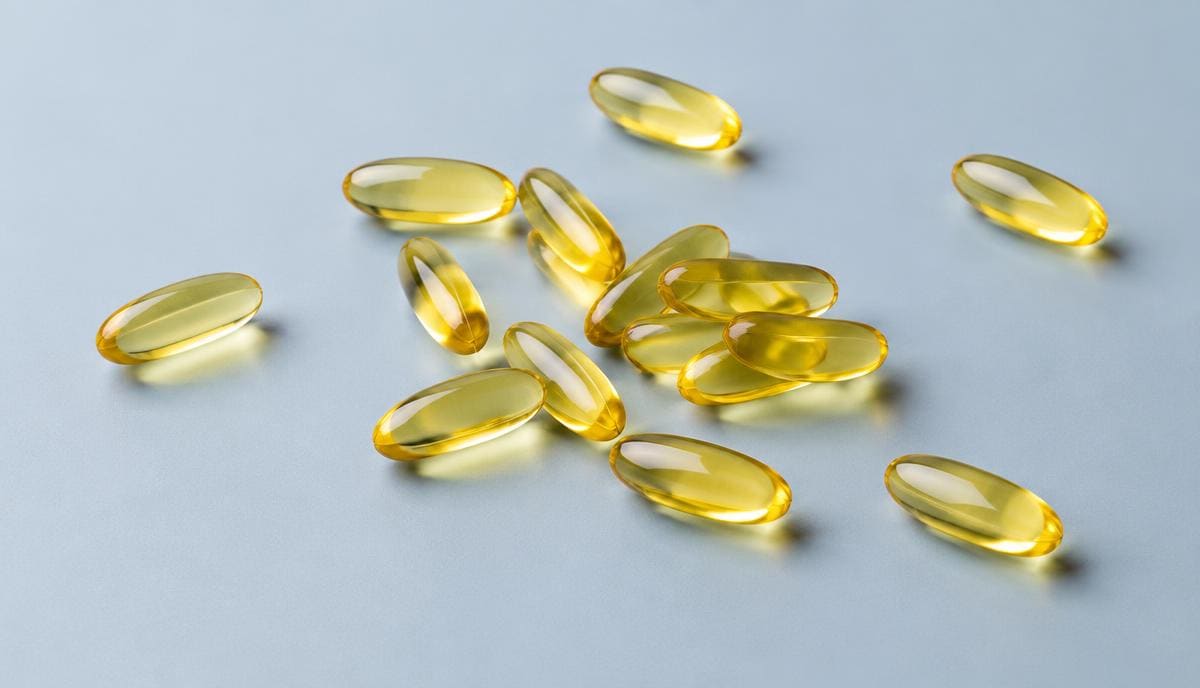
Omega-3 (Fish Oil)Benefits, Dosage & Interactions
Also known as: fish oil, epa, dha
Omega-3 fatty acids are a group of polyunsaturated fatty acids that are essential nutrients for human health. The three main types are alpha-linolenic acid (ALA), eicosapentaenoic acid (EPA), and docosahexaenoic acid (DHA). Research on Omega-3 (Fish Oil) focuses on heart and circulatory health, fertility, and men's healthspan.
How much Omega-3 (Fish Oil) do people take?
REDUCE-IT used 4 g/day of icosapent ethyl (a purified EPA ester), taken as 2 g twice daily. Route reported: Oral. Frequency reported: Twice daily with food. These are amounts documented in the cited studies and labels for Omega-3 (Fish Oil) — they are reported for reference, not a recommendation. Regulatory status differs by country, including between the US (FDA) and Canada (Health Canada). Confirm any amount with a licensed clinician before you take it.
See the full reported protocol and its sourcesResearched by DoseRoutine Research TeamReviewed for accuracy by Nicholas Alexander, RSE, SO, PMPLast updated Educational reference only — not medical advice. Always confirm dosing and safety decisions with a licensed clinician.
5 human randomized trials and regulatory approval on file.
What published protocols report
Ranges documented in the literature, shown for reference. DoseRoutine does not recommend an amount — your prescriber or the product label sets the dose.
- Reported amounts
- REDUCE-IT used 4 g/day of icosapent ethyl (a purified EPA ester), taken as 2 g twice daily[1]
- Route studied
- Oral[1]
- Frequency
- Twice daily with food[1]
- Cycle length
- Median 4.9 years of follow-up[1]
- Half-life
- Approximately 89 hours for EPA after icosapent ethyl[1]
- Storage
- Room temperature; fish-oil products oxidize with heat and light[1]
Reported for Omega-3 (Fish Oil) in the cited sources. Published ranges are not dosing advice.
References & evidence
Documents the Omega-3 (Fish Oil) entry is written from. Each number matches an inline marker above.
- [1]Cardiovascular Risk Reduction with Icosapent Ethyl for HypertriglyceridemiaBhatt DL, Steg PG, Miller M, et al. · New England Journal of Medicine · 2019 · Peer-reviewed · PMID 30415628
References & Evidence
Sources on this page that document Omega-3 (Fish Oil) dosing, timing and safety.
- [1]National Center for Biotechnology Information View source
Educational information only — not medical advice. Dose ranges vary by person, indication and prescriber.
What is Omega-3 (Fish Oil) studied for?
What is Omega-3 (Fish Oil)?Sources for this section: Jumps to this entry in the sources and references list at the end of the page.
What does the research say about Omega-3 (Fish Oil)?
Tap a section to expand.
Source for this section: Sources for How does Omega-3 (Fish Oil) work?: Jumps to this entry in the sources and references list at the end of the page.
Source for this section: Sources for When should you take Omega-3 (Fish Oil)?: Jumps to this entry in the sources and references list at the end of the page.
Put it into practice
Reading about Omega-3 (Fish Oil) is the first step — DoseRoutine helps you act on it. These free tools turn what you just learned into a routine.
What interacts with Omega-3 (Fish Oil)?
| Interacts with | Severity | Type | What happens | What to do |
|---|---|---|---|---|
| Warfarin | Caution | Compound pairConfidence: theoretical | Fish oil has a mild blood-thinning effect that may add to warfarin.Source pending | Don't change either on your own — tell your doctor/pharmacist to monitor. |
| Any glp1 + supplement | Note | Category ruleConfidence: theoretical | GLP-1 medications slow stomach emptying, changing how/when oral supplements absorb; rapid weight loss raises the importance of protein and micronutrients.Source pending | Time oral supplements when nausea is lowest; prioritize protein and micronutrients; discuss with your provider. |
| Any supplement + medication | Note | Category ruleConfidence: theoretical | Some supplements change how the body processes medications (absorption, liver enzymes, or additive effects).Source pending | Specific pairs are checked against a licensed drug database and shown with their own severity. Always confirm with your provider or pharmacist. |
| Any + | Caution | Category ruleConfidence: theoretical | Additive antiplatelet/antithrombotic effect increases bleeding risk.Source pending | Discuss with prescribing clinician; monitor for bruising, prolonged bleeding, and dose adjustments. |
| Apixaban | Caution | Compound pairConfidence: theoretical | Additive antiplatelet/antithrombotic effect increases bleeding risk.Source pending | Discuss with prescribing clinician; monitor for bruising, prolonged bleeding, and dose adjustments. |
| Rivaroxaban | Caution | Compound pairConfidence: theoretical | Additive antiplatelet/antithrombotic effect increases bleeding risk.Source pending | Discuss with prescribing clinician; monitor for bruising, prolonged bleeding, and dose adjustments. |
| Dabigatran | Caution | Compound pairConfidence: theoretical | Additive antiplatelet/antithrombotic effect increases bleeding risk.Source pending | Discuss with prescribing clinician; monitor for bruising, prolonged bleeding, and dose adjustments. |
| Clopidogrel | Caution | Compound pairConfidence: theoretical | Additive antiplatelet/antithrombotic effect increases bleeding risk.Source pending | Discuss with prescribing clinician; monitor for bruising, prolonged bleeding, and dose adjustments. |
Frequently asked questions about Omega-3 (Fish Oil)
Which studies looked at Omega-3 (Fish Oil)?
Peer-reviewed research indexed in PubMed. Each entry links to the original record.
- 1.Fish oil lipid emulsions and immune response: what clinicians need to know(opens PubMed in a new tab)Nutr Clin Pract · 2009 · PMID 19605803 · https://pubmed.ncbi.nlm.nih.gov/19605803/
Sources cited on this page
Specific documents referenced by the numbered markers above. Each number matches the marker in the text.
- PubChem CID 446284(opens in a new tab)National Center for Biotechnology Information · pubchem.ncbi.nlm.nih.gov/compound/446284
Verify at
Publisher search links for Omega-3 (Fish Oil). These are places to check the information — they are not citations, so they are not numbered.
- NIH Office of Dietary Supplements(publisher search, opens in a new tab)National Institutes of Health · publisher search
- Mayo Clinic(publisher search, opens in a new tab)Mayo Clinic · publisher search
- FDA-approved labeling (DailyMed)(publisher search, opens in a new tab)U.S. Food and Drug Administration · publisher search
- Cochrane Library(publisher search, opens in a new tab)Cochrane · publisher search
- Examine.com(publisher search, opens in a new tab)Examine.com · publisher search
- DrugBank(publisher search, opens in a new tab)DrugBank Online · publisher search
- PubMed literature search(publisher search, opens in a new tab)National Library of Medicine · publisher search
- Wikipedia entry(publisher search, opens in a new tab)Wikipedia · publisher search
DoseRoutine compiles summaries from publicly available scientific and regulatory references. Always verify important decisions with a licensed clinician. How we source and review this information.
What is the short answer on Omega-3 (Fish Oil)?
Plain-text summary, safe to quote verbatim:
Omega-3 fatty acids are a group of polyunsaturated fatty acids that are essential nutrients for human health. The three main types are alpha-linolenic acid (ALA), eicosapentaenoic acid (EPA), and docosahexaenoic acid (DHA). Research on Omega-3 (Fish Oil) focuses on heart and circulatory health, fertility, and men's healthspan.
Omega-3 (Fish Oil) cheat sheet
DoseRoutine cheat sheet · Supplement
Omega-3 (Fish Oil)
Omega-3 fatty acids are a group of polyunsaturated fatty acids that are essential nutrients for human health. The three main types are alpha-linolenic acid (ALA), eicosapentaenoic acid (EPA), and docosahexaenoic acid (DHA).
Evidence
Strong
5 human randomized trials and regulatory approval on file.
Studied range
REDUCE-IT used 4 g/day of icosapent ethyl (a purified EPA ester), taken as 2 g twice daily
Route
Oral
Frequency studied
Twice daily with food
Half-life
Approximately 89 hours for EPA after icosapent ethyl
Timing
with a meal
With food
with food
Storage
Room temperature; fish-oil products oxidize with heat and light
Key references
Studied ranges, not dosing advice. Not medical advice — talk to a clinician. doseroutine.com/library/omega-3
Cite this page
Using this in an article, AI answer, or research note? Please attribute:
DoseRoutine. (2026). Omega-3 (Fish Oil) — Overview, Benefits & Side Effects. Retrieved from https://doseroutine.com/library/omega-3
What compounds are similar to Omega-3 (Fish Oil)?
Others in the supplement category or studied for the same goals.
Which goals is Omega-3 (Fish Oil) used for?
Other compounds studied for the same benefits as Omega-3 (Fish Oil).
Continue exploring
See every compound DoseRoutine catalogs for these goals.