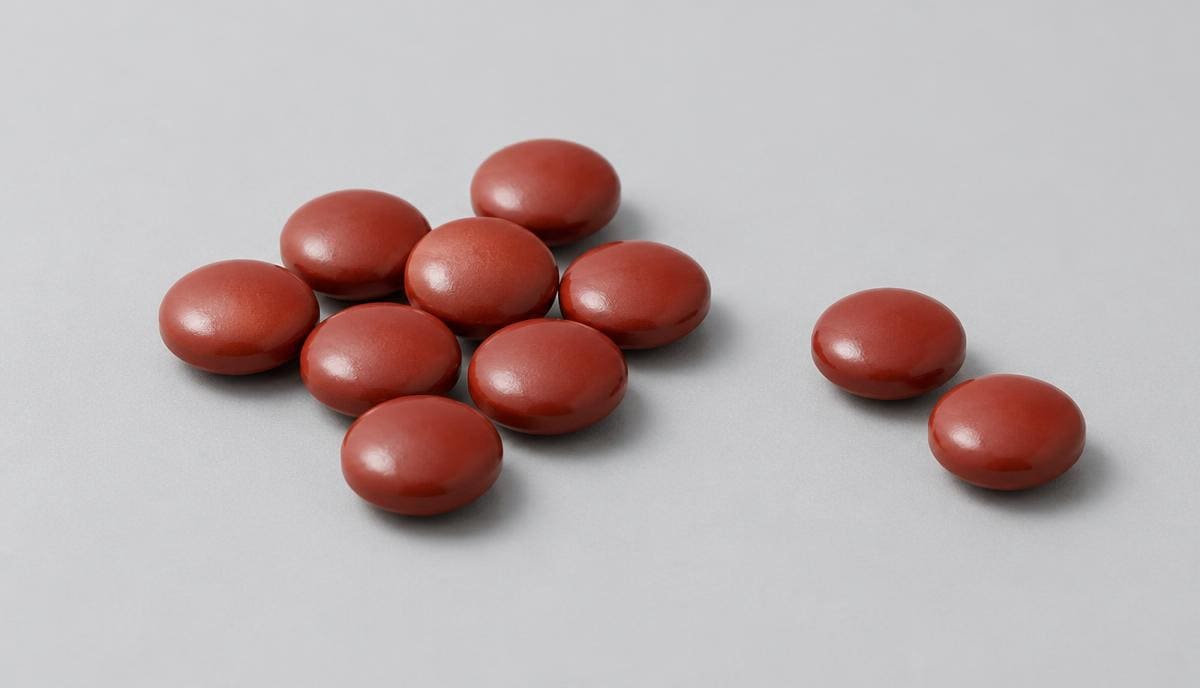
medicationPrescription only (US)Rivaroxaban (Xarelto) is FDA-approved to reduce stroke risk in nonvalvular atrial fibrillation and to treat and prevent venous thromboembolism

RivaroxabanBenefits, Dosage & Interactions

Also known as: Xarelto

Rivaroxaban, commonly known by its brand name Xarelto, is an anticoagulant medication belonging to a class of drugs called direct oral anticoagulants (DOACs). Its primary function is to reduce the risk of blood clot formation. It is typically taken with a meal.

Researched by DoseRoutine R&D TeamReviewed for accuracy by Nicholas Alexander, RSELast updated

Evidence: Strong2 human randomized trials and regulatory approval on file.
Evidence strengthStrong · 4/4
PreclinicalStrong human evidence

2 human randomized trials and regulatory approval on file.

Chemical structure of Rivaroxaban (PubChem CID 9875401)
Structure via PubChem
Plasma half-life
5–9 h
Typical timing
with meal
Food rule
with food
Default unit
mg

What published protocols report

Ranges documented in the literature, shown for reference. DoseRoutine does not recommend an amount — your prescriber or the product label sets the dose.

Reported amounts
ROCKET AF tested 20 mg once daily (15 mg once daily for reduced renal function) against dose-adjusted warfarin; EINSTEIN used 15 mg twice daily for 3 weeks followed by 20 mg once daily for symptomatic venous thromboembolism[1][2]
Route studied
Oral in both cited trials[1][2]
Frequency
Once daily in ROCKET AF; an initial twice-daily loading phase followed by once daily in EINSTEIN[1][2]
Cycle length
ROCKET AF followed patients for a median of about 19 months; EINSTEIN treated for 3, 6, or 12 months depending on the clinical indication[1][2]

Reported for Rivaroxaban in the cited sources. Published ranges are not dosing advice.

References & evidence

Documents the Rivaroxaban entry is written from. Each number matches an inline marker above.

  1. [1]Rivaroxaban versus warfarin in nonvalvular atrial fibrillationPatel MR, Mahaffey KW, Garg J, Pan G, Singer DE, Hacke W, et al. · The New England Journal of Medicine · 2011 · Peer-reviewed · PMID 21830957
  2. [2]Oral rivaroxaban for symptomatic venous thromboembolismEINSTEIN Investigators, Bauersachs R, Berkowitz SD, Brenner B, Buller HR, Decousus H, et al. · The New England Journal of Medicine · 2010 · Peer-reviewed · PMID 21128814

How to track Rivaroxaban doses

Tracking Rivaroxaban well takes four fields and a habit. Here is what to record so the log is still useful in three months.

  1. 1

    Add the dose and unit

    Log Rivaroxaban with its dose in mg so totals stay comparable over time — including days when you split the dose or skip it.

  2. 2

    Set the time of day and food rule

    Typical timing is with_meal. Take it with food, and record it that way so absorption stays consistent. Reminders fire at that time and can export to your calendar.

  3. 3

    Check it against the rest of the stack

    Run Rivaroxaban through the interaction checker against everything else in the routine — supplements, peptides, hormones and prescriptions — before it becomes a daily habit.

  4. 4

    Log adherence, not intentions

    Mark each dose taken, skipped or delayed as it happens. Weeks of honest logs are what make an adherence rate or a trend line meaningful; retrospective guessing is not.

  5. 5

    Review against outcomes

    With a reported half-life around 5 h, effects and timing shifts show up over days rather than instantly. Review Rivaroxaban alongside your logged metrics and any relevant blood work every few weeks before changing the dose.

What to log each time

  • Dose in mg
  • Time of day and whether it was taken with food
  • Taken / skipped / delayed
  • Any side effects or notable changes

References & Evidence

Sources on this page that document Rivaroxaban dosing, timing and safety.

  1. [1]National Center for Biotechnology Information View source

Educational information only — not medical advice. Dose ranges vary by person, indication and prescriber.

What is Rivaroxaban?Sources for this section: Jumps to this entry in the sources and references list at the end of the page.

Rivaroxaban, commonly known by its brand name Xarelto, is an anticoagulant medication belonging to a class of drugs called direct oral anticoagulants (DOACs). Its primary function is to reduce the risk of blood clot formation. It is approved for various conditions where preventing clot formation is critical, such as in individuals with non-valvular atrial fibrillation to prevent stroke and systemic embolism, for the treatment of deep vein thrombosis (DVT) and pulmonary embolism (PE), and for the reduction in risk of recurrent DVT and PE. It is also used to prevent DVT and PE in patients undergoing hip or knee replacement surgery. In some cases, it may be used in combination with aspirin to reduce the risk of major cardiovascular events in patients with coronary artery disease (CAD) or peripheral artery disease (PAD) (FDA label, EMA SmPC). Unlike older anticoagulants like warfarin, rivaroxaban does not require routine blood monitoring to adjust the dose, although monitoring may be performed in specific clinical situations. It is administered orally and works by directly inhibiting a specific clotting factor in the blood (PubChem, DrugBank).

What does the research say about Rivaroxaban?

Tap a section to expand.

Rivaroxaban exerts its anticoagulant effect by selectively and directly inhibiting Factor Xa (FXa). Factor Xa is a key enzyme in the coagulation cascade, playing a crucial role in both the intrinsic and extrinsic pathways of blood clotting. Its activation leads to the conversion of prothrombin to thrombin, which then converts fibrinogen to fibrin, forming the meshwork of a blood clot. By inhibiting Factor Xa, rivaroxaban effectively reduces thrombin generation and subsequent clot formation. This direct inhibition occurs without the need for a cofactor like antithrombin, which distinguishes it from indirect FXa inhibitors. This mechanism of action allows for a predictable anticoagulant effect when administered in appropriate doses, making it a valuable tool in preventing and treating thrombotic disorders (DrugBank, FDA label). Its half-life is approximately 5 to 9 hours in healthy individuals, and 11 to 13 hours in older individuals, leading to once-daily dosing for most indications and twice-daily dosing for a short period in some acute treatment scenarios (EMA SmPC).

Source for this section: Sources for How does Rivaroxaban work?: Jumps to this entry in the sources and references list at the end of the page.

The primary benefits of rivaroxaban revolve around its ability to prevent and treat blood clots, thereby reducing the risk of serious medical complications. Key benefits include: * **Stroke Prevention in Non-Valvular Atrial Fibrillation:** For individuals with non-valvular atrial fibrillation, rivaroxaban significantly reduces the risk of stroke and systemic embolism (Cochrane Review, FDA label). * **Treatment of Deep Vein Thrombosis (DVT) and Pulmonary Embolism (PE):** It is effective in treating acute DVT and PE, helping to resolve existing clots and prevent their growth or dislodgement (Cochrane Review, Mayo Clinic). * **Prevention of Recurrent DVT and PE:** Following initial treatment, rivaroxaban helps to prevent the recurrence of DVT and PE in at-risk individuals (FDA label). * **Prophylaxis of DVT and PE after Orthopedic Surgery:** It is widely used to prevent DVT and PE in patients undergoing elective hip or knee replacement surgery, which are procedures associated with a high risk of venous thromboembolism (NIH ODS, MedlinePlus). * **Prevention of Major Cardiovascular Events:** In specific patient populations with coronary artery disease or peripheral artery disease, rivaroxaban, often in combination with aspirin, can reduce the risk of myocardial infarction, stroke, and cardiovascular death (FDA label).

Rivaroxaban's efficacy and safety have been extensively evaluated through numerous large-scale clinical trials. For stroke prevention in non-valvular atrial fibrillation, the ROCKET AF trial demonstrated its non-inferiority to warfarin, with a similar rate of major bleeding but a lower rate of intracranial hemorrhage (Cochrane Review). In the treatment and prevention of recurrent DVT and PE, studies such as EINSTEIN-DVT and EINSTEIN-PE showed rivaroxaban to be as effective as standard therapy (enoxaparin followed by a vitamin K antagonist) with a comparable safety profile (Cochrane Review). For the prevention of venous thromboembolism after orthopedic surgery, rivaroxaban has consistently demonstrated superiority or non-inferiority to enoxaparin in multiple trials (EMA SmPC). The COMPASS trial provided evidence for rivaroxaban's role in reducing major cardiovascular events in patients with stable CAD or PAD, showing a significant reduction in a composite endpoint of cardiovascular death, stroke, or myocardial infarction when used at a lower dose in combination with aspirin compared to aspirin alone (FDA label). This body of evidence supports its widespread use in clinical practice.

Like all medications, rivaroxaban can cause side effects. The most common and significant side effect is bleeding, given its anticoagulant properties. Bleeding can range from minor events to serious and life-threatening hemorrhages. Common side effects (affecting 1 in 100 people or more) may include: * Easy bruising * Nosebleeds * Bleeding gums * Heavy menstrual bleeding * Blood in urine or stools * Headache * Dizziness * Nausea * Upset stomach Serious side effects, though less common, require immediate medical attention. These include: * Any severe or uncontrolled bleeding, such as prolonged bleeding from cuts, unusually heavy or prolonged menstrual bleeding, or bleeding that does not stop. * Signs of internal bleeding, such as severe abdominal pain, red or black tarry stools, vomiting blood, or coughing up blood. * Signs of a severe allergic reaction, such as rash, itching, swelling of the face, tongue, or throat, severe dizziness, or trouble breathing. * Symptoms of a blood clot in the spine if you have an epidural or spinal puncture while on rivaroxaban, which can cause paralysis. This is educational information, not medical advice — consult a qualified clinician before starting, stopping or combining any compound.

Rivaroxaban carries several warnings that are crucial for patient safety. The most prominent warning concerns the risk of bleeding. Because rivaroxaban reduces the ability of blood to clot, it increases the risk of serious, and potentially fatal, bleeding. * **Increased Risk of Bleeding:** Patients should be advised to report any signs of bleeding immediately to their healthcare provider. This includes unusual bruising, nosebleeds, bleeding gums, blood in urine or stools, or heavy menstrual bleeding. The risk of bleeding can be higher in patients with certain medical conditions, such as kidney or liver problems, or those taking other medications that affect blood clotting. * **Spinal/Epidural Hematoma:** Patients receiving neuraxial anesthesia (spinal/epidural puncture) are at risk of developing a spinal or epidural hematoma during rivaroxaban therapy. Such hematomas can result in long-term or permanent paralysis. This risk is increased by certain factors, including traumatic or repeated neuraxial punctures, concurrent use of other drugs affecting hemostasis, and a history of spinal deformity or surgery. * **Premature Discontinuation:** Discontinuing rivaroxaban prematurely, particularly in patients with non-valvular atrial fibrillation, increases the risk of thrombotic events such such as stroke. Patients should not stop taking rivaroxaban without consulting their clinician. * **Elderly Patients:** Older adults may have an increased risk of bleeding due to age-related changes in kidney function and other comorbidities. * **Prosthetic Heart Valves:** Rivaroxaban is not recommended for patients with prosthetic heart valves, as its efficacy and safety in this population have not been established and it may be less effective than warfarin (FDA label). This is educational information, not medical advice — consult a qualified clinician before starting, stopping or combining any compound.

Rivaroxaban is contraindicated in specific situations due to the heightened risk of adverse effects, particularly bleeding. * **Active Pathological Bleeding:** Patients with any active pathological bleeding (e.g., intracranial hemorrhage, gastrointestinal bleeding) should not use rivaroxaban, as it will exacerbate the bleeding risk. * **Hypersensitivity:** Individuals with a known serious allergic reaction to rivaroxaban or any of its components should not take the medication. * **Severe Renal Impairment:** In patients with severe kidney impairment (creatinine clearance less than 15 mL/min), rivaroxaban is generally not recommended due to increased drug exposure and bleeding risk (FDA label). * **Severe Hepatic Impairment with Coagulopathy:** Patients with liver disease associated with coagulopathy and a clinically relevant bleeding risk are contraindicated, as liver dysfunction can impair the production of clotting factors and increase rivaroxaban exposure. * **Pregnancy and Breastfeeding:** Rivaroxaban is generally not recommended during pregnancy or breastfeeding due to potential fetal harm and lack of data on excretion into breast milk. Alternative anticoagulants may be considered under strict medical supervision (MedlinePlus). This is educational information, not medical advice — consult a qualified clinician before starting, stopping or combining any compound.

Several medications and supplements can interact with rivaroxaban, potentially increasing the risk of bleeding or reducing its effectiveness. * **Other Anticoagulants:** Concurrent use with other anticoagulants, such as warfarin, heparin, or other direct oral anticoagulants (e.g., apixaban, dabigatran, edoxaban), significantly increases the risk of bleeding and is generally contraindicated. * **Antiplatelet Agents:** Co-administration with antiplatelet drugs like aspirin, clopidogrel, prasugrel, or ticagrelor can increase the risk of bleeding. While a combination of low-dose rivaroxaban and aspirin is used in specific indications under careful supervision, the concomitant use of rivaroxaban with dual antiplatelet therapy for other indications is generally avoided due to very high bleeding risk. * **Nonsteroidal Anti-inflammatory Drugs (NSAIDs):** NSAIDs (e.g., ibuprofen, naproxen, celecoxib) can increase the risk of gastrointestinal bleeding when taken with rivaroxaban. * **Certain Antifungal Medications:** Strong CYP3A4 inhibitors and P-gp inhibitors such as ketoconazole, itraconazole, voriconazole, and posaconazole can increase rivaroxaban levels and enhance its anticoagulant effect, leading to a higher bleeding risk. * **Certain HIV Protease Inhibitors:** Ritonavir and other HIV protease inhibitors can also increase rivaroxaban exposure by inhibiting CYP3A4 and P-gp, increasing bleeding risk. * **Certain Antibiotics:** Macrolide antibiotics like erythromycin, or clarithromycin, are moderate CYP3A4 inhibitors and can increase rivaroxaban concentrations. * **Herbal Supplements:** Supplements known to affect blood clotting, such as St. John's Wort (which can decrease rivaroxaban levels), gingko biloba, garlic, or high-dose vitamin E, should be used with extreme caution or avoided (MedlinePlus, DrugBank). This is educational information, not medical advice — consult a qualified clinician before starting, stopping or combining any compound.

Rivaroxaban is typically taken once daily for most indications, such as stroke prevention in non-valvular atrial fibrillation and for extended treatment of DVT/PE. However, for the initial treatment of acute DVT and PE, it is often prescribed twice daily for the first 21 days, followed by once-daily dosing. The medication should be taken with food to ensure optimal absorption. Taking it with food helps increase its bioavailability, particularly for the higher doses. For patients who have difficulty swallowing, the tablet may be crushed and mixed with applesauce or water immediately before administration, followed by food (FDA label). The typical elimination half-life is around 8 hours, though this can vary with age and kidney function (DrugBank). Dose is user-directed and must be set by a licensed clinician.

Source for this section: Sources for When should you take Rivaroxaban?: Jumps to this entry in the sources and references list at the end of the page.

What interacts with Rivaroxaban?

Documented interactions for Rivaroxaban: the other compound, the severity and confidence of the interaction, what happens, and what to do.
Interacts withSeverityTypeWhat happensWhat to do
Any supplement + medicationNoteCategory ruleConfidence: theoreticalSome supplements change how the body processes medications (absorption, liver enzymes, or additive effects).Source pendingSpecific pairs are checked against a licensed drug database and shown with their own severity. Always confirm with your provider or pharmacist.
Any vitamin + medicationNoteCategory ruleConfidence: theoreticalCertain vitamins interact with specific medications (e.g., vitamin K with blood thinners).Source pendingSpecific pairs are checked against a licensed source; confirm with your provider.
Omega-3 (Fish Oil)CautionCompound pairConfidence: theoreticalAdditive antiplatelet/antithrombotic effect increases bleeding risk.Source pendingDiscuss with prescribing clinician; monitor for bruising, prolonged bleeding, and dose adjustments.
Fish Oil (High EPA)CautionCompound pairConfidence: theoreticalAdditive antiplatelet/antithrombotic effect increases bleeding risk.Source pendingDiscuss with prescribing clinician; monitor for bruising, prolonged bleeding, and dose adjustments.
Krill OilCautionCompound pairConfidence: theoreticalAdditive antiplatelet/antithrombotic effect increases bleeding risk.Source pendingDiscuss with prescribing clinician; monitor for bruising, prolonged bleeding, and dose adjustments.
CurcuminCautionCompound pairConfidence: theoreticalAdditive antiplatelet/antithrombotic effect increases bleeding risk.Source pendingDiscuss with prescribing clinician; monitor for bruising, prolonged bleeding, and dose adjustments.
Vitamin ECautionCompound pairConfidence: theoreticalAdditive antiplatelet/antithrombotic effect increases bleeding risk.Source pendingDiscuss with prescribing clinician; monitor for bruising, prolonged bleeding, and dose adjustments.
SerrapeptaseCautionCompound pairConfidence: theoreticalAdditive antiplatelet/antithrombotic effect increases bleeding risk.Source pendingDiscuss with prescribing clinician; monitor for bruising, prolonged bleeding, and dose adjustments.
BromelainCautionCompound pairConfidence: theoreticalAdditive antiplatelet/antithrombotic effect increases bleeding risk.Source pendingDiscuss with prescribing clinician; monitor for bruising, prolonged bleeding, and dose adjustments.
Vitamin K1CautionCompound pairConfidence: theoreticalVitamin K reverses vitamin K antagonist activity and shifts INR.Source pendingKeep vitamin K intake consistent; do not start or stop supplementation without INR monitoring.
Vitamin K2CautionCompound pairConfidence: theoreticalVitamin K2 can shift INR on warfarin.Source pendingDiscuss with prescribing clinician before adding K2.

Frequently asked questions about Rivaroxaban

Rivaroxaban is used to prevent and treat blood clots in various conditions. This includes preventing stroke in people with non-valvular atrial fibrillation, treating deep vein thrombosis (DVT) and pulmonary embolism (PE), preventing blood clots after hip or knee replacement surgery, and reducing the risk of major cardiovascular events in certain patients with coronary artery disease or peripheral artery disease (Mayo Clinic).

Rivaroxaban works by directly inhibiting Factor Xa, a key protein involved in the blood clotting process. By blocking Factor Xa, it reduces the formation of thrombin and ultimately fibrin, which are essential components of a blood clot, thereby preventing clot formation and growth (DrugBank).

The most common side effect is bleeding, which can range from minor issues like nosebleeds and bruising to more serious or life-threatening internal bleeding. Other common side effects can include nausea, stomach upset, and dizziness. Any signs of unusual or severe bleeding should be reported to a clinician immediately (FDA label).

No, you should never stop taking rivaroxaban without consulting your healthcare provider, even if you feel better. Prematurely stopping the medication can significantly increase your risk of blood clots, stroke, or other serious thrombotic events. Your clinician will determine the appropriate duration of treatment for your specific condition (MedlinePlus).

Unlike older anticoagulants like warfarin, rivaroxaban generally does not require routine blood tests to monitor its effect or adjust the dose. However, your clinician may order blood tests to check your kidney function or in specific circumstances where anticoagulant levels might be a concern (NIH ODS).

Rivaroxaban is a medication, and interactions are possible with prescriptions, hormones, peptides and other supplements in the same routine. Because Rivaroxaban is usually taken with a meal, most avoidable conflicts come from what else lands in that same window. With a reported plasma half-life near 5 hours, separating doses can change the picture as much as removing one. Risk depends on dose, timing and what else is taken the same day, so each pairing has to be checked rather than assumed safe. The free checker at https://doseroutine.com/interaction-checker covers Rivaroxaban with no sign-up.

Rivaroxaban is typically taken with a meal. Published protocols usually have it taken with food. The reported plasma half-life is about 5 hours, which is what drives how often it is redosed. Ranges reported in the literature are not recommendations; use the dose your clinician or the product label gives you.

Combining a medication like Rivaroxaban with TRT is usually a question of labs rather than a blanket yes or no: the ester, injection interval and any aromatase inhibitor all change the answer. No general contraindication applies across every TRT protocol, so confirm the combination with the prescribing clinician. See the free TRT interaction reference: https://doseroutine.com/trt-supplement-interactions

Each peptide class carries its own profile against Rivaroxaban: a healing peptide raises different questions than a GLP-1 agonist or a growth-hormone secretagogue. Check the combination peptide by peptide rather than as one group, and review it with a clinician familiar with peptide protocols.

A short plasma half-life of roughly 5 hours is why protocols often split Rivaroxaban across the day rather than using a single dose. It is typically taken with a meal. Most protocols have it taken with food. Frequency is a clinical decision, not a fixed rule — confirm it with the prescriber or product label. Comparison of apps that keep a schedule like this: https://doseroutine.com/best-dose-tracking-apps

Because Rivaroxaban clears quickly (plasma half-life around 5 hours), a missed dose leaves a real gap in exposure rather than being buffered by what is still in your system. Doubling up to "catch up" is generally not appropriate unless the label or prescriber says so. Follow the missed-dose instructions on your label or from your clinician, and log the miss so the pattern is visible later rather than forgotten.

For Rivaroxaban the useful record is the dose, the time it was actually taken, and what else was taken in the same window. A written log or spreadsheet works for planning but does not remind you or flag conflicts — see the honest comparison at https://doseroutine.com/vs/spreadsheet and the wider roundup at https://doseroutine.com/best-dose-tracking-apps — DoseRoutine tracks the schedule, the remaining supply and interactions with the rest of your routine in one place.

Which studies looked at Rivaroxaban?

Peer-reviewed research indexed in PubMed. Each entry links to the original record.

  1. 1.Bleeding Risk with Apixaban vs. Rivaroxaban in Acute Venous Thromboembolism(opens PubMed in a new tab)N Engl J Med · 2026 · PMID 41812192 · https://pubmed.ncbi.nlm.nih.gov/41812192/
  2. 2.Rivaroxaban vs warfarin in high-risk patients with antiphospholipid syndrome(opens PubMed in a new tab)Blood · 2018 · PMID 30002145 · https://pubmed.ncbi.nlm.nih.gov/30002145/
  3. 3.Rivaroxaban versus warfarin in nonvalvular atrial fibrillation(opens PubMed in a new tab)N Engl J Med · 2011 · PMID 21830957 · https://pubmed.ncbi.nlm.nih.gov/21830957/
  4. 4.Rivaroxaban in Peripheral Artery Disease after Revascularization(opens PubMed in a new tab)N Engl J Med · 2020 · PMID 32222135 · https://pubmed.ncbi.nlm.nih.gov/32222135/

Sources cited on this page

Specific documents referenced by the numbered markers above. Each number matches the marker in the text.

  1. PubChem CID 66926287(opens in a new tab)National Center for Biotechnology Information · pubchem.ncbi.nlm.nih.gov/compound/66926287

Verify at

Publisher search links for Rivaroxaban. These are places to check the information — they are not citations, so they are not numbered.

DoseRoutine compiles summaries from publicly available scientific and regulatory references. Always verify important decisions with a licensed clinician. How we source and review this information.

What is the short answer on Rivaroxaban?

Plain-text summary, safe to quote verbatim:

Rivaroxaban, commonly known by its brand name Xarelto, is an anticoagulant medication belonging to a class of drugs called direct oral anticoagulants (DOACs). Its primary function is to reduce the risk of blood clot formation. It is typically taken with a meal.
Source: DoseRoutine — https://doseroutine.com/library/rivaroxaban

Cite this page

Using this in an article, AI answer, or research note? Please attribute:

DoseRoutine. (2026). Rivaroxaban — Overview, Benefits & Side Effects. Retrieved from https://doseroutine.com/library/rivaroxaban
Canonical URL

What compounds are similar to Rivaroxaban?

Others in the medication category or studied for the same goals.

Track Rivaroxaban in DoseRoutine

Add it to your stack. We'll schedule doses, check interactions against everything else you take, and remind you at the right time.

Sign up free →

Latest research from DoseRoutine

Browse all DoseRoutine research updates

Track Rivaroxaban in your own routine

Add Rivaroxaban to your stack, get reminders at the right times, and see interaction notes with everything else you take. Free to start — no card needed.