supplementNot FDA-approvedOTC supplementSold in the US as an unregulated dietary supplement; not an FDA-approved drug and not evaluated for efficacy by any regulatorTrials to date used branded, standardized extracts, which is not the same as an arbitrary retail holy basil product

Holy BasilBenefits, Dosage & Interactions

Also known as: Tulsi, Ocimum sanctum

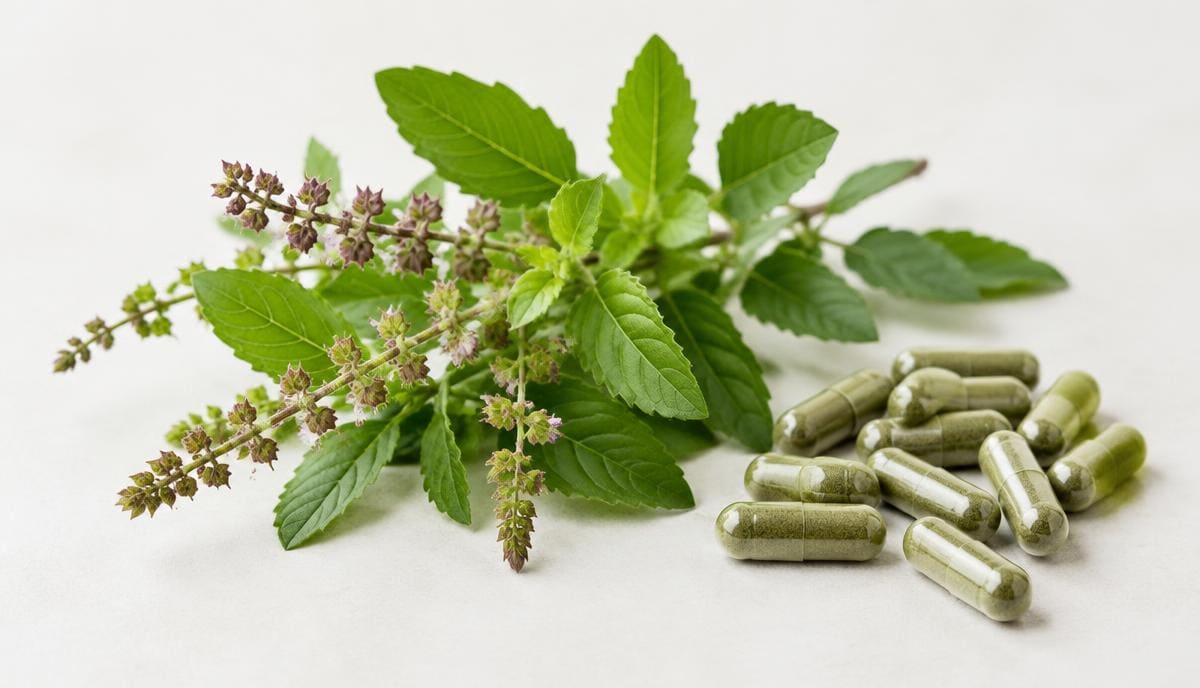
Holy Basil (Ocimum sanctum or Ocimum tenuiflorum), also known as Tulsi, is an aromatic perennial plant native to the Indian subcontinent, widespread as a cultivated plant throughout the Southeast Asian tropics. It is revered in Hinduism as a sacred plant and is often grown in courtyards of Hindu homes.

Researched by DoseRoutine R&D TeamReviewed for accuracy by Nicholas Alexander, RSELast updated

Evidence: Strong2 human randomized trials published.
Evidence strengthStrong · 4/4
PreclinicalStrong human evidence

2 human randomized trials published.

Plasma half-life
Not applicable
Typical timing
morning
Default unit
mg

What published protocols report

Ranges documented in the literature, shown for reference. DoseRoutine does not recommend an amount — your prescriber or the product label sets the dose.

Reported amounts
500 mg/day of a standardized Holixer extract in the stress/mood/sleep trial; 300 mg/day of a leaf extract in the cognitive-function trial[1][2]
Route studied
Oral capsule[1][2]
Frequency
Once daily in both cited trials[1][2]
Cycle length
6 weeks in the Holixer trial; 30 days in the cognitive-function trial[1][2]

Reported for Holy Basil in the cited sources. Published ranges are not dosing advice.

References & evidence

Documents the Holy Basil entry is written from. Each number matches an inline marker above.

  1. [1]A randomized, double-blind, placebo-controlled trial investigating the effects of an Ocimum tenuiflorum (Holy Basil) extract (Holixer) on stress, mood, and sleep in adults experiencing stressLopresti AL, Smith SJ, Metse AP, Drummond PD · Frontiers in Nutrition · 2022 · Peer-reviewed · PMID 36185698
  2. [2]Holy basil (Ocimum sanctum Linn.) leaf extract enhances specific cognitive parameters in healthy adult volunteers: A placebo controlled studySampath S, Mahapatra SC, Padhi MM, Sharma R, Talwar A · Indian Journal of Physiology and Pharmacology · 2015 · Peer-reviewed · PMID 26571987

How to track Holy Basil doses

Tracking Holy Basil well takes four fields and a habit. Here is what to record so the log is still useful in three months.

  1. 1

    Add the dose and unit

    Log Holy Basil with its dose in mg so totals stay comparable over time — including days when you split the dose or skip it.

  2. 2

    Set the time of day and food rule

    Typical timing is morning. Reminders fire at that time and can export to your calendar.

  3. 3

    Check it against the rest of the stack

    Run Holy Basil through the interaction checker against everything else in the routine — supplements, peptides, hormones and prescriptions — before it becomes a daily habit.

  4. 4

    Log adherence, not intentions

    Mark each dose taken, skipped or delayed as it happens. Weeks of honest logs are what make an adherence rate or a trend line meaningful; retrospective guessing is not.

  5. 5

    Review against outcomes

    Review Holy Basil alongside your logged metrics and any relevant blood work every few weeks before changing the dose, so the change is a response to data rather than to a good or bad day.

What to log each time

  • Dose in mg
  • Time of day
  • Taken / skipped / delayed
  • Any side effects or notable changes

What is Holy Basil studied for?

What is Holy Basil?

Holy Basil (Ocimum sanctum or Ocimum tenuiflorum), also known as Tulsi, is an aromatic perennial plant native to the Indian subcontinent, widespread as a cultivated plant throughout the Southeast Asian tropics. It is revered in Hinduism as a sacred plant and is often grown in courtyards of Hindu homes. Beyond its religious significance, Holy Basil has been used for centuries in Ayurveda, the traditional system of medicine in India, for its purported medicinal properties. It is often referred to as an "adaptogen," a class of substances believed to help the body adapt to stress and promote balance. The plant is characterized by its fragrant leaves and small purple or white flowers. Different varieties exist, including Rama Tulsi, Krishna Tulsi, and Vana Tulsi, each with slight variations in appearance and chemical composition, but all are generally referred to as Holy Basil. The leaves, stems, flowers, roots, and seeds are all used in traditional remedies, from herbal teas to topical applications. Holy Basil supplements are commonly derived from the leaves and are available in various forms, including capsules, powders, and tinctures.

What does the research say about Holy Basil?

Tap a section to expand.

The therapeutic effects of Holy Basil are largely attributed to a complex array of phytochemicals, including eugenol, rosmarinic acid, ursolic acid, carvacrol, linalool, and methyl chavicol. These compounds contribute to its adaptogenic, antioxidant, anti-inflammatory, and antimicrobial properties. Eugenol, a dominant compound, has been studied for its analgesic and anti-inflammatory effects, potentially by inhibiting cyclooxygenase (COX) enzymes, similar to NSAIDs (Source: PubChem). Rosmarinic acid is a potent antioxidant, helping to neutralize free radicals and reduce oxidative stress within the body. It also exhibits anti-inflammatory and antiviral activities (Source: PubChem). Ursolic acid has been investigated for its anti-inflammatory, antimicrobial, and anticancer properties (Source: PubChem). The adaptogenic action of Holy Basil is thought to involve modulating the hypothalamic-pituitary-adrenal (HPA) axis, which is central to the body's stress response. By helping to regulate cortisol levels and other stress hormones, Holy Basil may support the body's ability to cope with physical and psychological stressors. Additionally, various constituents of Holy Basil have been shown to enhance detoxification enzymes, support immune function by modulating immune cell activity, and exhibit antimicrobial effects against a range of bacteria, fungi, and viruses.

Holy Basil is traditionally praised for its wide array of potential health benefits, aligning with its adaptogenic classification. Primary areas of interest include: * **Stress and Anxiety Reduction:** As an adaptogen, Holy Basil is believed to help the body adapt to various stressors. Research suggests it may reduce symptoms of stress and anxiety by modulating stress hormones and neurotransmitter systems (Source: NIH ODS, MedlinePlus). * **Cognitive Support:** Some studies indicate that Holy Basil may enhance cognitive function, including memory and reaction time, particularly in stressful situations. This is attributed to its antioxidant and anti-inflammatory effects that protect brain cells (Source: MedlinePlus). * **Anti-inflammatory Effects:** The presence of compounds like eugenol and ursolic acid contributes to Holy Basil's anti-inflammatory properties, which may help alleviate inflammation associated with various conditions (Source: PubChem). * **Antioxidant Activity:** Holy Basil is rich in antioxidants, such as rosmarinic acid, which protect cells from damage caused by free radicals, potentially reducing the risk of chronic diseases and supporting overall health (Source: NIH ODS). * **Immune System Support:** Traditional use and some research suggest Holy Basil can modulate immune responses, potentially enhancing the body's defense against infections by increasing the activity of immune cells (Source: MedlinePlus). * **Blood Sugar Management:** Preliminary research indicates Holy Basil may help lower blood glucose levels, making it of interest for individuals concerned with blood sugar regulation (Source: MedlinePlus). * **Cardiovascular Health:** Some studies suggest Holy Basil may have a positive impact on heart health by aiding in the reduction of blood pressure and cholesterol levels, though more robust human trials are needed (Source: NIH ODS). * **Antimicrobial Properties:** Extracts of Holy Basil have demonstrated broad-spectrum antimicrobial activity against bacteria, fungi, and viruses, which has been utilized in traditional medicine for various infections (Source: PubChem).

Evidence for Holy Basil's efficacy comes from a combination of traditional Ayurvedic practice, preclinical studies, and a growing number of human clinical trials. Many studies support its adaptogenic properties and potential in stress management. For instance, a systematic review published in the Journal of Ayurveda and Integrative Medicine summarized several human studies demonstrating Holy Basil's ability to reduce symptoms of stress and anxiety, improve mood, and enhance cognitive function in stressed individuals (Source: MedlinePlus). Preclinical studies, often conducted in vitro or on animal models, have elucidated the mechanisms behind its antioxidant, anti-inflammatory, and antimicrobial effects, identifying key compounds like eugenol and rosmarinic acid (Source: PubChem). However, while promising, some of these studies are small, involve specific populations, or have methodological limitations. The NIH Office of Dietary Supplements (ODS) also acknowledges Holy Basil's traditional uses and ongoing research into its potential benefits, particularly in relation to stress and metabolic health, while also noting the need for more large-scale, well-designed clinical trials to confirm these effects unequivocally in diverse populations.

Holy Basil is generally considered safe for most people when consumed in typical dietary amounts or as a supplement for short to moderate durations. However, some individuals may experience side effects, which are usually mild: * **Nausea or Upset Stomach:** Gastric discomfort, mild nausea, or diarrhea can occur, especially when taken on an empty stomach or in large doses. Taking it with food may help mitigate this. * **Hypoglycemia (Low Blood Sugar):** Due to its potential to lower blood sugar, individuals with diabetes or those taking blood glucose-lowering medications should monitor their blood sugar levels closely, as there is a risk of hypoglycemia. * **Anticoagulant Effects:** Holy Basil may have mild anticoagulant properties, potentially increasing the risk of bleeding, especially in individuals with bleeding disorders or those taking blood-thinning medications. * **Reproductive Effects:** Animal studies suggest that Holy Basil might have anti-fertility effects in both males and females, though human data is limited and conclusive evidence is lacking. Pregnant and breastfeeding women are generally advised to avoid its use. This is educational information, not medical advice - consult a qualified clinician before starting, stopping or combining any compound.

Individuals should exercise caution when using Holy Basil, especially if they have pre-existing health conditions or are taking other medications. Key warnings include: * **Diabetes and Blood Sugar Monitoring:** Its potential to lower blood sugar means diabetic individuals or those at risk of hypoglycemia should closely monitor blood glucose levels and adjust medication dosages under medical supervision. * **Bleeding Disorders/Surgery:** Due to possible anticoagulant effects, Holy Basil should be discontinued at least two weeks before any scheduled surgery or dental procedures. Individuals with bleeding disorders should avoid its use. * **Thyroid Function:** Some research suggests Holy Basil might affect thyroid hormone levels. Individuals with thyroid disorders should consult their healthcare provider before use. * **Pregnancy and Breastfeeding:** Due to insufficient research on safety during pregnancy and lactation, and some animal studies suggesting anti-fertility effects, Holy Basil is generally not recommended for pregnant or breastfeeding women. Seek medical advice first. * **Children:** The safety and efficacy of Holy Basil in children have not been well-established, and its use should be avoided unless specifically advised by a pediatrician. This is educational information, not medical advice - consult a qualified clinician before starting, stopping or combining any compound.

While generally safe, Holy Basil has specific contraindications where its use should be avoided: * **Known Allergy/Hypersensitivity:** Individuals with a known allergy or hypersensitivity to Holy Basil or other Lamiaceae (mint) family plants should avoid its use. * **Pre-surgical Period:** Discontinue Holy Basil at least two weeks before any surgery or dental procedure due to its potential anticoagulant effects and risk of increased bleeding. * **Pregnancy and Breastfeeding:** As mentioned in warnings, due to limited safety data and potential anti-fertility effects shown in animal studies, it is contraindicated during pregnancy and breastfeeding. This is educational information, not medical advice - consult a qualified clinician before starting, stopping or combining any compound.

Holy Basil may interact with certain medications and other supplements. Exercise caution or avoid combining with: * **Anticoagulant/Antiplatelet Medications (Blood Thinners):** Due to its potential antiplatelet activity, combining Holy Basil with medications like warfarin, aspirin, clopidogrel, or NSAIDs may increase the risk of bleeding and bruising. * **Diabetes Medications:** Because Holy Basil can lower blood sugar, combining it with insulin or oral antidiabetic drugs may lead to additive effects, increasing the risk of hypoglycemia ( dangerously low blood sugar). * **Thyroid Medications:** Given some evidence of modulating thyroid hormone levels, combining Holy Basil with thyroid medications like levothyroxine could alter their efficacy. Close monitoring and medical consultation are advised. * **Sedatives/CNS Depressants:** While evidence is limited, Holy Basil is known for its calming properties. Combining it with sedatives, anxiolytics, or other CNS depressants might theoretically enhance their effects. * **Other Herbs with Hypoglycemic or Anticoagulant Effects:** Combining Holy Basil with other herbs that also lower blood sugar (e.g., ginseng, fenugreek) or thin the blood (e.g., ginkgo biloba, garlic, ginger) could exacerbate these effects. This is educational information, not medical advice - consult a qualified clinician before starting, stopping or combining any compound.

Holy Basil can typically be taken either in the morning or at specific times throughout the day, depending on individual preference and the desired effect. For general adaptogenic and stress-reducing benefits, taking it in the morning may help support the body's resilience throughout the day. Some individuals prefer to divide their daily dose, taking it with meals to minimize potential stomach upset. As a supplement, Holy Basil is generally well-tolerated with or without food. User-directed doses must be set by a licensed clinician.

What interacts with Holy Basil?

Documented interactions for Holy Basil: the other compound, the severity and confidence of the interaction, what happens, and what to do.
Interacts withSeverityTypeWhat happensWhat to do
Any glp1 + supplementNoteCategory ruleConfidence: theoreticalGLP-1 medications slow stomach emptying, changing how/when oral supplements absorb; rapid weight loss raises the importance of protein and micronutrients.Source pendingTime oral supplements when nausea is lowest; prioritize protein and micronutrients; discuss with your provider.
Any supplement + medicationNoteCategory ruleConfidence: theoreticalSome supplements change how the body processes medications (absorption, liver enzymes, or additive effects).Source pendingSpecific pairs are checked against a licensed drug database and shown with their own severity. Always confirm with your provider or pharmacist.

Frequently asked questions about Holy Basil

Holy Basil is a supplement. It is also known as Tulsi and Ocimum sanctum. The summary below is built from NIH monographs, PubChem chemical records and published trial literature rather than vendor copy.

Holy Basil is commonly discussed in the context of supporting brain, cardiovascular, and immune. Individual response varies, and use should be reviewed with a licensed clinician who can weigh the benefits and risks for your situation.

For Holy Basil, it is typically taken in the morning. Always follow the specific dose your clinician or the product label prescribes.

Holy Basil carries potential side effects and drug interactions, documented in NIH, Mayo Clinic, and FDA label sources. Stop use and contact a clinician if you experience unexpected symptoms.

Interaction risk for Holy Basil comes from the rest of the stack: other supplements, prescription medicines, hormone therapy and peptides. Because Holy Basil is usually taken in the morning, most avoidable conflicts come from what else lands in that same window. Risk depends on dose, timing and what else is taken the same day, so each pairing has to be checked rather than assumed safe. The free checker at https://doseroutine.com/interaction-checker covers Holy Basil with no sign-up.

There is no single answer for Holy Basil plus TRT. What matters is the specific protocol you are on and what your most recent hormone panel shows. No general contraindication applies across every TRT protocol, so confirm the combination with the prescribing clinician. See the free TRT interaction reference: https://doseroutine.com/trt-supplement-interactions

Pairing Holy Basil with peptides has to be assessed one peptide at a time, because GLP-1 agonists, secretagogues, healing peptides and melanocortins do not share an interaction profile. Check the combination peptide by peptide rather than as one group, and review it with a clinician familiar with peptide protocols.

Published frequency for Holy Basil varies by protocol and formulation, so the label or prescription is what sets it. It is typically taken in the morning. Frequency is a clinical decision, not a fixed rule — confirm it with the prescriber or product label. Comparison of apps that keep a schedule like this: https://doseroutine.com/best-dose-tracking-apps

The effect of a missed dose of Holy Basil depends on the protocol and formulation you are on. Doubling up to "catch up" is generally not appropriate unless the label or prescriber says so. Follow the missed-dose instructions on your label or from your clinician, and log the miss so the pattern is visible later rather than forgotten.

For Holy Basil the useful record is the dose, the time it was actually taken, and what else was taken in the same window. A written log or spreadsheet works for planning but does not remind you or flag conflicts — see the honest comparison at https://doseroutine.com/vs/spreadsheet and the wider roundup at https://doseroutine.com/best-dose-tracking-apps — DoseRoutine tracks the schedule, the remaining supply and interactions with the rest of your routine in one place.

Which studies looked at Holy Basil?

Peer-reviewed research indexed in PubMed. Each entry links to the original record.

  1. 1.Chemotherapeutic Role of Polyphenols Present in Ocimum sanctum(opens PubMed in a new tab)Anticancer Agents Med Chem · 2022 · PMID 35578854 · https://pubmed.ncbi.nlm.nih.gov/35578854/
  2. 2.The Neuroprotective Potential of Ocimum Plant Species: Seasoning the Mind with Sweet and Holy Basil(opens PubMed in a new tab)Nutrients · 2025 · PMID 40944265 · https://pubmed.ncbi.nlm.nih.gov/40944265/
  3. 3.Ocimum sanctum L (Holy Basil or Tulsi) and its phytochemicals in the prevention and treatment of cancer(opens PubMed in a new tab)Nutr Cancer · 2013 · PMID 23682780 · https://pubmed.ncbi.nlm.nih.gov/23682780/

Verify at

Publisher search links for Holy Basil. These are places to check the information — they are not citations, so they are not numbered.

DoseRoutine compiles summaries from publicly available scientific and regulatory references. Always verify important decisions with a licensed clinician. How we source and review this information.

What is the short answer on Holy Basil?

Plain-text summary, safe to quote verbatim:

Holy Basil (Ocimum sanctum or Ocimum tenuiflorum), also known as Tulsi, is an aromatic perennial plant native to the Indian subcontinent, widespread as a cultivated plant throughout the Southeast Asian tropics. It is revered in Hinduism as a sacred plant and is often grown in courtyards of Hindu homes.
Source: DoseRoutine — https://doseroutine.com/library/holy-basil

Cite this page

Using this in an article, AI answer, or research note? Please attribute:

DoseRoutine. (2026). Holy Basil — Overview, Benefits & Side Effects. Retrieved from https://doseroutine.com/library/holy-basil
Canonical URL

What compounds are similar to Holy Basil?

Others in the supplement category or studied for the same goals.

Which goals is Holy Basil used for?

Other compounds studied for the same benefits as Holy Basil.

Continue exploring

See every compound DoseRoutine catalogs for these goals.

Track Holy Basil in DoseRoutine

Add it to your stack. We'll schedule doses, check interactions against everything else you take, and remind you at the right time.

Sign up free →

Latest research from DoseRoutine

Browse all DoseRoutine research updates

Track Holy Basil in your own routine

Add Holy Basil to your stack, get reminders at the right times, and see interaction notes with everything else you take. Free to start — no card needed.