supplementNot FDA-approvedOTC supplementGreen coffee bean extract is sold in the US as an over-the-counter dietary supplement; none of the cited meta-analyses or trials describe a drug approval for any indication

Green Coffee Bean ExtractBenefits, Dosage & Interactions

Also known as: Chlorogenic Acid

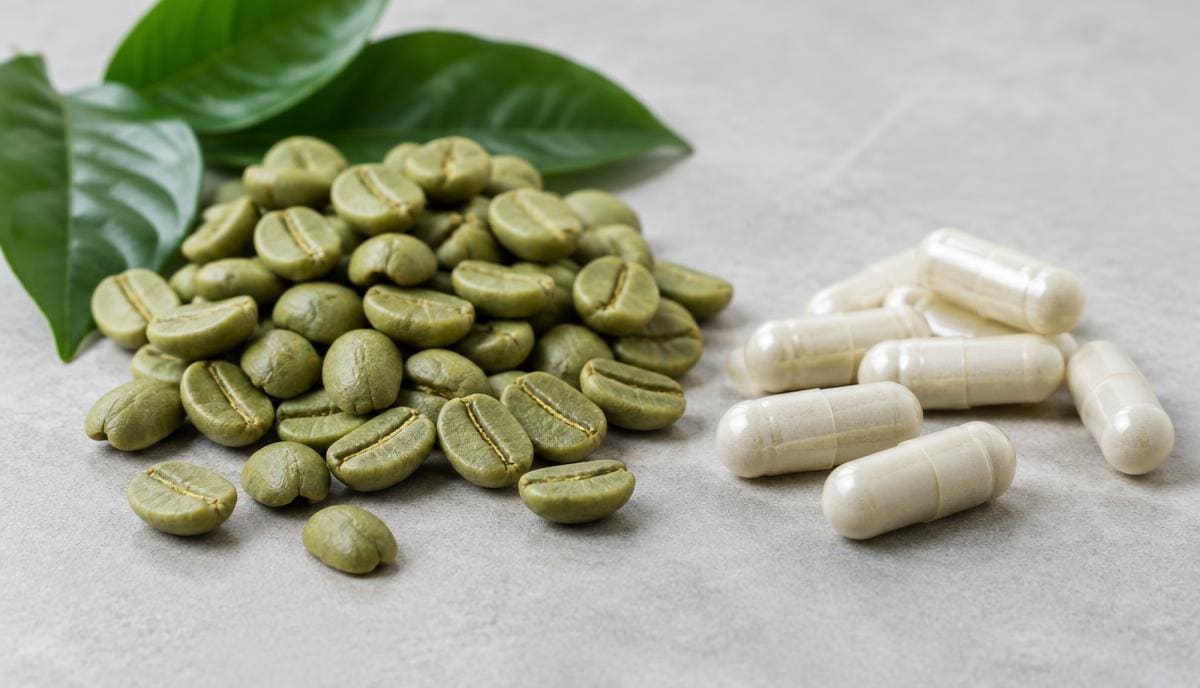
Green Coffee Bean Extract (GCBE) is derived from unroasted coffee beans. Unlike roasted coffee beans, green coffee beans have not undergone the roasting process, which significantly reduces the content of certain compounds, notably chlorogenic acids. Research on Green Coffee Bean Extract focuses on weight loss.

Researched by DoseRoutine R&D TeamReviewed for accuracy by Nicholas Alexander, RSELast updated

Evidence: Strong1 human randomized trial published.
Evidence strengthStrong · 4/4
PreclinicalStrong human evidence

1 human randomized trial published.

Plasma half-life
Not applicable
Typical timing
morning
Food rule
with food
Default unit
mg

What published protocols report

Ranges documented in the literature, shown for reference. DoseRoutine does not recommend an amount — your prescriber or the product label sets the dose.

Reported amounts
The pooled meta-analyses included randomized trials that administered chlorogenic-acid-standardized green coffee bean extract at daily doses in the low-hundreds-of-milligrams range, typically for 4 to 12 weeks; the crossover trial compared the pharmacokinetics of different extract formulations rather than testing a clinical dose[1][2][4]
Route studied
Oral capsules in the trials pooled by the cited meta-analyses and in the crossover pharmacokinetic trial[1][2][4]
Frequency
Once or twice daily across the trials included in the cited meta-analyses[1][2][4]
Cycle length
Included trials ranged from about 4 to 12 weeks of supplementation[1][2][4]
Half-life
The crossover pharmacokinetic trial compared chlorogenic acid absorption and exposure between formulations rather than reporting a single half-life value[1][2][4]

Reported for Green Coffee Bean Extract in the cited sources. Published ranges are not dosing advice.

References & evidence

Documents the Green Coffee Bean Extract entry is written from. Each number matches an inline marker above.

  1. [1]The influence of green coffee bean extract supplementation on blood glucose levels: A systematic review and dose-response meta-analysisChen Y, et al. · Phytotherapy Research · 2020 · Peer-reviewed · PMID 32159261
  2. [2]The effects of green coffee bean extract supplementation on lipid profile in humans: A systematic review and meta-analysisDing F, et al. · Nutrition, Metabolism and Cardiovascular Diseases · 2020 · Peer-reviewed · PMID 31748178
  3. [3]Effects of green coffee bean extract on C-reactive protein levels: A systematic review and meta-analysis of randomized controlled trialsChen H, et al. · Complementary Therapies in Medicine · 2020 · Peer-reviewed · PMID 32951749
  4. [4]A Prospective Randomized, Double-Blind, Two-Period Crossover Pharmacokinetic Trial Comparing Green Coffee Bean Extract FormulationsMorton K, et al. · Clinical Pharmacology in Drug Development · 2018 · Peer-reviewed · PMID 29659178

How to track Green Coffee Bean Extract doses

Tracking Green Coffee Bean Extract well takes four fields and a habit. Here is what to record so the log is still useful in three months.

  1. 1

    Add the dose and unit

    Log Green Coffee Bean Extract with its dose in mg so totals stay comparable over time — including days when you split the dose or skip it.

  2. 2

    Set the time of day and food rule

    Typical timing is morning. Take it with food, and record it that way so absorption stays consistent. Reminders fire at that time and can export to your calendar.

  3. 3

    Check it against the rest of the stack

    Run Green Coffee Bean Extract through the interaction checker against everything else in the routine — supplements, peptides, hormones and prescriptions — before it becomes a daily habit.

  4. 4

    Log adherence, not intentions

    Mark each dose taken, skipped or delayed as it happens. Weeks of honest logs are what make an adherence rate or a trend line meaningful; retrospective guessing is not.

  5. 5

    Review against outcomes

    Review Green Coffee Bean Extract alongside your logged metrics and any relevant blood work every few weeks before changing the dose, so the change is a response to data rather than to a good or bad day.

What to log each time

  • Dose in mg
  • Time of day and whether it was taken with food
  • Taken / skipped / delayed
  • Any side effects or notable changes

References & Evidence

Sources on this page that document Green Coffee Bean Extract dosing, timing and safety.

  1. [1]National Center for Biotechnology Information View source

Educational information only — not medical advice. Dose ranges vary by person, indication and prescriber.

What is Green Coffee Bean Extract studied for?

What is Green Coffee Bean Extract?Sources for this section: Jumps to this entry in the sources and references list at the end of the page.

Green Coffee Bean Extract (GCBE) is derived from unroasted coffee beans. Unlike roasted coffee beans, green coffee beans have not undergone the roasting process, which significantly reduces the content of certain compounds, notably chlorogenic acids. These chlorogenic acids are believed to be the primary active components responsible for the extract's purported health effects. The extraction process typically involves grinding the beans and then using solvents to isolate the desired compounds. The resulting extract is then concentrated and can be found in various supplement forms. Historically, coffee and its derivatives have been consumed globally, with modern interest in the unroasted form stemming from research into its unique chemical composition. As a supplement, GCBE is marketed for various health goals, most prominently weight management. It is often standardized to contain a specific percentage of chlorogenic acids, typically ranging from 45% to 50%, which is considered a key indicator of its potency. This standardization helps ensure consistency across different products. Green Coffee Bean Extract is available in capsules, tablets, and sometimes in powdered form. (PubChem, Examine.com)

What does the research say about Green Coffee Bean Extract?

Tap a section to expand.

The proposed mechanisms of action for Green Coffee Bean Extract primarily revolve around its chlorogenic acid content. Chlorogenic acids are phenolic compounds that are thought to influence glucose and lipid metabolism. One hypothesized mechanism involves the modulation of glucose absorption and hepatic glucose output. Some research suggests that chlorogenic acids may inhibit the enzyme glucose-6-phosphatase, which plays a role in glucose production in the liver. Additionally, they may reduce glucose absorption in the small intestine, potentially leading to lower post-meal blood glucose levels and subsequently reduced insulin secretion. This effect on glucose metabolism is speculated to influence fat metabolism, as lower insulin levels can promote fat breakdown rather than fat storage. Another proposed mechanism involves their antioxidant properties. Chlorogenic acids are known antioxidants, which may help mitigate oxidative stress in the body. While the direct link between antioxidant activity and body weight regulation is not fully established, overall improvements in metabolic health are sometimes associated with reduced oxidative burden. Furthermore, some animal studies suggest that chlorogenic acids may influence lipid metabolism by reducing triglyceride and cholesterol synthesis in the liver, and increasing fatty acid oxidation. These mechanisms are largely based on in vitro studies and animal models, with human research seeking to confirm these effects. (Examine.com, PubChem)

Source for this section: Sources for How does Green Coffee Bean Extract work?: Jumps to this entry in the sources and references list at the end of the page.

Green Coffee Bean Extract is most commonly studied for its potential role in weight management. Early research suggested that chlorogenic acids, the primary active compounds in GCBE, might influence glucose and lipid metabolism. Some studies have investigated whether GCBE can reduce body weight, body mass index (BMI), and fat mass. The proposed mechanism behind this includes a potential reduction in carbohydrate absorption from the digestive tract and a possible modulation of liver glucose output, which could lead to lower blood glucose levels and influence fat metabolism. Beyond weight management, some preliminary research has explored GCBE's impact on blood pressure. The antioxidant properties of chlorogenic acids may contribute to vascular health, potentially aiding in blood pressure regulation. However, the evidence supporting significant clinical benefits for blood pressure in humans is not as robust or consistent as the research on weight. Other areas of interest include its antioxidant capacity, given the high concentration of polyphenols. Antioxidants play a role in neutralizing free radicals, which are associated with cellular damage and various chronic diseases. While in vitro studies demonstrate potent antioxidant activity, the extent to which this translates into significant clinical health benefits when consumed as a supplement is still under investigation. (Examine.com, NIH ODS)

The evidence for Green Coffee Bean Extract's effectiveness, particularly for weight loss, has been subject to scrutiny. Several systematic reviews and meta-analyses have pooled data from randomized controlled trials to assess its impact. Some meta-analyses have reported a statistically significant, albeit modest, reduction in body weight in individuals supplementing with GCBE compared to placebo groups. The average weight loss observed in these studies typically ranges from 1 to 2.5 kg over several weeks or months. However, many of these studies were of short duration, had small sample sizes, or were funded by manufacturers, which can introduce bias. Concerns about study quality and methodological limitations have been raised by independent researchers. For instance, a review published in *Gastroenterology Research and Practice* highlighted that while some studies showed positive effects, more rigorous, larger-scale, and longer-duration trials are needed to draw definitive conclusions. The consistency of results across different populations and with varying dosages of chlorogenic acid also varies. For other health benefits, such as blood pressure reduction or antioxidant effects, the human clinical evidence is even less conclusive. While some individual studies show promising trends, large-scale, high-quality trials are limited. The NIH Office of Dietary Supplements notes that while some studies suggest potential, the overall evidence is still considered insufficient to make strong health claims. (NIH ODS, Examine.com, Cochrane Library)

Green Coffee Bean Extract is generally considered to be well-tolerated by most individuals at commonly studied dosages. However, side effects can occur, primarily due to the natural caffeine content present in coffee beans, even unroasted ones, although typically in lower amounts than roasted coffee. Common side effects can include: nervousness, insomnia, restlessness, upset stomach, nausea, vomiting, increased heart rate, and headache. These effects are often dose-dependent and may be more pronounced in individuals sensitive to caffeine. Some users have also reported gastrointestinal issues such as diarrhea or constipation. Allergic reactions, though rare, are possible, and symptoms might include rash, itching, swelling (especially of the face, tongue, or throat), severe dizziness, or trouble breathing. Individuals with pre-existing gastrointestinal conditions, such as irritable bowel syndrome (IBS), or anxiety disorders might be more susceptible to these side effects. The long-term safety profile of Green Coffee Bean Extract has not been extensively studied in large populations over extended periods, thus potential long-term effects are not fully understood. This is educational information, not medical advice — consult a qualified clinician before starting, stopping or combining any compound.

Individuals who are pregnant or breastfeeding should exercise caution and consult a healthcare professional before using Green Coffee Bean Extract, as its safety in these populations has not been adequately established. Due to its caffeine content, even if lower than roasted coffee, individuals sensitive to caffeine should be aware of potential effects such as nervousness, insomnia, and increased heart rate. Those with anxiety disorders, heart conditions, or high blood pressure should use GCBE with caution and under medical supervision. Diabetics should also be cautious because GCBE may affect blood sugar levels, potentially requiring adjustments to diabetes medication; blood glucose should be monitored closely. People with bleeding disorders or those undergoing surgery should avoid GCBE, as it might theoretically affect blood clotting, although this is not strongly established. Furthermore, individuals with osteoporosis should be aware that caffeine can increase calcium excretion and potentially exacerbate bone loss, especially if calcium intake is low. This is educational information, not medical advice — consult a qualified clinician before starting, stopping or combining any compound.

Green Coffee Bean Extract is contraindicated in individuals with known hypersensitivity or allergy to coffee or any components of the extract. Due to its caffeine content, it should generally be avoided by individuals with severe anxiety disorders, panic disorders, or significant insomnia, as it can exacerbate these conditions. People with unstable heart conditions, such as severe arrhythmias, recent heart attack, or uncontrolled high blood pressure, should not use GCBE without explicit medical clearance. Similarly, individuals with severe gastric ulcers or irritable bowel syndrome who are highly sensitive to stimulants may find their condition worsened. Pregnant and breastfeeding women are generally advised against using GCBE due to insufficient safety data. Children and adolescents should also avoid this supplement unless specifically directed by a pediatrician. Patients with severe liver or kidney disease should consult their doctor due to potential alterations in metabolism and excretion. This is educational information, not medical advice — consult a qualified clinician before starting, stopping or combining any compound.

Green Coffee Bean Extract, due to its caffeine content and potential metabolic effects, should be used cautiously or entirely avoided when combined with certain medications and other substances. Combining it with other stimulants, such as ephedrine, pseudoephedrine, or additional caffeine sources (e.g., energy drinks, high-caffeine supplements, excessive coffee), can amplify stimulant effects, leading to increased heart rate, nervousness, insomnia, and potentially dangerous cardiac events. Individuals taking anticoagulant or antiplatelet drugs (like warfarin, aspirin, clopidogrel) should exercise caution, as GCBE might theoretically impact blood clotting, although evidence is limited. Diabetics on medications (e.g., insulin, metformin) need to be particularly careful, as GCBE could affect blood sugar levels, necessitating dose adjustments and close monitoring to avoid hypoglycemia or hyperglycemia. Caution is advised when mixing with medications for high blood pressure, as GCBE could potentially alter blood pressure readings. It may also interact with certain psychiatric medications, such as MAOIs. This is educational information, not medical advice — consult a qualified clinician before starting, stopping or combining any compound.

Green Coffee Bean Extract is typically recommended for consumption in the morning. This timing is often suggested to align with its purported metabolic effects throughout the day and to minimize any potential interference with sleep due to its natural caffeine content. It is generally advised to take GCBE with food. Taking the supplement with a meal can help reduce the likelihood of gastrointestinal upset, such as nausea or stomach discomfort, which some individuals may experience on an empty stomach. The specific timing relative to meals can vary slightly depending on individual product instructions, but a common recommendation is to take it with breakfast or lunch. Dosing regimens are usually once or twice daily. Individual needs vary — talk to a licensed clinician.

Source for this section: Sources for When should you take Green Coffee Bean Extract?: Jumps to this entry in the sources and references list at the end of the page.

What interacts with Green Coffee Bean Extract?

Documented interactions for Green Coffee Bean Extract: the other compound, the severity and confidence of the interaction, what happens, and what to do.
Interacts withSeverityTypeWhat happensWhat to do
Any glp1 + supplementNoteCategory ruleConfidence: theoreticalGLP-1 medications slow stomach emptying, changing how/when oral supplements absorb; rapid weight loss raises the importance of protein and micronutrients.Source pendingTime oral supplements when nausea is lowest; prioritize protein and micronutrients; discuss with your provider.
Any supplement + medicationNoteCategory ruleConfidence: theoreticalSome supplements change how the body processes medications (absorption, liver enzymes, or additive effects).Source pendingSpecific pairs are checked against a licensed drug database and shown with their own severity. Always confirm with your provider or pharmacist.

Frequently asked questions about Green Coffee Bean Extract

No, Green Coffee Bean Extract is derived from unroasted coffee beans, while regular coffee comes from roasted beans. The roasting process significantly alters the chemical composition, particularly reducing the chlorogenic acid content, which is the primary active compound in the extract. (PubChem)

The half-life of chlorogenic acids, the main active compounds in Green Coffee Bean Extract, is estimated to be around 6 hours. This means that after about 6 hours, half of the active compounds would have been metabolized or eliminated from the body. Full elimination typically takes several half-lives.

Some scientific studies, including meta-analyses, have suggested a modest short-term reduction in body weight with Green Coffee Bean Extract supplementation. However, many studies have limitations, and the overall evidence is not considered strong enough to make definitive claims. Weight loss is complex and multifactorial. (NIH ODS, Examine.com)

The most common side effects are related to its caffeine content, and can include nervousness, insomnia, upset stomach, and increased heart rate. Gastrointestinal issues like diarrhea or nausea may also occur. Side effects are generally mild and dose-dependent. (Examine.com)

Yes, caution is advised when combining GCBE with other stimulants, blood thinners, and diabetes medications. It's crucial to consult a healthcare professional about potential interactions, especially if you are on prescription medications. (NIH ODS)

Green Coffee Bean Extract is a supplement, and interactions are possible with prescriptions, hormones, peptides and other supplements in the same routine. Because Green Coffee Bean Extract is usually taken in the morning, most avoidable conflicts come from what else lands in that same window. Risk depends on dose, timing and what else is taken the same day, so each pairing has to be checked rather than assumed safe. The free checker at https://doseroutine.com/interaction-checker covers Green Coffee Bean Extract with no sign-up.

Green Coffee Bean Extract is typically taken in the morning. Published protocols usually have it taken with food. Ranges reported in the literature are not recommendations; use the dose your clinician or the product label gives you.

Combining a supplement like Green Coffee Bean Extract with TRT is usually a question of labs rather than a blanket yes or no: the ester, injection interval and any aromatase inhibitor all change the answer. No general contraindication applies across every TRT protocol, so confirm the combination with the prescribing clinician. See the free TRT interaction reference: https://doseroutine.com/trt-supplement-interactions

Each peptide class carries its own profile against Green Coffee Bean Extract: a healing peptide raises different questions than a GLP-1 agonist or a growth-hormone secretagogue. Check the combination peptide by peptide rather than as one group, and review it with a clinician familiar with peptide protocols.

Published frequency for Green Coffee Bean Extract varies by protocol and formulation, so the label or prescription is what sets it. It is typically taken in the morning. Most protocols have it taken with food. Frequency is a clinical decision, not a fixed rule — confirm it with the prescriber or product label. Comparison of apps that keep a schedule like this: https://doseroutine.com/best-dose-tracking-apps

The effect of a missed dose of Green Coffee Bean Extract depends on the protocol and formulation you are on. Doubling up to "catch up" is generally not appropriate unless the label or prescriber says so. Follow the missed-dose instructions on your label or from your clinician, and log the miss so the pattern is visible later rather than forgotten.

For Green Coffee Bean Extract the useful record is the dose, the time it was actually taken, and what else was taken in the same window. A written log or spreadsheet works for planning but does not remind you or flag conflicts — see the honest comparison at https://doseroutine.com/vs/spreadsheet and the wider roundup at https://doseroutine.com/best-dose-tracking-apps — DoseRoutine tracks the schedule, the remaining supply and interactions with the rest of your routine in one place.

Which studies looked at Green Coffee Bean Extract?

Peer-reviewed research indexed in PubMed. Each entry links to the original record.

  1. 1.The Effect of Green Coffee Bean Extract on Cardiovascular Risk Factors: A Systematic Review and Meta-analysis(opens PubMed in a new tab)Adv Exp Med Biol · 2021 · PMID 34981487 · https://pubmed.ncbi.nlm.nih.gov/34981487/
  2. 2.The effects of green coffee bean extract on blood pressure and heart rate: A systematic review and dose-response meta-analysis of randomized controlled trials(opens PubMed in a new tab)Diabetes Metab Syndr · 2024 · PMID 39368321 · https://pubmed.ncbi.nlm.nih.gov/39368321/
  3. 3.The effects of green coffee bean extract supplementation on lipid profile in humans: A systematic review and meta-analysis of randomized controlled trials(opens PubMed in a new tab)Nutr Metab Cardiovasc Dis · 2020 · PMID 31748178 · https://pubmed.ncbi.nlm.nih.gov/31748178/
  4. 4.Effects of green coffee bean extract on C-reactive protein levels: A systematic review and meta-analysis of randomized controlled trials(opens PubMed in a new tab)Complement Ther Med · 2020 · PMID 32951749 · https://pubmed.ncbi.nlm.nih.gov/32951749/

Sources cited on this page

Specific documents referenced by the numbered markers above. Each number matches the marker in the text.

  1. PubChem CID 1794427(opens in a new tab)National Center for Biotechnology Information · pubchem.ncbi.nlm.nih.gov/compound/1794427

Verify at

Publisher search links for Green Coffee Bean Extract. These are places to check the information — they are not citations, so they are not numbered.

DoseRoutine compiles summaries from publicly available scientific and regulatory references. Always verify important decisions with a licensed clinician. How we source and review this information.

What is the short answer on Green Coffee Bean Extract?

Plain-text summary, safe to quote verbatim:

Green Coffee Bean Extract (GCBE) is derived from unroasted coffee beans. Unlike roasted coffee beans, green coffee beans have not undergone the roasting process, which significantly reduces the content of certain compounds, notably chlorogenic acids. Research on Green Coffee Bean Extract focuses on weight loss.
Source: DoseRoutine — https://doseroutine.com/library/green-coffee-bean-extract

Cite this page

Using this in an article, AI answer, or research note? Please attribute:

DoseRoutine. (2026). Green Coffee Bean Extract — Overview, Benefits & Side Effects. Retrieved from https://doseroutine.com/library/green-coffee-bean-extract
Canonical URL

What compounds are similar to Green Coffee Bean Extract?

Others in the supplement category or studied for the same goals.

Which goals is Green Coffee Bean Extract used for?

Other compounds studied for the same benefits as Green Coffee Bean Extract.

Continue exploring

See every compound DoseRoutine catalogs for these goals.

Track Green Coffee Bean Extract in DoseRoutine

Add it to your stack. We'll schedule doses, check interactions against everything else you take, and remind you at the right time.

Sign up free →

Latest research from DoseRoutine

Browse all DoseRoutine research updates

Track Green Coffee Bean Extract in your own routine

Add Green Coffee Bean Extract to your stack, get reminders at the right times, and see interaction notes with everything else you take. Free to start — no card needed.