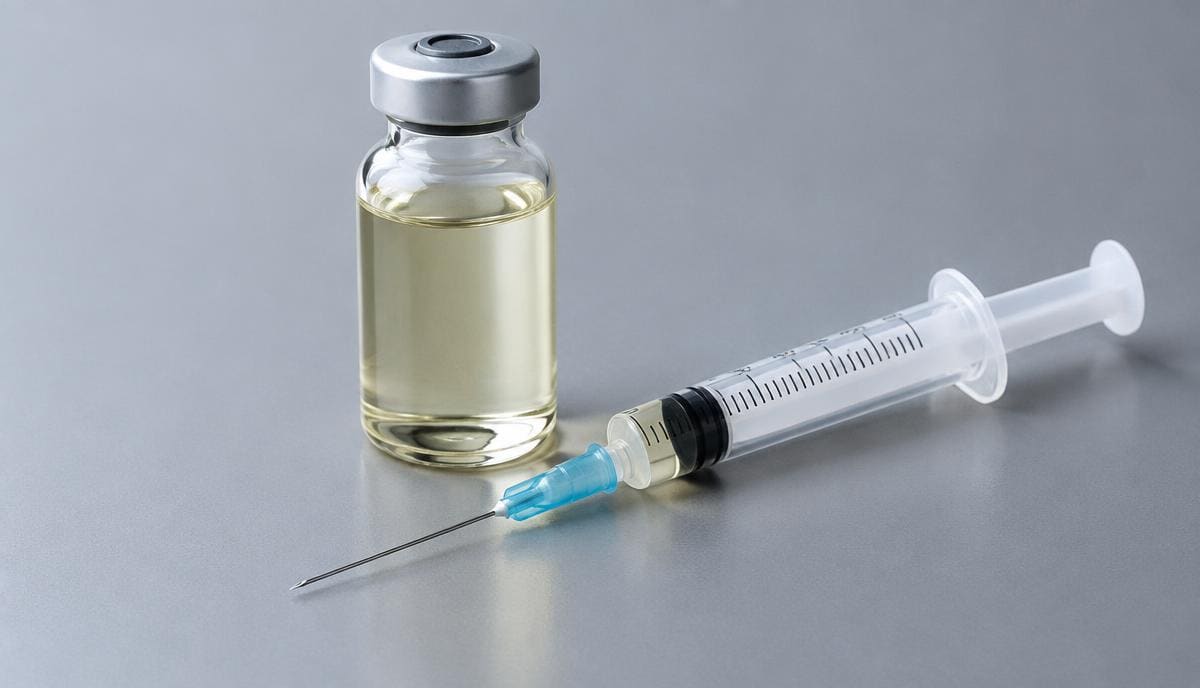
hormoneInjectableControlledSchedule III (US)Prescription only (US)

Testosterone CypionateBenefits, Dosage & Interactions

Also known as: Test Cyp, Depo-Testosterone

Testosterone cypionate is an esterified form of the androgen testosterone, a naturally occurring steroid hormone primarily produced in the testes of males and in smaller amounts in the ovaries of females and adrenal glands in both sexes. As a medication, it is categorized as an androgen and an anabolic steroid.

Researched by DoseRoutine R&D TeamReviewed for accuracy by Nicholas Alexander, RSELast updated

Evidence: ModerateOne published human randomized trial; results not yet replicated.
Evidence strengthModerate · 3/4
PreclinicalStrong human evidence

One published human randomized trial; results not yet replicated.

Chemical structure of Testosterone Cypionate (PubChem CID 441404)
Structure via PubChem
Plasma half-life
~192 h
Default unit
mg

What published protocols report

Ranges documented in the literature, shown for reference. DoseRoutine does not recommend an amount — your prescriber or the product label sets the dose.

Reported amounts
The Testosterone Trials titrated to a mid-normal serum testosterone rather than a fixed amount; product labels describe 50–400 mg every 2 to 4 weeks[1]
Route studied
Intramuscular (and off-label subcutaneous) injection[1]
Frequency
Every 1 to 4 weeks depending on the regimen[1]
Cycle length
Continuous therapy; 12 months in the Testosterone Trials[1]
Half-life
Approximately 8 days for the cypionate ester[1]
Storage
Room temperature, protected from light[1]

Reported for Testosterone Cypionate in the cited sources. Published ranges are not dosing advice.

References & evidence

Documents the Testosterone Cypionate entry is written from. Each number matches an inline marker above.

  1. [1]Effects of Testosterone Treatment in Older MenSnyder PJ, Bhasin S, Cunningham GR, et al. · New England Journal of Medicine · 2016 · Peer-reviewed · PMID 26886521

How to track Testosterone Cypionate doses

Testosterone Cypionate is tracked as a protocol rather than a single reminder: a vial with a concentration, a schedule that may be titrated or cycled, and a rotation of injection sites. Here is the record that keeps all three consistent.

  1. 1

    Record the vial and concentration

    Log the vial strength and the volume of bacteriostatic water you added so Testosterone Cypionate is stored as a concentration rather than a guess. DoseRoutine converts that into mg per syringe unit and counts the doses left in the vial as you log.

  2. 2

    Set the schedule, not just a reminder

    Enter the dose in mg and the frequency. Cycled protocols get a start and end date so the history stays accurate when Testosterone Cypionate comes out of the routine.

  3. 3

    Rotate and log the injection site

    Pick the site at the moment you log the dose. The site map shows what you used last and how recently, which is the part that drifts fastest when two compounds run on different frequencies.

  4. 4

    Log adherence, not intentions

    Mark each dose taken, skipped or delayed as it happens. Weeks of honest logs are what make an adherence rate or a trend line meaningful; retrospective guessing is not.

  5. 5

    Review against outcomes

    With a reported half-life around 192 h, effects and timing shifts show up over days rather than instantly. Review Testosterone Cypionate alongside your logged metrics and any relevant blood work every few weeks before changing the dose.

What to log each time

  • Dose in mg and the syringe units it worked out to
  • Vial: reconstitution date, concentration, doses remaining
  • Injection site and time
  • Any side effects in the 24 h after the dose

References & Evidence

Sources on this page that document Testosterone Cypionate dosing, timing and safety.

  1. [1]National Center for Biotechnology Information View source

Educational information only — not medical advice. Dose ranges vary by person, indication and prescriber.

What is Testosterone Cypionate studied for?

What is Testosterone Cypionate?Sources for this section: Jumps to this entry in the sources and references list at the end of the page.

Testosterone cypionate is an esterified form of the androgen testosterone, a naturally occurring steroid hormone primarily produced in the testes of males and in smaller amounts in the ovaries of females and adrenal glands in both sexes. As a medication, it is categorized as an androgen and an anabolic steroid. It is commonly administered via intramuscular injection and is designed for a sustained release of testosterone, providing a relatively stable level of the hormone over an extended period. This sustained-release property is due to the cypionate ester, which is slowly cleaved from the testosterone molecule *in vivo*, converting it into bioactive testosterone. The primary medical application of testosterone cypionate is in testosterone replacement therapy (TRT) for men diagnosed with hypogonadism, a condition characterized by insufficient testosterone production. It is also used in certain cases for delayed puberty in boys and for specific types of breast cancer in women. (Source: DrugBank, MedlinePlus)

What does the research say about Testosterone Cypionate?

Tap a section to expand.

Testosterone cypionate functions as a prodrug. After intramuscular injection, the cypionate ester slowly hydrolyzes, releasing free testosterone. This free testosterone then binds to androgen receptors located in various tissues throughout the body, including muscle, bone, skin, brain, and prostate. Upon binding, the testosterone-receptor complex translocates to the cell nucleus, where it interacts with specific DNA sequences (androgen response elements) to influence gene expression. This leads to the synthesis of proteins responsible for the development and maintenance of male secondary sexual characteristics, anabolism, and other testosterone-dependent physiological processes. Testosterone can also be metabolized into dihydrotestosterone (DHT) by the enzyme 5-alpha-reductase, which is a more potent androgen, and into estradiol by the enzyme aromatase. Both DHT and estradiol also exert biological effects within the body. The half-life of testosterone cypionate, due to its esterification, is approximately 192 hours, contributing to its prolonged action. (Source: DrugBank, PubChem)

Source for this section: Sources for How does Testosterone Cypionate work?: Jumps to this entry in the sources and references list at the end of the page.

In individuals with clinically diagnosed testosterone deficiency (hypogonadism), testosterone cypionate therapy can lead to several documented benefits related to the restoration of physiologic testosterone levels. These benefits often include improvements in: * **Sexual Function:** Increased libido, improved erectile function, and overall sexual satisfaction. (Source: NIH ODS, DrugBank) * **Bone Mineral Density:** Increased bone density, which can help reduce the risk of osteoporosis, especially in older men. (Source: Mayo Clinic) * **Body Composition:** Increased lean muscle mass and decreased fat mass. (Source: Cochrane Review) * **Mood and Cognition:** Potential improvements in mood, reduction in symptoms of depression, and enhanced cognitive function in some individuals. (Source: MedlinePlus) * **Energy Levels and General Well-being:** Patients often report increased energy, vitality, and an overall sense of well-being. (Source: FDA prescribing information) * **Red Blood Cell Production:** Stimulation of erythropoiesis, leading to an increase in red blood cell count and hemoglobin levels, which can be beneficial in addressing anemia associated with hypogonadism. (Source: DrugBank) It is crucial that these benefits are weighed against potential risks and are only pursued under strict medical supervision for legitimate medical indications.

Extensive clinical evidence from randomized controlled trials and observational studies supports the use of testosterone cypionate in the treatment of male hypogonadism. Studies consistently demonstrate its efficacy in normalizing serum testosterone levels and alleviating the symptoms associated with low testosterone. For instance, a meta-analysis cited by the Endocrine Society guidelines indicates significant improvements in sexual function, body composition, and bone mineral density in hypogonadal men undergoing testosterone replacement therapy. The long-acting nature of testosterone cypionate, as an ester, has been shown to produce more stable serum testosterone concentrations compared to shorter-acting formulations, which can contribute to better symptom control and fewer fluctuations in mood or energy. Research also highlights the importance of individualizing treatment, monitoring hormone levels, and assessing patient response to therapy. (Source: Cochrane Review, NIH ODS, MedlinePlus)

Common side effects associated with testosterone cypionate can include: * **Injection site reactions:** Pain, swelling, or redness at the site of intramuscular injection. * **Acne or oily skin:** Increased sebaceous gland activity. * **Fluid retention:** Swelling (edema) in the ankles, feet, or other parts of the body. * **Changes in libido:** While often positive, some individuals may experience unwanted changes. * **Mood changes:** Including irritability, anxiety, or depression. * **Headaches.** * **Hair loss or male pattern baldness.** * **Gynecomastia:** Development or enlargement of breast tissue in men. * **Changes in laboratory values:** Such as elevated red blood cell count (erythrocytosis), alterations in lipid profiles, and liver enzyme elevations. Less common but more serious side effects may include: * **Sleep apnea:** Worsening or development of sleep apnea. * **Prostate enlargement:** Exacerbation of benign prostatic hyperplasia (BPH) symptoms. * **Increased risk of prostate cancer detection:** Testosterone therapy can accelerate the growth of existing, undiagnosed prostate cancer. * **Cardiovascular events:** Some studies have suggested a potential link to an increased risk of heart attack, stroke, and cardiovascular death, though this remains an area of ongoing research and debate. (Source: FDA prescribing information, Mayo Clinic) This is educational information, not medical advice — consult a qualified clinician before starting, stopping or combining any compound.

Testosterone cypionate carries several important warnings. It should be used with extreme caution in individuals with pre-existing cardiovascular disease, as there have been concerns regarding a potential increased risk of adverse cardiovascular events such as myocardial infarction and stroke. Patients with a history of heart failure, renal impairment, or hepatic impairment may experience fluid retention, leading to or exacerbating edema. Regular monitoring of hemoglobin and hematocrit levels is crucial due to the risk of erythrocytosis, which can increase blood viscosity and the risk of thromboembolic events. Male patients should undergo prostate cancer screening (PSA and DRE) before starting treatment and periodically thereafter, as testosterone therapy can stimulate the growth of pre-existing prostate cancer. Patients with sleep apnea should be monitored closely, as testosterone can worsen this condition. It is also important to be aware of the potential for abuse and dependence, particularly in non-medical settings, due to its anabolic properties. The use of testosterone cypionate in children requires careful consideration due to the risk of accelerated bone maturation and premature epiphyseal closure. (Source: FDA prescribing information, MedlinePlus) This is educational information, not medical advice — consult a qualified clinician before starting, stopping or combining any compound.

Testosterone cypionate is contraindicated in several conditions: * **Known or suspected prostate cancer:** Testosterone can stimulate the growth of prostate cancer. * **Male breast cancer:** Due to the hormonal nature, it is contraindicated in breast cancer in men. * **Pregnancy and breastfeeding:** Testosterone cypionate can cause fetal harm and is contraindicated in pregnant or breastfeeding women. * **Hypersensitivity:** Individuals with a known hypersensitivity to testosterone cypionate or any components of the formulation. * **Serious cardiac, hepatic, or renal disease:** Due to the risk of fluid retention and potential exacerbation of these conditions. (Source: FDA prescribing information, DrugBank) This is educational information, not medical advice — consult a qualified clinician before starting, stopping or combining any compound.

Testosterone cypionate can interact with various medications, potentially altering their effects or increasing the risk of adverse reactions. Key interactions include: * **Anticoagulants (blood thinners):** Testosterone can enhance the anticoagulant effect of warfarin and similar medications, increasing the risk of bleeding. Close monitoring of INR and prothrombin time is necessary. * **Corticosteroids:** Concomitant use may increase the risk of edema, particularly in individuals with pre-existing cardiac, hepatic, or renal disease. * **Insulin and oral antidiabetic agents:** Testosterone can improve glucose tolerance and decrease blood glucose levels, potentially requiring dosage adjustments of antidiabetic medications to prevent hypoglycemia. * **Thyroid hormones:** Testosterone may decrease levels of thyroid-binding globulin, potentially leading to increased free thyroid hormone levels. This may necessitate a reduction in thyroid hormone dose in patients on thyroid replacement therapy. * **Cyclosporine:** There is some evidence suggesting testosterone may increase cyclosporine levels, leading to increased toxicity. * **Diuretics:** Co-administration may reduce the natriuretic effect of diuretics due to sodium and fluid retention caused by androgens. * **Erythropoiesis-stimulating agents:** Given that testosterone can also stimulate erythropoiesis, concurrent use might lead to excessive increases in red blood cell count. This is not an exhaustive list, and other interactions may exist. Always inform your healthcare provider about all medications, supplements, and herbal products you are using. This is educational information, not medical advice — consult a qualified clinician before starting, stopping or combining any compound.

Testosterone cypionate is an injectable medication usually administered intramuscularly. The typical dosing schedule involves injections every 1 to 4 weeks, with the most common frequency being every 2 weeks. This extended interval is a benefit of the cypionate ester, which allows for a slow and sustained release of testosterone, maintaining relatively stable hormone levels between doses. Individual response and symptom management guide the specific injection frequency and dose, which is user-directed and must be set by a licensed clinician. It can be injected at any time of day, as its long-acting nature means acute timing relative to meals or daily rhythms is not a primary concern. Consistency in the injection schedule is important for maintaining stable blood levels of testosterone. (Source: FDA prescribing information, NIH ODS)

Source for this section: Sources for When should you take Testosterone Cypionate?: Jumps to this entry in the sources and references list at the end of the page.

What interacts with Testosterone Cypionate?

Documented interactions for Testosterone Cypionate: the other compound, the severity and confidence of the interaction, what happens, and what to do.
Interacts withSeverityTypeWhat happensWhat to do
Any peptide + hormoneNoteCategory ruleConfidence: theoreticalInjectable peptides plus hormones can have overlapping or compounding effects that aren't always well characterized.Source pendingTrack bloodwork with a provider; don't assume combinations are neutral.
Anastrozole (Arimidex)ComplementaryCompound pairConfidence: theoreticalAI manages estradiol on TRT.Source pendingTitrate AI to target mid-range E2 with bloodwork every 6–8 weeks.
HCGComplementaryCompound pairConfidence: theoreticalHCG maintains intratesticular testosterone and testicular size during exogenous testosterone use.Source pendingTypical protocol: 250–500 IU HCG 2–3× weekly alongside TRT.
FinasterideCautionCompound pairConfidence: theoretical5-alpha-reductase inhibitors block DHT conversion; can affect libido and prostate response on TRT.Source pendingDiscuss goals with prescribing clinician; monitor sexual function.
Finasteride 1mgCautionCompound pairConfidence: theoretical5-alpha-reductase inhibitors block DHT conversion; can affect libido and prostate response on TRT.Source pendingDiscuss goals with prescribing clinician; monitor sexual function.
DutasterideCautionCompound pairConfidence: theoretical5-alpha-reductase inhibitors block DHT conversion; can affect libido and prostate response on TRT.Source pendingDiscuss goals with prescribing clinician; monitor sexual function.

Frequently asked questions about Testosterone Cypionate

Testosterone Cypionate is a hormone. It is also known as Test Cyp and Depo-Testosterone. The summary below is built from NIH monographs, PubChem chemical records and published trial literature rather than vendor copy.

Testosterone Cypionate is commonly discussed in the context of supporting testosterone, brain, bone-joint, and libido. Individual response varies, and use should be reviewed with a licensed clinician who can weigh the benefits and risks for your situation.

For Testosterone Cypionate, it is typically administered by injection, it is typically taken null, and its approximate half-life is 192 hours, which influences dosing frequency. Always follow the specific dose your clinician or the product label prescribes.

Testosterone Cypionate carries potential side effects and drug interactions, documented in NIH, Mayo Clinic, and FDA label sources. Testosterone Cypionate is classified as a controlled substance in some jurisdictions, so legal status and prescribing rules apply. Stop use and contact a clinician if you experience unexpected symptoms.

Interaction risk for Testosterone Cypionate comes from the rest of the stack: other hormones, prescription medicines, hormone therapy and peptides. With a reported plasma half-life near 192 hours, separating doses can change the picture as much as removing one. Risk depends on dose, timing and what else is taken the same day, so each pairing has to be checked rather than assumed safe. The free checker at https://doseroutine.com/interaction-checker covers Testosterone Cypionate with no sign-up.

There is no single answer for Testosterone Cypionate plus TRT. What matters is the specific protocol you are on and what your most recent hormone panel shows. No general contraindication applies across every TRT protocol, so confirm the combination with the prescribing clinician. See the free TRT interaction reference: https://doseroutine.com/trt-supplement-interactions

Pairing Testosterone Cypionate with peptides has to be assessed one peptide at a time, because GLP-1 agonists, secretagogues, healing peptides and melanocortins do not share an interaction profile. Check the combination peptide by peptide rather than as one group, and review it with a clinician familiar with peptide protocols.

A long plasma half-life of about 192 hours means Testosterone Cypionate is commonly dosed every few days or weekly rather than daily. Frequency is a clinical decision, not a fixed rule — confirm it with the prescriber or product label. Comparison of apps that keep a schedule like this: https://doseroutine.com/best-dose-tracking-apps

With a plasma half-life near 192 hours, a single missed dose of Testosterone Cypionate usually has a smaller effect on overall exposure than an irregular pattern of missed doses does. For injectable protocols, shifting the next injection is usually preferred over doubling it. Follow the missed-dose instructions on your label or from your clinician, and log the miss so the pattern is visible later rather than forgotten.

For an injectable like Testosterone Cypionate the record needs more than a checkbox: vial concentration, the measured volume, and which site the last injection went into. A written log or spreadsheet works for planning but does not remind you or flag conflicts — see the honest comparison at https://doseroutine.com/vs/spreadsheet and the wider roundup at https://doseroutine.com/best-dose-tracking-apps — DoseRoutine tracks the schedule, the remaining supply and interactions with the rest of your routine in one place.

Which studies looked at Testosterone Cypionate?

Peer-reviewed research indexed in PubMed. Each entry links to the original record.

  1. 1.Recommendations for the Use of Testosterone in Male Transgender(opens PubMed in a new tab)Rev Bras Ginecol Obstet · 2018 · PMID 29913543 · https://pubmed.ncbi.nlm.nih.gov/29913543/
  2. 2.Testosterone Treatment in Prostate Cancer Survivors With Hypogonadism: A Randomized Clinical Trial(opens PubMed in a new tab)JAMA Intern Med · 2026 · PMID 42113507 · https://pubmed.ncbi.nlm.nih.gov/42113507/
  3. 3.Effect of 100 mg of testosterone cypionate in trans men with erythrocytosis: a randomized controlled pilot study(opens PubMed in a new tab)J Sex Med · 2025 · PMID 41052128 · https://pubmed.ncbi.nlm.nih.gov/41052128/
  4. 4.The Effect of Route of Testosterone on Changes in Hematocrit: A Systematic Review and Bayesian Network Meta-Analysis of Randomized Trials(opens PubMed in a new tab)J Urol · 2022 · PMID 34445892 · https://pubmed.ncbi.nlm.nih.gov/34445892/

Sources cited on this page

Specific documents referenced by the numbered markers above. Each number matches the marker in the text.

  1. PubChem CID 441404(opens in a new tab)National Center for Biotechnology Information · pubchem.ncbi.nlm.nih.gov/compound/441404

Verify at

Publisher search links for Testosterone Cypionate. These are places to check the information — they are not citations, so they are not numbered.

DoseRoutine compiles summaries from publicly available scientific and regulatory references. Always verify important decisions with a licensed clinician. How we source and review this information.

What is the short answer on Testosterone Cypionate?

Plain-text summary, safe to quote verbatim:

Testosterone cypionate is an esterified form of the androgen testosterone, a naturally occurring steroid hormone primarily produced in the testes of males and in smaller amounts in the ovaries of females and adrenal glands in both sexes. As a medication, it is categorized as an androgen and an anabolic steroid.
Source: DoseRoutine — https://doseroutine.com/library/testosterone-cypionate

Cite this page

Using this in an article, AI answer, or research note? Please attribute:

DoseRoutine. (2026). Testosterone Cypionate — Overview, Benefits & Side Effects. Retrieved from https://doseroutine.com/library/testosterone-cypionate
Canonical URL

What compounds are similar to Testosterone Cypionate?

Others in the hormone category or studied for the same goals.

Which goals is Testosterone Cypionate used for?

Other compounds studied for the same benefits as Testosterone Cypionate.

Continue exploring

See every compound DoseRoutine catalogs for these goals.

Track Testosterone Cypionate in DoseRoutine

Add it to your stack. We'll schedule doses, check interactions against everything else you take, and remind you at the right time.

Sign up free →

Latest research from DoseRoutine

Browse all DoseRoutine research updates

Track Testosterone Cypionate in your own routine

Add Testosterone Cypionate to your stack, get reminders at the right times, and see interaction notes with everything else you take. Free to start — no card needed.