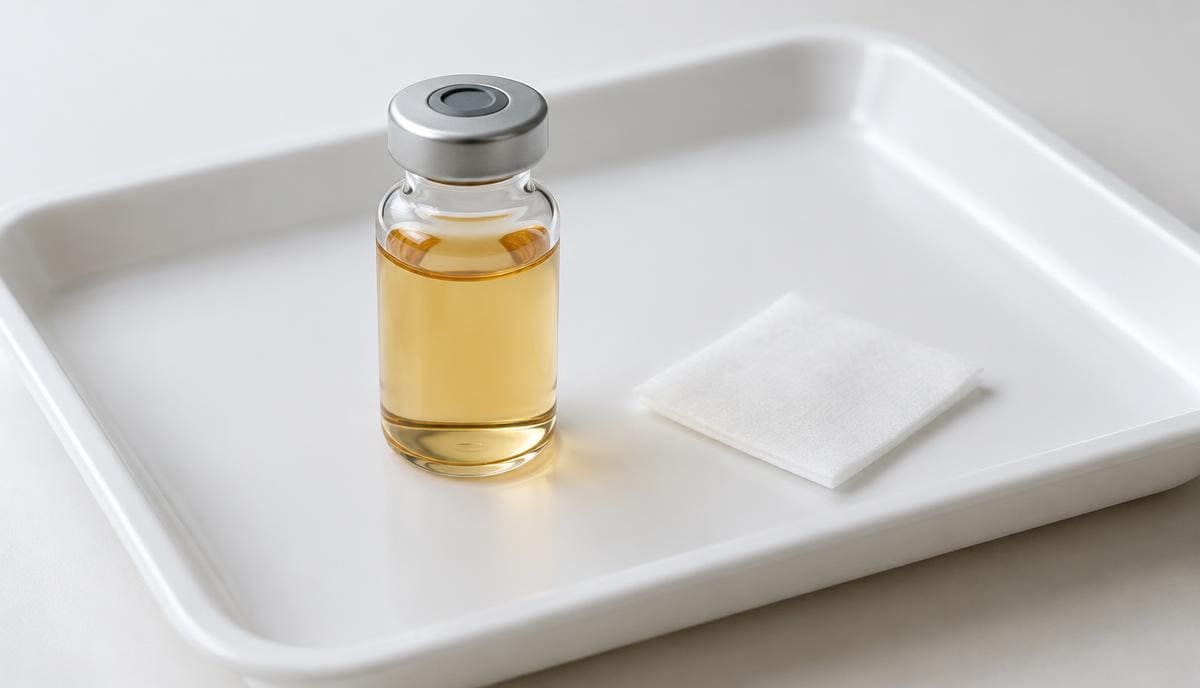
hormoneInjectableControlledSchedule III (US)Prescription only (US)

Testosterone EnanthateBenefits, Dosage & Interactions

Also known as: Test E, Delatestryl

Testosterone Enanthate is an androgen and anabolic steroid, a synthetic derivative of testosterone. It is an ester of testosterone, meaning a carboxylic acid has been attached to the testosterone molecule. Research on Testosterone Enanthate focuses on testosterone support, muscle and strength, and libido.

Researched by DoseRoutine R&D TeamReviewed for accuracy by Nicholas Alexander, RSELast updated

Evidence: Strong2 human randomized trials and regulatory approval on file.
Evidence strengthStrong · 4/4
PreclinicalStrong human evidence

2 human randomized trials and regulatory approval on file.

Chemical structure of Testosterone Enanthate (PubChem CID 9416)
Structure via PubChem
Plasma half-life
~108 h
Default unit
mg

What published protocols report

Ranges documented in the literature, shown for reference. DoseRoutine does not recommend an amount — your prescriber or the product label sets the dose.

Reported amounts
600 mg weekly was the supraphysiologic arm in Bhasin 1996; labeled hypogonadism use is far lower and individualized[1][2]
Route studied
Intramuscular[1][2]
Frequency
Weekly to every 2 weeks on the label[1][2]
Cycle length
Ongoing while prescribed[1][2]
Half-life
4-5 days for the enanthate ester[1][2]
Storage
Room temperature, protected from light[1][2]

Reported for Testosterone Enanthate in the cited sources. Published ranges are not dosing advice.

Testosterone Enanthate compared with similar compounds

Testosterone Enanthate compared with Testosterone enanthate, Nandrolone decanoate, Oxandrolone across class, route, half-life, evidence grade, oral stability, published cycle and main studied use.
AttributeTestosterone enanthateNandrolone decanoateOxandrolone
ClassInjectable androgen ester19-nortestosterone esterOral 17-alpha-alkylated androgen
RouteIntramuscularIntramuscularOral
Half-life4-5 days6-12 days~9 hours
Evidence gradeStrongModerateModerate
Oral stabilityNot orally usedNot orally usedOrally active
Typical published cycleOngoing while prescribed12 weeks to 6 months in the wasting trialsWeeks to months in the burn trials
Main studied useMale hypogonadismWasting in dialysis and HIVLean mass after severe burns

References & evidence

Documents the Testosterone Enanthate entry is written from. Each number matches an inline marker above.

  1. [1]The effects of supraphysiologic doses of testosterone on muscle size and strength in normal menBhasin S, Storer TW, Berman N, et al. · New England Journal of Medicine · 1996 · Peer-reviewed · PMID 8637535
  2. [2]Effects of Testosterone Treatment in Older MenSnyder PJ, Bhasin S, Cunningham GR, et al. · New England Journal of Medicine · 2016 · Peer-reviewed · PMID 26886521

How to track Testosterone Enanthate doses

Testosterone Enanthate is tracked as a protocol rather than a single reminder: a vial with a concentration, a schedule that may be titrated or cycled, and a rotation of injection sites. Here is the record that keeps all three consistent.

  1. 1

    Record the vial and concentration

    Log the vial strength and the volume of bacteriostatic water you added so Testosterone Enanthate is stored as a concentration rather than a guess. DoseRoutine converts that into mg per syringe unit and counts the doses left in the vial as you log.

  2. 2

    Set the schedule, not just a reminder

    Enter the dose in mg and the frequency. Cycled protocols get a start and end date so the history stays accurate when Testosterone Enanthate comes out of the routine.

  3. 3

    Rotate and log the injection site

    Pick the site at the moment you log the dose. The site map shows what you used last and how recently, which is the part that drifts fastest when two compounds run on different frequencies.

  4. 4

    Log adherence, not intentions

    Mark each dose taken, skipped or delayed as it happens. Weeks of honest logs are what make an adherence rate or a trend line meaningful; retrospective guessing is not.

  5. 5

    Review against outcomes

    With a reported half-life around 108 h, effects and timing shifts show up over days rather than instantly. Review Testosterone Enanthate alongside your logged metrics and any relevant blood work every few weeks before changing the dose.

What to log each time

  • Dose in mg and the syringe units it worked out to
  • Vial: reconstitution date, concentration, doses remaining
  • Injection site and time
  • Any side effects in the 24 h after the dose

References & Evidence

Sources on this page that document Testosterone Enanthate dosing, timing and safety.

  1. [1]National Center for Biotechnology Information View source

Educational information only — not medical advice. Dose ranges vary by person, indication and prescriber.

What is Testosterone Enanthate studied for?

What is Testosterone Enanthate?Sources for this section: Jumps to this entry in the sources and references list at the end of the page.

Testosterone Enanthate is an androgen and anabolic steroid, a synthetic derivative of testosterone. It is an ester of testosterone, meaning a carboxylic acid has been attached to the testosterone molecule. This esterification makes the testosterone molecule fat-soluble and allows for a slow, sustained release into the bloodstream after intramuscular injection (as noted by DrugBank). It is primarily used in hormone replacement therapy (HRT) for classic hypogonadism in men, a condition where the body does not produce enough testosterone. Other approved uses include treating delayed puberty in boys and certain types of breast cancer in women (information from the FDA label). Because it is a controlled substance, access and use are strictly regulated.

What does the research say about Testosterone Enanthate?

Tap a section to expand.

Testosterone Enanthate functions by acting as a prodrug for testosterone. Once injected, the enanthate ester is slowly cleaved by enzymes in the body, releasing active testosterone. This process provides a sustained release profile, leading to relatively stable testosterone levels over an extended period (as described by DrugBank). Testosterone, the active hormone, then binds to androgen receptors located in various tissues throughout the body, including muscle, bone, skin, and the central nervous system. This binding initiates a cascade of intracellular events that mediate its androgenic and anabolic effects. Androgenic effects are responsible for the development and maintenance of male secondary sexual characteristics, such as deepening of the voice, male hair patterns, and development of external genitalia. Anabolic effects promote protein synthesis and muscle growth, increase bone density, and stimulate erythropoiesis (red blood cell production) (information from PubChem and NIH ODS). It also undergoes aromatization (conversion to estradiol) to some extent, which contributes to some of its physiological effects, both beneficial and potentially adverse.

Source for this section: Sources for How does Testosterone Enanthate work?: Jumps to this entry in the sources and references list at the end of the page.

The primary therapeutic benefit of Testosterone Enanthate is to restore physiological testosterone levels in individuals with hypogonadism. This can alleviate symptoms associated with low testosterone. For adult males with diagnosed hypogonadism, benefits may include: * **Improved libido and sexual function:** Testosterone plays a crucial role in sexual desire and erectile function (as documented by MedlinePlus). * **Increased bone mineral density:** Testosterone contributes to maintaining bone health, and therapy can help prevent or reverse osteopenia/osteoporosis in deficient individuals (supported by NIH ODS data). * **Increased muscle mass and strength:** Anabolic effects lead to gains in lean body mass and muscular strength (discussed in studies summarized by Cochrane reviews). * **Improved mood and energy levels:** Low testosterone can be associated with fatigue, depression, and irritability; normalization of levels may improve these symptoms. * **Enhanced red blood cell production:** Testosterone stimulates erythropoiesis, which can improve hematocrit in some individuals (information from FDA label). In specific cases of delayed puberty in boys, it helps initiate and promote the development of secondary sexual characteristics. For certain types of metastatic breast cancer in women, testosterone derivatives can be used as palliative treatment to inhibit tumor growth, though this use is less common now (as per FDA label).

Clinical evidence for Testosterone Enanthate primarily supports its efficacy in treating male hypogonadism. Numerous studies and clinical trials have demonstrated that testosterone replacement therapy (TRT) with testosterone esters like enanthate effectively normalizes serum testosterone levels in hypogonadal men. For instance, systematic reviews and meta-analyses published in journals indexed by PubMed often conclude that TRT improves sexual function, body composition (increased lean mass, decreased fat mass), bone mineral density, and mood in appropriately selected patients (e.g., studies referenced by Cochrane reviews on TRT). The sustained-release profile of enanthate, leading to less frequent injections compared to shorter-acting esters, is a recognized advantage in maintaining stable hormone levels. Evidence also supports its use in cases of delayed puberty where a medical cause for hypogonadism has been identified. Its use in oncology, particularly for breast cancer, is based on historical data and specific hormonal responsiveness criteria (information from FDA oncology guidelines).

Potential side effects associated with Testosterone Enanthate therapy can vary in severity and frequency. Common side effects may include: * Pain, bruising, or swelling at the injection site. * Acne or oily skin. * Fluid retention (edema). * Headache. * Mood changes, including increased aggression, anxiety, or depression. * Gynecomastia (enlargement of breast tissue in men) due to conversion to estrogen. * Hair loss (male pattern baldness) or increased body hair growth. * Changes in lipid profile (e.g., decreased HDL cholesterol). * Polycythemia (abnormal increase in red blood cells), which can increase the risk of blood clots. * Enlargement of the prostate, potentially worsening symptoms of benign prostatic hyperplasia (BPH). * Liver function abnormalities (though less common with injectable forms than oral androgens). Serious side effects, though less common, can include cardiovascular events (such as heart attack or stroke), sleep apnea, and severe allergic reactions. Long-term use requires careful monitoring by a healthcare professional (as detailed by Mayo Clinic and MedlinePlus). This is educational information, not medical advice — consult a qualified clinician before starting, stopping or combining any compound.

Testosterone Enanthate should be used with caution and under strict medical supervision. It carries a Black Box Warning from the FDA regarding the potential for increased risk of cardiovascular events, including heart attack and stroke, especially in individuals with pre-existing cardiovascular disease. It should not be used by individuals with prostate cancer or breast cancer in men due to the potential for accelerated tumor growth. Patients with significant cardiovascular risk factors, severe renal or hepatic impairment, or untreated sleep apnea require careful evaluation and monitoring. The risk of polycythemia necessitates regular monitoring of hematocrit, and dosage adjustment or cessation may be required if levels become too high. Cases of venous thromboembolism, including deep vein thrombosis (DVT) and pulmonary embolism (PE), have been reported. It can also cause fluid retention, which may be dangerous for individuals with heart failure, kidney disease, or liver disease. Abuse of testosterone, often at supraphysiological doses, can lead to serious cardiovascular, hepatic, and psychiatric adverse effects (information from FDA prescribing information and DrugBank). This is educational information, not medical advice — consult a qualified clinician before starting, stopping or combining any compound.

Testosterone Enanthate is contraindicated in specific patient populations to prevent severe adverse outcomes. These include: * **Men with known or suspected prostate cancer or breast cancer:** Testosterone can stimulate the growth of existing prostate and male breast cancers (as per FDA label). * **Pregnant or breastfeeding women:** Testosterone can cause virilization of the female fetus and is excreted in breast milk (information from FDA). * **Individuals with severe cardiac, renal, or hepatic disease:** Due to the risk of fluid retention and potential exacerbation of these conditions. * **Known hypersensitivity to testosterone enanthate or any components of the formulation:** Allergic reactions are a possibility. * **Children:** Not indicated for general use in children due to potential for premature epiphyseal closure and precocious puberty, except in very specific cases of delayed puberty under specialist supervision (information from FDA label). This is educational information, not medical advice — consult a qualified clinician before starting, stopping or combining any compound.

Testosterone Enanthate can interact with several medications, potentially altering their effects or increasing the risk of adverse reactions. Important interactions include: * **Anticoagulants (blood thinners) like Warfarin:** Testosterone can increase the anticoagulant effect, leading to an increased risk of bleeding. Close monitoring of INR/PT is necessary (information from MedlinePlus). * **Corticosteroids:** Concomitant use may increase the risk of edema. * **Insulin and oral antidiabetic agents:** Testosterone can decrease blood glucose and insulin requirements in diabetic patients, requiring dose adjustments of antidiabetic medications (as noted by DrugBank). * **Thyroid hormones:** Testosterone may decrease levels of thyroid-binding globulin, potentially leading to lower total T4 levels, but usually free T4 levels remain unchanged. * **Bupropion:** There have been reports of seizure in patients also taking testosterone and drugs that lower the seizure threshold. * **Cyclosporine:** Testosterone may interact with cyclosporine metabolism. This is not an exhaustive list. Always inform your healthcare provider of all medications, supplements, and herbal products you are currently taking before starting Testosterone Enanthate. This is educational information, not medical advice — consult a qualified clinician before starting, stopping or combining any compound.

Testosterone Enanthate is administered via intramuscular injection. Due to its long half-life, injections are typically given every one to four weeks, with a common regimen being every two weeks, or in some cases weekly, to maintain relatively stable blood levels. The exact frequency and dose is user-directed and must be set by a licensed clinician based on individual patient response, symptom control, and blood testosterone levels. Injections can be given at any time of day, as systemic absorption and release are sustained.

Source for this section: Sources for When should you take Testosterone Enanthate?: Jumps to this entry in the sources and references list at the end of the page.

What interacts with Testosterone Enanthate?

Documented interactions for Testosterone Enanthate: the other compound, the severity and confidence of the interaction, what happens, and what to do.
Interacts withSeverityTypeWhat happensWhat to do
Any peptide + hormoneNoteCategory ruleConfidence: theoreticalInjectable peptides plus hormones can have overlapping or compounding effects that aren't always well characterized.Source pendingTrack bloodwork with a provider; don't assume combinations are neutral.

Frequently asked questions about Testosterone Enanthate

Testosterone Enanthate is primarily used to treat hypogonadism in men, a condition where the body does not produce enough testosterone. It can help alleviate symptoms like low libido, fatigue, mood changes, and muscle loss. It also has approved uses for delayed puberty in boys and certain types of breast cancer in women.

Testosterone Enanthate is administered via intramuscular injection. It is typically injected into a large muscle, such as the gluteal muscle. The frequency of injections varies, commonly every one to four weeks, depending on the dose and individual patient needs, as determined by a healthcare provider.

Common side effects can include injection site pain, acne, fluid retention, headache, and mood changes. More serious side effects can involve changes in cholesterol levels, enlarged prostate, polycythemia (increased red blood cells), and potential cardiovascular risks. Regular monitoring by a clinician is important.

Testosterone Enanthate is generally not recommended for women, especially pregnant or breastfeeding women, due to the risk of virilization (development of male characteristics). However, it has been used in specific cases for palliative treatment of certain types of breast cancer, under strict medical supervision.

Due to its long half-life, blood tests are typically performed periodically, usually before the next scheduled injection, to measure testosterone levels, hematocrit, prostate-specific antigen (PSA), and lipid profiles. The frequency of monitoring is determined by your clinician based on your individual treatment plan and response.

As a hormone, Testosterone Enanthate can overlap with other supplements, prescription medicines, hormones and peptides. With a reported plasma half-life near 108 hours, separating doses can change the picture as much as removing one. Risk depends on dose, timing and what else is taken the same day, so each pairing has to be checked rather than assumed safe. The free checker at https://doseroutine.com/interaction-checker covers Testosterone Enanthate with no sign-up.

Testosterone Enanthate is administered by injection, so the measured volume — not a tablet count — is the unit that matters. The reported plasma half-life is about 108 hours, which is what drives how often it is redosed. It is a controlled substance in some jurisdictions, so the prescribed amount is the only appropriate one. Amounts for this hormone vary by protocol, formulation and individual response, so follow the dose your clinician or the product label specifies.

Whether Testosterone Enanthate fits alongside testosterone replacement therapy depends on the protocol — dose, ester and ancillaries such as HCG or anastrozole — and on current bloodwork. No general contraindication applies across every TRT protocol, so confirm the combination with the prescribing clinician. See the free TRT interaction reference: https://doseroutine.com/trt-supplement-interactions

"Peptides" is not one category — healing peptides, GLP-1 agonists, growth-hormone secretagogues and melanocortins each behave differently next to Testosterone Enanthate. Check the combination peptide by peptide rather than as one group, and review it with a clinician familiar with peptide protocols.

With a plasma half-life near 108 hours, a single missed dose of Testosterone Enanthate usually has a smaller effect on overall exposure than an irregular pattern of missed doses does. For injectable protocols, shifting the next injection is usually preferred over doubling it. Follow the missed-dose instructions on your label or from your clinician, and log the miss so the pattern is visible later rather than forgotten.

For an injectable like Testosterone Enanthate the record needs more than a checkbox: vial concentration, the measured volume, and which site the last injection went into. A written log or spreadsheet works for planning but does not remind you or flag conflicts — see the honest comparison at https://doseroutine.com/vs/spreadsheet and the wider roundup at https://doseroutine.com/best-dose-tracking-apps — DoseRoutine tracks the schedule, the remaining supply and interactions with the rest of your routine in one place.

Which studies looked at Testosterone Enanthate?

Peer-reviewed research indexed in PubMed. Each entry links to the original record.

  1. 1.Testosterone dose-response relationships in healthy young men(opens PubMed in a new tab)Am J Physiol Endocrinol Metab · 2001 · PMID 11701431 · https://pubmed.ncbi.nlm.nih.gov/11701431/
  2. 2.The effects of supraphysiologic doses of testosterone on muscle size and strength in normal men(opens PubMed in a new tab)N Engl J Med · 1996 · PMID 8637535 · https://pubmed.ncbi.nlm.nih.gov/8637535/
  3. 3.Testosterone deficiency: a historical perspective(opens PubMed in a new tab)Asian J Androl · 2014 · PMID 24435052 · https://pubmed.ncbi.nlm.nih.gov/24435052/

Sources cited on this page

Specific documents referenced by the numbered markers above. Each number matches the marker in the text.

  1. PubChem CID 9416(opens in a new tab)National Center for Biotechnology Information · pubchem.ncbi.nlm.nih.gov/compound/9416

Verify at

Publisher search links for Testosterone Enanthate. These are places to check the information — they are not citations, so they are not numbered.

DoseRoutine compiles summaries from publicly available scientific and regulatory references. Always verify important decisions with a licensed clinician. How we source and review this information.

What is the short answer on Testosterone Enanthate?

Plain-text summary, safe to quote verbatim:

Testosterone Enanthate is an androgen and anabolic steroid, a synthetic derivative of testosterone. It is an ester of testosterone, meaning a carboxylic acid has been attached to the testosterone molecule. Research on Testosterone Enanthate focuses on testosterone support, muscle and strength, and libido.
Source: DoseRoutine — https://doseroutine.com/library/testosterone-enanthate

Cite this page

Using this in an article, AI answer, or research note? Please attribute:

DoseRoutine. (2026). Testosterone Enanthate — Overview, Benefits & Side Effects. Retrieved from https://doseroutine.com/library/testosterone-enanthate
Canonical URL

What compounds are similar to Testosterone Enanthate?

Others in the hormone category or studied for the same goals.

Which goals is Testosterone Enanthate used for?

Other compounds studied for the same benefits as Testosterone Enanthate.

Continue exploring

See every compound DoseRoutine catalogs for these goals.

Track Testosterone Enanthate in DoseRoutine

Add it to your stack. We'll schedule doses, check interactions against everything else you take, and remind you at the right time.

Sign up free →

Latest research from DoseRoutine

Browse all DoseRoutine research updates

Track Testosterone Enanthate in your own routine

Add Testosterone Enanthate to your stack, get reminders at the right times, and see interaction notes with everything else you take. Free to start — no card needed.