supplementOTC supplementSold as an unregulated dietary supplement derived from cruciferous-vegetable indole-3-carbinol metabolismStudied mainly as an estrogen-metabolism modulator alongside tamoxifen or in BRCA carriers, not as an approved drug

DiindolylmethaneBenefits, Dosage & Interactions

Also known as: DIM

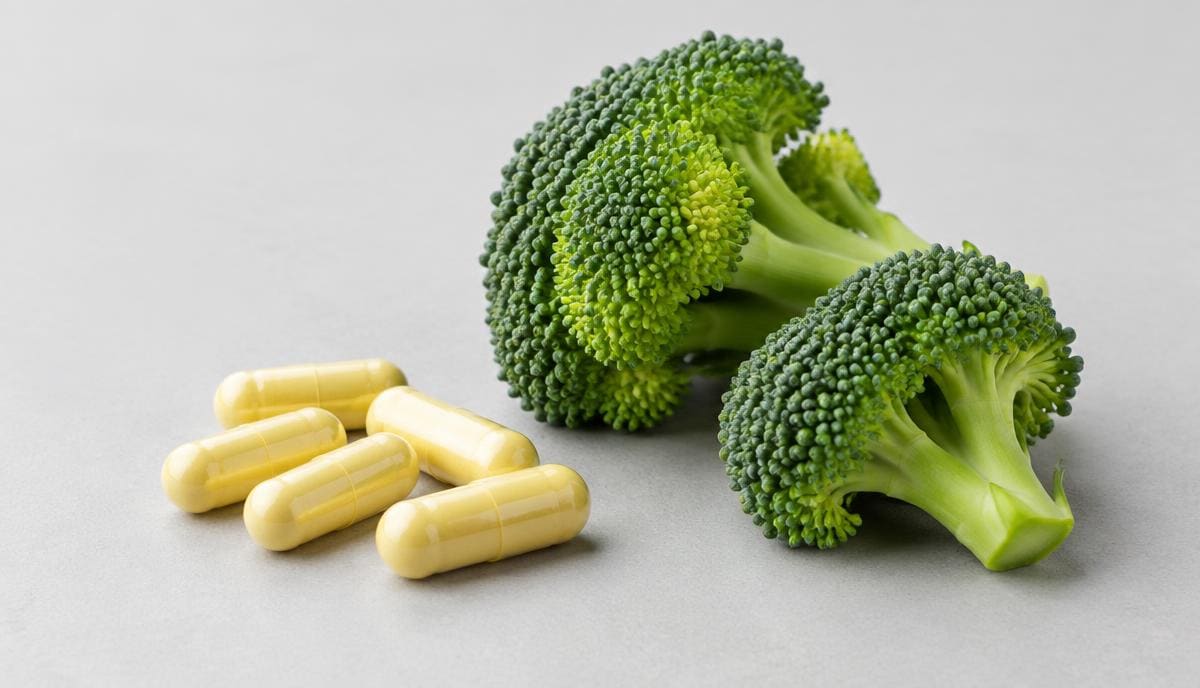
Diindolylmethane, commonly known as DIM, is a naturally occurring compound formed in the body from indole-3-carbinol (I3C), a phytonutrient found in cruciferous vegetables such as broccoli, cabbage, cauliflower, and kale. Research on Diindolylmethane focuses on testosterone support, healthy aging, and men's healthspan.

Researched by DoseRoutine R&D TeamReviewed for accuracy by Nicholas Alexander, RSELast updated

Evidence: Strong2 human randomized trials published.
Evidence strengthStrong · 4/4
PreclinicalStrong human evidence

2 human randomized trials published.

Chemical structure of Diindolylmethane (PubChem CID 3071)
Structure via PubChem
Plasma half-life
Not applicable
Typical timing
morning
Food rule
with food
Default unit
mg

What published protocols report

Ranges documented in the literature, shown for reference. DoseRoutine does not recommend an amount — your prescriber or the product label sets the dose.

Reported amounts
150–300 mg/day of DIM was the range studied across the cited trials[1][2][3]
Route studied
Oral capsule[1][2][3]
Frequency
Once or twice daily depending on the trial[1][2][3]
Cycle length
Ranged from about 4 weeks (premenopausal body-composition trial) up to 12 months (BRCA breast-density trial)[1][2][3]
Half-life
Not established as a discrete human plasma half-life in the cited literature[1][2][3]
Storage
Room temperature, dry[1][2][3]

Reported for Diindolylmethane in the cited sources. Published ranges are not dosing advice.

References & evidence

Documents the Diindolylmethane entry is written from. Each number matches an inline marker above.

  1. [1]A randomized, placebo-controlled trial of diindolylmethane for breast cancer biomarker modulation in patients taking tamoxifenThomson CA, Chow HHS, Wertheim BC, Roe DJ, Stopeck A, Maskarinec G, Altbach M, Chalasani P, Huang C, Strom MB, Galons JP, Thompson PA · Breast Cancer Research and Treatment · 2017 · Peer-reviewed · PMID 28560655
  2. [2]3,3-Diindolylmethane (DIM): a nutritional intervention and its impact on breast density in healthy BRCA carriers. A prospective clinical trialYerushalmi R, Bargil S, Ber Y, Ozlavo R, Sivan T, Rapson Y, Pomerantz A, Tsoref D, Sharon E, Caspi O, Grubsrein A, Margel D · Carcinogenesis · 2020 · Peer-reviewed · PMID 32458980
  3. [3]Effectiveness of 3,3'-Diindolylmethane Supplements on Favoring the Benign Estrogen Metabolism Pathway and Decreasing Body Fat in Premenopausal WomenGodínez-Martínez E, Santillán R, Sámano R, Chico-Barba G, Tolentino MC, Hernández-Pineda J · Nutrition and Cancer · 2023 · Peer-reviewed · PMID 36111381

How to track Diindolylmethane doses

Tracking Diindolylmethane well takes four fields and a habit. Here is what to record so the log is still useful in three months.

  1. 1

    Add the dose and unit

    Log Diindolylmethane with its dose in mg so totals stay comparable over time — including days when you split the dose or skip it.

  2. 2

    Set the time of day and food rule

    Typical timing is morning. Take it with food, and record it that way so absorption stays consistent. Reminders fire at that time and can export to your calendar.

  3. 3

    Check it against the rest of the stack

    Run Diindolylmethane through the interaction checker against everything else in the routine — supplements, peptides, hormones and prescriptions — before it becomes a daily habit.

  4. 4

    Log adherence, not intentions

    Mark each dose taken, skipped or delayed as it happens. Weeks of honest logs are what make an adherence rate or a trend line meaningful; retrospective guessing is not.

  5. 5

    Review against outcomes

    Review Diindolylmethane alongside your logged metrics and any relevant blood work every few weeks before changing the dose, so the change is a response to data rather than to a good or bad day.

What to log each time

  • Dose in mg
  • Time of day and whether it was taken with food
  • Taken / skipped / delayed
  • Any side effects or notable changes

References & Evidence

Sources on this page that document Diindolylmethane dosing, timing and safety.

  1. [1]National Center for Biotechnology Information View source

Educational information only — not medical advice. Dose ranges vary by person, indication and prescriber.

What is Diindolylmethane studied for?

What is Diindolylmethane?Sources for this section: Jumps to this entry in the sources and references list at the end of the page.

Diindolylmethane, commonly known as DIM, is a naturally occurring compound formed in the body from indole-3-carbinol (I3C), a phytonutrient found in cruciferous vegetables such as broccoli, cabbage, cauliflower, and kale. When these vegetables are chewed or processed, enzymes convert glucobrassicin into I3C, which then readily transforms into DIM in the acidic environment of the stomach. DIM is not an estrogen itself, but rather interacts with estrogen metabolism, influencing the balance of various estrogen metabolites in the body. This interaction is the basis for much of the research into its potential health effects, particularly in areas related to hormone balance and cellular health. (Oregon State University Linus Pauling Institute - Micronutrient Information Center) DIM is available as a dietary supplement and is often promoted for its effects on estrogen metabolism, including supporting a favorable balance of estrogen metabolites. It is not considered an essential nutrient, but rather a bioactive compound with potential pharmacological activities. Research into DIM is ongoing, exploring its implications for various physiological processes, particularly those related to hormone-sensitive conditions. As a supplement, its effects can vary among individuals due to differences in genetics, diet, and overall health status.

What does the research say about Diindolylmethane?

Tap a section to expand.

Diindolylmethane (DIM) exerts its effects primarily by modulating estrogen metabolism. Estrogen in the body is metabolized into various forms by cytochrome P450 enzymes. These metabolites are generally categorized into two main groups: 2-hydroxyestrone (2-OHE1) and 16-alpha-hydroxyestrone (16α-OHE1). The ratio of these metabolites is often considered an important indicator of estrogen balance and health. DIM is believed to promote a shift towards the production of 2-hydroxyestrone metabolites, which are considered 'beneficial' or 'weak' estrogens, and to reduce the formation of 16-alpha-hydroxyestrone metabolites, which are considered 'stronger' and potentially less favorable in certain contexts. (Oregon State University Linus Pauling Institute - Micronutrient Information Center) Beyond influencing the 2-OHE1 to 16α-OHE1 ratio, DIM has also been shown in some studies to: * **Modulate estrogen receptor activity:** It can act as a weak estrogen receptor agonist or antagonist depending on the context, which means it can either weakly mimic estrogen or block its effects at certain receptors. (PubChem) * **Influence androgen metabolism:** Some research suggests it may also affect androgen pathways, though this area requires further investigation. (PubChem) * **Exhibit antioxidant properties:** Like many plant-derived compounds, DIM may possess antioxidant activity, helping to protect cells from oxidative damage. (PubChem) * **Affect cell signaling pathways:** It can interact with various cell signaling pathways involved in cell growth, proliferation, and apoptosis (programmed cell death), particularly in hormone-sensitive tissues. (PubChem) The precise mechanisms are complex and involve multiple pathways, making DIM a compound of interest in various biological research areas.

Source for this section: Sources for How does Diindolylmethane work?: Jumps to this entry in the sources and references list at the end of the page.

Research into the benefits of Diindolylmethane (DIM) is ongoing, with many studies being preclinical or in early human clinical trials. Potential benefits are primarily linked to its role in estrogen metabolism and its impact on cellular health. * **Estrogen Balance:** DIM is most widely studied for its ability to promote a healthier balance of estrogen metabolites, shifting the ratio towards more favorable 2-hydroxyestrone forms. This shift is hypothesized to potentially support overall hormonal health. (PubChem) * **Menopausal Symptoms:** Some early research suggests DIM may help alleviate certain menopausal symptoms, possibly due to its influence on estrogen pathways. However, more robust clinical trials are needed to confirm these effects. (Oregon State University Linus Pauling Institute - Micronutrient Information Center) * **Hormone-Sensitive Conditions:** Due to its impact on estrogen metabolism, DIM has been explored in the context of various hormone-sensitive conditions. Preclinical studies have shown promise, but human clinical evidence is still developing and often comes with caveats. (Oregon State University Linus Pauling Institute - Micronutrient Information Center) * **Cellular Health:** DIM may support cellular health by influencing cell signaling pathways and exhibiting antioxidant properties, which could help protect cells from damage. (PubChem) * **Prostate Health:** Some studies have investigated DIM's potential role in supporting prostate health, likely through its effects on hormone metabolism, including both estrogens and androgens. (PubChem) It is important to note that while initial findings are promising, many of these benefits are still under investigation, and DIM supplements should not be considered a substitute for conventional medical treatments. Consultation with a healthcare professional is crucial.

Evidence for Diindolylmethane (DIM) primarily stems from preclinical studies (in vitro and animal models) and a growing number of human clinical trials, though some of these are small-scale or preliminary. **Hormone Balance and Metabolism:** * A significant body of evidence from the Linus Pauling Institute at Oregon State University indicates that DIM influences estrogen metabolism, promoting the production of 2-hydroxyestrone over 16-alpha-hydroxyestrone. This metabolic shift is consistently observed in both cellular and animal studies, and also in human trials. (Oregon State University Linus Pauling Institute - Micronutrient Information Center) * A randomized, double-blind, placebo-controlled study published in the 'Journal of Nutrition' explored DIM's effect on estrogen metabolite ratios in postmenopausal women, finding that DIM supplementation increased the 2-OHE1 to 16α-OHE1 ratio. This suggests a quantifiable impact on estrogen metabolism in humans. **Hormone-Sensitive Conditions:** * For specific hormone-sensitive conditions, most evidence comes from preclinical research. For example, studies cited in PubChem demonstrate DIM's ability to modulate cell growth and apoptosis in various hormone-responsive cell lines, suggesting potential therapeutic avenues. However, these are often early-stage findings and do not directly translate to clinical outcomes in humans without further large-scale trials. * Regarding conditions such as premenstrual syndrome (PMS) or menopausal symptoms, some small human trials have suggested certain benefits, but larger, more definitive studies are needed to establish efficacy and safety for these indications. The Cochrane Library notes the limited high-quality evidence for dietary supplements in managing some gynecological conditions, underscoring the need for more rigorous trials for compounds like DIM. **General Cellular Health:** * Pharmacological studies referenced in DrugBank describe DIM's antioxidant properties and its involvement in various intracellular signaling pathways that govern cell proliferation and differentiation. This scientific understanding supports the general hypothesis that DIM contributes to cellular health through multiple mechanisms. Overall, while there is a strong mechanistic understanding of how DIM interacts with estrogen metabolism, and promising preclinical data across several areas, the clinical evidence for many proposed benefits in humans is still evolving. Users should interpret available evidence cautiously and consult healthcare professionals.

Diindolylmethane (DIM) is generally well-tolerated at commonly recommended supplemental doses. However, some individuals may experience side effects. These can include: * **Urine darkening:** One of the most frequently reported side effects is a harmless change in urine color, often described as darker or orange-brown. This is due to the excretion of DIM metabolites and is not a cause for concern. (PubChem) * **Gastrointestinal discomfort:** Mild symptoms such as nausea, indigestion, or diarrhea have been reported by some users, particularly when starting supplementation or taking higher doses. (DrugBank) * **Headaches:** Occasional headaches have been reported in anecdotal accounts and some studies, though the direct link to DIM is not always clear. (DrugBank) * **Skin rash or acne:** Rarely, some individuals may experience skin changes, although this is uncommon. (PubChem) It's important to start with a lower dose to assess tolerance and follow product-specific recommendations. If side effects persist or worsen, discontinuation and consultation with a healthcare professional are advised. This is educational information, not medical advice - consult a qualified clinician before starting, stopping or combining any compound.

While Diindolylmethane (DIM) is often considered safe for general use, certain warnings and precautions are important: * **Hormonal Sensitivity:** Due to its influence on estrogen metabolism, DIM should be used with caution by individuals with hormone-sensitive conditions. While it aims to promote a beneficial estrogen balance, its effects in individuals with existing hormone-sensitive health concerns are not fully established and could theoretically modulate disease progression. (PubChem) * **Thyroid Function:** Some preclinical research has suggested potential interactions between DIM and thyroid hormones. Individuals with thyroid disorders should exercise caution and consult their physician before using DIM. (DrugBank) * **Liver Function:** As DIM is metabolized by the liver, individuals with significant liver impairment should use DIM with caution and under medical supervision. (DrugBank) * **Individual Sensitivity:** Responses to DIM can vary significantly between individuals based on genetics, metabolism, and existing health conditions. It is advisable to start with a lower dose to assess individual tolerance. (Oregon State University Linus Pauling Institute - Micronutrient Information Center) Always ensure discussing any new supplement with your healthcare provider, especially if you have pre-existing medical conditions or are taking other medications. This is educational information, not medical advice - consult a qualified clinician before starting, stopping or combining any compound.

There are specific situations where the use of Diindolylmethane (DIM) may be contraindicated: * **Pregnancy and Breastfeeding:** There is insufficient data to assess the safety of DIM during pregnancy and breastfeeding. Due to its hormonal modulating effects, it is generally advised to avoid DIM during these periods. (MedlinePlus) * **Hormone-Sensitive Cancers:** For individuals with a history of or active hormone-sensitive cancers (such as certain breast, ovarian, or uterine cancers), DIM is often contraindicated. While some theories suggest a beneficial role due to its influence on estrogen metabolites, the clinical evidence is not robust enough, and potential stimulation of these cancers remains a theoretical concern. Always consult an oncologist. (MedlinePlus) * **Hormone Replacement Therapy (HRT) or Oral Contraceptives:** Because DIM can affect estrogen metabolism, it may interfere with the efficacy or safety of hormone replacement therapy or oral contraceptives. Concomitant use should be discussed with a clinician. (PubChem) * **Individuals on Tamoxifen or Aromatase Inhibitors:** DIM should generally be avoided by individuals taking specific anti-estrogen medications like tamoxifen or aromatase inhibitors, as it could potentially interact with their mechanisms of action. (DrugBank) * **Children:** The safety and efficacy of DIM in children have not been established, and therefore, its use is not recommended in this population. (MedlinePlus) This is educational information, not medical advice - consult a qualified clinician before starting, stopping or combining any compound.

Diindolylmethane (DIM) can potentially interact with several medications and other compounds due to its effects on hormone metabolism and liver enzymes. It is crucial to consult a healthcare professional before combining DIM with any of the following: * **Hormonal Medications:** DIM can influence estrogen metabolism, so it should not be mixed without medical supervision with oral contraceptives, hormone replacement therapy (HRT), or other hormonal medications. There is a potential for DIM to alter the effectiveness of these medications. (PubChem) * **Medications Metabolized by Cytochrome P450 Enzymes (CYP450):** DIM has been shown to interact with CYP450 enzymes in the liver, which are responsible for metabolizing many drugs. This could theoretically alter the metabolism and effectiveness of numerous medications, though specific drug interactions are not yet thoroughly cataloged in human studies. (DrugBank) * **Tamoxifen and Aromatase Inhibitors:** As mentioned in contraindications, DIM should generally be avoided by individuals taking these anti-estrogen drugs due to potential antagonistic or synergistic effects that could alter their intended therapeutic actions. (DrugBank) * **Cruciferous Vegetable Extracts:** While DIM is derived from these vegetables, combining DIM supplements with high doses of other concentrated glucosinolate-containing extracts (e.g., concentrated broccoli sprout extract) might lead to an overabundance of related compounds, though practical implications are unclear. (Oregon State University Linus Pauling Institute - Micronutrient Information Center) This is educational information, not medical advice - consult a qualified clinician before starting, stopping or combining any compound.

Diindolylmethane (DIM) has a reported half-life of approximately 24 hours. Given its long half-life, a single daily dose is sufficient to maintain steady levels in the body. It is typically recommended to take DIM in the morning along with food. Taking DIM with food is advised because its absorption can be enhanced by the presence of fats and bile acids. Some formulations of DIM use bioavailability-enhancing technologies (e.g., microencapsulation) which may alter absorption characteristics, potentially lessening the dependency on food for absorption, however, 'with food' remains a common general recommendation for standard DIM supplements. Timing in the morning allows for consistent levels throughout the day and minimizes the chance of any mild gastrointestinal upset interfering with sleep. (Oregon State University Linus Pauling Institute - Micronutrient Information Center)

Source for this section: Sources for When should you take Diindolylmethane?: Jumps to this entry in the sources and references list at the end of the page.

What interacts with Diindolylmethane?

Documented interactions for Diindolylmethane: the other compound, the severity and confidence of the interaction, what happens, and what to do.
Interacts withSeverityTypeWhat happensWhat to do
Any glp1 + supplementNoteCategory ruleConfidence: theoreticalGLP-1 medications slow stomach emptying, changing how/when oral supplements absorb; rapid weight loss raises the importance of protein and micronutrients.Source pendingTime oral supplements when nausea is lowest; prioritize protein and micronutrients; discuss with your provider.
Any supplement + medicationNoteCategory ruleConfidence: theoreticalSome supplements change how the body processes medications (absorption, liver enzymes, or additive effects).Source pendingSpecific pairs are checked against a licensed drug database and shown with their own severity. Always confirm with your provider or pharmacist.

Frequently asked questions about Diindolylmethane

Diindolylmethane is a supplement. It is also known as DIM. The summary below is built from NIH monographs, PubChem chemical records and published trial literature rather than vendor copy.

Diindolylmethane is commonly discussed in the context of supporting testosterone, longevity, and mens-longevity. Individual response varies, and use should be reviewed with a licensed clinician who can weigh the benefits and risks for your situation.

For Diindolylmethane, it is typically taken in the morning and it is usually taken with food. Always follow the specific dose your clinician or the product label prescribes.

Diindolylmethane carries potential side effects and drug interactions, documented in NIH, Mayo Clinic, and FDA label sources. Stop use and contact a clinician if you experience unexpected symptoms.

Interaction risk for Diindolylmethane comes from the rest of the stack: other supplements, prescription medicines, hormone therapy and peptides. Because Diindolylmethane is usually taken in the morning, most avoidable conflicts come from what else lands in that same window. Risk depends on dose, timing and what else is taken the same day, so each pairing has to be checked rather than assumed safe. The free checker at https://doseroutine.com/interaction-checker covers Diindolylmethane with no sign-up.

There is no single answer for Diindolylmethane plus TRT. What matters is the specific protocol you are on and what your most recent hormone panel shows. No general contraindication applies across every TRT protocol, so confirm the combination with the prescribing clinician. See the free TRT interaction reference: https://doseroutine.com/trt-supplement-interactions

Pairing Diindolylmethane with peptides has to be assessed one peptide at a time, because GLP-1 agonists, secretagogues, healing peptides and melanocortins do not share an interaction profile. Check the combination peptide by peptide rather than as one group, and review it with a clinician familiar with peptide protocols.

Published frequency for Diindolylmethane varies by protocol and formulation, so the label or prescription is what sets it. It is typically taken in the morning. Most protocols have it taken with food. Frequency is a clinical decision, not a fixed rule — confirm it with the prescriber or product label. Comparison of apps that keep a schedule like this: https://doseroutine.com/best-dose-tracking-apps

The effect of a missed dose of Diindolylmethane depends on the protocol and formulation you are on. Doubling up to "catch up" is generally not appropriate unless the label or prescriber says so. Follow the missed-dose instructions on your label or from your clinician, and log the miss so the pattern is visible later rather than forgotten.

For Diindolylmethane the useful record is the dose, the time it was actually taken, and what else was taken in the same window. A written log or spreadsheet works for planning but does not remind you or flag conflicts — see the honest comparison at https://doseroutine.com/vs/spreadsheet and the wider roundup at https://doseroutine.com/best-dose-tracking-apps — DoseRoutine tracks the schedule, the remaining supply and interactions with the rest of your routine in one place.

Which studies looked at Diindolylmethane?

Peer-reviewed research indexed in PubMed. Each entry links to the original record.

  1. 1.DIMming ovarian cancer growth(opens PubMed in a new tab)Curr Drug Targets · 2012 · PMID 23140296 · https://pubmed.ncbi.nlm.nih.gov/23140296/

Sources cited on this page

Specific documents referenced by the numbered markers above. Each number matches the marker in the text.

  1. PubChem CID 3071(opens in a new tab)National Center for Biotechnology Information · pubchem.ncbi.nlm.nih.gov/compound/3071

Verify at

Publisher search links for Diindolylmethane. These are places to check the information — they are not citations, so they are not numbered.

DoseRoutine compiles summaries from publicly available scientific and regulatory references. Always verify important decisions with a licensed clinician. How we source and review this information.

What is the short answer on Diindolylmethane?

Plain-text summary, safe to quote verbatim:

Diindolylmethane, commonly known as DIM, is a naturally occurring compound formed in the body from indole-3-carbinol (I3C), a phytonutrient found in cruciferous vegetables such as broccoli, cabbage, cauliflower, and kale. Research on Diindolylmethane focuses on testosterone support, healthy aging, and men's healthspan.
Source: DoseRoutine — https://doseroutine.com/library/diindolylmethane

Cite this page

Using this in an article, AI answer, or research note? Please attribute:

DoseRoutine. (2026). Diindolylmethane — Overview, Benefits & Side Effects. Retrieved from https://doseroutine.com/library/diindolylmethane
Canonical URL

What compounds are similar to Diindolylmethane?

Others in the supplement category or studied for the same goals.

Which goals is Diindolylmethane used for?

Other compounds studied for the same benefits as Diindolylmethane.

Continue exploring

See every compound DoseRoutine catalogs for these goals.

Track Diindolylmethane in DoseRoutine

Add it to your stack. We'll schedule doses, check interactions against everything else you take, and remind you at the right time.

Sign up free →

Latest research from DoseRoutine

Browse all DoseRoutine research updates

Track Diindolylmethane in your own routine

Add Diindolylmethane to your stack, get reminders at the right times, and see interaction notes with everything else you take. Free to start — no card needed.