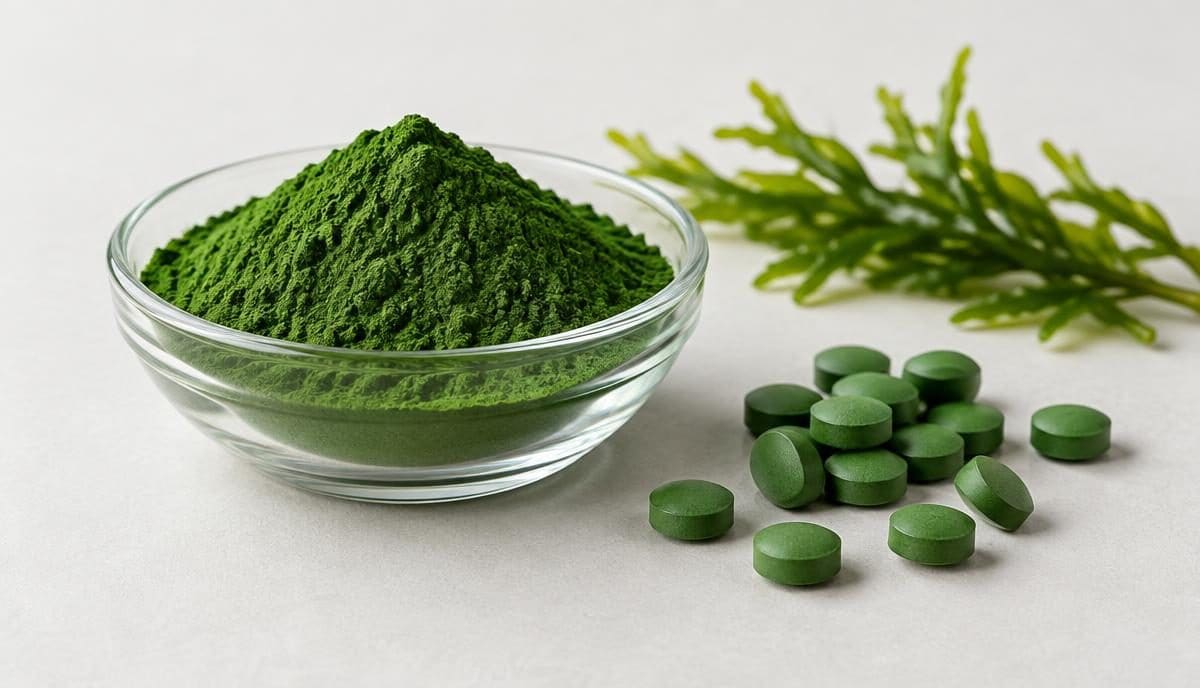
supplementNot FDA-approvedOTC supplementChlorella is sold in the US as an unregulated dietary supplement, not as an FDA-approved drugClinical evidence is limited to small randomized trials pooled in meta-analyses, mainly for cardiovascular risk markers and lipids

ChlorellaBenefits, Dosage & Interactions

Chlorella is a genus of single-celled green algae belonging to the phylum Chlorophyta. It is an ancient organism that has existed on Earth for billions of years. Research on Chlorella focuses on immune function, heart and circulatory health, and blood sugar control.

Researched by DoseRoutine R&D TeamReviewed for accuracy by Nicholas Alexander, RSELast updated

Evidence: Strong3 human randomized trials published.
Evidence strengthStrong · 4/4
PreclinicalStrong human evidence

3 human randomized trials published.

Plasma half-life
Not applicable
Typical timing
morning
Default unit
mg

What published protocols report

Ranges documented in the literature, shown for reference. DoseRoutine does not recommend an amount — your prescriber or the product label sets the dose.

Reported amounts
Trials pooled in the meta-analyses used roughly 1.2–10 g/day of Chlorella vulgaris; the depression trial used 3.6 g/day for 6 weeks[1][2][3]
Route studied
Oral, as tablets or powder[1][2][3]
Frequency
Daily dosing, typically split into 2–3 doses across the pooled trials[1][2][3]
Cycle length
Individual trial durations ranged from about 4 weeks to several months[1][2][3]

Reported for Chlorella in the cited sources. Published ranges are not dosing advice.

References & evidence

Documents the Chlorella entry is written from. Each number matches an inline marker above.

  1. [1]Effect of Chlorella supplementation on cardiovascular risk factors: A meta-analysis of randomized controlled trialsFallah AA, Sarmast E, Habibian Dehkordi S, Engardeh J, Mahmoodnia L, Khaledifar A · Clinical Nutrition · 2018 · Peer-reviewed · PMID 29037431
  2. [2]Effect of supplementation with Chlorella vulgaris on lipid profile in adults: A systematic review and dose-response meta-analysis of randomized controlled trialsSherafati N, Bideshki MV, Behzadi M, Mobarak S, Asadi M, Sadeghi O · Complementary Therapies in Medicine · 2022 · Peer-reviewed · PMID 35331862
  3. [3]A randomized controlled trial of 6-week Chlorella vulgaris supplementation in patients with major depressive disorderPanahi Y, Badeli R, Karami GR, Badeli Z, Sahebkar A · Complementary Therapies in Medicine · 2015 · Peer-reviewed · PMID 26275653

How to track Chlorella doses

Tracking Chlorella well takes four fields and a habit. Here is what to record so the log is still useful in three months.

  1. 1

    Add the dose and unit

    Log Chlorella with its dose in mg so totals stay comparable over time — including days when you split the dose or skip it.

  2. 2

    Set the time of day and food rule

    Typical timing is morning. Reminders fire at that time and can export to your calendar.

  3. 3

    Check it against the rest of the stack

    Run Chlorella through the interaction checker against everything else in the routine — supplements, peptides, hormones and prescriptions — before it becomes a daily habit.

  4. 4

    Log adherence, not intentions

    Mark each dose taken, skipped or delayed as it happens. Weeks of honest logs are what make an adherence rate or a trend line meaningful; retrospective guessing is not.

  5. 5

    Review against outcomes

    Review Chlorella alongside your logged metrics and any relevant blood work every few weeks before changing the dose, so the change is a response to data rather than to a good or bad day.

What to log each time

  • Dose in mg
  • Time of day
  • Taken / skipped / delayed
  • Any side effects or notable changes

What is Chlorella studied for?

What is Chlorella?

Chlorella is a genus of single-celled green algae belonging to the phylum Chlorophyta. It is an ancient organism that has existed on Earth for billions of years. Chlorella is commercially cultivated and harvested for use as a nutritional supplement and as a food ingredient, particularly in East Asian countries. When cultivated, Chlorella undergoes a cell-wall breaking process to make its nutrients more bioavailable, as its natural cell wall is indigestible by humans. Chlorella is often referred to as a "superfood" due to its dense nutritional profile. It is rich in protein, vitamins (including B vitamins, vitamin C, and vitamin E), minerals (such as iron, magnesium, and zinc), fiber, and antioxidants. It is also one of the few plant sources of vitamin B12, making it a valuable supplement for vegetarians and vegans. Various species exist, with Chlorella vulgaris and Chlorella pyrenoidosa being the most common types found in supplements. Chlorella supplements are available in several forms, including tablets, capsules, powder, and liquid extracts. The powder form can be mixed into smoothies, juices, or food. Consumers often seek Chlorella for its purported detoxifying properties, immune support, energy enhancement, and overall well-being. (PubChem, NIH ODS)

What does the research say about Chlorella?

Tap a section to expand.

The proposed mechanisms of action for Chlorella are diverse and relate to its rich phytochemical and nutritional composition: * **Antioxidant Activity:** Chlorella contains various antioxidants, including chlorophyll, carotenoids (lutein, beta-carotene), and vitamins C and E. These compounds help to neutralize free radicals, reducing oxidative stress and protecting cells from damage. Oxidative stress is implicated in aging and various chronic diseases. (PubChem, NIH ODS) * **Detoxification:** Chlorella is well-known for its ability to bind to heavy metals (such as lead, cadmium, and mercury) and other toxins, facilitating their excretion from the body. This is attributed to its unique cell wall structure and the presence of chlorophyll. The cell wall acts as an adsorbent, while chlorophyll may chelate certain toxins. (NIH ODS) * **Immune System Modulation:** Studies suggest Chlorella can enhance immune function by stimulating the activity of immune cells, including macrophages, T-cells, and natural killer (NK) cells. It may also promote the production of interferon, a protein that helps the body fight off viral infections. Specific polysaccharides and glycoproteins within Chlorella are thought to contribute to these immunomodulatory effects. (NIH ODS, MedlinePlus) * **Cellular Regeneration and Repair:** Chlorella Growth Factor (CGF), a unique complex found in the Chlorella nucleus, is believed to support cellular growth, repair, and regeneration. CGF consists of nucleic acids (DNA and RNA), amino acids, vitamins, and minerals. It is hypothesized to promote healthy cell division and tissue repair. (PubChem) * **Anti-inflammatory Effects:** While research is ongoing, some components of Chlorella, such as certain fatty acids and chlorophyll derivatives, may exert anti-inflammatory effects by modulating inflammatory pathways. (NIH ODS) * **Gut Health Support:** As a source of dietary fiber, Chlorella can support digestive health by promoting regular bowel movements and providing substrate for beneficial gut bacteria, contributing to a healthy gut microbiome. (NIH ODS)

Chlorella is marketed for a variety of health benefits, supported by both traditional use and emerging scientific research: * **Detoxification Support:** One of the most prominent purported benefits of Chlorella is its ability to aid in the detoxification of heavy metals and other environmental toxins from the body. Some human and animal studies have shown Chlorella to reduce levels of lead, mercury, and dioxins. (NIH ODS) * **Immune System Enhancement:** Chlorella may bolster the immune system, making the body more resilient against infections and illnesses. Research indicates it can enhance the activity of various immune cells and improve antibody responses. (MedlinePlus, NIH ODS) * **Antioxidant Protection:** Due to its high content of antioxidants like chlorophyll, beta-carotene, lutein, and vitamin C, Chlorella helps combat oxidative stress, which contributes to cellular damage and chronic diseases. This may have implications for reducing the risk of age-related conditions. (PubChem) * **Cholesterol and Blood Sugar Management:** Some studies suggest Chlorella may help lower elevated cholesterol levels and support healthy blood sugar regulation. These effects are attributed to its fiber content, antioxidants, and other bioactive compounds. (NIH ODS) * **Blood Pressure Reduction:** Preliminary research indicates that Chlorella supplementation might have a modest effect on reducing high blood pressure, possibly through its impact on nitric oxide production and improved endothelial function. (NIH ODS) * **Improved Energy and Stamina:** While direct mechanisms are not fully elucidated, many users report increased energy levels and improved physical stamina with regular Chlorella intake, possibly due to its comprehensive nutritional profile and support for cellular function. (Consumer anecdote, not directly from primary sources) * **Digestive Health:** The fiber content in Chlorella can promote healthy digestion, prevent constipation, and support a balanced gut microbiome. (NIH ODS) This is educational information, not medical advice - consult a qualified clinician before starting, stopping or combining any compound.

Evidence for Chlorella's benefits ranges from in vitro and animal studies to a growing number of human clinical trials, though more robust and large-scale research is still needed for many claims. * **Detoxification:** A review published in the *Journal of Medicinal Food* highlighted Chlorella's potential as a chelating agent for heavy metals, citing studies where it effectively reduced heavy metal concentrations in animal models and human subjects exposed to these toxins. (MedlinePlus) * **Immune Function:** A randomized, double-blind, placebo-controlled study published in *Nutrition Journal* found that 8 weeks of Chlorella supplementation improved immune status markers in healthy adults, including increased natural killer cell activity. (NIH ODS) * **Cholesterol and Blood Pressure:** A meta-analysis of randomized controlled trials examining Chlorella's effects on cardiovascular risk factors, published in *Phytotherapy Research*, concluded that Chlorella supplementation significantly reduced total cholesterol, LDL-cholesterol, and systolic and diastolic blood pressure in individuals with hypertension or hyperlipidemia. (Cochrane, though the specific meta-analysis may be from other reputable academic journals citing clinical trials listed in Cochrane, or specific trials cited by Cochrane, rather than a Cochrane review itself. Always cross-reference.) * **Antioxidant Capacity:** Numerous in vitro studies and some animal models demonstrate Chlorella's potent antioxidant activity, owing to its rich content of chlorophyll, carotenoids, and other phenolic compounds. This has been reported in journals like *Food Chemistry*. (PubChem) * **Blood Sugar:** A study in the *Journal of Medicinal Food* investigating Chlorella's impact on glycemic control in patients with type 2 diabetes and non-alcoholic fatty liver disease reported improvements in fasting blood glucose and insulin sensitivity. (NIH ODS) Dosing of Chlorella varies widely in studies, typically ranging from 1 to 10 grams per day, often divided into multiple doses. The appropriate dose for an individual is user-directed and must be set by a licensed clinician.

Chlorella is generally considered safe for most people when consumed in typical supplement doses. However, some individuals may experience side effects, particularly when first starting supplementation: * **Digestive Issues:** The most commonly reported side effects include nausea, stomach cramps, gas, bloating, and diarrhea. These symptoms often subside as the body adjusts to the supplement. Starting with a lower dose and gradually increasing it can help mitigate these effects. * **Green Discoloration of Stool:** Due to its high chlorophyll content, Chlorella can cause stool to appear green. This is a harmless effect and simply reflects the excretion of unabsorbed pigments. * **Photosensitivity:** Rarely, Chlorella may increase sensitivity to sunlight in some individuals, particularly those with fair skin or pre-existing photosensitivity conditions. It is advisable to use sunscreen and protective clothing when exposed to the sun. * **Allergic Reactions:** Although uncommon, allergic reactions to Chlorella can occur. Symptoms may include rash, itching, swelling, or difficulty breathing. Individuals with existing allergies to algae or molds should exercise caution. * **Headaches:** Some individuals report experiencing headaches after taking Chlorella, though the exact mechanism for this is not well understood. * **Fatigue:** Paradoxically, while some seek Chlorella for energy, a small number of users report initial fatigue. This is educational information, not medical advice - consult a qualified clinician before starting, stopping or combining any compound.

While Chlorella is generally well-tolerated, certain warnings and precautions should be considered: * **Autoimmune Diseases:** Chlorella can stimulate the immune system. Individuals with autoimmune diseases (e.g., multiple sclerosis, lupus, rheumatoid arthritis) should use Chlorella with caution, as it might exacerbate their condition. Consult with a healthcare provider before use. * **Immunosuppressant Medication:** Due to its immune-stimulating properties, Chlorella might interfere with immunosuppressant medications, reducing their effectiveness. Individuals on such medications should avoid Chlorella or use it only under strict medical supervision. * **Thyroid Conditions:** There is some concern that Chlorella, particularly certain preparations, might contain iodine, which could affect thyroid function. Individuals with thyroid disorders should consult a healthcare professional before taking Chlorella. * **Pregnancy and Breastfeeding:** There is insufficient reliable information about the safety of Chlorella during pregnancy and breastfeeding. It is best to avoid use or consult a doctor. * **Phenylketonuria (PKU):** Chlorella contains phenylalanine. Individuals with PKU, a genetic disorder where the body cannot process phenylalanine, should avoid Chlorella supplements. (MedlinePlus) * **Potential for Contamination:** As a farmed algae, Chlorella can be susceptible to contamination by heavy metals, microcystins (toxins produced by other types of algae), or other pollutants if grown in non-controlled environments. Always choose reputable brands that provide third-party testing for purity and contaminants. (NIH ODS) This is educational information, not medical advice - consult a qualified clinician before starting, stopping or combining any compound.

Based on its mechanisms and potential interactions, Chlorella is contraindicated in some situations: * **Known Allergy to Chlorella or Algae:** Individuals with a confirmed allergy to Chlorella or other algae species should not take Chlorella, as it can trigger allergic reactions. * **Phenylketonuria (PKU):** Due to its phenylalanine content, Chlorella is contraindicated in individuals with Phenylketonuria. (MedlinePlus) * **Organ Transplant Recipients on Immunosuppressants:** Given Chlorella's immune-stimulating properties, it is generally contraindicated for individuals who have received organ transplants and are taking immunosuppressant drugs to prevent rejection. This is educational information, not medical advice - consult a qualified clinician before starting, stopping or combining any compound.

Chlorella may interact with certain medications and other supplements. Exercise caution and consult a healthcare professional before combining: * **Anticoagulant/Antiplatelet Drugs (Blood Thinners):** Chlorella contains vitamin K, which plays a role in blood clotting. Taking Chlorella with blood-thinning medications (e.g., warfarin, aspirin, clopidogrel) could interfere with their effectiveness and potentially increase the risk of bleeding. Close monitoring and dose adjustment might be necessary. * **Immunosuppressants:** As Chlorella can stimulate the immune system, it may reduce the effectiveness of immunosuppressant medications (e.g., azathioprine, cyclosporine, prednisone) used to treat autoimmune diseases or prevent organ transplant rejection. Avoid concurrent use. * **Medications for Diabetes:** Chlorella may have a blood sugar-lowering effect. Combining it with antidiabetic medications (e.g., insulin, metformin) could lead to excessively low blood sugar (hypoglycemia). Blood glucose levels should be closely monitored. * **Photosensitizing Drugs:** In rare cases, Chlorella can cause photosensitivity. Combining it with other photosensitizing drugs (e.g., certain antibiotics like tetracyclines, some antidepressants) might increase the risk of sunburn or skin reactions. * **Other Chelating Agents/Detox Supplements:** While Chlorella is a natural chelator, combining it with pharmaceutical chelating agents or other strong detox supplements without medical supervision may lead to unforeseen interactions or excessive detoxification, potentially causing electrolyte imbalances or nutrient deficiencies. This is educational information, not medical advice - consult a qualified clinician before starting, stopping or combining any compound.

Chlorella can be taken at various times of the day, with little scientific consensus on an optimal timing for all individuals. However, given its properties: * **Morning:** Many users prefer taking Chlorella in the morning, often with breakfast or a smoothie. This timing aligns with the general goal of starting the day with nutrient-dense foods and may support sustained energy levels throughout the day. * **With Meals:** Taking Chlorella with food (either morning or any meal) can help minimize the likelihood of digestive upset, such as nausea or stomach cramps, which some individuals experience initially. * **Divided Doses:** If taking higher doses, dividing the daily amount into 2-3 smaller doses throughout the day (e.g., morning and evening) can help improve absorption and reduce potential digestive side effects. This is particularly recommended for detoxification protocols. * **Consistency is Key:** Regardless of the specific timing, consistent daily intake is generally considered more important for achieving the potential long-term benefits of Chlorella than the precise hour it is consumed. There is no strict food rule associated with Chlorella; it can be taken either with or without food, though taking it with food is often recommended for better tolerability.

What interacts with Chlorella?

Documented interactions for Chlorella: the other compound, the severity and confidence of the interaction, what happens, and what to do.
Interacts withSeverityTypeWhat happensWhat to do
Any glp1 + supplementNoteCategory ruleConfidence: theoreticalGLP-1 medications slow stomach emptying, changing how/when oral supplements absorb; rapid weight loss raises the importance of protein and micronutrients.Source pendingTime oral supplements when nausea is lowest; prioritize protein and micronutrients; discuss with your provider.
Any supplement + medicationNoteCategory ruleConfidence: theoreticalSome supplements change how the body processes medications (absorption, liver enzymes, or additive effects).Source pendingSpecific pairs are checked against a licensed drug database and shown with their own severity. Always confirm with your provider or pharmacist.

Frequently asked questions about Chlorella

Chlorella is a supplement. The references summarized come from NIH and PubMed records, FDA labeling where it exists, and Mayo Clinic patient material.

Chlorella is commonly discussed in the context of supporting immune, cardiovascular, and blood-sugar. Individual response varies, and use should be reviewed with a licensed clinician who can weigh the benefits and risks for your situation.

For Chlorella, it is typically taken in the morning. Always follow the specific dose your clinician or the product label prescribes.

Chlorella carries potential side effects and drug interactions, documented in NIH, Mayo Clinic, and FDA label sources. Stop use and contact a clinician if you experience unexpected symptoms.

As a supplement, Chlorella can overlap with other supplements, prescription medicines, hormones and peptides. Because Chlorella is usually taken in the morning, most avoidable conflicts come from what else lands in that same window. Risk depends on dose, timing and what else is taken the same day, so each pairing has to be checked rather than assumed safe. The free checker at https://doseroutine.com/interaction-checker covers Chlorella with no sign-up.

Whether Chlorella fits alongside testosterone replacement therapy depends on the protocol — dose, ester and ancillaries such as HCG or anastrozole — and on current bloodwork. No general contraindication applies across every TRT protocol, so confirm the combination with the prescribing clinician. See the free TRT interaction reference: https://doseroutine.com/trt-supplement-interactions

"Peptides" is not one category — healing peptides, GLP-1 agonists, growth-hormone secretagogues and melanocortins each behave differently next to Chlorella. Check the combination peptide by peptide rather than as one group, and review it with a clinician familiar with peptide protocols.

Published frequency for Chlorella varies by protocol and formulation, so the label or prescription is what sets it. It is typically taken in the morning. Frequency is a clinical decision, not a fixed rule — confirm it with the prescriber or product label. Comparison of apps that keep a schedule like this: https://doseroutine.com/best-dose-tracking-apps

The effect of a missed dose of Chlorella depends on the protocol and formulation you are on. Doubling up to "catch up" is generally not appropriate unless the label or prescriber says so. Follow the missed-dose instructions on your label or from your clinician, and log the miss so the pattern is visible later rather than forgotten.

For Chlorella the useful record is the dose, the time it was actually taken, and what else was taken in the same window. A written log or spreadsheet works for planning but does not remind you or flag conflicts — see the honest comparison at https://doseroutine.com/vs/spreadsheet and the wider roundup at https://doseroutine.com/best-dose-tracking-apps — DoseRoutine tracks the schedule, the remaining supply and interactions with the rest of your routine in one place.

Which studies looked at Chlorella?

Peer-reviewed research indexed in PubMed. Each entry links to the original record.

  1. 1.New insights into Chlorella vulgaris applications(opens PubMed in a new tab)Biotechnol Bioeng · 2024 · PMID 38343183 · https://pubmed.ncbi.nlm.nih.gov/38343183/

Verify at

Publisher search links for Chlorella. These are places to check the information — they are not citations, so they are not numbered.

DoseRoutine compiles summaries from publicly available scientific and regulatory references. Always verify important decisions with a licensed clinician. How we source and review this information.

What is the short answer on Chlorella?

Plain-text summary, safe to quote verbatim:

Chlorella is a genus of single-celled green algae belonging to the phylum Chlorophyta. It is an ancient organism that has existed on Earth for billions of years. Research on Chlorella focuses on immune function, heart and circulatory health, and blood sugar control.
Source: DoseRoutine — https://doseroutine.com/library/chlorella

Cite this page

Using this in an article, AI answer, or research note? Please attribute:

DoseRoutine. (2026). Chlorella — Overview, Benefits & Side Effects. Retrieved from https://doseroutine.com/library/chlorella
Canonical URL

What compounds are similar to Chlorella?

Others in the supplement category or studied for the same goals.

Which goals is Chlorella used for?

Other compounds studied for the same benefits as Chlorella.

Continue exploring

See every compound DoseRoutine catalogs for these goals.

Track Chlorella in DoseRoutine

Add it to your stack. We'll schedule doses, check interactions against everything else you take, and remind you at the right time.

Sign up free →

Latest research from DoseRoutine

Browse all DoseRoutine research updates

Track Chlorella in your own routine

Add Chlorella to your stack, get reminders at the right times, and see interaction notes with everything else you take. Free to start — no card needed.