HMB: The Leucine Metabolite for Muscle | DoseRoutineHMB: The Leucine Metabolite for Muscle | DoseRoutineHMB is a metabolite of the amino acid leucine studied for muscle preservation. What the research shows, who it helps most, and its safety record.
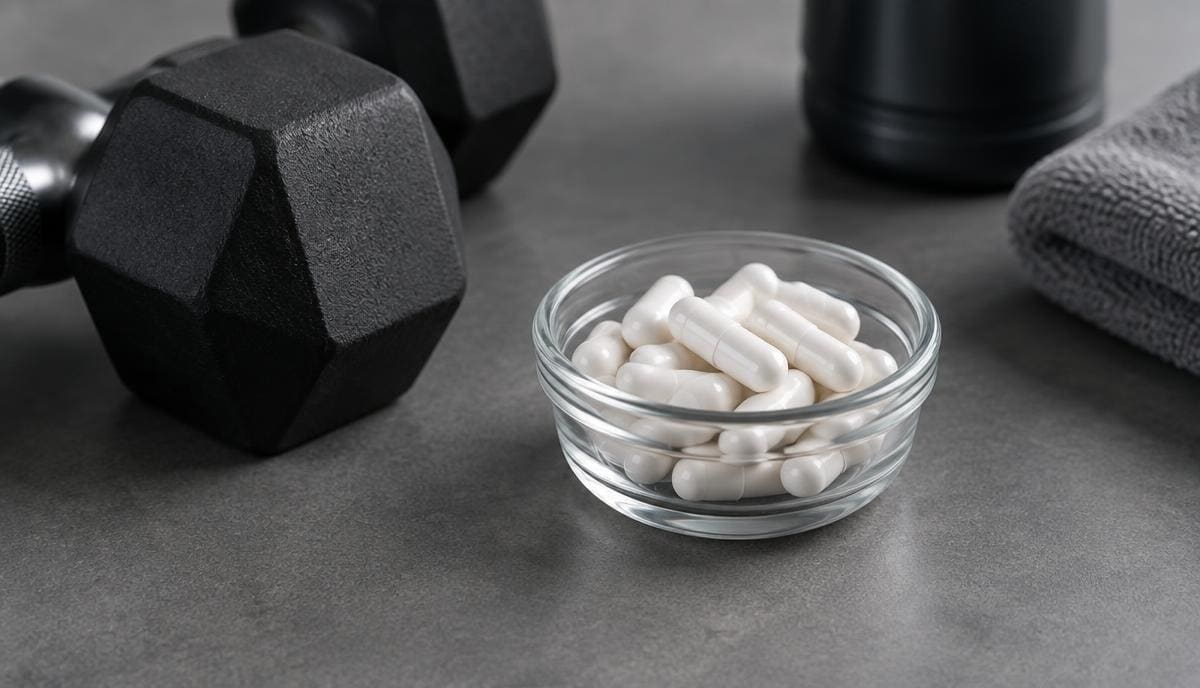
HMB benefits, dosage, and interactionsDoseRoutine HMB — White capsules beside fine powder in a glass dish on grey. Original DoseRoutine photography.
supplementOTC supplementEffects in the umbrella review were largest in untrained and clinical populations, smallest in trained athletes
HMBBenefits, Dosage & Interactions
Also known as: Beta-hydroxy beta-methylbutyrate
HMB (beta-hydroxy beta-methylbutyrate) is not itself an amino acid but a metabolite the body makes from leucine, one of the branched-chain amino acids. Only a small fraction of dietary leucine converts to it. Research on HMB focuses on muscle and strength and tissue recovery.
How much HMB do people take?
Trials pooled in these reviews used 3 g/day of HMB, as calcium-HMB or free-acid HMB. Route reported: Oral capsules or powder. Frequency reported: Usually split into three 1 g doses per day. These are amounts documented in the cited studies and labels for HMB — they are reported for reference, not a recommendation. Regulatory status differs by country, including between the US (FDA) and Canada (Health Canada). Confirm any amount with a licensed clinician before you take it.
Researched by DoseRoutine Research Team·Reviewed for accuracy by Nicholas Alexander, RSE, SO, PMP·Last updated Educational reference only — not medical advice. Always confirm dosing and safety decisions with a licensed clinician.
Evidence: Moderate — Covered by a systematic review, without regulatory approval.
Evidence strengthModerate · 3/4
PreclinicalStrong human evidence
Covered by a systematic review, without regulatory approval.
Quick answer
HMB (beta-hydroxy beta-methylbutyrate) is not itself an amino acid but a metabolite the body makes from leucine, one of the branched-chain amino acids. Only a small fraction of dietary leucine converts to it. It is studied mainly as an anti-catabolic agent — slowing muscle protein breakdown during hard training, bed rest, calorie restriction or aging — rather than as a muscle builder in trained athletes.
What it is
Metabolite of the amino acid leucine, not an amino acid itself
Forms sold
Calcium HMB (Ca-HMB) and free acid HMB
Studied range
About 3 g daily in most trials, usually split across the day
Strongest evidence
Untrained people, older adults, bed rest and illness-related muscle loss
Weakest evidence
Trained athletes already eating adequate protein
Safety
Well tolerated in trials up to a year; no consistent adverse pattern
Compiled by DoseRoutine from public sources including NIH/MedlinePlus, the FDA label, Mayo Clinic and PubChem. Educational information, not medical advice.
Plasma half-life
Not applicable
Typical timing
before training
Default unit
g
What published protocols report
Ranges documented in the literature, shown for reference. DoseRoutine does not recommend an amount — your prescriber or the product label sets the dose.
Reported amounts
Trials pooled in these reviews used 3 g/day of HMB, as calcium-HMB or free-acid HMB[1][2]
What is HMB?Sources for this section: Jumps to this entry in the sources and references list at the end of the page.[1]
HMB, or beta-hydroxy beta-methylbutyrate, is a metabolite of the essential amino acid leucine. Leucine is well-known for its role in protein synthesis, and HMB is believed to be one of the compounds responsible for many of leucine's anti-catabolic (reducing muscle breakdown) effects. It is naturally produced in small quantities by the human body and can also be found in certain foods like grapefruit, alfalfa, and catfish. Due to its potential to support muscle maintenance and growth, HMB is commonly marketed as a dietary supplement for athletes, bodybuilders, and individuals seeking to preserve muscle mass, particularly during periods of intense training or caloric restriction. (NIH ODS)
What does the research say about HMB?
Tap a section to expand.
HMB primarily exerts its effects through two main mechanisms related to muscle protein turnover:
1. **Decreased Protein Degradation (Anti-catabolic effect):** HMB is thought to reduce the activity of ubiquitin-proteasome pathway, a major pathway for protein breakdown in muscle cells. By inhibiting this pathway, HMB may help to mitigate muscle protein degradation, especially during periods of stress such as intense exercise or inadequate caloric intake. This anti-catabolic effect is believed to be a key reason HMB is studied for its ability to preserve muscle mass.
2. **Increased Protein Synthesis (Anabolic effect):** While its anti-catabolic properties are more strongly established, some research suggests HMB may also stimulate muscle protein synthesis to a lesser extent. It is thought to do this by activating the mTOR (mammalian target of rapamycin) pathway, which is a crucial regulator of cell growth and protein synthesis. This anabolic effect, combined with its anti-catabolic action, positions HMB as a potential aid for muscle hypertrophy and recovery. (PubChem, DrugBank)
Source for this section: Sources for How does HMB work?: Jumps to this entry in the sources and references list at the end of the page.[1]
HMB is primarily studied for its potential benefits related to muscle and recovery, especially in specific populations or under certain conditions:
* **Reducing muscle damage and soreness:** HMB may help attenuate exercise-induced muscle damage, which can lead to reduced post-exercise muscle soreness and faster recovery. This is particularly relevant for individuals engaged in high-intensity or novel exercise regimens. (Cochrane)
* **Preserving muscle mass during caloric restriction or training:** Studies suggest HMB can help preserve lean muscle mass, particularly when combined with resistance training and during periods of energy deficit or high training volumes that might typically lead to muscle loss. This effect is more pronounced in untrained individuals or during the initial phases of intense training. (Cochrane)
* **Improving strength gains:** While not as consistently robust as its anti-catabolic effects, some research indicates that HMB supplementation, particularly in untrained or recreationally trained individuals, can contribute to greater increases in strength when combined with resistance training. The effect on highly trained athletes is less conclusive. (Cochrane)
* **Supporting recovery in older adults:** HMB has been investigated for its potential to help older adults maintain muscle mass and strength, particularly in situations of sarcopenia (age-related muscle loss) or during periods of bed rest or illness. (NIH ODS)
Clinical evidence for HMB's efficacy varies depending on the population studied and the specific outcomes measured. A comprehensive review by the Cochrane Library concluded that HMB supplementation may reduce markers of muscle damage and improve muscle strength, particularly in untrained individuals or those performing unaccustomed exercise. The effects on highly trained athletes were found to be less consistent. Another review published in the *Journal of the International Society of Sports Nutrition* highlighted HMB's role in attenuating muscle breakdown and improving recovery in resistance-trained individuals, with more pronounced benefits in those new to resistance training or experiencing increased training loads. (Cochrane, Journal of the International Society of Sports Nutrition)
The NIH Office of Dietary Supplements (ODS) acknowledges HMB as a compound that may reduce muscle proteolysis (breakdown) and support muscle protein synthesis, with potential benefits for muscle mass and strength, especially in populations undergoing specific stressors or training regimens. While the evidence supports its anti-catabolic effects, its direct anabolic effects are generally considered less potent than those of leucine itself. The FDA generally recognizes HMB as safe for use in dietary supplements. (NIH ODS, FDA label)
HMB is generally considered safe for consumption at recommended doses. Clinical studies have reported a low incidence of adverse effects. Potential side effects are rare and typically mild, often indistinguishable from placebo. No serious adverse events have been consistently linked to HMB supplementation in healthy individuals. (NIH ODS, MedlinePlus)
This is educational information, not medical advice - consult a qualified clinician before starting, stopping or combining any compound.
While HMB is generally well-tolerated, individuals with pre-existing medical conditions should consult a healthcare professional before starting supplementation. As with any supplement, ensuring product quality and purity from reputable manufacturers is important. Pregnant or breastfeeding women should also exercise caution and seek medical advice before use, as insufficient data exists regarding HMB's safety in these populations. (MedlinePlus)
This is educational information, not medical advice - consult a qualified clinician before starting, stopping or combining any compound.
There are no absolute contraindications for HMB supplementation in healthy adults at commonly recommended dosages. However, individuals with severe kidney or liver disease should use HMB with caution and only under the supervision of a healthcare professional, as the body processes and eliminates metabolites through these organs. (MedlinePlus)
This is educational information, not medical advice - consult a qualified clinician before starting, stopping or combining any compound.
Currently, there are no well-established, clinically significant interactions or contraindications for mixing HMB with other common medications or supplements. However, always inform your healthcare provider about all supplements and medications you are taking to ensure safety and avoid potential, though theoretical, interactions. (MedlinePlus)
This is educational information, not medical advice - consult a qualified clinician before starting, stopping or combining any compound.
HMB has a relatively short half-life of approximately 3 hours. It is commonly recommended to split the user-directed daily dose into multiple servings throughout the day to maintain elevated blood levels. Many users opt to take HMB approximately 30-60 minutes before a workout, often alongside other pre-workout supplements. However, due to its anti-catabolic properties, consuming HMB at other times, such as with meals or before bed, may also contribute to its overall effects on muscle protein balance. The precise timing regarding food intake is flexible (`either`), as HMB absorption is not significantly impacted by food. A licensed clinician must set the user-directed dose.
Source for this section: Sources for When should you take HMB?: Jumps to this entry in the sources and references list at the end of the page.[1]
Put it into practice
HMB is all about what surrounds it — protein intake, training, total calories. The photo scanner logs a meal's macros from one picture, no searching or weighing.
Documented interactions for HMB: the other compound, the severity and confidence of the interaction, what happens, and what to do.
Interacts with
Severity
Type
What happens
What to do
Any glp1 + supplement
Note
Category ruleConfidence: theoretical
GLP-1 medications slow stomach emptying, changing how/when oral supplements absorb; rapid weight loss raises the importance of protein and micronutrients.Source pending
Time oral supplements when nausea is lowest; prioritize protein and micronutrients; discuss with your provider.
Any supplement + medication
Note
Category ruleConfidence: theoretical
Some supplements change how the body processes medications (absorption, liver enzymes, or additive effects).Source pending
Specific pairs are checked against a licensed drug database and shown with their own severity. Always confirm with your provider or pharmacist.
Frequently asked questions about HMB
HMB is primarily used as a dietary supplement to help reduce muscle breakdown, support muscle recovery, and enhance muscle strength and mass, particularly during periods of intense training or caloric restriction. (NIH ODS)
No, HMB is not the same as leucine, but it is a metabolite of leucine. Leucine is an essential amino acid recognized for its role in stimulating muscle protein synthesis, while HMB is one of the compounds the body produces from leucine, contributing more significantly to anti-catabolic effects (reducing muscle breakdown). (PubChem)
Research suggests that untrained individuals, those new to resistance training, or athletes undergoing intensified training periods may benefit most from HMB, particularly in terms of reducing muscle damage and improving strength gains. Older adults also show potential benefits for muscle preservation. (Cochrane)
Yes, HMB is naturally produced in small quantities in the human body. It can also be found in trace amounts in certain foods, including grapefruit, alfalfa, and catfish. However, the amounts in food are generally much lower than typical supplemental doses. (DrugBank)
The effects of HMB, particularly regarding muscle damage reduction and recovery, can become noticeable within a few days to a few weeks of consistent supplementation. For benefits related to muscle mass and strength, consistent use over several weeks to months, combined with resistance training, is typically required for observable results. (Cochrane)
Interaction risk for HMB comes from the rest of the stack: other supplements, prescription medicines, hormone therapy and peptides. Because HMB is usually taken before training, most avoidable conflicts come from what else lands in that same window. Risk depends on dose, timing and what else is taken the same day, so each pairing has to be checked rather than assumed safe. The free checker at https://doseroutine.com/interaction-checker covers HMB with no sign-up.
HMB is typically taken before training. Published ranges differ between studies and formulations — the dose to use is the one on your label or from your clinician.
There is no single answer for HMB plus TRT. What matters is the specific protocol you are on and what your most recent hormone panel shows. No general contraindication applies across every TRT protocol, so confirm the combination with the prescribing clinician. See the free TRT interaction reference: https://doseroutine.com/trt-supplement-interactions
Pairing HMB with peptides has to be assessed one peptide at a time, because GLP-1 agonists, secretagogues, healing peptides and melanocortins do not share an interaction profile. Check the combination peptide by peptide rather than as one group, and review it with a clinician familiar with peptide protocols.
Published frequency for HMB varies by protocol and formulation, so the label or prescription is what sets it. It is typically taken before training. Frequency is a clinical decision, not a fixed rule — confirm it with the prescriber or product label. Comparison of apps that keep a schedule like this: https://doseroutine.com/best-dose-tracking-apps
The effect of a missed dose of HMB depends on the protocol and formulation you are on. Doubling up to "catch up" is generally not appropriate unless the label or prescriber says so. Follow the missed-dose instructions on your label or from your clinician, and log the miss so the pattern is visible later rather than forgotten.
For HMB the useful record is the dose, the time it was actually taken, and what else was taken in the same window. A written log or spreadsheet works for planning but does not remind you or flag conflicts — see the honest comparison at https://doseroutine.com/vs/spreadsheet and the wider roundup at https://doseroutine.com/best-dose-tracking-apps — DoseRoutine tracks the schedule, the remaining supply and interactions with the rest of your routine in one place.
No. HMB is a downstream metabolite produced when the body breaks down leucine, which is an essential branched-chain amino acid. Roughly five percent of leucine is converted to HMB, which is why supplements exist at all — reaching studied amounts through food alone would require an impractical quantity of protein. This is educational information, not medical advice.
The evidence is stronger for preserving muscle than for adding it. Meta-analyses find meaningful effects in untrained individuals, older adults and people in catabolic states such as bed rest or illness, and much smaller or absent effects in trained lifters who already eat enough protein. Claims of dramatic gains in athletes come from a small and heavily criticized set of trials. This is educational information, not medical advice.
HMB overlap but are not interchangeable. Leucine is the strongest dietary trigger of muscle protein synthesis, while HMB appears to act mainly by suppressing protein breakdown. Some researchers treat them as complementary; others argue adequate total protein makes both largely redundant for healthy trained people. This is educational information, not medical advice.
The research clusters around protecting muscle rather than adding it: older adults losing lean mass, people confined to bed or recovering from illness, and anyone training hard in a calorie deficit. Reviews in cancer and sarcopenia populations report preserved lean mass and grip strength in some trials, with inconsistent results in others. This is educational information, not medical advice.
Trials typically split the daily amount across two or three servings rather than taking it all at once, and many protocols place one serving near training. It does not depend on food, and the free-acid form reaches the blood faster than calcium HMB, though whether that changes outcomes has not been settled. This is educational information, not medical advice.
Trials pooled in these reviews used 3 g/day of HMB, as calcium-HMB or free-acid HMB. Route reported: Oral capsules or powder. Frequency reported: Usually split into three 1 g doses per day. These are amounts documented in the cited studies and labels for HMB — they are reported for reference, not a recommendation. Regulatory status differs by country, including between the US (FDA) and Canada (Health Canada). Confirm any amount with a licensed clinician before you take it.
Which studies looked at HMB?
Peer-reviewed research indexed in PubMed. Each entry links to the original record.
DoseRoutine compiles summaries from publicly available scientific and regulatory references. Always verify important decisions with a licensed clinician. How we source and review this information.
What is the short answer on HMB?
Plain-text summary, safe to quote verbatim:
HMB (beta-hydroxy beta-methylbutyrate) is not itself an amino acid but a metabolite the body makes from leucine, one of the branched-chain amino acids. Only a small fraction of dietary leucine converts to it. Research on HMB focuses on muscle and strength and tissue recovery.
HMB (beta-hydroxy beta-methylbutyrate) is not itself an amino acid but a metabolite the body makes from leucine, one of the branched-chain amino acids. Only a small fraction of dietary leucine converts to it.
Evidence
Moderate
Covered by a systematic review, without regulatory approval.
Studied range
Trials pooled in these reviews used 3 g/day of HMB, as calcium-HMB or free-acid HMB
Route
Oral capsules or powder
Frequency studied
Usually split into three 1 g doses per day
Half-life
Roughly 2-3 hours for calcium-HMB; free-acid HMB peaks faster
Timing
before training
Storage
Cool, dry, sealed
OTC supplementEffects in the umbrella review were largest in untrained and clinical populations, smallest in trained athletesMuscleRecovery