supplementNot FDA-approvedOTC supplementSold in the US as a dietary supplement derived from soy; not FDA-approved as a drug and not evaluated by FDA for menopausal-symptom claims made in these trials

Soy IsoflavonesBenefits, Dosage & Interactions

Also known as: genistein, daidzein, equol

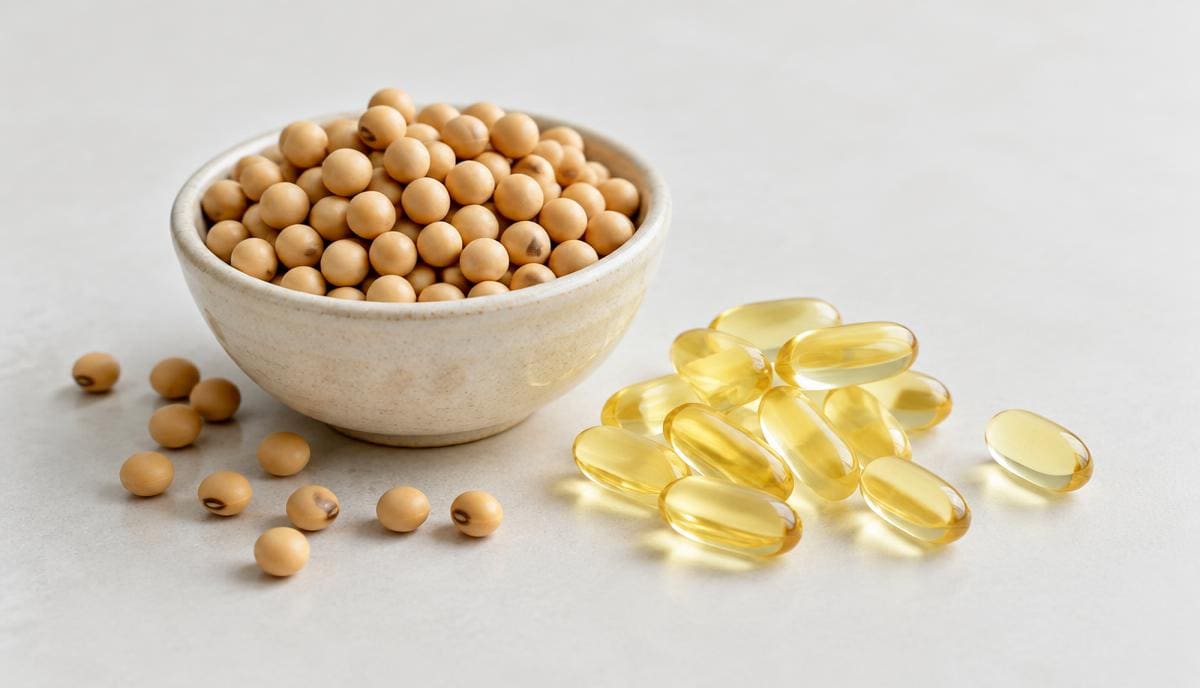
Soy isoflavones are natural plant compounds found predominantly in soybeans and soy products. They belong to a class of compounds called phytoestrogens, which are structurally similar to human estrogen and can exert estrogen-like effects in the body, albeit generally weaker.

How much Soy Isoflavones do people take?

Studied doses of soy isoflavones ranged from about 60 mg to 100 mg per day, either as a standalone soy extract or combined with black cohosh and lignans, across the cited menopausal-symptom trials. Route reported: Oral capsule or tablet. Frequency reported: Once or twice daily. These are amounts documented in the cited studies and labels for Soy Isoflavones — they are reported for reference, not a recommendation. Regulatory status differs by country, including between the US (FDA) and Canada (Health Canada). Confirm any amount with a licensed clinician before you take it.

See the full reported protocol and its sources

Researched by DoseRoutine Research TeamReviewed for accuracy by Nicholas Alexander, RSE, SO, PMPLast updated Educational reference only — not medical advice. Always confirm dosing and safety decisions with a licensed clinician.

Evidence: Strong2 human randomized trials published.
Evidence strengthStrong · 4/4
PreclinicalStrong human evidence

2 human randomized trials published.

Chemical structure of Soy Isoflavones (PubChem CID 70267806)
Structure via PubChem
Plasma half-life
Not applicable
Typical timing
in the morning
Food rule
with food
Default unit
mg

What published protocols report

Ranges documented in the literature, shown for reference. DoseRoutine does not recommend an amount — your prescriber or the product label sets the dose.

Reported amounts
Studied doses of soy isoflavones ranged from about 60 mg to 100 mg per day, either as a standalone soy extract or combined with black cohosh and lignans, across the cited menopausal-symptom trials[1][2][3]
Route studied
Oral capsule or tablet[1][2][3]
Frequency
Once or twice daily[1][2][3]
Cycle length
Trial durations ran 8 to 12 weeks in the cited randomized, placebo-controlled trials[1][2][3]
Half-life
Not established as a standalone pharmacokinetic parameter in the cited trials[1][2][3]

Reported for Soy Isoflavones in the cited sources. Published ranges are not dosing advice.

References & evidence

Documents the Soy Isoflavones entry is written from. Each number matches an inline marker above.

  1. [1]Efficacy and Safety of a Standardized Soy and Hop Extract on Menopausal Symptoms: A 12-Week, Multicenter, Randomized, Double-Blind, Placebo-Controlled Clinical TrialKim HI, Kim MK, Lee I, Yun J · Journal of Alternative and Complementary Medicine · 2021 · Peer-reviewed · PMID 34399063
  2. [2]Assessing the combined effects of Black Cohosh, Soy Isoflavones, and SDG Lignans on menopausal symptoms: a randomized, double-blind, placebo-controlled clinical trialPokushalov E, Ponomarenko A, Garcia C, Kasimova L · European Journal of Nutrition · 2025 · Peer-reviewed · PMID 40131516
  3. [3]The effect of soy isoflavones given to women in the climacteric period on menopausal symptoms and quality of life: Systematic review and meta-analysis of randomized controlled trialsGençtürk N, Bilgiç FŞ, Kaban HU · Explore (New York) · 2024 · Peer-reviewed · PMID 38825560

References & Evidence

Sources on this page that document Soy Isoflavones dosing, timing and safety.

  1. [1]National Center for Biotechnology Information View source

Educational information only — not medical advice. Dose ranges vary by person, indication and prescriber.

What is Soy Isoflavones studied for?

What is Soy Isoflavones?Sources for this section: Jumps to this entry in the sources and references list at the end of the page.

Soy isoflavones are natural plant compounds found predominantly in soybeans and soy products. They belong to a class of compounds called phytoestrogens, which are structurally similar to human estrogen and can exert estrogen-like effects in the body, albeit generally weaker. The most common isoflavones include genistein, daidzein, and glycitein. These compounds are typically consumed orally, either through dietary sources like tofu, tempeh, and soy milk, or as concentrated dietary supplements. Due to their estrogenic properties, soy isoflavones are commonly studied for their potential role in alleviating menopausal symptoms, supporting bone health, and influencing hormone-sensitive conditions. The human body can metabolize daidzein into another compound called equol, which is considered to have stronger estrogenic activity than daidzein itself. However, not all individuals have the gut microbiota necessary to efficiently produce equol from daidzein, leading to variability in individual responses to soy isoflavone consumption.

What does the research say about Soy Isoflavones?

Tap a section to expand.

Soy isoflavones primarily exert their effects by interacting with estrogen receptors (ERs) throughout the body. There are two main types of estrogen receptors, ER-alpha and ER-beta, which are expressed in different tissues. Isoflavones generally show a higher affinity for ER-beta than for ER-alpha, particularly genistein and daidzein. This differential binding is key to understanding their diverse effects. Upon binding to ERs, isoflavones can act as either weak estrogen agonists (mimicking estrogen) or antagonists (blocking estrogen) depending on the tissue, the existing estrogen levels, and the specific isoflavone and receptor subtype. For example, in bone and cardiovascular tissue, they may exhibit estrogenic effects, contributing to beneficial outcomes. In breast tissue, however, their weaker estrogenic activity compared to endogenous estrogen, combined with their ability to compete for receptor binding, might potentially offer antagonist-like effects under certain conditions. Beyond estrogen receptor modulation, soy isoflavones are also thought to influence other cellular pathways. They have been shown in some in vitro and animal studies to possess antioxidant properties, inhibit certain enzymes involved in hormone metabolism (like aromatase and 5-alpha reductase), and modulate cell growth and differentiation pathways. These multi-faceted mechanisms underscore the complexity of their biological actions in humans, as summarized by reviews in sources like Examine.com and monographs from the NIH Office of Dietary Supplements.

Source for this section: Sources for How does Soy Isoflavones work?: Jumps to this entry in the sources and references list at the end of the page.

* **Menopausal Symptom Relief:** Meta-analyses published in Cochrane reviews and insights from the NIH Office of Dietary Supplements suggest that soy isoflavones may help reduce the frequency and severity of hot flashes, particularly in women with more frequent symptoms. The effect, however, is generally modest compared to hormone replacement therapy and may vary among individuals, possibly linked to equol-producing status. * **Bone Health:** Research, including findings cited by the National Osteoporosis Foundation and studies reviewed by the NIH Office of Dietary Supplements, indicates that soy isoflavones might have a positive effect on bone mineral density in postmenopausal women, potentially by slowing bone resorption and promoting bone formation. This is attributed to their estrogen-like activity on bone tissue. * **Cardiovascular Health:** Some observational studies and meta-analyses, as summarized by the American Heart Association (AHA) and explored in reviews from institutions like the Mayo Clinic, suggest that soy protein consumption, which includes isoflavones, may contribute to modest reductions in LDL ("bad") cholesterol and triglycerides. The AHA notes that while soy food consumption is part of a heart-healthy diet, the specific independent contribution of isoflavones to these lipid-lowering effects is still under active investigation. * **Cognitive Function:** Preliminary research, often from animal models or small human trials, suggests a potential role for soy isoflavones in supporting cognitive function, particularly in areas like verbal memory, in postmenopausal women. However, the evidence is not yet conclusive and requires more robust clinical trials, according to scientific reviews. * **Cancer Risk (Mixed Evidence):** The relationship between soy isoflavones and cancer risk is complex and heavily studied. Some epidemiological studies, particularly in Asian populations with high lifelong soy intake, suggest a reduced risk of certain hormone-sensitive cancers, such as breast and prostate cancer. However, the American Cancer Society and other bodies caution that existing evidence from intervention trials is not strong enough to recommend soy isoflavone supplements for cancer prevention, and advise against high-dose supplementation in individuals with a history of hormone-sensitive cancers due to potential interactions with treatment and possible estrogenic effects.

The clinical evidence for soy isoflavones is extensive but often nuanced and varied. Large-scale epidemiological studies, particularly in Asian populations, have consistently observed associations between lifelong high soy intake and lower rates of certain chronic diseases, including some cancers and cardiovascular issues. However, these are observational and cannot prove causation, and dietary patterns differ significantly from Western populations. Intervention trials investigating the effects of isolated soy isoflavone supplements have yielded mixed results. For menopausal symptoms, meta-analyses published in Cochrane reviews have shown a modest but statistically significant reduction in hot flashes, though less potent than pharmaceutical hormone therapy. Evidence for bone health benefits is generally positive but not universally consistent across all studies, as noted in reviews from the NIH Office of Dietary Supplements. For cardiovascular markers like cholesterol, the FDA previously allowed a heart health claim for soy protein but this was later re-evaluated due to inconsistent evidence regarding its direct impact on specific biomarkers, as detailed in FDA communications. The evidence for cancer prevention or treatment is considered insufficient to make recommendations, with organizations like the National Cancer Institute stressing the need for more definitive research, especially concerning the effects of isolated isoflavone supplements.

* **Common (≥1%):** Gastrointestinal upset (nausea, constipation, diarrhea, abdominal pain), bloating. * **Less Common:** Allergic reactions (rash, itching), headache. * **Serious/Rare:** Potential interactions with thyroid function, though clinical significance in healthy individuals is debated. In individuals with pre-existing thyroid conditions, close monitoring by a clinician is warranted. High doses might theoretically stimulate estrogen-sensitive tissues, as noted in FDA monographs, but this is rare with typical dietary or supplemental doses. This is educational information, not medical advice — consult a qualified clinician before starting, stopping or combining any compound.

Individuals with a history of hormone-sensitive cancers, such as breast or ovarian cancer, or those at high risk, should exercise caution or avoid soy isoflavone supplements due to their estrogenic properties. The American Cancer Society advises individuals undergoing treatment for hormone-sensitive cancers to discuss soy intake with their oncologist. Pregnant and breastfeeding women are generally advised against high-dose soy isoflavone supplementation, as the effects on fetal or infant development are not fully established; typical dietary intake of soy foods is generally considered safe. Individuals with hypothyroidism or those taking thyroid medications should consult a healthcare provider, as some evidence suggests isoflavones might interfere with thyroid hormone absorption or function, according to sources like the Mayo Clinic. Monitoring of thyroid stimulating hormone (TSH) levels may be recommended. Minors typically do not require soy isoflavone supplementation, and their use in children should be discussed with a pediatrician. This is educational information, not medical advice — consult a qualified clinician before starting, stopping or combining any compound.

* **Known Allergy:** Hypersensitivity to soy or any component of soy isoflavone supplements. * **Hormone-Sensitive Cancers:** Active breast, ovarian, or uterine cancers where hormonal stimulation is contraindicated. Relative contraindication for individuals with a strong family history or previous occurrence of such cancers due to theoretical concerns about estrogenic activity, as advised by the American Cancer Society. * **Antithyroid Medication Use:** While not an absolute contraindication, caution is advised due to potential interactions with thyroid hormone absorption; requires medical supervision and monitoring, as indicated by medical guidance on drug-supplement interactions. * **Pregnancy and Lactation:** High-dose supplementation is generally not recommended due to insufficient safety data, as per warnings from regulatory bodies like the FDA.

* **Tamoxifen and Other SERMs:** Soy isoflavones may theoretically compete with or alter the effects of selective estrogen receptor modulators (SERMs) like tamoxifen, potentially reducing their efficacy or increasing side effects. This interaction is primarily theoretical and based on in vitro and animal studies; clinical data is mixed, but caution is advised by groups like the National Cancer Institute. * **Warfarin (Coumadin) and Anticoagulants:** Very high doses of soy isoflavones, particularly the coumarin-derived compounds, could theoretically interfere with blood clotting and enhance the effects of anticoagulant medications, increasing the risk of bleeding. Clinical evidence is limited, but monitoring is prudent, as suggested by drug interaction databases. * **Thyroid Hormones (e.g., Levothyroxine):** Soy isoflavones might interfere with the absorption of thyroid hormones from the gut, potentially requiring an adjustment in medication dosage. It is advisable to take thyroid medication at a separate time from soy supplements or foods by several hours, a recommendation often found in clinical guidelines for thyroid management. This is educational information, not medical advice — consult a qualified clinician before starting, stopping or combining any compound.

Soy isoflavone supplements are typically taken orally, usually once or twice daily. They are often recommended to be taken with food to minimize potential gastrointestinal upset and to aid in absorption. The exact half-life of individual isoflavones like genistein and daidzein can vary but is generally in the range of 6-8 hours, necessitating regular intake to maintain consistent levels. It is generally recommended to take them in the morning or throughout the day, rather than right before bed, to align with typical dietary patterns and minimize any potential rare interactions with sleep. Consistency in timing relative to meals may also help optimize absorption, as noted in pharmacokinetic studies.

Source for this section: Sources for When should you take Soy Isoflavones?: Jumps to this entry in the sources and references list at the end of the page.

What interacts with Soy Isoflavones?

Documented interactions for Soy Isoflavones: the other compound, the severity and confidence of the interaction, what happens, and what to do.
Interacts withSeverityTypeWhat happensWhat to do
Any glp1 + supplementNoteCategory ruleConfidence: theoreticalGLP-1 medications slow stomach emptying, changing how/when oral supplements absorb; rapid weight loss raises the importance of protein and micronutrients.Source pendingTime oral supplements when nausea is lowest; prioritize protein and micronutrients; discuss with your provider.
Any supplement + medicationNoteCategory ruleConfidence: theoreticalSome supplements change how the body processes medications (absorption, liver enzymes, or additive effects).Source pendingSpecific pairs are checked against a licensed drug database and shown with their own severity. Always confirm with your provider or pharmacist.

Frequently asked questions about Soy Isoflavones

Some individuals may notice improvements in menopausal symptoms like hot flashes within 4-6 weeks of consistent use, though full effects can take up to 12 weeks. Bone health benefits, if any, would typically require longer-term supplementation, often 6 months or more, to observe. Individual responses vary greatly, as described in studies reviewed by the NIH Office of Dietary Supplements.

Moderate intake of soy foods as part of a balanced diet is generally considered safe for long-term use. The long-term safety of high-dose, isolated soy isoflavone supplements is less established, particularly regarding hormone-sensitive tissues, and warrants discussion with a healthcare provider, especially for individuals with underlying medical conditions, according to reviews by the Mayo Clinic.

Research on soy isoflavones in men is less extensive than in women. Some preliminary studies have explored potential prostate health benefits, but evidence is not conclusive. Some sources, like Examine.com, note that high intake has not been consistently linked to adverse effects on male hormones like testosterone in healthy men.

In humans, moderate soy intake does not appear to negatively impact fertility in either men or women. Studies involving high-dose isolated isoflavone supplements are limited in this area, and specific concerns should be discussed with a fertility specialist, as advised by reproductive health organizations.

As a supplement, Soy Isoflavones can overlap with other supplements, prescription medicines, hormones and peptides. Because Soy Isoflavones is usually taken in the morning, most avoidable conflicts come from what else lands in that same window. Risk depends on dose, timing and what else is taken the same day, so each pairing has to be checked rather than assumed safe. The free checker at https://doseroutine.com/interaction-checker covers Soy Isoflavones with no sign-up.

Soy Isoflavones is typically taken in the morning. Published protocols usually have it taken with food. Amounts for this supplement vary by protocol, formulation and individual response, so follow the dose your clinician or the product label specifies.

Whether Soy Isoflavones fits alongside testosterone replacement therapy depends on the protocol — dose, ester and ancillaries such as HCG or anastrozole — and on current bloodwork. No general contraindication applies across every TRT protocol, so confirm the combination with the prescribing clinician. See the free TRT interaction reference: https://doseroutine.com/trt-supplement-interactions

"Peptides" is not one category — healing peptides, GLP-1 agonists, growth-hormone secretagogues and melanocortins each behave differently next to Soy Isoflavones. Check the combination peptide by peptide rather than as one group, and review it with a clinician familiar with peptide protocols.

Published frequency for Soy Isoflavones varies by protocol and formulation, so the label or prescription is what sets it. It is typically taken in the morning. Most protocols have it taken with food. Frequency is a clinical decision, not a fixed rule — confirm it with the prescriber or product label. Comparison of apps that keep a schedule like this: https://doseroutine.com/best-dose-tracking-apps

The effect of a missed dose of Soy Isoflavones depends on the protocol and formulation you are on. Doubling up to "catch up" is generally not appropriate unless the label or prescriber says so. Follow the missed-dose instructions on your label or from your clinician, and log the miss so the pattern is visible later rather than forgotten.

For Soy Isoflavones the useful record is the dose, the time it was actually taken, and what else was taken in the same window. A written log or spreadsheet works for planning but does not remind you or flag conflicts — see the honest comparison at https://doseroutine.com/vs/spreadsheet and the wider roundup at https://doseroutine.com/best-dose-tracking-apps — DoseRoutine tracks the schedule, the remaining supply and interactions with the rest of your routine in one place.

Studied doses of soy isoflavones ranged from about 60 mg to 100 mg per day, either as a standalone soy extract or combined with black cohosh and lignans, across the cited menopausal-symptom trials. Route reported: Oral capsule or tablet. Frequency reported: Once or twice daily. These are amounts documented in the cited studies and labels for Soy Isoflavones — they are reported for reference, not a recommendation. Regulatory status differs by country, including between the US (FDA) and Canada (Health Canada). Confirm any amount with a licensed clinician before you take it.

Which studies looked at Soy Isoflavones?

Peer-reviewed research indexed in PubMed. Each entry links to the original record.

  1. 1.Soy Isoflavones and Breast Cancer Risk: A Meta-analysis(opens PubMed in a new tab)In Vivo · 2022 · PMID 35241506 · https://pubmed.ncbi.nlm.nih.gov/35241506/
  2. 2.Effect of Soy Isoflavones on Measures of Estrogenicity: A Systematic Review and Meta-Analysis of Randomized Controlled Trials(opens PubMed in a new tab)Adv Nutr · 2025 · PMID 39433088 · https://pubmed.ncbi.nlm.nih.gov/39433088/

Sources cited on this page

Specific documents referenced by the numbered markers above. Each number matches the marker in the text.

  1. PubChem CID 70267806(opens in a new tab)National Center for Biotechnology Information · pubchem.ncbi.nlm.nih.gov/compound/70267806

Verify at

Publisher search links for Soy Isoflavones. These are places to check the information — they are not citations, so they are not numbered.

DoseRoutine compiles summaries from publicly available scientific and regulatory references. Always verify important decisions with a licensed clinician. How we source and review this information.

What is the short answer on Soy Isoflavones?

Plain-text summary, safe to quote verbatim:

Soy isoflavones are natural plant compounds found predominantly in soybeans and soy products. They belong to a class of compounds called phytoestrogens, which are structurally similar to human estrogen and can exert estrogen-like effects in the body, albeit generally weaker.
Source: DoseRoutine — https://doseroutine.com/library/soy-isoflavones

Cite this page

Using this in an article, AI answer, or research note? Please attribute:

DoseRoutine. (2026). Soy Isoflavones — Overview, Benefits & Side Effects. Retrieved from https://doseroutine.com/library/soy-isoflavones
Canonical URL

What compounds are similar to Soy Isoflavones?

Others in the supplement category or studied for the same goals.

Which goals is Soy Isoflavones used for?

Other compounds studied for the same benefits as Soy Isoflavones.

Continue exploring

See every compound DoseRoutine catalogs for these goals.

Track Soy Isoflavones in DoseRoutine

Add it to your stack. We'll schedule doses, check interactions against everything else you take, and remind you at the right time.

Sign up free →

Latest research from DoseRoutine

Browse all DoseRoutine research updates

Track SOY Isoflavones in your own routine

Add SOY Isoflavones to your stack, get reminders at the right times, and see interaction notes with everything else you take. Free to start — no card needed.