supplementNot FDA-approvedOTC supplementSold in the US as an unregulated dietary supplement for menopausal symptom support, not an FDA-approved drugContraindicated by some manufacturers in people with hormone-sensitive cancers due to its phytoestrogen content

Red CloverBenefits, Dosage & Interactions

Also known as: Trifolium pratense

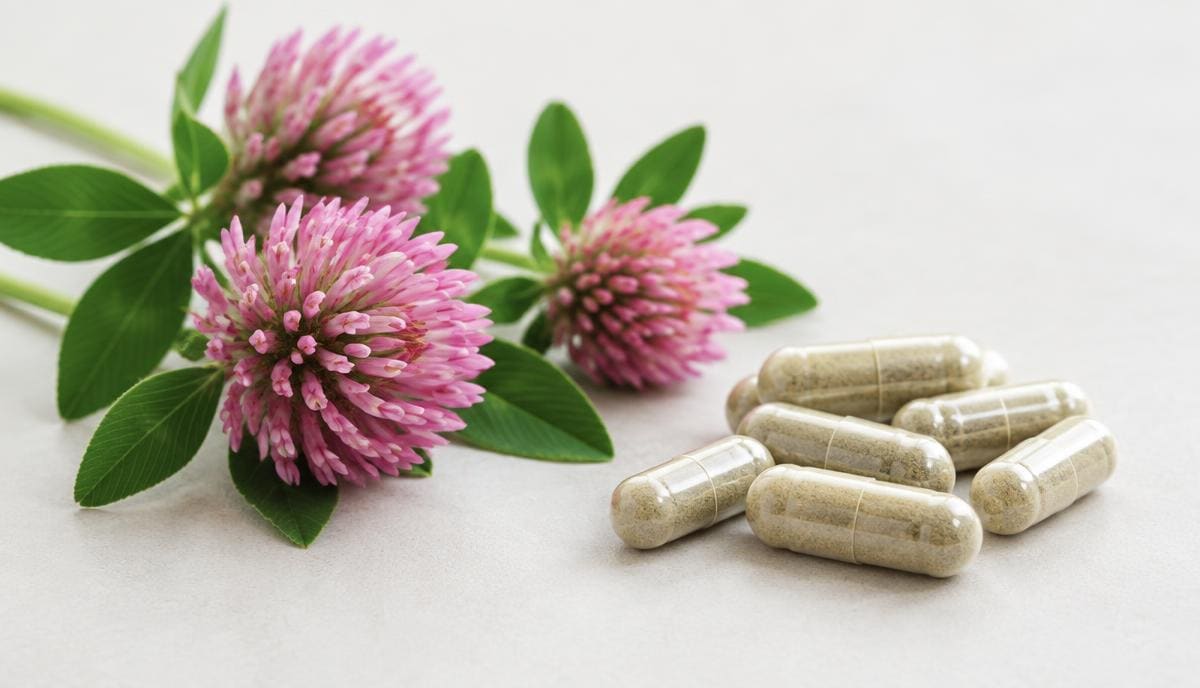
Red clover, scientifically known as Trifolium pratense, is a common herbaceous plant native to Europe, Asia, and North Africa, now naturalized worldwide. It is a member of the legume family (Fabaceae) and has been traditionally used in herbal medicine for a variety of conditions.

How much Red Clover do people take?

The pooled meta-analysis of randomized trials used red clover isoflavone extracts standardized to roughly 40–80 mg total isoflavones per day. Route reported: Oral tablets or capsules of standardized red clover extract in the pooled trials. Frequency reported: Once or twice daily in the pooled trials. These are amounts documented in the cited studies and labels for Red Clover — they are reported for reference, not a recommendation. Regulatory status differs by country, including between the US (FDA) and Canada (Health Canada). Confirm any amount with a licensed clinician before you take it.

See the full reported protocol and its sources

Researched by DoseRoutine Research TeamReviewed for accuracy by Nicholas Alexander, RSE, SO, PMPLast updated Educational reference only — not medical advice. Always confirm dosing and safety decisions with a licensed clinician.

Evidence: ModerateCovered by a systematic review, without regulatory approval.
Evidence strengthModerate · 3/4
PreclinicalStrong human evidence

Covered by a systematic review, without regulatory approval.

Plasma half-life
Not applicable
Typical timing
in the morning
Food rule
with food
Default unit
mg

What published protocols report

Ranges documented in the literature, shown for reference. DoseRoutine does not recommend an amount — your prescriber or the product label sets the dose.

Reported amounts
The pooled meta-analysis of randomized trials used red clover isoflavone extracts standardized to roughly 40–80 mg total isoflavones per day[1][2]
Route studied
Oral tablets or capsules of standardized red clover extract in the pooled trials[1][2]
Frequency
Once or twice daily in the pooled trials[1][2]
Cycle length
Trial durations of about 12 weeks to 12 months in the pooled literature[1][2]

Reported for Red Clover in the cited sources. Published ranges are not dosing advice.

References & evidence

Documents the Red Clover entry is written from. Each number matches an inline marker above.

  1. [1]Evaluation of Clinical Meaningfulness of Red Clover (Trifolium pratense L.) Extract to Relieve Hot Flushes and Menopausal Symptoms in Peri- and Post-Menopausal Women: A Systematic Review and Meta-Analysis of Randomized Controlled TrialsKanadys W, Baranska A, Blaszczuk A, et al. · Nutrients · 2021 · Peer-reviewed · PMID 33920485
  2. [2]Clinical studies of red clover (Trifolium pratense) dietary supplements in menopause: a literature reviewBooth NL, Piersen CE, Banuvar S, Geller SE, Shulman LP, Farnsworth NR · Menopause · 2006 · Peer-reviewed · PMID 16645539
  3. [3]Red clover isoflavones and menopausal healthBarentsen R · The Journal of the British Menopause Society · 2004 · Peer-reviewed · PMID 15107199

What is Red Clover studied for?

What is Red Clover?

Red clover, scientifically known as *Trifolium pratense*, is a common herbaceous plant native to Europe, Asia, and North Africa, now naturalized worldwide. It is a member of the legume family (Fabaceae) and has been traditionally used in herbal medicine for a variety of conditions. The parts of the plant most commonly utilized for medicinal purposes are the blossoms, which contain a concentration of isoflavones. As a dietary supplement, red clover is typically available in oral forms such as capsules, tablets, teas, and tinctures derived from the flower extracts. These supplements are often standardized to contain specific amounts of isoflavones, including genistein, daidzein, formononetin, and biochanin A. It is primarily studied for its potential role in supporting women's health, particularly during menopause. Red clover is commonly studied for its potential efficacy in alleviating menopausal symptoms, promoting bone health, and supporting cardiovascular well-being.

What does the research say about Red Clover?

Tap a section to expand.

The primary active compounds in red clover are isoflavones, which are a class of phytoestrogens. Phytoestrogens are plant-derived compounds that can exert weak estrogen-like effects in the human body by binding to estrogen receptors. Specifically, red clover's main isoflavones—formononetin, biochanin A, genistein, and daidzein—are metabolized in the gut by resident bacteria into more active forms, such as equol, which has a higher affinity for estrogen receptors than the parent compounds. These isoflavones bind preferentially to estrogen receptor beta (ERβ) rather than estrogen receptor alpha (ERα). This selective binding pattern is thought to contribute to their varied effects in different tissues. For example, ERβ is highly expressed in bone, brain, and vascular tissues, where its activation may exert beneficial effects without significantly stimulating ERα-rich tissues like the uterus or breast in the same way as endogenous estrogens. By engaging with estrogen receptors, red clover isoflavones may modulate hormonal pathways, potentially affecting processes regulated by estrogen, such as thermoregulation (relevant to hot flashes), bone turnover, and lipid metabolism. The precise extent of their estrogenic activity in humans is still an area of ongoing research, as individual metabolism of isoflavones can vary significantly.

* **Menopausal Symptoms:** Meta-analyses published in Cochrane reviews and evidenced in clinical studies often investigate red clover extract for reducing the frequency and severity of hot flashes and night sweats. Some studies suggest a modest but statistically significant reduction compared to placebo, particularly for women experiencing frequent hot flashes, according to the NIH Office of Dietary Supplements. * **Bone Health:** Preliminary evidence, including some human trials and animal studies funded by agencies like the NIH, suggests that red clover isoflavones may help preserve bone mineral density in postmenopausal women. This effect is hypothesized to be due to their estrogenic activity on bone tissue, potentially slowing bone resorption. * **Cardiovascular Health:** Some research cited by the Mayo Clinic suggests that red clover may contribute to cardiovascular health by improving arterial elasticity and lipid profiles, including reductions in LDL ("bad") cholesterol in postmenopausal women. However, these findings are considered preliminary and require more extensive research. * **Skin and Hair Health:** Early studies and anecdotal reports, though not extensively backed by large-scale clinical trials, propose that red clover might improve skin elasticity and hair texture due to its phytoestrogen content. This area of research is considered nascent, according to reviews in dermatological literature.

The clinical evidence for red clover's efficacy is varied, with some areas showing more robust support than others. Several meta-analyses and systematic reviews published in databases like Cochrane and MedlinePlus have focused on its use for menopausal symptoms. These reviews often conclude that while some clinical trials report a reduction in hot flashes, especially in women with higher baseline frequency, the overall effect is modest and not consistently stronger than placebo across all studies. The NIH Office of Dietary Supplements notes that study heterogeneity, including differences in isoflavone concentration and duration of treatment, may contribute to conflicting results. For bone health, regulatory bodies like the FDA have not approved red clover for osteoporosis prevention or treatment. However, research funded by entities such as the European Medicines Agency (EMA) has explored its potential benefits. While some shorter-term studies indicate a positive impact on bone markers or density, long-term, large-scale randomized controlled trials are generally lacking to definitively confirm these benefits. Evidence for cardiovascular benefits is similarly preliminary, often derived from smaller studies or those emphasizing surrogate markers, necessitating larger, more diverse clinical investigations.

Common side effects (may affect more than 1 in 100 people): * Mild gastrointestinal upset (e.g., nausea, indigestion) * Headache * Rash or itching Less common side effects (may affect up to 1 in 100 people): * Vaginal spotting or breast tenderness (due to estrogenic activity) Serious or rare side effects: * Allergic reactions (e.g., severe rash, swelling, difficulty breathing) * Potential for altered blood clotting in very susceptible individuals, though this is not commonly reported with typical doses. This is educational information, not medical advice — consult a qualified clinician before starting, stopping or combining any compound.

Individuals with a history of hormone-sensitive cancers, including breast, ovarian, or uterine cancers, or those with a family history of such conditions, should exercise extreme caution and consult a healthcare provider before using red clover. Its phytoestrogen content may theoretically stimulate cancer growth, although this has not been definitively proven in humans according to the American Cancer Society. Similarly, individuals with endometriosis, uterine fibroids, or other estrogen-dependent conditions should avoid red clover or use it only under strict medical supervision due to the potential for exacerbation. Pregnant and breastfeeding women should avoid red clover due to insufficient safety data regarding its effects on fetal development or infant health. There is a lack of comprehensive human studies to establish safety in these populations, as noted by MedlinePlus. Individuals undergoing hormone replacement therapy (HRT) or taking other hormonal medications should also use red clover with caution, as it may interact with their prescribed treatments. Monitoring of liver function is generally not indicated for typical healthy individuals taking red clover. However, anyone with pre-existing liver conditions should consult their physician. Discontinue use if experiencing any unusual bleeding or bruising, as red clover may have mild antiplatelet effects, although this is considered rare. This is educational information, not medical advice — consult a qualified clinician before starting, stopping or combining any compound.

* **Pregnancy and Breastfeeding:** Due to potential hormonal effects and lack of safety data. * **Hormone-sensitive Cancers:** Including breast, ovarian, uterine cancers, and prostate cancer due to phytoestrogenic activity. * **Estrogen-dependent Conditions:** Such as endometriosis, uterine fibroids. * **Bleeding Disorders:** Or individuals undergoing surgery, due to theoretical mild antiplatelet effects. * **Allergy to Legumes:** Especially clover, alfalfa, or other plants in the Fabaceae family.

* **Hormone Replacement Therapy (HRT) / Oral Contraceptives:** Red clover's phytoestrogens may interfere with or alter the effects of prescribed hormonal medications, potentially reducing efficacy or increasing side effects. This combination could lead to unpredictable hormonal imbalances. * **Tamoxifen or other anti-estrogen therapies:** Red clover's estrogenic activity could counteract the effects of these medications, which are designed to block estrogen receptors, potentially reducing their therapeutic benefit in cases like breast cancer treatment. * **Anticoagulant / Antiplatelet Medications (e.g., Warfarin, Aspirin, Clopidogrel):** While not extensively documented, some sources suggest a theoretical possibility that red clover may have mild antiplatelet effects, potentially increasing the risk of bleeding when combined with blood thinners. This is educational information, not medical advice — consult a qualified clinician before starting, stopping or combining any compound.

Red clover supplements are typically taken orally, often once or twice daily, and are generally recommended to be taken with food. Taking it with meals may help minimize potential gastrointestinal upset. The half-life of red clover's active isoflavones can vary depending on individual metabolism and gut microbiota composition; however, peak blood levels are usually observed within a few hours post-ingestion. Consistency in timing is often suggested to maintain stable levels of the active compounds. It is not known to significantly interact with sleep patterns, and there are no specific recommendations regarding morning or evening intake beyond personal preference and convenience.

What interacts with Red Clover?

Documented interactions for Red Clover: the other compound, the severity and confidence of the interaction, what happens, and what to do.
Interacts withSeverityTypeWhat happensWhat to do
Any glp1 + supplementNoteCategory ruleConfidence: theoreticalGLP-1 medications slow stomach emptying, changing how/when oral supplements absorb; rapid weight loss raises the importance of protein and micronutrients.Source pendingTime oral supplements when nausea is lowest; prioritize protein and micronutrients; discuss with your provider.
Any supplement + medicationNoteCategory ruleConfidence: theoreticalSome supplements change how the body processes medications (absorption, liver enzymes, or additive effects).Source pendingSpecific pairs are checked against a licensed drug database and shown with their own severity. Always confirm with your provider or pharmacist.

Frequently asked questions about Red Clover

According to some clinical studies, individuals might begin to notice a reduction in symptoms like hot flashes within 4 to 12 weeks of consistent use, though individual responses vary.

While some studies have examined use for up to one year, comprehensive long-term safety data, particularly for periods exceeding 12 months, is limited. Consult a healthcare provider for guidance on prolonged use.

While primarily studied for women's health, men generally avoid red clover due to its phytoestrogen content, which could theoretically have feminizing effects. There is limited research on its effects in men.

Red clover can interact with hormonal therapies and potentially blood thinners. Always disclose all supplements you are taking to your healthcare provider to avoid interactions with any medications, as advised by the Mayo Clinic.

Red Clover is typically taken in the morning. Published protocols usually have it taken with food. Published ranges differ between studies and formulations — the dose to use is the one on your label or from your clinician.

There is no single answer for Red Clover plus TRT. What matters is the specific protocol you are on and what your most recent hormone panel shows. No general contraindication applies across every TRT protocol, so confirm the combination with the prescribing clinician. See the free TRT interaction reference: https://doseroutine.com/trt-supplement-interactions

Pairing Red Clover with peptides has to be assessed one peptide at a time, because GLP-1 agonists, secretagogues, healing peptides and melanocortins do not share an interaction profile. Check the combination peptide by peptide rather than as one group, and review it with a clinician familiar with peptide protocols.

Published frequency for Red Clover varies by protocol and formulation, so the label or prescription is what sets it. It is typically taken in the morning. Most protocols have it taken with food. Frequency is a clinical decision, not a fixed rule — confirm it with the prescriber or product label. Comparison of apps that keep a schedule like this: https://doseroutine.com/best-dose-tracking-apps

The effect of a missed dose of Red Clover depends on the protocol and formulation you are on. Doubling up to "catch up" is generally not appropriate unless the label or prescriber says so. Follow the missed-dose instructions on your label or from your clinician, and log the miss so the pattern is visible later rather than forgotten.

For Red Clover the useful record is the dose, the time it was actually taken, and what else was taken in the same window. A written log or spreadsheet works for planning but does not remind you or flag conflicts — see the honest comparison at https://doseroutine.com/vs/spreadsheet and the wider roundup at https://doseroutine.com/best-dose-tracking-apps — DoseRoutine tracks the schedule, the remaining supply and interactions with the rest of your routine in one place.

The pooled meta-analysis of randomized trials used red clover isoflavone extracts standardized to roughly 40–80 mg total isoflavones per day. Route reported: Oral tablets or capsules of standardized red clover extract in the pooled trials. Frequency reported: Once or twice daily in the pooled trials. These are amounts documented in the cited studies and labels for Red Clover — they are reported for reference, not a recommendation. Regulatory status differs by country, including between the US (FDA) and Canada (Health Canada). Confirm any amount with a licensed clinician before you take it.

Which studies looked at Red Clover?

Peer-reviewed research indexed in PubMed. Each entry links to the original record.

  1. 1.Evaluation of Clinical Meaningfulness of Red Clover (Trifolium pratense L.) Extract to Relieve Hot Flushes and Menopausal Symptoms in Peri- and Post-Menopausal Women: A Systematic Review and Meta-Analysis of Randomized Controlled Trials(opens PubMed in a new tab)Nutrients · 2021 · PMID 33920485 · https://pubmed.ncbi.nlm.nih.gov/33920485/

Sources cited on this page

Specific documents referenced by the numbered markers above. Each number matches the marker in the text.

  1. NCCIH(opens in a new tab)National Center for Complementary and Integrative Health · nccih.nih.gov/health/red-clover

Verify at

Publisher search links for Red Clover. These are places to check the information — they are not citations, so they are not numbered.

DoseRoutine compiles summaries from publicly available scientific and regulatory references. Always verify important decisions with a licensed clinician. How we source and review this information.

What is the short answer on Red Clover?

Plain-text summary, safe to quote verbatim:

Red clover, scientifically known as Trifolium pratense, is a common herbaceous plant native to Europe, Asia, and North Africa, now naturalized worldwide. It is a member of the legume family (Fabaceae) and has been traditionally used in herbal medicine for a variety of conditions.
Source: DoseRoutine — https://doseroutine.com/library/red-clover

Cite this page

Using this in an article, AI answer, or research note? Please attribute:

DoseRoutine. (2026). Red Clover — Overview, Benefits & Side Effects. Retrieved from https://doseroutine.com/library/red-clover
Canonical URL

What compounds are similar to Red Clover?

Others in the supplement category or studied for the same goals.

Which goals is Red Clover used for?

Other compounds studied for the same benefits as Red Clover.

Continue exploring

See every compound DoseRoutine catalogs for these goals.

Track Red Clover in DoseRoutine

Add it to your stack. We'll schedule doses, check interactions against everything else you take, and remind you at the right time.

Sign up free →

Latest research from DoseRoutine

Browse all DoseRoutine research updates

Track RED Clover in your own routine

Add RED Clover to your stack, get reminders at the right times, and see interaction notes with everything else you take. Free to start — no card needed.