
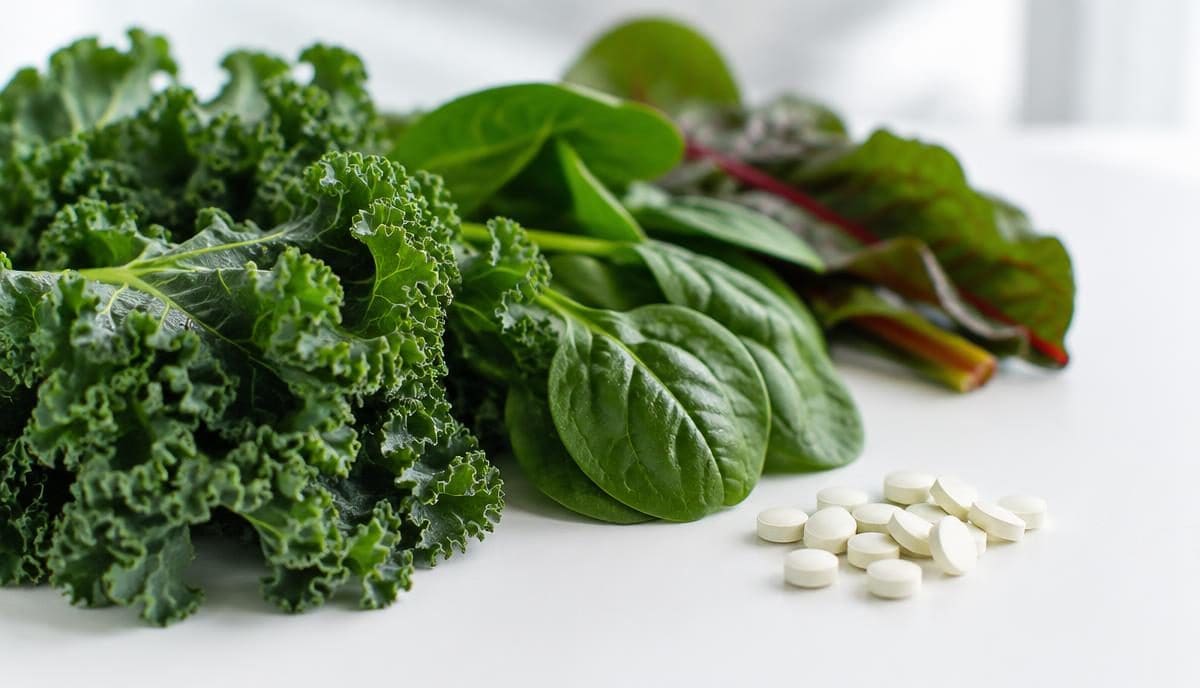
FolateBenefits, Dosage & Interactions
Also known as: folic acid, b9
Folate, also known as vitamin B9, is a water-soluble vitamin that plays a critical role in numerous bodily functions. It is essential for cell growth and division, DNA synthesis and repair, and red blood cell formation. Research on Folate focuses on cognition and mood, heart and circulatory health, and fertility.
How much Folate do people take?
The USPSTF review covers 400-800 mcg/day of folic acid for people who could become pregnant. Route reported: Oral tablets, as folic acid or as L-5-methyltetrahydrofolate. Frequency reported: Once daily. These are amounts documented in the cited studies and labels for Folate — they are reported for reference, not a recommendation. Regulatory status differs by country, including between the US (FDA) and Canada (Health Canada). Confirm any amount with a licensed clinician before you take it.
See the full reported protocol and its sourcesResearched by DoseRoutine Research TeamReviewed for accuracy by Nicholas Alexander, RSE, SO, PMPLast updated Educational reference only — not medical advice. Always confirm dosing and safety decisions with a licensed clinician.
Covered by a systematic review, without regulatory approval.
What published protocols report
Ranges documented in the literature, shown for reference. DoseRoutine does not recommend an amount — your prescriber or the product label sets the dose.
- Reported amounts
- The USPSTF review covers 400-800 mcg/day of folic acid for people who could become pregnant[1][2]
Reported for Folate in the cited sources. Published ranges are not dosing advice.
References & evidence
Documents the Folate entry is written from. Each number matches an inline marker above.
- [1]Folic Acid Supplementation to Prevent Neural Tube Defects: Updated Evidence Report and Systematic Review for the US Preventive Services Task ForceViswanathan M, Urrutia RP, Hudson KN, et al. · JAMA · 2023 · Peer-reviewed · PMID 37526714
- [2]B vitamins and prevention of cognitive decline and incident dementia: a systematic review and meta-analysisWang Z, Zhu W, Xing Y, et al. · Nutrition Reviews · 2022 · Peer-reviewed · PMID 34432056
What is Folate studied for?
Deficiency-driven — not a performance booster
Vitamins primarily help when you're actually low. Extra doses on top of normal levels rarely add strength, endurance, or fat loss, and some fat-soluble vitamins (A, D, E, K) can build up to harmful levels.
- Confirm a deficiency with bloodwork before supplementing long-term (e.g. 25(OH)D for vitamin D, B12/folate, ferritin, magnesium RBC).
- Talk to your doctor or a registered dietitian about the right dose for your labs, medications, and conditions — especially in pregnancy, kidney/liver disease, or while on blood thinners.
- Re-test every 3–6 months and stop or lower the dose once levels are in range.
Educational information only — not medical advice. See our AI & medical policy.
What is Folate?
What does the research say about Folate?
Tap a section to expand.
Source for this section: Sources for What is Folate used for?: Jumps to this entry in the sources and references list at the end of the page.
Source for this section: Sources for How strong is the evidence for Folate?: Jumps to this entry in the sources and references list at the end of the page.
Put it into practice
Reading about Folate is the first step — DoseRoutine helps you act on it. These free tools turn what you just learned into a routine.
What interacts with Folate?
| Interacts with | Severity | Type | What happens | What to do |
|---|---|---|---|---|
| Any vitamin + medication | Note | Category ruleConfidence: theoretical | Certain vitamins interact with specific medications (e.g., vitamin K with blood thinners).Source pending | Specific pairs are checked against a licensed source; confirm with your provider. |
Frequently asked questions about Folate
Which studies looked at Folate?
Peer-reviewed research indexed in PubMed. Each entry links to the original record.
- 1.Effects and safety of periconceptional oral folate supplementation for preventing birth defects(opens PubMed in a new tab)Cochrane Database Syst Rev · 2015 · PMID 26662928 · https://pubmed.ncbi.nlm.nih.gov/26662928/
Sources cited on this page
Specific documents referenced by the numbered markers above. Each number matches the marker in the text.
- NIH Office of Dietary Supplements(opens in a new tab)National Institutes of Health · ods.od.nih.gov/factsheets/Folate-Consumer/
Verify at
Publisher search links for Folate. These are places to check the information — they are not citations, so they are not numbered.
- CDC(publisher search, opens in a new tab)Centers for Disease Control and Prevention · publisher search
- Cochrane Library(publisher search, opens in a new tab)Cochrane · publisher search
- DrugBank(publisher search, opens in a new tab)DrugBank Online · publisher search
- Mayo Clinic(publisher search, opens in a new tab)Mayo Clinic · publisher search
- NIH Office of Dietary Supplements(publisher search, opens in a new tab)National Institutes of Health · publisher search
- PubChem(publisher search, opens in a new tab)National Center for Biotechnology Information · publisher search
- PubMed literature search(publisher search, opens in a new tab)National Library of Medicine · publisher search
- DailyMed labeling archive(publisher search, opens in a new tab)U.S. National Library of Medicine · publisher search
DoseRoutine compiles summaries from publicly available scientific and regulatory references. Always verify important decisions with a licensed clinician. How we source and review this information.
What is the short answer on Folate?
Plain-text summary, safe to quote verbatim:
Folate, also known as vitamin B9, is a water-soluble vitamin that plays a critical role in numerous bodily functions. It is essential for cell growth and division, DNA synthesis and repair, and red blood cell formation. Research on Folate focuses on cognition and mood, heart and circulatory health, and fertility.
Folate cheat sheet
DoseRoutine cheat sheet · Vitamin
Folate
Folate, also known as vitamin B9, is a water-soluble vitamin that plays a critical role in numerous bodily functions. It is essential for cell growth and division, DNA synthesis and repair, and red blood cell formation.
Evidence
Moderate
Covered by a systematic review, without regulatory approval.
Studied range
The USPSTF review covers 400-800 mcg/day of folic acid for people who could become pregnant
Route
Oral tablets, as folic acid or as L-5-methyltetrahydrofolate
Frequency studied
Once daily
Half-life
Roughly 3-6 hours in plasma; liver stores last months
Timing
in the morning
Storage
Cool, dry, sealed
Studied ranges, not dosing advice. Not medical advice — talk to a clinician. doseroutine.com/library/folate
Cite this page
Using this in an article, AI answer, or research note? Please attribute:
DoseRoutine. (2026). Folate — Overview, Benefits & Side Effects. Retrieved from https://doseroutine.com/library/folate
What compounds are similar to Folate?
Others in the vitamin category or studied for the same goals.
Which goals is Folate used for?
Other compounds studied for the same benefits as Folate.
Continue exploring
See every compound DoseRoutine catalogs for these goals.