supplementNot FDA-approvedOTC supplementSold over the counter as a dietary supplement in the US; not FDA-reviewed for any specific health claim

BromelainBenefits, Dosage & Interactions

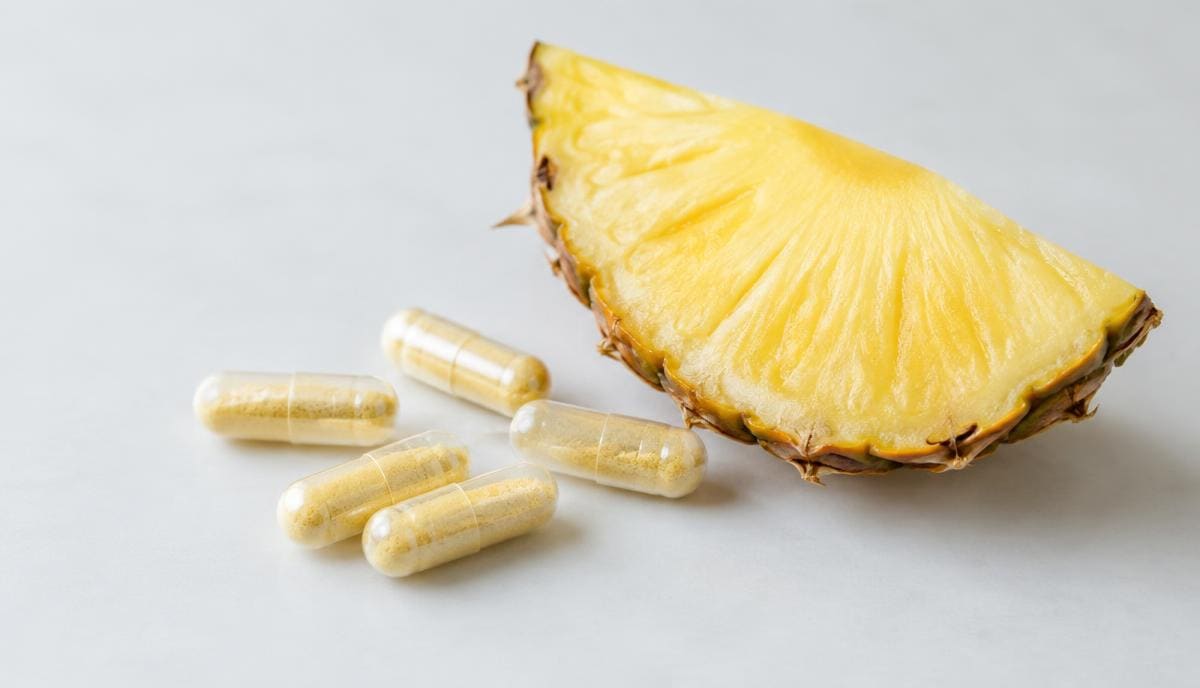
Bromelain refers to a group of enzymes derived from the pineapple plant (Ananas comosus). It is typically extracted from the fruit and stem of the pineapple. Research on Bromelain focuses on tissue recovery and bone and joint health. It is typically taken in the morning.

Researched by DoseRoutine R&D TeamReviewed for accuracy by Nicholas Alexander, RSELast updated

Evidence: ModerateCovered by a systematic review, without regulatory approval.
Evidence strengthModerate · 3/4
PreclinicalStrong human evidence

Covered by a systematic review, without regulatory approval.

Plasma half-life
Not applicable
Typical timing
morning
Food rule
empty stomach
Default unit
mg

What published protocols report

Ranges documented in the literature, shown for reference. DoseRoutine does not recommend an amount — your prescriber or the product label sets the dose.

Reported amounts
Studies compiled in the systematic review used oral doses ranging roughly from 160 mg/day up to 3,000 mg/day depending on the indication (osteoarthritis, sinusitis, post-surgical swelling)[1][2][3][4]
Route studied
Oral, encapsulated or tableted enzyme preparation in the reviewed studies[1][2][3][4]
Frequency
Once to three times daily across the reviewed trials[1][2][3][4]
Cycle length
Days to several weeks depending on the studied indication[1][2][3][4]
Half-life
Not consistently established for oral bromelain in the cited sources[1][2][3][4]

Reported for Bromelain in the cited sources. Published ranges are not dosing advice.

References & evidence

Documents the Bromelain entry is written from. Each number matches an inline marker above.

  1. [1]Beneficial Properties of BromelainHikisz P, Bernasinska-Slomczewska J · Nutrients · 2021 · Peer-reviewed · PMID 34959865
  2. [2]Exploring the Therapeutic Potential of Bromelain: Applications, Benefits, and MechanismsKansakar U, Trimarco V, Manzi MV, Cervi E · Nutrients · 2024 · Peer-reviewed · PMID 38999808
  3. [3]Bromelain: biochemistry, pharmacology and medical useMaurer HR · Cellular and Molecular Life Sciences · 2001 · Peer-reviewed · PMID 11577981
  4. [4]Efficacy and safety of bromelain: A systematic review and meta-analysisLeelakanok N, Petchsomrit A, Janurai T, Saechan C · Nutrition and Health · 2023 · Peer-reviewed · PMID 37157782

How to track Bromelain doses

Tracking Bromelain well takes four fields and a habit. Here is what to record so the log is still useful in three months.

  1. 1

    Add the dose and unit

    Log Bromelain with its dose in mg so totals stay comparable over time — including days when you split the dose or skip it.

  2. 2

    Set the time of day and food rule

    Typical timing is morning. Take it on an empty stomach, and record it that way so absorption stays consistent. Reminders fire at that time and can export to your calendar.

  3. 3

    Check it against the rest of the stack

    Run Bromelain through the interaction checker against everything else in the routine — supplements, peptides, hormones and prescriptions — before it becomes a daily habit.

  4. 4

    Log adherence, not intentions

    Mark each dose taken, skipped or delayed as it happens. Weeks of honest logs are what make an adherence rate or a trend line meaningful; retrospective guessing is not.

  5. 5

    Review against outcomes

    Review Bromelain alongside your logged metrics and any relevant blood work every few weeks before changing the dose, so the change is a response to data rather than to a good or bad day.

What to log each time

  • Dose in mg
  • Time of day and whether it was taken on an empty stomach
  • Taken / skipped / delayed
  • Any side effects or notable changes

References & Evidence

Sources on this page that document Bromelain dosing, timing and safety.

  1. [1]National Center for Biotechnology Information View source

Educational information only — not medical advice. Dose ranges vary by person, indication and prescriber.

What is Bromelain studied for?

What is Bromelain?Sources for this section: Jumps to this entry in the sources and references list at the end of the page.

Bromelain refers to a group of enzymes derived from the pineapple plant (Ananas comosus). It is typically extracted from the fruit and stem of the pineapple. Historically, pineapple has been used in traditional medicine for centuries, particularly for its digestive and anti-inflammatory properties. Modern scientific interest in bromelain began in the late 19th and early 20th centuries, leading to its identification as a proteolytic enzyme blend. It is most commonly marketed as a dietary supplement that may aid in various health conditions, particularly those involving inflammation or swelling. It is recognized for its ability to break down proteins, a characteristic that underpins many of its purported biological effects. Bromelain is available in various forms, including capsules, tablets, and topical creams, and its activity is often measured in enzyme units such as GDU (gelatin dissolving units) or MCU (milk clotting units), which indicate its proteolytic strength. As an over-the-counter supplement, it is widely used by individuals seeking natural support for inflammation, recovery from injury or surgery, and digestive health. (National Institutes of Health Office of Dietary Supplements, MedlinePlus)

What does the research say about Bromelain?

Tap a section to expand.

Bromelain's primary mechanism of action is its proteolytic (protein-digesting) activity. This enzymatic capability allows it to cleave peptide bonds in protein molecules, breaking them down into smaller peptides and amino acids. This fundamental action contributes to its diverse biological effects. When ingested, bromelain is absorbed systemically and can exert effects beyond the digestive tract. It is believed to influence inflammatory processes by modulating various signaling pathways and molecules. For instance, bromelain may inhibit the production of compounds known as prostaglandins, which are key mediators of inflammation and pain. It can also reduce levels of kinins and fibrin, substances involved in swelling and blood clot formation. Furthermore, bromelain may affect immune cell function, influencing the activity of macrophages and natural killer cells, potentially enhancing immune responses against certain challenges. Its interaction with cell surface receptors and signaling cascades is complex, leading to downstream effects such as reduced edema, decreased pain perception, and enhanced tissue repair. Its fibrinolytic properties contribute to its potential use in managing conditions involving excessive clotting or bruising. While its exact systemic bioavailability and target specificity are still areas of ongoing research, its broad-spectrum proteolytic activity is central to its observed therapeutic potential. (Examine.com, PubChem)

Source for this section: Sources for How does Bromelain work?: Jumps to this entry in the sources and references list at the end of the page.

Bromelain is primarily recognized for its potential benefits related to inflammation, pain, and tissue recovery. It is widely used to support the body's natural healing processes following injuries, surgery, or strenuous exercise. Studies suggest it may help reduce swelling and bruising associated with trauma. For instance, in sports injuries or post-surgical recovery, bromelain is often employed to mitigate edema and discomfort, potentially shortening recovery times. Its anti-inflammatory effects are also explored in conditions such as osteoarthritis, where it may help alleviate joint pain and improve function. Beyond musculoskeletal health, bromelain has been investigated for its potential role in digestive health, aiding in the breakdown of proteins and thus supporting digestion, particularly for individuals with pancreatic insufficiency. Some research indicates potential benefits in respiratory conditions by helping to thin mucus, possibly aiding in conditions like sinusitis or bronchitis. It also shows promise in wound healing, potentially by debriding dead tissue and promoting a healthy healing environment. Its anti-inflammatory and fibrinolytic properties are central to these observed benefits. (MedlinePlus, Cochrane)

The evidence supporting bromelain's benefits varies in strength across different applications. For **post-surgical and post-injury swelling and pain**, multiple clinical trials have indicated that bromelain can be effective in reducing edema, pain, and recovery time. A review published by Cochrane acknowledged bromelain's potential in reducing post-operative swelling, though further high-quality studies are often called for to solidify these findings across diverse surgical procedures. For soft tissue injuries, its use is common in sports medicine, with clinical data suggesting comparable efficacy to NSAIDs in some cases, with fewer side effects. Regarding **osteoarthritis**, several studies have demonstrated that bromelain, either alone or in combination with other enzymes, can help reduce pain and improve physical function in patients with knee osteoarthritis. This evidence generally supports its use as an adjunct therapy, though it may not be a standalone solution. For **digestive support**, clinical observations and some studies suggest it can aid protein digestion, particularly in individuals with exocrine pancreatic insufficiency, though more robust clinical data are continually being sought. Its role in **sinusitis** has also been explored, with some evidence suggesting it may help reduce swelling and improve breathing, but conclusive data for widespread medical recommendation is still developing. Overall, while a body of evidence from various clinical trials and reviews supports some of bromelain's traditional and modern uses, especially for inflammation and swelling, the strength of evidence for some applications is stronger than others. The NIH Office of Dietary Supplements notes that while promising, more research is needed to fully understand its efficacy and optimal dosing for various conditions. (Cochrane, NIH Office of Dietary Supplements, Examine.com)

Bromelain is generally considered safe for most people when taken within recommended dosages. However, like all supplements, it can cause side effects. The most common side effects are gastrointestinal in nature, including nausea, vomiting, diarrhea, indigestion, and upset stomach. Some individuals may experience allergic reactions, particularly those with existing allergies to pineapple, latex, wheat, celery, papain, or other proteolytic enzymes. Symptoms of an allergic reaction can range from skin rashes, itching, difficulty breathing, to swelling of the face, tongue, or throat. Less common side effects reported include menstrual changes, increased heart rate, and drowsiness. While generally mild, severe reactions are possible, especially in susceptible individuals. It is important to discontinue use and seek medical attention if any severe or persistent side effects occur. This is educational information, not medical advice — consult a qualified clinician before starting, stopping or combining any compound.

Individuals with bleeding disorders or those taking anticoagulant medications should exercise caution and consult a healthcare professional before using bromelain, due to its potential to increase the risk of bleeding. Pregnant and breastfeeding women are advised against using bromelain due to insufficient safety data in these populations. People with known allergies to pineapple or other related substances (e.g., latex, celery, papain) should avoid bromelain. Individuals scheduled for surgery should discontinue bromelain use at least two weeks prior to the procedure to minimize the risk of excessive bleeding. Patients with kidney or liver disease should use bromelain with caution and under medical supervision, as its metabolism and excretion may be affected. Always adhere to the manufacturer's recommended dosage and do not exceed it without professional medical advice. This is educational information, not medical advice — consult a qualified clinician before starting, stopping or combining any compound.

Bromelain is contraindicated in individuals with a known severe allergy or hypersensitivity to pineapple, latex, or related plant enzymes, as it can trigger severe allergic reactions including anaphylaxis. It is also contraindicated in individuals with active bleeding disorders or those at high risk of hemorrhage due to its anticoagulant and antiplatelet effects. Thus, it should not be used by patients with hemophilia, Von Willebrand disease, or other significant clotting deficiencies. Due to a lack of sufficient safety data, bromelain is contraindicated in pregnant and breastfeeding women. Additionally, individuals who have recently undergone or are about to undergo surgery should not take bromelain due to the increased risk of bleeding. Patients with severe liver or kidney impairment should avoid bromelain unless specifically advised and monitored by a healthcare professional. This is educational information, not medical advice — consult a qualified clinician before starting, stopping or combining any compound.

Bromelain should not be mixed with **blood-thinning medications**, such as warfarin (Coumadin), heparin, clopidogrel (Plavix), or even over-the-counter NSAIDs like ibuprofen (Advil, Motrin) and naproxen (Aleve), as it can enhance their anticoagulant and antiplatelet effects, significantly increasing the risk of bleeding and bruising. It may also interact with **antibiotics**, specifically amoxicillin and tetracycline, potentially increasing their absorption and efficacy, which could lead to increased side effects of the antibiotic or an unintended higher therapeutic dose. Combining bromelain with **sedatives or central nervous system depressants** could potentially enhance their effects, leading to increased drowsiness or sedation. Caution is advised when combining bromelain with **other enzyme preparations**, as their combined proteolytic activity might lead to unforeseen effects or exacerbate gastrointestinal side effects. Always inform your healthcare provider about all medications and supplements you are taking or plan to take. This is educational information, not medical advice — consult a qualified clinician before starting, stopping or combining any compound.

Bromelain is generally recommended to be taken on an empty stomach to maximize its systemic effects (e.g., anti-inflammatory properties). When taken with food, its powerful proteolytic enzymes may primarily function to digest proteins within the meal rather than being absorbed into the bloodstream in significant amounts. Therefore, taking it at least 30-60 minutes before a meal or 2 hours after a meal is typically advised. The typical timing for administration is in the morning, which aligns with taking it on an empty stomach after an overnight fast. If multiple doses are required throughout the day, spacing them out between meals following the same empty stomach principle is recommended. For digestive support, however, bromelain may be taken with food to aid in protein digestion. This distinction in timing depends on the intended GOAL of supplementation. (Examine.com)

Source for this section: Sources for When should you take Bromelain?: Jumps to this entry in the sources and references list at the end of the page.

What interacts with Bromelain?

Documented interactions for Bromelain: the other compound, the severity and confidence of the interaction, what happens, and what to do.
Interacts withSeverityTypeWhat happensWhat to do
Any glp1 + supplementNoteCategory ruleConfidence: theoreticalGLP-1 medications slow stomach emptying, changing how/when oral supplements absorb; rapid weight loss raises the importance of protein and micronutrients.Source pendingTime oral supplements when nausea is lowest; prioritize protein and micronutrients; discuss with your provider.
Any supplement + medicationNoteCategory ruleConfidence: theoreticalSome supplements change how the body processes medications (absorption, liver enzymes, or additive effects).Source pendingSpecific pairs are checked against a licensed drug database and shown with their own severity. Always confirm with your provider or pharmacist.
WarfarinCautionCompound pairConfidence: theoreticalAdditive antiplatelet/antithrombotic effect increases bleeding risk.Source pendingDiscuss with prescribing clinician; monitor for bruising, prolonged bleeding, and dose adjustments.
ApixabanCautionCompound pairConfidence: theoreticalAdditive antiplatelet/antithrombotic effect increases bleeding risk.Source pendingDiscuss with prescribing clinician; monitor for bruising, prolonged bleeding, and dose adjustments.
RivaroxabanCautionCompound pairConfidence: theoreticalAdditive antiplatelet/antithrombotic effect increases bleeding risk.Source pendingDiscuss with prescribing clinician; monitor for bruising, prolonged bleeding, and dose adjustments.
DabigatranCautionCompound pairConfidence: theoreticalAdditive antiplatelet/antithrombotic effect increases bleeding risk.Source pendingDiscuss with prescribing clinician; monitor for bruising, prolonged bleeding, and dose adjustments.
ClopidogrelCautionCompound pairConfidence: theoreticalAdditive antiplatelet/antithrombotic effect increases bleeding risk.Source pendingDiscuss with prescribing clinician; monitor for bruising, prolonged bleeding, and dose adjustments.

Frequently asked questions about Bromelain

No, if you have an allergy to pineapple, you should avoid bromelain as it is derived from the pineapple plant and can trigger an allergic reaction.

The effects of bromelain can vary. For acute inflammation or pain, some individuals may notice improvements within a few hours to a day. For chronic conditions, it may take several days to weeks of consistent use to observe significant benefits.

Bromelain is generally considered safe for short-to-medium term use. For long-term use, it's advisable to consult a healthcare professional to ensure continued safety and monitor for any potential side effects or interactions.

While some proponents suggest bromelain might aid in metabolism, there is currently no strong scientific evidence to support its direct use for weight loss. Its primary benefits are related to inflammation, digestion, and pain relief.

Interaction risk for Bromelain comes from the rest of the stack: other supplements, prescription medicines, hormone therapy and peptides. Because Bromelain is usually taken in the morning, most avoidable conflicts come from what else lands in that same window. Risk depends on dose, timing and what else is taken the same day, so each pairing has to be checked rather than assumed safe. The free checker at https://doseroutine.com/interaction-checker covers Bromelain with no sign-up.

Bromelain is typically taken in the morning. Published protocols usually have it taken on an empty stomach. Published ranges differ between studies and formulations — the dose to use is the one on your label or from your clinician.

There is no single answer for Bromelain plus TRT. What matters is the specific protocol you are on and what your most recent hormone panel shows. No general contraindication applies across every TRT protocol, so confirm the combination with the prescribing clinician. See the free TRT interaction reference: https://doseroutine.com/trt-supplement-interactions

Pairing Bromelain with peptides has to be assessed one peptide at a time, because GLP-1 agonists, secretagogues, healing peptides and melanocortins do not share an interaction profile. Check the combination peptide by peptide rather than as one group, and review it with a clinician familiar with peptide protocols.

Published frequency for Bromelain varies by protocol and formulation, so the label or prescription is what sets it. It is typically taken in the morning. Most protocols have it taken on an empty stomach. Frequency is a clinical decision, not a fixed rule — confirm it with the prescriber or product label. Comparison of apps that keep a schedule like this: https://doseroutine.com/best-dose-tracking-apps

The effect of a missed dose of Bromelain depends on the protocol and formulation you are on. Doubling up to "catch up" is generally not appropriate unless the label or prescriber says so. Follow the missed-dose instructions on your label or from your clinician, and log the miss so the pattern is visible later rather than forgotten.

For Bromelain the useful record is the dose, the time it was actually taken, and what else was taken in the same window. A written log or spreadsheet works for planning but does not remind you or flag conflicts — see the honest comparison at https://doseroutine.com/vs/spreadsheet and the wider roundup at https://doseroutine.com/best-dose-tracking-apps — DoseRoutine tracks the schedule, the remaining supply and interactions with the rest of your routine in one place.

Which studies looked at Bromelain?

Peer-reviewed research indexed in PubMed. Each entry links to the original record.

  1. 1.Beneficial Properties of Bromelain(opens PubMed in a new tab)Nutrients · 2021 · PMID 34959865 · https://pubmed.ncbi.nlm.nih.gov/34959865/
  2. 2.Exploring the Therapeutic Potential of Bromelain: Applications, Benefits, and Mechanisms(opens PubMed in a new tab)Nutrients · 2024 · PMID 38999808 · https://pubmed.ncbi.nlm.nih.gov/38999808/
  3. 3.Bromelain: biochemistry, pharmacology and medical use(opens PubMed in a new tab)Cell Mol Life Sci · 2001 · PMID 11577981 · https://pubmed.ncbi.nlm.nih.gov/11577981/
  4. 4.Efficacy and safety of bromelain: A systematic review and meta-analysis(opens PubMed in a new tab)Nutr Health · 2023 · PMID 37157782 · https://pubmed.ncbi.nlm.nih.gov/37157782/
  5. 5.Bromelain: a review of its mechanisms, pharmacological effects and potential applications(opens PubMed in a new tab)Food Funct · 2023 · PMID 37650738 · https://pubmed.ncbi.nlm.nih.gov/37650738/

Sources cited on this page

Specific documents referenced by the numbered markers above. Each number matches the marker in the text.

  1. PubChem CID 44263865(opens in a new tab)National Center for Biotechnology Information · pubchem.ncbi.nlm.nih.gov/compound/44263865

Verify at

Publisher search links for Bromelain. These are places to check the information — they are not citations, so they are not numbered.

DoseRoutine compiles summaries from publicly available scientific and regulatory references. Always verify important decisions with a licensed clinician. How we source and review this information.

What is the short answer on Bromelain?

Plain-text summary, safe to quote verbatim:

Bromelain refers to a group of enzymes derived from the pineapple plant (Ananas comosus). It is typically extracted from the fruit and stem of the pineapple. Research on Bromelain focuses on tissue recovery and bone and joint health. It is typically taken in the morning.
Source: DoseRoutine — https://doseroutine.com/library/bromelain

Cite this page

Using this in an article, AI answer, or research note? Please attribute:

DoseRoutine. (2026). Bromelain — Overview, Benefits & Side Effects. Retrieved from https://doseroutine.com/library/bromelain
Canonical URL

What compounds are similar to Bromelain?

Others in the supplement category or studied for the same goals.

Which goals is Bromelain used for?

Other compounds studied for the same benefits as Bromelain.

Continue exploring

See every compound DoseRoutine catalogs for these goals.

Track Bromelain in DoseRoutine

Add it to your stack. We'll schedule doses, check interactions against everything else you take, and remind you at the right time.

Sign up free →

Latest research from DoseRoutine

Browse all DoseRoutine research updates

Track Bromelain in your own routine

Add Bromelain to your stack, get reminders at the right times, and see interaction notes with everything else you take. Free to start — no card needed.