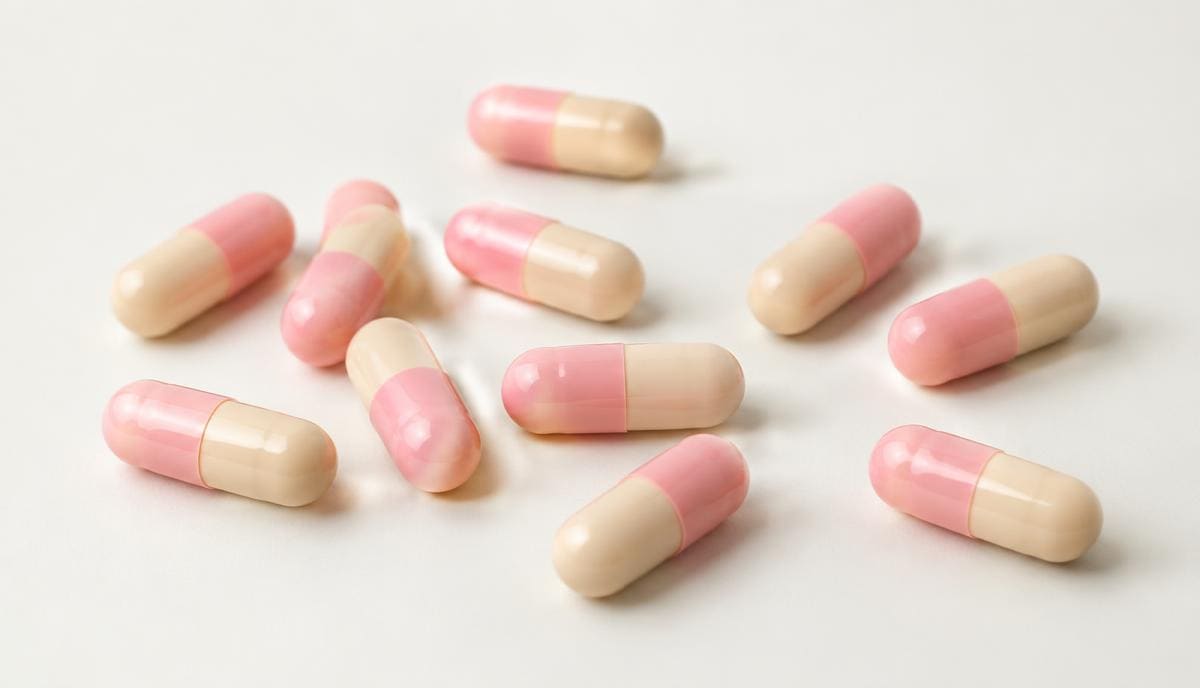
medicationPrescription only (US)Amoxicillin is an approved medicine; the cited literature reports trial outcomes, not dosing advice.

AmoxicillinBenefits, Dosage & Interactions

Amoxicillin is an antibiotic belonging to the penicillin class of drugs. It is a broad-spectrum antibiotic that works by stopping the growth of bacteria. It is typically taken with a meal. The reported plasma half-life is about 1 hours, which shapes dosing frequency.

Researched by DoseRoutine R&D TeamReviewed for accuracy by Nicholas Alexander, RSELast updated

Evidence: Strong2153 human randomized trials and regulatory approval on file.
Evidence strengthStrong · 4/4
PreclinicalStrong human evidence

2153 human randomized trials and regulatory approval on file.

Chemical structure of Amoxicillin (PubChem CID 33613)
Structure via PubChem
Plasma half-life
1–1.3 h
Typical timing
with meal
Default unit
mg

What published protocols report

Ranges documented in the literature, shown for reference. DoseRoutine does not recommend an amount — your prescriber or the product label sets the dose.

Reported amounts
Not stated here. The cited trials each used their own protocol amounts, and Amoxicillin is dosed by a prescriber or the approved product label — DoseRoutine records what you were told to take, it does not suggest an amount.[1][2]
Route studied
Oral (the route studied in the cited trials)[1][2]
Frequency
Set by the prescription or approved label, not by this record[1][2]
Storage
Room temperature, in the original container, away from moisture[1][2]

Reported for Amoxicillin in the cited sources. Published ranges are not dosing advice.

References & evidence

Documents the Amoxicillin entry is written from. Each number matches an inline marker above.

  1. [1]Sulopenem versus Amoxicillin/Clavulanate for the Treatment of Uncomplicated Urinary Tract InfectionPuttagunta S, Aronin SI, Gupta J, et al. · NEJM Evid · 2025 · Peer-reviewed · PMID 40552968
  2. [2]Low-dose or high-dose amoxicillin in vonoprazan-based dual therapy for Helicobacter pylori eradication? A systematic review and meta-analysisJu KP, Kong QZ, Li YY, et al. · Helicobacter · 2024 · Peer-reviewed · PMID 38900537

How to track Amoxicillin doses

Tracking Amoxicillin well takes four fields and a habit. Here is what to record so the log is still useful in three months.

  1. 1

    Add the dose and unit

    Log Amoxicillin with its dose in mg so totals stay comparable over time — including days when you split the dose or skip it.

  2. 2

    Set the time of day and food rule

    Typical timing is with_meal. Reminders fire at that time and can export to your calendar.

  3. 3

    Check it against the rest of the stack

    Run Amoxicillin through the interaction checker against everything else in the routine — supplements, peptides, hormones and prescriptions — before it becomes a daily habit.

  4. 4

    Log adherence, not intentions

    Mark each dose taken, skipped or delayed as it happens. Weeks of honest logs are what make an adherence rate or a trend line meaningful; retrospective guessing is not.

  5. 5

    Review against outcomes

    With a reported half-life around 1 h, effects and timing shifts show up over days rather than instantly. Review Amoxicillin alongside your logged metrics and any relevant blood work every few weeks before changing the dose.

What to log each time

  • Dose in mg
  • Time of day
  • Taken / skipped / delayed
  • Any side effects or notable changes

References & Evidence

Sources on this page that document Amoxicillin dosing, timing and safety.

  1. [1]National Center for Biotechnology Information View source

Educational information only — not medical advice. Dose ranges vary by person, indication and prescriber.

What is Amoxicillin?Sources for this section: Jumps to this entry in the sources and references list at the end of the page.

Amoxicillin is an antibiotic belonging to the penicillin class of drugs. It is a broad-spectrum antibiotic that works by stopping the growth of bacteria. Amoxicillin is commonly prescribed to treat various types of bacterial infections, including infections of the ear, nose, throat, respiratory tract, urinary tract, and skin. It is available in several forms, including capsules, chewable tablets, oral suspension, and extended-release tablets (source: MedlinePlus). Amoxicillin is effective only against bacterial infections and does not work for viral infections like the common cold or flu. Using antibiotics when they are not needed can lead to decreased effectiveness for future infections.

What does the research say about Amoxicillin?

Tap a section to expand.

Amoxicillin exerts its bactericidal (bacteria-killing) effect by interfering with the synthesis of the bacterial cell wall (source: DrugBank). Specifically, it binds to penicillin-binding proteins (PBPs) located in the bacterial cell wall. These PBPs are enzymes crucial for linking peptidoglycan strands, which form the structural component of the bacterial cell wall. By inhibiting these enzymes, amoxicillin prevents the bacteria from constructing and maintaining a stable cell wall. This disruption leads to an osmotic imbalance, causing the bacterial cell to swell and burst, ultimately resulting in bacterial death. Its broad-spectrum activity comes from its ability to penetrate the outer membrane of various Gram-positive and some Gram-negative bacteria.

Source for this section: Sources for How does Amoxicillin work?: Jumps to this entry in the sources and references list at the end of the page.

Amoxicillin is primarily used to treat a wide range of bacterial infections. Its therapeutic benefits arise from its efficacy in eliminating or controlling bacterial pathogens, leading to the resolution of infection symptoms and prevention of potential complications. It is commonly prescribed for conditions such as bacterial sinusitis, acute otitis media (ear infections), pharyngitis/tonsillitis (strep throat), lower respiratory tract infections like bacterial bronchitis and pneumonia, urinary tract infections, and certain skin and soft tissue infections (source: Mayo Clinic). It is also used as part of combination therapy to eradicate *Helicobacter pylori* in treating peptic ulcers and in some dental procedures to prevent bacterial endocarditis in at-risk individuals.

The efficacy of amoxicillin has been extensively studied and validated through numerous clinical trials and observational studies, supporting its widespread use as an antibiotic. For instance, a Cochrane review regarding antibiotics for acute otitis media in children found that amoxicillin remains a first-line treatment for bacterial ear infections, demonstrating clear benefits in symptom resolution, particularly in certain subgroups. Its role in treating respiratory tract infections, such as community-acquired pneumonia, is well-documented, with guidelines from organizations like the Infectious Diseases Society of America (IDSA) often recommending amoxicillin as an appropriate treatment option, either alone or in combination with other antibiotics (source: NIH). Research published in peer-reviewed journals consistently confirms amoxicillin's effectiveness against susceptible bacterial strains. Resistance patterns are continuously monitored globally by organizations like the Centers for Disease Control and Prevention (CDC) to ensure appropriate prescribing practices.

Like all medications, amoxicillin can cause side effects, though not everyone experiences them. Common side effects often include nausea, vomiting, diarrhea, and stomach upset (source: MedlinePlus). Some individuals may experience a headache or a rash. Less common but more serious side effects can include severe allergic reactions (anaphylaxis), which may manifest as hives, difficulty breathing, or swelling of the face, lips, tongue, or throat. Other serious but rare side effects include *Clostridioides difficile*-associated diarrhea (CDAD), which can range from mild diarrhea to life-threatening colitis, and liver problems. Superinfections, such as oral thrush or vaginal yeast infections, can also occur due to disruption of the body's natural bacterial balance. Any persistent or severe side effects should be reported to a healthcare professional immediately. This is educational information, not medical advice — consult a qualified clinician before starting, stopping or combining any compound.

Before taking amoxicillin, it is crucial to inform your doctor about any allergies, especially to penicillin or cephalosporin antibiotics, as severe allergic reactions can occur (source: FDA label). Patients with a history of kidney disease may require a dose adjustment due to the medication being primarily excreted by the kidneys. Individuals with a history of gastrointestinal diseases, particularly colitis, should use amoxicillin with caution, as it can worsen symptoms or lead to *Clostridioides difficile*-associated diarrhea. Amoxicillin does not treat viral infections; using it inappropriately can lead to antibiotic resistance. Prolonged use may result in the overgrowth of non-susceptible organisms. Pregnant or breastfeeding individuals should discuss the risks and benefits with their healthcare provider. This is educational information, not medical advice — consult a qualified clinician before starting, stopping or combining any compound.

Amoxicillin is primarily contraindicated in individuals with a known history of hypersensitivity to penicillin or any other beta-lactam antibiotics (e.g., cephalosporins, carbapenems), as this can lead to severe allergic reactions, including anaphylaxis (source: FDA label). It should be used with extreme caution or not at all in patients with infectious mononucleosis, as amoxicillin can cause a widespread skin rash in this population that is not allergic in nature but can be confused with an allergic reaction. Individuals with severely impaired kidney function may require dose adjustments due to accumulation of the drug, and in some cases, it may be contraindicated. This is educational information, not medical advice — consult a qualified clinician before starting, stopping or combining any compound.

Concurrent use of amoxicillin with certain other medications can lead to altered efficacy or increased risk of side effects (source: DrugBank). Methotrexate, a drug used for cancer and autoimmune diseases, can have increased toxicity when taken with amoxicillin, as amoxicillin can reduce its renal clearance. Probenecid, used for gout, blocks the renal tubular secretion of amoxicillin, leading to higher and more prolonged blood levels of amoxicillin. Allopurinol, another gout medication, when combined with amoxicillin, increases the risk of skin rash. Amoxicillin may reduce the effectiveness of oral contraceptives, so alternative or additional birth control methods may be advisable. Tetracycline antibiotics may interfere with the bactericidal effect of penicillin-class antibiotics, including amoxicillin, and simultaneous administration should generally be avoided. Individuals on anticoagulants (blood thinners) like warfarin may experience an increased international normalized ratio (INR) when taking amoxicillin, necessitating close monitoring. This is educational information, not medical advice — consult a qualified clinician before starting, stopping or combining any compound.

Amoxicillin is typically taken two or three times a day, depending on the specific infection being treated and the formulation (source: MedlinePlus). It can be taken with or without food. Taking it with food may help to reduce stomach upset in some individuals. It is essential to take amoxicillin for the full prescribed duration, even if symptoms improve before the course is finished, to ensure complete eradication of the infection and prevent the development of antibiotic resistance. Dose is user-directed and must be set by a licensed clinician.

Source for this section: Sources for When should you take Amoxicillin?: Jumps to this entry in the sources and references list at the end of the page.

What interacts with Amoxicillin?

Documented interactions for Amoxicillin: the other compound, the severity and confidence of the interaction, what happens, and what to do.
Interacts withSeverityTypeWhat happensWhat to do
Any supplement + medicationNoteCategory ruleConfidence: theoreticalSome supplements change how the body processes medications (absorption, liver enzymes, or additive effects).Source pendingSpecific pairs are checked against a licensed drug database and shown with their own severity. Always confirm with your provider or pharmacist.
Any vitamin + medicationNoteCategory ruleConfidence: theoreticalCertain vitamins interact with specific medications (e.g., vitamin K with blood thinners).Source pendingSpecific pairs are checked against a licensed source; confirm with your provider.

Frequently asked questions about Amoxicillin

Amoxicillin is a medication. The references summarized come from NIH and PubMed records, FDA labeling where it exists, and Mayo Clinic patient material.

Amoxicillin is commonly discussed in the context of the goals discussed on its profile page. Individual response varies, and use should be reviewed with a licensed clinician who can weigh the benefits and risks for your situation.

For Amoxicillin, it is typically taken with a meal and its approximate half-life is 1 hours, which influences dosing frequency. Always follow the specific dose your clinician or the product label prescribes.

Amoxicillin carries potential side effects and drug interactions, documented in NIH, Mayo Clinic, and FDA label sources. Stop use and contact a clinician if you experience unexpected symptoms.

As a medication, Amoxicillin can overlap with other supplements, prescription medicines, hormones and peptides. Because Amoxicillin is usually taken with a meal, most avoidable conflicts come from what else lands in that same window. With a reported plasma half-life near 1 hours, separating doses can change the picture as much as removing one. Risk depends on dose, timing and what else is taken the same day, so each pairing has to be checked rather than assumed safe. The free checker at https://doseroutine.com/interaction-checker covers Amoxicillin with no sign-up.

Whether Amoxicillin fits alongside testosterone replacement therapy depends on the protocol — dose, ester and ancillaries such as HCG or anastrozole — and on current bloodwork. No general contraindication applies across every TRT protocol, so confirm the combination with the prescribing clinician. See the free TRT interaction reference: https://doseroutine.com/trt-supplement-interactions

"Peptides" is not one category — healing peptides, GLP-1 agonists, growth-hormone secretagogues and melanocortins each behave differently next to Amoxicillin. Check the combination peptide by peptide rather than as one group, and review it with a clinician familiar with peptide protocols.

A short plasma half-life of roughly 1 hours is why protocols often split Amoxicillin across the day rather than using a single dose. It is typically taken with a meal. Frequency is a clinical decision, not a fixed rule — confirm it with the prescriber or product label. Comparison of apps that keep a schedule like this: https://doseroutine.com/best-dose-tracking-apps

Because Amoxicillin clears quickly (plasma half-life around 1 hours), a missed dose leaves a real gap in exposure rather than being buffered by what is still in your system. Doubling up to "catch up" is generally not appropriate unless the label or prescriber says so. Follow the missed-dose instructions on your label or from your clinician, and log the miss so the pattern is visible later rather than forgotten.

For Amoxicillin the useful record is the dose, the time it was actually taken, and what else was taken in the same window. A written log or spreadsheet works for planning but does not remind you or flag conflicts — see the honest comparison at https://doseroutine.com/vs/spreadsheet and the wider roundup at https://doseroutine.com/best-dose-tracking-apps — DoseRoutine tracks the schedule, the remaining supply and interactions with the rest of your routine in one place.

Which studies looked at Amoxicillin?

Peer-reviewed research indexed in PubMed. Each entry links to the original record.

  1. 1.Sulopenem versus Amoxicillin/Clavulanate for the Treatment of Uncomplicated Urinary Tract Infection(opens PubMed in a new tab)NEJM Evid · 2025 · PMID 40552968 · https://pubmed.ncbi.nlm.nih.gov/40552968/

Sources cited on this page

Specific documents referenced by the numbered markers above. Each number matches the marker in the text.

  1. PubChem CID 33613(opens in a new tab)National Center for Biotechnology Information · pubchem.ncbi.nlm.nih.gov/compound/33613

Verify at

Publisher search links for Amoxicillin. These are places to check the information — they are not citations, so they are not numbered.

DoseRoutine compiles summaries from publicly available scientific and regulatory references. Always verify important decisions with a licensed clinician. How we source and review this information.

What is the short answer on Amoxicillin?

Plain-text summary, safe to quote verbatim:

Amoxicillin is an antibiotic belonging to the penicillin class of drugs. It is a broad-spectrum antibiotic that works by stopping the growth of bacteria. It is typically taken with a meal. The reported plasma half-life is about 1 hours, which shapes dosing frequency.
Source: DoseRoutine — https://doseroutine.com/library/amoxicillin

Cite this page

Using this in an article, AI answer, or research note? Please attribute:

DoseRoutine. (2026). Amoxicillin — Overview, Benefits & Side Effects. Retrieved from https://doseroutine.com/library/amoxicillin
Canonical URL

What compounds are similar to Amoxicillin?

Others in the medication category or studied for the same goals.

Track Amoxicillin in DoseRoutine

Add it to your stack. We'll schedule doses, check interactions against everything else you take, and remind you at the right time.

Sign up free →

Latest research from DoseRoutine

Browse all DoseRoutine research updates

Track Amoxicillin in your own routine

Add Amoxicillin to your stack, get reminders at the right times, and see interaction notes with everything else you take. Free to start — no card needed.