Inulin (Prebiotic) | DoseRoutineInulin (Prebiotic) | DoseRoutineLearn about Inulin as a prebiotic, its benefits for gut health, mechanism of action, evidence, side effects, and more. DoseRoutine educational resource.
supplementNot FDA-approvedOTC supplementSold in the US as a fiber ingredient and dietary supplement, and used in food manufacturing; not an FDA-approved drugGI gas, bloating, and cramping are commonly reported at higher inulin doses in both cited trials
Inulin (Prebiotic)Benefits, Dosage & Interactions
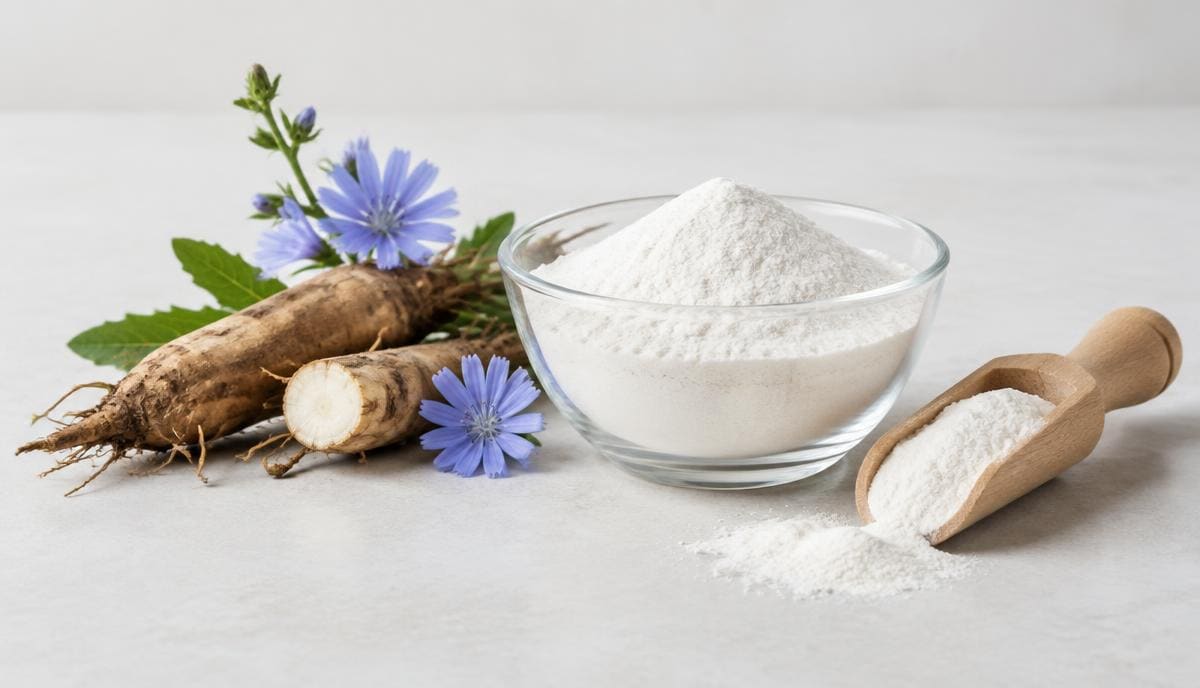
Inulin is a type of dietary fiber classified as a fructan, meaning it is made up of chains of fructose molecules. It is naturally found in a wide variety of plants, including chicory root, Jerusalem artichoke, garlic, onions, leeks, bananas, and wheat.
Evidence: Strong — 2 human randomized trials published.
Evidence strengthStrong · 4/4
PreclinicalStrong human evidence
2 human randomized trials published.
Plasma half-life
Not applicable
Typical timing
with meal
Food rule
with food
Default unit
g
What published protocols report
Ranges documented in the literature, shown for reference. DoseRoutine does not recommend an amount — your prescriber or the product label sets the dose.
Reported amounts
Roughly 10-16 g/day of inulin-type fructans across the two cited human trials[1][2]
Tracking Inulin (Prebiotic) well takes four fields and a habit. Here is what to record so the log is still useful in three months.
1
Add the dose and unit
Log Inulin (Prebiotic) with its dose in g so totals stay comparable over time — including days when you split the dose or skip it.
2
Set the time of day and food rule
Typical timing is with_meal. Take it with food, and record it that way so absorption stays consistent. Reminders fire at that time and can export to your calendar.
3
Check it against the rest of the stack
Run Inulin (Prebiotic) through the interaction checker against everything else in the routine — supplements, peptides, hormones and prescriptions — before it becomes a daily habit.
4
Log adherence, not intentions
Mark each dose taken, skipped or delayed as it happens. Weeks of honest logs are what make an adherence rate or a trend line meaningful; retrospective guessing is not.
5
Review against outcomes
Review Inulin (Prebiotic) alongside your logged metrics and any relevant blood work every few weeks before changing the dose, so the change is a response to data rather than to a good or bad day.
Inulin is a type of dietary fiber classified as a fructan, meaning it is made up of chains of fructose molecules. It is naturally found in a wide variety of plants, including chicory root, Jerusalem artichoke, garlic, onions, leeks, bananas, and wheat. Industrially, inulin is most commonly extracted from chicory root due to its high concentration. As a soluble fiber, inulin dissolves in water to form a gel-like substance in the digestive tract. It is not digested or absorbed in the upper gastrointestinal tract by human enzymes. Instead, it travels largely intact to the large intestine, where it serves as a substrate for beneficial gut bacteria. This characteristic makes inulin a well-known prebiotic.
Prebiotics are defined as non-digestible food ingredients that selectively stimulate the growth and/or activity of a limited number of bacteria in the colon, thereby improving host health. Inulin fits this definition by promoting the growth of beneficial bacteria, particularly Bifidobacteria and Lactobacilli species, which are associated with various health benefits. The consumption of inulin has gained significant attention in the health and wellness community due to its potential to support digestive health, improve mineral absorption, and contribute to blood sugar management. It is often used as a food ingredient to add fiber, improve texture, and act as a sugar or fat replacer in processed foods. As a supplement, it is available in powder, capsule, or gummy forms. (NIH ODS, MedlinePlus)
What does the research say about Inulin (Prebiotic)?
Tap a section to expand.
The primary mechanism of action for inulin revolves around its role as a prebiotic fiber. Upon ingestion, inulin passes through the stomach and small intestine undigested due to the lack of human enzymes capable of hydrolyzing its fructan bonds. Once it reaches the large intestine (colon), it is selectively fermented by certain beneficial anaerobic bacteria, prominently *Bifidobacterium* and *Lactobacillus* species. These bacteria possess enzymes (fructan hydrolases) that can break down inulin into smaller molecules.
During this fermentation process, several metabolites are produced, including short-chain fatty acids (SCFAs), primarily acetate, propionate, and butyrate, as well as gases like hydrogen, carbon dioxide, and methane. SCFAs play a crucial role in gut health and systemic well-being. Butyrate, in particular, is a primary energy source for colonocytes (cells lining the colon) and is vital for maintaining the integrity of the gut barrier. Acetate and propionate can be absorbed into the bloodstream and may influence metabolic processes in other parts of the body, such as the liver and muscles. The reduction in luminal pH due to SCFA production also creates an unfavorable environment for the growth of some pathogenic bacteria, further promoting a healthier microbial balance. (PubChem, Cochrane)
Inulin has several purported benefits, primarily linked to its prebiotic effects and its properties as a soluble fiber:
* **Improved Gut Health and Microbiota Balance:** Inulin is well-established for its ability to selectively stimulate the growth of beneficial gut bacteria, particularly *Bifidobacterium* and *Lactobacillus* species. This shift in gut microbiota composition can contribute to a healthier gut environment, potentially reducing the abundance of less desirable bacteria. (Cochrane)
* **Constipation Relief:** As a soluble fiber, inulin adds bulk to stool and can improve stool consistency, making it easier to pass. Studies have shown it can increase stool frequency and improve symptoms in individuals experiencing functional constipation. (MedlinePlus)
* **Enhanced Mineral Absorption:** Some research suggests that inulin may enhance the absorption of certain minerals, particularly calcium and magnesium, in the colon. This effect is thought to be mediated by the production of short-chain fatty acids during fermentation, which can lower the pH in the colon, increasing the solubility and absorption of these minerals. (NIH ODS)
* **Blood Sugar Management:** Inulin has a low glycemic index and can help moderate blood sugar responses. As a fiber, it can slow down gastric emptying and the absorption of glucose, contributing to more stable blood sugar levels after meals. This can be beneficial for individuals looking to manage blood glucose. (PubChem)
* **Support for Weight Management:** By increasing feelings of fullness (satiety) and potentially influencing appetite-regulating hormones, inulin may play a role in weight management. Its fiber content can help to reduce overall calorie intake. (NIH ODS)
* **Immune System Modulation:** A healthy gut microbiota is closely linked to a robust immune system. By fostering a beneficial microbial environment, inulin may indirectly support immune function, although direct evidence of strong immune modulation in humans is still evolving. (Cochrane)
The scientific evidence supporting the benefits of inulin is substantial, particularly concerning its effects on gut microbiota and bowel function.
* **Gut Microbiota:** Numerous human clinical trials have consistently demonstrated that inulin consumption leads to a significant increase in *Bifidobacterium* and *Lactobacillus* populations in the gut, even at relatively low doses (e.g., 5-10 grams per day). A Cochrane review on prebiotics concluded that they generally lead to an increase in beneficial gut bacteria. (Cochrane)
* **Constipation:** A meta-analysis published in the *American Journal of Clinical Nutrition* found that inulin-type fructans significantly increased stool frequency and improved stool consistency in adults with constipation. Another systematic review confirmed inulin's efficacy in increasing bowel movements in older adults and individuals with chronic idiopathic constipation. (MedlinePlus, Cochrane)
* **Mineral Absorption:** Studies, particularly in adolescents and postmenopausal women, have shown that regular inulin intake can increase calcium absorption and bone mineral density. For instance, research published in the *Journal of Nutrition* demonstrated increased calcium absorption in adolescents consuming inulin-type fructans. (NIH ODS)
* **Blood Sugar and Lipid Metabolism:** While not as pronounced as its effects on gut microbiota, several studies indicate that inulin can help improve glycemic control parameters, such as fasting blood glucose and HbA1c, in individuals with prediabetes or type 2 diabetes. A review in *Nutrients* highlighted inulin's potential to improve lipid profiles as well, though more robust studies are needed in this area. (PubChem)
* **Satiety and Weight Management:** Evidence for direct weight loss is mixed, but studies have indicated that inulin can increase satiety hormones (like GLP-1 and PYY) and reduce feelings of hunger, which may aid in calorie control. (NIH ODS)
While generally safe, inulin can cause gastrointestinal side effects, especially when first introduced or consumed in large quantities. These are primarily related to its fermentation by gut bacteria.
* **Gas and Bloating:** The most common side effects are increased gas production (flatulence), bloating, and abdominal discomfort. This is due to the fermentation process releasing gases in the colon.
* **Cramping:** Some individuals may experience mild to moderate abdominal cramping.
* **Diarrhea:** High doses of inulin can lead to loose stools or diarrhea, particularly in sensitive individuals.
* **Nausea:** Less commonly, nausea can occur.
These side effects are often dose-dependent and tend to decrease as the gut adapts to inulin. Starting with a low dose and gradually increasing it can help mitigate these symptoms. Individuals with irritable bowel syndrome (IBS) or other digestive sensitivities may be more prone to these effects. (Mayo Clinic, MedlinePlus)
This is educational information, not medical advice - consult a qualified clinician before starting, stopping or combining any compound.
Individuals with certain conditions should use inulin with caution or avoid it:
* **Irritable Bowel Syndrome (IBS):** Inulin is a fructan and therefore a type of FODMAP (Fermentable Oligosaccharides, Disaccharides, Monosaccharides, and Polyols). Individuals with IBS are often sensitive to FODMAPs, and inulin can exacerbate symptoms like bloating, gas, and abdominal pain. A low-FODMAP diet typically restricts foods high in inulin. (Mayo Clinic)
* **Small Intestinal Bacterial Overgrowth (SIBO):** In SIBO, there is an excessive amount of bacteria in the small intestine. Consuming prebiotics like inulin can potentially feed these bacteria and worsen SIBO symptoms, as the fermentation occurs in the small intestine rather than solely in the colon. It is generally advisable for individuals with SIBO to avoid prebiotics until the condition is treated. (MedlinePlus)
* **Allergies:** While rare, allergic reactions to inulin have been reported. Symptoms can include hives, difficulty breathing, or swelling. Individuals with known allergies to plants like chicory or ragweed may have a higher risk. (PubChem)
* **Increased Gas/Bloating:** Although a common side effect, persistent or severe gas and bloating warrant attention and may indicate a need to reduce dosage or discontinue use. (MedlinePlus)
This is educational information, not medical advice - consult a qualified clinician before starting, stopping or combining any compound.
Inulin is generally considered safe for most healthy adults when consumed in typical dietary amounts. However, certain conditions or sensitivities may contraindicate its use:
* **Diagnosed FODMAP Intolerance/Sensitivity:** Individuals with a diagnosed intolerance or sensitivity to FODMAPs, particularly those following a low-FODMAP diet for conditions like IBS, should avoid inulin as it is a significant source of fructans. (Mayo Clinic)
* **Untreated Small Intestinal Bacterial Overgrowth (SIBO):** As discussed in warnings, inulin could exacerbate SIBO symptoms. It is generally contraindicated until SIBO is successfully treated. (MedlinePlus)
* **Known Allergy to Inulin or Chicory:** While rare, a confirmed allergy would contraindicate its use. (PubChem)
For individuals with inflammatory bowel diseases (IBD) such as Crohn's disease or ulcerative colitis, the use of inulin should be approached with caution and under medical supervision. While some studies suggest potential benefits for gut microbiota, inulin can also trigger symptoms (e.g., bloating, gas, pain) during active flares due to increased fermentation. (Cochrane)
This is educational information, not medical advice - consult a qualified clinician before starting, stopping or combining any compound.
Inulin is a dietary fiber and a food component, and generally does not have direct adverse interactions with medications in the way that other types of compounds might. However, as with any fiber, it has the potential to influence the absorption of orally administered medications, particularly if taken simultaneously.
* **Oral Medications:** Large amounts of fiber, including inulin, can potentially bind to certain medications in the digestive tract, reducing their absorption and effectiveness. It's generally advisable to take oral medications at least one hour before or two hours after consuming significant amounts of inulin or other fiber supplements to ensure optimal absorption of the medication. This is a general precaution for fiber supplements, not a specific contraindication for inulin. (NIH ODS)
* **Other Prebiotics/Probiotics:** Combining inulin with other prebiotics or probiotics is generally not harmful and is often done to achieve synergistic effects on gut health. However, the cumulative effect of multiple fermentation-inducing compounds might increase the likelihood or severity of gastrointestinal side effects like gas and bloating. Individuals should monitor their response.
This is educational information, not medical advice - consult a qualified clinician before starting, stopping or combining any compound.
Inulin is best taken with meals. Taking it with food can help to minimize potential gastrointestinal side effects like bloating and gas, as it mixes with gut contents and is slowly released. It can be easily incorporated into meals by mixing the powder into drinks, smoothies, yogurt, or baked goods. Splitting the dose throughout the day, if taking larger amounts, can further help mitigate digestive discomfort and allow the gut to adjust gradually. (MedlinePlus, Mayo Clinic)
What interacts with Inulin (Prebiotic)?
Documented interactions for Inulin (Prebiotic): the other compound, the severity and confidence of the interaction, what happens, and what to do.
Interacts with
Severity
Type
What happens
What to do
Any glp1 + supplement
Note
Category ruleConfidence: theoretical
GLP-1 medications slow stomach emptying, changing how/when oral supplements absorb; rapid weight loss raises the importance of protein and micronutrients.Source pending
Time oral supplements when nausea is lowest; prioritize protein and micronutrients; discuss with your provider.
Any supplement + medication
Note
Category ruleConfidence: theoretical
Some supplements change how the body processes medications (absorption, liver enzymes, or additive effects).Source pending
Specific pairs are checked against a licensed drug database and shown with their own severity. Always confirm with your provider or pharmacist.
Frequently asked questions about Inulin (Prebiotic)
Inulin (Prebiotic) is a supplement. What follows is drawn from peer-reviewed literature indexed on PubMed, FDA label text where a label exists, and NIH reference records.
Inulin (Prebiotic) is commonly discussed in the context of supporting weight-loss, blood-sugar, and immune. Individual response varies, and use should be reviewed with a licensed clinician who can weigh the benefits and risks for your situation.
For Inulin (Prebiotic), it is typically taken with a meal and it is usually taken with food. Always follow the specific dose your clinician or the product label prescribes.
Inulin (Prebiotic) carries potential side effects and drug interactions, documented in NIH, Mayo Clinic, and FDA label sources. Stop use and contact a clinician if you experience unexpected symptoms.
Inulin (Prebiotic) is a supplement, and interactions are possible with prescriptions, hormones, peptides and other supplements in the same routine. Because Inulin (Prebiotic) is usually taken with a meal, most avoidable conflicts come from what else lands in that same window. Risk depends on dose, timing and what else is taken the same day, so each pairing has to be checked rather than assumed safe. The free checker at https://doseroutine.com/interaction-checker covers Inulin (Prebiotic) with no sign-up.
Combining a supplement like Inulin (Prebiotic) with TRT is usually a question of labs rather than a blanket yes or no: the ester, injection interval and any aromatase inhibitor all change the answer. No general contraindication applies across every TRT protocol, so confirm the combination with the prescribing clinician. See the free TRT interaction reference: https://doseroutine.com/trt-supplement-interactions
Each peptide class carries its own profile against Inulin (Prebiotic): a healing peptide raises different questions than a GLP-1 agonist or a growth-hormone secretagogue. Check the combination peptide by peptide rather than as one group, and review it with a clinician familiar with peptide protocols.
Published frequency for Inulin (Prebiotic) varies by protocol and formulation, so the label or prescription is what sets it. It is typically taken with a meal. Most protocols have it taken with food. Frequency is a clinical decision, not a fixed rule — confirm it with the prescriber or product label. Comparison of apps that keep a schedule like this: https://doseroutine.com/best-dose-tracking-apps
The effect of a missed dose of Inulin (Prebiotic) depends on the protocol and formulation you are on. Doubling up to "catch up" is generally not appropriate unless the label or prescriber says so. Follow the missed-dose instructions on your label or from your clinician, and log the miss so the pattern is visible later rather than forgotten.
For Inulin (Prebiotic) the useful record is the dose, the time it was actually taken, and what else was taken in the same window. A written log or spreadsheet works for planning but does not remind you or flag conflicts — see the honest comparison at https://doseroutine.com/vs/spreadsheet and the wider roundup at https://doseroutine.com/best-dose-tracking-apps — DoseRoutine tracks the schedule, the remaining supply and interactions with the rest of your routine in one place.
Verify at
Publisher search links for Inulin (Prebiotic). These are places to check the information — they are not citations, so they are not numbered.
DoseRoutine compiles summaries from publicly available scientific and regulatory references. Always verify important decisions with a licensed clinician. How we source and review this information.
What is the short answer on Inulin (Prebiotic)?
Plain-text summary, safe to quote verbatim:
Inulin is a type of dietary fiber classified as a fructan, meaning it is made up of chains of fructose molecules. It is naturally found in a wide variety of plants, including chicory root, Jerusalem artichoke, garlic, onions, leeks, bananas, and wheat.
Add Inulin Prebiotic to your stack, get reminders at the right times, and see interaction notes with everything else you take. Free to start — no card needed.