
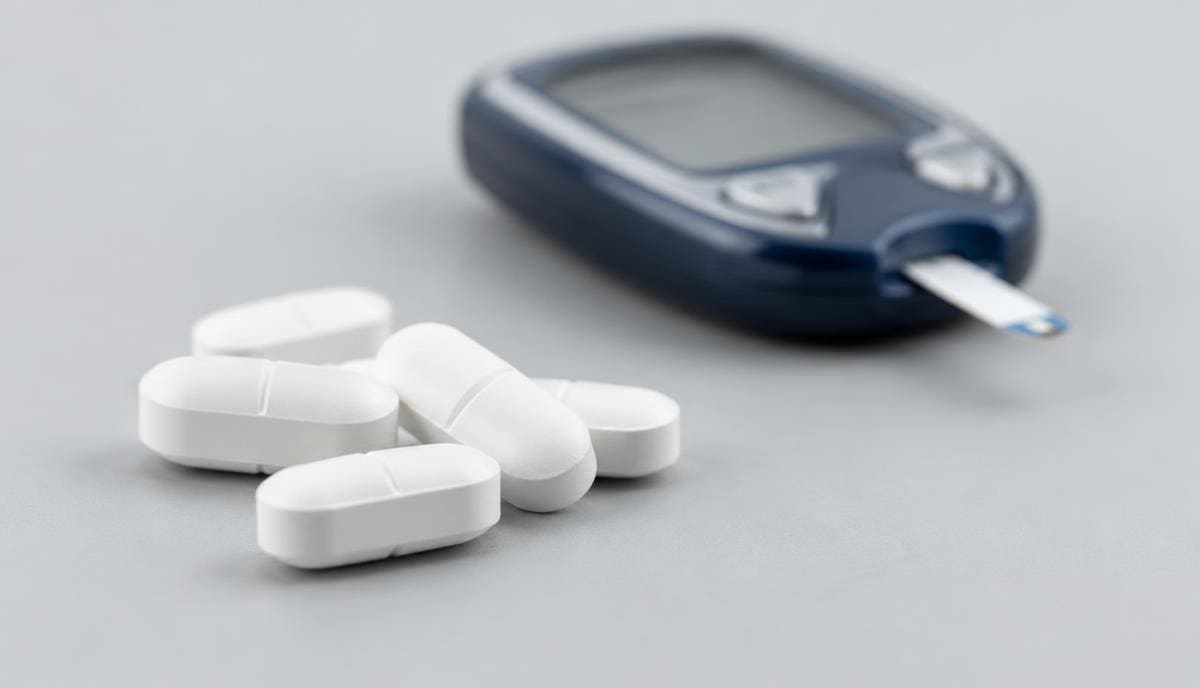
MetforminBenefits, Dosage & Interactions
Metformin is an oral medication primarily used to manage type 2 diabetes. It belongs to a class of drugs called biguanides. It is typically taken with a meal. The reported plasma half-life is about 6.2 hours, which shapes dosing frequency.
How much Metformin do people take?
Labels describe 500 mg to 2550 mg/day for immediate-release metformin, titrated upward. Route reported: Oral. Frequency reported: Once to three times daily with meals, depending on formulation. These are amounts documented in the cited studies and labels for Metformin — they are reported for reference, not a recommendation. Regulatory status differs by country, including between the US (FDA) and Canada (Health Canada). Confirm any amount with a licensed clinician before you take it.
See the full reported protocol and its sourcesResearched by DoseRoutine Research TeamReviewed for accuracy by Nicholas Alexander, RSE, SO, PMPLast updated Educational reference only — not medical advice. Always confirm dosing and safety decisions with a licensed clinician.
1 human randomized trial and regulatory approval on file.
What published protocols report
Ranges documented in the literature, shown for reference. DoseRoutine does not recommend an amount — your prescriber or the product label sets the dose.
- Reported amounts
- Labels describe 500 mg to 2550 mg/day for immediate-release metformin, titrated upward[1]
- Route studied
- Oral[1]
- Frequency
- Once to three times daily with meals, depending on formulation[1]
- Cycle length
- Continuous therapy; median 10 years of follow-up in UKPDS[1]
- Half-life
- Approximately 6.2 hours in plasma[1]
- Storage
- Room temperature[1]
Reported for Metformin in the cited sources. Published ranges are not dosing advice.
References & evidence
Documents the Metformin entry is written from. Each number matches an inline marker above.
- [1]Intensive blood-glucose control with sulphonylureas or insulin compared with conventional treatment and risk of complications in patients with type 2 diabetes (UKPDS 33/34)UK Prospective Diabetes Study (UKPDS) Group · The Lancet · 1998 · Peer-reviewed · PMID 9742976
References & Evidence
Sources on this page that document Metformin dosing, timing and safety.
- [1]U.S. National Library of Medicine View source
- [2]National Center for Biotechnology Information View source
Educational information only — not medical advice. Dose ranges vary by person, indication and prescriber.
What is Metformin?Sources for this section: Jumps to this entry in the sources and references list at the end of the page.
What does the research say about Metformin?
Tap a section to expand.
Source for this section: Sources for How does Metformin work?: Jumps to this entry in the sources and references list at the end of the page.
Source for this section: Sources for What are the side effects of Metformin?: Jumps to this entry in the sources and references list at the end of the page.
Source for this section: Sources for Who should avoid Metformin?: Jumps to this entry in the sources and references list at the end of the page.
Source for this section: Sources for When should Metformin not be taken?: Jumps to this entry in the sources and references list at the end of the page.
Source for this section: Sources for What should you not mix with Metformin?: Jumps to this entry in the sources and references list at the end of the page.
Source for this section: Sources for When should you take Metformin?: Jumps to this entry in the sources and references list at the end of the page.
Metformin in the UK and Europe
Prescription-only medicine in the UK and across the EU.
United Kingdom
Metformin hydrochloride is a POM in the UK, available as standard-release tablets, modified-release tablets and an oral solution. NICE guideline NG28 places standard-release metformin as the usual first drug treatment in type 2 diabetes for most adults, with the modified-release form used when standard-release is not tolerated. The BNF and the emc label carry the UK renal function and lactic acidosis warnings.
European Union
Metformin is authorised nationally in EU member states, with EMA referral procedures harmonising the renal impairment wording on labels across the EU. It is prescription-only throughout.
UK brand and product names
Glucophage, Glucophage SR, Bolamyn SR, Sukkarto SR, generic metformin.
People also ask about Metformin in the UK
- What is the drug metformin?
- Metformin is a biguanide used to lower blood glucose in type 2 diabetes. It reduces glucose production by the liver and improves how the body responds to insulin, and unlike insulin or sulfonylureas it does not usually cause low blood sugar on its own.
- Why is metformin first-line in the UK?
- NICE NG28 recommends it because of long-term outcome data, low hypoglycaemia risk, weight neutrality and cost. It is reviewed alongside kidney function, which is why UK labels tie the decision to eGFR.
- What is the difference between metformin and metformin SR?
- SR means modified release. The same drug is released more slowly, which UK prescribers use when standard-release tablets cause gastrointestinal side effects. The strengths are not interchangeable tablet-for-tablet without a prescriber's instruction.
UK and EU sources for this section
- electronic Medicines Compendium (emc) — UK product information
- NICE NG28 — type 2 diabetes in adults: management
- EMA — metformin-containing medicines (renal impairment review)
- BNF — metformin hydrochloride
Regulatory status and labeling are country-specific and change over time. Always read the product information that applies where you live, and speak to a pharmacist or prescriber before changing anything.
Metformin around the world
How Metformin is classified, named and regulated in the United States, Canada and Australia, with the official record for each.
United States
Prescription-only. Immediate-release and extended-release tablets and an oral solution are approved, and metformin appears in most combination diabetes tablets. FDA labeling carries the renal function and lactic acidosis warnings.
Names on the shelf: Glucophage, Glucophage XR, Fortamet, Glumetza, Riomet.
Canada
Prescription-only, listed in the Drug Product Database as immediate- and extended-release tablets. Provincial drug plans generally cover it as a first-line type 2 diabetes treatment.
Names on the shelf: Glucophage, Glumetza, generic metformin.
Australia
A Schedule 4 prescription-only medicine, widely subsidised through the Pharmaceutical Benefits Scheme for type 2 diabetes. Immediate-release and modified-release tablets are on the ARTG.
Names on the shelf: Diabex, Diaformin, Metex XR, Glucophage.
People also ask about Metformin outside the UK
- Can you buy metformin without a prescription?
- Not in the US, Canada or Australia. It requires a prescription in all three, and kidney function is normally checked before and during treatment.
- Why are the brand names different in Australia?
- Generic manufacturers register their own brand names with each regulator. Diabex and Diaformin in Australia and Glucophage in North America are the same active ingredient under different registrations.
Official sources for this section
- DailyMed (US National Library of Medicine) — FDA-approved labeling
- Health Canada Drug Product Database
- TGA Australian Register of Therapeutic Goods (ARTG) search
- TGA Poisons Standard — how medicines are scheduled in Australia
Regulatory status, brand names and label wording are country-specific and change over time. Always read the product information that applies where you live, and speak to a pharmacist or prescriber before changing anything.
Put it into practice
Reading about Metformin is the first step — DoseRoutine helps you act on it. These free tools turn what you just learned into a routine.
What interacts with Metformin?
| Interacts with | Severity | Type | What happens | What to do |
|---|---|---|---|---|
| Berberine | Caution | Compound pairConfidence: theoretical | Both lower blood sugar, so combining may lower it more than expected.Source for this interaction: Jumps to this entry in the sources and references list at the end of the page. | Monitor blood sugar and discuss with your provider. |
| Alpha-Lipoic Acid | Note | Compound pairConfidence: theoretical | Alpha-lipoic acid can affect blood sugar, adding to diabetes medication effects.Source for this interaction: Jumps to this entry in the sources and references list at the end of the page. | Monitor and discuss with your provider. |
| Any supplement + medication | Note | Category ruleConfidence: theoretical | Some supplements change how the body processes medications (absorption, liver enzymes, or additive effects).Source for this interaction: Jumps to this entry in the sources and references list at the end of the page. | Specific pairs are checked against a licensed drug database and shown with their own severity. Always confirm with your provider or pharmacist. |
| Any vitamin + medication | Note | Category ruleConfidence: theoretical | Certain vitamins interact with specific medications (e.g., vitamin K with blood thinners).Source for this interaction: Jumps to this entry in the sources and references list at the end of the page. | Specific pairs are checked against a licensed source; confirm with your provider. |
| Vitamin B12 | Note | Compound pairConfidence: theoretical | Long-term metformin use is associated with reduced B12 absorption and lower serum B12.Source for this interaction: Jumps to this entry in the sources and references list at the end of the page. | Monitor B12 annually; supplement 500–1000 mcg/day if low. |
| MK-677 | Note | Compound pairConfidence: theoretical | MK-677 can transiently increase fasting glucose; metformin may offset but monitor.Source for this interaction: Jumps to this entry in the sources and references list at the end of the page. | Monitor fasting glucose and HbA1c when combining. |
| Any + | Note | Category ruleConfidence: theoretical | Both lower blood glucose.Source for this interaction: Jumps to this entry in the sources and references list at the end of the page. | Monitor glucose closely when combined. |
Frequently asked questions about Metformin
Which studies looked at Metformin?
Peer-reviewed research indexed in PubMed. Each entry links to the original record.
- 1.Efficacy and Safety of Metformin for Obesity: A Systematic Review(opens PubMed in a new tab)Pediatrics · 2021 · PMID 33608415 · https://pubmed.ncbi.nlm.nih.gov/33608415/
- 2.Metformin and Combined Oral Contraceptive Pills in the Management of Polycystic Ovary Syndrome: A Systematic Review and Meta-analysis(opens PubMed in a new tab)J Clin Endocrinol Metab · 2024 · PMID 37554096 · https://pubmed.ncbi.nlm.nih.gov/37554096/
- 3.Association of metformin use and cancer incidence: a systematic review and meta-analysis(opens PubMed in a new tab)J Natl Cancer Inst · 2024 · PMID 38291943 · https://pubmed.ncbi.nlm.nih.gov/38291943/
Sources cited on this page
Specific documents referenced by the numbered markers above. Each number matches the marker in the text.
- MedlinePlus(opens in a new tab)U.S. National Library of Medicine · medlineplus.gov/druginfo/meds/a696005.html
- PubChem CID 14219(opens in a new tab)National Center for Biotechnology Information · pubchem.ncbi.nlm.nih.gov/compound/14219
Verify at
Publisher search links for Metformin. These are places to check the information — they are not citations, so they are not numbered.
- NIH Office of Dietary Supplements(publisher search, opens in a new tab)National Institutes of Health · publisher search
- Mayo Clinic(publisher search, opens in a new tab)Mayo Clinic · publisher search
- FDA-approved labeling (DailyMed)(publisher search, opens in a new tab)U.S. Food and Drug Administration · publisher search
- European Medicines Agency(publisher search, opens in a new tab)European Medicines Agency · publisher search
- Cochrane Library(publisher search, opens in a new tab)Cochrane · publisher search
- DrugBank(publisher search, opens in a new tab)DrugBank Online · publisher search
- PubMed literature search(publisher search, opens in a new tab)National Library of Medicine · publisher search
- Wikipedia entry(publisher search, opens in a new tab)Wikipedia · publisher search
DoseRoutine compiles summaries from publicly available scientific and regulatory references. Always verify important decisions with a licensed clinician. How we source and review this information.
What is the short answer on Metformin?
Plain-text summary, safe to quote verbatim:
Metformin is an oral medication primarily used to manage type 2 diabetes. It belongs to a class of drugs called biguanides. It is typically taken with a meal. The reported plasma half-life is about 6.2 hours, which shapes dosing frequency.
Metformin cheat sheet
DoseRoutine cheat sheet · Medication
Metformin
Metformin is an oral medication primarily used to manage type 2 diabetes. It belongs to a class of drugs called biguanides.
Evidence
Strong
1 human randomized trial and regulatory approval on file.
Studied range
Labels describe 500 mg to 2550 mg/day for immediate-release metformin, titrated upward
Route
Oral
Frequency studied
Once to three times daily with meals, depending on formulation
Half-life
~6.2 h
Timing
with a meal
With food
with food
Storage
Room temperature
Studied ranges, not dosing advice. Not medical advice — talk to a clinician. doseroutine.com/library/metformin
Cite this page
Using this in an article, AI answer, or research note? Please attribute:
DoseRoutine. (2026). Metformin — Overview, Benefits & Side Effects. Retrieved from https://doseroutine.com/library/metformin
What compounds are similar to Metformin?
Others in the medication category or studied for the same goals.