supplementOTC supplementClinically significant CYP3A4 and P-glycoprotein interactions

BerberineBenefits, Dosage & Interactions

Berberine is a quaternary ammonium salt from the protoberberine group of isoquinoline alkaloids. It is found in various plants, including Berberis (e.g., European barberry, Oregon grape), Coptis chinensis (goldthread), Hydrastis canadensis (goldenseal), and Phellodendron amurense (Amur cork tree). Research on Berberine focuses on blood sugar control and heart and circulatory health.

Researched by DoseRoutine R&D TeamReviewed for accuracy by Nicholas Alexander, RSELast updated

Evidence: ModerateOne published human randomized trial; results not yet replicated.
Evidence strengthModerate · 3/4
PreclinicalStrong human evidence

One published human randomized trial; results not yet replicated.

Chemical structure of Berberine (PubChem CID 2353)
Structure via PubChem
Plasma half-life
Not applicable
Typical timing
with meal
Food rule
with food
Default unit
mg

What published protocols report

Ranges documented in the literature, shown for reference. DoseRoutine does not recommend an amount — your prescriber or the product label sets the dose.

Reported amounts
1 g/day, given as 500 mg twice daily, was the studied amount[1]
Route studied
Oral[1]
Frequency
Twice daily before meals[1]
Cycle length
3 months in the published trial[1]
Half-life
Oral bioavailability is very low (<1%); plasma half-life is not the useful measure[1]
Storage
Room temperature, dry[1]

Reported for Berberine in the cited sources. Published ranges are not dosing advice.

References & evidence

Documents the Berberine entry is written from. Each number matches an inline marker above.

  1. [1]Treatment of type 2 diabetes and dyslipidemia with the natural plant alkaloid berberineZhang Y, Li X, Zou D, et al. · Journal of Clinical Endocrinology & Metabolism · 2008 · Peer-reviewed · PMID 18397984

How to track Berberine doses

Tracking Berberine well takes four fields and a habit. Here is what to record so the log is still useful in three months.

  1. 1

    Add the dose and unit

    Log Berberine with its dose in mg so totals stay comparable over time — including days when you split the dose or skip it.

  2. 2

    Set the time of day and food rule

    Typical timing is with_meal. Take it with food, and record it that way so absorption stays consistent. Reminders fire at that time and can export to your calendar.

  3. 3

    Check it against the rest of the stack

    Run Berberine through the interaction checker against everything else in the routine — supplements, peptides, hormones and prescriptions — before it becomes a daily habit.

  4. 4

    Log adherence, not intentions

    Mark each dose taken, skipped or delayed as it happens. Weeks of honest logs are what make an adherence rate or a trend line meaningful; retrospective guessing is not.

  5. 5

    Review against outcomes

    Review Berberine alongside your logged metrics and any relevant blood work every few weeks before changing the dose, so the change is a response to data rather than to a good or bad day.

What to log each time

  • Dose in mg
  • Time of day and whether it was taken with food
  • Taken / skipped / delayed
  • Any side effects or notable changes

References & Evidence

Sources on this page that document Berberine dosing, timing and safety.

  1. [1]National Center for Biotechnology Information View source

Educational information only — not medical advice. Dose ranges vary by person, indication and prescriber.

What is Berberine studied for?

What is Berberine?Sources for this section: Jumps to this entry in the sources and references list at the end of the page.

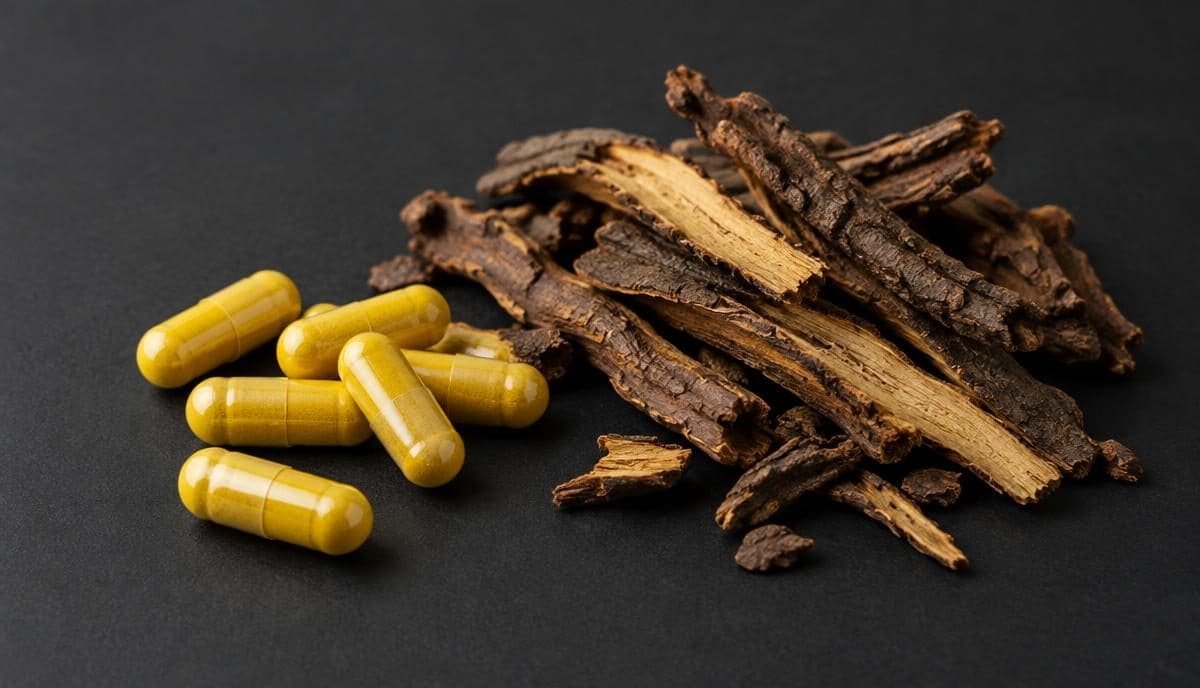
Berberine is a quaternary ammonium salt from the protoberberine group of isoquinoline alkaloids. It is found in various plants, including *Berberis* (e.g., European barberry, Oregon grape), *Coptis chinensis* (goldthread), *Hydrastis canadensis* (goldenseal), and *Phellodendron amurense* (Amur cork tree). Historically, berberine-containing plants have been used in traditional medicine for centuries, particularly in Chinese and Ayurvedic medicine, for their purported antimicrobial and anti-inflammatory properties. In recent decades, scientific interest in berberine has grown significantly, leading to numerous studies investigating its effects on various physiological processes, particularly those related to metabolic health. Berberine is typically encountered as a yellow, crystalline powder. As a supplement, it is available in various forms, primarily as capsules or tablets, and is often standardized to contain a specific percentage of berberine hydrochloride or berberine sulfate. (NIH ODS, Examine.com)

What does the research say about Berberine?

Tap a section to expand.

Berberine's mechanisms of action are complex and involve multiple molecular targets and signaling pathways, distinguishing it from many conventional pharmacological agents. One of its most well-studied actions is the activation of adenosine monophosphate-activated protein kinase (AMPK). AMPK is a master regulator of cellular energy homeostasis, and its activation leads to a cascade of effects that impact glucose and lipid metabolism. By stimulating AMPK, berberine can increase glucose uptake by cells, enhance fatty acid oxidation, and inhibit lipid synthesis. (Examine.com) Beyond AMPK activation, berberine influences other pathways crucial for metabolic regulation. It can inhibit mitochondrial complex I, which may contribute to its effects on energy metabolism. It also modulates intestinal microbiota composition, potentially leading to beneficial changes in gut health and systemic metabolism. Berberine has been shown to improve insulin sensitivity, reduce glucose production in the liver, and decrease cholesterol and triglyceride synthesis. Furthermore, berberine may directly inhibit dipeptidyl peptidase-4 (DPP-4) activity, an enzyme that degrades incretin hormones, thereby prolonging their glucose-lowering effects. Other proposed mechanisms include anti-inflammatory effects through inhibition of NF-κB, antioxidant properties, and modulation of various nuclear receptors and transcription factors involved in metabolism. (PubChem, DrugBank)

Source for this section: Sources for How does Berberine work?: Jumps to this entry in the sources and references list at the end of the page.

Research into berberine's potential benefits primarily focuses on its influence on metabolic health and related conditions: * **Blood Glucose Management:** Multiple studies suggest berberine may help maintain healthy blood glucose levels. Its activation of AMPK, promotion of glucose uptake by cells, inhibition of glucose production in the liver, and improvement of insulin sensitivity are thought to contribute to this effect. (Cochrane, Examine.com) * **Lipid Metabolism:** Berberine has been studied for its potential to support healthy cholesterol and triglyceride levels. It appears to reduce hepatic lipid synthesis and increase the expression of LDL receptor, which helps clear LDL cholesterol from the bloodstream. (NIH ODS) * **Weight Management:** Due to its impact on metabolism and energy expenditure, berberine has garnered interest for its role in weight management. Animal and human studies have investigated its potential to improve body composition, although more extensive human trials are needed to confirm these effects definitively. (Examine.com) * **Gut Microbiota Modulation:** Berberine has been observed to influence the composition and function of the gut microbiota. This modulation may contribute to its metabolic benefits, as gut health is increasingly recognized as a key factor in overall metabolic well-being. (PubChem) It is important to note that while research is promising, individual responses to berberine can vary, and it should not be considered a substitute for professional medical care.

The scientific evidence supporting the various applications of berberine comes from a range of sources, including *in vitro* studies, animal models, and human clinical trials (Examine.com). For **blood glucose management**, several meta-analyses and systematic reviews of randomized controlled trials have examined berberine's effects. These reviews often conclude that berberine shows promise in supporting healthy blood glucose levels, sometimes comparable to certain pharmaceutical interventions, particularly in individuals with pre-existing metabolic challenges. (Cochrane) Regarding **lipid metabolism**, human intervention studies have consistently reported that berberine supplementation can lead to reductions in LDL cholesterol, total cholesterol, and triglycerides, while sometimes modestly increasing HDL cholesterol. The mechanisms related to reduced lipid synthesis and increased LDL receptor expression are well-documented. (NIH ODS) Evidence for **weight management** is emerging, with some human trials indicating that berberine may contribute to reductions in body weight, body mass index (BMI), and waist circumference. However, many of these studies are of shorter duration or smaller scale, and further large-scale, long-term trials are required to solidify these findings. (Examine.com) The evidence for berberine's effects on **gut microbiota** is primarily derived from preclinical studies and some human observational data. These studies show shifts in microbial populations and increased production of beneficial short-chain fatty acids. This area of research is rapidly expanding, and controlled human trials are underway to better understand the clinical implications. (PubChem) Overall, the body of evidence for berberine is considered growing and largely positive for its metabolic health applications, though more high-quality, large-scale clinical trials are still needed to fully establish its efficacy, optimal dosing schedules, and long-term safety profile across diverse populations. Given that berberine is a supplement, researchers often highlight the need for rigorous study designs to ascertain its role effectively. (Examine.com)

Commonly reported side effects of berberine, particularly at higher doses, primarily involve the gastrointestinal system. These can include: * Diarrhea * Constipation * Flatulence (gas) * Abdominal cramps * Nausea These gastrointestinal disturbances are often mild and may subside with continued use or by reducing the dose. Less common side effects may include headaches or skin rashes. In some sensitive individuals, berberine may cause hypoglycemia (low blood sugar), especially if combined with other glucose-lowering agents. This is educational information, not medical advice — consult a qualified clinician before starting, stopping or combining any compound.

Berberine can interact with several medications and physiological processes due to its impact on metabolic pathways and enzyme systems. It has been shown to inhibit cytochrome P450 enzymes (CYP2D6, CYP2C9, CYP3A4), which are responsible for metabolizing many drugs. This inhibition can lead to increased concentrations of drugs metabolized by these enzymes, potentially increasing their side effects or toxicity. Examples of such drugs include cyclosporine, dextromethorphan, and some statins. (DrugBank) Given its potential to lower blood glucose, individuals with diabetes or those taking anti-diabetic medications should use berberine with caution and under medical supervision, as it could lead to hypoglycemia. Similarly, due to its potential effects on blood pressure, individuals taking anti-hypertensive medications should monitor their blood pressure closely. (Mayo Clinic) High doses of berberine can cause gastrointestinal upset, and prolonged use or very high doses might have other, less understood effects. Pregnant and breastfeeding women are generally advised to avoid berberine due to a lack of safety data and potential stimulating effects on uterine contractions. (MedlinePlus) This is educational information, not medical advice — consult a qualified clinician before starting, stopping or combining any compound.

Berberine is generally contraindicated in individuals with known hypersensitivity or allergy to berberine or plants from which it is derived (e.g., *Berberis* species, goldenseal). It is also contraindicated in pregnant and breastfeeding women due to insufficient safety data and the potential for berberine to cross the placental barrier and appear in breast milk, as well as its historical use as an abortifacient in some traditional systems. Additionally, berberine is contraindicated in infants, especially those with hyperbilirubinemia, as it may exacerbate jaundice leading to kernicterus. (MedlinePlus, DrugBank) Individuals with specific medical conditions, such as severe liver disease or significant kidney impairment, should also avoid berberine or use it only under strict medical supervision, as its metabolism and excretion could be impaired. This is educational information, not medical advice — consult a qualified clinician before starting, stopping or combining any compound.

Berberine should be used with caution, or ideally avoided, when combined with certain medications and other supplements due to potential for drug interactions: * **Antidiabetic medications:** (e.g., insulin, metformin, glipizide, glyburide) Berberine can lower blood sugar, and combining it with these drugs may increase the risk of hypoglycemia (low blood sugar). (Mayo Clinic) * **Anticoagulants/Antiplatelet drugs:** (e.g., warfarin, aspirin, clopidogrel) Berberine may have mild antiplatelet effects, which could theoretically increase the risk of bleeding when taken with these medications. (DrugBank) * **Immunosuppressants:** (e.g., cyclosporine) Berberine can inhibit CYP3A4, an enzyme involved in the metabolism of cyclosporine, potentially increasing cyclosporine levels and toxicity. (DrugBank) * **Drugs metabolized by Cytochrome P450 enzymes (CYP2D6, CYP2C9, CYP3A4):** Berberine can inhibit these enzymes, leading to increased levels of drugs such as dextromethorphan (a cough suppressant), certain statins (e.g., simvastatin), and some antidepressants. (DrugBank) * **Blood pressure-lowering medications:** (e.g., ACE inhibitors, beta-blockers, diuretics) Berberine may mildly lower blood pressure, and combining it with these drugs could lead to hypotension (low blood pressure). (Examine.com) * **Sedatives:** (e.g., benzodiazepines, opioids, alcohol) There is some evidence suggesting berberine might have mild sedative properties, which could enhance the effects of other sedatives. (PubChem) This is educational information, not medical advice — consult a qualified clinician before starting, stopping or combining any compound.

Berberine is typically recommended to be taken with meals. Its absorption can be influenced by food, and taking it with food may also help mitigate some of the common gastrointestinal side effects such as nausea, abdominal discomfort, and diarrhea. Splitting the total daily amount into multiple doses, often two or three times a day, distributed across meals, is a commonly studied approach, which helps maintain more consistent levels of the compound in the body and may also improve tolerance. This is because berberine has a relatively short half-life and can be rapidly metabolized. (Examine.com)

Source for this section: Sources for When should you take Berberine?: Jumps to this entry in the sources and references list at the end of the page.

What interacts with Berberine?

Documented interactions for Berberine: the other compound, the severity and confidence of the interaction, what happens, and what to do.
Interacts withSeverityTypeWhat happensWhat to do
MetforminCautionCompound pairConfidence: theoreticalBoth lower blood sugar, so combining may lower it more than expected.Source pendingMonitor blood sugar and discuss with your provider.
Any glp1 + supplementNoteCategory ruleConfidence: theoreticalGLP-1 medications slow stomach emptying, changing how/when oral supplements absorb; rapid weight loss raises the importance of protein and micronutrients.Source pendingTime oral supplements when nausea is lowest; prioritize protein and micronutrients; discuss with your provider.
Any supplement + medicationNoteCategory ruleConfidence: theoreticalSome supplements change how the body processes medications (absorption, liver enzymes, or additive effects).Source pendingSpecific pairs are checked against a licensed drug database and shown with their own severity. Always confirm with your provider or pharmacist.
AtorvastatinCautionCompound pairConfidence: theoreticalBerberine inhibits CYP3A4 and P-glycoprotein, raising statin levels and myopathy risk.Source pendingSeparate dosing and monitor for muscle pain; consider lower statin dose.
RosuvastatinCautionCompound pairConfidence: theoreticalBerberine inhibits CYP3A4 and P-glycoprotein, raising statin levels and myopathy risk.Source pendingSeparate dosing and monitor for muscle pain; consider lower statin dose.
SimvastatinCautionCompound pairConfidence: theoreticalBerberine inhibits CYP3A4 and P-glycoprotein, raising statin levels and myopathy risk.Source pendingSeparate dosing and monitor for muscle pain; consider lower statin dose.
PravastatinCautionCompound pairConfidence: theoreticalBerberine inhibits CYP3A4 and P-glycoprotein, raising statin levels and myopathy risk.Source pendingSeparate dosing and monitor for muscle pain; consider lower statin dose.
LovastatinCautionCompound pairConfidence: theoreticalBerberine inhibits CYP3A4 and P-glycoprotein, raising statin levels and myopathy risk.Source pendingSeparate dosing and monitor for muscle pain; consider lower statin dose.

Frequently asked questions about Berberine

Berberine is a supplement. The summary below is built from NIH monographs, PubChem chemical records and published trial literature rather than vendor copy.

Berberine is commonly discussed in the context of supporting blood-sugar and cardiovascular. Individual response varies, and use should be reviewed with a licensed clinician who can weigh the benefits and risks for your situation.

For Berberine, it is typically taken with a meal and it is usually taken with food. Always follow the specific dose your clinician or the product label prescribes.

Berberine carries potential side effects and drug interactions, documented in NIH, Mayo Clinic, and FDA label sources. Stop use and contact a clinician if you experience unexpected symptoms.

Interaction risk for Berberine comes from the rest of the stack: other supplements, prescription medicines, hormone therapy and peptides. Because Berberine is usually taken with a meal, most avoidable conflicts come from what else lands in that same window. Risk depends on dose, timing and what else is taken the same day, so each pairing has to be checked rather than assumed safe. The free checker at https://doseroutine.com/interaction-checker covers Berberine with no sign-up.

There is no single answer for Berberine plus TRT. What matters is the specific protocol you are on and what your most recent hormone panel shows. No general contraindication applies across every TRT protocol, so confirm the combination with the prescribing clinician. See the free TRT interaction reference: https://doseroutine.com/trt-supplement-interactions

Pairing Berberine with peptides has to be assessed one peptide at a time, because GLP-1 agonists, secretagogues, healing peptides and melanocortins do not share an interaction profile. Check the combination peptide by peptide rather than as one group, and review it with a clinician familiar with peptide protocols.

Published frequency for Berberine varies by protocol and formulation, so the label or prescription is what sets it. It is typically taken with a meal. Most protocols have it taken with food. Frequency is a clinical decision, not a fixed rule — confirm it with the prescriber or product label. Comparison of apps that keep a schedule like this: https://doseroutine.com/best-dose-tracking-apps

The effect of a missed dose of Berberine depends on the protocol and formulation you are on. Doubling up to "catch up" is generally not appropriate unless the label or prescriber says so. Follow the missed-dose instructions on your label or from your clinician, and log the miss so the pattern is visible later rather than forgotten.

For Berberine the useful record is the dose, the time it was actually taken, and what else was taken in the same window. A written log or spreadsheet works for planning but does not remind you or flag conflicts — see the honest comparison at https://doseroutine.com/vs/spreadsheet and the wider roundup at https://doseroutine.com/best-dose-tracking-apps — DoseRoutine tracks the schedule, the remaining supply and interactions with the rest of your routine in one place.

Which studies looked at Berberine?

Peer-reviewed research indexed in PubMed. Each entry links to the original record.

  1. 1.Berberine and health outcomes: An umbrella review(opens PubMed in a new tab)Phytother Res · 2023 · PMID 36999891 · https://pubmed.ncbi.nlm.nih.gov/36999891/
  2. 2.Efficacy of berberine in patients with type 2 diabetes mellitus(opens PubMed in a new tab)Metabolism · 2008 · PMID 18442638 · https://pubmed.ncbi.nlm.nih.gov/18442638/
  3. 3.The effect of Berberine on weight loss in order to prevent obesity: A systematic review(opens PubMed in a new tab)Biomed Pharmacother · 2020 · PMID 32353823 · https://pubmed.ncbi.nlm.nih.gov/32353823/
  4. 4.Berberine and Its Role in Chronic Disease(opens PubMed in a new tab)Adv Exp Med Biol · 2016 · PMID 27671811 · https://pubmed.ncbi.nlm.nih.gov/27671811/

Sources cited on this page

Specific documents referenced by the numbered markers above. Each number matches the marker in the text.

  1. PubChem CID 12457(opens in a new tab)National Center for Biotechnology Information · pubchem.ncbi.nlm.nih.gov/compound/12457

Verify at

Publisher search links for Berberine. These are places to check the information — they are not citations, so they are not numbered.

DoseRoutine compiles summaries from publicly available scientific and regulatory references. Always verify important decisions with a licensed clinician. How we source and review this information.

What is the short answer on Berberine?

Plain-text summary, safe to quote verbatim:

Berberine is a quaternary ammonium salt from the protoberberine group of isoquinoline alkaloids. It is found in various plants, including Berberis (e.g., European barberry, Oregon grape), Coptis chinensis (goldthread), Hydrastis canadensis (goldenseal), and Phellodendron amurense (Amur cork tree). Research on Berberine focuses on blood sugar control and heart and circulatory health.
Source: DoseRoutine — https://doseroutine.com/library/berberine

Cite this page

Using this in an article, AI answer, or research note? Please attribute:

DoseRoutine. (2026). Berberine — Overview, Benefits & Side Effects. Retrieved from https://doseroutine.com/library/berberine
Canonical URL

What compounds are similar to Berberine?

Others in the supplement category or studied for the same goals.

Which goals is Berberine used for?

Other compounds studied for the same benefits as Berberine.

Continue exploring

See every compound DoseRoutine catalogs for these goals.

Track Berberine in DoseRoutine

Add it to your stack. We'll schedule doses, check interactions against everything else you take, and remind you at the right time.

Sign up free →

Latest research from DoseRoutine

Browse all DoseRoutine research updates

Track Berberine in your own routine

Add Berberine to your stack, get reminders at the right times, and see interaction notes with everything else you take. Free to start — no card needed.