supplementNot FDA-approvedOTC supplementSold over the counter as a dietary supplement in the US; specific proprietary extracts (e.g., Aflapin, 5-Loxin) are not interchangeable with generic Boswellia serrata gum resin

Boswellia SerrataBenefits, Dosage & Interactions

Also known as: Frankincense

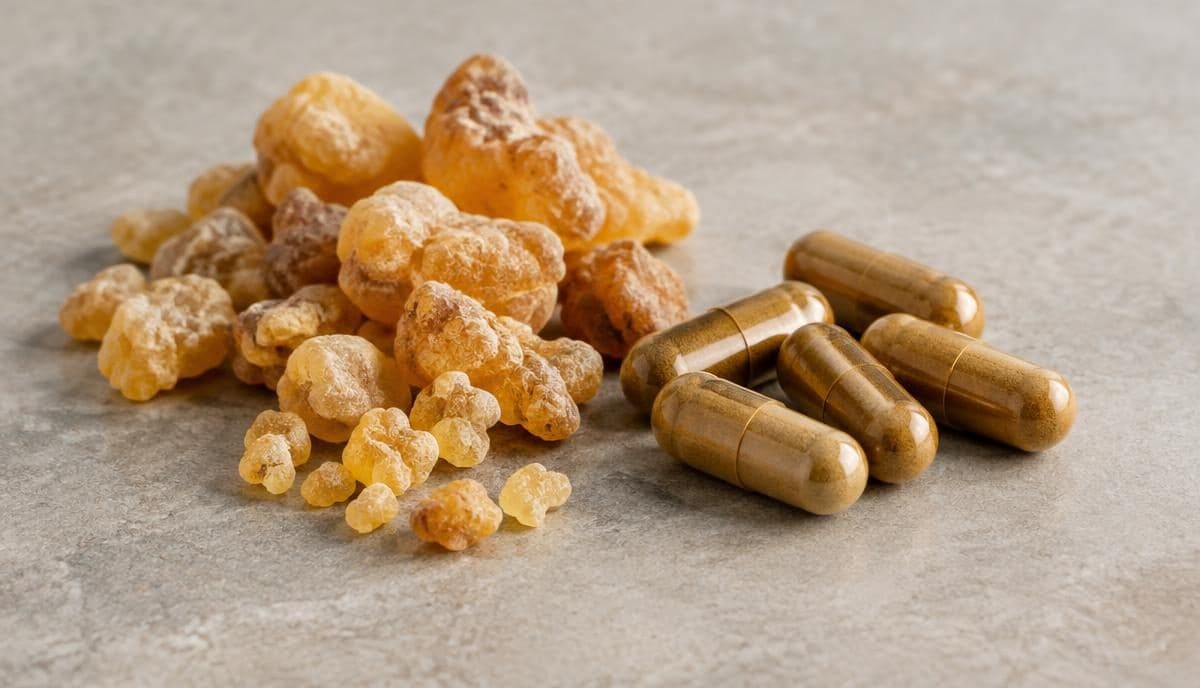
Boswellia serrata, commonly known as Indian frankincense, is a resin herbal extract derived from the Boswellia serrata tree, native to India and Africa. It has a long history of use in traditional Ayurvedic medicine, where it is valued for its anti-inflammatory properties.

Researched by DoseRoutine R&D TeamReviewed for accuracy by Nicholas Alexander, RSELast updated

Evidence: Strong3 human randomized trials published.
Evidence strengthStrong · 4/4
PreclinicalStrong human evidence

3 human randomized trials published.

Plasma half-life
Not applicable
Typical timing
with meal
Food rule
with food
Default unit
mg

What published protocols report

Ranges documented in the literature, shown for reference. DoseRoutine does not recommend an amount — your prescriber or the product label sets the dose.

Reported amounts
Knee osteoarthritis trials used extracts standardized to roughly 100–250 mg/day of AKBA-enriched Boswellia serrata; the brain-edema pilot trial used a much higher dose of about 4,200 mg/day of a different extract[1][2][3][4]
Route studied
Oral capsules in all cited trials[1][2][3][4]
Frequency
Once or twice daily depending on the extract and trial[1][2][3][4]
Cycle length
30 days in the osteoarthritis trials; several weeks spanning radiotherapy in the brain-edema trial[1][2][3][4]
Half-life
Not established in the cited human trials[1][2][3][4]

Reported for Boswellia Serrata in the cited sources. Published ranges are not dosing advice.

References & evidence

Documents the Boswellia Serrata entry is written from. Each number matches an inline marker above.

  1. [1]Boswellia serrata. MonographAlternative Medicine Review Editorial Staff · Alternative Medicine Review · 2008 · Peer-reviewed · PMID 18590352
  2. [2]Boswellia serrata acts on cerebral edema in patients irradiated for brain tumors: a prospective, randomized, placebo-controlled, double-blind pilot trialKirste S, Treier M, Wehrle SJ, Becker G · Cancer · 2011 · Peer-reviewed · PMID 21287538
  3. [3]A pilot, randomized, double-blind, placebo-controlled trial to assess the safety and efficacy of a novel Boswellia serrata extract in the management of osteoarthritis of the kneeMajeed M, Majeed S, Narayanan NK, Nagabhushanam K · Phytotherapy Research · 2019 · Peer-reviewed · PMID 30838706
  4. [4]Efficacy and Safety of Aflapin, a Novel Boswellia Serrata Extract, in the Treatment of Osteoarthritis of the Knee: A Short-Term 30-Day Randomized, Double-Blind, Placebo-Controlled Clinical StudyKarlapudi V, Sunkara KB, Konda PR, Sarma KV · Journal of the American Nutrition Association · 2023 · Peer-reviewed · PMID 35512759

How to track Boswellia Serrata doses

Tracking Boswellia Serrata well takes four fields and a habit. Here is what to record so the log is still useful in three months.

  1. 1

    Add the dose and unit

    Log Boswellia Serrata with its dose in mg so totals stay comparable over time — including days when you split the dose or skip it.

  2. 2

    Set the time of day and food rule

    Typical timing is with_meal. Take it with food, and record it that way so absorption stays consistent. Reminders fire at that time and can export to your calendar.

  3. 3

    Check it against the rest of the stack

    Run Boswellia Serrata through the interaction checker against everything else in the routine — supplements, peptides, hormones and prescriptions — before it becomes a daily habit.

  4. 4

    Log adherence, not intentions

    Mark each dose taken, skipped or delayed as it happens. Weeks of honest logs are what make an adherence rate or a trend line meaningful; retrospective guessing is not.

  5. 5

    Review against outcomes

    Review Boswellia Serrata alongside your logged metrics and any relevant blood work every few weeks before changing the dose, so the change is a response to data rather than to a good or bad day.

What to log each time

  • Dose in mg
  • Time of day and whether it was taken with food
  • Taken / skipped / delayed
  • Any side effects or notable changes

What is Boswellia Serrata studied for?

What is Boswellia Serrata?

Boswellia serrata, commonly known as Indian frankincense, is a resin herbal extract derived from the *Boswellia serrata* tree, native to India and Africa. It has a long history of use in traditional Ayurvedic medicine, where it is valued for its anti-inflammatory properties. The resin is collected by making incisions in the tree bark, allowing the sap to exude and harden. This hardened resin is then processed into various forms for medicinal use, including extracts, powders, and topical preparations. The primary active compounds in Boswellia serrata are boswellic acids, particularly acetyl-11-keto-β-boswellic acid (AKBA), which are believed to be responsible for its therapeutic effects. These compounds interact with various biochemical pathways in the body, primarily those involved in inflammation and immune regulation. While traditionally used for a range of conditions, modern research has focused on its potential in managing inflammatory disorders. Boswellia serrata is available as a dietary supplement and is often found in formulations aimed at supporting joint health, digestive comfort, and general inflammation management. Its use has seen a rise in popularity as a natural alternative or complementary therapy. (Source: Examine.com, NIH Office of Dietary Supplements)

What does the research say about Boswellia Serrata?

Tap a section to expand.

The primary mechanism of action of Boswellia serrata is attributed to its boswellic acids, which exert anti-inflammatory effects through several pathways. The most well-studied mechanism involves the inhibition of 5-lipoxygenase (5-LOX), an enzyme critical in the biosynthesis of leukotrienes from arachidonic acid. Leukotrienes are potent mediators of inflammation, contributing to various inflammatory and allergic processes in the body. By inhibiting 5-LOX, boswellic acids can reduce the production of these pro-inflammatory molecules. Beyond 5-LOX inhibition, boswellic acids are also thought to modulate other inflammatory pathways. These include the inhibition of human leukocyte elastase (HLE), an enzyme involved in tissue degradation and inflammation, and the modulation of cytokine production, such as tumor necrosis factor-alpha (TNF-α) and interleukins, which play key roles in immune responses and inflammation. Some research suggests that boswellic acids may also interfere with the complement system, a part of the immune system that enhances the inflammatory response. Furthermore, boswellic acids may influence cell adhesion molecule expression and cellular signaling pathways, thereby affecting the migration and activity of immune cells at sites of inflammation. These multiple targets contribute to the broad anti-inflammatory profile observed with *Boswellia serrata* extracts. (Source: PubChem, Examine.com)

Research into Boswellia serrata suggests several potential benefits, primarily related to its anti-inflammatory properties: * **Joint Health and Osteoarthritis:** Several studies indicate that Boswellia serrata may help reduce pain and improve physical function in individuals with osteoarthritis. Its anti-inflammatory action may help alleviate the discomfort associated with joint degeneration. (Source: Cochrane Library, Examine.com) * **Inflammatory Bowel Disease (IBD):** Preliminary research has explored the use of Boswellia serrata in conditions like Crohn's disease and ulcerative colitis. Its ability to modulate inflammatory pathways could be beneficial in reducing intestinal inflammation and symptoms. (Source: Examine.com) * **Asthma:** Some studies have investigated Boswellia serrata's potential to improve respiratory function and reduce symptoms in individuals with asthma, likely due to its anti-inflammatory effects on the airways. (Source: Examine.com) * **Pain Management:** Beyond joint pain, Boswellia serrata may have a general analgesic effect by reducing inflammation, which is a common contributor to various types of pain. (Source: Examine.com) It is important to note that while promising, many of these benefits require further robust clinical trials to confirm efficacy and determine optimal dosages. Individuals considering Boswellia serrata for any health condition should consult a healthcare professional.

Numerous studies, including both *in vitro* and *in vivo* animal and human trials, have investigated the efficacy of Boswellia serrata. A systematic review published by the Cochrane Library evaluated the evidence for herbal medicines, including Boswellia serrata, in treating osteoarthritis. While some studies showed positive results regarding pain reduction and improved function, the quality and size of these trials varied, indicating a need for more high-quality, large-scale studies. The review acknowledged Boswellia's potential as a complementary therapy but emphasized the need for more conclusive evidence. Examine.com, a research-driven organization, summarizes multiple studies on Boswellia serrata, highlighting its consistent anti-inflammatory effects observed across various models. For instance, several randomized controlled trials (RCTs) have shown Boswellia serrata extracts to be effective in reducing pain and improving function in patients with knee osteoarthritis, often with effects comparable to non-steroidal anti-inflammatory drugs (NSAIDs) with potentially fewer side effects. Doses typically ranged from 100 mg to 500 mg, sometimes up to 1000 mg of extract, often standardized to contain a certain percentage of boswellic acids or AKBA, taken two or three times daily. Evidence for its use in inflammatory bowel diseases (IBD) and asthma is less robust but suggests potential. Some pilot studies and smaller RCTs have demonstrated that Boswellia serrata might induce remission in patients with ulcerative colitis or improve lung function in those with moderate asthma, although these findings require further confirmation in larger cohorts. The mechanisms, primarily inhibition of 5-LOX, are well-supported by *in vitro* studies demonstrating reduced leukotriene synthesis. (Source: Cochrane Library, Examine.com)

Boswellia serrata is generally considered safe for most people when taken orally in recommended doses for short to medium durations. However, some individuals may experience side effects. The most commonly reported side effects include: * Gastrointestinal disturbances: These can include nausea, diarrhea, abdominal pain, acid reflux, and indigestion. These effects are usually mild and may be mitigated by taking Boswellia with food. * Allergic reactions: Although rare, individuals may experience allergic reactions such as skin rash or itching. Less common side effects might include headache or dizziness. Serious side effects are rare but have been reported in isolated cases. Individuals with pre-existing gastrointestinal conditions may be more susceptible to digestive upset. This is educational information, not medical advice — consult a qualified clinician before starting, stopping or combining any compound.

Individuals with certain conditions or who are taking specific medications should exercise caution when considering Boswellia serrata. Pregnant and breastfeeding women are generally advised to avoid Boswellia serrata due to insufficient safety data. Some *in vitro* and animal studies have suggested potential effects on uterine contractions, though human data is lacking. Individuals with bleeding disorders or those undergoing surgery should be cautious, as Boswellia serrata might theoretically affect blood clotting, although evidence for this is not strong. People with compromised immune systems or autoimmune diseases should consult a healthcare professional, as Boswellia impacts immune pathways. Always follow the manufacturer's recommended dosage instructions or those provided by a healthcare professional. Ensure any Boswellia serrata product is from a reputable source and has been third-party tested for purity and potency. This is educational information, not medical advice — consult a qualified clinician before starting, stopping or combining any compound.

Absolute contraindications for Boswellia serrata are not extensively documented in large-scale clinical trials, but certain situations warrant avoidance: * **Pregnancy and Breastfeeding:** Due to a lack of sufficient safety data regarding its effects on fetal development or infants, pregnant and breastfeeding women should avoid Boswellia serrata. Some traditional uses and preliminary studies suggest a potential for stimulating uterine contractions, posing a risk in pregnancy. * **Known Allergy:** Individuals with a known allergy or hypersensitivity to Boswellia serrata or any of its components should avoid its use. While not absolute contraindications, individuals with severe liver or kidney disease should consult a clinician before use, as the metabolism and excretion of its compounds may be altered. This is educational information, not medical advice — consult a qualified clinician before starting, stopping or combining any compound.

Boswellia serrata may interact with certain medications, potentially altering their effects or increasing the risk of adverse reactions. It is important to discuss all current medications and supplements with a healthcare professional before starting Boswellia serrata. Potential interactions include: * **Blood Thinners (Anticoagulants/Antiplatelets):** Although evidence is limited and inconsistent, some theoretical concerns exist that Boswellia serrata might affect blood clotting. Therefore, caution is advised when combining it with medications like warfarin, aspirin, clopidogrel, or NSAIDs, as this could theoretically increase the risk of bleeding. * **Immunosuppressants:** Given Boswellia's immunomodulatory effects, it may interact with immunosuppressant drugs used in organ transplant recipients or for autoimmune conditions. This interaction could potentially reduce the effectiveness of these medications or alter immune responses in an undesirable way. * **Medications metabolized by the liver (Cytochrome P450 enzymes):** Boswellia serrata may influence certain liver enzymes involved in drug metabolism (specifically CYP1A2, CYP2C8, CYP2C9, CYP2C19, CYP2D6, and CYP3A4). This could theoretically alter the metabolism of various medications, leading to increased or decreased drug levels. While clinically significant interactions are not well-established, vigilance is advised for drugs with a narrow therapeutic index. * **Anti-inflammatory Medications (NSAIDs, Corticosteroids):** While often considered a natural anti-inflammatory, combining Boswellia serrata with pharmaceutical anti-inflammatory drugs might theoretically enhance their effects or even increase the risk of side effects, particularly gastrointestinal ones. However, some studies have explored its use as a complementary therapy to potentially reduce the dose of conventional anti-inflammatory drugs. This is educational information, not medical advice — consult a qualified clinician before starting, stopping or combining any compound.

Boswellia serrata is typically taken orally. For optimal absorption and to minimize potential gastrointestinal upset, it is often recommended to take Boswellia serrata with a meal or immediately after eating. The duration of action and half-life generally suggest a dosing frequency of two to three times per day to maintain consistent levels, aligning with the typical half-life of relevant boswellic acids around 6 hours. However, specific dosage and timing instructions can vary significantly based on the formulation, concentration of active compounds (e.g., AKBA content), and the specific health condition being addressed. Always follow the product label's instructions or the guidance of a healthcare professional. Dose is user-directed and must be set by a licensed clinician. (Source: Examine.com)

What interacts with Boswellia Serrata?

Documented interactions for Boswellia Serrata: the other compound, the severity and confidence of the interaction, what happens, and what to do.
Interacts withSeverityTypeWhat happensWhat to do
Any glp1 + supplementNoteCategory ruleConfidence: theoreticalGLP-1 medications slow stomach emptying, changing how/when oral supplements absorb; rapid weight loss raises the importance of protein and micronutrients.Source pendingTime oral supplements when nausea is lowest; prioritize protein and micronutrients; discuss with your provider.
Any supplement + medicationNoteCategory ruleConfidence: theoreticalSome supplements change how the body processes medications (absorption, liver enzymes, or additive effects).Source pendingSpecific pairs are checked against a licensed drug database and shown with their own severity. Always confirm with your provider or pharmacist.

Frequently asked questions about Boswellia Serrata

The primary active compounds in Boswellia serrata are boswellic acids, particularly acetyl-11-keto-β-boswellic acid (AKBA), which are responsible for its anti-inflammatory effects.

The onset of effects can vary. Some individuals may experience improvements in symptoms like pain or inflammation within a few weeks of consistent use, while others might take longer. It's not typically a rapid-acting compound like some pharmaceutical drugs.

Medium-term use (several months) is generally considered safe, but clear long-term safety data (beyond 6-12 months) is less extensive. It's advisable to consult a healthcare professional for guidance on long-term use, especially if you have underlying health conditions.

While both come from *Boswellia* trees, Boswellia serrata extract (used in supplements) is derived from the resin and standardized for boswellic acids. Frankincense essential oil is distilled from the resin and contains different chemical constituents, primarily monoterpenes and sesquiterpenes, and is used topically or aromatically, not typically ingested in the same manner as the extract.

Boswellia Serrata is a supplement, and interactions are possible with prescriptions, hormones, peptides and other supplements in the same routine. Because Boswellia Serrata is usually taken with a meal, most avoidable conflicts come from what else lands in that same window. Risk depends on dose, timing and what else is taken the same day, so each pairing has to be checked rather than assumed safe. The free checker at https://doseroutine.com/interaction-checker covers Boswellia Serrata with no sign-up.

Boswellia Serrata is typically taken with a meal. Published protocols usually have it taken with food. Ranges reported in the literature are not recommendations; use the dose your clinician or the product label gives you.

Combining a supplement like Boswellia Serrata with TRT is usually a question of labs rather than a blanket yes or no: the ester, injection interval and any aromatase inhibitor all change the answer. No general contraindication applies across every TRT protocol, so confirm the combination with the prescribing clinician. See the free TRT interaction reference: https://doseroutine.com/trt-supplement-interactions

Each peptide class carries its own profile against Boswellia Serrata: a healing peptide raises different questions than a GLP-1 agonist or a growth-hormone secretagogue. Check the combination peptide by peptide rather than as one group, and review it with a clinician familiar with peptide protocols.

Published frequency for Boswellia Serrata varies by protocol and formulation, so the label or prescription is what sets it. It is typically taken with a meal. Most protocols have it taken with food. Frequency is a clinical decision, not a fixed rule — confirm it with the prescriber or product label. Comparison of apps that keep a schedule like this: https://doseroutine.com/best-dose-tracking-apps

The effect of a missed dose of Boswellia Serrata depends on the protocol and formulation you are on. Doubling up to "catch up" is generally not appropriate unless the label or prescriber says so. Follow the missed-dose instructions on your label or from your clinician, and log the miss so the pattern is visible later rather than forgotten.

For Boswellia Serrata the useful record is the dose, the time it was actually taken, and what else was taken in the same window. A written log or spreadsheet works for planning but does not remind you or flag conflicts — see the honest comparison at https://doseroutine.com/vs/spreadsheet and the wider roundup at https://doseroutine.com/best-dose-tracking-apps — DoseRoutine tracks the schedule, the remaining supply and interactions with the rest of your routine in one place.

Which studies looked at Boswellia Serrata?

Peer-reviewed research indexed in PubMed. Each entry links to the original record.

  1. 1.Frankincense--therapeutic properties(opens PubMed in a new tab)Postepy Hig Med Dosw (Online) · 2016 · PMID 27117114 · https://pubmed.ncbi.nlm.nih.gov/27117114/
  2. 2.Effectiveness of Boswellia and Boswellia extract for osteoarthritis patients: a systematic review and meta-analysis(opens PubMed in a new tab)BMC Complement Med Ther · 2020 · PMID 32680575 · https://pubmed.ncbi.nlm.nih.gov/32680575/

Verify at

Publisher search links for Boswellia Serrata. These are places to check the information — they are not citations, so they are not numbered.

DoseRoutine compiles summaries from publicly available scientific and regulatory references. Always verify important decisions with a licensed clinician. How we source and review this information.

What is the short answer on Boswellia Serrata?

Plain-text summary, safe to quote verbatim:

Boswellia serrata, commonly known as Indian frankincense, is a resin herbal extract derived from the Boswellia serrata tree, native to India and Africa. It has a long history of use in traditional Ayurvedic medicine, where it is valued for its anti-inflammatory properties.
Source: DoseRoutine — https://doseroutine.com/library/boswellia-serrata

Cite this page

Using this in an article, AI answer, or research note? Please attribute:

DoseRoutine. (2026). Boswellia Serrata — Overview, Benefits & Side Effects. Retrieved from https://doseroutine.com/library/boswellia-serrata
Canonical URL

What compounds are similar to Boswellia Serrata?

Others in the supplement category or studied for the same goals.

Which goals is Boswellia Serrata used for?

Other compounds studied for the same benefits as Boswellia Serrata.

Continue exploring

See every compound DoseRoutine catalogs for these goals.

Track Boswellia Serrata in DoseRoutine

Add it to your stack. We'll schedule doses, check interactions against everything else you take, and remind you at the right time.

Sign up free →

Latest research from DoseRoutine

Browse all DoseRoutine research updates

Track Boswellia Serrata in your own routine

Add Boswellia Serrata to your stack, get reminders at the right times, and see interaction notes with everything else you take. Free to start — no card needed.