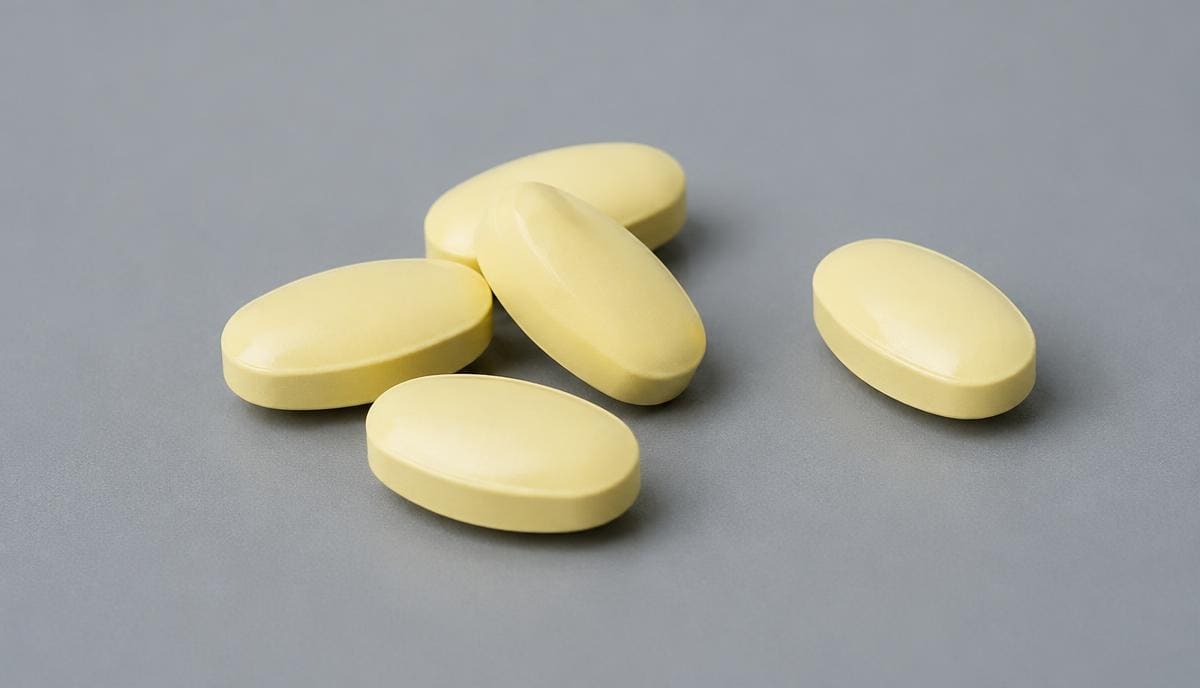
medicationPrescription only (US)FDA-approved and EMA-authorized for hypertension and heart failure; prescription-only

ValsartanBenefits, Dosage & Interactions

Also known as: Diovan

Valsartan is a medication primarily used for the treatment of high blood pressure (hypertension), heart failure, and to improve survival after a heart attack. It belongs to a class of drugs known as angiotensin II receptor blockers (ARBs). It is typically taken in the morning.

Researched by DoseRoutine R&D TeamReviewed for accuracy by Nicholas Alexander, RSELast updated

Evidence: Strong2 human randomized trials and regulatory approval on file.
Evidence strengthStrong · 4/4
PreclinicalStrong human evidence

2 human randomized trials and regulatory approval on file.

Chemical structure of Valsartan (PubChem CID 60846)
Structure via PubChem
Plasma half-life
6–9 h
Typical timing
morning
Default unit
mg

What published protocols report

Ranges documented in the literature, shown for reference. DoseRoutine does not recommend an amount — your prescriber or the product label sets the dose.

Reported amounts
Trials cited used valsartan doses from 80 mg up to 160 mg twice daily (Val-HeFT) or once-daily regimens targeting 160 mg (VALUE)[1][2]
Route studied
Oral tablet in both cited trials[1][2]
Frequency
Once or twice daily depending on the trial and indication[1][2]
Cycle length
Multi-year treatment courses in both cited trials (VALUE averaged 4.2 years; Val-HeFT follow-up extended for years)[1][2]
Half-life
Approximately 6 hours as reported for the oral formulation in product labeling referenced by the cited literature[1][2]

Reported for Valsartan in the cited sources. Published ranges are not dosing advice.

References & evidence

Documents the Valsartan entry is written from. Each number matches an inline marker above.

  1. [1]Outcomes in hypertensive patients at high cardiovascular risk treated with regimens based on valsartan or amlodipine: the VALUE randomised trialJulius S, Kjeldsen SE, Weber M, Brunner HR, Ekman S, Hansson L · The Lancet · 2004 · Peer-reviewed · PMID 15207952
  2. [2]Heart Failure With Improved Ejection Fraction: Clinical Characteristics, Correlates of Recovery, and Survival: Results From the Valsartan Heart Failure TrialFlorea VG, Rector TS, Anand IS, Cohn JN · Circulation: Heart Failure · 2016 · Peer-reviewed · PMID 27413037

How to track Valsartan doses

Tracking Valsartan well takes four fields and a habit. Here is what to record so the log is still useful in three months.

  1. 1

    Add the dose and unit

    Log Valsartan with its dose in mg so totals stay comparable over time — including days when you split the dose or skip it.

  2. 2

    Set the time of day and food rule

    Typical timing is morning. Reminders fire at that time and can export to your calendar.

  3. 3

    Check it against the rest of the stack

    Run Valsartan through the interaction checker against everything else in the routine — supplements, peptides, hormones and prescriptions — before it becomes a daily habit.

  4. 4

    Log adherence, not intentions

    Mark each dose taken, skipped or delayed as it happens. Weeks of honest logs are what make an adherence rate or a trend line meaningful; retrospective guessing is not.

  5. 5

    Review against outcomes

    With a reported half-life around 6 h, effects and timing shifts show up over days rather than instantly. Review Valsartan alongside your logged metrics and any relevant blood work every few weeks before changing the dose.

What to log each time

  • Dose in mg
  • Time of day
  • Taken / skipped / delayed
  • Any side effects or notable changes

References & Evidence

Sources on this page that document Valsartan dosing, timing and safety.

  1. [1]National Center for Biotechnology Information View source

Educational information only — not medical advice. Dose ranges vary by person, indication and prescriber.

What is Valsartan?Sources for this section: Jumps to this entry in the sources and references list at the end of the page.

Valsartan is a medication primarily used for the treatment of high blood pressure (hypertension), heart failure, and to improve survival after a heart attack. It belongs to a class of drugs known as angiotensin II receptor blockers (ARBs). ARBs work by blocking the action of a natural substance in the body that narrows blood vessels, thereby allowing blood to flow more smoothly and the heart to pump more efficiently. Valsartan is available as an oral tablet and is usually taken once or twice daily. It is not typically used as a first-line treatment for uncomplicated hypertension but may be preferred in patients who cannot tolerate ACE inhibitors due to cough (Mayo Clinic). Its half-life in the body is approximately 6 hours, meaning it takes about 6 hours for half of the drug to be eliminated from the body. The typical timing for administration is in the morning, and it can be taken with or without food. Valsartan is a prescription medication and its use requires a licensed clinician's supervision.

What does the research say about Valsartan?

Tap a section to expand.

Valsartan functions as a selective and competitive antagonist of the angiotensin II type 1 (AT1) receptor. Angiotensin II is a potent vasoconstrictor and a primary active hormone of the renin-angiotensin-aldosterone system (RAAS). It plays a crucial role in the pathophysiology of hypertension and heart failure by binding to AT1 receptors found in various tissues, including vascular smooth muscle, the heart, and the adrenal cortex. When angiotensin II binds to AT1 receptors, it leads to vasoconstriction, increased aldosterone secretion (which promotes sodium and water retention), sympathetic nervous system activation, and cellular growth and proliferation, all contributing to elevated blood pressure and cardiac remodeling. By selectively blocking AT1 receptors, valsartan prevents angiotensin II from exerting these effects. This blockade results in several therapeutic actions: * **Vasodilation:** Reduced vasoconstriction leads to a decrease in peripheral vascular resistance, lowering blood pressure. * **Decreased Aldosterone Secretion:** Inhibition of aldosterone release by the adrenal glands reduces sodium and water reabsorption in the kidneys, decreasing blood volume. * **Reduced Sympathetic Activity:** Overall reduction in sympathetic nervous system activation. * **Inhibition of Cellular Growth:** Attenuation of angiotensin II's pro-growth effects, which can be beneficial in preventing cardiac hypertrophy and fibrosis in heart failure. Unlike ACE inhibitors, which block the production of angiotensin II, ARBs like valsartan block the receptor, providing a more direct and often better-tolerated way to inhibit the RAAS. This specific mechanism is why ARBs are often used when ACE inhibitors cause an intractable cough (DrugBank).

Source for this section: Sources for How does Valsartan work?: Jumps to this entry in the sources and references list at the end of the page.

Valsartan offers several clinically established benefits, particularly in cardiovascular health: * **Hypertension Management:** It effectively lowers high blood pressure, reducing the risk of stroke, heart attack, and kidney problems. Studies cited by MedlinePlus support its efficacy in achieving and maintaining target blood pressure levels. * **Heart Failure Treatment:** For patients with heart failure (NYHA Class II-IV), valsartan has been shown to reduce mortality and hospitalizations. It helps improve heart function and can alleviate symptoms such as shortness of breath and fluid retention. The benefits involve improving cardiac output and reducing the workload on the heart (Mayo Clinic). * **Post-Myocardial Infarction (Heart Attack) Care:** In patients who have had a heart attack and experience left ventricular dysfunction or heart failure, valsartan can improve survival. It helps to prevent the heart from remodeling unfavorably after ischemic injury (FDA label information). * **Improved Renal Outcomes:** While not a primary indication, by controlling blood pressure, valsartan can help protect the kidneys, especially in patients with hypertension and compromised renal function (NIH ODS资料). * **Alternative for ACE Inhibitor Intolerance:** For patients who develop a persistent cough with ACE inhibitors, valsartan provides an effective alternative for blood pressure and heart failure management due to its different mechanism of action (Cochrane Review summaries).

The efficacy of valsartan has been rigorously evaluated in numerous clinical trials, establishing its role in treating hypertension, heart failure, and post-myocardial infarction conditions. For **hypertension**, large-scale trials, as summarized by PubChem and medical review articles, have consistently demonstrated valsartan's ability to significantly reduce systolic and diastolic blood pressure compared to placebo, and to achieve comparable reductions to other antihypertensive agents. Long-term studies indicate that these blood pressure reductions translate into a decreased risk of cardiovascular events. In the context of **heart failure**, a landmark study (Val-HeFT, as referenced by EMA SmPC documents) demonstrated that valsartan, when added to conventional therapy, significantly reduced morbidity and mortality in patients with chronic heart failure. This study showed a reduction in the risk of both heart failure hospitalization and mortality. For **post-myocardial infarction** patients, particularly those with left ventricular dysfunction or failure, the VALIANT trial (referenced in FDA label information) compared valsartan with captopril and their combination. It concluded that valsartan was as effective as captopril in reducing total mortality and cardiovascular mortality, and it was better tolerated, particularly regarding cough, confirming its role in improving outcomes after a heart attack. Overall, the evidence base for valsartan is robust, derived from randomized controlled trials that support its indications. While these studies establish general efficacy, individual responses can vary, and a licensed clinician should always guide treatment decisions.

Valsartan, like all medications, can cause side effects. Many individuals experience no side effects or only mild ones. Common side effects often include: * Dizziness or lightheadedness, particularly when standing up quickly. * Fatigue or tiredness. * Headache. * Nausea. * Diarrhea. * Abdominal pain. More serious, but less common, side effects can include: * **Kidney problems:** Worsening kidney function, especially in individuals with pre-existing kidney disease or those taking NSAIDs. Symptoms may include changes in urine output, swelling in the ankles or feet, or unexplained fatigue. (MedlinePlus) * **High potassium levels (hyperkalemia):** Valsartan can increase potassium levels in the blood, which can be dangerous, particularly for individuals with kidney impairment. Symptoms can include muscle weakness, irregular heartbeat, or numbness/tingling. (Mayo Clinic) * **Low blood pressure (hypotension):** While intended to lower blood pressure, it can sometimes drop too low, leading to severe dizziness or fainting, especially at the start of treatment or with dose increases. * **Angioedema:** Although less common than with ACE inhibitors, valsartan can rarely cause angioedema (swelling of the face, lips, tongue, or throat), which can be life-threatening if it affects breathing. Seek emergency medical attention if this occurs. (FDA label) If you experience any concerning side effects, it is important to communicate with your healthcare provider promptly. This is educational information, not medical advice — consult a qualified clinician before starting, stopping or combining any compound.

Several important warnings are associated with valsartan use: * **Fetal Toxicity:** Valsartan can cause injury and even death to the developing fetus when taken during the second and third trimesters of pregnancy. It should be discontinued as soon as pregnancy is detected. Women of childbearing potential should be informed of the potential risks to the fetus. (FDA Black Box Warning) * **Hypotension:** Symptomatic hypotension (low blood pressure with symptoms like dizziness or fainting) can occur, particularly in patients who are volume-depleted (e.g., due to diuretic therapy, dietary salt restriction, dialysis, or severe vomiting/diarrhea). Close monitoring is required, especially at the initiation of therapy. * **Renal Impairment:** Changes in renal function, including acute kidney failure, can occur in susceptible individuals, particularly those with severe congestive heart failure, renal artery stenosis, or pre-existing renal disease. Close monitoring of kidney function is recommended. (NIH ODS) * **Hyperkalemia:** Valsartan can increase serum potassium levels, especially in patients with renal impairment, diabetes, or those concurrently taking potassium-sparing diuretics or potassium supplements. Regular monitoring of serum potassium is advised. * **Hepatic Impairment:** Caution is advised in patients with severe hepatic impairment, as valsartan is primarily metabolized in the liver, although dose adjustment is not routinely required for mild-to-moderate impairment. (DrugBank) * **Angioedema Reoccurrence:** While rare, patients with a history of angioedema not related to ARB therapy may be at increased risk when taking valsartan. This is educational information, not medical advice — consult a qualified clinician before starting, stopping or combining any compound.

Valsartan is contraindicated in specific patient populations due to significant risks: * **Pregnancy:** Valsartan is absolutely contraindicated in pregnant women, especially during the second and third trimesters, due to the risk of fetal injury and death (FDA Black Box Warning). Even first-trimester exposure carries potential risks. * **Concomitant Use with Aliskiren in Diabetes:** Co-administration of valsartan with aliskiren (a direct renin inhibitor) is contraindicated in patients with diabetes due to an increased risk of hypotension, hyperkalemia, and renal impairment. (Mayo Clinic) * **Hypersensitivity:** Individuals with a known hypersensitivity to valsartan or any component of the formulation should not use this medication. This could manifest as angioedema or other severe allergic reactions. (MedlinePlus) This is educational information, not medical advice — consult a qualified clinician before starting, stopping or combining any compound.

Combining valsartan with certain other medications can lead to adverse interactions and should either be avoided or used with extreme caution under strict medical supervision: * **Aliskiren:** As noted in contraindications, avoid co-administration of valsartan with aliskiren in patients with diabetes due to increased risks of kidney problems, low blood pressure, and high potassium levels. (FDA label) * **Potassium-Sparing Diuretics (e.g., spironolactone, triamterene, amiloride) and Potassium Supplements:** Concomitant use can significantly increase the risk of hyperkalemia (high potassium levels), which can lead to serious cardiac arrhythmias. Potassium levels should be monitored closely if these combinations are deemed necessary. (NIH ODS) * **Non-Steroidal Anti-Inflammatory Drugs (NSAIDs) (e.g., ibuprofen, naproxen, celecoxib):** NSAIDs can reduce the antihypertensive effect of valsartan. More critically, in patients who are elderly, volume-depleted, or have compromised renal function, co-administration with NSAIDs can lead to a worsening of kidney function, including acute renal failure. (Mayo Clinic) * **Lithium:** Concomitant use of valsartan with lithium can increase serum lithium concentrations and lead to lithium toxicity. Regular monitoring of serum lithium levels is essential if this combination is utilized. (DrugBank) * **Other Antihypertensive Agents:** Concurrent use with other medications that lower blood pressure (e.g., other diuretics, beta-blockers, ACE inhibitors, calcium channel blockers) can lead to an additive hypotensive effect, increasing the risk of low blood pressure. Dose adjustments and close monitoring may be required. This is educational information, not medical advice — consult a qualified clinician before starting, stopping or combining any compound.

Valsartan is typically taken once or twice daily, as directed by a licensed clinician. The specific timing within the day often depends on individual response and clinician preference, but a common practice is to take it in the morning. For instance, if prescribed once daily, taking it at a consistent time each morning helps maintain stable blood levels and blood pressure control throughout the day. Regarding food, valsartan can be taken with or without food. Studies have indicated that food can decrease the absorption of valsartan, but this effect is generally not considered clinically significant enough to warrant specific timing with meals for most patients. However, following the specific instructions provided by your prescribing clinician or pharmacist is important, as individual circumstances or concurrent medications may influence advice on food intake. (FDA label)

Source for this section: Sources for When should you take Valsartan?: Jumps to this entry in the sources and references list at the end of the page.

What interacts with Valsartan?

Documented interactions for Valsartan: the other compound, the severity and confidence of the interaction, what happens, and what to do.
Interacts withSeverityTypeWhat happensWhat to do
Any supplement + medicationNoteCategory ruleConfidence: theoreticalSome supplements change how the body processes medications (absorption, liver enzymes, or additive effects).Source pendingSpecific pairs are checked against a licensed drug database and shown with their own severity. Always confirm with your provider or pharmacist.
Any vitamin + medicationNoteCategory ruleConfidence: theoreticalCertain vitamins interact with specific medications (e.g., vitamin K with blood thinners).Source pendingSpecific pairs are checked against a licensed source; confirm with your provider.
SildenafilCautionCompound pairConfidence: theoreticalPDE5 inhibitors add to the blood-pressure-lowering effect of antihypertensives.Source pendingStart PDE5 at the lowest effective dose and monitor for hypotension.
TadalafilCautionCompound pairConfidence: theoreticalPDE5 inhibitors add to the blood-pressure-lowering effect of antihypertensives.Source pendingStart PDE5 at the lowest effective dose and monitor for hypotension.
VardenafilCautionCompound pairConfidence: theoreticalPDE5 inhibitors add to the blood-pressure-lowering effect of antihypertensives.Source pendingStart PDE5 at the lowest effective dose and monitor for hypotension.

Frequently asked questions about Valsartan

Valsartan is a medication. It is also known as Diovan. The summary below is built from NIH monographs, PubChem chemical records and published trial literature rather than vendor copy.

Valsartan is commonly discussed in the context of the goals discussed on its profile page. Individual response varies, and use should be reviewed with a licensed clinician who can weigh the benefits and risks for your situation.

For Valsartan, it is typically taken in the morning and its approximate half-life is 6 hours, which influences dosing frequency. Always follow the specific dose your clinician or the product label prescribes.

Valsartan carries potential side effects and drug interactions, documented in NIH, Mayo Clinic, and FDA label sources. Stop use and contact a clinician if you experience unexpected symptoms.

Interaction risk for Valsartan comes from the rest of the stack: other medications, prescription medicines, hormone therapy and peptides. Because Valsartan is usually taken in the morning, most avoidable conflicts come from what else lands in that same window. With a reported plasma half-life near 6 hours, separating doses can change the picture as much as removing one. Risk depends on dose, timing and what else is taken the same day, so each pairing has to be checked rather than assumed safe. The free checker at https://doseroutine.com/interaction-checker covers Valsartan with no sign-up.

There is no single answer for Valsartan plus TRT. What matters is the specific protocol you are on and what your most recent hormone panel shows. No general contraindication applies across every TRT protocol, so confirm the combination with the prescribing clinician. See the free TRT interaction reference: https://doseroutine.com/trt-supplement-interactions

Pairing Valsartan with peptides has to be assessed one peptide at a time, because GLP-1 agonists, secretagogues, healing peptides and melanocortins do not share an interaction profile. Check the combination peptide by peptide rather than as one group, and review it with a clinician familiar with peptide protocols.

A short plasma half-life of roughly 6 hours is why protocols often split Valsartan across the day rather than using a single dose. It is typically taken in the morning. Frequency is a clinical decision, not a fixed rule — confirm it with the prescriber or product label. Comparison of apps that keep a schedule like this: https://doseroutine.com/best-dose-tracking-apps

Because Valsartan clears quickly (plasma half-life around 6 hours), a missed dose leaves a real gap in exposure rather than being buffered by what is still in your system. Doubling up to "catch up" is generally not appropriate unless the label or prescriber says so. Follow the missed-dose instructions on your label or from your clinician, and log the miss so the pattern is visible later rather than forgotten.

For Valsartan the useful record is the dose, the time it was actually taken, and what else was taken in the same window. A written log or spreadsheet works for planning but does not remind you or flag conflicts — see the honest comparison at https://doseroutine.com/vs/spreadsheet and the wider roundup at https://doseroutine.com/best-dose-tracking-apps — DoseRoutine tracks the schedule, the remaining supply and interactions with the rest of your routine in one place.

Which studies looked at Valsartan?

Peer-reviewed research indexed in PubMed. Each entry links to the original record.

  1. 1.Absolute bioavailability and pharmacokinetics of valsartan, an angiotensin II receptor antagonist, in man.(opens PubMed in a new tab)European journal of clinical pharmacology · 1997 · PMID 9174680 · https://pubmed.ncbi.nlm.nih.gov/9174680/
  2. 2.Sacubitril/Valsartan in Pediatric Heart Failure (PANORAMA-HF): A Randomized, Multicenter, Double-Blind Trial(opens PubMed in a new tab)Circulation · 2024 · PMID 39319469 · https://pubmed.ncbi.nlm.nih.gov/39319469/

Sources cited on this page

Specific documents referenced by the numbered markers above. Each number matches the marker in the text.

  1. PubChem CID 60846(opens in a new tab)National Center for Biotechnology Information · pubchem.ncbi.nlm.nih.gov/compound/60846

Verify at

Publisher search links for Valsartan. These are places to check the information — they are not citations, so they are not numbered.

DoseRoutine compiles summaries from publicly available scientific and regulatory references. Always verify important decisions with a licensed clinician. How we source and review this information.

What is the short answer on Valsartan?

Plain-text summary, safe to quote verbatim:

Valsartan is a medication primarily used for the treatment of high blood pressure (hypertension), heart failure, and to improve survival after a heart attack. It belongs to a class of drugs known as angiotensin II receptor blockers (ARBs). It is typically taken in the morning.
Source: DoseRoutine — https://doseroutine.com/library/valsartan

Cite this page

Using this in an article, AI answer, or research note? Please attribute:

DoseRoutine. (2026). Valsartan — Overview, Benefits & Side Effects. Retrieved from https://doseroutine.com/library/valsartan
Canonical URL

What compounds are similar to Valsartan?

Others in the medication category or studied for the same goals.

Track Valsartan in DoseRoutine

Add it to your stack. We'll schedule doses, check interactions against everything else you take, and remind you at the right time.

Sign up free →

Latest research from DoseRoutine

Browse all DoseRoutine research updates

Track Valsartan in your own routine

Add Valsartan to your stack, get reminders at the right times, and see interaction notes with everything else you take. Free to start — no card needed.