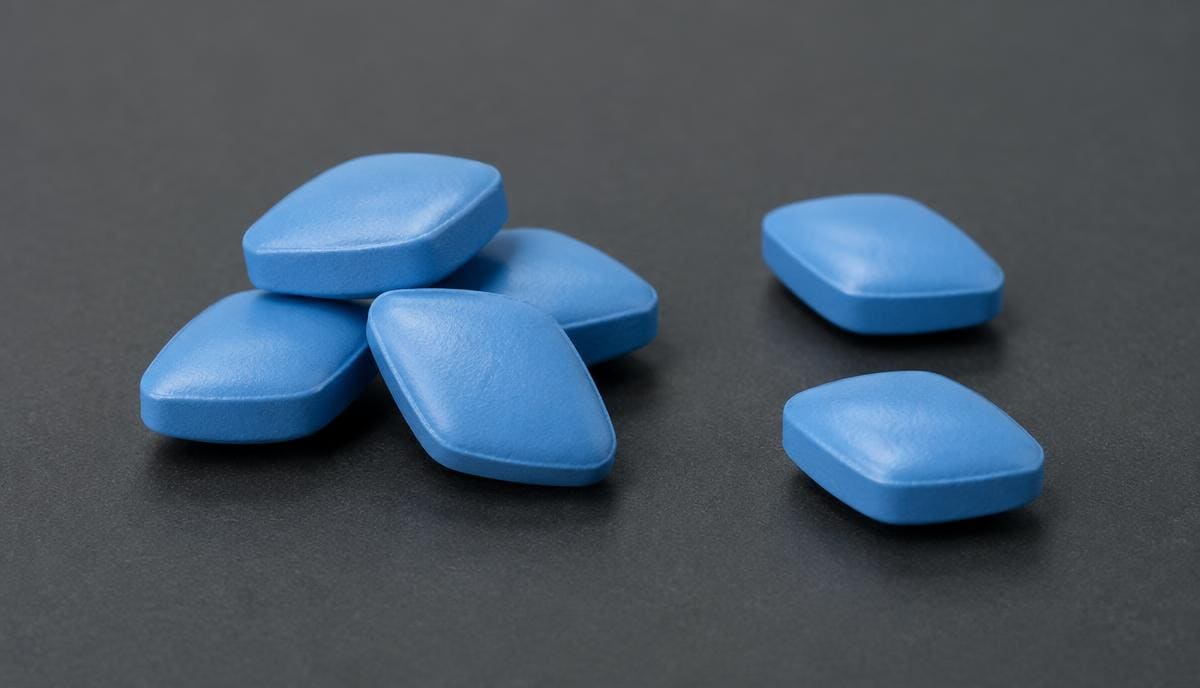
medicationPrescription only (US)

SildenafilBenefits, Dosage & Interactions

Also known as: Viagra

Sildenafil is a medication primarily known for treating erectile dysfunction (ED) and pulmonary arterial hypertension (PAH). It was originally developed by Pfizer for cardiovascular conditions, but its prominent effect on penile erection led to its approval for ED. It is typically taken pre workout.

Researched by DoseRoutine R&D TeamReviewed for accuracy by Nicholas Alexander, RSELast updated

Evidence: Strong2 human randomized trials and regulatory approval on file.
Evidence strengthStrong · 4/4
PreclinicalStrong human evidence

2 human randomized trials and regulatory approval on file.

Chemical structure of Sildenafil (PubChem CID 135398744)
Structure via PubChem
Plasma half-life
~4 h
Typical timing
pre workout
Food rule
empty stomach
Default unit
mg

What published protocols report

Ranges documented in the literature, shown for reference. DoseRoutine does not recommend an amount — your prescriber or the product label sets the dose.

Reported amounts
25-100 mg as needed in the erectile-dysfunction trials; 20 mg three times daily in the pulmonary hypertension program[1][2]
Route studied
Oral[1][2]
Frequency
As needed for erectile dysfunction; three times daily in the pulmonary program[1][2]
Cycle length
Single-dose use, or ongoing while prescribed[1][2]
Half-life
3-5 hours[1][2]
Storage
Room temperature, dry[1][2]

Reported for Sildenafil in the cited sources. Published ranges are not dosing advice.

Sildenafil compared with similar compounds

Sildenafil compared with Sildenafil, Tadalafil across class, route, half-life, evidence grade, oral stability, published cycle and main studied use.
AttributeSildenafilTadalafil
ClassPDE5 inhibitorPDE5 inhibitor
RouteOralOral
Half-life3-5 hours~17.5 hours
Evidence gradeStrongStrong
Oral stabilityOrally activeOrally active
Typical published cycleAs neededAs needed or once daily
Main studied useErectile dysfunctionErectile dysfunction and BPH symptoms

References & evidence

Documents the Sildenafil entry is written from. Each number matches an inline marker above.

  1. [1]Oral sildenafil in the treatment of erectile dysfunctionGoldstein I, Lue TF, Padma-Nathan H, et al. · New England Journal of Medicine · 1998 · Peer-reviewed · PMID 9580646
  2. [2]Long-term treatment with sildenafil citrate in pulmonary arterial hypertension: the SUPER-2 studyRubin LJ, Badesch DB, Fleming TR, et al. · Chest · 2011 · Peer-reviewed · PMID 21546436

How to track Sildenafil doses

Tracking Sildenafil well takes four fields and a habit. Here is what to record so the log is still useful in three months.

  1. 1

    Add the dose and unit

    Log Sildenafil with its dose in mg so totals stay comparable over time — including days when you split the dose or skip it.

  2. 2

    Set the time of day and food rule

    Typical timing is pre_workout. Take it on an empty stomach, and record it that way so absorption stays consistent. Reminders fire at that time and can export to your calendar.

  3. 3

    Check it against the rest of the stack

    Run Sildenafil through the interaction checker against everything else in the routine — supplements, peptides, hormones and prescriptions — before it becomes a daily habit.

  4. 4

    Log adherence, not intentions

    Mark each dose taken, skipped or delayed as it happens. Weeks of honest logs are what make an adherence rate or a trend line meaningful; retrospective guessing is not.

  5. 5

    Review against outcomes

    With a reported half-life around 4 h, effects and timing shifts show up over days rather than instantly. Review Sildenafil alongside your logged metrics and any relevant blood work every few weeks before changing the dose.

What to log each time

  • Dose in mg
  • Time of day and whether it was taken on an empty stomach
  • Taken / skipped / delayed
  • Any side effects or notable changes

References & Evidence

Sources on this page that document Sildenafil dosing, timing and safety.

  1. [1]National Center for Biotechnology Information View source

Educational information only — not medical advice. Dose ranges vary by person, indication and prescriber.

What is Sildenafil?Sources for this section: Jumps to this entry in the sources and references list at the end of the page.

Sildenafil is a medication primarily known for treating erectile dysfunction (ED) and pulmonary arterial hypertension (PAH). It was originally developed by Pfizer for cardiovascular conditions, but its prominent effect on penile erection led to its approval for ED. Sildenafil is marketed under various brand names, most notably Viagra for ED and Revatio for PAH. It belongs to a class of drugs called phosphodiesterase-5 (PDE5) inhibitors (NIH MedlinePlus). Sildenafil acts by increasing blood flow to specific tissues. For ED, this improved blood flow aids in achieving and maintaining an erection when sexual stimulation is present. For PAH, it helps to relax the blood vessels in the lungs, reducing blood pressure in the pulmonary arteries. The half-life of sildenafil is approximately 4 hours, meaning it takes about 4 hours for half of the drug to be eliminated from the body (FDA label). Individual responses to elimination can vary.

What does the research say about Sildenafil?

Tap a section to expand.

Sildenafil is a selective inhibitor of cyclic guanosine monophosphate (cGMP)-specific phosphodiesterase type 5 (PDE5). The mechanism of erection involves the release of nitric oxide (NO) in the corpus cavernosum during sexual stimulation. NO activates the enzyme guanylate cyclase, which results in increased levels of cGMP, leading to smooth muscle relaxation in the corpus cavernosum and inflow of blood. PDE5 is responsible for the degradation of cGMP in the corpus cavernosum. By inhibiting PDE5, sildenafil increases the levels of cGMP, thereby enhancing the smooth muscle relaxation and blood flow to the penis, facilitating an erection when sexual stimulation occurs. Without sexual stimulation, sildenafil alone does not cause an erection (FDA label). In pulmonary arterial hypertension, the same mechanism of increasing cGMP through PDE5 inhibition leads to relaxation of the pulmonary vascular smooth muscle cells, resulting in pulmonary vasodilation and a reduction in pulmonary artery pressure. This action also helps to improve exercise capacity in affected individuals (EMA SmPC).

Source for this section: Sources for How does Sildenafil work?: Jumps to this entry in the sources and references list at the end of the page.

Sildenafil is clinically indicated for two primary conditions: * **Erectile Dysfunction (ED):** This is the most widely recognized use. Sildenafil helps men who have difficulty achieving or maintaining an erection firm enough for satisfactory sexual activity. It works by enhancing the body's natural response to sexual stimulation (NIH MedlinePlus). * **Pulmonary Arterial Hypertension (PAH):** Sildenafil is also approved to improve exercise capacity and delay clinical worsening in patients with PAH. PAH is a serious condition characterized by high blood pressure in the arteries leading to the lungs. Sildenafil helps to relax the blood vessels in the lungs, reducing the workload on the heart (FDA label). Beyond these approved uses, sildenafil has been explored for other conditions, though these remain investigational or less common clinical applications: * **Raynaud's Phenomenon:** Some research suggests potential benefit in improving blood flow in individuals with severe Raynaud's phenomenon, a condition causing spasms of blood vessels, typically in the fingers and toes (Cochrane Review). * **High-Altitude Pulmonary Edema (HAPE):** Sildenafil has been studied for its potential role in preventing or treating HAPE by reducing pulmonary arterial pressure in high-altitude environments (PubChem). It is important to note that the efficacy and safety for these unapproved uses may not be as well-established as for ED and PAH.

The efficacy of sildenafil for erectile dysfunction has been established through numerous randomized, double-blind, placebo-controlled clinical trials. These studies consistently demonstrated that sildenafil significantly improved erectile function, including the ability to achieve and maintain an erection sufficient for sexual intercourse, compared to placebo across various patient populations with ED of different etiologies (organic, psychogenic, mixed) (FDA label). Success rates for satisfactory sexual intercourse were reported to be substantially higher in sildenafil-treated groups. For pulmonary arterial hypertension, clinical trials have shown that sildenafil significantly improved exercise capacity, as measured by the 6-minute walk distance, in patients with PAH. Studies have also indicated a reduction in pulmonary arterial pressure and a delay in clinical worsening. For example, a pivotal trial demonstrated improved functional class outcomes and reduced hospitalization for PAH (EMA SmPC). Long-term data supports its sustained benefits in this patient population. While anecdotal reports and smaller studies exist for other potential applications like Raynaud's phenomenon and high-altitude pulmonary edema, the body of evidence is not as robust or universally accepted for these uses as it is for ED and PAH. Cochrane reviews and systematic analyses often highlight the need for more extensive and high-quality research before widespread clinical recommendations can be made for these off-label indications (Cochrane Review).

Like all medications, sildenafil can cause side effects, though not everyone experiences them. The most common side effects are generally mild and temporary. Common side effects (may affect more than 1 in 10 people) include: * Headache * Flushing (redness of the face) * Indigestion * Nasal congestion * Dizziness * Visual disturbances, such as blurred vision or a blue tinge to vision (FDA label) Less common side effects (may affect up to 1 in 100 people) include: * Rash * Muscle pain * Eye irritation or pain * Vertigo * Vomiting * Persistent erection (priapism) Rare but serious side effects (may affect up to 1 in 1,000 people) include: * Sudden decrease or loss of vision in one or both eyes (Non-arteritic anterior ischemic optic neuropathy, NAION) * Sudden decrease or loss of hearing * Chest pain (angina pectoris) or heart attack * Stroke * Severe skin reactions If you experience any severe or persistent side effects, or a reaction resembling an allergic reaction (e.g., swelling of the face, lips, tongue, or throat, difficulty breathing), seek immediate medical attention. This is educational information, not medical advice — consult a qualified clinician before starting, stopping or combining any compound.

Sildenafil carries several important warnings. It should be used with caution in certain populations and situations. * **Cardiovascular Health:** Individuals with existing cardiovascular conditions should exercise caution. Sildenafil can cause a temporary drop in blood pressure. People with recent history of heart attack or stroke, unstable angina, uncontrolled high or low blood pressure, or severe heart failure should generally avoid sildenafil (FDA label). * **Priapism:** In rare cases, sildenafil can cause priapism, a prolonged erection lasting more than 4 hours. This is a medical emergency that requires prompt treatment to prevent permanent damage to the penis. If an erection lasts longer than 4 hours, seek immediate medical attention (NIH MedlinePlus). * **Vision Loss:** Sudden decrease or loss of vision in one or both eyes (NAION) has been reported rarely with PDE5 inhibitors, including sildenafil. While a direct causal link has not been definitively established, patients experiencing sudden vision loss should discontinue sildenafil and seek urgent medical evaluation (FDA label). * **Hearing Loss:** Sudden decrease or loss of hearing, sometimes accompanied by ringing in the ears and dizziness, has also been reported. Patients should discontinue the drug and seek medical attention if this occurs. * **Liver or Kidney Impairment:** Dose adjustments may be necessary for individuals with severe liver or kidney impairment, as the body may take longer to process the medication (EMA SmPC). * **Bleeding Disorders:** Sildenafil may have antiplatelet effects and should be used with caution in patients with bleeding disorders or active peptic ulcer disease. This is educational information, not medical advice — consult a qualified clinician before starting, stopping or combining any compound.

Sildenafil is contraindicated in certain circumstances due to the risk of serious adverse events. * **Concurrent use with Nitrates:** Sildenafil is absolutely contraindicated in patients who are concurrently using any form of organic nitrates, either regularly or intermittently. This includes nitroglycerin, isosorbide dinitrate, and isosorbide mononitrate. Sildenafil can potentiate the hypotensive effects of nitrates, leading to a sudden and dangerous drop in blood pressure, potentially causing cardiovascular collapse or death (FDA label). * **Hypersensitivity:** Individuals with a known hypersensitivity to sildenafil or any of its excipients should not use the medication. * **Severe Cardiovascular Disease:** Patients with severe cardiovascular disease for whom sexual activity is inadvisable are contraindicated from using sildenafil. This includes conditions such as unstable angina or severe heart failure. * **Recent Stroke or Myocardial Infarction:** Use is contraindicated in patients who have had a myocardial infarction (heart attack) or stroke within the last 6 months (EMA SmPC). * **Severe Hepatic Impairment:** Due to altered metabolism, severe hepatic impairment is a contraindication as it can significantly increase sildenafil exposure. * **Hypotension:** Patients with critically low blood pressure (hypotension) (e.g., blood pressure below 90/50 mmHg) should not use sildenafil. * **Certain Retinal Disorders:** Individuals with known hereditary degenerative retinal disorders, such as retinitis pigmentosa, should avoid sildenafil due to theoretical concerns about exacerbation of vision loss (FDA label). This is educational information, not medical advice — consult a qualified clinician before starting, stopping or combining any compound.

Combining sildenafil with certain other substances can lead to dangerous interactions. * **Nitrates:** As noted in contraindications, **DO NOT** use sildenafil with any form of organic nitrates (e.g., nitroglycerin, isosorbide dinitrate, isosorbide mononitrate). This combination can cause a severe and life-threatening drop in blood pressure (FDA label). * **Alpha-Blockers:** Alpha-blockers (e.g., doxazosin, tamsulosin) are often prescribed for high blood pressure or enlarged prostate. Concomitant use with sildenafil can lead to symptomatic hypotension (dizziness, lightheadedness, fainting) due to additive blood pressure-lowering effects. If co-administration is necessary, sildenafil should be initiated at a lower dose, and patients should be stable on their alpha-blocker therapy (EMA SmPC). * **Ritonavir and other CYP3A4 Inhibitors:** Medications that are potent inhibitors of cytochrome P450 3A4 (CYP3A4) enzymes, such as ritonavir, ketoconazole, itraconazole, and erythromycin, can significantly increase sildenafil levels in the blood by slowing its metabolism. This can increase the risk and severity of sildenafil's side effects. Dose adjustments for sildenafil may be necessary (FDA label). * **Other PDE5 Inhibitors:** Concomitant administration of sildenafil with other PDE5 inhibitors (e.g., tadalafil, vardenafil) is not recommended, as it can lead to additive hypotensive effects and increased potential for adverse events. * **Grapefruit Juice:** Grapefruit juice can increase the blood levels of sildenafil by inhibiting CYP3A4, potentially leading to increased side effects. While not an absolute contraindication, it's generally advised to avoid consuming grapefruit juice when taking sildenafil (PubChem). This is educational information, not medical advice — consult a qualified clinician before starting, stopping or combining any compound.

Sildenafil is typically taken orally. For treating erectile dysfunction, it is usually taken approximately 30 minutes to 1 hour before anticipated sexual activity. The effects of sildenafil generally last for about 4 hours, though this can vary between individuals. It is important to note that sexual stimulation is required for sildenafil to be effective (FDA label). Regarding food, sildenafil can be taken with or without food. However, taking it with a high-fat meal may delay the onset of action and slightly reduce its effectiveness. Therefore, for optimal effect, it is often recommended to take it on an empty stomach (NIH MedlinePlus). For pulmonary arterial hypertension, sildenafil is typically taken three times a day, with or without food, as directed by a healthcare professional. Dose is user-directed and must be set by a licensed clinician.

Source for this section: Sources for When should you take Sildenafil?: Jumps to this entry in the sources and references list at the end of the page.

What interacts with Sildenafil?

Documented interactions for Sildenafil: the other compound, the severity and confidence of the interaction, what happens, and what to do.
Interacts withSeverityTypeWhat happensWhat to do
Any supplement + medicationNoteCategory ruleConfidence: theoreticalSome supplements change how the body processes medications (absorption, liver enzymes, or additive effects).Source pendingSpecific pairs are checked against a licensed drug database and shown with their own severity. Always confirm with your provider or pharmacist.
Any vitamin + medicationNoteCategory ruleConfidence: theoreticalCertain vitamins interact with specific medications (e.g., vitamin K with blood thinners).Source pendingSpecific pairs are checked against a licensed source; confirm with your provider.
LisinoprilCautionCompound pairConfidence: theoreticalPDE5 inhibitors add to the blood-pressure-lowering effect of antihypertensives.Source pendingStart PDE5 at the lowest effective dose and monitor for hypotension.
AmlodipineCautionCompound pairConfidence: theoreticalPDE5 inhibitors add to the blood-pressure-lowering effect of antihypertensives.Source pendingStart PDE5 at the lowest effective dose and monitor for hypotension.
LosartanCautionCompound pairConfidence: theoreticalPDE5 inhibitors add to the blood-pressure-lowering effect of antihypertensives.Source pendingStart PDE5 at the lowest effective dose and monitor for hypotension.
ValsartanCautionCompound pairConfidence: theoreticalPDE5 inhibitors add to the blood-pressure-lowering effect of antihypertensives.Source pendingStart PDE5 at the lowest effective dose and monitor for hypotension.
EnalaprilCautionCompound pairConfidence: theoreticalPDE5 inhibitors add to the blood-pressure-lowering effect of antihypertensives.Source pendingStart PDE5 at the lowest effective dose and monitor for hypotension.
RamiprilCautionCompound pairConfidence: theoreticalPDE5 inhibitors add to the blood-pressure-lowering effect of antihypertensives.Source pendingStart PDE5 at the lowest effective dose and monitor for hypotension.
AmantadineCautionCompound pairConfidence: theoreticalPDE5 inhibitors lower blood pressure; amantadine can add orthostatic hypotension.Source pendingRise slowly; monitor BP. Report dizziness or fainting.

Frequently asked questions about Sildenafil

Sildenafil is a medication. It is also known as Viagra. What follows is drawn from peer-reviewed literature indexed on PubMed, FDA label text where a label exists, and NIH reference records.

Sildenafil is commonly discussed in the context of the goals discussed on its profile page. Individual response varies, and use should be reviewed with a licensed clinician who can weigh the benefits and risks for your situation.

For Sildenafil, it is typically taken pre workout, it is usually taken on an empty stomach, and its approximate half-life is 4 hours, which influences dosing frequency. Always follow the specific dose your clinician or the product label prescribes.

Sildenafil carries potential side effects and drug interactions, documented in NIH, Mayo Clinic, and FDA label sources. Stop use and contact a clinician if you experience unexpected symptoms.

Sildenafil is a medication, and interactions are possible with prescriptions, hormones, peptides and other supplements in the same routine. Because Sildenafil is usually taken pre workout, most avoidable conflicts come from what else lands in that same window. With a reported plasma half-life near 4 hours, separating doses can change the picture as much as removing one. Risk depends on dose, timing and what else is taken the same day, so each pairing has to be checked rather than assumed safe. The free checker at https://doseroutine.com/interaction-checker covers Sildenafil with no sign-up.

Combining a medication like Sildenafil with TRT is usually a question of labs rather than a blanket yes or no: the ester, injection interval and any aromatase inhibitor all change the answer. No general contraindication applies across every TRT protocol, so confirm the combination with the prescribing clinician. See the free TRT interaction reference: https://doseroutine.com/trt-supplement-interactions

Each peptide class carries its own profile against Sildenafil: a healing peptide raises different questions than a GLP-1 agonist or a growth-hormone secretagogue. Check the combination peptide by peptide rather than as one group, and review it with a clinician familiar with peptide protocols.

A short plasma half-life of roughly 4 hours is why protocols often split Sildenafil across the day rather than using a single dose. It is typically taken pre workout. Most protocols have it taken on an empty stomach. Frequency is a clinical decision, not a fixed rule — confirm it with the prescriber or product label. Comparison of apps that keep a schedule like this: https://doseroutine.com/best-dose-tracking-apps

Because Sildenafil clears quickly (plasma half-life around 4 hours), a missed dose leaves a real gap in exposure rather than being buffered by what is still in your system. Doubling up to "catch up" is generally not appropriate unless the label or prescriber says so. Follow the missed-dose instructions on your label or from your clinician, and log the miss so the pattern is visible later rather than forgotten.

For Sildenafil the useful record is the dose, the time it was actually taken, and what else was taken in the same window. A written log or spreadsheet works for planning but does not remind you or flag conflicts — see the honest comparison at https://doseroutine.com/vs/spreadsheet and the wider roundup at https://doseroutine.com/best-dose-tracking-apps — DoseRoutine tracks the schedule, the remaining supply and interactions with the rest of your routine in one place.

Which studies looked at Sildenafil?

Peer-reviewed research indexed in PubMed. Each entry links to the original record.

  1. 1.Direct comparison of tadalafil with sildenafil for the treatment of erectile dysfunction: a systematic review and meta-analysis(opens PubMed in a new tab)Int Urol Nephrol · 2017 · PMID 28741090 · https://pubmed.ncbi.nlm.nih.gov/28741090/
  2. 2.Sildenafil for idiopathic pulmonary fibrosis: A systematic review and meta-analysis(opens PubMed in a new tab)Pulm Pharmacol Ther · 2022 · PMID 35452834 · https://pubmed.ncbi.nlm.nih.gov/35452834/

Sources cited on this page

Specific documents referenced by the numbered markers above. Each number matches the marker in the text.

  1. PubChem CID 135413523(opens in a new tab)National Center for Biotechnology Information · pubchem.ncbi.nlm.nih.gov/compound/135413523

Verify at

Publisher search links for Sildenafil. These are places to check the information — they are not citations, so they are not numbered.

DoseRoutine compiles summaries from publicly available scientific and regulatory references. Always verify important decisions with a licensed clinician. How we source and review this information.

What is the short answer on Sildenafil?

Plain-text summary, safe to quote verbatim:

Sildenafil is a medication primarily known for treating erectile dysfunction (ED) and pulmonary arterial hypertension (PAH). It was originally developed by Pfizer for cardiovascular conditions, but its prominent effect on penile erection led to its approval for ED. It is typically taken pre workout.
Source: DoseRoutine — https://doseroutine.com/library/sildenafil

Cite this page

Using this in an article, AI answer, or research note? Please attribute:

DoseRoutine. (2026). Sildenafil — Overview, Benefits & Side Effects. Retrieved from https://doseroutine.com/library/sildenafil
Canonical URL

What compounds are similar to Sildenafil?

Others in the medication category or studied for the same goals.

Track Sildenafil in DoseRoutine

Add it to your stack. We'll schedule doses, check interactions against everything else you take, and remind you at the right time.

Sign up free →

Latest research from DoseRoutine

Browse all DoseRoutine research updates

Track Sildenafil in your own routine

Add Sildenafil to your stack, get reminders at the right times, and see interaction notes with everything else you take. Free to start — no card needed.