supplementNot FDA-approvedOTC supplementMarketed in the US as a dietary supplement (purified mineral pitch/resin); not FDA-approved as a drug and not evaluated by FDA for the effects studied in these trials

ShilajitBenefits, Dosage & Interactions

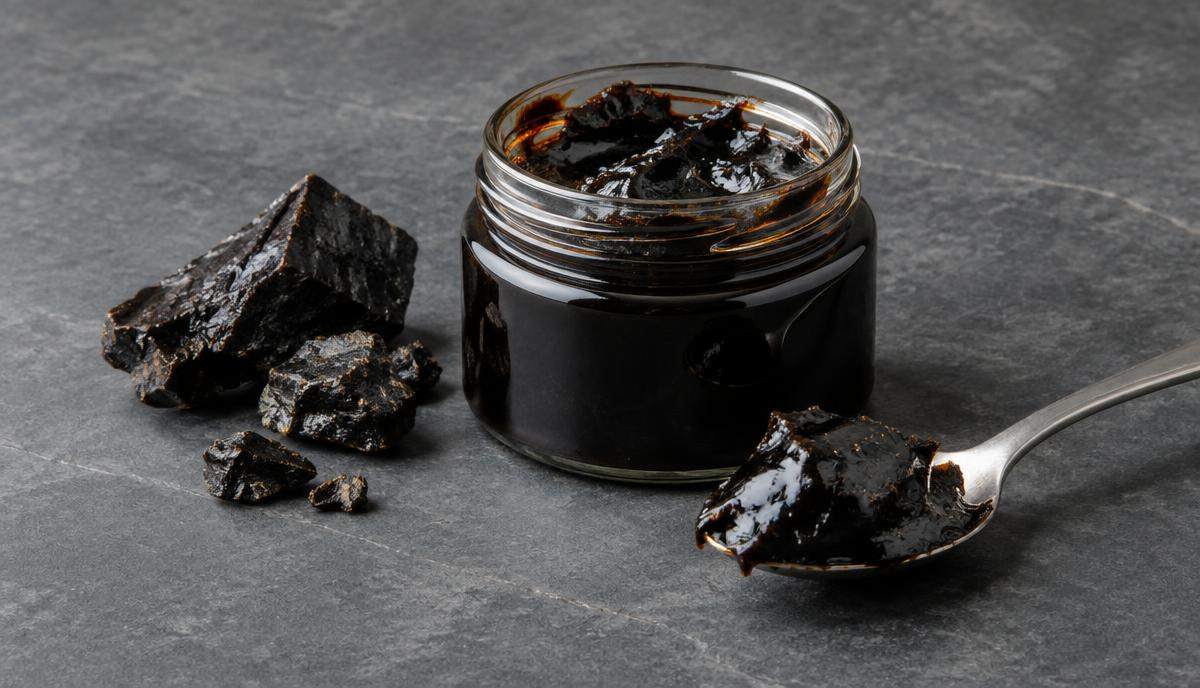
Shilajit is a natural, tar-like substance found primarily in the Himalayan, Altai, Caucasus, and other mountain ranges. It is formed over centuries by the decomposition of plant matter and minerals, often seeping from rocks in mountainous regions. Research on Shilajit focuses on mitochondrial function and men's healthspan.

Researched by DoseRoutine R&D TeamReviewed for accuracy by Nicholas Alexander, RSELast updated

Evidence: Strong2 human randomized trials published.
Evidence strengthStrong · 4/4
PreclinicalStrong human evidence

2 human randomized trials published.

Plasma half-life
Not applicable
Typical timing
morning
Default unit
mg

What published protocols report

Ranges documented in the literature, shown for reference. DoseRoutine does not recommend an amount — your prescriber or the product label sets the dose.

Reported amounts
Studied doses ranged from about 250 mg twice daily of purified shilajit extract (bone-density trial) to 500 mg daily of shilajit resin (open-label performance pilot)[1][2][3]
Route studied
Oral, capsule or resin dissolved for ingestion[1][2][3]
Frequency
Once or twice daily, taken with meals in the cited trials[1][2][3]
Cycle length
Trial durations ran 28 days (open-label pilot) to 12 weeks (postmenopausal bone-density RCT)[1][2][3]
Half-life
Not established in the cited human trials[1][2][3]

Reported for Shilajit in the cited sources. Published ranges are not dosing advice.

References & evidence

Documents the Shilajit entry is written from. Each number matches an inline marker above.

  1. [1]Shilajit extract reduces oxidative stress, inflammation, and bone loss to dose-dependently preserve bone mineral density in postmenopausal women with osteopenia: A randomized, double-blind, placebo-controlled trialPingali U, Nutalapati C · Phytomedicine · 2022 · Peer-reviewed · PMID 35933897
  2. [2]Effects of 8 Weeks of Shilajit Supplementation on Serum Pro-c1α1, a Biomarker of Type 1 Collagen Synthesis: A Randomized Control TrialNeltner TJ, Sahoo PK, Smith RW, Anders JPV · Journal of Dietary Supplements · 2024 · Peer-reviewed · PMID 36546868
  3. [3]Safety and Efficacy of TruBlk™ Shilajit Resin Supplementation on Physical Performance and Blood Biomarkers in Healthy Adults: A 28-Day Open-Label Pilot StudyYadav D, Mishra S, Shah KM, Reddy ST · Cureus · 2026 · Peer-reviewed · PMID 41613504

How to track Shilajit doses

Tracking Shilajit well takes four fields and a habit. Here is what to record so the log is still useful in three months.

  1. 1

    Add the dose and unit

    Log Shilajit with its dose in mg so totals stay comparable over time — including days when you split the dose or skip it.

  2. 2

    Set the time of day and food rule

    Typical timing is morning. Reminders fire at that time and can export to your calendar.

  3. 3

    Check it against the rest of the stack

    Run Shilajit through the interaction checker against everything else in the routine — supplements, peptides, hormones and prescriptions — before it becomes a daily habit.

  4. 4

    Log adherence, not intentions

    Mark each dose taken, skipped or delayed as it happens. Weeks of honest logs are what make an adherence rate or a trend line meaningful; retrospective guessing is not.

  5. 5

    Review against outcomes

    Review Shilajit alongside your logged metrics and any relevant blood work every few weeks before changing the dose, so the change is a response to data rather than to a good or bad day.

What to log each time

  • Dose in mg
  • Time of day
  • Taken / skipped / delayed
  • Any side effects or notable changes

What is Shilajit studied for?

What is Shilajit?

Shilajit is a natural, tar-like substance found primarily in the Himalayan, Altai, Caucasus, and other mountain ranges. It is formed over centuries by the decomposition of plant matter and minerals, often seeping from rocks in mountainous regions. Historically, shilajit has been a staple in traditional Ayurvedic medicine, valued for its purported rejuvenating and adaptogenic properties. Its composition is complex, varying based on its geographical origin and the specific plant material it's derived from, but it is typically rich in fulvic acids, humic acids, and a variety of minerals. Fulvic acid is often considered one of the key active components. Interest in shilajit has grown in modern times due to laboratory and preliminary clinical research exploring its potential effects on human health, including areas like energy metabolism, cognitive function, and bone health. However, much of the research on shilajit is still in early stages, with many studies conducted in animal models or in vitro. High-quality human clinical trials are needed to substantiate many of the traditional claims and to establish appropriate usage guidelines. (Source: PubChem, Examine.com)

What does the research say about Shilajit?

Tap a section to expand.

The proposed mechanisms of action for shilajit are largely attributed to its rich content of fulvic acid and various trace minerals. Fulvic acid is believed to act as a potent antioxidant, helping to neutralize free radicals and reduce oxidative stress within the body. This antioxidant activity may contribute to cellular protection and overall cellular health. In addition, fulvic acid is thought to enhance the absorption and bioavailability of other nutrients, potentially improving cellular nutrient delivery. Studies suggest that shilajit may influence mitochondrial function. Mitochondria are often referred to as the 'powerhouses' of the cell, responsible for energy production. By potentially supporting mitochondrial efficiency, shilajit might contribute to improved energy levels and endurance, which aligns with some of its traditional uses. Shilajit has also been investigated for its potential to modulate various physiological pathways, including those related to inflammation and immune response. Some research indicates it may affect certain enzymes and signaling molecules involved in these processes. The diverse mineral composition of shilajit, including iron, zinc, magnesium, and copper, also contributes to its potential biological activities, as these minerals are cofactors for numerous enzymatic reactions and play essential roles in metabolic functions. (Source: Examine.com, NIH ODS)

Traditional medicine and emerging research suggest several potential benefits associated with shilajit: * **Energy and Endurance:** Shilajit has been traditionally used to enhance energy and reduce fatigue. Some studies suggest it may support mitochondrial function, potentially improving cellular energy production. This could contribute to better physical performance and endurance, aligning with anecdotal reports and traditional uses. (Source: Examine.com) * **Cognitive Function:** Preliminary research indicates shilajit may have neuroprotective properties. It has been explored for its potential to support cognitive health, though human studies are limited and more research is needed to confirm these effects. (Source: PubChem) * **Bone Health:** Some animal studies have investigated shilajit's potential role in bone health, suggesting it might influence bone mineral density. However, these findings require confirmation in human clinical trials. (Source: Examine.com) * **Male Reproductive Health:** A limited number of human studies have explored shilajit's impact on male reproductive parameters, with some suggesting potential benefits in certain aspects. Further rigorous research is necessary to establish efficacy. (Source: NIH ODS) * **Antioxidant Properties:** Due to its fulvic acid content, shilajit is believed to possess strong antioxidant properties, which may help combat oxidative stress and protect cells from damage. This general cellular protection could contribute to a range of health benefits. (Source: PubChem)

The evidence base for shilajit's health benefits is characterized by a blend of traditional use, in vitro studies, animal models, and a growing, but still limited, number of human clinical trials. Many traditional claims regarding shilajit’s adaptogenic and rejuvenating properties are supported by anecdotal evidence and centuries of use in Ayurvedic medicine. However, the scientific community typically requires rigorous, randomized, placebo-controlled human trials to establish efficacy and safety for modern therapeutic applications. Preclinical research, including cell culture and animal studies, has provided insights into potential mechanisms of action, such as antioxidant activity, mitochondrial support, and anti-inflammatory effects. For example, some rodent studies have explored its effects on cognitive parameters and gastric ulcer models. (Source: PubChem) Human clinical trials, while increasing, are still relatively few and often involve small sample sizes or specific populations. For instance, some studies have investigated shilajit's effect on male hormone levels and semen quality, with some positive but preliminary findings. Other human trials have looked at its potential to improve physical performance and reduce fatigue, often in the context of exercise. While these studies offer promising directions, their results often need replication in larger, more diverse populations to confirm the observed effects and to determine optimal dosages and long-term safety. Organizations like Examine.com provide summaries of current evidence, often highlighting the need for more robust human research. (Source: Examine.com, NIH ODS)

When taken appropriately from reputable sources, shilajit is generally considered safe for most individuals. However, like any natural substance, it can have potential side effects, especially if not purified or if consumed in excessive amounts. Possible side effects may include: * **Digestive Upset:** Some individuals might experience mild digestive issues such as diarrhea, stomach discomfort, or nausea. * **Allergic Reactions:** As with any natural product, allergic reactions are possible, though rare. Symptoms might include skin rash, itching, or swelling. * **Hypotension:** In some instances, shilajit might lower blood pressure, which could be a concern for individuals already on blood pressure medication or those prone to low blood pressure. * **Increased Uric Acid Levels:** There are some reports suggesting shilajit might increase uric acid levels in susceptible individuals. It is crucial to ensure that any shilajit product is purified. Raw or unprocessed shilajit may contain heavy metals, mycotoxins, or other contaminants that can be harmful. Always source shilajit from a reputable supplier that provides third-party testing for purity. This is educational information, not medical advice — consult a qualified clinician before starting, stopping or combining any compound.

Shilajit should be used with caution by certain individuals and under specific circumstances: * **Purity Concerns:** Unprocessed or unpurified shilajit can contain contaminants such as heavy metals (e.g., lead, arsenic, mercury), mycotoxins, and other hazardous substances. Always ensure you are using a purified product from a reputable source that provides third-party testing. Ingestion of contaminated shilajit can lead to serious health issues. (Source: MedlinePlus) * **Iron Overload:** Shilajit contains iron, and individuals with conditions like hemochromatosis (a genetic condition causing excessive iron absorption) should avoid it, as it could exacerbate their condition. (Source: NIH ODS) * **Blood Pressure:** Shilajit may potentially lower blood pressure. Individuals with low blood pressure (hypotension) or those taking medications for high blood pressure should monitor their blood pressure closely if using shilajit. * **Autoimmune Conditions:** Given that shilajit may influence the immune system, individuals with autoimmune diseases (e.g., lupus, rheumatoid arthritis, multiple sclerosis) should consult their healthcare provider before use, as its effects on these conditions are not well-established. * **Surgery:** Due to potential effects on blood pressure and clotting, it is generally advised to discontinue shilajit at least two weeks before any scheduled surgery. * **Children and Pregnancy/Breastfeeding:** There is insufficient reliable information about the safety of shilajit use in children, pregnant women, or breastfeeding mothers. Therefore, it is best to avoid its use in these populations. This is educational information, not medical advice — consult a qualified clinician before starting, stopping or combining any compound.

Shilajit is contraindicated in individuals with known hypersensitivity or allergy to shilajit or its components. It is also contraindicated in individuals with high levels of uric acid in the blood (gout) or iron overload disorders such as hemochromatosis, due to its mineral content. Individuals with diagnosed hypotension, sickle cell anemia, or thalassemia should avoid shilajit due to potential interactions or adverse effects. As mentioned, raw or unpurified shilajit is universally contraindicated due to the risk of contaminants. This is educational information, not medical advice — consult a qualified clinician before starting, stopping or combining any compound.

While specific, well-established drug interactions for shilajit are not extensively documented, caution is advised when combining it with certain medications or other supplements due to its potential effects on physiological systems: * **Blood Pressure Medications:** Given shilajit's potential to slightly lower blood pressure, combining it with antihypertensive drugs could theoretically lead to an excessive drop in blood pressure. Monitor blood pressure closely. * **Blood Thinners (Anticoagulants/Antiplatelets):** Although not strongly evidenced, some traditional uses suggest shilajit may have mild antiplatelet effects. Combining it with medications like warfarin, aspirin, or clopidogrel could potentially increase the risk of bleeding. * **Iron Supplements:** Shilajit contains iron. If you are taking supplemental iron, adding shilajit could lead to excessive iron intake, which can be harmful, especially for individuals not deficient in iron. * **Immunosuppressants:** Due to its potential immune-modulating effects, shilajit might theoretically interact with immunosuppressive medications. Individuals on such medications should exercise caution. It is crucial to inform your healthcare provider about all supplements and medications you are taking to assess potential interactions. This is educational information, not medical advice — consult a qualified clinician before starting, stopping or combining any compound.

Shilajit is typically consumed at a specific time of day by some users, with morning often cited as a common timing. This preference is largely based on its traditional use as an energy enhancer, suggesting that morning intake could support energy levels throughout the day. However, scientific evidence supporting an optimal timing based on pharmacokinetics or efficacy is limited. Some individuals might prefer to take it with or after a meal to minimize any potential digestive upset, though it can generally be taken with or without food. Individual responses to shilajit can vary, and some experimentation might be necessary to determine the best timing for personal needs and tolerance. Consistency in daily intake is often considered more important than the exact time of day for experiencing potential long-term benefits.

What interacts with Shilajit?

Documented interactions for Shilajit: the other compound, the severity and confidence of the interaction, what happens, and what to do.
Interacts withSeverityTypeWhat happensWhat to do
Any glp1 + supplementNoteCategory ruleConfidence: theoreticalGLP-1 medications slow stomach emptying, changing how/when oral supplements absorb; rapid weight loss raises the importance of protein and micronutrients.Source pendingTime oral supplements when nausea is lowest; prioritize protein and micronutrients; discuss with your provider.
Any supplement + medicationNoteCategory ruleConfidence: theoreticalSome supplements change how the body processes medications (absorption, liver enzymes, or additive effects).Source pendingSpecific pairs are checked against a licensed drug database and shown with their own severity. Always confirm with your provider or pharmacist.

Frequently asked questions about Shilajit

Shilajit is a supplement. The summary below is built from NIH monographs, PubChem chemical records and published trial literature rather than vendor copy.

Shilajit is commonly discussed in the context of supporting mitochondria and mens-longevity. Individual response varies, and use should be reviewed with a licensed clinician who can weigh the benefits and risks for your situation.

For Shilajit, it is typically taken in the morning. Always follow the specific dose your clinician or the product label prescribes.

Shilajit carries potential side effects and drug interactions, documented in NIH, Mayo Clinic, and FDA label sources. Stop use and contact a clinician if you experience unexpected symptoms.

Interaction risk for Shilajit comes from the rest of the stack: other supplements, prescription medicines, hormone therapy and peptides. Because Shilajit is usually taken in the morning, most avoidable conflicts come from what else lands in that same window. Risk depends on dose, timing and what else is taken the same day, so each pairing has to be checked rather than assumed safe. The free checker at https://doseroutine.com/interaction-checker covers Shilajit with no sign-up.

There is no single answer for Shilajit plus TRT. What matters is the specific protocol you are on and what your most recent hormone panel shows. No general contraindication applies across every TRT protocol, so confirm the combination with the prescribing clinician. See the free TRT interaction reference: https://doseroutine.com/trt-supplement-interactions

Pairing Shilajit with peptides has to be assessed one peptide at a time, because GLP-1 agonists, secretagogues, healing peptides and melanocortins do not share an interaction profile. Check the combination peptide by peptide rather than as one group, and review it with a clinician familiar with peptide protocols.

Published frequency for Shilajit varies by protocol and formulation, so the label or prescription is what sets it. It is typically taken in the morning. Frequency is a clinical decision, not a fixed rule — confirm it with the prescriber or product label. Comparison of apps that keep a schedule like this: https://doseroutine.com/best-dose-tracking-apps

The effect of a missed dose of Shilajit depends on the protocol and formulation you are on. Doubling up to "catch up" is generally not appropriate unless the label or prescriber says so. Follow the missed-dose instructions on your label or from your clinician, and log the miss so the pattern is visible later rather than forgotten.

For Shilajit the useful record is the dose, the time it was actually taken, and what else was taken in the same window. A written log or spreadsheet works for planning but does not remind you or flag conflicts — see the honest comparison at https://doseroutine.com/vs/spreadsheet and the wider roundup at https://doseroutine.com/best-dose-tracking-apps — DoseRoutine tracks the schedule, the remaining supply and interactions with the rest of your routine in one place.

Which studies looked at Shilajit?

Peer-reviewed research indexed in PubMed. Each entry links to the original record.

  1. 1.Clinical evaluation of purified Shilajit on testosterone levels in healthy volunteers(opens PubMed in a new tab)Andrologia · 2016 · PMID 26395129 · https://pubmed.ncbi.nlm.nih.gov/26395129/
  2. 2.Shilajit: a review(opens PubMed in a new tab)Phytother Res · 2007 · PMID 17295385 · https://pubmed.ncbi.nlm.nih.gov/17295385/
  3. 3.Safety and efficacy of shilajit (mumie, moomiyo)(opens PubMed in a new tab)Phytother Res · 2014 · PMID 23733436 · https://pubmed.ncbi.nlm.nih.gov/23733436/
  4. 4.Shilajit extract reduces oxidative stress, inflammation, and bone loss to dose-dependently preserve bone mineral density in postmenopausal women with osteopenia: A randomized, double-blind, placebo-controlled trial(opens PubMed in a new tab)Phytomedicine · 2022 · PMID 35933897 · https://pubmed.ncbi.nlm.nih.gov/35933897/

Verify at

Publisher search links for Shilajit. These are places to check the information — they are not citations, so they are not numbered.

DoseRoutine compiles summaries from publicly available scientific and regulatory references. Always verify important decisions with a licensed clinician. How we source and review this information.

What is the short answer on Shilajit?

Plain-text summary, safe to quote verbatim:

Shilajit is a natural, tar-like substance found primarily in the Himalayan, Altai, Caucasus, and other mountain ranges. It is formed over centuries by the decomposition of plant matter and minerals, often seeping from rocks in mountainous regions. Research on Shilajit focuses on mitochondrial function and men's healthspan.
Source: DoseRoutine — https://doseroutine.com/library/shilajit

Cite this page

Using this in an article, AI answer, or research note? Please attribute:

DoseRoutine. (2026). Shilajit — Overview, Benefits & Side Effects. Retrieved from https://doseroutine.com/library/shilajit
Canonical URL

What compounds are similar to Shilajit?

Others in the supplement category or studied for the same goals.

Which goals is Shilajit used for?

Other compounds studied for the same benefits as Shilajit.

Continue exploring

See every compound DoseRoutine catalogs for these goals.

Track Shilajit in DoseRoutine

Add it to your stack. We'll schedule doses, check interactions against everything else you take, and remind you at the right time.

Sign up free →

Latest research from DoseRoutine

Browse all DoseRoutine research updates

Track Shilajit in your own routine

Add Shilajit to your stack, get reminders at the right times, and see interaction notes with everything else you take. Free to start — no card needed.