supplementNot FDA-approvedOTC supplementSold in the US as an OTC dietary supplement and naturally present in tomatoes and other red produce; no FDA-approved therapeutic indication existsSystematic reviews of prostate cancer trials found inconsistent and generally weak evidence for clinical benefit, prompting reviewers to caution against overinterpreting early observational associations

LycopeneBenefits, Dosage & Interactions

Also known as: Tomato carotenoid

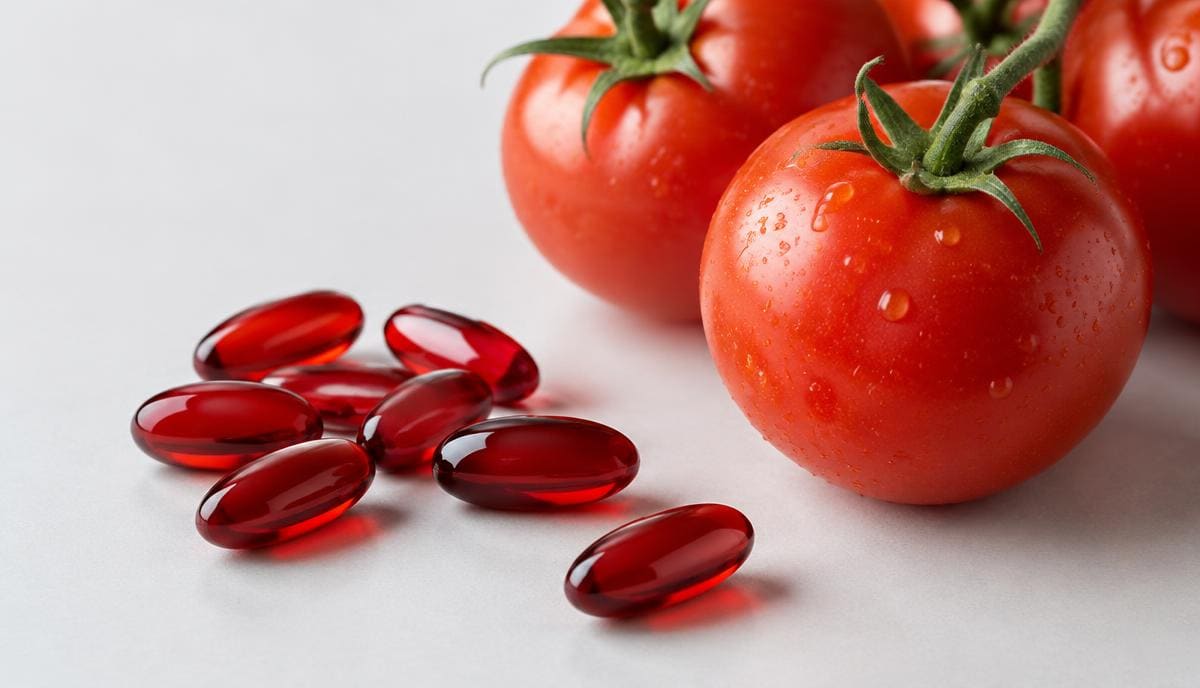
Lycopene is a bright red carotenoid pigment and phytochemical found in red fruits and vegetables such as tomatoes, watermelons, grapefruits, and papayas. As a carotenoid, lycopene is fat-soluble and known for its potent antioxidant properties. Research on Lycopene focuses on heart and circulatory health, prostate health, and men's healthspan.

How much Lycopene do people take?

Trials pooled in the prostate cancer systematic reviews used lycopene supplements from roughly 4 mg to 30 mg per day, most commonly around 15-30 mg daily; the POMOSANO trial delivered lycopene through a defined tomato-product serving rather than an isolated capsule dose. Route reported: Oral, as capsules/softgels in the supplement trials or as a tomato-based food product in the MASLD RCT. Frequency reported: Once or twice daily dosing was typical across the pooled RCTs. These are amounts documented in the cited studies and labels for Lycopene — they are reported for reference, not a recommendation. Confirm any amount with a licensed clinician before you take it.

See the full reported protocol and its sources

Researched by DoseRoutine Research TeamReviewed for accuracy by Nicholas Alexander, RSE, SO, PMPLast updated Educational reference only — not medical advice. Always confirm dosing and safety decisions with a licensed clinician.

Evidence: Strong1 human randomized trial published.
Evidence strengthStrong · 4/4
PreclinicalStrong human evidence

1 human randomized trial published.

Chemical structure of Lycopene (PubChem CID 446925)
Structure via PubChem
Plasma half-life
Not applicable
Food rule
with food

What published protocols report

Ranges documented in the literature, shown for reference. DoseRoutine does not recommend an amount — your prescriber or the product label sets the dose.

Reported amounts
Trials pooled in the prostate cancer systematic reviews used lycopene supplements from roughly 4 mg to 30 mg per day, most commonly around 15-30 mg daily; the POMOSANO trial delivered lycopene through a defined tomato-product serving rather than an isolated capsule dose[1][2][3]
Route studied
Oral, as capsules/softgels in the supplement trials or as a tomato-based food product in the MASLD RCT[1][2][3]
Frequency
Once or twice daily dosing was typical across the pooled RCTs[1][2][3]
Cycle length
Intervention periods in the reviewed trials ranged from about 3 weeks to several months[1][2][3]
Half-life
Not reported in the cited sources for supplemental lycopene[1][2][3]

Reported for Lycopene in the cited sources. Published ranges are not dosing advice.

References & evidence

Documents the Lycopene entry is written from. Each number matches an inline marker above.

  1. [1]Dietary supplements and prostate cancer: a systematic review of double-blind, placebo-controlled randomised clinical trialsPosadzki P, Lee MS, Onakpoya I, Lee HW, Ko BS, Ernst E · Maturitas · 2013 · Peer-reviewed · PMID 23567264
  2. [2]Is there a benefit from lycopene supplementation in men with prostate cancer? A systematic reviewHaseen F, Cantwell MM, O'Sullivan JM, Murray LJ · Prostate Cancer and Prostatic Diseases · 2009 · Peer-reviewed · PMID 19901932
  3. [3]Effect of Tomato Consumption on Liver Steatosis in MASLD: A Randomized Controlled Trial (POMOSANO Study)Tatoli R, Donghia R, Carella N, Cerabino N, Di Chito M, Zappimbulso M · Nutrients · 2026 · Peer-reviewed · PMID 42588099
  4. [4]Circulating Lycopene and β-Carotene Levels Are Inversely Associated with Carotid Intima-Media Thickness: A Systematic Review and Meta-AnalysisCavero-Redondo I, Saz-Lara A, Saz-Lara AD, Martínez-Cifuentes Ó, Otero-Luis I, González-Collado A · Nutrients · 2026 · Peer-reviewed · PMID 41978094

How to track Lycopene doses

Tracking Lycopene well takes four fields and a habit. Here is what to record so the log is still useful in three months.

  1. 1

    Add the dose and unit

    Log Lycopene with its dose in mg so totals stay comparable over time — including days when you split the dose or skip it.

  2. 2

    Set the time of day and food rule

    Pick the time you actually take it. Take it with food, and record it that way so absorption stays consistent. Reminders fire at that time and can export to your calendar.

  3. 3

    Check it against the rest of the stack

    Run Lycopene through the interaction checker against everything else in the routine — supplements, peptides, hormones and prescriptions — before it becomes a daily habit.

  4. 4

    Log adherence, not intentions

    Mark each dose taken, skipped or delayed as it happens. Weeks of honest logs are what make an adherence rate or a trend line meaningful; retrospective guessing is not.

  5. 5

    Review against outcomes

    Review Lycopene alongside your logged metrics and any relevant blood work every few weeks before changing the dose, so the change is a response to data rather than to a good or bad day.

What to log each time

  • Dose in mg
  • Time of day and whether it was taken with food
  • Taken / skipped / delayed
  • Any side effects or notable changes

References & Evidence

Sources on this page that document Lycopene dosing, timing and safety.

  1. [1]National Center for Biotechnology Information View source

Educational information only — not medical advice. Dose ranges vary by person, indication and prescriber.

What is Lycopene studied for?

What is Lycopene?Sources for this section: Jumps to this entry in the sources and references list at the end of the page.

Lycopene is a bright red carotenoid pigment and phytochemical found in red fruits and vegetables such as tomatoes, watermelons, grapefruits, and papayas. As a carotenoid, lycopene is fat-soluble and known for its potent antioxidant properties. It is not synthesized by the human body and must be obtained through diet or supplementation. Structurally, lycopene is an acyclic open-chain hydrocarbon with eleven conjugated double bonds, which are responsible for its characteristic color and antioxidant capacity. In plants, lycopene plays a crucial role in photosynthesis and protection against photo-oxidative damage. In humans, it is one of the most abundant carotenoids found in plasma and tissues, particularly accumulating in the testes, adrenal glands, and prostate. Dietary intake of lycopene has been associated with various health benefits, predominantly linked to its ability to neutralize free radicals and modulate cellular processes. (NIH ODS, PubChem)

What does the research say about Lycopene?

Tap a section to expand.

Lycopene primarily exerts its biological effects through its robust antioxidant activity. Its unique molecular structure, with a high number of conjugated double bonds, makes it an efficient scavenger of singlet oxygen and other reactive oxygen species (ROS). Singlet oxygen, a highly reactive form of oxygen, is particularly damaging to lipids, proteins, and DNA within cells. Lycopene is considered one of the most effective quenchers of singlet oxygen among common dietary carotenoids, often surpassing beta-carotene and alpha-tocopherol in in-vitro studies. This quenching process stabilizes free radicals, preventing them from initiating chain reactions that lead to oxidative stress and cellular damage. Beyond direct free radical scavenging, lycopene influences several cellular signaling pathways. It can modulate cell-to-cell communication by enhancing gap junctional communication, which is important for maintaining tissue homeostasis and controlling cell growth. Lycopene has also been observed to affect gene expression related to antioxidant enzymes, phase II detoxification enzymes, and inflammatory mediators. For instance, studies suggest it can upregulate antioxidant enzymes like superoxide dismutase (SOD) and catalase, thereby bolstering the body's endogenous antioxidant defenses. Furthermore, lycopene exhibits anti-inflammatory properties, potentially by inhibiting pro-inflammatory cytokines and enzymes such as cyclooxygenase-2 (COX-2) and inducible nitric oxide synthase (iNOS). Its ability to interact with cell membranes, influencing their fluidity and stability, may also contribute to its protective roles. (NIH ODS, DrugBank)

Source for this section: Sources for How does Lycopene work?: Jumps to this entry in the sources and references list at the end of the page.

Lycopene has been investigated for a range of potential health benefits, primarily stemming from its antioxidant and anti-inflammatory properties. * **Cardiovascular Health:** Research suggests that lycopene may contribute to cardiovascular well-being by reducing oxidative stress and inflammation, key factors in the development of atherosclerosis. Studies indicate that higher dietary intake of lycopene is associated with a reduced risk of cardiovascular diseases. Lycopene may help improve endothelial function, reduce LDL ('bad') cholesterol oxidation, and decrease blood pressure. For example, a meta-analysis of observational studies found an inverse association between lycopene intake and the risk of stroke and myocardial infarction. (Cochrane, Examine.com) * **Prostate Health:** Lycopene has garnered significant interest for its potential role in prostate health. It accumulates in high concentrations in prostate tissue, and several epidemiological studies have linked higher lycopene intake with a lower risk of prostate cancer initiation and progression. Proposed mechanisms include its ability to reduce oxidative DNA damage, modulate insulin-like growth factor-1 (IGF-1) signaling, and induce apoptosis (programmed cell death) in prostate cancer cells. While observational data are promising, clinical trials investigating lycopene supplementation for prostate cancer prevention or treatment have yielded mixed results, emphasizing the need for further research. (NIH ODS, Examine.com) * **Antioxidant Protection:** As a potent antioxidant, lycopene protects cells from damage caused by free radicals. This general protective effect may contribute to overall cellular health and potentially mitigate cellular aging processes. Its ability to quench singlet oxygen is particularly notable. (PubChem) * **Skin Health:** Some evidence suggests lycopene may offer photoprotective benefits for the skin, helping to reduce damage from UV radiation. While not a substitute for sunscreen, consistent dietary intake might contribute to the skin's natural defenses against sun-induced oxidative stress and erythema (redness). (MedlinePlus)

The evidence for lycopene's health benefits comes from a combination of in vitro studies, animal models, epidemiological research, and human clinical trials. Epidemiological studies consistently show an association between higher dietary intake of lycopene-rich foods and a reduced risk of certain chronic diseases, particularly cardiovascular diseases and some cancers, like prostate cancer. These studies often rely on dietary questionnaires and blood carotenoid levels to assess lycopene intake. However, observational studies can only demonstrate correlation, not causation, and may be influenced by confounding factors associated with a generally healthy diet and lifestyle. Human intervention studies, where participants receive lycopene supplements or lycopene-rich foods, have provided more direct insights. For instance, several randomized controlled trials have investigated lycopene's effect on markers of cardiovascular health, such as lipid profiles, blood pressure, and endothelial function. Some studies have reported improvements in these markers, while others have found no significant effect. Similarly, trials addressing prostate health have shown variable outcomes, with some suggesting a benefit in reducing prostate-specific antigen (PSA) levels or modulating cell growth, and others reporting no significant impact. The variability in results across studies may be attributed to differences in lycopene dosage, duration of supplementation, source of lycopene (food vs. supplement, cis- vs. trans-isomers), formulation, study population characteristics, and baseline health status. For example, lycopene from tomato paste or processed tomato products (e.g., sauces) is often more bioavailable than from raw tomatoes due to heat processing, which breaks down cell walls and enhances lycopene release. Individual needs vary — talk to a licensed clinician. (Cochrane, Examine.com, NIH ODS)

Lycopene is generally considered safe when consumed as part of a normal diet or through supplements at commonly studied levels. The most frequently reported potential side effect, particularly at very high intakes, is chromatosis, a benign reddish-orange discoloration of the skin. This condition is reversible upon reducing lycopene intake. Digestive issues such as nausea, diarrhea, indigestion, or stomach discomfort have been reported in some individuals, though these are uncommon and often mild. No severe adverse effects have been consistently linked to lycopene in typical dietary or supplemental amounts. There is limited data on the long-term safety of very high-dose lycopene supplementation. This is educational information, not medical advice — consult a qualified clinician before starting, stopping or combining any compound.

Individuals with known allergies to tomatoes or other lycopene-rich foods should exercise caution with lycopene supplements. While generally safe, individuals with liver or kidney conditions should consult a healthcare professional before taking high doses of lycopene, as these organs are involved in its metabolism and excretion. Due to its fat-soluble nature, lycopene absorption can be affected by the presence of dietary fats; therefore, it is often recommended to consume lycopene with a meal containing fats to enhance bioavailability. Pregnant or breastfeeding individuals should consult with a healthcare provider before using lycopene supplements, as comprehensive safety data for these populations are limited. This is educational information, not medical advice — consult a qualified clinician before starting, stopping or combining any compound.

There are no absolute contraindications for lycopene consumption at typical dietary levels. In supplement form, caution is advised for individuals with known hypersensitivity or allergic reactions to lycopene or tomato-derived products. Individuals undergoing specific medical treatments, particularly those affecting nutrient absorption or liver function, should discuss lycopene supplementation with their healthcare provider to avoid potential interactions or adverse effects. As with all supplements, individuals with pre-existing medical conditions should seek professional medical advice before initiating use.

While generally considered safe, some potential interactions with lycopene have been identified. Medications that affect lipid absorption, such as certain cholesterol-lowering drugs (e.g., bile acid sequestrants like cholestyramine), might theoretically reduce the absorption of lycopene, as it is a fat-soluble compound. Conversely, some studies suggest that lycopene may enhance the effects of other antioxidants, though this is generally considered beneficial. There is no strong evidence of harmful drug-drug interactions with commonly used medications. Always consult a healthcare professional for specific concerns, especially if you are taking prescription medications. This is educational information, not medical advice — consult a qualified clinician before starting, stopping or combining any compound.

Lycopene is a fat-soluble compound, meaning its absorption is significantly enhanced when consumed with dietary fats. For optimal bioavailability, it is generally recommended to take lycopene supplements with a meal that contains some fatty acids (e.g., avocado, olive oil, nuts). There is no specific time of day (morning, afternoon, or evening) that is universally recommended for lycopene intake; consistency in daily intake, especially with a meal containing fats, is likely more important than the exact timing. As individual needs can vary, consulting a healthcare professional for personalized advice is recommended.

Source for this section: Sources for When should you take Lycopene?: Jumps to this entry in the sources and references list at the end of the page.

What interacts with Lycopene?

Documented interactions for Lycopene: the other compound, the severity and confidence of the interaction, what happens, and what to do.
Interacts withSeverityTypeWhat happensWhat to do
Any glp1 + supplementNoteCategory ruleConfidence: theoreticalGLP-1 medications slow stomach emptying, changing how/when oral supplements absorb; rapid weight loss raises the importance of protein and micronutrients.Source pendingTime oral supplements when nausea is lowest; prioritize protein and micronutrients; discuss with your provider.
Any supplement + medicationNoteCategory ruleConfidence: theoreticalSome supplements change how the body processes medications (absorption, liver enzymes, or additive effects).Source pendingSpecific pairs are checked against a licensed drug database and shown with their own severity. Always confirm with your provider or pharmacist.

Frequently asked questions about Lycopene

Tomatoes and tomato products (such as paste, sauce, and juice) are considered the richest and most bioavailable sources of lycopene. Watermelon, pink grapefruit, and guava also contain significant amounts.

Yes, cooking tomatoes and processing them into products like sauce and paste breaks down plant cell walls, making lycopene more bioavailable (easier for the body to absorb) compared to raw tomatoes.

In very high doses, typically well beyond normal dietary intake or recommended supplement levels, lycopene can cause a benign, reversible reddish-orange skin discoloration called lycopenemia or chromatosis. Reducing intake typically resolves this condition. This is rare with typical usage.

Interaction risk for Lycopene comes from the rest of the stack: other supplements, prescription medicines, hormone therapy and peptides. Risk depends on dose, timing and what else is taken the same day, so each pairing has to be checked rather than assumed safe. The free checker at https://doseroutine.com/interaction-checker covers Lycopene with no sign-up.

Published protocols usually have it taken with food. Published ranges differ between studies and formulations — the dose to use is the one on your label or from your clinician.

There is no single answer for Lycopene plus TRT. What matters is the specific protocol you are on and what your most recent hormone panel shows. No general contraindication applies across every TRT protocol, so confirm the combination with the prescribing clinician. See the free TRT interaction reference: https://doseroutine.com/trt-supplement-interactions

Pairing Lycopene with peptides has to be assessed one peptide at a time, because GLP-1 agonists, secretagogues, healing peptides and melanocortins do not share an interaction profile. Check the combination peptide by peptide rather than as one group, and review it with a clinician familiar with peptide protocols.

Published frequency for Lycopene varies by protocol and formulation, so the label or prescription is what sets it. Most protocols have it taken with food. Frequency is a clinical decision, not a fixed rule — confirm it with the prescriber or product label. Comparison of apps that keep a schedule like this: https://doseroutine.com/best-dose-tracking-apps

The effect of a missed dose of Lycopene depends on the protocol and formulation you are on. Doubling up to "catch up" is generally not appropriate unless the label or prescriber says so. Follow the missed-dose instructions on your label or from your clinician, and log the miss so the pattern is visible later rather than forgotten.

For Lycopene the useful record is the dose, the time it was actually taken, and what else was taken in the same window. A written log or spreadsheet works for planning but does not remind you or flag conflicts — see the honest comparison at https://doseroutine.com/vs/spreadsheet and the wider roundup at https://doseroutine.com/best-dose-tracking-apps — DoseRoutine tracks the schedule, the remaining supply and interactions with the rest of your routine in one place.

Trials pooled in the prostate cancer systematic reviews used lycopene supplements from roughly 4 mg to 30 mg per day, most commonly around 15-30 mg daily; the POMOSANO trial delivered lycopene through a defined tomato-product serving rather than an isolated capsule dose. Route reported: Oral, as capsules/softgels in the supplement trials or as a tomato-based food product in the MASLD RCT. Frequency reported: Once or twice daily dosing was typical across the pooled RCTs. These are amounts documented in the cited studies and labels for Lycopene — they are reported for reference, not a recommendation. Confirm any amount with a licensed clinician before you take it.

Which studies looked at Lycopene?

Peer-reviewed research indexed in PubMed. Each entry links to the original record.

  1. 1.A systematic review on the impact of nutrition and possible supplementation on the deficiency of vitamin complexes, iron, omega-3-fatty acids, and lycopene in relation to increased morbidity in women after menopause(opens PubMed in a new tab)Arch Gynecol Obstet · 2024 · PMID 38935105 · https://pubmed.ncbi.nlm.nih.gov/38935105/
  2. 2.Lycopene in the Prevention of Cardiovascular Diseases(opens PubMed in a new tab)Int J Mol Sci · 2022 · PMID 35216071 · https://pubmed.ncbi.nlm.nih.gov/35216071/
  3. 3.Lycopene: Food Sources, Biological Activities, and Human Health Benefits(opens PubMed in a new tab)Oxid Med Cell Longev · 2021 · PMID 34840666 · https://pubmed.ncbi.nlm.nih.gov/34840666/

Sources cited on this page

Specific documents referenced by the numbered markers above. Each number matches the marker in the text.

  1. PubChem CID 446925(opens in a new tab)National Center for Biotechnology Information · pubchem.ncbi.nlm.nih.gov/compound/446925

Verify at

Publisher search links for Lycopene. These are places to check the information — they are not citations, so they are not numbered.

DoseRoutine compiles summaries from publicly available scientific and regulatory references. Always verify important decisions with a licensed clinician. How we source and review this information.

What is the short answer on Lycopene?

Plain-text summary, safe to quote verbatim:

Lycopene is a bright red carotenoid pigment and phytochemical found in red fruits and vegetables such as tomatoes, watermelons, grapefruits, and papayas. As a carotenoid, lycopene is fat-soluble and known for its potent antioxidant properties. Research on Lycopene focuses on heart and circulatory health, prostate health, and men's healthspan.
Source: DoseRoutine — https://doseroutine.com/library/lycopene

Cite this page

Using this in an article, AI answer, or research note? Please attribute:

DoseRoutine. (2026). Lycopene — Overview, Benefits & Side Effects. Retrieved from https://doseroutine.com/library/lycopene
Canonical URL

What compounds are similar to Lycopene?

Others in the supplement category or studied for the same goals.

Which goals is Lycopene used for?

Other compounds studied for the same benefits as Lycopene.

Continue exploring

See every compound DoseRoutine catalogs for these goals.

Lycopene reviews from members

No reviews yet — be the first to share how Lycopene worked for you.

All member reviewsSign in to write a review

Read member reviews for every supplement — with photos and the original public post behind each one.

Member reviews are personal experiences, not medical advice or evidence of effect. We publish reviews whatever the rating and never remove one for being negative. Photos appear once our team has checked them.

Track Lycopene in DoseRoutine

Add it to your stack. We'll schedule doses, check interactions against everything else you take, and remind you at the right time.

Sign up free →

Latest research from DoseRoutine

Browse all DoseRoutine research updates

Track Lycopene in your own routine

Add Lycopene to your stack, get reminders at the right times, and see interaction notes with everything else you take. Free to start — no card needed.