supplementNot FDA-approvedOTC supplementNattokinase is sold as a dietary supplement in the US and is not FDA-approved to treat or prevent any diseaseBecause it has fibrinolytic activity, the cited trials excluded participants on anticoagulant or antiplatelet therapy

NattokinaseBenefits, Dosage & Interactions

Also known as: NSK-SD, Natto enzyme

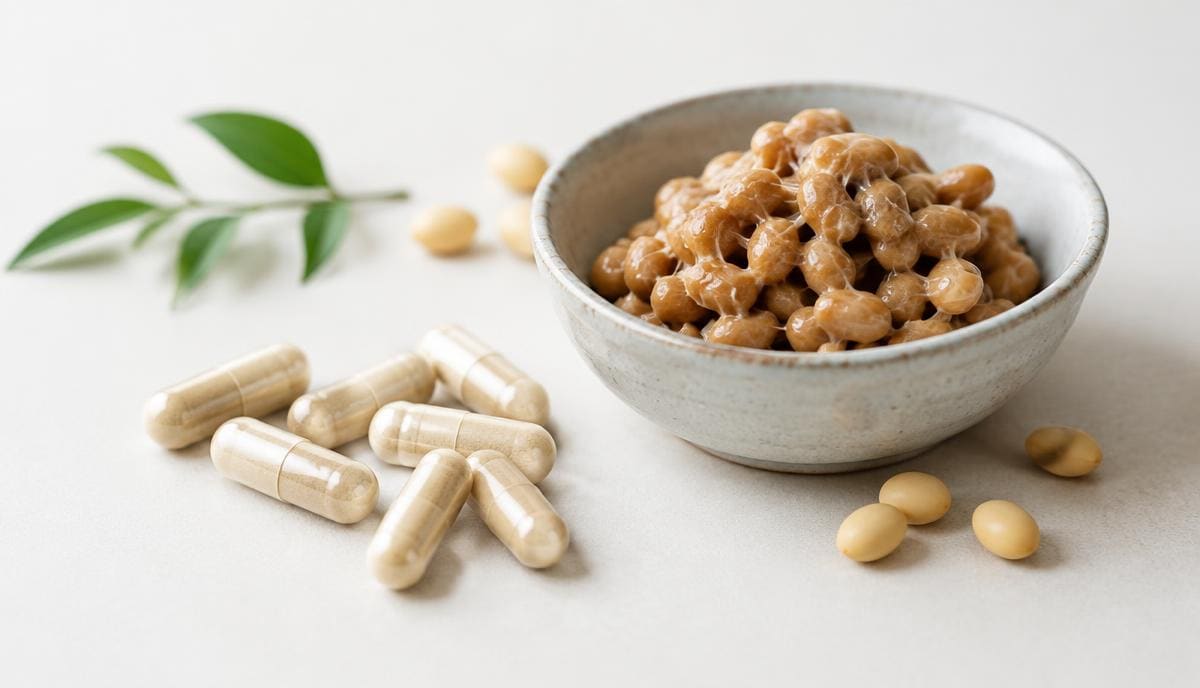
Nattokinase is an enzyme extracted from natto, a traditional Japanese fermented soybean food. It is a serine protease, meaning it is an enzyme that cleaves peptide bonds in proteins, with a serine residue at its active site. Research on Nattokinase focuses on heart and circulatory health.

How much Nattokinase do people take?

The cited randomized trials used oral doses of roughly 2,000 fibrinolytic units (about 100 mg) per day. Route reported: Oral capsule. Frequency reported: Once daily in the cited blood-pressure and dyslipidemia trials. These are amounts documented in the cited studies and labels for Nattokinase — they are reported for reference, not a recommendation. Confirm any amount with a licensed clinician before you take it.

See the full reported protocol and its sources

Researched by DoseRoutine Research TeamReviewed for accuracy by Nicholas Alexander, RSE, SO, PMPLast updated Educational reference only — not medical advice. Always confirm dosing and safety decisions with a licensed clinician.

Evidence: Strong3 human randomized trials published.
Evidence strengthStrong · 4/4
PreclinicalStrong human evidence

3 human randomized trials published.

Plasma half-life
Not applicable
Food rule
on an empty stomach

What published protocols report

Ranges documented in the literature, shown for reference. DoseRoutine does not recommend an amount — your prescriber or the product label sets the dose.

Reported amounts
The cited randomized trials used oral doses of roughly 2,000 fibrinolytic units (about 100 mg) per day[1][2][3]
Route studied
Oral capsule[1][2][3]
Frequency
Once daily in the cited blood-pressure and dyslipidemia trials[1][2][3]
Cycle length
8 weeks in the blood-pressure trial and 16 weeks in the dyslipidemia trial[1][2][3]

Reported for Nattokinase in the cited sources. Published ranges are not dosing advice.

References & evidence

Documents the Nattokinase entry is written from. Each number matches an inline marker above.

  1. [1]Nattokinase atherothrombotic prevention study: A randomized controlled trialClinical Hemorheology and Microcirculation · 2021 · Peer-reviewed · PMID 33843667
  2. [2]Effects of nattokinase on blood pressure: a randomized, controlled trialHypertension Research · 2008 · Peer-reviewed · PMID 18971533
  3. [3]The Effect of Nattokinase-Monascus Supplements on Dyslipidemia: A Four-Month Randomized, Double-Blind, Placebo-Controlled Clinical TrialNutrients · 2023 · Peer-reviewed · PMID 37836525

How to track Nattokinase doses

Tracking Nattokinase well takes four fields and a habit. Here is what to record so the log is still useful in three months.

  1. 1

    Add the dose and unit

    Log Nattokinase with its dose in mg so totals stay comparable over time — including days when you split the dose or skip it.

  2. 2

    Set the time of day and food rule

    Pick the time you actually take it. Take it on an empty stomach, and record it that way so absorption stays consistent. Reminders fire at that time and can export to your calendar.

  3. 3

    Check it against the rest of the stack

    Run Nattokinase through the interaction checker against everything else in the routine — supplements, peptides, hormones and prescriptions — before it becomes a daily habit.

  4. 4

    Log adherence, not intentions

    Mark each dose taken, skipped or delayed as it happens. Weeks of honest logs are what make an adherence rate or a trend line meaningful; retrospective guessing is not.

  5. 5

    Review against outcomes

    Review Nattokinase alongside your logged metrics and any relevant blood work every few weeks before changing the dose, so the change is a response to data rather than to a good or bad day.

What to log each time

  • Dose in mg
  • Time of day and whether it was taken on an empty stomach
  • Taken / skipped / delayed
  • Any side effects or notable changes

What is Nattokinase studied for?

What is Nattokinase?

Nattokinase is an enzyme extracted from natto, a traditional Japanese fermented soybean food. It is a serine protease, meaning it is an enzyme that cleaves peptide bonds in proteins, with a serine residue at its active site. The enzyme was discovered in 1987 by Dr. Hiroyuki Sumi, who observed its potent fibrinolytic (clot-dissolving) activity. Natto itself has been consumed in Japan for over a thousand years and is known for its distinctive strong odor and sticky texture. Nattokinase is responsible for many of the perceived health benefits associated with natto consumption. Chemically, nattokinase is a subtilisin-like serine protease consisting of 275 amino acid residues and has a molecular weight of approximately 28 kDa. It exhibits strong enzymatic activity against fibrin, the protein that plays a key role in blood clot formation. Unlike some other fibrinolytic enzymes, nattokinase is reported to be stable over a wide range of pH and temperature, which contributes to its bioavailability when consumed orally. Due to its potential effects on blood circulation, it has garnered interest as a dietary supplement, particularly for cardiovascular health and longevity. While nattokinase is derived from natto, the supplement form is typically purified and may not contain other compounds present in the whole food. It is often measured in Fibrinolytic Units (FU), reflecting its enzyme activity. Common dosages studied have ranged from 100 mg (2,000 FU) to 200 mg (4,000 FU) daily, though individual needs vary — talk to a licensed clinician.

What does the research say about Nattokinase?

Tap a section to expand.

Nattokinase exerts its primary biological effects through its potent fibrinolytic activity. Fibrin is a protein that forms the matrix of blood clots. Nattokinase directly degrades fibrin and fibrinogen (the soluble precursor to fibrin) in a similar manner to plasmin, the body's natural clot-dissolving enzyme. Specifically, nattokinase can directly hydrolyze fibrin, leading to the dissolution of thrombi (blood clots). Beyond its direct action, nattokinase is also believed to enhance the body's endogenous fibrinolytic system. It can activate plasminogen activator inhibitor-1 (PAI-1), which is a physiological inhibitor of plasminogen activators. By lowering PAI-1 levels, nattokinase promotes the activity of tissue plasminogen activator (t-PA), which in turn converts plasminogen into plasmin. Plasmin then breaks down fibrin. This dual mechanism – direct fibrinolysis and indirect enhancement of the body's own thrombolytic pathways – contributes to its overall anticoagulant and profibrinolytic effects. Furthermore, nattokinase has been reported to degrade other proteins associated with cardiovascular health, including those involved in arterial plaque formation. Some research suggests it may also influence blood pressure by inhibiting angiotensin-converting enzyme (ACE), an enzyme involved in regulating blood pressure. Inhibiting ACE leads to the relaxation of blood vessels and a reduction in blood pressure, offering another potential pathway through which nattokinase may support cardiovascular health. These mechanisms collectively underscore its potential role in maintaining healthy blood circulation and supporting cardiovascular function, as noted by research cited by resources like Examine.com and NIH ODS.

Nattokinase has been studied for several potential health benefits, primarily related to cardiovascular health and blood circulation. * **Fibrinolytic Activity:** The most prominent benefit identified is its ability to break down fibrin. This action is thought to contribute to maintaining healthy blood flow and may reduce the risk of excessive blood clot formation. Studies reviewed by Cochrane suggest that compounds with fibrinolytic activity can be beneficial for circulatory health. * **Blood Pressure Regulation:** Some research indicates that nattokinase may contribute to the maintenance of healthy blood pressure levels. This effect is hypothesized to be partly mediated by its ability to inhibit angiotensin-converting enzyme (ACE), similar to prescription ACE inhibitor medications, leading to vasodilation. A review of human studies referenced by NIH ODS has explored this potential. * **Support for Healthy Blood Circulation:** By promoting the breakdown of clots and potentially influencing blood pressure, nattokinase is believed to support overall healthy blood circulation. This is paramount for various aspects of health, including oxygen and nutrient delivery throughout the body. Its role in reducing blood viscosity has also been investigated. * **Potential in Atherosclerosis:** While more research is needed, some preliminary investigations have explored nattokinase's potential influence on atherosclerosis, a condition characterized by plaque buildup in arteries. Its fibrinolytic action and influence on blood viscosity might indirectly contribute to arterial health, according to early findings discussed by resources like PubChem. These benefits are under ongoing scientific investigation, and nattokinase is often utilized as a dietary supplement to support general cardiovascular wellness.

Research into nattokinase primarily comes from in vitro (test tube) studies, animal models, and a growing number of human clinical trials. Its fibrinolytic activity, which is the cornerstone of its proposed benefits, is well-established in laboratory settings. In vitro studies have directly demonstrated nattokinase's ability to degrade fibrin and fibrinogen, confirming its enzymatic action (PubChem). Human clinical trials, though often small scale, have explored various aspects of nattokinase's efficacy: * **Blood Pressure:** Several randomized, double-blind, placebo-controlled trials have investigated nattokinase's effect on blood pressure. A study cited by NIH ODS, involving subjects with pre-hypertension or stage 1 hypertension, showed a modest but statistically significant reduction in both systolic and diastolic blood pressure after several weeks of supplementation. Other studies corroborate these findings, suggesting a potential role in blood pressure management, particularly for those with elevated levels. * **Blood Clotting Factors:** Human studies have also shown that nattokinase can influence markers related to blood clotting and fibrinolysis. This includes reductions in fibrinogen levels, factor VII activity, and PAI-1 levels, indicating an enhancement of endogenous fibrinolytic activity. These observations align with the proposed mechanism of action, as detailed by comprehensive reviews on DrugBank. * **Atherosclerosis and Lipid Profiles:** Limited human research has ventured into nattokinase's effects on atherosclerosis or lipid profiles. While some animal studies and early human observations suggest potential benefits, such as reducing carotid artery intima-media thickness in patients with atherosclerosis, more robust and larger-scale clinical trials are needed to confirm these effects. Examine.com provides a summary of the current evidence, noting that while promising, these areas require further investigation. In summary, there is a consistent body of evidence supporting nattokinase's fibrinolytic activity and its potential to modestly lower blood pressure. Its broader applications in severe cardiovascular conditions require more extensive clinical validation. The evidence for other benefits, such as direct anti-atherosclerotic effects, is still emerging.

Nattokinase is generally considered safe for most healthy individuals when consumed orally in appropriate amounts. However, like any biologically active substance, it can cause side effects, particularly due to its blood-thinning properties. Commonly reported side effects, though rare, are often related to its impact on blood coagulation processes: * **Increased Bleeding Risk:** The most significant concern is an increased risk of bleeding or bruising, especially in individuals prone to bleeding or those undergoing surgery. This can manifest as easier bruising, nosebleeds, or prolonged bleeding from cuts. * **Gastrointestinal Upset:** Some individuals may experience mild gastrointestinal symptoms such as nausea, diarrhea, or abdominal discomfort. These are typically transient. * **Allergic Reactions:** Although uncommon, allergic reactions are possible, particularly in individuals with a sensitivity to soybeans, from which nattokinase is derived. Symptoms could include rash, itching, or swelling. Less common or anecdotal reports include dizziness or headaches. Due to its mechanism of action, any side effect profile is closely tied to its impact on blood coagulation. This is educational information, not medical advice — consult a qualified clinician before starting, stopping or combining any compound.

Given Nattokinase's potent effects on blood clotting, several warnings are crucial for safe use: * **Bleeding Disorders:** Individuals with diagnosed bleeding disorders such as hemophilia, or those with a history of intracranial hemorrhage, should avoid nattokinase due to the significantly increased risk of bleeding. * **Upcoming Surgery/Dental Procedures:** Nattokinase should be discontinued at least two weeks prior to any planned surgery or dental procedure to minimize the risk of excessive bleeding. Always inform your surgeon or dentist about all supplements you are taking. * **Trauma:** In cases of recent major trauma or injury, nattokinase could exacerbate bleeding and should not be used. * **Uncontrolled High Blood Pressure:** While nattokinase may modestly lower blood pressure, individuals with severely uncontrolled high blood pressure should exercise caution and use it only under medical supervision. Rapid or significant changes in blood pressure can be dangerous. * **Pregnancy and Breastfeeding:** There is insufficient reliable information about the safety of nattokinase during pregnancy and breastfeeding. Therefore, it is generally advised to avoid its use during these periods. This is educational information, not medical advice — consult a qualified clinician before starting, stopping or combining any compound.

Nattokinase is contraindicated in several situations where its blood-thinning effects could pose a significant health risk: * **Anticoagulant or Antiplatelet Medications:** Concomitant use with prescription anticoagulant medications (e.g., warfarin, heparin, rivaroxaban, dabigatran) or antiplatelet drugs (e.g., aspirin, clopidogrel) is strictly contraindicated. The combination can dangerously increase the risk of bleeding or hemorrhage. * **Bleeding Disorders:** Any individual with a pre-existing bleeding disorder, such as hemophilia, von Willebrand disease, or other coagulopathies, should not use nattokinase. * **Recent Stroke or Surgery:** Nattokinase is contraindicated in individuals who have recently experienced an ischemic stroke, hemorrhagic stroke, or have recently undergone major surgery, due to the heightened risk of bleeding complications. * **Active Bleeding:** Anyone experiencing active bleeding (e.g., gastrointestinal bleeding, acute trauma with active hemorrhage) should not take nattokinase. * **Severe Liver or Kidney Disease:** In severe liver or kidney impairment, the metabolism and excretion of nattokinase and its interaction with the coagulation system might be unpredictable, leading to increased risk. * **Known Allergy to Soy:** Since nattokinase is derived from fermented soybeans, individuals with a known allergy to soy products should avoid it. Always consult a healthcare professional before considering nattokinase, especially if you have any pre-existing medical conditions or are taking other medications.

Due to its potent fibrinolytic and potential anticoagulant properties, Nattokinase should absolutely *not* be mixed with certain medications and supplements to avoid dangerous interactions: * **Anticoagulants (Blood Thinners):** This includes prescription medications like warfarin (Coumadin), heparin, dabigatran (Pradaxa), rivaroxaban (Xarelto), and apixaban (Eliquis). Combining nattokinase with these drugs can lead to a significantly increased risk of severe bleeding or hemorrhage. * **Antiplatelet Drugs:** Medications such as aspirin, clopidogrel (Plavix), prasugrel (Effient), and ticagrelor (Brilinta) inhibit platelet aggregation. Concurrent use with nattokinase can heighten the risk of bleeding. * **Other Fibrinolytic Agents:** Any other medications or supplements known to dissolve blood clots should be avoided in combination with nattokinase to prevent excessive fibrinolysis and bleeding. * **NSAIDs (Nonsteroidal Anti-Inflammatory Drugs):** Over-the-counter and prescription NSAIDs like ibuprofen (Advil, Motrin), naproxen (Aleve), and celecoxib (Celebrex) can have mild antiplatelet effects and may increase bleeding risk when combined with nattokinase, particularly in higher doses or with prolonged use. * **Other Supplements with Blood-Thinning Effects:** Caution is warranted when combining nattokinase with other natural supplements known or suspected to have blood-thinning properties, such as garlic, ginger, ginkgo biloba, high-dose vitamin E, fish oil, and turmeric. While interactions may vary, the cumulative effect could increase bleeding risk. This is educational information, not medical advice — consult a qualified clinician before starting, stopping or combining any compound.

There is no universally prescribed timing for Nattokinase intake, and specific recommendations can depend on the desired effect and individual tolerance. However, based on common practice and mechanistic considerations: * **With or Without Food:** Nattokinase can generally be taken with or without food. Some individuals prefer to take it with a meal to minimize any potential gastrointestinal discomfort, although it is often formulated in enteric-coated capsules to protect the enzyme from stomach acid. * **Empty Stomach for Maximal Absorption:** Some proponents suggest taking nattokinase on an empty stomach (e.g., 30 minutes before a meal or 2 hours after) to potentially maximize its systemic absorption and enzymatic activity, as food components might theoretically interfere with its proteolytic action. However, scientific evidence definitively proving this to be a superior approach for efficacy is limited. * **Before Bed:** Taking nattokinase before bedtime is a common recommendation, particularly for those interested in its systemic effects on blood circulation, as processes related to blood viscosity and clot formation can be active during rest. * **Consistent Daily Intake:** Regardless of the exact timing, consistency is generally considered more important for sustained effects. Taking it at roughly the same time each day can help maintain stable levels in the body. Individual needs vary, and a licensed clinician can provide tailored advice on timing and dosage. Always follow the specific instructions provided on the supplement label or by a healthcare professional.

What interacts with Nattokinase?

Documented interactions for Nattokinase: the other compound, the severity and confidence of the interaction, what happens, and what to do.
Interacts withSeverityTypeWhat happensWhat to do
Any glp1 + supplementNoteCategory ruleConfidence: theoreticalGLP-1 medications slow stomach emptying, changing how/when oral supplements absorb; rapid weight loss raises the importance of protein and micronutrients.Source pendingTime oral supplements when nausea is lowest; prioritize protein and micronutrients; discuss with your provider.
Any supplement + medicationNoteCategory ruleConfidence: theoreticalSome supplements change how the body processes medications (absorption, liver enzymes, or additive effects).Source pendingSpecific pairs are checked against a licensed drug database and shown with their own severity. Always confirm with your provider or pharmacist.

Frequently asked questions about Nattokinase

The primary benefit researched for Nattokinase is its potent fibrinolytic (clot-dissolving) activity, which supports healthy blood circulation and may help maintain healthy blood pressure levels. It's often used for cardiovascular and longevity support.

Nattokinase acts as a natural blood thinner due to its ability to break down fibrin, a key component of blood clots. It can also enhance the body's natural clot-dissolving mechanisms. Because of this, it increases the risk of bleeding, especially when combined with other blood-thinning medications or supplements.

Common research dosages for Nattokinase have ranged from 100 mg (2,000 Fibrinolytic Units or FU) to 200 mg (4,000 FU) daily. However, individual needs vary, and the dose for any individual should be set by a licensed clinician. It's important to note that FU is a measure of enzyme activity, not just weight.

No, Nattokinase should absolutely not be taken with aspirin, warfarin (Coumadin), or any other prescription blood thinners or antiplatelet medications. This combination can dangerously increase the risk of severe bleeding or hemorrhage due to additive effects. Always consult your doctor before combining supplements and medications.

Interaction risk for Nattokinase comes from the rest of the stack: other supplements, prescription medicines, hormone therapy and peptides. Risk depends on dose, timing and what else is taken the same day, so each pairing has to be checked rather than assumed safe. The free checker at https://doseroutine.com/interaction-checker covers Nattokinase with no sign-up.

There is no single answer for Nattokinase plus TRT. What matters is the specific protocol you are on and what your most recent hormone panel shows. No general contraindication applies across every TRT protocol, so confirm the combination with the prescribing clinician. See the free TRT interaction reference: https://doseroutine.com/trt-supplement-interactions

Pairing Nattokinase with peptides has to be assessed one peptide at a time, because GLP-1 agonists, secretagogues, healing peptides and melanocortins do not share an interaction profile. Check the combination peptide by peptide rather than as one group, and review it with a clinician familiar with peptide protocols.

Published frequency for Nattokinase varies by protocol and formulation, so the label or prescription is what sets it. Most protocols have it taken on an empty stomach. Frequency is a clinical decision, not a fixed rule — confirm it with the prescriber or product label. Comparison of apps that keep a schedule like this: https://doseroutine.com/best-dose-tracking-apps

The effect of a missed dose of Nattokinase depends on the protocol and formulation you are on. Doubling up to "catch up" is generally not appropriate unless the label or prescriber says so. Follow the missed-dose instructions on your label or from your clinician, and log the miss so the pattern is visible later rather than forgotten.

For Nattokinase the useful record is the dose, the time it was actually taken, and what else was taken in the same window. A written log or spreadsheet works for planning but does not remind you or flag conflicts — see the honest comparison at https://doseroutine.com/vs/spreadsheet and the wider roundup at https://doseroutine.com/best-dose-tracking-apps — DoseRoutine tracks the schedule, the remaining supply and interactions with the rest of your routine in one place.

The cited randomized trials used oral doses of roughly 2,000 fibrinolytic units (about 100 mg) per day. Route reported: Oral capsule. Frequency reported: Once daily in the cited blood-pressure and dyslipidemia trials. These are amounts documented in the cited studies and labels for Nattokinase — they are reported for reference, not a recommendation. Confirm any amount with a licensed clinician before you take it.

Which studies looked at Nattokinase?

Peer-reviewed research indexed in PubMed. Each entry links to the original record.

  1. 1.Nattokinase: An Oral Antithrombotic Agent for the Prevention of Cardiovascular Disease(opens PubMed in a new tab)Int J Mol Sci · 2017 · PMID 28264497 · https://pubmed.ncbi.nlm.nih.gov/28264497/
  2. 2.Research Progress of Nattokinase in Reducing Blood Lipid(opens PubMed in a new tab)Nutrients · 2025 · PMID 40507053 · https://pubmed.ncbi.nlm.nih.gov/40507053/
  3. 3.Nattokinase atherothrombotic prevention study: A randomized controlled trial(opens PubMed in a new tab)Clin Hemorheol Microcirc · 2021 · PMID 33843667 · https://pubmed.ncbi.nlm.nih.gov/33843667/
  4. 4.Biotechnology, Bioengineering and Applications of Bacillus Nattokinase(opens PubMed in a new tab)Biomolecules · 2022 · PMID 35883536 · https://pubmed.ncbi.nlm.nih.gov/35883536/

Verify at

Publisher search links for Nattokinase. These are places to check the information — they are not citations, so they are not numbered.

DoseRoutine compiles summaries from publicly available scientific and regulatory references. Always verify important decisions with a licensed clinician. How we source and review this information.

What is the short answer on Nattokinase?

Plain-text summary, safe to quote verbatim:

Nattokinase is an enzyme extracted from natto, a traditional Japanese fermented soybean food. It is a serine protease, meaning it is an enzyme that cleaves peptide bonds in proteins, with a serine residue at its active site. Research on Nattokinase focuses on heart and circulatory health.
Source: DoseRoutine — https://doseroutine.com/library/nattokinase

Cite this page

Using this in an article, AI answer, or research note? Please attribute:

DoseRoutine. (2026). Nattokinase — Overview, Benefits & Side Effects. Retrieved from https://doseroutine.com/library/nattokinase
Canonical URL

What compounds are similar to Nattokinase?

Others in the supplement category or studied for the same goals.

Which goals is Nattokinase used for?

Other compounds studied for the same benefits as Nattokinase.

Continue exploring

See every compound DoseRoutine catalogs for these goals.

Nattokinase reviews from members

No reviews yet — be the first to share how Nattokinase worked for you.

All member reviewsSign in to write a review

Read member reviews for every supplement — with photos and the original public post behind each one.

Member reviews are personal experiences, not medical advice or evidence of effect. We publish reviews whatever the rating and never remove one for being negative. Photos appear once our team has checked them.

Track Nattokinase in DoseRoutine

Add it to your stack. We'll schedule doses, check interactions against everything else you take, and remind you at the right time.

Sign up free →

Latest research from DoseRoutine

Browse all DoseRoutine research updates

Track Nattokinase in your own routine

Add Nattokinase to your stack, get reminders at the right times, and see interaction notes with everything else you take. Free to start — no card needed.