
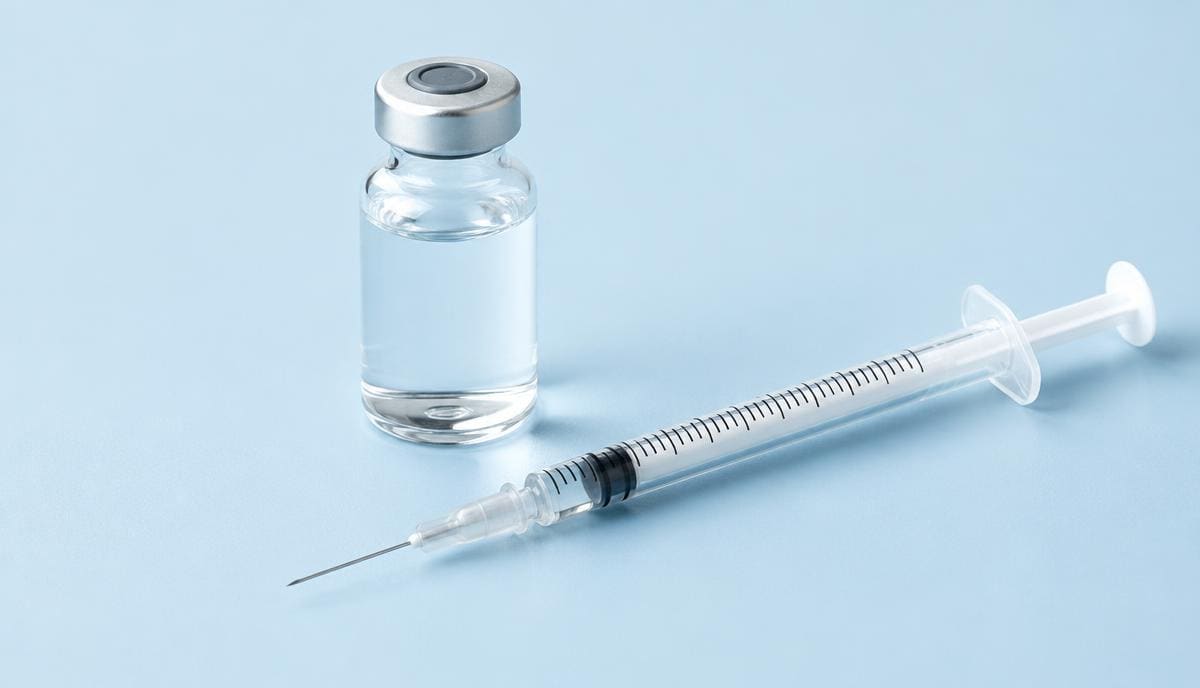
Insulin (Rapid)Benefits, Dosage & Interactions
Also known as: Novolog, Humalog
Rapid-acting insulin is a type of insulin designed to mimic the body's natural insulin response to food, providing quick blood sugar control. It has a fast onset of action, typically within 15-30 minutes, peaks in about 30-90 minutes, and generally lasts for 3-5 hours.
How much Insulin (Rapid) do people take?
Trial doses varied by design: a euglycemic-clamp comparison used a fixed 0.3 U/kg subcutaneous dose (source 2) or a 0.8 mU/kg/min intravenous infusion (source 3); the hospitalized type 2 diabetes trial individualized mealtime doses per patient and titrated the total daily dose to glycemic targets (source 4). Route reported: Subcutaneous mealtime injection in clinical use; intravenous infusion and subcutaneous clamp dosing were used experimentally in the pharmacokinetic studies cited. Frequency reported: Dosed with each meal (mealtime bolus) in the clinical comparison trial. These are amounts documented in the cited studies and labels for Insulin (Rapid) — they are reported for reference, not a recommendation. Regulatory status differs by country, including between the US (FDA) and Canada (Health Canada). Confirm any amount with a licensed clinician before you take it.
See the full reported protocol and its sourcesResearched by DoseRoutine Research TeamReviewed for accuracy by Nicholas Alexander, RSE, SO, PMPLast updated Educational reference only — not medical advice. Always confirm dosing and safety decisions with a licensed clinician.
2 human randomized trials and regulatory approval on file.
What published protocols report
Ranges documented in the literature, shown for reference. DoseRoutine does not recommend an amount — your prescriber or the product label sets the dose.
- Reported amounts
- Trial doses varied by design: a euglycemic-clamp comparison used a fixed 0.3 U/kg subcutaneous dose (source 2) or a 0.8 mU/kg/min intravenous infusion (source 3); the hospitalized type 2 diabetes trial individualized mealtime doses per patient and titrated the total daily dose to glycemic targets (source 4)[1][2][3][4]
Reported for Insulin (Rapid) in the cited sources. Published ranges are not dosing advice.
Mixing Insulin (Rapid): bacteriostatic water and syringe units
The vial arrives as dry powder. How much water you add sets the strength, and the strength sets the mark you draw to on the syringe. The table assumes a 5 mg vial and a 250 mcg example draw on a U-100 insulin syringe, where 100 units is one millilitre. If your vial is a different size, scale it — the arithmetic is the same.
| Bacteriostatic water added | Resulting strength | 250 mcg draws to |
|---|---|---|
| 1 mL | 5 mg/mL | 5 units |
| 2 mL | 2.5 mg/mL | 10 units |
| 3 mL | 1.67 mg/mL | 15 units |
Units, not millilitres. Insulin syringes are marked in units, and mixing up mcg and mg on a peptide label is the single most common error people report. Check the label twice. Run your own vial through the calculator.
Storage and stability
- Before mixing
- Sealed and still as a dry powder, Insulin (Rapid) vials are normally kept in the fridge at 2–8 °C, out of light. Short spells at room temperature during shipping are the norm for lyophilized peptides and are not, on their own, a sign the vial is spoiled.
- After mixing
- Once bacteriostatic water goes in, the vial belongs in the fridge and is generally treated as good for about 28 days — that is how long the benzyl alcohol in bacteriostatic water is relied on to hold back bacterial growth. Plain sterile water has no preservative, so a vial mixed with it is a single-session vial. Never freeze a reconstituted vial.
- When to throw it out
- A properly mixed vial is clear. Cloudiness, floating strands, a color change or powder that will not go into solution after gentle swirling all mean the vial should be discarded rather than used. Shaking a peptide vial hard is the usual cause — swirl it, or run the water down the inside wall of the vial instead of onto the powder.
Handling and shelf-life figures describe general practice for lyophilized peptides. They are not a dose and not medical advice — your prescriber or the product label sets the amount.
References & evidence
Documents the Insulin (Rapid) entry is written from. Each number matches an inline marker above.
- [1]Insulin aspart: a new rapid-acting insulin analogSetter SM, Corbett CF, Campbell RK, White JR · The Annals of Pharmacotherapy · 2000 · Peer-reviewed · PMID 11144701
- [2]Insulin aspart in a 30/70 premixed formulation. Pharmacodynamic properties of a rapid-acting insulin analog in stable mixtureWeyer C, Heise T, Heinemann L · Diabetes Care · 1997 · Peer-reviewed · PMID 9314644
- [3]A comparison of the steady-state pharmacokinetics and pharmacodynamics of a novel rapid-acting insulin analog, insulin glulisine, and regular human insulin in healthy volunteers using the euglycemic clamp techniqueBecker RH, Frick AD, Burger F, Scholtz H, Potgieter JH · Experimental and Clinical Endocrinology & Diabetes · 2005 · Peer-reviewed · PMID 15926116
- [4]Mealtime dosing of a rapid-acting insulin analog reduces glucose variability and suppresses daytime cardiac sympathetic activity: a randomized controlled study in hospitalized patients with type 2 diabetesKanamori T, Takeshita Y, Isobe Y, Kato KI, Misu H, Kaneko S, Takamura T · BMJ Open Diabetes Research & Care · 2018 · Peer-reviewed · PMID 30487974
References & Evidence
Sources on this page that document Insulin (Rapid) dosing, timing and safety.
- [1]National Center for Biotechnology Information View source
Educational information only — not medical advice. Dose ranges vary by person, indication and prescriber.
What is Insulin (Rapid) studied for?
What is Insulin (Rapid)?Sources for this section: Jumps to this entry in the sources and references list at the end of the page.
What does the research say about Insulin (Rapid)?
Tap a section to expand.
Source for this section: Sources for How does Insulin (Rapid) work?: Jumps to this entry in the sources and references list at the end of the page.
Source for this section: Sources for When should you take Insulin (Rapid)?: Jumps to this entry in the sources and references list at the end of the page.
Put it into practice
Reading about Insulin (Rapid) is the first step — DoseRoutine helps you act on it. These free tools turn what you just learned into a routine.
What interacts with Insulin (Rapid)?
| Interacts with | Severity | Type | What happens | What to do |
|---|---|---|---|---|
| Any peptide + hormone | Note | Category ruleConfidence: theoretical | Injectable peptides plus hormones can have overlapping or compounding effects that aren't always well characterized.Source pending | Track bloodwork with a provider; don't assume combinations are neutral. |
| Dulaglutide | Caution | Compound pairConfidence: theoretical | Combining a GLP-1 with rapid insulin increases hypoglycemia risk.Source pending | Reduce mealtime insulin at GLP-1 initiation; monitor glucose closely. |
| Semaglutide | Caution | Compound pairConfidence: theoretical | Combining a GLP-1 with rapid insulin increases hypoglycemia risk.Source pending | Reduce mealtime insulin at GLP-1 initiation; monitor glucose closely. |
| Tirzepatide | Caution | Compound pairConfidence: theoretical | Combining a GLP-1 with rapid insulin increases hypoglycemia risk.Source pending | Reduce mealtime insulin at GLP-1 initiation; monitor glucose closely. |
| Retatrutide | Caution | Compound pairConfidence: theoretical | Combining a GLP-1 with rapid insulin increases hypoglycemia risk.Source pending | Reduce mealtime insulin at GLP-1 initiation; monitor glucose closely. |
| Any + | Caution | Category ruleConfidence: theoretical | Combining a GLP-1 with rapid insulin increases hypoglycemia risk.Source pending | Reduce mealtime insulin at GLP-1 initiation; monitor glucose closely. |
| Liraglutide | Caution | Compound pairConfidence: theoretical | Combining a GLP-1 with rapid insulin increases hypoglycemia risk.Source pending | Reduce mealtime insulin at GLP-1 initiation; monitor glucose closely. |
| Exenatide | Caution | Compound pairConfidence: theoretical | Combining a GLP-1 with rapid insulin increases hypoglycemia risk.Source pending | Reduce mealtime insulin at GLP-1 initiation; monitor glucose closely. |
| Survodutide | Caution | Compound pairConfidence: theoretical | Combining a GLP-1 with rapid insulin increases hypoglycemia risk.Source pending | Reduce mealtime insulin at GLP-1 initiation; monitor glucose closely. |
Frequently asked questions about Insulin (Rapid)
Which studies looked at Insulin (Rapid)?
Peer-reviewed research indexed in PubMed. Each entry links to the original record.
- 1.Prandial Insulins: A Person-Centered Choice(opens PubMed in a new tab)Curr Diab Rep · 2024 · PMID 38568467 · https://pubmed.ncbi.nlm.nih.gov/38568467/
- 2.Insulin formulations--a review(opens PubMed in a new tab)Eur Rev Med Pharmacol Sci · 2001 · PMID 12004916 · https://pubmed.ncbi.nlm.nih.gov/12004916/
- 3.Clinical pharmacokinetics and pharmacodynamics of insulin aspart.(opens PubMed in a new tab)Clinical pharmacokinetics · 2001 · PMID 11605714 · https://pubmed.ncbi.nlm.nih.gov/11605714/
- 4.Insulin glulisine: an evaluation of its pharmacodynamic properties and clinical application(opens PubMed in a new tab)Ann Pharmacother · 2009 · PMID 19336657 · https://pubmed.ncbi.nlm.nih.gov/19336657/
- 5.Insulin therapy and hypoglycaemia: the size of the problem(opens PubMed in a new tab)Diabetes Metab Res Rev · 2004 · PMID 15551297 · https://pubmed.ncbi.nlm.nih.gov/15551297/
- 6.The transition from insulin infusions to long-term diabetes therapy: the argument for insulin analogs(opens PubMed in a new tab)Semin Thorac Cardiovasc Surg · 2006 · PMID 17395034 · https://pubmed.ncbi.nlm.nih.gov/17395034/
Sources cited on this page
Specific documents referenced by the numbered markers above. Each number matches the marker in the text.
- PubChem CID 16132418(opens in a new tab)National Center for Biotechnology Information · pubchem.ncbi.nlm.nih.gov/compound/16132418
Verify at
Publisher search links for Insulin (Rapid). These are places to check the information — they are not citations, so they are not numbered.
- Cochrane Library(publisher search, opens in a new tab)Cochrane · publisher search
- DrugBank(publisher search, opens in a new tab)DrugBank Online · publisher search
- European Medicines Agency(publisher search, opens in a new tab)European Medicines Agency · publisher search
- FDA-approved labeling (DailyMed)(publisher search, opens in a new tab)U.S. Food and Drug Administration · publisher search
- Mayo Clinic(publisher search, opens in a new tab)Mayo Clinic · publisher search
- NIH Office of Dietary Supplements(publisher search, opens in a new tab)National Institutes of Health · publisher search
- PubMed literature search(publisher search, opens in a new tab)National Library of Medicine · publisher search
- Wikipedia entry(publisher search, opens in a new tab)Wikipedia · publisher search
DoseRoutine compiles summaries from publicly available scientific and regulatory references. Always verify important decisions with a licensed clinician. How we source and review this information.
What is the short answer on Insulin (Rapid)?
Plain-text summary, safe to quote verbatim:
Rapid-acting insulin is a type of insulin designed to mimic the body's natural insulin response to food, providing quick blood sugar control. It has a fast onset of action, typically within 15-30 minutes, peaks in about 30-90 minutes, and generally lasts for 3-5 hours.
Insulin (Rapid) cheat sheet
DoseRoutine cheat sheet · Hormone
Insulin (Rapid)
Rapid-acting insulin is a type of insulin designed to mimic the body's natural insulin response to food, providing quick blood sugar control. It has a fast onset of action, typically within 15-30 minutes, peaks in about 30-90 minutes, and generally lasts for 3-5 hours.
Evidence
Strong
2 human randomized trials and regulatory approval on file.
Studied range
Trial doses varied by design: a euglycemic-clamp comparison used a fixed 0.3 U/kg subcutaneous dose (source 2) or a 0.8 mU/kg/min intravenous infusion (source 3); the hospitalized type 2 diabetes trial individualized mealtime doses per patient and titrated the total daily dose to glycemic targets (source 4)
Route
Subcutaneous mealtime injection in clinical use; intravenous infusion and subcutaneous clamp dosing were used experimentally in the pharmacokinetic studies cited
Frequency studied
Dosed with each meal (mealtime bolus) in the clinical comparison trial
Half-life
1–1.3 h
Timing
with a meal
With food
with food
Key references
- Insulin aspart: a new rapid-acting insulin analog (2000)
- Insulin aspart in a 30/70 premixed formulation. Pharmacodynamic properties of a rapid-acting insulin analog in stable mixture (1997)
- A comparison of the steady-state pharmacokinetics and pharmacodynamics of a novel rapid-acting insulin analog, insulin glulisine, and regular human insulin in healthy volunteers using the euglycemic clamp technique (2005)
Studied ranges, not dosing advice. Not medical advice — talk to a clinician. doseroutine.com/library/insulin-rapid
Cite this page
Using this in an article, AI answer, or research note? Please attribute:
DoseRoutine. (2026). Insulin (Rapid) — Overview, Benefits & Side Effects. Retrieved from https://doseroutine.com/library/insulin-rapid
What compounds are similar to Insulin (Rapid)?
Others in the hormone category or studied for the same goals.
Which goals is Insulin (Rapid) used for?
Other compounds studied for the same benefits as Insulin (Rapid).
Continue exploring
See every compound DoseRoutine catalogs for these goals.