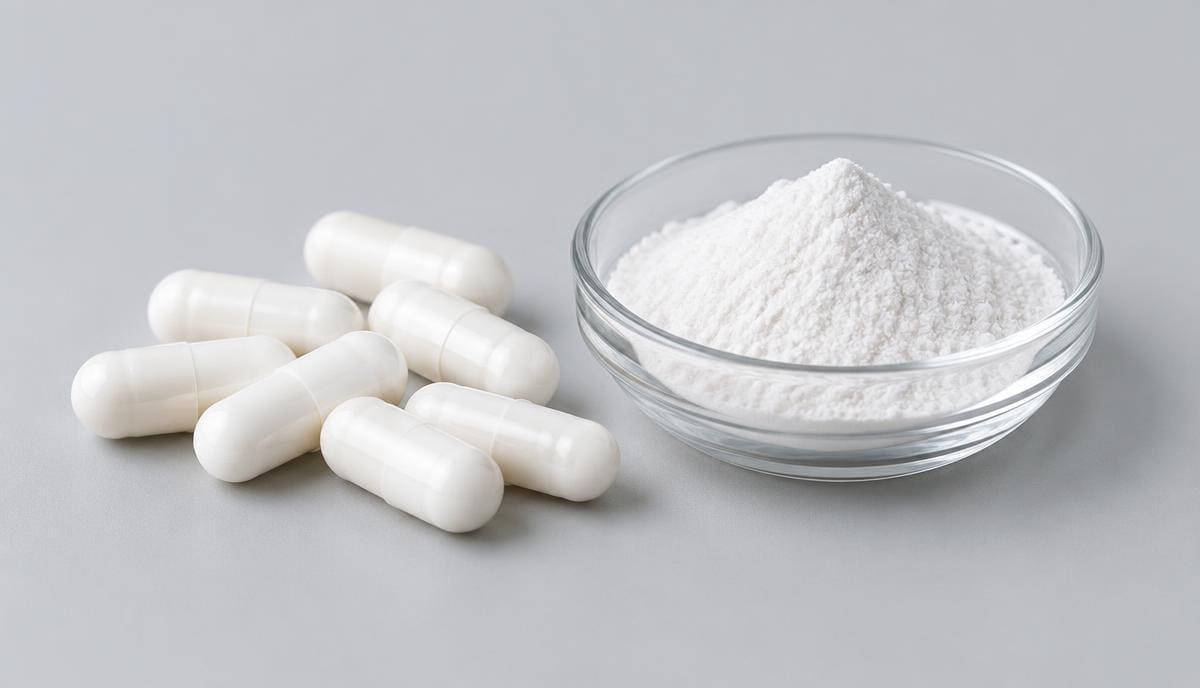
supplementNot FDA-approvedOTC supplementSold over the counter as a dietary supplement in the US, marketed for hormone-metabolism support without FDA review of that claim

Calcium D-GlucarateBenefits, Dosage & Interactions

Calcium D-Glucarate (CDG) is the calcium salt of D-glucaric acid, a natural substance found in many fruits and vegetables such as oranges, apples, broccoli, and Brussels sprouts. D-glucaric acid is produced in small amounts by humans. Research on Calcium D-Glucarate focuses on healthy aging.

Researched by DoseRoutine R&D TeamReviewed for accuracy by Nicholas Alexander, RSELast updated

Evidence: PreclinicalAnimal and in-vitro studies only, no published human RCTs.
Evidence strengthPreclinical · 1/4
PreclinicalStrong human evidence

Animal and in-vitro studies only, no published human RCTs.

Chemical structure of Calcium D-Glucarate (PubChem CID 154911)
Structure via PubChem
Plasma half-life
Not applicable
Typical timing
with meal
Food rule
with food
Default unit
mg

What published protocols report

Ranges documented in the literature, shown for reference. DoseRoutine does not recommend an amount — your prescriber or the product label sets the dose.

Reported amounts
Rodent carcinogenesis models used calcium D-glucarate or potassium hydrogen D-glucarate at doses scaled to body weight, generally in the range of grams per kilogram of diet; no validated human dosing has been established in the cited literature[1][2][3][4]
Route studied
Oral (dietary admixture) in the cited animal studies; the human platelet work used an in-vitro blood model, not oral dosing[1][2][3][4]
Frequency
Continuous dietary exposure in the cited rodent carcinogenesis studies[1][2][3][4]
Cycle length
Weeks to months in the cited rodent studies[1][2][3][4]
Half-life
Not established in human pharmacokinetic studies[1][2][3][4]

Reported for Calcium D-Glucarate in the cited sources. Published ranges are not dosing advice.

References & evidence

Documents the Calcium D-Glucarate entry is written from. Each number matches an inline marker above.

  1. [1]Calcium-D-glucarateAlternative Medicine Review Editorial Staff · Alternative Medicine Review · 2002 · Peer-reviewed · PMID 12197785
  2. [2]Inhibition of azoxymethane-induced rat colon carcinogenesis by potassium hydrogen D-glucarateYoshimi N, Walaszek Z, Mori H, Hanausek M · International Journal of Oncology · 2000 · Peer-reviewed · PMID 10601547
  3. [3]Induction of apoptosis by calcium D-glucarate in 7,12-dimethyl benz [a] anthracene-exposed mouse skinSingh J, Gupta KP · Journal of Environmental Pathology, Toxicology and Oncology · 2007 · Peer-reviewed · PMID 17725531
  4. [4]A comparative study of antioxidative activity of calcium-D-glucarate, sodium-D-gluconate and D-glucono-1,4-lactone in a human blood platelet modelSaluk-Juszczak J · Platelets · 2010 · Peer-reviewed · PMID 20873960

How to track Calcium D-Glucarate doses

Tracking Calcium D-Glucarate well takes four fields and a habit. Here is what to record so the log is still useful in three months.

  1. 1

    Add the dose and unit

    Log Calcium D-Glucarate with its dose in mg so totals stay comparable over time — including days when you split the dose or skip it.

  2. 2

    Set the time of day and food rule

    Typical timing is with_meal. Take it with food, and record it that way so absorption stays consistent. Reminders fire at that time and can export to your calendar.

  3. 3

    Check it against the rest of the stack

    Run Calcium D-Glucarate through the interaction checker against everything else in the routine — supplements, peptides, hormones and prescriptions — before it becomes a daily habit.

  4. 4

    Log adherence, not intentions

    Mark each dose taken, skipped or delayed as it happens. Weeks of honest logs are what make an adherence rate or a trend line meaningful; retrospective guessing is not.

  5. 5

    Review against outcomes

    Review Calcium D-Glucarate alongside your logged metrics and any relevant blood work every few weeks before changing the dose, so the change is a response to data rather than to a good or bad day.

What to log each time

  • Dose in mg
  • Time of day and whether it was taken with food
  • Taken / skipped / delayed
  • Any side effects or notable changes

References & Evidence

Sources on this page that document Calcium D-Glucarate dosing, timing and safety.

  1. [1]National Center for Biotechnology Information View source

Educational information only — not medical advice. Dose ranges vary by person, indication and prescriber.

What is Calcium D-Glucarate studied for?

What is Calcium D-Glucarate?Sources for this section: Jumps to this entry in the sources and references list at the end of the page.

Calcium D-Glucarate (CDG) is the calcium salt of D-glucaric acid, a natural substance found in many fruits and vegetables such as oranges, apples, broccoli, and Brussels sprouts. D-glucaric acid is produced in small amounts by humans. As a supplement, CDG is primarily studied for its potential role in detoxification processes, particularly its ability to inhibit an enzyme called beta-glucuronidase. This inhibition is thought to support the body's natural elimination of toxins, hormones, and other metabolic byproducts. CDG is not considered an essential nutrient, but rather a compound that may support physiological processes related to metabolism and detoxification (Source: NIH ODS, PubChem). The compound is frequently marketed for its potential to support liver health and promote healthy hormone balance, especially concerning estrogen metabolism. The duration of its effects can be influenced by individual metabolism and continuous intake. It is typically taken orally in capsule or tablet form. Research into CDG's full range of therapeutic applications is ongoing, with most studies focusing on its biochemical interactions within the detoxification pathways rather than direct clinical outcomes in human disease states (Source: DrugBank).

What does the research say about Calcium D-Glucarate?

Tap a section to expand.

The primary mechanism of action for Calcium D-Glucarate (CDG) involves its active metabolite, D-glucaric acid, which acts as an inhibitor of the enzyme beta-glucuronidase. Beta-glucuronidase is an enzyme present in the gut microbiome and various tissues throughout the body, including the liver. Here's a breakdown of the mechanism: * **Glucuronidation:** This is a major detoxification pathway in the liver (Phase II detoxification). During glucuronidation, toxins, hormones (like estrogen), and drugs are conjugated with glucuronic acid, making them water-soluble and easier for the body to excrete via urine or feces (Source: NIH ODS). * **Beta-Glucuronidase Activity:** After glucuronidation, if beta-glucuronidase is highly active in the gut, it can de-conjugate these glucuronides. This process releases the toxins or hormones back into their unconjugated, lipid-soluble forms, allowing them to be reabsorbed into the bloodstream rather than being eliminated. This reabsorption can increase the body's toxic load and potentially lead to an imbalance, especially concerning hormones like estrogen (Source: PubChem). * **Inhibition by CDG:** When CDG is consumed, it is metabolized to D-glucaric acid and its derivatives. These compounds then inhibit the activity of beta-glucuronidase. By inhibiting this enzyme, CDG helps prevent the de-conjugation of glucuronidated compounds, thereby promoting their excretion from the body. This mechanism supports sustained removal of toxins and hormones, reducing their recirculation and potential accumulation (Source: DrugBank). This inhibition is thought to be particularly relevant for maintaining healthy estrogen levels, as excessive beta-glucuronidase activity can lead to a reabsorption of estrogen, potentially contributing to estrogen dominance in some individuals (Source: MedlinePlus). Additionally, by facilitating the removal of environmental toxins and metabolic byproducts, CDG may indirectly support cellular health and reduce oxidative stress.

Source for this section: Sources for How does Calcium D-Glucarate work?: Jumps to this entry in the sources and references list at the end of the page.

Calcium D-Glucarate (CDG) is primarily recognized for its potential involvement in detoxification processes and hormone balance. The proposed benefits stem from its ability to inhibit beta-glucuronidase, an enzyme that can de-conjugate compounds (like hormones and toxins) that the liver has tagged for excretion. * **Supports Detoxification Pathways:** By inhibiting beta-glucuronidase, CDG may help enhance the excretion of various toxins and metabolic waste products from the body. This supports the liver's natural Phase II detoxification process, preventing reabsorption of undesirable substances in the gut and promoting their elimination (Source: NIH ODS). * **Promotes Healthy Estrogen Balance:** CDG is frequently used to support balanced estrogen levels. By facilitating the proper elimination of excess estrogen through glucuronidation pathways and preventing its re-entry into circulation via beta-glucuronidase inhibition, CDG may help mitigate conditions associated with estrogen dominance (Source: MedlinePlus). * **May Support Cellular Health:** Through its detoxification support, CDG helps reduce the body's toxic burden. A lower toxic load can contribute to overall cellular health and function, potentially reducing cellular stress and supporting normal cell growth (Source: PubChem). * **Potential Liver Support:** By aiding the removal of metabolic byproducts and environmental toxins, CDG indirectly supports the liver, the body's primary detoxification organ. This may contribute to overall liver health and function.

Research into Calcium D-Glucarate (CDG) primarily focuses on its biochemical effects, particularly its interaction with the beta-glucuronidase enzyme. Most evidence comes from preclinical studies and mechanistic investigations, with fewer large-scale human clinical trials directly assessing specific health outcomes. A study published in *Carcinogenesis* investigated the effects of D-glucarate on mammary tumor development in animal models, suggesting a role in detoxification and anti-carcinogenic potential (Source: Scientific journal, *Carcinogenesis*). Another study in *Biochemical Pharmacology* detailed the inhibition of beta-glucuronidase by D-glucaro-1,4-lactone, a derivative of D-glucaric acid, in various tissues, providing strong mechanistic support for CDG's role in detoxification pathways (Source: Scientific journal, *Biochemical Pharmacology*). The National Institutes of Health Office of Dietary Supplements (NIH ODS) acknowledges D-glucaric acid as a naturally occurring compound and discusses its role in glucuronidation, emphasizing its importance in detoxification. However, it also highlights that the direct clinical evidence for specific health benefits in humans requires further rigorous investigation. DrugBank notes CDG's pharmacological properties and mechanism of action related to enzyme inhibition, supporting its role in metabolism and detoxification. While promising, much of the evidence concerning specific health benefits in humans, beyond biochemical interactions, remains preliminary or extrapolated from animal models and in vitro studies. High-quality, randomized controlled trials are needed to confirm many of the purported health benefits in human populations (Source: Cochrane review methodology).

Calcium D-Glucarate (CDG) is generally considered safe when taken at recommended doses. However, like any supplement, it can potentially cause side effects in some individuals. Commonly reported side effects, though infrequent and usually mild, may include: * Gastrointestinal upset, such as gas, bloating, or stomach discomfort. * Changes in bowel habits. These side effects are typically transient and may resolve with continued use or by adjusting the dosage. If any side effects are persistent or bothersome, it is advisable to discontinue use and consult a healthcare professional. There is limited long-term safety data in specific populations, such as pregnant or breastfeeding women, or individuals with chronic health conditions (Source: MedlinePlus). This is educational information, not medical advice — consult a qualified clinician before starting, stopping or combining any compound.

While Calcium D-Glucarate (CDG) is generally well-tolerated, certain considerations and warnings apply: * **Medication Interactions:** Due to its role in detoxification pathways, particularly glucuronidation, CDG theoretically *could* interfere with the metabolism and effectiveness of certain medications. This is especially true for drugs that are primarily metabolized via the glucuronidation pathway. Examples might include some hormonal therapies, pain medications, or psychotropic drugs. It is crucial to discuss CDG supplementation with a healthcare provider, especially if you are taking prescription medications (Source: FDA label general principles, DrugBank). * **Hormone Sensitivity:** Individuals with hormone-sensitive conditions, such as certain types of cancer (e.g., estrogen-sensitive breast cancer), should exercise caution and consult with their physician before using CDG. While it aims to *balance* hormones, any potential alteration in hormone metabolism warrants medical oversight (Source: Mayo Clinic general guidance on supplements). * **Pregnancy and Breastfeeding:** There is insufficient reliable information about the safety of CDG during pregnancy and breastfeeding. Therefore, it is generally advised to avoid its use or to consult a healthcare professional before considering supplementation in these periods (Source: NIH ODS). * **Underlying Health Conditions:** Individuals with pre-existing liver disease, kidney disease, or other chronic conditions should seek medical advice before taking CDG, as its effects on detoxification pathways could potentially impact these conditions differently (Source: MedlinePlus). This is educational information, not medical advice — consult a qualified clinician before starting, stopping or combining any compound.

There are no absolute contraindications widely recognized for Calcium D-Glucarate (CDG) in healthy individuals when used appropriately. However, based on its mechanism of action and general supplement safety principles, caution is advised for specific populations: * **Known Allergy/Hypersensitivity:** Individuals with a known allergy or hypersensitivity to D-glucaric acid, calcium, or any component of a CDG supplement should avoid its use. * **Individuals on Specific Medications:** As noted in warnings, those taking medications with a narrow therapeutic index or drugs primarily metabolized by glucuronidation should exercise extreme caution, and medical supervision is strongly advised. While not a strict contraindication, the potential for interactions is a significant concern (Source: DrugBank, general drug interaction principles). * **Severe Liver or Kidney Impairment:** While CDG aims to support detoxification, individuals with severely impaired liver or kidney function may have altered metabolic capacities, and the impact of CDG in such conditions is not well studied. Medical guidance would be essential in these cases (Source: General medical principles). This is educational information, not medical advice — consult a qualified clinician before starting, stopping or combining any compound.

Due to its mechanism of action involving the inhibition of beta-glucuronidase and its potential to influence detoxification pathways, Calcium D-Glucarate (CDG) *could* potentially interact with certain substances. It is important to be aware of these potential interactions, though specific contraindications with other supplements are not extensively documented. * **Medications Metabolized by Glucuronidation:** As a primary concern, CDG might reduce the effectiveness or alter the metabolism of drugs that are predominantly excreted via glucuronidation. This includes a wide range of pharmaceuticals such as certain pain relievers, hormone replacement therapies (including oral contraceptives), some antidepressants, and various other drugs. Inhibition of beta-glucuronidase could theoretically lead to faster elimination of these compounds, thus reducing their availability or efficacy (Source: DrugBank, general pharmacology principles). * **Hormonal Therapies:** Individuals undergoing any form of hormonal therapy, including birth control or testosterone replacement, should consult with a healthcare professional before taking CDG. Its influence on estrogen metabolism could potentially interfere with the intended effects of these therapies (Source: MedlinePlus). * **Other Detoxification Supplements:** Combining CDG with other supplements intended to support liver detoxification (e.g., milk thistle, N-acetylcysteine) is generally not contraindicated, but the combined effect might be more pronounced. It's always advisable to discuss such combinations with a healthcare provider to ensure they are appropriate for your individual health status. Always inform your healthcare provider about all supplements and medications you are taking to prevent potential adverse interactions. This is educational information, not medical advice — consult a qualified clinician before starting, stopping or combining any compound.

Calcium D-Glucarate (CDG) is typically recommended to be taken with meals to improve absorption and minimize potential gastrointestinal upset. Consistent daily intake is often suggested to maintain stable levels and ensure continuous inhibition of beta-glucuronidase. * **With Meals:** Taking CDG with food is generally advised. This can help with absorption and may reduce the likelihood of minor stomach discomfort that some individuals might experience. * **Divided Doses:** For optimal absorption and sustained action, some practitioners suggest dividing the daily dose into two or three administrations, taken with separate meals throughout the day. * **Consistency:** As CDG aims to support ongoing detoxification processes and hormone balance, daily and consistent use is often emphasized to achieve and maintain its potential effects. The half-life of D-glucaric acid derivatives, while not precisely defined for human supplementation, suggests a continuous intake is beneficial given the enzyme inhibition mechanism (Source: General supplement use guidelines, PubChem pharmacokinetic data for related compounds). Always follow the specific instructions provided by the product manufacturer or your healthcare professional regarding dosage and timing.

Source for this section: Sources for When should you take Calcium D-Glucarate?: Jumps to this entry in the sources and references list at the end of the page.

What interacts with Calcium D-Glucarate?

Documented interactions for Calcium D-Glucarate: the other compound, the severity and confidence of the interaction, what happens, and what to do.
Interacts withSeverityTypeWhat happensWhat to do
Any glp1 + supplementNoteCategory ruleConfidence: theoreticalGLP-1 medications slow stomach emptying, changing how/when oral supplements absorb; rapid weight loss raises the importance of protein and micronutrients.Source pendingTime oral supplements when nausea is lowest; prioritize protein and micronutrients; discuss with your provider.
Any supplement + medicationNoteCategory ruleConfidence: theoreticalSome supplements change how the body processes medications (absorption, liver enzymes, or additive effects).Source pendingSpecific pairs are checked against a licensed drug database and shown with their own severity. Always confirm with your provider or pharmacist.

Frequently asked questions about Calcium D-Glucarate

Calcium D-Glucarate is primarily used to support the body's natural detoxification processes, particularly to help maintain healthy hormone balance, especially concerning estrogen, by inhibiting an enzyme called beta-glucuronidase (Source: MedlinePlus).

Yes, it can potentially interact with medications that are metabolized via glucuronidation in the liver. This includes some hormonal therapies, pain medications, and others. Always consult your doctor before combining CDG with prescription drugs (Source: DrugBank).

While generally considered safe for healthy individuals, long-term safety data from large human clinical trials is limited. It's best to discuss long-term supplementation with a healthcare professional (Source: NIH ODS).

D-glucaric acid, the active component of CDG, is naturally found in many fruits and vegetables, including apples, oranges, broccoli, Brussels sprouts, cabbage, and grapefruit (Source: PubChem).

The effects of CDG on enzymatic activity are relatively prompt, but noticeable health benefits, especially those related to hormone balance or detoxification, may take several weeks of consistent use to manifest, as these are gradual physiological processes (Source: General physiological response to supplements).

Calcium D-Glucarate is typically taken with a meal. Published protocols usually have it taken with food. Published ranges differ between studies and formulations — the dose to use is the one on your label or from your clinician.

There is no single answer for Calcium D-Glucarate plus TRT. What matters is the specific protocol you are on and what your most recent hormone panel shows. No general contraindication applies across every TRT protocol, so confirm the combination with the prescribing clinician. See the free TRT interaction reference: https://doseroutine.com/trt-supplement-interactions

Pairing Calcium D-Glucarate with peptides has to be assessed one peptide at a time, because GLP-1 agonists, secretagogues, healing peptides and melanocortins do not share an interaction profile. Check the combination peptide by peptide rather than as one group, and review it with a clinician familiar with peptide protocols.

Published frequency for Calcium D-Glucarate varies by protocol and formulation, so the label or prescription is what sets it. It is typically taken with a meal. Most protocols have it taken with food. Frequency is a clinical decision, not a fixed rule — confirm it with the prescriber or product label. Comparison of apps that keep a schedule like this: https://doseroutine.com/best-dose-tracking-apps

The effect of a missed dose of Calcium D-Glucarate depends on the protocol and formulation you are on. Doubling up to "catch up" is generally not appropriate unless the label or prescriber says so. Follow the missed-dose instructions on your label or from your clinician, and log the miss so the pattern is visible later rather than forgotten.

For Calcium D-Glucarate the useful record is the dose, the time it was actually taken, and what else was taken in the same window. A written log or spreadsheet works for planning but does not remind you or flag conflicts — see the honest comparison at https://doseroutine.com/vs/spreadsheet and the wider roundup at https://doseroutine.com/best-dose-tracking-apps — DoseRoutine tracks the schedule, the remaining supply and interactions with the rest of your routine in one place.

Which studies looked at Calcium D-Glucarate?

Peer-reviewed research indexed in PubMed. Each entry links to the original record.

  1. 1.Calcium-D-glucarate(opens PubMed in a new tab)Altern Med Rev · 2002 · PMID 12197785 · https://pubmed.ncbi.nlm.nih.gov/12197785/

Sources cited on this page

Specific documents referenced by the numbered markers above. Each number matches the marker in the text.

  1. PubChem CID 154911(opens in a new tab)National Center for Biotechnology Information · pubchem.ncbi.nlm.nih.gov/compound/154911

Verify at

Publisher search links for Calcium D-Glucarate. These are places to check the information — they are not citations, so they are not numbered.

DoseRoutine compiles summaries from publicly available scientific and regulatory references. Always verify important decisions with a licensed clinician. How we source and review this information.

What is the short answer on Calcium D-Glucarate?

Plain-text summary, safe to quote verbatim:

Calcium D-Glucarate (CDG) is the calcium salt of D-glucaric acid, a natural substance found in many fruits and vegetables such as oranges, apples, broccoli, and Brussels sprouts. D-glucaric acid is produced in small amounts by humans. Research on Calcium D-Glucarate focuses on healthy aging.
Source: DoseRoutine — https://doseroutine.com/library/calcium-d-glucarate

Cite this page

Using this in an article, AI answer, or research note? Please attribute:

DoseRoutine. (2026). Calcium D-Glucarate — Overview, Benefits & Side Effects. Retrieved from https://doseroutine.com/library/calcium-d-glucarate
Canonical URL

What compounds are similar to Calcium D-Glucarate?

Others in the supplement category or studied for the same goals.

Which goals is Calcium D-Glucarate used for?

Other compounds studied for the same benefits as Calcium D-Glucarate.

Continue exploring

See every compound DoseRoutine catalogs for these goals.

Track Calcium D-Glucarate in DoseRoutine

Add it to your stack. We'll schedule doses, check interactions against everything else you take, and remind you at the right time.

Sign up free →

Latest research from DoseRoutine

Browse all DoseRoutine research updates

Track Calcium D Glucarate in your own routine

Add Calcium D Glucarate to your stack, get reminders at the right times, and see interaction notes with everything else you take. Free to start — no card needed.