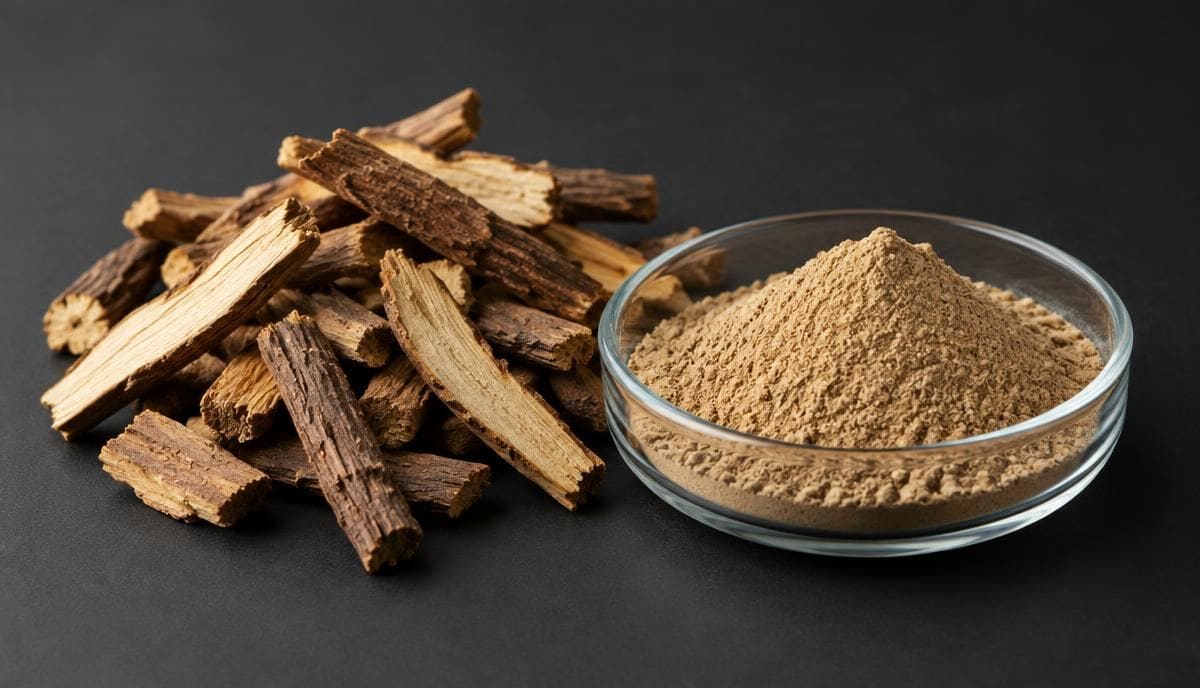
supplementOTC supplementHeavy-metal contamination has been reported in unregulated root powders

Tongkat AliBenefits, Dosage & Interactions

Also known as: Eurycoma longifolia, Longjack

Tongkat Ali, scientifically known as Eurycoma longifolia, is a flowering plant in the Simaroubaceae family native to Southeast Asian countries like Malaysia, Indonesia, and Vietnam. It is also commonly referred to as Longjack. Research on Tongkat Ali focuses on libido, muscle and strength, and men's healthspan.

Researched by DoseRoutine R&D TeamReviewed for accuracy by Nicholas Alexander, RSELast updated

Evidence: Strong1 human randomized trial published.
Evidence strengthStrong · 4/4
PreclinicalStrong human evidence

1 human randomized trial published.

Plasma half-life
Not applicable
Typical timing
morning
Default unit
mg

What published protocols report

Ranges documented in the literature, shown for reference. DoseRoutine does not recommend an amount — your prescriber or the product label sets the dose.

Reported amounts
Trials in the meta-analysis used roughly 200-400 mg/day of standardized root extract[1][2]
Route studied
Oral capsules of water-soluble root extract[1][2]
Frequency
Once daily in most trials[1][2]
Cycle length
Trial durations of 4 weeks to 6 months[1][2]
Half-life
Eurycomanone pharmacokinetics in humans are poorly characterized[1][2]
Storage
Cool, dry, sealed[1][2]

Reported for Tongkat Ali in the cited sources. Published ranges are not dosing advice.

References & evidence

Documents the Tongkat Ali entry is written from. Each number matches an inline marker above.

  1. [1]Eurycoma longifolia (Jack) Improves Serum Total Testosterone in Men: A Systematic Review and Meta-Analysis of Clinical TrialsLeisegang K, Finelli R, Sikka SC, et al. · Medicina (Kaunas) · 2022 · Peer-reviewed · PMID 36013514
  2. [2]A 6-month, double-blind, placebo-controlled, randomized trial to evaluate the effect of Eurycoma longifolia (Tongkat Ali) and concurrent training on erectile function and testosterone levels in androgen deficiency of aging malesLeitao AE, Vieira MCS, Pelegrini A, et al. · Maturitas · 2021 · Peer-reviewed · PMID 33541567
  3. [3]Do \"testosterone boosters\" really increase serum total testosterone? A systematic reviewMorgado A, Tsampoukas G, Sokolakis I, et al. · International Journal of Impotence Research · 2024 · Peer-reviewed · PMID 37697053

How to track Tongkat Ali doses

Tracking Tongkat Ali well takes four fields and a habit. Here is what to record so the log is still useful in three months.

  1. 1

    Add the dose and unit

    Log Tongkat Ali with its dose in mg so totals stay comparable over time — including days when you split the dose or skip it.

  2. 2

    Set the time of day and food rule

    Typical timing is morning. Reminders fire at that time and can export to your calendar.

  3. 3

    Check it against the rest of the stack

    Run Tongkat Ali through the interaction checker against everything else in the routine — supplements, peptides, hormones and prescriptions — before it becomes a daily habit.

  4. 4

    Log adherence, not intentions

    Mark each dose taken, skipped or delayed as it happens. Weeks of honest logs are what make an adherence rate or a trend line meaningful; retrospective guessing is not.

  5. 5

    Review against outcomes

    Review Tongkat Ali alongside your logged metrics and any relevant blood work every few weeks before changing the dose, so the change is a response to data rather than to a good or bad day.

What to log each time

  • Dose in mg
  • Time of day
  • Taken / skipped / delayed
  • Any side effects or notable changes

What is Tongkat Ali studied for?

What is Tongkat Ali?

Tongkat Ali, scientifically known as *Eurycoma longifolia*, is a flowering plant in the Simaroubaceae family native to Southeast Asian countries like Malaysia, Indonesia, and Vietnam. It is also commonly referred to as Longjack. Traditionally, various parts of the plant, particularly the root, have been used in folk medicine for a range of purposes, including as an aphrodisiac, antimalarial, and antipyretic. In contemporary use, Tongkat Ali is most often found as a dietary supplement, primarily marketed for its potential to support male vigor, athletic performance, and stress management. The active compounds believed to be responsible for its effects are a group of quassinoids, including eurycomanone, eurycolactone, and eurycomalactone, along with various alkaloids and bioactive steroids. Extracts are typically standardized to these key quassinoids or to a specific ratio of extraction (e.g., 100:1 or 200:1). Its growing popularity has led to increased scientific interest, with studies exploring its biological activities, although comprehensive human clinical trials are still emerging (PubChem, Examine.com).

What does the research say about Tongkat Ali?

Tap a section to expand.

The mechanisms by which Tongkat Ali exerts its effects are thought to involve several pathways within the body. Primarily, research suggests an influence on steroidogenesis, particularly the regulation of testosterone levels. Some *in vitro* and animal studies indicate that Tongkat Ali may stimulate the release of luteinizing hormone (LH) from the pituitary gland, which in turn signals the Leydig cells in the testes to produce more testosterone. Additionally, it may inhibit the enzyme aromatase, which converts testosterone into estrogen, thereby potentially maintaining higher levels of circulating testosterone. Another proposed mechanism involves its potential to reduce sex hormone-binding globulin (SHBG), a protein that binds to testosterone, making it biologically inactive. By reducing SHBG, more free (bioavailable) testosterone may be available in the body. Beyond hormonal effects, Tongkat Ali contains compounds that exhibit adaptogenic properties, suggesting it may help the body manage stress by modulating the hypothalamic-pituitary-adrenal (HPA) axis and potentially reducing cortisol levels. These mechanisms collectively underpin its traditional uses and contemporary supplement marketing (Examine.com, DrugBank).

Tongkat Ali is commonly investigated for several potential benefits. * **Male Vigor and Sexual Health:** This is perhaps the most widely recognized traditional and contemporary use. Some studies in men experiencing reduced libido or mild erectile dysfunction have reported improvements in sexual desire, performance, and satisfaction. These effects are often attributed to the observed influence on testosterone levels, though direct causality is still an area of ongoing research (Examine.com). * **Stress and Mood Management:** As an adaptogen, Tongkat Ali has been studied for its potential to alleviate stress and improve mood. Some research in both healthy individuals and those experiencing moderate stress has suggested a reduction in cortisol (a stress hormone) and an improvement in parameters related to tension, anger, and confusion (NIH ODS). * **Supports Muscle and Endurance (Athletic Performance):** There is some evidence, particularly from studies involving resistance-trained men, that Tongkat Ali supplementation may support improvements in strength and muscle mass, and potentially enhance endurance. These effects are hypothesized to be linked to its ability to modulate testosterone and cortisol, which play roles in muscle anabolism and catabolism, respectively. However, results are not universally consistent across all studies (Examine.com). * **Bone Health:** Preliminary research, primarily *in vitro* and animal studies, suggests Tongkat Ali might have a positive impact on bone density through its effect on hormone levels. This area requires further investigation through human clinical trials (PubChem). It is important to note that while these potential benefits are being explored, more rigorous and large-scale human clinical trials are needed to fully confirm efficacy and establish optimal use parameters. Individual responses can vary.

The evidence supporting the benefits of Tongkat Ali is derived from a mix of *in vitro* studies, animal models, and human clinical trials, with varying levels of robustness. For example, a systematic review published in the *Journal of the International Society of Sports Nutrition* in 2021 noted that several human studies have indicated Tongkat Ali's potential to improve testosterone levels, reduce stress hormones, and enhance aspects of male sexual health. However, the review also highlighted the heterogeneity of study designs, dosages, and participant populations, which makes direct comparisons and definitive conclusions challenging. A meta-analysis published in the *Journal of Ethnopharmacology* observed that Tongkat Ali supplementation consistently showed positive effects on body composition and muscular strength in some studies, particularly in older adults or those engaged in consistent resistance training, but the magnitude of these effects was often modest. In the context of stress and mood, a randomized, controlled trial involving moderately stressed subjects (cited by NIH ODS) reported a significant improvement in stress hormone profiles and mood states with Tongkat Ali supplementation compared to placebo. While promising, the overall body of evidence would benefit from larger, double-blind, placebo-controlled trials with standardized extracts and longer intervention periods to fully elucidate the efficacy and safety across diverse populations (Cochrane, Examine.com).

Tongkat Ali is generally considered to be well-tolerated by most individuals when used appropriately. However, some side effects have been reported. The most commonly noted include insomnia and restlessness, especially at higher doses, which may be related to its stimulating properties. Other reported side effects include mild stomach discomfort or nausea. There have also been anecdotal reports of irritability or anxiety in some users. Due to its potential influence on hormone levels, particularly testosterone, it is important to consult a healthcare professional. Although rare, concerns have been raised regarding heavy metal contamination in some commercial Tongkat Ali products, emphasizing the importance of sourcing from reputable manufacturers. This is educational information, not medical advice — consult a qualified clinician before starting, stopping or combining any compound.

Individuals with hormone-sensitive conditions, such as certain cancers (e.g., prostate or breast cancer), cardiovascular disease, liver disease, or kidney disease, should exercise extreme caution or avoid Tongkat Ali due to its potential effects on hormones and overall metabolic processes. Pregnant or breastfeeding women, and children, should not use Tongkat Ali, as safety data in these populations are lacking. Individuals with sleep disorders should be cautious due to the potential for insomnia. Those undergoing treatment for any chronic medical condition should consult their healthcare provider before using Tongkat Ali, as it may interact with medications or exacerbate underlying conditions. Due to its potential to subtly influence blood pressure, individuals with hypertension or hypotension should monitor their blood pressure closely. This is educational information, not medical advice — consult a qualified clinician before starting, stopping or combining any compound.

Tongkat Ali is contraindicated in individuals with known sensitivity or allergy to *Eurycoma longifolia* or any of its components. It is also contraindicated in individuals diagnosed with hormone-sensitive cancers, including but not limited to prostate cancer and breast cancer, due to its potential impact on hormone levels. People with severe heart, kidney, or liver disease should avoid Tongkat Ali. Pregnant and lactating individuals should not use this supplement. Individuals with diagnosed sleep disorders should avoid this supplement, especially without direct medical supervision. The medication is clinician-directed and must be set by a licensed clinician. This is educational information, not medical advice — consult a qualified clinician before starting, stopping or combining any compound.

Tongkat Ali may interact with certain medications and other supplements. Individuals taking hormone-altering medications, such as testosterone replacement therapy or anti-estrogens, should avoid Tongkat Ali unless directed by a clinician, as it could cumulatively affect hormone levels. It may also interact with medications for blood pressure, potentially causing changes that require adjustment. Due to its potential stimulating effects, combining Tongkat Ali with other stimulants or medications for sleep disorders could exacerbate insomnia or anxiety. Individuals on immunosuppressants or medications for chronic diseases should consult a healthcare provider, as Tongkat Ali's immune-modulating properties and metabolic effects have not been fully characterized in these contexts. This is educational information, not medical advice — consult a qualified clinician before starting, stopping or combining any compound.

Tongkat Ali is commonly studied at dosages ranging from 200 mg to 400 mg of standardized extract per day. Individual needs vary — talk to a licensed clinician. It is typically taken once daily, often in the morning, to align with diurnal hormonal rhythms. Regarding food intake, it can generally be taken either with or without food. Some individuals prefer to take it with a meal to mitigate any potential mild stomach discomfort, while others take it on an empty stomach.

What interacts with Tongkat Ali?

Documented interactions for Tongkat Ali: the other compound, the severity and confidence of the interaction, what happens, and what to do.
Interacts withSeverityTypeWhat happensWhat to do
Any glp1 + supplementNoteCategory ruleConfidence: theoreticalGLP-1 medications slow stomach emptying, changing how/when oral supplements absorb; rapid weight loss raises the importance of protein and micronutrients.Source pendingTime oral supplements when nausea is lowest; prioritize protein and micronutrients; discuss with your provider.
Any supplement + medicationNoteCategory ruleConfidence: theoreticalSome supplements change how the body processes medications (absorption, liver enzymes, or additive effects).Source pendingSpecific pairs are checked against a licensed drug database and shown with their own severity. Always confirm with your provider or pharmacist.

Frequently asked questions about Tongkat Ali

Tongkat Ali is a supplement. It is also known as Eurycoma longifolia and Longjack. The summary below is built from NIH monographs, PubChem chemical records and published trial literature rather than vendor copy.

Tongkat Ali is commonly discussed in the context of supporting libido, muscle, and mens-longevity. Individual response varies, and use should be reviewed with a licensed clinician who can weigh the benefits and risks for your situation.

For Tongkat Ali, it is typically taken in the morning. Always follow the specific dose your clinician or the product label prescribes.

Tongkat Ali carries potential side effects and drug interactions, documented in NIH, Mayo Clinic, and FDA label sources. Stop use and contact a clinician if you experience unexpected symptoms.

Interaction risk for Tongkat Ali comes from the rest of the stack: other supplements, prescription medicines, hormone therapy and peptides. Because Tongkat Ali is usually taken in the morning, most avoidable conflicts come from what else lands in that same window. Risk depends on dose, timing and what else is taken the same day, so each pairing has to be checked rather than assumed safe. The free checker at https://doseroutine.com/interaction-checker covers Tongkat Ali with no sign-up.

There is no single answer for Tongkat Ali plus TRT. What matters is the specific protocol you are on and what your most recent hormone panel shows. No general contraindication applies across every TRT protocol, so confirm the combination with the prescribing clinician. See the free TRT interaction reference: https://doseroutine.com/trt-supplement-interactions

Pairing Tongkat Ali with peptides has to be assessed one peptide at a time, because GLP-1 agonists, secretagogues, healing peptides and melanocortins do not share an interaction profile. Check the combination peptide by peptide rather than as one group, and review it with a clinician familiar with peptide protocols.

Published frequency for Tongkat Ali varies by protocol and formulation, so the label or prescription is what sets it. It is typically taken in the morning. Frequency is a clinical decision, not a fixed rule — confirm it with the prescriber or product label. Comparison of apps that keep a schedule like this: https://doseroutine.com/best-dose-tracking-apps

The effect of a missed dose of Tongkat Ali depends on the protocol and formulation you are on. Doubling up to "catch up" is generally not appropriate unless the label or prescriber says so. Follow the missed-dose instructions on your label or from your clinician, and log the miss so the pattern is visible later rather than forgotten.

For Tongkat Ali the useful record is the dose, the time it was actually taken, and what else was taken in the same window. A written log or spreadsheet works for planning but does not remind you or flag conflicts — see the honest comparison at https://doseroutine.com/vs/spreadsheet and the wider roundup at https://doseroutine.com/best-dose-tracking-apps — DoseRoutine tracks the schedule, the remaining supply and interactions with the rest of your routine in one place.

Which studies looked at Tongkat Ali?

Peer-reviewed research indexed in PubMed. Each entry links to the original record.

  1. 1.Eurycoma longifolia (Jack) Improves Serum Total Testosterone in Men: A Systematic Review and Meta-Analysis of Clinical Trials(opens PubMed in a new tab)Medicina (Kaunas) · 2022 · PMID 36013514 · https://pubmed.ncbi.nlm.nih.gov/36013514/
  2. 2.An evidence-based systematic review of tongkat ali (Eurycoma longifolia) by the Natural Standard Research Collaboration(opens PubMed in a new tab)J Diet Suppl · 2013 · PMID 23419023 · https://pubmed.ncbi.nlm.nih.gov/23419023/
  3. 3.A 6-month, double-blind, placebo-controlled, randomized trial to evaluate the effect of Eurycoma longifolia (Tongkat Ali) and concurrent training on erectile function and testosterone levels in androgen deficiency of aging males (ADAM)(opens PubMed in a new tab)Maturitas · 2021 · PMID 33541567 · https://pubmed.ncbi.nlm.nih.gov/33541567/
  4. 4.Tongkat Ali (Eurycoma longifolia Jack): a review on its ethnobotany and pharmacological importance(opens PubMed in a new tab)Fitoterapia · 2010 · PMID 20434529 · https://pubmed.ncbi.nlm.nih.gov/20434529/
  5. 5.Efficacy of Tongkat Ali (Eurycoma longifolia) on erectile function improvement: systematic review and meta-analysis of randomized controlled trials(opens PubMed in a new tab)Complement Ther Med · 2015 · PMID 26365449 · https://pubmed.ncbi.nlm.nih.gov/26365449/

Verify at

Publisher search links for Tongkat Ali. These are places to check the information — they are not citations, so they are not numbered.

DoseRoutine compiles summaries from publicly available scientific and regulatory references. Always verify important decisions with a licensed clinician. How we source and review this information.

What is the short answer on Tongkat Ali?

Plain-text summary, safe to quote verbatim:

Tongkat Ali, scientifically known as Eurycoma longifolia, is a flowering plant in the Simaroubaceae family native to Southeast Asian countries like Malaysia, Indonesia, and Vietnam. It is also commonly referred to as Longjack. Research on Tongkat Ali focuses on libido, muscle and strength, and men's healthspan.
Source: DoseRoutine — https://doseroutine.com/library/tongkat-ali

Cite this page

Using this in an article, AI answer, or research note? Please attribute:

DoseRoutine. (2026). Tongkat Ali — Overview, Benefits & Side Effects. Retrieved from https://doseroutine.com/library/tongkat-ali
Canonical URL

What compounds are similar to Tongkat Ali?

Others in the supplement category or studied for the same goals.

Which goals is Tongkat Ali used for?

Other compounds studied for the same benefits as Tongkat Ali.

Continue exploring

See every compound DoseRoutine catalogs for these goals.

Track Tongkat Ali in DoseRoutine

Add it to your stack. We'll schedule doses, check interactions against everything else you take, and remind you at the right time.

Sign up free →

Latest research from DoseRoutine

Browse all DoseRoutine research updates

Track Tongkat ALI in your own routine

Add Tongkat ALI to your stack, get reminders at the right times, and see interaction notes with everything else you take. Free to start — no card needed.