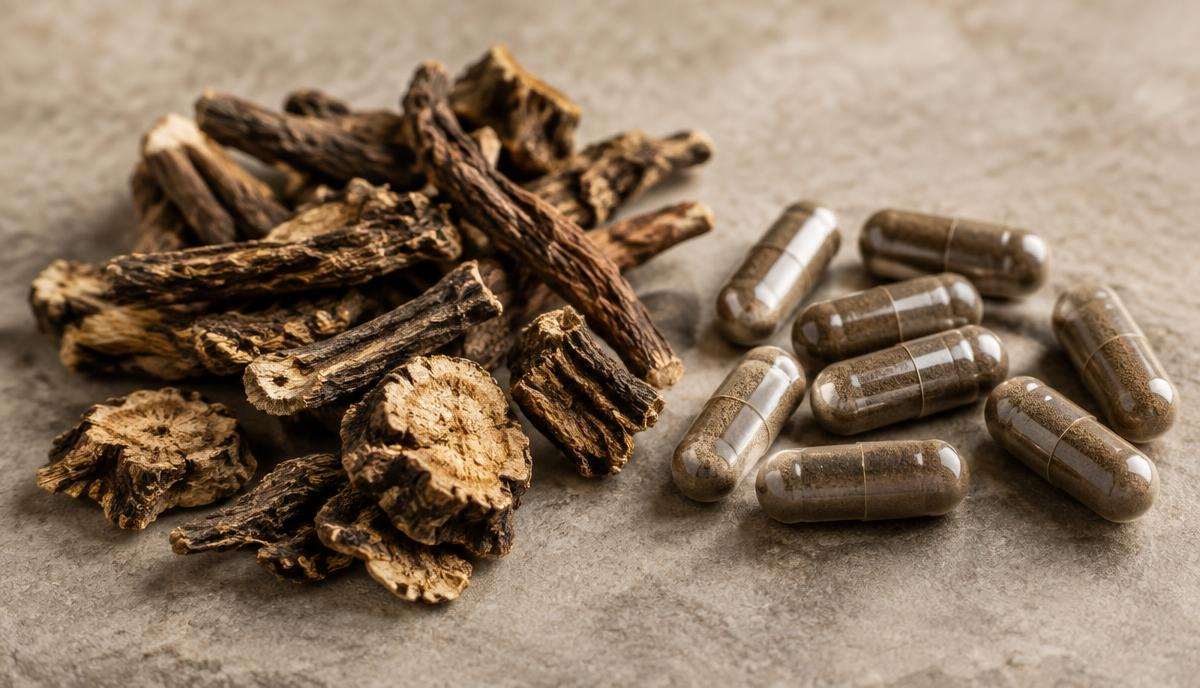
supplementNot FDA-approvedOTC supplementThe larger cited randomized trial found no statistically significant reduction in hot flashes versus placebo

Black CohoshBenefits, Dosage & Interactions

Also known as: Actaea racemosa, Cimicifuga racemosa

Benefits Black cohosh (Actaea racemosa) is studied mainly for menopausal symptom relief. The strongest signal is for vasomotor symptoms — hot flashes and night sweats — where several randomized trials of standardized extracts report a moderate reduction in frequency and severity versus placebo over 8 to 12 weeks.

How much Black Cohosh do people take?

The cited randomized trials used standardized black cohosh extracts of roughly 20-128 mg/day for menopausal symptoms; the larger NCCTG crossover trial found no significant hot-flash benefit over placebo. Route reported: Oral. Frequency reported: Daily, in one or two divided doses in the cited trials. These are amounts documented in the cited studies and labels for Black Cohosh — they are reported for reference, not a recommendation. Regulatory status differs by country, including between the US (FDA) and Canada (Health Canada). Confirm any amount with a licensed clinician before you take it.

See the full reported protocol and its sources

Researched by DoseRoutine Research TeamReviewed for accuracy by Nicholas Alexander, RSE, SO, PMPLast updated Educational reference only — not medical advice. Always confirm dosing and safety decisions with a licensed clinician.

Evidence: Strong2 human randomized trials published.
Evidence strengthStrong · 4/4
PreclinicalStrong human evidence

2 human randomized trials published.

Plasma half-life
Not applicable
Typical timing
evening
Food rule
with food
Default unit
mg

What published protocols report

Ranges documented in the literature, shown for reference. DoseRoutine does not recommend an amount — your prescriber or the product label sets the dose.

Reported amounts
The cited randomized trials used standardized black cohosh extracts of roughly 20-128 mg/day for menopausal symptoms; the larger NCCTG crossover trial found no significant hot-flash benefit over placebo[1][2]
Route studied
Oral[1][2]
Frequency
Daily, in one or two divided doses in the cited trials[1][2]
Cycle length
4-12 weeks per trial arm in the cited trials[1][2]
Half-life
Not established by these sources[1][2]
Storage
Room temperature, sealed[1][2]

Reported for Black Cohosh in the cited sources. Published ranges are not dosing advice.

References & evidence

Documents the Black Cohosh entry is written from. Each number matches an inline marker above.

  1. [1]Randomized, double-blind, placebo-controlled trial of Cimicifuga racemosa (black cohosh) in women with anxiety disorder due to menopauseReame NE, Lukacs JL, Padmanabhan V, et al. · Journal of Clinical Psychopharmacology · 2009 · Peer-reviewed · PMID 19745648
  2. [2]Phase III double-blind, randomized, placebo-controlled crossover trial of black cohosh in the management of hot flashes: NCCTG Trial N01CC1Pockaj BA, Gallagher JG, Loprinzi CL, et al. · Journal of Clinical Oncology · 2006 · Peer-reviewed · PMID 16782922

What is Black Cohosh studied for?

What is Black Cohosh?

## Benefits Black cohosh (Actaea racemosa) is studied mainly for menopausal symptom relief. The strongest signal is for vasomotor symptoms — hot flashes and night sweats — where several randomized trials of standardized extracts report a moderate reduction in frequency and severity versus placebo over 8 to 12 weeks. Results are mixed: some well-run trials find no benefit beyond placebo, and effect sizes are smaller than those seen with hormone therapy. Secondary outcomes reported in trials include better sleep continuity (largely a downstream effect of fewer night sweats), lower Kupperman index scores, and modest improvement in mood and irritability. Black cohosh is not estrogenic in the classic sense; current thinking points to serotonergic and dopaminergic activity rather than estrogen-receptor binding, which is why it is often considered by people who cannot or prefer not to use estrogen. It is not established for bone density, cardiovascular protection, fertility, or vaginal dryness. Treat those uses as unsupported. ## Side effects Most people tolerate standardized black cohosh extract at typical doses. The commonly reported effects are mild and dose-related: stomach upset, nausea, headache, dizziness, and rash. Some users report breast tenderness or spotting, which is worth reporting to a clinician rather than pushing through. The important rare risk is liver injury. Case reports of hepatitis and elevated liver enzymes led several regulators to require a liver warning on black cohosh products. Causality has not been proven and the incidence appears very low, but stop immediately and seek care for yellowing skin or eyes, dark urine, right-upper-abdominal pain, or unexplained fatigue. Avoid black cohosh in pregnancy and breastfeeding, and discuss it first if you have liver disease, a history of hormone-sensitive breast cancer, or take medicines processed heavily by the liver. Do not combine it with other hepatotoxic supplements without medical supervision. ## Timing Black cohosh is taken daily rather than as needed — the effect builds and is usually judged after 4 to 12 weeks of consistent use. Standardized extracts are typically dosed once or twice daily, with the split dose favored when nausea appears at a single larger dose. Taking it with food reduces stomach upset and does not appear to blunt the effect. Many people put the dose in the evening because night sweats are the symptom they most want covered, but there is no strong pharmacokinetic reason to prefer morning or evening; consistency matters more than clock time. Reassess after about 12 weeks. Trials rarely run past 6 to 12 months, so extended use should be a deliberate decision made with a clinician, alongside periodic liver-enzyme checks if you continue long term.

What does the research say about Black Cohosh?

Tap a section to expand.

Black cohosh (Actaea racemosa) is studied mainly for menopausal symptom relief. The strongest signal is for vasomotor symptoms — hot flashes and night sweats — where several randomized trials of standardized extracts report a moderate reduction in frequency and severity versus placebo over 8 to 12 weeks. Results are mixed: some well-run trials find no benefit beyond placebo, and effect sizes are smaller than those seen with hormone therapy. Secondary outcomes reported in trials include better sleep continuity (largely a downstream effect of fewer night sweats), lower Kupperman index scores, and modest improvement in mood and irritability. Black cohosh is not estrogenic in the classic sense; current thinking points to serotonergic and dopaminergic activity rather than estrogen-receptor binding, which is why it is often considered by people who cannot or prefer not to use estrogen. It is not established for bone density, cardiovascular protection, fertility, or vaginal dryness. Treat those uses as unsupported.

Most people tolerate standardized black cohosh extract at typical doses. The commonly reported effects are mild and dose-related: stomach upset, nausea, headache, dizziness, and rash. Some users report breast tenderness or spotting, which is worth reporting to a clinician rather than pushing through. The important rare risk is liver injury. Case reports of hepatitis and elevated liver enzymes led several regulators to require a liver warning on black cohosh products. Causality has not been proven and the incidence appears very low, but stop immediately and seek care for yellowing skin or eyes, dark urine, right-upper-abdominal pain, or unexplained fatigue. Avoid black cohosh in pregnancy and breastfeeding, and discuss it first if you have liver disease, a history of hormone-sensitive breast cancer, or take medicines processed heavily by the liver. Do not combine it with other hepatotoxic supplements without medical supervision.

Individuals with pre-existing liver conditions or a history of liver disease should exercise extreme caution or avoid black cohosh entirely due to the reported, albeit rare, association with liver damage (NIH Office of Dietary Supplements). It is advisable to consult a healthcare provider before using black cohosh, especially if you have any chronic health conditions or are taking other medications. There is some concern regarding its potential effect on hormone-sensitive conditions, such as breast cancer or other estrogen-dependent cancers, although current research does not consistently support a direct estrogenic action. Nonetheless, individuals with a history of hormone-sensitive cancers should seek medical advice before use. Pregnant or breastfeeding women should avoid black cohosh due to insufficient safety data and potential effects on uterine contractions (MedlinePlus). Symptoms such as stomach pain, nausea, vomiting, dark urine, or yellowing of the skin or eyes require immediate medical attention. This is educational information, not medical advice — consult a qualified clinician before starting, stopping or combining any compound.

Black cohosh is contraindicated in individuals with known allergies or hypersensitivity to plants in the Ranunculaceae (buttercup) family. It should also be avoided by pregnant and breastfeeding women due to a lack of sufficient safety data and potential for uterine stimulation (MedlinePlus). Individuals with a history of liver disease, liver damage, or impaired liver function should generally avoid black cohosh or use it only under strict medical supervision, given the rare but serious reports of liver toxicity (FDA). Patients with hormone-sensitive cancers, such as certain breast or ovarian cancers, should exercise caution and consult their oncologist before considering black cohosh, despite evidence suggesting it does not act as a classic estrogen. Those on certain medications, particularly those that are metabolized by the liver, should also exercise caution. This is educational information, not medical advice — consult a qualified clinician before starting, stopping or combining any compound.

Caution should be exercised when combining black cohosh with certain medications or other supplements. Due to concerns about potential liver toxicity, it is advisable to avoid combining black cohosh with other hepatotoxic substances, including certain prescription drugs (e.g., acetaminophen in high doses, some antifungals) or other herbal supplements known to affect liver function (Examine.com). Individuals taking hormone therapy, including estrogen replacement therapy or selective estrogen receptor modulators (SERMs), should consult their healthcare provider before using black cohosh due to potential, though unproven, interactions affecting hormone levels or efficacy (NIH Office of Dietary Supplements). It may also interact with blood-thinning medications (anticoagulants) due to some in vitro evidence, although clinical significance is uncertain. People with a history of seizures or those taking anti-seizure medication should also be cautious, as some isolated reports have linked black cohosh to seizures, though causation is not established. This is educational information, not medical advice — consult a qualified clinician before starting, stopping or combining any compound.

Black cohosh is taken daily rather than as needed — the effect builds and is usually judged after 4 to 12 weeks of consistent use. Standardized extracts are typically dosed once or twice daily, with the split dose favored when nausea appears at a single larger dose. Taking it with food reduces stomach upset and does not appear to blunt the effect. Many people put the dose in the evening because night sweats are the symptom they most want covered, but there is no strong pharmacokinetic reason to prefer morning or evening; consistency matters more than clock time. Reassess after about 12 weeks. Trials rarely run past 6 to 12 months, so extended use should be a deliberate decision made with a clinician, alongside periodic liver-enzyme checks if you continue long term.

What interacts with Black Cohosh?

Documented interactions for Black Cohosh: the other compound, the severity and confidence of the interaction, what happens, and what to do.
Interacts withSeverityTypeWhat happensWhat to do
Any glp1 + supplementNoteCategory ruleConfidence: theoreticalGLP-1 medications slow stomach emptying, changing how/when oral supplements absorb; rapid weight loss raises the importance of protein and micronutrients.Source pendingTime oral supplements when nausea is lowest; prioritize protein and micronutrients; discuss with your provider.
Any supplement + medicationNoteCategory ruleConfidence: theoreticalSome supplements change how the body processes medications (absorption, liver enzymes, or additive effects).Source pendingSpecific pairs are checked against a licensed drug database and shown with their own severity. Always confirm with your provider or pharmacist.

Frequently asked questions about Black Cohosh

Black cohosh is primarily used as a dietary supplement to help alleviate symptoms associated with menopause, such as hot flashes, night sweats, and mood changes (NIH Office of Dietary Supplements).

The scientific evidence on black cohosh's effectiveness for menopausal symptoms is mixed. Some studies suggest moderate benefits for symptoms like hot flashes, while others have found no significant difference compared to a placebo. Its effectiveness may vary among individuals and depend on the specific product used (Cochrane Database of Systematic Reviews).

While generally considered safe for short-term use, black cohosh has been rarely associated with serious side effects, particularly liver damage. Common side effects include gastrointestinal upset, headache, and rash. Symptoms of liver problems, such as jaundice or dark urine, warrant immediate medical attention (MedlinePlus).

Combining black cohosh with certain medications should be approached with caution. It is particularly important to consult a healthcare provider if you are taking medications for liver conditions, hormone therapy, or blood thinners, as potential interactions or additive side effects could occur (Examine.com).

Black cohosh should be avoided by pregnant or breastfeeding women, individuals with a history of liver disease, and those with known allergies to plants in the buttercup family. People with hormone-sensitive cancers should also consult their doctor before use (Mayo Clinic).

Black Cohosh is a supplement, and interactions are possible with prescriptions, hormones, peptides and other supplements in the same routine. Because Black Cohosh is usually taken evening, most avoidable conflicts come from what else lands in that same window. Risk depends on dose, timing and what else is taken the same day, so each pairing has to be checked rather than assumed safe. The free checker at https://doseroutine.com/interaction-checker covers Black Cohosh with no sign-up.

Black Cohosh is typically taken evening. Published protocols usually have it taken with food. Ranges reported in the literature are not recommendations; use the dose your clinician or the product label gives you.

Combining a supplement like Black Cohosh with TRT is usually a question of labs rather than a blanket yes or no: the ester, injection interval and any aromatase inhibitor all change the answer. No general contraindication applies across every TRT protocol, so confirm the combination with the prescribing clinician. See the free TRT interaction reference: https://doseroutine.com/trt-supplement-interactions

Each peptide class carries its own profile against Black Cohosh: a healing peptide raises different questions than a GLP-1 agonist or a growth-hormone secretagogue. Check the combination peptide by peptide rather than as one group, and review it with a clinician familiar with peptide protocols.

Published frequency for Black Cohosh varies by protocol and formulation, so the label or prescription is what sets it. It is typically taken evening. Most protocols have it taken with food. Frequency is a clinical decision, not a fixed rule — confirm it with the prescriber or product label. Comparison of apps that keep a schedule like this: https://doseroutine.com/best-dose-tracking-apps

The effect of a missed dose of Black Cohosh depends on the protocol and formulation you are on. Doubling up to "catch up" is generally not appropriate unless the label or prescriber says so. Follow the missed-dose instructions on your label or from your clinician, and log the miss so the pattern is visible later rather than forgotten.

For Black Cohosh the useful record is the dose, the time it was actually taken, and what else was taken in the same window. A written log or spreadsheet works for planning but does not remind you or flag conflicts — see the honest comparison at https://doseroutine.com/vs/spreadsheet and the wider roundup at https://doseroutine.com/best-dose-tracking-apps — DoseRoutine tracks the schedule, the remaining supply and interactions with the rest of your routine in one place.

The cited randomized trials used standardized black cohosh extracts of roughly 20-128 mg/day for menopausal symptoms; the larger NCCTG crossover trial found no significant hot-flash benefit over placebo. Route reported: Oral. Frequency reported: Daily, in one or two divided doses in the cited trials. These are amounts documented in the cited studies and labels for Black Cohosh — they are reported for reference, not a recommendation. Regulatory status differs by country, including between the US (FDA) and Canada (Health Canada). Confirm any amount with a licensed clinician before you take it.

Sources cited on this page

Specific documents referenced by the numbered markers above. Each number matches the marker in the text.

  1. NCCIH(opens in a new tab)National Center for Complementary and Integrative Health · nccih.nih.gov/health/black-cohosh

Verify at

Publisher search links for Black Cohosh. These are places to check the information — they are not citations, so they are not numbered.

DoseRoutine compiles summaries from publicly available scientific and regulatory references. Always verify important decisions with a licensed clinician. How we source and review this information.

What is the short answer on Black Cohosh?

Plain-text summary, safe to quote verbatim:

Benefits Black cohosh (Actaea racemosa) is studied mainly for menopausal symptom relief. The strongest signal is for vasomotor symptoms - hot flashes and night sweats - where several randomized trials of standardized extracts report a moderate reduction in frequency and severity versus placebo over 8 to 12 weeks.
Source: DoseRoutine — https://doseroutine.com/library/black-cohosh

Cite this page

Using this in an article, AI answer, or research note? Please attribute:

DoseRoutine. (2026). Black Cohosh — Overview, Benefits & Side Effects. Retrieved from https://doseroutine.com/library/black-cohosh
Canonical URL

What compounds are similar to Black Cohosh?

Others in the supplement category or studied for the same goals.

Which goals is Black Cohosh used for?

Other compounds studied for the same benefits as Black Cohosh.

Continue exploring

See every compound DoseRoutine catalogs for these goals.

Track Black Cohosh in DoseRoutine

Add it to your stack. We'll schedule doses, check interactions against everything else you take, and remind you at the right time.

Sign up free →

Latest research from DoseRoutine

Browse all DoseRoutine research updates

Track Black Cohosh in your own routine

Add Black Cohosh to your stack, get reminders at the right times, and see interaction notes with everything else you take. Free to start — no card needed.