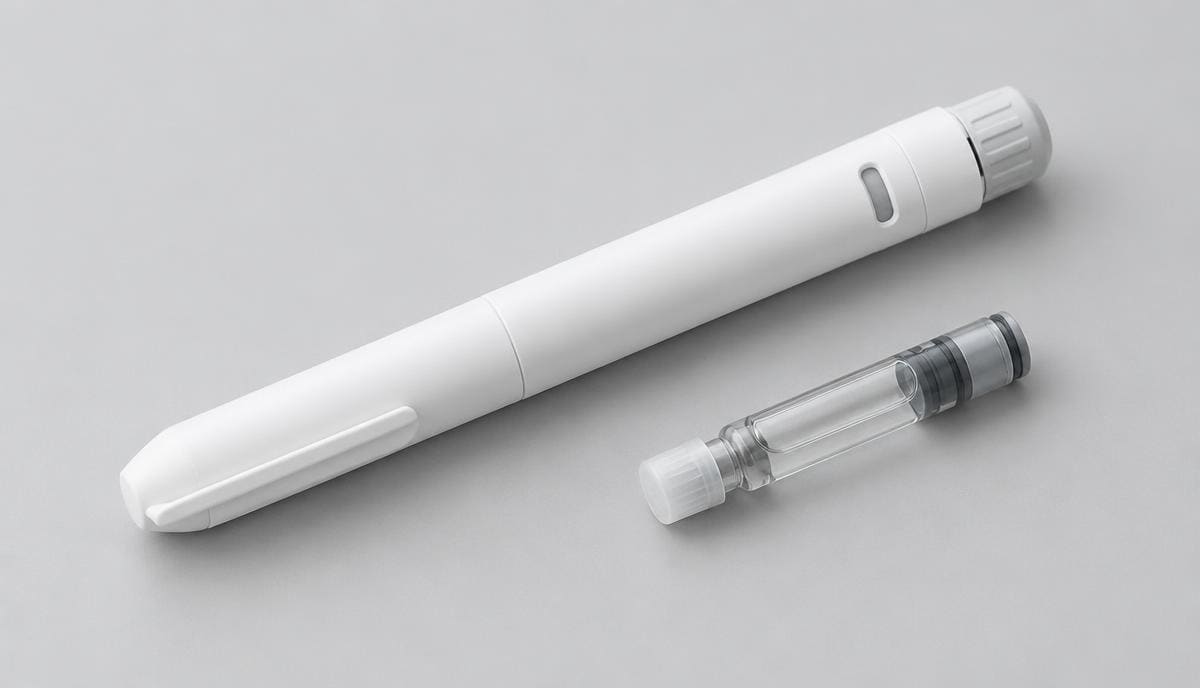
hormoneInjectableControlledSchedule III (US, Anabolic Steroids Control Act)Prescription only (US)FDA-approved for diagnosed growth hormone deficiency and several other labeled indications; not approved for anti-aging or athletic useDistribution for unapproved uses is a federal offense under US law

HGH (Somatropin)Benefits, Dosage & Interactions

Also known as: Human Growth Hormone, Norditropin, Genotropin

Somatropin is a synthetic form of human growth hormone (HGH), a peptide hormone produced naturally by the pituitary gland. It plays a crucial role in growth, cell reproduction, and regeneration. Research on HGH (Somatropin) focuses on muscle and strength, tissue recovery, and healthy aging.

Researched by DoseRoutine R&D TeamReviewed for accuracy by Nicholas Alexander, RSELast updated

Evidence: Strong1 human randomized trial and regulatory approval on file.
Evidence strengthStrong · 4/4
PreclinicalStrong human evidence

1 human randomized trial and regulatory approval on file.

Plasma half-life
Approximately 2–3 hours after subcutaneous injection
Typical timing
bedtime
Default unit
iu

What published protocols report

Ranges documented in the literature, shown for reference. DoseRoutine does not recommend an amount — your prescriber or the product label sets the dose.

Reported amounts
Adult GH-deficiency trials titrated from roughly 0.005–0.01 mg/kg/day up to an IGF-1-guided maintenance dose[1][2]
Route studied
Subcutaneous injection in every cited study[1][2]
Frequency
Once daily[1][2]
Cycle length
Continuous replacement therapy; the cited multicenter trial followed patients for 2 years[1][2]
Half-life
Approximately 2–3 hours after subcutaneous injection[1][2]
Storage
Refrigerated; reconstituted product refrigerated and used within the manufacturer's stated window[1][2]

Worked example: a 5 mg vial reconstituted with 2 ml of bacteriostatic water gives 2.5 mg/ml, so a 1000 mcg amount measures 3 units on a U-100 syringe. Open this in the reconstitution calculator.

Reported for HGH (Somatropin) in the cited sources. Published ranges are not dosing advice.

HGH (Somatropin) compared with similar compounds

HGH (Somatropin) compared with Tesamorelin, Sermorelin across class, route, half-life, evidence grade, oral stability, published cycle and main studied use.
AttributeTesamorelinSermorelin
ClassStabilized GHRH analogGHRH (1-29) analog
RouteSubcutaneous once dailySubcutaneous injection
Half-life~26–38 minutes~11–12 minutes
Evidence gradeStrongModerate
Oral stabilityNot orally availableNot orally available
Typical published cycle26–52 weeks in the pivotal trialsDaily dosing in published studies
Main studied useHIV-associated visceral adiposityGrowth hormone secretion / GH deficiency testing

References & evidence

Documents the HGH (Somatropin) entry is written from. Each number matches an inline marker above.

  1. [1]Two years of replacement therapy in adults with growth hormone deficiencyVerhelst J, Abs R, Vandeweghe M, et al. · Clinical Endocrinology · 1997 · Peer-reviewed · PMID 9404448
  2. [2]Impaired quality of life in hypopituitary adults with growth hormone deficiency: can somatropin replacement therapy help?Mardh G, Nyberg B · Treatments in Endocrinology · 2006 · Peer-reviewed · PMID 16879003

How to track HGH (Somatropin) doses

HGH (Somatropin) is tracked as a protocol rather than a single reminder: a vial with a concentration, a schedule that may be titrated or cycled, and a rotation of injection sites. Here is the record that keeps all three consistent.

  1. 1

    Record the vial and concentration

    Log the vial strength and the volume of bacteriostatic water you added so HGH (Somatropin) is stored as a concentration rather than a guess. DoseRoutine converts that into iu per syringe unit and counts the doses left in the vial as you log.

  2. 2

    Set the schedule, not just a reminder

    Enter the dose in iu and the frequency (typical timing: bedtime). Cycled protocols get a start and end date so the history stays accurate when HGH (Somatropin) comes out of the routine.

  3. 3

    Rotate and log the injection site

    Pick the site at the moment you log the dose. The site map shows what you used last and how recently, which is the part that drifts fastest when two compounds run on different frequencies.

  4. 4

    Log adherence, not intentions

    Mark each dose taken, skipped or delayed as it happens. Weeks of honest logs are what make an adherence rate or a trend line meaningful; retrospective guessing is not.

  5. 5

    Review against outcomes

    Review HGH (Somatropin) alongside your logged metrics and any relevant blood work every few weeks before changing the dose, so the change is a response to data rather than to a good or bad day.

What to log each time

  • Dose in iu and the syringe units it worked out to
  • Vial: reconstitution date, concentration, doses remaining
  • Injection site and time
  • Any side effects in the 24 h after the dose

What is HGH (Somatropin) studied for?

What is HGH (Somatropin)?

Somatropin is a synthetic form of human growth hormone (HGH), a peptide hormone produced naturally by the pituitary gland. It plays a crucial role in growth, cell reproduction, and regeneration. In the medical field, Somatropin is primarily used to treat growth hormone deficiency in children and adults, as well as specific conditions like Prader-Willi syndrome, Turner syndrome, chronic kidney disease, and AIDS-related wasting (Mayo Clinic). It is administered via injection and is available under various brand names, including Norditropin and Genotropin. As a prescription-only medication, its use is carefully regulated and monitored by healthcare professionals due to its potent effects and potential for misuse. The half-life of injected Somatropin is approximately 3 hours, meaning it is quickly metabolized by the body. Users should consult a licensed clinician for appropriate dosage and administration.

What does the research say about HGH (Somatropin)?

Tap a section to expand.

Somatropin works by mimicking the action of endogenous human growth hormone. Once injected, it binds to growth hormone receptors on target cells throughout the body. This binding stimulates a cascade of intracellular signaling pathways that lead to various physiological effects. A primary mechanism involves stimulating the liver to produce insulin-like growth factor 1 (IGF-1). IGF-1 then acts on its own receptors in various tissues to promote growth and metabolism. Specifically, Somatropin directly and indirectly, via IGF-1, promotes protein synthesis in muscle and bone, leading to increased lean body mass and bone mineral density. It also influences carbohydrate and lipid metabolism, affecting glucose uptake by peripheral tissues and promoting lipolysis (fat breakdown). (DrugBank, EMA SmPC)

For individuals with diagnosed growth hormone deficiency or specific medical conditions, Somatropin offers several significant benefits: * **Increased Linear Growth:** In children with growth hormone deficiency or conditions like Turner syndrome, Somatropin can significantly increase final adult height (Mayo Clinic). * **Improved Body Composition:** In adults with growth hormone deficiency, Somatropin can lead to reductions in fat mass and increases in lean body mass, improving overall body composition (Cochrane, Mayo Clinic). * **Increased Bone Mineral Density:** Long-term treatment can improve bone mineral density, reducing the risk of fractures (Cochrane). * **Enhanced Exercise Capacity and Muscle Strength:** Some studies in adults with GH deficiency indicate improvements in exercise capacity and muscle strength (NIH ODS). * **Improved Quality of Life:** Patients with growth hormone deficiency often report improvements in energy levels, mood, and overall quality of life (NIH ODS). * **Reversal of Wasting in AIDS:** For patients with AIDS-related wasting, Somatropin can help restore lean body mass and improve physical function (FDA label). These benefits are observed in populations with a medical need for growth hormone therapy and are not typically applicable to healthy individuals. The use of Somatropin for non-medical purposes, such as athletic performance enhancement or anti-aging, is not approved and carries significant risks.

The efficacy of Somatropin for approved indications is supported by extensive clinical trials and regulatory body approvals. For example, a Cochrane review on growth hormone treatment for growth failure in children with chronic kidney disease found that HGH treatment significantly increased height velocity. Another Cochrane review on growth hormone for Turner syndrome demonstrated its effectiveness in increasing final height. The FDA has approved various Somatropin products for multiple indications, including pediatric and adult growth hormone deficiency, Prader-Willi syndrome, Turner syndrome, chronic renal insufficiency, and AIDS wasting (FDA label). Studies cited by organizations like the NIH Office of Dietary Supplements also detail the metabolic and physiological effects of Somatropin in various treated populations. PubChem and DrugBank provide detailed pharmacological profiles and mechanisms of action, further substantiating its medical applications.

Common side effects associated with Somatropin may include (Mayo Clinic, FDA label): * Injection site reactions (pain, redness, swelling) * Joint pain and stiffness (arthralgia) * Muscle pain (myalgia) * Headache * Edema (swelling, especially in hands and feet) * Carpal tunnel syndrome (more common in adults) * Numbness and tingling sensations * Insulin resistance * Flu-like symptoms * Hypothyroidism (may require thyroid hormone supplementation) More serious, but less common, side effects can include: * Increased risk of diabetes mellitus or worsening of pre-existing diabetes. * Intracranial hypertension (pseudotumor cerebri), characterized by severe headaches, visual changes, nausea, and vomiting. * Slipped capital femoral epiphysis (in children, limping or hip/knee pain). * Pancreatitis (severe abdominal pain). * Increased risk of certain cancers, though this link is complex and often related to pre-existing conditions or very high doses. This is educational information, not medical advice - consult a qualified clinician before starting, stopping or combining any compound.

Somatropin should be used with extreme caution and only under strict medical supervision. Key warnings include (FDA label, Mayo Clinic): * **Diabetic Ketoacidosis and Diabetes Mellitus:** Somatropin can cause insulin resistance and may precipitate diabetes mellitus or worsen existing diabetes. Blood glucose levels should be closely monitored. * **Intracranial Hypertension:** Patients should be monitored for signs and symptoms of intracranial hypertension (e.g., severe headache, visual changes, nausea, vomiting, papilledema). * **Hypothyroidism:** Somatropin therapy may unmask previously undiagnosed central hypothyroidism or exacerbate existing hypothyroidism. Thyroid function should be assessed before and during therapy. * **Slipped Capital Femoral Epiphysis and Scoliosis:** In children, Slipped Capital Femoral Epiphysis (SCFE) may occur, characterized by limping or pain in the hip or knee. Progressive scoliosis may also worsen in children who have it. * **Acute Critical Illness:** HGH is contraindicated in patients with acute critical illness due to complications following open heart surgery, abdominal surgery, or multiple accidental trauma, or those with acute respiratory failure. * **Neoplasm:** Patients with a history of certain cancers or pre-existing tumors should be carefully evaluated, as HGH might stimulate tumor growth. * **Fluid Retention:** Patients may experience fluid retention, leading to edema and carpal tunnel syndrome, especially early in treatment. * **Pancreatitis:** Rare cases of pancreatitis have been reported. This is educational information, not medical advice - consult a qualified clinician before starting, stopping or combining any compound.

Somatropin is contraindicated in individuals with certain medical conditions due to the risk of serious adverse effects. These contraindications include (FDA label, EMA SmPC): * **Active Malignancy:** Somatropin should not be used in patients with active cancer. Any pre-existing tumors must be inactive and anti-tumor therapy completed before initiating Somatropin. * **Acute Critical Illness:** As mentioned in warnings, it is contraindicated in patients who are acutely critically ill due to complications following major surgery (e.g., open heart or abdominal surgery), multiple accidental trauma, or acute respiratory failure. * **Diabetic Retinopathy:** Patients with active proliferative or severe non-proliferative diabetic retinopathy should not use Somatropin. * **Closed Epiphyses:** In pediatric patients, Somatropin is contraindicated once epiphyseal closure has occurred. * **Prader-Willi Syndrome with Severe Obesity or Respiratory Impairment:** In children with Prader-Willi syndrome, Somatropin is contraindicated in those who are severely obese or have severe respiratory impairment due to an increased risk of sudden death. * **Hypersensitivity:** Known hypersensitivity to Somatropin or to any of its excipients is a contraindication. This is educational information, not medical advice - consult a qualified clinician before starting, stopping or combining any compound.

Several compounds or classes of drugs may interact with Somatropin, potentially altering its effects or increasing the risk of adverse reactions (FDA label, DrugBank): * **Glucocorticoids:** Corticosteroids can inhibit the growth-promoting effects of Somatropin. Patients receiving concomitant glucocorticoid therapy should have their glucocorticoid dose carefully adjusted or reduced to avoid blunting the Somatropin effect. * **Insulin and Oral Hypoglycemic Agents:** Somatropin can decrease insulin sensitivity, necessitating adjustments in the dosage of insulin or oral hypoglycemic agents in diabetic patients. * **Thyroid Hormones:** Undiagnosed central hypothyroidism may be unmasked or exacerbated by Somatropin. Patients on thyroid replacement therapy may require dosage adjustments. * **Cytochrome P450 (CYP450)-Metabolized Drugs:** Somatropin may alter the metabolism of drugs cleared via CYP450 liver enzymes. Caution is advised when co-administering with compounds such as anticonvulsants (e.g., carbamazepine, phenytoin), benzodiazepines (e.g., diazepam), or sex steroids. * **Estrogens (Oral):** Oral estrogens can decrease IGF-I response to Somatropin. Women on oral estrogen replacement may require higher Somatropin doses. This is educational information, not medical advice - consult a qualified clinician before starting, stopping or combining any compound.

For prescription use, the specific timing, frequency, and duration of Somatropin administration are user-directed and must be set by a licensed clinician based on the individual's diagnosis, age, weight, and response to treatment. Generally, Somatropin is administered subcutaneously once daily. Some formulations or conditions may allow for less frequent administration. A common practice for daily injections is to administer it at bedtime, which mimics the natural pulsatile release of growth hormone that largely occurs during sleep. The absorption of Somatropin is not significantly influenced by food; therefore, it can be taken with or without meals.

What interacts with HGH (Somatropin)?

Documented interactions for HGH (Somatropin): the other compound, the severity and confidence of the interaction, what happens, and what to do.
Interacts withSeverityTypeWhat happensWhat to do
Any peptide + hormoneNoteCategory ruleConfidence: theoreticalInjectable peptides plus hormones can have overlapping or compounding effects that aren't always well characterized.Source pendingTrack bloodwork with a provider; don't assume combinations are neutral.

Frequently asked questions about HGH (Somatropin)

Yes, Somatropin is the generic name for recombinant human growth hormone (HGH), which is a synthetic version of the naturally occurring human growth hormone produced in the body. (DrugBank)

Somatropin is approved to treat growth hormone deficiency in children and adults, as well as specific conditions like Turner syndrome, Prader-Willi syndrome, chronic kidney disease, and AIDS-related wasting. (Mayo Clinic)

The use of Somatropin for anti-aging, athletic performance enhancement, or muscle building in healthy adults without a diagnosed growth hormone deficiency is not approved by regulatory agencies (e.g., FDA). Such off-label use is considered misuse and carries significant health risks. (NIH ODS)

Somatropin is administered via subcutaneous injection, typically once daily. The specific injection site and technique will be demonstrated by a healthcare provider. (FDA label)

If you miss a dose, you should consult your healthcare provider for guidance. Do not double your next dose to make up for a missed one. (EMA SmPC)

HGH (Somatropin) is a hormone, and interactions are possible with prescriptions, hormones, peptides and other supplements in the same routine. Because HGH (Somatropin) is usually taken in the evening, most avoidable conflicts come from what else lands in that same window. Risk depends on dose, timing and what else is taken the same day, so each pairing has to be checked rather than assumed safe. The free checker at https://doseroutine.com/interaction-checker covers HGH (Somatropin) with no sign-up.

Combining a hormone like HGH (Somatropin) with TRT is usually a question of labs rather than a blanket yes or no: the ester, injection interval and any aromatase inhibitor all change the answer. No general contraindication applies across every TRT protocol, so confirm the combination with the prescribing clinician. See the free TRT interaction reference: https://doseroutine.com/trt-supplement-interactions

Each peptide class carries its own profile against HGH (Somatropin): a healing peptide raises different questions than a GLP-1 agonist or a growth-hormone secretagogue. Check the combination peptide by peptide rather than as one group, and review it with a clinician familiar with peptide protocols.

Published frequency for HGH (Somatropin) varies by protocol and formulation, so the label or prescription is what sets it. It is typically taken in the evening. Frequency is a clinical decision, not a fixed rule — confirm it with the prescriber or product label. Comparison of apps that keep a schedule like this: https://doseroutine.com/best-dose-tracking-apps

For an injectable like HGH (Somatropin) the record needs more than a checkbox: vial concentration, the measured volume, and which site the last injection went into. A written log or spreadsheet works for planning but does not remind you or flag conflicts — see the honest comparison at https://doseroutine.com/vs/spreadsheet and the wider roundup at https://doseroutine.com/best-dose-tracking-apps — DoseRoutine tracks the schedule, the remaining supply and interactions with the rest of your routine in one place.

Verify at

Publisher search links for HGH (Somatropin). These are places to check the information — they are not citations, so they are not numbered.

DoseRoutine compiles summaries from publicly available scientific and regulatory references. Always verify important decisions with a licensed clinician. How we source and review this information.

What is the short answer on HGH (Somatropin)?

Plain-text summary, safe to quote verbatim:

Somatropin is a synthetic form of human growth hormone (HGH), a peptide hormone produced naturally by the pituitary gland. It plays a crucial role in growth, cell reproduction, and regeneration. Research on HGH (Somatropin) focuses on muscle and strength, tissue recovery, and healthy aging.
Source: DoseRoutine — https://doseroutine.com/library/hgh-somatropin

Cite this page

Using this in an article, AI answer, or research note? Please attribute:

DoseRoutine. (2026). HGH (Somatropin) — Overview, Benefits & Side Effects. Retrieved from https://doseroutine.com/library/hgh-somatropin
Canonical URL

What compounds are similar to HGH (Somatropin)?

Others in the hormone category or studied for the same goals.

Which goals is HGH (Somatropin) used for?

Other compounds studied for the same benefits as HGH (Somatropin).

Continue exploring

See every compound DoseRoutine catalogs for these goals.

Track HGH (Somatropin) in DoseRoutine

Add it to your stack. We'll schedule doses, check interactions against everything else you take, and remind you at the right time.

Sign up free →

Latest research from DoseRoutine

Browse all DoseRoutine research updates

Track HGH Somatropin in your own routine

Add HGH Somatropin to your stack, get reminders at the right times, and see interaction notes with everything else you take. Free to start — no card needed.