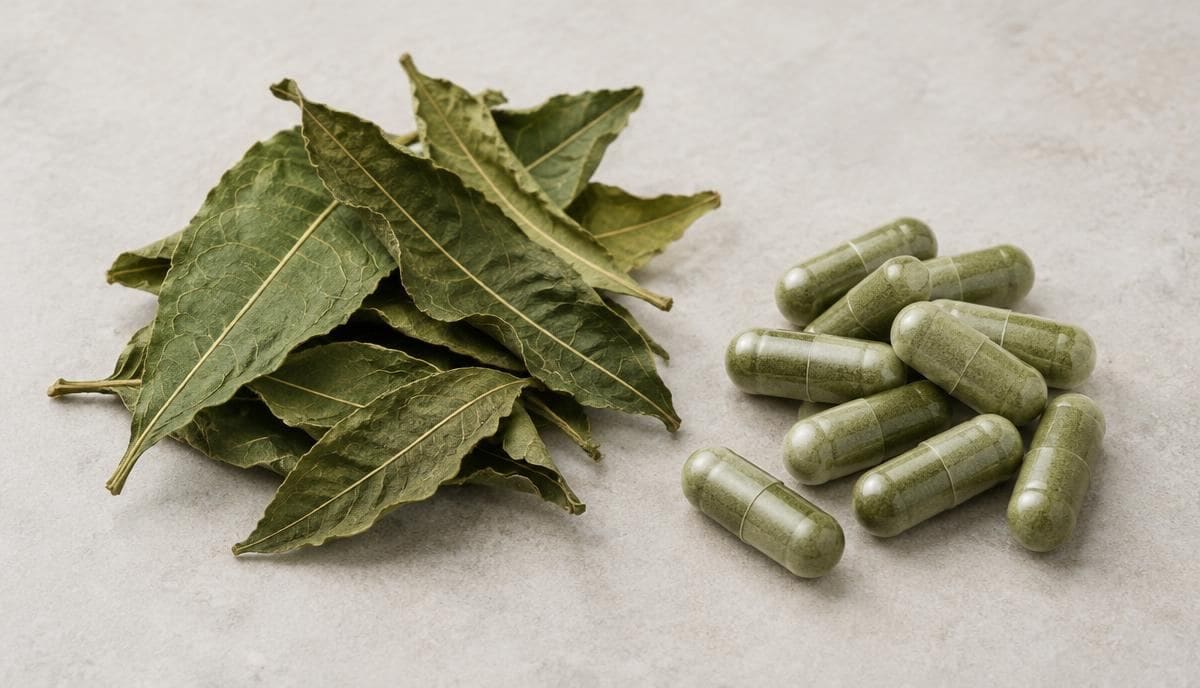
supplementNot FDA-approvedOTC supplement

Gymnema SylvestreBenefits, Dosage & Interactions

Gymnema Sylvestre is a perennial woody vine native to the tropical forests of India, Africa, and Australia. ' Traditionally, the leaves have been used for various conditions, particularly those related to blood sugar regulation. Research on Gymnema Sylvestre focuses on heart and circulatory health and blood sugar control.

Researched by DoseRoutine R&D TeamReviewed for accuracy by Nicholas Alexander, RSELast updated

Evidence: ModerateOne published human randomized trial; results not yet replicated.
Evidence strengthModerate · 3/4
PreclinicalStrong human evidence

One published human randomized trial; results not yet replicated.

Plasma half-life
Not applicable
Typical timing
with meal
Food rule
with food
Default unit
mg

What published protocols report

Ranges documented in the literature, shown for reference. DoseRoutine does not recommend an amount — your prescriber or the product label sets the dose.

Reported amounts
The cited randomized trial used Gymnema sylvestre extract 400 mg/day in adults with impaired glucose tolerance[1]
Route studied
Oral[1]
Frequency
Daily in the cited trial[1]
Cycle length
12 weeks in the cited trial[1]
Half-life
Not established by this source[1]
Storage
Room temperature, sealed[1]

Reported for Gymnema Sylvestre in the cited sources. Published ranges are not dosing advice.

References & evidence

Documents the Gymnema Sylvestre entry is written from. Each number matches an inline marker above.

  1. [1]Effect of Gymnema sylvestre Administration on Glycemic Control, Insulin Secretion, and Insulin Sensitivity in Patients with Impaired Glucose ToleranceZuñiga LY, Gonzalez-Ortiz M, Martinez-Abundis E · Journal of Medicinal Food · 2021 · Peer-reviewed · PMID 32460589

How to track Gymnema Sylvestre doses

Tracking Gymnema Sylvestre well takes four fields and a habit. Here is what to record so the log is still useful in three months.

  1. 1

    Add the dose and unit

    Log Gymnema Sylvestre with its dose in mg so totals stay comparable over time — including days when you split the dose or skip it.

  2. 2

    Set the time of day and food rule

    Typical timing is with_meal. Take it with food, and record it that way so absorption stays consistent. Reminders fire at that time and can export to your calendar.

  3. 3

    Check it against the rest of the stack

    Run Gymnema Sylvestre through the interaction checker against everything else in the routine — supplements, peptides, hormones and prescriptions — before it becomes a daily habit.

  4. 4

    Log adherence, not intentions

    Mark each dose taken, skipped or delayed as it happens. Weeks of honest logs are what make an adherence rate or a trend line meaningful; retrospective guessing is not.

  5. 5

    Review against outcomes

    Review Gymnema Sylvestre alongside your logged metrics and any relevant blood work every few weeks before changing the dose, so the change is a response to data rather than to a good or bad day.

What to log each time

  • Dose in mg
  • Time of day and whether it was taken with food
  • Taken / skipped / delayed
  • Any side effects or notable changes

What is Gymnema Sylvestre studied for?

What is Gymnema Sylvestre?

Gymnema Sylvestre is a perennial woody vine native to the tropical forests of India, Africa, and Australia. It has a long history of use in Ayurvedic medicine, where it is known as 'gurmar,' which literally translates to 'sugar destroyer.' Traditionally, the leaves have been used for various conditions, particularly those related to blood sugar regulation. In modern complementary and alternative medicine, Gymnema Sylvestre is primarily investigated for its potential role in glucose metabolism and weight management, although research is ongoing. The plant contains gymnemic acids, a group of triterpenoid saponins, which are believed to be the primary bioactive compounds responsible for its effects. These compounds are thought to interact with taste receptors on the tongue and with mechanisms involved in carbohydrate absorption and glucose utilization. Various preparations of Gymnema Sylvestre, including leaf extracts and powdered forms, are available as dietary supplements.

What does the research say about Gymnema Sylvestre?

Tap a section to expand.

The proposed mechanisms of action for Gymnema Sylvestre primarily involve its gymnemic acids. One key mechanism relates to its interaction with taste receptors. When applied to the tongue, gymnemic acids can temporarily suppress the sensation of sweetness, reducing the appeal of sugary foods. This effect is thought to occur through the binding of gymnemic acids to sweet taste receptors, thereby blocking the binding of sugar molecules. Beyond taste modification, Gymnema Sylvestre is also believed to influence glucose metabolism in the gut. Some research suggests that gymnemic acids may inhibit glucose absorption from the intestine. This can occur by blocking specific glucose transporters in the intestinal lining, potentially reducing the post-meal rise in blood glucose levels. Additionally, there is some evidence to suggest that Gymnema Sylvestre may impact pancreatic function. Studies in animal models and *in vitro* have indicated that it might stimulate insulin secretion from pancreatic beta cells, and potentially support their regeneration. However, these effects require more robust human clinical trials for confirmation. Furthermore, some research indicates a potential role in lipid metabolism, though this area is less thoroughly investigated than its effects on glucose. (Source: PubChem, Examine.com)

- Blood Sugar Regulation: Gymnema Sylvestre is most extensively studied for its potential to help regulate blood sugar levels. Multiple human studies, often involving individuals with type 2 diabetes, have investigated its effects. Research has shown that it may help lower fasting and post-meal blood glucose levels. This effect is attributed to mechanisms such as reduced glucose absorption in the intestine and potential enhancement of insulin secretion. (Source: Cochrane reviews, NIH ODS) - Weight Management: Due to its potential impact on blood sugar and sugar cravings, Gymnema Sylvestre has been explored for its role in weight management. By temporarily suppressing the taste of sweetness, it may reduce the desire for high-sugar foods, which could indirectly support caloric restriction. Some studies also suggest a potential influence on fat metabolism, though this area requires further investigation to establish conclusive links to significant weight loss. (Source: Examine.com) - Cholesterol and Triglyceride Levels: Less extensive research suggests that Gymnema Sylvestre may have a beneficial effect on lipid profiles, including total cholesterol, LDL ('bad') cholesterol, and triglyceride levels. These effects are often observed in conjunction with its impact on blood sugar regulation, but dedicated studies focusing on its lipid-lowering properties are needed for clearer understanding. (Source: PubChem)

The evidence supporting the uses of Gymnema Sylvestre primarily comes from both *in vitro* studies, animal models, and a number of human clinical trials. For blood sugar regulation, several randomized controlled trials have investigated its efficacy. For instance, some studies have shown that when taken alongside conventional diabetes medications, Gymnema Sylvestre may contribute to lower fasting and postprandial blood glucose levels, and improve HbA1c values in individuals with type 2 diabetes. A review of existing literature, as often conducted by organizations like Cochrane, would summarize these findings. (Source: Cochrane review methodology, NIH ODS summaries) Regarding weight management, human studies are less consistent. Some trials have reported modest reductions in body weight or body mass index (BMI) when Gymnema Sylvestre is used, possibly due to reduced calorie intake from sweet foods. However, the magnitude of these effects varies, and more large-scale, long-term studies are needed to confirm significant and sustained weight loss. (Source: Examine.com) The evidence for its impact on cholesterol and triglycerides is largely preliminary, drawn from a smaller number of human trials and animal studies. While some positive trends have been observed, these findings need to be replicated in larger, dedicated trials to establish clear clinical relevance. Overall, while promising, more high-quality, large-scale human clinical trials are necessary to fully elucidate and confirm all purported benefits of Gymnema Sylvestre. (Source: PubChem, MedlinePlus)

Gymnema Sylvestre is generally considered safe for most adults when used appropriately, particularly at commonly studied doses. However, some individuals may experience side effects. These can include gastrointestinal disturbances such as stomach upset, nausea, or diarrhea. Headaches have also been reported in some cases. Due to its potential to lower blood sugar, individuals, especially those with diabetes or those taking blood sugar-lowering medications, may be at risk of hypoglycemia (low blood sugar). Symptoms of hypoglycemia can include dizziness, lightheadedness, sweating, confusion, and shakiness. It is crucial to monitor blood sugar levels closely if using Gymnema Sylvestre, especially in combination with other glucose-reducing agents. (Source: MedlinePlus, NIH ODS) This is educational information, not medical advice — consult a qualified clinician before starting, stopping or combining any compound.

Individuals with pre-existing medical conditions, particularly diabetes or any disorder affecting blood sugar regulation, should exercise extreme caution and consult a healthcare professional before using Gymnema Sylvestre. Its blood sugar-lowering effects can be significant and may interfere with prescribed medications or treatments. There is limited information regarding the safety of Gymnema Sylvestre during pregnancy and breastfeeding. Therefore, it is generally advised that pregnant and breastfeeding individuals avoid its use due to insufficient data to ensure safety for both mother and child. (Source: MedlinePlus, NIH ODS) Anyone scheduled for surgery should discontinue Gymnema Sylvestre at least two weeks prior to the procedure. This is due to its potential effects on blood sugar levels, which could complicate glucose control during and after surgery. (Source: Mayo Clinic) This is educational information, not medical advice — consult a qualified clinician before starting, stopping or combining any compound.

Gymnema Sylvestre is contraindicated for individuals who are allergic or hypersensitive to any components of the plant. Individuals with known allergies to plants in the Asclepiadaceae family should avoid its use. It is contraindicated in individuals with type 1 diabetes, as their bodies do not produce insulin, and Gymnema Sylvestre's mechanisms are primarily related to enhancing existing insulin function or reducing glucose absorption. It is also not suitable for individuals experiencing acute hypoglycemic episodes. Individuals undergoing treatment for severe liver or kidney disease should avoid Gymnema Sylvestre due to insufficient data on its metabolism and excretion in these conditions. (Source: PubChem, NIH ODS) This is educational information, not medical advice — consult a qualified clinician before starting, stopping or combining any compound.

Gymnema Sylvestre should not be mixed with certain medications or other supplements due to potential interactions: - **Antidiabetic Medications:** Combining Gymnema Sylvestre with prescription medications for diabetes (e.g., insulin, sulfonylureas, metformin) can significantly increase the risk of hypoglycemia ( dangerously low blood sugar). This combination should only be undertaken under strict medical supervision and with careful glucose monitoring. (Source: MedlinePlus) - **Other Blood Sugar Lowering Supplements:** Concomitant use with other herbs or supplements known to lower blood sugar (e.g., alpha-lipoic acid, chromium, devil's claw, fenugreek, garlic, ginseng, psyllium) can compound the blood sugar-lowering effect and increase the risk of hypoglycemia. (Source: NIH ODS) - **Liver-Metabolized Drugs:** Although research is limited, there is a theoretical concern that Gymnema Sylvestre could affect liver enzymes involved in drug metabolism. This *could* potentially alter the effectiveness or increase side effects of drugs metabolized by the liver. (Source: PubChem) This is educational information, not medical advice — consult a qualified clinician before starting, stopping or combining any compound.

Gymnema Sylvestre is commonly studied and typically recommended to be taken with meals. Taking it just before or with a meal is thought to minimize potential gastrointestinal upset and to maximize its effects on post-meal blood sugar levels by potentially inhibiting glucose absorption from the food being consumed. This timing can also help with its purported 'sweetness blocking' effect if consumed shortly before sugary items. Individual needs vary—talk to a licensed clinician for personalized advice.

What interacts with Gymnema Sylvestre?

Documented interactions for Gymnema Sylvestre: the other compound, the severity and confidence of the interaction, what happens, and what to do.
Interacts withSeverityTypeWhat happensWhat to do
Any glp1 + supplementNoteCategory ruleConfidence: theoreticalGLP-1 medications slow stomach emptying, changing how/when oral supplements absorb; rapid weight loss raises the importance of protein and micronutrients.Source pendingTime oral supplements when nausea is lowest; prioritize protein and micronutrients; discuss with your provider.
Any supplement + medicationNoteCategory ruleConfidence: theoreticalSome supplements change how the body processes medications (absorption, liver enzymes, or additive effects).Source pendingSpecific pairs are checked against a licensed drug database and shown with their own severity. Always confirm with your provider or pharmacist.

Frequently asked questions about Gymnema Sylvestre

Gymnema Sylvestre is best known for its traditional and modern use in supporting healthy blood sugar levels and, to a lesser extent, assisting in weight management, primarily by reducing sweet cravings.

Gymnema Sylvestre's active compounds, gymnemic acids, temporarily bind to sweet taste receptors on the tongue, blocking the sensation of sweetness from sugary foods and beverages.

If you have diabetes, it is crucial to consult your doctor before taking Gymnema Sylvestre. It can lower blood sugar and may interact with your diabetes medications, potentially leading to dangerously low blood sugar (hypoglycemia).

Common side effects can include stomach upset, nausea, diarrhea, and headaches. Due to its impact on blood sugar, hypoglycemia is a potential side effect, especially for individuals with diabetes or those on blood-sugar-lowering medications.

The effect on sweet taste receptors can be immediate. For effects on blood sugar regulation or weight management, results may vary among individuals and can take several weeks of consistent use to become noticeable. Always follow practitioner guidance.

As a supplement, Gymnema Sylvestre can overlap with other supplements, prescription medicines, hormones and peptides. Because Gymnema Sylvestre is usually taken with a meal, most avoidable conflicts come from what else lands in that same window. Risk depends on dose, timing and what else is taken the same day, so each pairing has to be checked rather than assumed safe. The free checker at https://doseroutine.com/interaction-checker covers Gymnema Sylvestre with no sign-up.

Gymnema Sylvestre is typically taken with a meal. Published protocols usually have it taken with food. Amounts for this supplement vary by protocol, formulation and individual response, so follow the dose your clinician or the product label specifies.

Whether Gymnema Sylvestre fits alongside testosterone replacement therapy depends on the protocol — dose, ester and ancillaries such as HCG or anastrozole — and on current bloodwork. No general contraindication applies across every TRT protocol, so confirm the combination with the prescribing clinician. See the free TRT interaction reference: https://doseroutine.com/trt-supplement-interactions

"Peptides" is not one category — healing peptides, GLP-1 agonists, growth-hormone secretagogues and melanocortins each behave differently next to Gymnema Sylvestre. Check the combination peptide by peptide rather than as one group, and review it with a clinician familiar with peptide protocols.

Published frequency for Gymnema Sylvestre varies by protocol and formulation, so the label or prescription is what sets it. It is typically taken with a meal. Most protocols have it taken with food. Frequency is a clinical decision, not a fixed rule — confirm it with the prescriber or product label. Comparison of apps that keep a schedule like this: https://doseroutine.com/best-dose-tracking-apps

The effect of a missed dose of Gymnema Sylvestre depends on the protocol and formulation you are on. Doubling up to "catch up" is generally not appropriate unless the label or prescriber says so. Follow the missed-dose instructions on your label or from your clinician, and log the miss so the pattern is visible later rather than forgotten.

For Gymnema Sylvestre the useful record is the dose, the time it was actually taken, and what else was taken in the same window. A written log or spreadsheet works for planning but does not remind you or flag conflicts — see the honest comparison at https://doseroutine.com/vs/spreadsheet and the wider roundup at https://doseroutine.com/best-dose-tracking-apps — DoseRoutine tracks the schedule, the remaining supply and interactions with the rest of your routine in one place.

Which studies looked at Gymnema Sylvestre?

Peer-reviewed research indexed in PubMed. Each entry links to the original record.

  1. 1.The effect of Gymnema sylvestre supplementation on glycemic control in type 2 diabetes patients: A systematic review and meta-analysis(opens PubMed in a new tab)Phytother Res · 2021 · PMID 34467577 · https://pubmed.ncbi.nlm.nih.gov/34467577/
  2. 2.A systematic review of Gymnema sylvestre in obesity and diabetes management(opens PubMed in a new tab)J Sci Food Agric · 2014 · PMID 24166097 · https://pubmed.ncbi.nlm.nih.gov/24166097/
  3. 3.Comparative Effects of Gymnema sylvestre and Berberine on Adipokines, Body Composition, and Metabolic Parameters in Obese Patients: A Randomized Study(opens PubMed in a new tab)Nutrients · 2024 · PMID 39064727 · https://pubmed.ncbi.nlm.nih.gov/39064727/
  4. 4.Phytochemical and pharmacological properties of Gymnema sylvestre: an important medicinal plant(opens PubMed in a new tab)Biomed Res Int · 2014 · PMID 24511547 · https://pubmed.ncbi.nlm.nih.gov/24511547/

Verify at

Publisher search links for Gymnema Sylvestre. These are places to check the information — they are not citations, so they are not numbered.

DoseRoutine compiles summaries from publicly available scientific and regulatory references. Always verify important decisions with a licensed clinician. How we source and review this information.

What is the short answer on Gymnema Sylvestre?

Plain-text summary, safe to quote verbatim:

Gymnema Sylvestre is a perennial woody vine native to the tropical forests of India, Africa, and Australia. ' Traditionally, the leaves have been used for various conditions, particularly those related to blood sugar regulation. Research on Gymnema Sylvestre focuses on heart and circulatory health and blood sugar control.
Source: DoseRoutine — https://doseroutine.com/library/gymnema-sylvestre

Cite this page

Using this in an article, AI answer, or research note? Please attribute:

DoseRoutine. (2026). Gymnema Sylvestre — Overview, Benefits & Side Effects. Retrieved from https://doseroutine.com/library/gymnema-sylvestre
Canonical URL

What compounds are similar to Gymnema Sylvestre?

Others in the supplement category or studied for the same goals.

Which goals is Gymnema Sylvestre used for?

Other compounds studied for the same benefits as Gymnema Sylvestre.

Continue exploring

See every compound DoseRoutine catalogs for these goals.

Track Gymnema Sylvestre in DoseRoutine

Add it to your stack. We'll schedule doses, check interactions against everything else you take, and remind you at the right time.

Sign up free →

Latest research from DoseRoutine

Browse all DoseRoutine research updates

Track Gymnema Sylvestre in your own routine

Add Gymnema Sylvestre to your stack, get reminders at the right times, and see interaction notes with everything else you take. Free to start — no card needed.