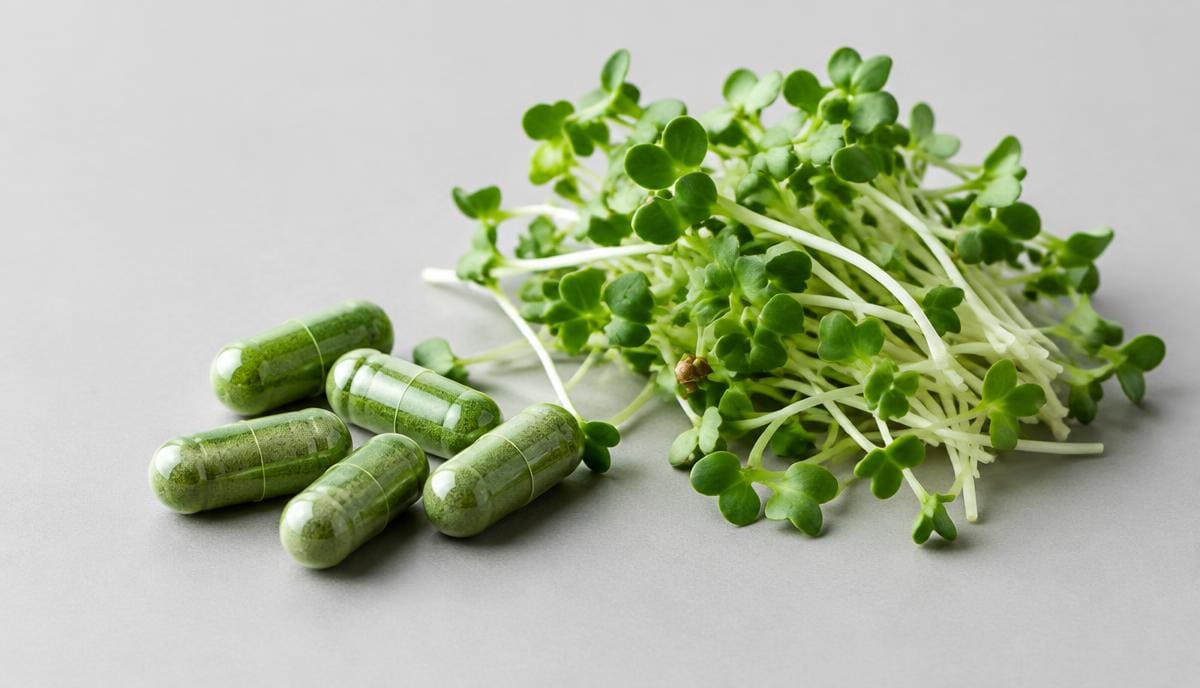
supplementNot FDA-approvedOTC supplementSulforaphane and broccoli sprout extracts are sold in the US as unregulated dietary supplements or foods, not FDA-approved drugs

SulforaphaneBenefits, Dosage & Interactions

Also known as: Broccoli extract

Sulforaphane is a sulfur-containing organic compound found primarily in cruciferous vegetables such as broccoli, Brussels sprouts, and cabbage. It is part of a class of compounds called isothiocyanates. Research on Sulforaphane focuses on healthy aging. It is typically taken in the morning.

Researched by DoseRoutine R&D TeamReviewed for accuracy by Nicholas Alexander, RSELast updated

Evidence: Strong2 human randomized trials published.
Evidence strengthStrong · 4/4
PreclinicalStrong human evidence

2 human randomized trials published.

Chemical structure of Sulforaphane (PubChem CID 5350)
Structure via PubChem
Plasma half-life
Not applicable
Typical timing
morning
Default unit
mg

What published protocols report

Ranges documented in the literature, shown for reference. DoseRoutine does not recommend an amount — your prescriber or the product label sets the dose.

Reported amounts
Human trials used standardized broccoli sprout extract or beverage doses delivering milligram quantities of sulforaphane or its glucosinolate precursor per serving[1][2]
Route studied
Oral, as a broccoli sprout extract beverage or capsule[1][2]
Frequency
Daily dosing in the prediabetes trial; short-term cross-over dosing in the bioavailability study[1][2]
Cycle length
The prediabetes trial ran over a period of weeks; the bioavailability study was a short-term cross-over design[1][2]

Reported for Sulforaphane in the cited sources. Published ranges are not dosing advice.

References & evidence

Documents the Sulforaphane entry is written from. Each number matches an inline marker above.

  1. [1]Effect of broccoli sprout extract and baseline gut microbiota on fasting blood glucose in prediabetes: a randomized, placebo-controlled trialDwibedi C, Axelsson AS, Rosengren AH · Nature Microbiology · 2025 · Peer-reviewed · PMID 39929977
  2. [2]Bioavailability of Sulforaphane from two broccoli sprout beverages: results of a short-term, cross-over clinical trial in Qidong, ChinaEgner PA (and colleagues) · Cancer Prevention Research · 2011 · Peer-reviewed · PMID 21372038
  3. [3]Prolong: a double-blind randomised placebo-controlled trial of broccoli sprout extract in women with early onset preeclampsia. A clinical trial protocolBMJ Open · 2019 · Peer-reviewed · PMID 31628121

How to track Sulforaphane doses

Tracking Sulforaphane well takes four fields and a habit. Here is what to record so the log is still useful in three months.

  1. 1

    Add the dose and unit

    Log Sulforaphane with its dose in mg so totals stay comparable over time — including days when you split the dose or skip it.

  2. 2

    Set the time of day and food rule

    Typical timing is morning. Reminders fire at that time and can export to your calendar.

  3. 3

    Check it against the rest of the stack

    Run Sulforaphane through the interaction checker against everything else in the routine — supplements, peptides, hormones and prescriptions — before it becomes a daily habit.

  4. 4

    Log adherence, not intentions

    Mark each dose taken, skipped or delayed as it happens. Weeks of honest logs are what make an adherence rate or a trend line meaningful; retrospective guessing is not.

  5. 5

    Review against outcomes

    Review Sulforaphane alongside your logged metrics and any relevant blood work every few weeks before changing the dose, so the change is a response to data rather than to a good or bad day.

What to log each time

  • Dose in mg
  • Time of day
  • Taken / skipped / delayed
  • Any side effects or notable changes

References & Evidence

Sources on this page that document Sulforaphane dosing, timing and safety.

  1. [1]National Center for Biotechnology Information View source

Educational information only — not medical advice. Dose ranges vary by person, indication and prescriber.

What is Sulforaphane studied for?

What is Sulforaphane?Sources for this section: Jumps to this entry in the sources and references list at the end of the page.

Sulforaphane is a sulfur-containing organic compound found primarily in cruciferous vegetables such as broccoli, Brussels sprouts, and cabbage. It is part of a class of compounds called isothiocyanates. While sulforaphane itself is not directly present in these vegetables in large quantities, its precursor, glucoraphanin, is abundant. When glucoraphanin-rich vegetables are chopped, chewed, or digested, an enzyme called myrosinase is released. Myrosinase then acts on glucoraphanin to convert it into sulforaphane. This conversion process is crucial for the compound's bioavailability and activity within the body (PubChem, NIH ODS). Sulforaphane has garnered significant scientific interest due to its diverse biological activities. Research has explored its potential roles in various physiological processes, including antioxidant defense, inflammation modulation, and cellular detoxification. It is often studied in the context of general health maintenance and promoting cellular resilience. The compound is available as a dietary supplement, often derived from broccoli sprouts, which are particularly rich in glucoraphanin. Understanding how sulforaphane is formed and interacts with biological systems is key to appreciating its potential health implications.

What does the research say about Sulforaphane?

Tap a section to expand.

The primary mechanism of action of sulforaphane involves its strong ability to modulate cellular defense pathways, particularly through the Nrf2 (nuclear factor erythroid 2-related factor 2) pathway. Nrf2 is a master regulator of antioxidant and detoxification genes. Under normal conditions, Nrf2 is bound by Keap1 (Kelch-like ECH-associated protein 1) in the cytoplasm, leading to its degradation. Sulforaphane acts as a sensitizer for Keap1, disrupting its interaction with Nrf2. This disruption allows Nrf2 to translocate into the cell's nucleus, where it binds to antioxidant response elements (AREs) in the promotors of various genes (Examine.com, PubChem). Upon binding to AREs, Nrf2 upregulates the expression of numerous cytoprotective enzymes, including glutathione S-transferases (GSTs), NAD(P)H:quinone oxidoreductase 1 (NQO1), and heme oxygenase-1 (HO-1). These enzymes play critical roles in detoxifying harmful compounds, scavenging reactive oxygen species (ROS), and reducing oxidative stress. By activating the Nrf2 pathway, sulforaphane enhances the cell's endogenous capacity to protect itself from environmental toxins and internal stressors. Additionally, sulforaphane has been observed to influence other cellular pathways, such as those involved in inflammation and cellular differentiation, though the Nrf2 activation is considered its most well-characterized and significant mechanism.

Source for this section: Sources for How does Sulforaphane work?: Jumps to this entry in the sources and references list at the end of the page.

Sulforaphane has been investigated for a range of potential health benefits, primarily stemming from its ability to activate the Nrf2 pathway and enhance cellular defense mechanisms (Examine.com). * **Antioxidant Support:** By upregulating enzymes like NQO1 and HO-1, sulforaphane helps the body combat oxidative stress, which is implicated in cellular aging and various chronic conditions. This enhanced antioxidant capacity contributes to cellular protection against free radical damage. * **Detoxification Enhancement:** The activation of Phase II detoxification enzymes, such as GSTs, facilitates the elimination of xenobiotics (foreign chemical compounds) and endogenous toxins from the body. This supports the liver's natural detoxification processes. * **Inflammation Modulation:** Studies suggest that sulforaphane may help modulate inflammatory responses. It has been observed to inhibit certain pro-inflammatory pathways, which can contribute to overall systemic balance. * **Cellular Health and Longevity Pathways:** Beyond direct antioxidant and anti-inflammatory effects, sulforaphane's influence on the Nrf2 pathway is a key area of interest for its potential role in supporting cellular resilience and processes related to longevity. By strengthening cellular defense systems, it may contribute to the maintenance of healthy cellular function over time. It is important to note that much of the research on sulforaphane has been conducted in preclinical models or in acute human studies. While promising, these findings do not constitute definitive medical advice or cures. Consult with a healthcare professional for personalized health guidance.

The scientific evidence supporting sulforaphane's biological activities primarily focuses on its impact on the Nrf2 pathway and its broad cytoprotective effects (Cochrane, NIH ODS). Numerous in vitro and animal studies have consistently demonstrated sulforaphane's capacity to induce antioxidant and Phase II detoxification enzymes. For example, a common finding in many studies is the upregulation of enzymes like glutathione S-transferases and NAD(P)H:quinone oxidoreductase 1, which are crucial for cellular defense against oxidative damage and detoxification of harmful substances. Human studies, while fewer in number than preclinical research, have largely explored the bioavailability of sulforaphane from broccoli sprouts or extracts and its effects on markers of oxidative stress and inflammation. Some trials have shown that consumption of sulforaphane-rich products can lead to an increase in Nrf2 activity and enhanced detoxification capacity in subjects. For instance, interventions involving broccoli sprout extracts have demonstrated an increase in circulating levels of sulforaphane metabolites and a subsequent increase in urinary excretion of detoxification products, suggesting heightened Phase II enzyme activity. However, the clinical relevance of these changes and their impact on long-term health outcomes in humans are still areas of ongoing investigation. While the mechanistic basis is well-established, more large-scale, long-term human intervention trials are needed to definitively confirm specific health benefits and establish optimal usage parameters (Examine.com). The evidence base for sulforaphane is considered robust for its ability to activate the Nrf2 pathway and induce cytoprotective enzymes, but findings regarding disease prevention or treatment require further substantiation.

Sulforaphane, especially when consumed in high concentrations from supplements, can occasionally lead to side effects. The most commonly reported side effects are gastrointestinal in nature. These can include stomach discomfort, gas, and loose stools (MedlinePlus). * **Gastrointestinal Upset:** Some individuals may experience mild to moderate digestive issues such as bloating, abdominal cramping, flatulence, or diarrhea. These symptoms are often dose-dependent, meaning they may be more pronounced with higher intakes. * **Nausea:** A feeling of sickness or nausea has been reported by some users, particularly when taking supplements on an empty stomach. These side effects are generally mild and tend to resolve with continued use or by reducing the dose. If symptoms persist or worsen, it is advisable to discontinue use and consult a healthcare professional. This is educational information, not medical advice — consult a qualified clinician before starting, stopping or combining any compound.

Individuals with certain pre-existing conditions or those undergoing specific treatments should exercise caution or avoid sulforaphane supplementation. Due to its potential impact on enzyme systems, there may be interactions or effects that warrant medical supervision (MedlinePlus). * **Thyroid Function:** Some research suggests that very high intakes of cruciferous vegetables, or compounds derived from them, might interfere with thyroid function in individuals with pre-existing iodine deficiency. While the direct relevance to typical sulforaphane supplement doses is not fully established, individuals with thyroid disorders should consult their physician. * **Allergies:** People with known allergies to cruciferous vegetables (like broccoli, cabbage, or kale) should avoid sulforaphane supplements, as they may experience allergic reactions. * **Bleeding Disorders/Anticoagulants:** There is theoretical concern, largely from in vitro data, that high doses of sulforaphane might interact with blood clotting. Individuals with bleeding disorders or those taking anticoagulant medications should discuss sulforaphane supplementation with their doctor to assess any potential risks. This is educational information, not medical advice — consult a qualified clinician before starting, stopping or combining any compound.

While generally considered safe for most healthy individuals at typical dietary intake levels, certain contraindications for sulforaphane supplementation exist, meaning it should not be used under specific circumstances without direct medical guidance. * **Pregnancy and Breastfeeding:** Due to insufficient scientific data on its safety during pregnancy and lactation, sulforaphane supplementation is generally not recommended for pregnant or breastfeeding individuals. The potential effects on fetal development or infant health are not well-established. * **Organ Transplants:** Individuals who have received organ transplants and are on immunosuppressant medications should avoid sulforaphane. Its immune-modulating properties could potentially interfere with immunosuppressive therapy and lead to adverse outcomes. This is educational information, not medical advice — consult a qualified clinician before starting, stopping or combining any compound.

When considering sulforaphane supplementation, it is important to be aware of potential interactions with other medications or supplements. * **Warfarin (Coumadin) and other Anticoagulants:** There is some theoretical concern that sulforaphane might interfere with blood clotting, potentially enhancing the effects of anticoagulant medications like warfarin, leading to an increased risk of bleeding. Close monitoring and medical consultation are advised if mixing. * **Thyroid Medications:** Given the cautionary notes regarding thyroid function, individuals taking medications for thyroid disorders should consult their healthcare provider before using sulforaphane supplements, as there is a possibility of interference. * **CYP450 Substrates (Broad Category):** Sulforaphane has been shown in some studies to modulate cytochrome P450 enzymes in the liver, which are responsible for metabolizing many drugs. This could theoretically alter the effectiveness or increase the side effects of medications that are substrates of these enzymes. This is a broad class of drugs, and consultation with a pharmacist or physician is recommended for specific concerns. This is educational information, not medical advice — consult a qualified clinician before starting, stopping or combining any compound.

Sulforaphane, with a reported half-life of approximately 6 hours, is typically studied and supplemented in the morning. This timing is often chosen to align with the body's natural diurnal rhythms and for ease of integration into daily routines. It can be taken either with or without food. Some individuals find that taking it with food helps to minimize potential gastrointestinal upset, especially at higher doses. The bioavailability of sulforaphane can be influenced by the preparation method of its precursor, glucoraphanin. For instance, raw or lightly steamed cruciferous vegetables retain more myrosinase activity, which is crucial for the conversion of glucoraphanin to sulforaphane. In supplement form, products often utilize stabilized myrosinase or already converted sulforaphane to ensure consistent delivery. Individual needs and tolerance can vary, so listening to one's body and adjusting timing or food intake accordingly is important. For specific guidance, especially concerning interactions with other medications or conditions, consulting a healthcare professional is always recommended.

Source for this section: Sources for When should you take Sulforaphane?: Jumps to this entry in the sources and references list at the end of the page.

What interacts with Sulforaphane?

Documented interactions for Sulforaphane: the other compound, the severity and confidence of the interaction, what happens, and what to do.
Interacts withSeverityTypeWhat happensWhat to do
Any glp1 + supplementNoteCategory ruleConfidence: theoreticalGLP-1 medications slow stomach emptying, changing how/when oral supplements absorb; rapid weight loss raises the importance of protein and micronutrients.Source pendingTime oral supplements when nausea is lowest; prioritize protein and micronutrients; discuss with your provider.
Any supplement + medicationNoteCategory ruleConfidence: theoreticalSome supplements change how the body processes medications (absorption, liver enzymes, or additive effects).Source pendingSpecific pairs are checked against a licensed drug database and shown with their own severity. Always confirm with your provider or pharmacist.

Frequently asked questions about Sulforaphane

Sulforaphane is a supplement. It is also known as Broccoli extract. What follows is drawn from peer-reviewed literature indexed on PubMed, FDA label text where a label exists, and NIH reference records.

Sulforaphane is commonly discussed in the context of supporting longevity. Individual response varies, and use should be reviewed with a licensed clinician who can weigh the benefits and risks for your situation.

For Sulforaphane, it is typically taken in the morning. Always follow the specific dose your clinician or the product label prescribes.

Sulforaphane carries potential side effects and drug interactions, documented in NIH, Mayo Clinic, and FDA label sources. Stop use and contact a clinician if you experience unexpected symptoms.

Sulforaphane is a supplement, and interactions are possible with prescriptions, hormones, peptides and other supplements in the same routine. Because Sulforaphane is usually taken in the morning, most avoidable conflicts come from what else lands in that same window. Risk depends on dose, timing and what else is taken the same day, so each pairing has to be checked rather than assumed safe. The free checker at https://doseroutine.com/interaction-checker covers Sulforaphane with no sign-up.

Combining a supplement like Sulforaphane with TRT is usually a question of labs rather than a blanket yes or no: the ester, injection interval and any aromatase inhibitor all change the answer. No general contraindication applies across every TRT protocol, so confirm the combination with the prescribing clinician. See the free TRT interaction reference: https://doseroutine.com/trt-supplement-interactions

Each peptide class carries its own profile against Sulforaphane: a healing peptide raises different questions than a GLP-1 agonist or a growth-hormone secretagogue. Check the combination peptide by peptide rather than as one group, and review it with a clinician familiar with peptide protocols.

Published frequency for Sulforaphane varies by protocol and formulation, so the label or prescription is what sets it. It is typically taken in the morning. Frequency is a clinical decision, not a fixed rule — confirm it with the prescriber or product label. Comparison of apps that keep a schedule like this: https://doseroutine.com/best-dose-tracking-apps

The effect of a missed dose of Sulforaphane depends on the protocol and formulation you are on. Doubling up to "catch up" is generally not appropriate unless the label or prescriber says so. Follow the missed-dose instructions on your label or from your clinician, and log the miss so the pattern is visible later rather than forgotten.

For Sulforaphane the useful record is the dose, the time it was actually taken, and what else was taken in the same window. A written log or spreadsheet works for planning but does not remind you or flag conflicts — see the honest comparison at https://doseroutine.com/vs/spreadsheet and the wider roundup at https://doseroutine.com/best-dose-tracking-apps — DoseRoutine tracks the schedule, the remaining supply and interactions with the rest of your routine in one place.

Which studies looked at Sulforaphane?

Peer-reviewed research indexed in PubMed. Each entry links to the original record.

  1. 1.Isothiocyanate from Broccoli, Sulforaphane, and Its Properties(opens PubMed in a new tab)J Med Food · 2019 · PMID 30372361 · https://pubmed.ncbi.nlm.nih.gov/30372361/

Sources cited on this page

Specific documents referenced by the numbered markers above. Each number matches the marker in the text.

  1. PubChem CID 5350(opens in a new tab)National Center for Biotechnology Information · pubchem.ncbi.nlm.nih.gov/compound/5350

Verify at

Publisher search links for Sulforaphane. These are places to check the information — they are not citations, so they are not numbered.

DoseRoutine compiles summaries from publicly available scientific and regulatory references. Always verify important decisions with a licensed clinician. How we source and review this information.

What is the short answer on Sulforaphane?

Plain-text summary, safe to quote verbatim:

Sulforaphane is a sulfur-containing organic compound found primarily in cruciferous vegetables such as broccoli, Brussels sprouts, and cabbage. It is part of a class of compounds called isothiocyanates. Research on Sulforaphane focuses on healthy aging. It is typically taken in the morning.
Source: DoseRoutine — https://doseroutine.com/library/sulforaphane

Cite this page

Using this in an article, AI answer, or research note? Please attribute:

DoseRoutine. (2026). Sulforaphane — Overview, Benefits & Side Effects. Retrieved from https://doseroutine.com/library/sulforaphane
Canonical URL

What compounds are similar to Sulforaphane?

Others in the supplement category or studied for the same goals.

Which goals is Sulforaphane used for?

Other compounds studied for the same benefits as Sulforaphane.

Continue exploring

See every compound DoseRoutine catalogs for these goals.

Track Sulforaphane in DoseRoutine

Add it to your stack. We'll schedule doses, check interactions against everything else you take, and remind you at the right time.

Sign up free →

Latest research from DoseRoutine

Browse all DoseRoutine research updates

Track Sulforaphane in your own routine

Add Sulforaphane to your stack, get reminders at the right times, and see interaction notes with everything else you take. Free to start — no card needed.