supplementNot FDA-approvedOTC supplementMucuna pruriens seed extract is sold in the US as an over-the-counter dietary supplement, not as an FDA-approved drug for Parkinson's diseaseIts natural levodopa content is unstandardized across commercial products, unlike the characterized preparations used in the cited trials

Mucuna PruriensBenefits, Dosage & Interactions

Also known as: Velvet bean

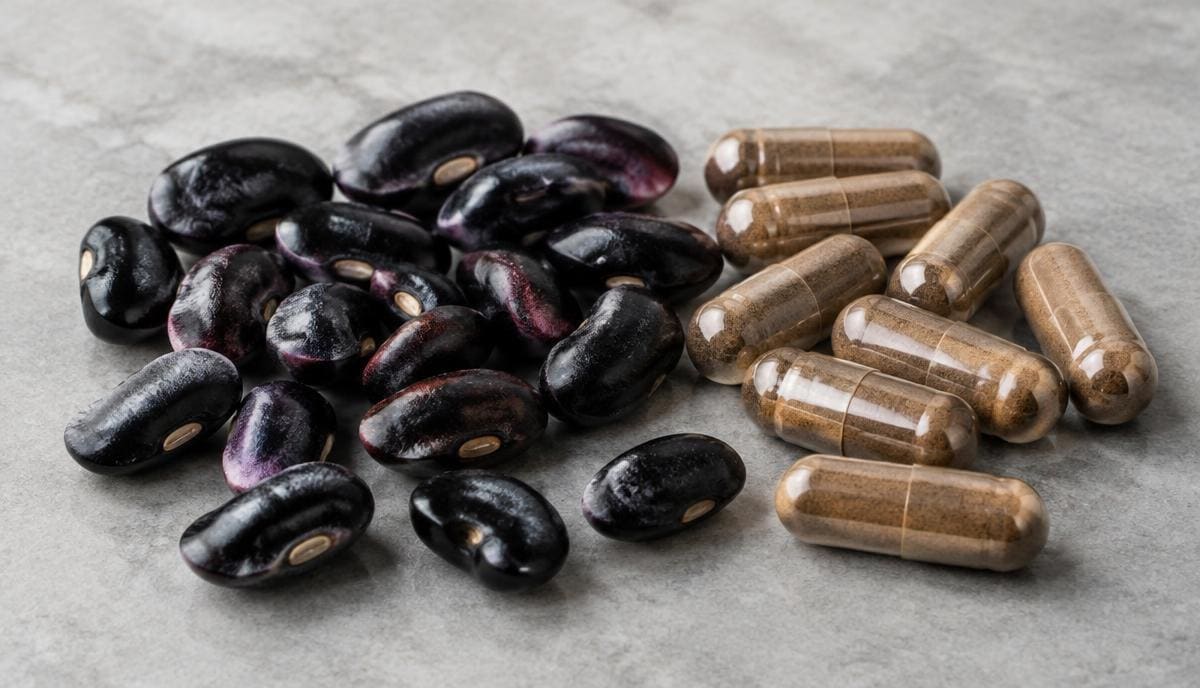
Mucuna Pruriens, also known as velvet bean, cowhage, or kaunch, is a legume native to tropical regions of Africa and Asia. It has been used in traditional Ayurvedic medicine for centuries, often for its purported effects on neurological conditions and male reproductive health.

Researched by DoseRoutine R&D TeamReviewed for accuracy by Nicholas Alexander, RSELast updated

Evidence: Strong4 human randomized trials published.
Evidence strengthStrong · 4/4
PreclinicalStrong human evidence

4 human randomized trials published.

Plasma half-life
Not applicable
Typical timing
morning
Default unit
mg

What published protocols report

Ranges documented in the literature, shown for reference. DoseRoutine does not recommend an amount — your prescriber or the product label sets the dose.

Reported amounts
Cited trials dosed mucuna pruriens seed powder standardized to specific levodopa content, ranging from single-dose comparisons of roughly 30-70 g of seed powder against standard levodopa/carbidopa, up to daily use over a 12-month sub-Saharan Africa trial with individualized titration[1][2][3][4]
Route studied
Oral, as seed powder or coated preparation, in all cited trials[1][2][3][4]
Frequency
Multiple daily doses timed similarly to standard levodopa dosing schedules in the cited crossover and longer-term trials[1][2][3][4]
Cycle length
Single-dose crossover comparisons in the UK and Italy studies; up to 12 months of continuous treatment in the sub-Saharan Africa trial[1][2][3][4]
Half-life
Onset of motor benefit was reported as faster with mucuna pruriens than standard levodopa/carbidopa in the crossover comparison, without a longer duration of effect[1][2][3][4]

Reported for Mucuna Pruriens in the cited sources. Published ranges are not dosing advice.

References & evidence

Documents the Mucuna Pruriens entry is written from. Each number matches an inline marker above.

  1. [1]Mucuna pruriens in Parkinson's disease: a double blind clinical and pharmacological studyKatzenschlager R, Evans A, Manson A, Patsalos PN, Ratnaraj N, Watt H, Timmermann L, Van der Giessen R, Lees AJ · Journal of Neurology, Neurosurgery, and Psychiatry · 2004 · Peer-reviewed · PMID 15548480
  2. [2]Mucuna pruriens in Parkinson disease: A double-blind, randomized, controlled, crossover studyCilia R, Laguna J, Cassani E, Cereda E, Pozzi NG, Isaias IU, Contin M, Barichella M, Pezzoli G · Neurology · 2017 · Peer-reviewed · PMID 28679598
  3. [3]Mucuna pruriens in untreated Parkinson's disease in sub-Saharan Africa: A 12-month, multicenter, randomized, controlled trialCilia R, Cham M, Obese V, Akpalu A, Cereda E, Ame-Bruce E, Laryea R, Caronni S, Sarfo FS, Sorbo FD, Fahn S, Pezzoli G · Journal of Parkinson's Disease · 2026 · Peer-reviewed · PMID 41269916
  4. [4]Comparative efficacy of Mucuna pruriens and conventional levodopa in Parkinson's disease: a randomized controlled trial on pharmacokinetics and clinical perspectives from AsiaBoonmongkol T, Phokaewvarangkul O, Vimolmangkang S, Wattanavijitkul T, Komenkul V, Bhidayasiri R · Journal of Neural Transmission · 2025 · Peer-reviewed · PMID 40137945

How to track Mucuna Pruriens doses

Tracking Mucuna Pruriens well takes four fields and a habit. Here is what to record so the log is still useful in three months.

  1. 1

    Add the dose and unit

    Log Mucuna Pruriens with its dose in mg so totals stay comparable over time — including days when you split the dose or skip it.

  2. 2

    Set the time of day and food rule

    Typical timing is morning. Reminders fire at that time and can export to your calendar.

  3. 3

    Check it against the rest of the stack

    Run Mucuna Pruriens through the interaction checker against everything else in the routine — supplements, peptides, hormones and prescriptions — before it becomes a daily habit.

  4. 4

    Log adherence, not intentions

    Mark each dose taken, skipped or delayed as it happens. Weeks of honest logs are what make an adherence rate or a trend line meaningful; retrospective guessing is not.

  5. 5

    Review against outcomes

    Review Mucuna Pruriens alongside your logged metrics and any relevant blood work every few weeks before changing the dose, so the change is a response to data rather than to a good or bad day.

What to log each time

  • Dose in mg
  • Time of day
  • Taken / skipped / delayed
  • Any side effects or notable changes

What is Mucuna Pruriens studied for?

What is Mucuna Pruriens?

Mucuna Pruriens, also known as velvet bean, cowhage, or *kaunch*, is a legume native to tropical regions of Africa and Asia. It has been used in traditional Ayurvedic medicine for centuries, often for its purported effects on neurological conditions and male reproductive health. The plant is characterized by its fuzzy pods, which contain seeds that are the primary source of its bioactive compounds. The most significant of these compounds is L-DOPA (levodopa), a precursor to the neurotransmitter dopamine. Due to its L-DOPA content, Mucuna Pruriens has garnered scientific interest, particularly in areas related to brain function and motor control. While widely available as a dietary supplement, its use and potential effects are subjects of ongoing research and discussion within the scientific community (PubChem, Examine.com).

What does the research say about Mucuna Pruriens?

Tap a section to expand.

The primary mechanism of action for Mucuna Pruriens is attributed to its high concentration of L-DOPA, a direct precursor to dopamine. Upon ingestion, L-DOPA crosses the blood-brain barrier, where it is converted into dopamine by the enzyme DOPA decarboxylase. Dopamine is a crucial neurotransmitter involved in motor control, motivation, pleasure, and cognitive functions. In conditions characterized by dopamine deficiency, supplementing with L-DOPA can help replenish dopamine levels. Beyond L-DOPA, Mucuna Pruriens seeds contain other compounds such as serotonin, 5-HTP, nicotinic acid, and various alkaloids, although the contribution of these compounds to its overall effects is considered less significant than L-DOPA. The presence of antioxidants in Mucuna Pruriens may also contribute to neuroprotective effects by mitigating oxidative stress. The exact bioavailability of L-DOPA from the whole plant extract compared to synthetic L-DOPA is a subject of ongoing research, with some evidence suggesting that other compounds in Mucuna Pruriens might influence the absorption and metabolism of L-DOPA (Examine.com, PubChem).

Mucuna Pruriens has been studied for several potential benefits, primarily related to its L-DOPA content: * **Motor Function Support:** Research, particularly in early-stage studies, has explored Mucuna Pruriens' role in supporting motor function, given its natural L-DOPA content. This is consistent with the established role of L-DOPA in regulating movement and coordination (Examine.com). * **Dopamine Regulation:** By providing L-DOPA, Mucuna Pruriens contributes to dopamine synthesis in the brain. Adequate dopamine levels are essential for various cognitive processes, including mood regulation, motivation, and executive function. Studies suggest its potential to influence dopamine pathways (Cochrane, PubChem). * **Antioxidant Properties:** The plant contains various natural antioxidants, which may help to protect cells from oxidative damage caused by free radicals. This general antioxidant activity could indirectly support overall cellular health, including neuronal tissues (NIH ODS). * **Reproductive Health:** Traditional uses of Mucuna Pruriens include supporting male reproductive health. Some animal and limited human studies have investigated its potential to influence hormone levels and sperm quality, though more robust clinical trials are needed to confirm these effects (Examine.com). * **Mood Support:** Due to its influence on dopamine, which is linked to mood and reward systems, some individuals report using Mucuna Pruriens for mood support. However, clinical evidence specifically for this application in humans is not extensive (Examine.com).

The evidence for Mucuna Pruriens primarily stems from its L-DOPA content. Many studies on its effects, particularly concerning motor function support, draw parallels to the known efficacy of pharmaceutical L-DOPA. Clinical studies specifically on whole Mucuna Pruriens extracts, while promising in some areas, are often limited in size, duration, or methodology compared to rigorous pharmaceutical trials. For instance, some research has compared Mucuna Pruriens powder to synthetic L-DOPA in terms of effects on motor symptoms, with certain studies suggesting comparable or even improved bioavailability and fewer side effects for the natural extract due to synergistic compounds (Cochrane). However, these findings require replication in larger, well-controlled trials. Evidence supporting its traditional uses for anxiety, stress, and sexual health is largely anecdotal or derived from animal models, with human clinical data being scarce or preliminary (Examine.com). The NIH ODS emphasizes that while L-DOPA is a well-established compound, the effects of whole Mucuna Pruriens supplements may vary due to differences in standardization and the presence of other plant constituents. Further robust, double-blind, placebo-controlled human trials are needed to fully substantiate many of the purported benefits and to establish optimal dosages and long-term safety profiles.

Potential side effects associated with Mucuna Pruriens are largely related to its L-DOPA content and can include gastrointestinal issues such as nausea, vomiting, abdominal discomfort, and constipation or diarrhea. Neurological side effects, though less common with typical supplemental doses, can include headache, confusion, agitation, hallucinations, and dyskinesia (involuntary movements), especially at higher doses or in susceptible individuals. Cardiovascular effects like orthostatic hypotension (a drop in blood pressure upon standing) and cardiac arrhythmias have also been reported with L-DOPA, and theoretically could occur with Mucuna Pruriens. Users may also experience increased heart rate or restlessness. Allergic reactions, though rare, are also possible, manifesting as rash, itching, or swelling. Due to its impact on neurotransmitters, changes in mood or sleep patterns are possible. It is important to remember that the concentration of L-DOPA can vary significantly between products, impacting the likelihood and severity of side effects. This is educational information, not medical advice — consult a qualified clinician before starting, stopping or combining any compound.

Individuals with certain medical conditions should exercise extreme caution or avoid Mucuna Pruriens. Those with a history of melanoma or suspicious skin lesions should avoid it, as L-DOPA theoretically could exacerbate melanoma due to its role in melanin synthesis. It should also be avoided by individuals with acute narrow-angle glaucoma due to its potential to increase intraocular pressure. Individuals prone to psychosis or those with pre-existing psychiatric conditions should be cautious, as L-DOPA can sometimes worsen psychotic symptoms. People with active stomach ulcers or gastrointestinal bleeding should avoid Mucuna Pruriens as it may exacerbate these conditions. Pregnant and breastfeeding women are generally advised to avoid Mucuna Pruriens due to a lack of safety data. Because Mucuna Pruriens can affect blood pressure, individuals with cardiovascular disease or those on blood pressure medication should use it only under medical supervision. Due to its dopamine-related effects, it may interfere with anesthesia during surgery; therefore, it is often recommended to discontinue use several weeks prior to any planned surgical procedures. Self-medication with Mucuna Pruriens, especially for neurological conditions, can be dangerous and should be avoided. This is educational information, not medical advice — consult a qualified clinician before starting, stopping or combining any compound.

Mucuna Pruriens is contraindicated in individuals with pheochromocytoma, a rare tumor of the adrenal gland, due to the risk of inducing a hypertensive crisis. It is also contraindicated in individuals with active psychosis or a history of severe psychiatric disturbance, as the L-DOPA content can exacerbate these conditions. Individuals with a history of melanoma should not use Mucuna Pruriens due to the theoretical risk of worsening the condition. Those with narrow-angle glaucoma are advised against its use. It should not be used by pregnant or breastfeeding individuals. Individuals taking MAO inhibitors or other dopaminergic medications should not use Mucuna Pruriens due to severe interaction risks. Patients with active gastrointestinal bleeding or peptic ulcers should also avoid its use. A licensed clinician should always be consulted to determine contraindications based on an individual's specific health profile. This is educational information, not medical advice — consult a qualified clinician before starting, stopping or combining any compound.

* **MAO Inhibitors (MAOIs):** Combining Mucuna Pruriens with MAOIs, which are used for depression and Parkinson's disease, can lead to a dangerous surge in dopamine, causing a hypertensive crisis (extremely high blood pressure), severe headache, rapid heartbeat, and other life-threatening symptoms. This interaction is highly severe and absolutely contraindicated. * **Antihypertensive Medications:** Mucuna Pruriens can lower blood pressure, which may lead to excessive drops in blood pressure when combined with medications for high blood pressure, resulting in dizziness, fainting, or shock. * **Antidiabetic Medications:** There is some evidence Mucuna Pruriens may affect blood sugar levels. Combining it with antidiabetic drugs could lead to hypoglycemia (dangerously low blood sugar). * **Antipsychotic Medications:** Since Mucuna Pruriens increases dopamine, it can counteract the effects of antipsychotic drugs, which often work by blocking dopamine receptors. This can reduce the effectiveness of the medication and potentially worsen psychotic symptoms. * **Opioids:** Some research suggests Mucuna Pruriens may interact with opioid receptors, potentially altering the effects of opioid pain medications. * **Tricyclic Antidepressants (TCAs):** Combining with TCAs could potentially lead to increased cardiovascular side effects. * **Dopamine Agonists:** Simultaneous use with other medications that increase dopamine levels (e.g., ropinirole, pramipexole) could lead to excessive dopamine activity and increased side effects. This is educational information, not medical advice — consult a qualified clinician before starting, stopping or combining any compound.

Mucuna Pruriens is typically taken in the morning, often with or without food depending on individual tolerance and product formulation. Some sources suggest taking it with food to minimize potential stomach upset, while others suggest taking it on an empty stomach to maximize absorption of L-DOPA. Due to its potential stimulating effects, taking it late in the day might interfere with sleep for some individuals. The exact timing and frequency can vary based on the specific product, the L-DOPA concentration, and individual response. It's crucial to follow the guidance from a healthcare professional or reliable product instructions. Individual needs vary — talk to a licensed clinician.

What interacts with Mucuna Pruriens?

Documented interactions for Mucuna Pruriens: the other compound, the severity and confidence of the interaction, what happens, and what to do.
Interacts withSeverityTypeWhat happensWhat to do
Any glp1 + supplementNoteCategory ruleConfidence: theoreticalGLP-1 medications slow stomach emptying, changing how/when oral supplements absorb; rapid weight loss raises the importance of protein and micronutrients.Source pendingTime oral supplements when nausea is lowest; prioritize protein and micronutrients; discuss with your provider.
Any supplement + medicationNoteCategory ruleConfidence: theoreticalSome supplements change how the body processes medications (absorption, liver enzymes, or additive effects).Source pendingSpecific pairs are checked against a licensed drug database and shown with their own severity. Always confirm with your provider or pharmacist.

Frequently asked questions about Mucuna Pruriens

Mucuna Pruriens is a supplement. It is also known as Velvet bean. What follows is drawn from peer-reviewed literature indexed on PubMed, FDA label text where a label exists, and NIH reference records.

Mucuna Pruriens is commonly discussed in the context of supporting brain. Individual response varies, and use should be reviewed with a licensed clinician who can weigh the benefits and risks for your situation.

For Mucuna Pruriens, it is typically taken in the morning. Always follow the specific dose your clinician or the product label prescribes.

Mucuna Pruriens carries potential side effects and drug interactions, documented in NIH, Mayo Clinic, and FDA label sources. Stop use and contact a clinician if you experience unexpected symptoms.

Mucuna Pruriens is a supplement, and interactions are possible with prescriptions, hormones, peptides and other supplements in the same routine. Because Mucuna Pruriens is usually taken in the morning, most avoidable conflicts come from what else lands in that same window. Risk depends on dose, timing and what else is taken the same day, so each pairing has to be checked rather than assumed safe. The free checker at https://doseroutine.com/interaction-checker covers Mucuna Pruriens with no sign-up.

Combining a supplement like Mucuna Pruriens with TRT is usually a question of labs rather than a blanket yes or no: the ester, injection interval and any aromatase inhibitor all change the answer. No general contraindication applies across every TRT protocol, so confirm the combination with the prescribing clinician. See the free TRT interaction reference: https://doseroutine.com/trt-supplement-interactions

Each peptide class carries its own profile against Mucuna Pruriens: a healing peptide raises different questions than a GLP-1 agonist or a growth-hormone secretagogue. Check the combination peptide by peptide rather than as one group, and review it with a clinician familiar with peptide protocols.

Published frequency for Mucuna Pruriens varies by protocol and formulation, so the label or prescription is what sets it. It is typically taken in the morning. Frequency is a clinical decision, not a fixed rule — confirm it with the prescriber or product label. Comparison of apps that keep a schedule like this: https://doseroutine.com/best-dose-tracking-apps

The effect of a missed dose of Mucuna Pruriens depends on the protocol and formulation you are on. Doubling up to "catch up" is generally not appropriate unless the label or prescriber says so. Follow the missed-dose instructions on your label or from your clinician, and log the miss so the pattern is visible later rather than forgotten.

For Mucuna Pruriens the useful record is the dose, the time it was actually taken, and what else was taken in the same window. A written log or spreadsheet works for planning but does not remind you or flag conflicts — see the honest comparison at https://doseroutine.com/vs/spreadsheet and the wider roundup at https://doseroutine.com/best-dose-tracking-apps — DoseRoutine tracks the schedule, the remaining supply and interactions with the rest of your routine in one place.

Which studies looked at Mucuna Pruriens?

Peer-reviewed research indexed in PubMed. Each entry links to the original record.

  1. 1.Neuroprotection by Mucuna pruriens in Neurodegenerative Diseases(opens PubMed in a new tab)Neurochem Res · 2022 · PMID 35380400 · https://pubmed.ncbi.nlm.nih.gov/35380400/
  2. 2.A Comprehensive Review of the Therapeutic Potential of Mucuna Pruriens(opens PubMed in a new tab)Molecules · 2026 · PMID 41828855 · https://pubmed.ncbi.nlm.nih.gov/41828855/
  3. 3.Alternative food/feed perspectives of an underutilized legume Mucuna pruriens var. utilis--a review(opens PubMed in a new tab)Plant Foods Hum Nutr · 2005 · PMID 16395632 · https://pubmed.ncbi.nlm.nih.gov/16395632/

Verify at

Publisher search links for Mucuna Pruriens. These are places to check the information — they are not citations, so they are not numbered.

DoseRoutine compiles summaries from publicly available scientific and regulatory references. Always verify important decisions with a licensed clinician. How we source and review this information.

What is the short answer on Mucuna Pruriens?

Plain-text summary, safe to quote verbatim:

Mucuna Pruriens, also known as velvet bean, cowhage, or kaunch, is a legume native to tropical regions of Africa and Asia. It has been used in traditional Ayurvedic medicine for centuries, often for its purported effects on neurological conditions and male reproductive health.
Source: DoseRoutine — https://doseroutine.com/library/mucuna-pruriens

Cite this page

Using this in an article, AI answer, or research note? Please attribute:

DoseRoutine. (2026). Mucuna Pruriens — Overview, Benefits & Side Effects. Retrieved from https://doseroutine.com/library/mucuna-pruriens
Canonical URL

What compounds are similar to Mucuna Pruriens?

Others in the supplement category or studied for the same goals.

Which goals is Mucuna Pruriens used for?

Other compounds studied for the same benefits as Mucuna Pruriens.

Continue exploring

See every compound DoseRoutine catalogs for these goals.

Track Mucuna Pruriens in DoseRoutine

Add it to your stack. We'll schedule doses, check interactions against everything else you take, and remind you at the right time.

Sign up free →

Latest research from DoseRoutine

Browse all DoseRoutine research updates

Track Mucuna Pruriens in your own routine

Add Mucuna Pruriens to your stack, get reminders at the right times, and see interaction notes with everything else you take. Free to start — no card needed.