
MOTS-c AnalogueBenefits, Dosage & Interactions
Also known as: MOTS-c
MOTS-c (mitochondrial open reading frame of the 12S rRNA type-c) is a naturally occurring mitochondrial-derived peptide. Its analogue is a synthetic variation designed to mimic or enhance the actions of the endogenous peptide. Research on MOTS-c Analogue focuses on mitochondrial function and blood sugar control.
Researched by DoseRoutine Research TeamReviewed for accuracy by Nicholas Alexander, RSE, SO, PMPLast updated Educational reference only — not medical advice. Always confirm dosing and safety decisions with a licensed clinician.
Human observational or case data only — no randomized trials.
Mixing MOTS-c Analogue: bacteriostatic water and syringe units
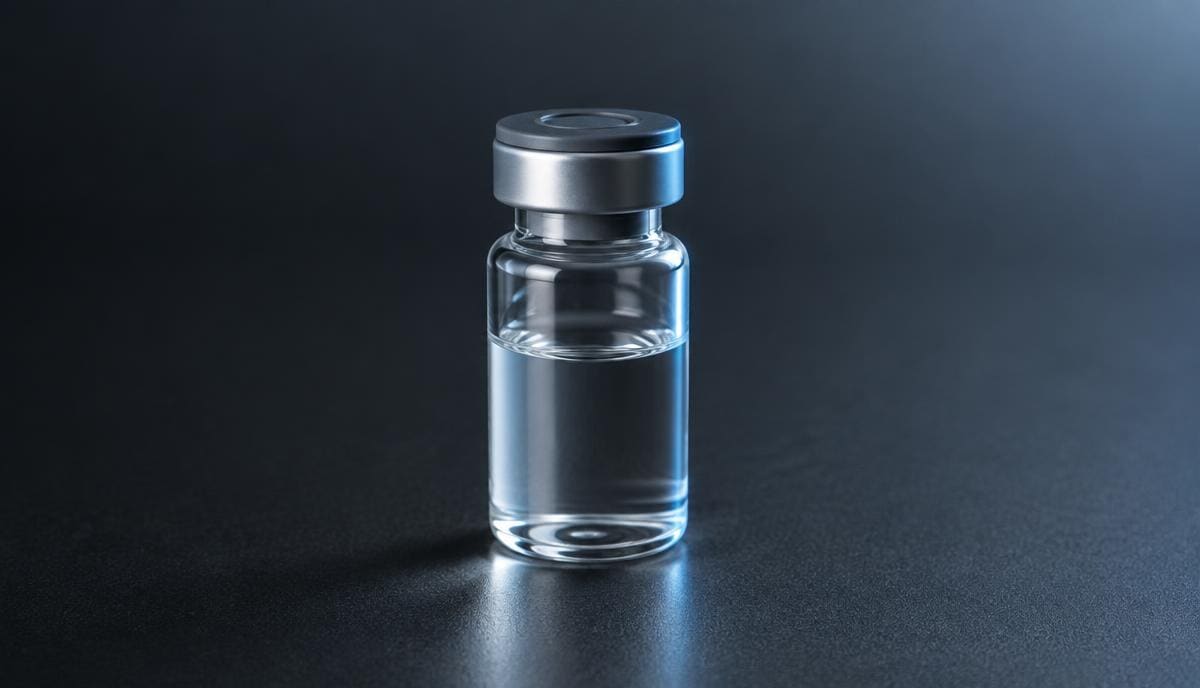
The vial arrives as dry powder. How much water you add sets the strength, and the strength sets the mark you draw to on the syringe. The table assumes a 5 mg vial and a 250 mcg example draw on a U-100 insulin syringe, where 100 units is one millilitre. If your vial is a different size, scale it — the arithmetic is the same.
| Bacteriostatic water added | Resulting strength | 250 mcg draws to |
|---|---|---|
| 1 mL | 5 mg/mL | 5 units |
| 2 mL | 2.5 mg/mL | 10 units |
| 3 mL | 1.67 mg/mL | 15 units |
Units, not millilitres. Insulin syringes are marked in units, and mixing up mcg and mg on a peptide label is the single most common error people report. Check the label twice. Run your own vial through the calculator.
Storage and stability
- Before mixing
- Sealed and still as a dry powder, MOTS-c Analogue vials are normally kept in the fridge at 2–8 °C, out of light. Short spells at room temperature during shipping are the norm for lyophilized peptides and are not, on their own, a sign the vial is spoiled.
- After mixing
- Once bacteriostatic water goes in, the vial belongs in the fridge and is generally treated as good for about 28 days — that is how long the benzyl alcohol in bacteriostatic water is relied on to hold back bacterial growth. Plain sterile water has no preservative, so a vial mixed with it is a single-session vial. Never freeze a reconstituted vial.
- When to throw it out
- A properly mixed vial is clear. Cloudiness, floating strands, a color change or powder that will not go into solution after gentle swirling all mean the vial should be discarded rather than used. Shaking a peptide vial hard is the usual cause — swirl it, or run the water down the inside wall of the vial instead of onto the powder.
Handling and shelf-life figures describe general practice for lyophilized peptides. They are not a dose and not medical advice — your prescriber or the product label sets the amount.
References & evidence
Documents the MOTS-c Analogue entry is written from. Each number matches an inline marker above.
- [1]Lipids and insulin regulate mitochondrial-derived peptide (MOTS-c) in PCOS and healthy subjectsRamanjaneya M, Jerobin J, Bettahi I, et al. · Clinical Endocrinology · 2019 · Peer-reviewed · PMID 31066084
- [2]Plasma mitochondrial derived peptides MOTS-c and SHLP2 positively associate with android and liver fat in people without diabetesSequeira IR, Woodhead JST, Chan A, et al. · Biochimica et Biophysica Acta. General Subjects · 2021 · Peer-reviewed · PMID 34419510
References & Evidence
Sources on this page that document MOTS-c Analogue dosing, timing and safety.
- [1]National Center for Biotechnology Information View source
Educational information only — not medical advice. Dose ranges vary by person, indication and prescriber.
What is MOTS-c Analogue studied for?
What is MOTS-c Analogue?Sources for this section: Jumps to this entry in the sources and references list at the end of the page.
What does the research say about MOTS-c Analogue?
Tap a section to expand.
Source for this section: Sources for How does MOTS-c Analogue work?: Jumps to this entry in the sources and references list at the end of the page.
Source for this section: Sources for When should you take MOTS-c Analogue?: Jumps to this entry in the sources and references list at the end of the page.
Put it into practice
Reading about MOTS-c Analogue is the first step — DoseRoutine helps you act on it. These free tools turn what you just learned into a routine.
What interacts with MOTS-c Analogue?
| Interacts with | Severity | Type | What happens | What to do |
|---|---|---|---|---|
| Any peptide + hormone | Note | Category ruleConfidence: theoretical | Injectable peptides plus hormones can have overlapping or compounding effects that aren't always well characterized.Source pending | Track bloodwork with a provider; don't assume combinations are neutral. |
Frequently asked questions about MOTS-c Analogue
Which studies looked at MOTS-c Analogue?
Peer-reviewed research indexed in PubMed. Each entry links to the original record.
- 1.MOTS-c: A promising mitochondrial-derived peptide for therapeutic exploitation(opens PubMed in a new tab)Frontiers in endocrinology · 2023 · PMID 36761202 · https://pubmed.ncbi.nlm.nih.gov/36761202/
- 2.The mitochondrial-derived peptide MOTS-c promotes metabolic homeostasis and reduces obesity and insulin resistance(opens PubMed in a new tab)Cell metabolism · 2015 · PMID 25738459 · https://pubmed.ncbi.nlm.nih.gov/25738459/
- 3.Mitochondrial-Derived Peptide MOTS-c Suppresses Ovarian Cancer Progression by Attenuating USP7-Mediated LARS1 Deubiquitination(opens PubMed in a new tab)Advanced science (Weinheim, Baden-Wurttemberg, Germany) · 2024 · PMID 39321430 · https://pubmed.ncbi.nlm.nih.gov/39321430/
- 4.The mitochondrial-derived peptide MOTS-c relieves hyperglycemia and insulin resistance in gestational diabetes mellitus(opens PubMed in a new tab)Pharmacological research · 2022 · PMID 34798268 · https://pubmed.ncbi.nlm.nih.gov/34798268/
- 5.MOTS-c attenuates lung ischemia-reperfusion injury via MYH9-Dependent nuclear translocation and transcriptional activation of antioxidant genes(opens PubMed in a new tab)Redox biology · 2025 · PMID 40403491 · https://pubmed.ncbi.nlm.nih.gov/40403491/
Sources cited on this page
Specific documents referenced by the numbered markers above. Each number matches the marker in the text.
- PubChem CID 146675088(opens in a new tab)National Center for Biotechnology Information · pubchem.ncbi.nlm.nih.gov/compound/146675088
Verify at
Publisher search links for MOTS-c Analogue. These are places to check the information — they are not citations, so they are not numbered.
- NIH Office of Dietary Supplements(publisher search, opens in a new tab)National Institutes of Health · publisher search
- DrugBank(publisher search, opens in a new tab)DrugBank Online · publisher search
- Examine.com(publisher search, opens in a new tab)Examine.com · publisher search
- Mayo Clinic(publisher search, opens in a new tab)Mayo Clinic · publisher search
- PubMed literature search(publisher search, opens in a new tab)National Library of Medicine · publisher search
- DailyMed labeling archive(publisher search, opens in a new tab)U.S. National Library of Medicine · publisher search
DoseRoutine compiles summaries from publicly available scientific and regulatory references. Always verify important decisions with a licensed clinician. How we source and review this information.
What is the short answer on MOTS-c Analogue?
Plain-text summary, safe to quote verbatim:
MOTS-c (mitochondrial open reading frame of the 12S rRNA type-c) is a naturally occurring mitochondrial-derived peptide. Its analogue is a synthetic variation designed to mimic or enhance the actions of the endogenous peptide. Research on MOTS-c Analogue focuses on mitochondrial function and blood sugar control.
MOTS-c Analogue cheat sheet
DoseRoutine cheat sheet · Peptide
MOTS-c Analogue
MOTS-c (mitochondrial open reading frame of the 12S rRNA type-c) is a naturally occurring mitochondrial-derived peptide. Its analogue is a synthetic variation designed to mimic or enhance the actions of the endogenous peptide.
Evidence
Limited
Human observational or case data only — no randomized trials.
Studied ranges, not dosing advice. Not medical advice — talk to a clinician. doseroutine.com/library/mots-c-analog
Cite this page
Using this in an article, AI answer, or research note? Please attribute:
DoseRoutine. (2026). MOTS-c Analogue — Overview, Benefits & Side Effects. Retrieved from https://doseroutine.com/library/mots-c-analog
What compounds are similar to MOTS-c Analogue?
Others in the peptide category or studied for the same goals.
Which goals is MOTS-c Analogue used for?
Other compounds studied for the same benefits as MOTS-c Analogue.
Mitochondrial Health
See all →Continue exploring
See every compound DoseRoutine catalogs for these goals.