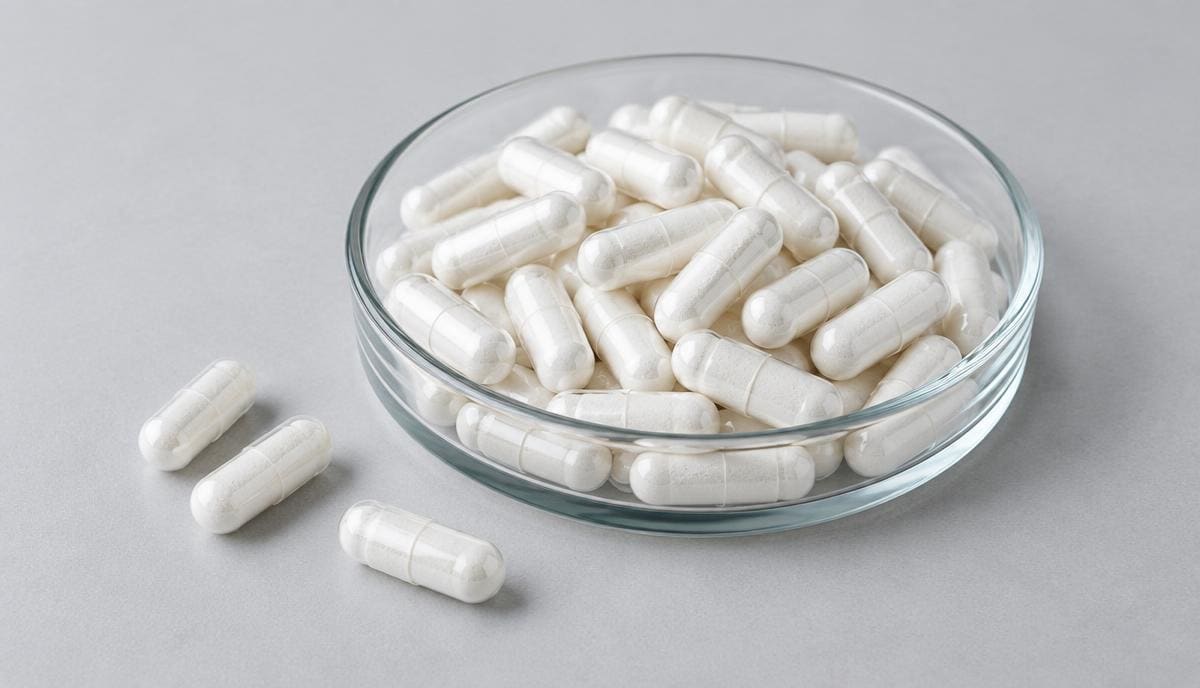
supplementNot FDA-approvedOTC supplementPrescription cognitive drug in some European countries; sold as a supplement in the US

Alpha-GPCBenefits, Dosage & Interactions

Also known as: Choline alfoscerate

Alpha-GPC (L-Alpha glycerylphosphorylcholine or Choline alfoscerate) is a naturally occurring choline compound found in the brain and in some foods such as soy and milk. It is also marketed as a dietary supplement. Research on Alpha-GPC focuses on cognition and mood.

Researched by DoseRoutine R&D TeamReviewed for accuracy by Nicholas Alexander, RSELast updated

Evidence: Strong2 human randomized trials published.
Evidence strengthStrong · 4/4
PreclinicalStrong human evidence

2 human randomized trials published.

Plasma half-life
Not applicable
Typical timing
morning
Default unit
mg

What published protocols report

Ranges documented in the literature, shown for reference. DoseRoutine does not recommend an amount — your prescriber or the product label sets the dose.

Reported amounts
1200 mg daily, usually split into three doses, in the ASCOMALVA program[1][2]
Route studied
Oral[1][2]
Frequency
Two to three times daily in those trials[1][2]
Cycle length
6 months in the mild-cognitive-dysfunction trial; up to 4 years of follow-up in ASCOMALVA[1][2]
Half-life
Not well characterized in humans[1][2]
Storage
Cool, dry, sealed - the powder is strongly hygroscopic[1][2]

Reported for Alpha-GPC in the cited sources. Published ranges are not dosing advice.

References & evidence

Documents the Alpha-GPC entry is written from. Each number matches an inline marker above.

  1. [1]The ASCOMALVA trial: association between the cholinesterase inhibitor donepezil and the cholinergic precursor choline alphoscerate in Alzheimer's disease with cerebrovascular injuryAmenta F, Carotenuto A, Fasanaro AM, et al. · Journal of the Neurological Sciences · 2012 · Peer-reviewed · PMID 22959283
  2. [2]Effect of Treatment of the Cholinergic Precursor Choline Alphoscerate in Mild Cognitive Dysfunction: A Randomized Controlled TrialCarotenuto A, Andreone V, Amenta F, et al. · Medicina · 2024 · Peer-reviewed · PMID 38929542

How to track Alpha-GPC doses

Tracking Alpha-GPC well takes four fields and a habit. Here is what to record so the log is still useful in three months.

  1. 1

    Add the dose and unit

    Log Alpha-GPC with its dose in mg so totals stay comparable over time — including days when you split the dose or skip it.

  2. 2

    Set the time of day and food rule

    Typical timing is morning. Reminders fire at that time and can export to your calendar.

  3. 3

    Check it against the rest of the stack

    Run Alpha-GPC through the interaction checker against everything else in the routine — supplements, peptides, hormones and prescriptions — before it becomes a daily habit.

  4. 4

    Log adherence, not intentions

    Mark each dose taken, skipped or delayed as it happens. Weeks of honest logs are what make an adherence rate or a trend line meaningful; retrospective guessing is not.

  5. 5

    Review against outcomes

    Review Alpha-GPC alongside your logged metrics and any relevant blood work every few weeks before changing the dose, so the change is a response to data rather than to a good or bad day.

What to log each time

  • Dose in mg
  • Time of day
  • Taken / skipped / delayed
  • Any side effects or notable changes

References & Evidence

Sources on this page that document Alpha-GPC dosing, timing and safety.

  1. [1]National Center for Biotechnology Information View source

Educational information only — not medical advice. Dose ranges vary by person, indication and prescriber.

What is Alpha-GPC studied for?

What is Alpha-GPC?Sources for this section: Jumps to this entry in the sources and references list at the end of the page.

Alpha-GPC (L-Alpha glycerylphosphorylcholine or Choline alfoscerate) is a naturally occurring choline compound found in the brain and in some foods such as soy and milk. It is also marketed as a dietary supplement. Alpha-GPC is distinct from other choline sources because it is a phospholipid metabolite, meaning it is derived from fats and can readily cross the blood-brain barrier. Often utilized for its potential cognitive benefits, Alpha-GPC serves as a precursor for the neurotransmitter acetylcholine, which plays a critical role in memory, learning, and other cognitive functions. It is also involved in the structural integrity of cell membranes. (NIH ODS, PubChem)

What does the research say about Alpha-GPC?

Tap a section to expand.

The primary mechanism of action for Alpha-GPC revolves around its ability to rapidly deliver choline to the brain. Once absorbed, Alpha-GPC is metabolized into choline and glycerol-1-phosphate. Choline then serves as a direct precursor for the biosynthesis of acetylcholine, a neurotransmitter crucial for various cognitive processes, including attention, memory formation, and executive function. By increasing acetylcholine levels in the brain, Alpha-GPC is theorized to enhance cholinergic neurotransmission. (PubChem, DrugBank) Additionally, the glycerol-1-phosphate component of Alpha-GPC is believed to support cellular membrane integrity. It can be incorporated into phospholipids, which are essential building blocks of neuronal cell membranes. This dual action, providing both a neurotransmitter precursor and a structural component for cell membranes, distinguishes Alpha-GPC from simpler choline supplements. (DrugBank)

Source for this section: Sources for How does Alpha-GPC work?: Jumps to this entry in the sources and references list at the end of the page.

Alpha-GPC has been investigated for several potential benefits, primarily related to cognitive function and physical performance: * **Cognitive Support:** Studies suggest that Alpha-GPC may support memory, learning, and attention, particularly in populations experiencing cognitive decline or age-related memory impairment. This is often attributed to its role in increasing acetylcholine levels in the brain. (Cochrane, Examine.com) * **Physical Performance:** Some research indicates that Alpha-GPC might enhance power output and strength in athletes. This effect is hypothesized to be related to its ability to modulate growth hormone secretion or improve neuromuscular function, though more robust evidence is needed. (Examine.com) * **Neuroprotection:** There is preclinical interest in Alpha-GPC's potential neuroprotective properties, possibly due to its role in membrane repair and its antioxidant activity, although clinical relevance for neurodegenerative diseases is still under investigation. (DrugBank)

Research on Alpha-GPC includes a mix of human clinical trials, animal studies, and *in vitro* experiments. For cognitive function, some studies, particularly in older adults with mild cognitive impairment or post-stroke cognitive deficits, have shown positive effects on memory and attention. For instance, a systematic review on cognitive enhancers noted Alpha-GPC's potential in improving certain cognitive parameters. (Cochrane) Regarding physical performance, several small-scale studies have explored its impact on power output and growth hormone in athletic populations, with some showing marginal benefits. However, the overall body of evidence in this area is less consistent and calls for larger, well-controlled trials. (Examine.com) The safety profile appears generally favorable in most studied populations, but long-term data are still developing. (NIH ODS)

Alpha-GPC is generally considered well-tolerated. However, some individuals may experience mild side effects, especially at higher intakes. These can include: * Headache * Insomnia or difficulty sleeping * Heartburn * Dizziness * Transient confusion These side effects are typically mild and often resolve with dose adjustment or discontinuation. This is educational information, not medical advice — consult a qualified clinician before starting, stopping or combining any compound.

Individuals with certain pre-existing conditions should exercise caution or avoid Alpha-GPC. Those with very low blood pressure (hypotension) or those prone to dizzy spells should be cautious due to potential minor hypotensive effects in some individuals. Due to its potential to increase acetylcholine, individuals with conditions sensitive to cholinergic activity, such as certain respiratory or cardiac issues, should consult a healthcare provider. Pregnant or breastfeeding individuals should also avoid Alpha-GPC due to insufficient safety data. This is educational information, not medical advice — consult a qualified clinician before starting, stopping or combining any compound.

Absolute contraindications for Alpha-GPC are not extensively documented in human clinical trials, largely due to a lack of research in specific high-risk populations. However, given its mechanism of action, it is generally advised against use in individuals with known hypersensitivity to choline compounds. Individuals on medications that significantly affect acetylcholine levels should exercise extreme caution and seek medical advice. As with most supplements, it is contraindicated in pregnant and breastfeeding women due to a lack of safety studies. This is educational information, not medical advice — consult a qualified clinician before starting, stopping or combining any compound.

Specific drug-supplement interactions with Alpha-GPC are not definitively established in large clinical trials. However, theoretical interactions may exist: * **Acetylcholinesterase Inhibitors:** Given that Alpha-GPC increases acetylcholine, combining it with medications designed to increase acetylcholine (e.g., donepezil, rivastigmine, galantamine, commonly used for Alzheimer's disease) could theoretically lead to excessive cholinergic stimulation and increased side effects. Close clinical monitoring would be essential. * **Anticholinergic Drugs:** Conversely, Alpha-GPC's effects might be attenuated by medications that block acetylcholine receptors (e.g., some antihistamines, tricyclic antidepressants, certain medications for irritable bowel syndrome). Always discuss all supplements and medications with a qualified healthcare provider to avoid potential interactions. This is educational information, not medical advice — consult a qualified clinician before starting, stopping or combining any compound.

Alpha-GPC is typically taken in the morning. Due to its half-life of approximately 4 hours, splitting the daily intake might be suggested by some practitioners, though commonly studied dosages often involve a single daily administration. Given some reports of mild insomnia, particularly at higher doses, taking Alpha-GPC late in the day is generally not recommended. It can be taken with or without food. Individual needs vary — talk to a licensed clinician.

Source for this section: Sources for When should you take Alpha-GPC?: Jumps to this entry in the sources and references list at the end of the page.

What interacts with Alpha-GPC?

Documented interactions for Alpha-GPC: the other compound, the severity and confidence of the interaction, what happens, and what to do.
Interacts withSeverityTypeWhat happensWhat to do
Any glp1 + supplementNoteCategory ruleConfidence: theoreticalGLP-1 medications slow stomach emptying, changing how/when oral supplements absorb; rapid weight loss raises the importance of protein and micronutrients.Source pendingTime oral supplements when nausea is lowest; prioritize protein and micronutrients; discuss with your provider.
Any supplement + medicationNoteCategory ruleConfidence: theoreticalSome supplements change how the body processes medications (absorption, liver enzymes, or additive effects).Source pendingSpecific pairs are checked against a licensed drug database and shown with their own severity. Always confirm with your provider or pharmacist.
PiracetamComplementaryCompound pairConfidence: theoreticalRacetams increase acetylcholine turnover; adding a choline source can prevent headaches from choline depletion.Source pendingConsider stacking 300–600 mg alpha-GPC with racetam doses.
AniracetamComplementaryCompound pairConfidence: theoreticalRacetam + choline source stack is well-established for cognition and headache prevention.Source pendingAdd alpha-GPC 300 mg with each aniracetam dose.

Frequently asked questions about Alpha-GPC

Alpha-GPC is a supplement. It is also known as Choline alfoscerate. What follows is drawn from peer-reviewed literature indexed on PubMed, FDA label text where a label exists, and NIH reference records.

Alpha-GPC is commonly discussed in the context of supporting brain. Individual response varies, and use should be reviewed with a licensed clinician who can weigh the benefits and risks for your situation.

For Alpha-GPC, it is typically taken in the morning. Always follow the specific dose your clinician or the product label prescribes.

Alpha-GPC carries potential side effects and drug interactions, documented in NIH, Mayo Clinic, and FDA label sources. Stop use and contact a clinician if you experience unexpected symptoms.

Alpha-GPC is a supplement, and interactions are possible with prescriptions, hormones, peptides and other supplements in the same routine. Because Alpha-GPC is usually taken in the morning, most avoidable conflicts come from what else lands in that same window. Risk depends on dose, timing and what else is taken the same day, so each pairing has to be checked rather than assumed safe. The free checker at https://doseroutine.com/interaction-checker covers Alpha-GPC with no sign-up.

Combining a supplement like Alpha-GPC with TRT is usually a question of labs rather than a blanket yes or no: the ester, injection interval and any aromatase inhibitor all change the answer. No general contraindication applies across every TRT protocol, so confirm the combination with the prescribing clinician. See the free TRT interaction reference: https://doseroutine.com/trt-supplement-interactions

Each peptide class carries its own profile against Alpha-GPC: a healing peptide raises different questions than a GLP-1 agonist or a growth-hormone secretagogue. Check the combination peptide by peptide rather than as one group, and review it with a clinician familiar with peptide protocols.

Published frequency for Alpha-GPC varies by protocol and formulation, so the label or prescription is what sets it. It is typically taken in the morning. Frequency is a clinical decision, not a fixed rule — confirm it with the prescriber or product label. Comparison of apps that keep a schedule like this: https://doseroutine.com/best-dose-tracking-apps

The effect of a missed dose of Alpha-GPC depends on the protocol and formulation you are on. Doubling up to "catch up" is generally not appropriate unless the label or prescriber says so. Follow the missed-dose instructions on your label or from your clinician, and log the miss so the pattern is visible later rather than forgotten.

For Alpha-GPC the useful record is the dose, the time it was actually taken, and what else was taken in the same window. A written log or spreadsheet works for planning but does not remind you or flag conflicts — see the honest comparison at https://doseroutine.com/vs/spreadsheet and the wider roundup at https://doseroutine.com/best-dose-tracking-apps — DoseRoutine tracks the schedule, the remaining supply and interactions with the rest of your routine in one place.

Which studies looked at Alpha-GPC?

Peer-reviewed research indexed in PubMed. Each entry links to the original record.

  1. 1.Activity of Choline Alphoscerate on Adult-Onset Cognitive Dysfunctions: A Systematic Review and Meta-Analysis(opens PubMed in a new tab)J Alzheimers Dis · 2023 · PMID 36683513 · https://pubmed.ncbi.nlm.nih.gov/36683513/
  2. 2.L-Alpha-Glycerylphosphorylcholine (L-α-GPC): A Comprehensive Review of Its Preparation Techniques and Versatile Biological Effects(opens PubMed in a new tab)J Food Sci · 2025 · PMID 40556032 · https://pubmed.ncbi.nlm.nih.gov/40556032/
  3. 3.Unlocking the potential of l-α-glycerylphosphorylcholine in the food industry: From safety approvals to market prospects(opens PubMed in a new tab)Compr Rev Food Sci Food Saf · 2025 · PMID 39898924 · https://pubmed.ncbi.nlm.nih.gov/39898924/
  4. 4.Multicentre study of l-alpha-glyceryl-phosphorylcholine vs ST200 among patients with probable senile dementia of Alzheimer's type(opens PubMed in a new tab)Drugs Aging · 1993 · PMID 8477148 · https://pubmed.ncbi.nlm.nih.gov/8477148/
  5. 5.Revisiting choline alphoscerate profile: a new, perspective, role in dementia?(opens PubMed in a new tab)Int J Neurosci · 2013 · PMID 23387341 · https://pubmed.ncbi.nlm.nih.gov/23387341/

Sources cited on this page

Specific documents referenced by the numbered markers above. Each number matches the marker in the text.

  1. PubChem CID 657272(opens in a new tab)National Center for Biotechnology Information · pubchem.ncbi.nlm.nih.gov/compound/657272

Verify at

Publisher search links for Alpha-GPC. These are places to check the information — they are not citations, so they are not numbered.

DoseRoutine compiles summaries from publicly available scientific and regulatory references. Always verify important decisions with a licensed clinician. How we source and review this information.

What is the short answer on Alpha-GPC?

Plain-text summary, safe to quote verbatim:

Alpha-GPC (L-Alpha glycerylphosphorylcholine or Choline alfoscerate) is a naturally occurring choline compound found in the brain and in some foods such as soy and milk. It is also marketed as a dietary supplement. Research on Alpha-GPC focuses on cognition and mood.
Source: DoseRoutine — https://doseroutine.com/library/alpha-gpc

Cite this page

Using this in an article, AI answer, or research note? Please attribute:

DoseRoutine. (2026). Alpha-GPC — Overview, Benefits & Side Effects. Retrieved from https://doseroutine.com/library/alpha-gpc
Canonical URL

What compounds are similar to Alpha-GPC?

Others in the supplement category or studied for the same goals.

Which goals is Alpha-GPC used for?

Other compounds studied for the same benefits as Alpha-GPC.

Continue exploring

See every compound DoseRoutine catalogs for these goals.

Track Alpha-GPC in DoseRoutine

Add it to your stack. We'll schedule doses, check interactions against everything else you take, and remind you at the right time.

Sign up free →

Latest research from DoseRoutine

Browse all DoseRoutine research updates

Track Alpha GPC in your own routine

Add Alpha GPC to your stack, get reminders at the right times, and see interaction notes with everything else you take. Free to start — no card needed.