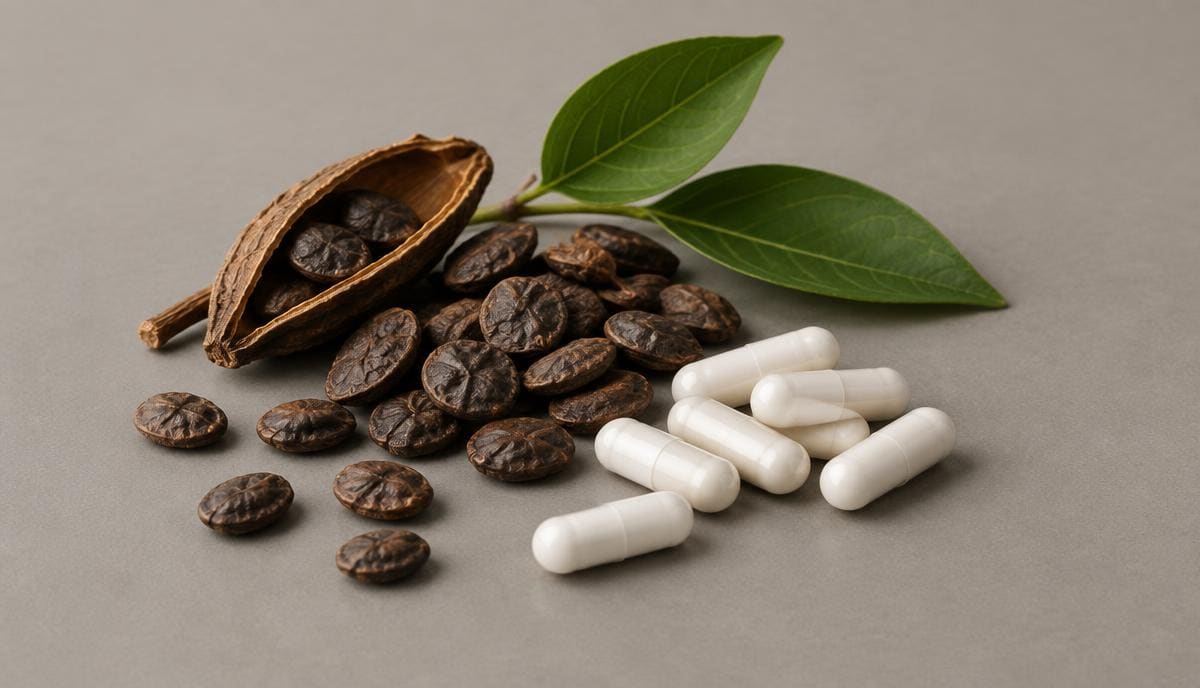
supplementOTC supplementCombining 5-HTP with SSRIs, MAOIs or triptans carries a serotonin-syndrome risk

5-HTPBenefits, Dosage & Interactions

Also known as: 5-Hydroxytryptophan, Griffonia

5-HTP, or 5-Hydroxytryptophan, is a naturally occurring amino acid and chemical precursor to the neurotransmitter serotonin. It is derived from the seeds of the African plant Griffonia simplicifolia. Research on 5-HTP focuses on cognition and mood. It is typically taken in the evening.

Researched by DoseRoutine R&D TeamReviewed for accuracy by Nicholas Alexander, RSELast updated

Evidence: Strong1 human randomized trial published.
Evidence strengthStrong · 4/4
PreclinicalStrong human evidence

1 human randomized trial published.

Chemical structure of 5-HTP (PubChem CID 144)
Structure via PubChem
Plasma half-life
~2.5 h
Typical timing
bedtime
Default unit
mg

What published protocols report

Ranges documented in the literature, shown for reference. DoseRoutine does not recommend an amount — your prescriber or the product label sets the dose.

Reported amounts
Depression trials in the review used roughly 150-3,000 mg/day; the sleep trial used 100 mg/day[1][2]
Route studied
Oral capsules, often enteric-coated[1][2]
Frequency
Once to three times daily in the pooled trials[1][2]
Cycle length
Trial durations of 1 week to 6 months[1][2]
Half-life
Roughly 2-7 hours[1][2]
Storage
Cool, dry, sealed[1][2]

Reported for 5-HTP in the cited sources. Published ranges are not dosing advice.

References & evidence

Documents the 5-HTP entry is written from. Each number matches an inline marker above.

  1. [1]Effects of 5-hydroxytryptophan on distinct types of depression: a systematic review and meta-analysisJavelle F, Lampit A, Bloch W, et al. · Nutrition Reviews · 2020 · Peer-reviewed · PMID 31504850
  2. [2]The impact of 5-hydroxytryptophan supplementation on sleep quality and gut microbiota composition in older adults: A randomized controlled trialSutanto CN, Xia X, Heng CW, et al. · Clinical Nutrition · 2024 · Peer-reviewed · PMID 38309227
  3. [3]5-Hydroxytryptophan (5-HTP): Natural Occurrence, Analysis, Biosynthesis, Biotechnology, Physiology and ToxicologyMaffei ME · International Journal of Molecular Sciences · 2020 · Peer-reviewed · PMID 33375373

How to track 5-HTP doses

Tracking 5-HTP well takes four fields and a habit. Here is what to record so the log is still useful in three months.

  1. 1

    Add the dose and unit

    Log 5-HTP with its dose in mg so totals stay comparable over time — including days when you split the dose or skip it.

  2. 2

    Set the time of day and food rule

    Typical timing is bedtime. Reminders fire at that time and can export to your calendar.

  3. 3

    Check it against the rest of the stack

    Run 5-HTP through the interaction checker against everything else in the routine — supplements, peptides, hormones and prescriptions — before it becomes a daily habit.

  4. 4

    Log adherence, not intentions

    Mark each dose taken, skipped or delayed as it happens. Weeks of honest logs are what make an adherence rate or a trend line meaningful; retrospective guessing is not.

  5. 5

    Review against outcomes

    With a reported half-life around 2.5 h, effects and timing shifts show up over days rather than instantly. Review 5-HTP alongside your logged metrics and any relevant blood work every few weeks before changing the dose.

What to log each time

  • Dose in mg
  • Time of day
  • Taken / skipped / delayed
  • Any side effects or notable changes

References & Evidence

Sources on this page that document 5-HTP dosing, timing and safety.

  1. [1]National Center for Biotechnology Information View source

Educational information only — not medical advice. Dose ranges vary by person, indication and prescriber.

What is 5-HTP studied for?

What is 5-HTP?Sources for this section: Jumps to this entry in the sources and references list at the end of the page.

5-HTP, or 5-Hydroxytryptophan, is a naturally occurring amino acid and chemical precursor to the neurotransmitter serotonin. It is derived from the seeds of the African plant *Griffonia simplicifolia*. In the body, 5-HTP is converted into serotonin, a crucial neurotransmitter involved in regulating mood, sleep, appetite, and pain sensation. Because it crosses the blood-brain barrier more readily than tryptophan (another serotonin precursor), 5-HTP is sometimes used as a supplement to support serotonin levels in the brain. Unlike tryptophan, 5-HTP is not converted to niacin or proteins, primarily serving as a direct precursor to serotonin. Its role in serotonin synthesis has led to interest in its potential applications for various conditions linked to serotonin imbalance.

What does the research say about 5-HTP?

Tap a section to expand.

The primary mechanism of action for 5-HTP revolves around its role as an intermediate metabolite in the biosynthesis of serotonin. When consumed, 5-HTP is absorbed from the gastrointestinal tract and then crosses the blood-brain barrier. Once inside the central nervous system, 5-HTP is decarboxylated by the enzyme L-amino acid decarboxylase (also known as 5-HTP decarboxylase or aromatic L-amino acid decarboxylase, AADC) into serotonin (5-hydroxytryptamine, 5-HT). This direct conversion allows for an increase in serotonin production within the brain. Serotonin then binds to various serotonin receptors, influencing a wide array of physiological and psychological processes. These include mood regulation, sleep-wake cycles, appetite control, pain perception, and cognitive functions. By bypassing the enzyme tryptophan hydroxylase (the rate-limiting step in serotonin synthesis from tryptophan), 5-HTP can more directly and effectively increase central nervous system serotonin levels compared to its precursor tryptophan. The half-life of 5-HTP in the body is approximately 6 hours, meaning it is processed and eliminated relatively quickly.

Source for this section: Sources for How does 5-HTP work?: Jumps to this entry in the sources and references list at the end of the page.

Research into 5-HTP's potential benefits commonly investigates its impact on conditions thought to be related to serotonin levels. Studies, such as those reviewed by Examine.com, suggest areas of interest: * **Mood Regulation:** A primary area of study for 5-HTP concerns its role in supporting healthy mood. By increasing serotonin levels, it is hypothesized to contribute to feelings of well-being. Some evidence suggests it may help in managing symptoms of low mood, though more robust and large-scale studies are needed to confirm these effects. (Source: Examine.com) * **Sleep Quality:** Serotonin is a precursor to melatonin, a hormone critical for regulating sleep-wake cycles. By increasing serotonin, 5-HTP may indirectly support melatonin production, potentially aiding in better sleep. Research on this application is ongoing. (Source: PubChem) * **Appetite Control:** Serotonin plays a role in satiety, the feeling of fullness. Some preliminary studies have explored whether 5-HTP, by enhancing serotonin, could help reduce appetite and calorie intake, potentially supporting weight management efforts. (Source: NIH ODS) * **Headache and Migraine:** Serotonin imbalances have been implicated in the pathophysiology of certain headache types, including migraines. Some early research has investigated 5-HTP for its potential to reduce the frequency or severity of headaches, possibly by modulating serotonin pathways involved in pain perception. (Source: MedlinePlus) * **Fibromyalgia Symptoms:** Fibromyalgia is a chronic condition characterized by widespread pain and other symptoms, where serotonin dysregulation is sometimes observed. Limited studies have explored if 5-HTP could help alleviate some symptoms, such as pain, morning stiffness, or sleep disturbances, in individuals with fibromyalgia. (Source: Mayo Clinic) Individual responses to 5-HTP can vary significantly, and comprehensive clinical trials are still needed to fully establish its efficacy for these conditions.

The evidence supporting the benefits of 5-HTP comes from a variety of sources, including animal studies, human clinical trials, and observational research. Early research, often involving smaller cohorts, has shown promising results in areas such as mood support and sleep. For instance, some meta-analyses and systematic reviews, as described by Cochrane, have compiled findings from studies investigating 5-HTP's impact on mood disorders, noting some positive outcomes but often highlighting the need for larger, more rigorously designed trials. Studies on sleep quality and appetite control, presented in journals indexed by NIH ODS, have also indicated potential benefits through 5-HTP's influence on serotonin pathways. However, the overall body of evidence is not uniformly strong across all potential claims. Organizations like Examine.com provide comprehensive reviews of the scientific literature, often categorizing the strength of evidence for various applications. They frequently note that while some benefits show 'moderate' or 'some' evidence, many require further high-quality research to be definitively established. It is important to note that many studies use specific formulations and dosages, and the results may not be generalizable to all commercially available 5-HTP supplements. Always consult a qualified clinician for personalized advice.

Common side effects associated with 5-HTP are generally mild and may include gastrointestinal disturbances. These can manifest as nausea, vomiting, diarrhea, and stomach cramps, especially when taken on an empty stomach or at higher doses. Other reported side effects include drowsiness, muscle problems, and sexual dysfunction. Some individuals might experience vivid dreams. Rarely, more serious side effects can occur, particularly when 5-HTP is used in combination with other serotonergic agents, which can lead to serotonin syndrome. This is a potentially life-threatening condition characterized by symptoms such as confusion, agitation, rapid heart rate, high blood pressure, muscle rigidity, and fever. Starting with a low dose and gradually increasing it may help mitigate some of these adverse effects. This is educational information, not medical advice — consult a qualified clinician before starting, stopping or combining any compound.

Individuals with certain pre-existing conditions should exercise caution or avoid 5-HTP use. Due to its impact on serotonin levels, 5-HTP should be used with extreme care in individuals with cardiovascular disease, as elevated serotonin can affect heart function. Those with Down syndrome may also be particularly sensitive to 5-HTP and may be at an increased risk of specific side effects or adverse events, as indicated by some studies. People with nervous system disorders or conditions affecting motor control should also consult their clinician. Pregnant or breastfeeding individuals should avoid 5-HTP due to insufficient safety data. Driving or operating heavy machinery should be avoided until an individual knows how 5-HTP affects them, as it can cause drowsiness. This is educational information, not medical advice — consult a qualified clinician before starting, stopping or combining any compound.

5-HTP is contraindicated in individuals who are taking medications that affect serotonin levels, due to the significant risk of serotonin syndrome. This includes, but is not limited to, selective serotonin reuptake inhibitors (SSRIs), serotonin-norepinephrine reuptake inhibitors (SNRIs), monoamine oxidase inhibitors (MAOIs), tricyclic antidepressants (TCAs), and certain migraine medications (triptans). It is also contraindicated in individuals with a known hypersensitivity to 5-HTP or any components of the supplement. Due to lack of sufficient safety data, 5-HTP is contraindicated in pregnant and breastfeeding women. Individuals undergoing surgery should discontinue 5-HTP at least two weeks prior, as it may interact with anesthetics and other medications used perioperatively. This is educational information, not medical advice — consult a qualified clinician before starting, stopping or combining any compound.

Mixing 5-HTP with certain medications or supplements can lead to dangerous interactions, primarily by excessively elevating serotonin levels in the brain, potentially causing serotonin syndrome. Key interactions to avoid include: * **Antidepressants:** Especially SSRIs (e.g., fluoxetine, sertraline), SNRIs (e.g., venlafaxine, duloxetine), MAOIs (e.g., phenelzine, tranylcypromine), and TCAs (e.g., amitriptyline, imipramine). Concurrent use dramatically increases the risk of serotonin syndrome. * **Migraine Medications (Triptans):** Drugs like sumatriptan and zolmitriptan also increase serotonin, and combining them with 5-HTP can lead to serotonin syndrome. * **Dextromethorphan:** Found in many cough and cold medications, dextromethorphan can also increase serotonin levels. * **Tramadol:** This pain reliever has serotonergic activity and should not be combined with 5-HTP. * **St. John's Wort:** This herbal supplement also affects serotonin levels and can increase the risk of serotonin syndrome when taken with 5-HTP. * **Carbidopa:** This medication, used in Parkinson's disease, can increase the conversion of 5-HTP to serotonin outside the brain, potentially leading to increased side effects and reduced brain availability. It can also increase the risk of scleroderma-like symptoms. Always discuss all medications and supplements with a healthcare provider before introducing 5-HTP. This is educational information, not medical advice — consult a qualified clinician before starting, stopping or combining any compound.

Given its typical half-life of around 6 hours and potential for drowsiness, 5-HTP is commonly studied when taken in the evening or before bedtime to potentially support sleep. Some individuals might also take it divided throughout the day, although single daily doses before bed are frequently reported. To mitigate potential gastrointestinal side effects such as nausea, it can sometimes be taken with food, although effects may vary by individual. Individual needs vary — talk to a licensed clinician.

Source for this section: Sources for When should you take 5-HTP?: Jumps to this entry in the sources and references list at the end of the page.

What interacts with 5-HTP?

Documented interactions for 5-HTP: the other compound, the severity and confidence of the interaction, what happens, and what to do.
Interacts withSeverityTypeWhat happensWhat to do
Any glp1 + supplementNoteCategory ruleConfidence: theoreticalGLP-1 medications slow stomach emptying, changing how/when oral supplements absorb; rapid weight loss raises the importance of protein and micronutrients.Source pendingTime oral supplements when nausea is lowest; prioritize protein and micronutrients; discuss with your provider.
Any supplement + medicationNoteCategory ruleConfidence: theoreticalSome supplements change how the body processes medications (absorption, liver enzymes, or additive effects).Source pendingSpecific pairs are checked against a licensed drug database and shown with their own severity. Always confirm with your provider or pharmacist.
SertralineAvoidCompound pairConfidence: theoretical5-HTP raises serotonin and layered onto an SSRI/SNRI risks serotonin syndrome.Source pendingAvoid combining 5-HTP with prescription serotonergic antidepressants.
EscitalopramAvoidCompound pairConfidence: theoretical5-HTP raises serotonin and layered onto an SSRI/SNRI risks serotonin syndrome.Source pendingAvoid combining 5-HTP with prescription serotonergic antidepressants.
FluoxetineAvoidCompound pairConfidence: theoretical5-HTP raises serotonin and layered onto an SSRI/SNRI risks serotonin syndrome.Source pendingAvoid combining 5-HTP with prescription serotonergic antidepressants.
DuloxetineAvoidCompound pairConfidence: theoretical5-HTP raises serotonin and layered onto an SSRI/SNRI risks serotonin syndrome.Source pendingAvoid combining 5-HTP with prescription serotonergic antidepressants.
VenlafaxineAvoidCompound pairConfidence: theoretical5-HTP raises serotonin and layered onto an SSRI/SNRI risks serotonin syndrome.Source pendingAvoid combining 5-HTP with prescription serotonergic antidepressants.

Frequently asked questions about 5-HTP

5-HTP is a supplement. It is also known as 5-Hydroxytryptophan and Griffonia. What follows is drawn from peer-reviewed literature indexed on PubMed, FDA label text where a label exists, and NIH reference records.

5-HTP is commonly discussed in the context of supporting brain. Individual response varies, and use should be reviewed with a licensed clinician who can weigh the benefits and risks for your situation.

For 5-HTP, it is typically taken in the evening and its approximate half-life is 2.5 hours, which influences dosing frequency. Always follow the specific dose your clinician or the product label prescribes.

5-HTP carries potential side effects and drug interactions, documented in NIH, Mayo Clinic, and FDA label sources. Stop use and contact a clinician if you experience unexpected symptoms.

5-HTP is a supplement, and interactions are possible with prescriptions, hormones, peptides and other supplements in the same routine. Because 5-HTP is usually taken in the evening, most avoidable conflicts come from what else lands in that same window. With a reported plasma half-life near 2.5 hours, separating doses can change the picture as much as removing one. Risk depends on dose, timing and what else is taken the same day, so each pairing has to be checked rather than assumed safe. The free checker at https://doseroutine.com/interaction-checker covers 5-HTP with no sign-up.

Combining a supplement like 5-HTP with TRT is usually a question of labs rather than a blanket yes or no: the ester, injection interval and any aromatase inhibitor all change the answer. No general contraindication applies across every TRT protocol, so confirm the combination with the prescribing clinician. See the free TRT interaction reference: https://doseroutine.com/trt-supplement-interactions

Each peptide class carries its own profile against 5-HTP: a healing peptide raises different questions than a GLP-1 agonist or a growth-hormone secretagogue. Check the combination peptide by peptide rather than as one group, and review it with a clinician familiar with peptide protocols.

A short plasma half-life of roughly 2.5 hours is why protocols often split 5-HTP across the day rather than using a single dose. It is typically taken in the evening. Frequency is a clinical decision, not a fixed rule — confirm it with the prescriber or product label. Comparison of apps that keep a schedule like this: https://doseroutine.com/best-dose-tracking-apps

Because 5-HTP clears quickly (plasma half-life around 2.5 hours), a missed dose leaves a real gap in exposure rather than being buffered by what is still in your system. Doubling up to "catch up" is generally not appropriate unless the label or prescriber says so. Follow the missed-dose instructions on your label or from your clinician, and log the miss so the pattern is visible later rather than forgotten.

For 5-HTP the useful record is the dose, the time it was actually taken, and what else was taken in the same window. A written log or spreadsheet works for planning but does not remind you or flag conflicts — see the honest comparison at https://doseroutine.com/vs/spreadsheet and the wider roundup at https://doseroutine.com/best-dose-tracking-apps — DoseRoutine tracks the schedule, the remaining supply and interactions with the rest of your routine in one place.

Which studies looked at 5-HTP?

Peer-reviewed research indexed in PubMed. Each entry links to the original record.

  1. 1.5-Hydroxytryptophan (5-HTP): Natural Occurrence, Analysis, Biosynthesis, Biotechnology, Physiology and Toxicology(opens PubMed in a new tab)Int J Mol Sci · 2020 · PMID 33375373 · https://pubmed.ncbi.nlm.nih.gov/33375373/
  2. 2.Serotonin a la carte: supplementation with the serotonin precursor 5-hydroxytryptophan(opens PubMed in a new tab)Pharmacol Ther · 2006 · PMID 16023217 · https://pubmed.ncbi.nlm.nih.gov/16023217/
  3. 3.The impact of 5-hydroxytryptophan supplementation on sleep quality and gut microbiota composition in older adults: A randomized controlled trial(opens PubMed in a new tab)Clin Nutr · 2024 · PMID 38309227 · https://pubmed.ncbi.nlm.nih.gov/38309227/

Sources cited on this page

Specific documents referenced by the numbered markers above. Each number matches the marker in the text.

  1. PubChem CID 144(opens in a new tab)National Center for Biotechnology Information · pubchem.ncbi.nlm.nih.gov/compound/144

Verify at

Publisher search links for 5-HTP. These are places to check the information — they are not citations, so they are not numbered.

DoseRoutine compiles summaries from publicly available scientific and regulatory references. Always verify important decisions with a licensed clinician. How we source and review this information.

What is the short answer on 5-HTP?

Plain-text summary, safe to quote verbatim:

5-HTP, or 5-Hydroxytryptophan, is a naturally occurring amino acid and chemical precursor to the neurotransmitter serotonin. It is derived from the seeds of the African plant Griffonia simplicifolia. Research on 5-HTP focuses on cognition and mood. It is typically taken in the evening.
Source: DoseRoutine — https://doseroutine.com/library/5-htp

Cite this page

Using this in an article, AI answer, or research note? Please attribute:

DoseRoutine. (2026). 5-HTP — Overview, Benefits & Side Effects. Retrieved from https://doseroutine.com/library/5-htp
Canonical URL

What compounds are similar to 5-HTP?

Others in the supplement category or studied for the same goals.

Which goals is 5-HTP used for?

Other compounds studied for the same benefits as 5-HTP.

Continue exploring

See every compound DoseRoutine catalogs for these goals.

Track 5-HTP in DoseRoutine

Add it to your stack. We'll schedule doses, check interactions against everything else you take, and remind you at the right time.

Sign up free →

Latest research from DoseRoutine

Browse all DoseRoutine research updates

Track 5 HTP in your own routine

Add 5 HTP to your stack, get reminders at the right times, and see interaction notes with everything else you take. Free to start — no card needed.