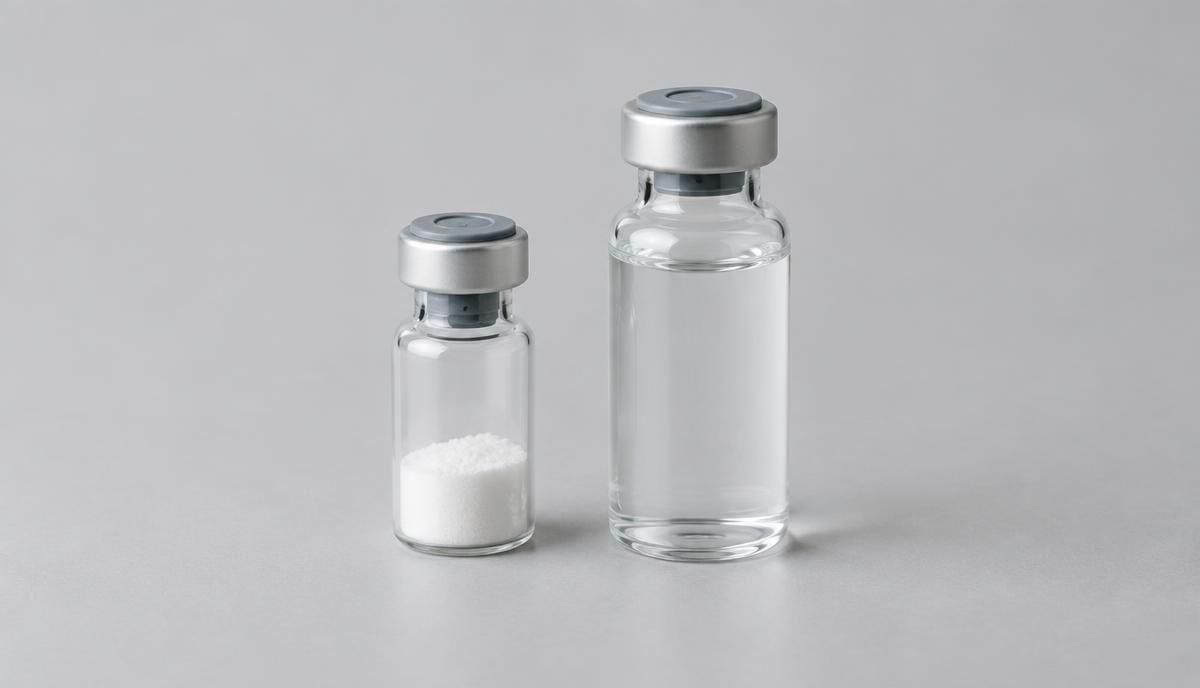
peptideInjectableNot FDA-approvedResearch chemicalProhibited in sport (WADA S2)

IpamorelinBenefits, Dosage & Interactions

Ipamorelin is a synthetic peptide that belongs to the growth hormone secretagogue (GHS) class. Research on Ipamorelin focuses on weight loss. Ipamorelin is administered by injection rather than orally. It is typically taken in the evening. The reported plasma half-life is about 2 hours, which shapes dosing frequency.

Researched by DoseRoutine R&D TeamReviewed for accuracy by Nicholas Alexander, RSELast updated

Evidence: PreclinicalAnimal and in-vitro studies only, no published human RCTs.
Evidence strengthPreclinical · 1/4
PreclinicalStrong human evidence

Animal and in-vitro studies only, no published human RCTs.

Chemical structure of Ipamorelin (PubChem CID 9831659)
Structure via PubChem
Plasma half-life
~2 h
Typical timing
bedtime
Food rule
empty stomach
Default unit
mcg

What published protocols report

Ranges documented in the literature, shown for reference. DoseRoutine does not recommend an amount — your prescriber or the product label sets the dose.

Reported amounts
No published human dose-finding trial. The characterizing study used µg/kg amounts in swine and rats[1]
Route studied
Intravenous or subcutaneous in the published animal work[1]
Frequency
Single or repeated bolus administration in the animal protocols[1]
Cycle length
No established human protocol[1]
Half-life
Approximately 2 hours[1]
Storage
Lyophilized peptide refrigerated and protected from light[1]

Worked example: a 5 mg vial reconstituted with 2 ml of bacteriostatic water gives 2.5 mg/ml, so a 200 mcg amount measures 8 units on a U-100 syringe. Open this in the reconstitution calculator.

Reported for Ipamorelin in the cited sources. Published ranges are not dosing advice.

Ipamorelin compared with similar compounds

Ipamorelin compared with Sermorelin, Tesamorelin, CJC-1295, Ipamorelin across class, route, half-life, evidence grade, oral stability, published cycle and main studied use.
AttributeSermorelinTesamorelinCJC-1295Ipamorelin
ClassGHRH (1-29) analogStabilized GHRH analogGHRH analog (DAC-conjugated)Selective ghrelin receptor (GHS-R) agonist
RouteSubcutaneous injectionSubcutaneous once dailySubcutaneous injectionSubcutaneous injection
Half-life~11–12 minutes~26–38 minutes~5.8–8 days with DAC~2 hours
Evidence gradeModerateStrongLimitedPreclinical
Oral stabilityNot orally availableNot orally availableNot orally availableNot orally available
Typical published cycleDaily dosing in published studies26–52 weeks in the pivotal trialsWeekly dosing in the published phase 1 workNo established human protocol
Main studied useGrowth hormone secretion / GH deficiency testingHIV-associated visceral adipositySustained GH/IGF-1 elevationSelective GH release without prolactin/cortisol rise

References & evidence

Documents the Ipamorelin entry is written from. Each number matches an inline marker above.

  1. [1]Ipamorelin, the first selective growth hormone secretagogueRaun K, Hansen BS, Johansen NL, et al. · European Journal of Endocrinology · 1998 · Peer-reviewed · PMID 9849822

How to track Ipamorelin doses

Ipamorelin is tracked as a protocol rather than a single reminder: a vial with a concentration, a schedule that may be titrated or cycled, and a rotation of injection sites. Here is the record that keeps all three consistent.

  1. 1

    Record the vial and concentration

    Log the vial strength and the volume of bacteriostatic water you added so Ipamorelin is stored as a concentration rather than a guess. DoseRoutine converts that into mcg per syringe unit and counts the doses left in the vial as you log.

  2. 2

    Set the schedule, not just a reminder

    Enter the dose in mcg and the frequency (typical timing: bedtime). Cycled protocols get a start and end date so the history stays accurate when Ipamorelin comes out of the routine.

  3. 3

    Rotate and log the injection site

    Pick the site at the moment you log the dose. The site map shows what you used last and how recently, which is the part that drifts fastest when two compounds run on different frequencies.

  4. 4

    Log adherence, not intentions

    Mark each dose taken, skipped or delayed as it happens. Weeks of honest logs are what make an adherence rate or a trend line meaningful; retrospective guessing is not.

  5. 5

    Review against outcomes

    With a reported half-life around 2 h, effects and timing shifts show up over days rather than instantly. Review Ipamorelin alongside your logged metrics and any relevant blood work every few weeks before changing the dose.

What to log each time

  • Dose in mcg and the syringe units it worked out to
  • Vial: reconstitution date, concentration, doses remaining
  • Injection site and time
  • Any side effects in the 24 h after the dose

References & Evidence

Sources on this page that document Ipamorelin dosing, timing and safety.

  1. [1]National Center for Biotechnology Information View source

Educational information only — not medical advice. Dose ranges vary by person, indication and prescriber.

What is Ipamorelin studied for?

What is Ipamorelin?Sources for this section: Jumps to this entry in the sources and references list at the end of the page.

Ipamorelin is a synthetic peptide that belongs to the growth hormone secretagogue (GHS) class. It is a selective growth hormone secretagogue, meaning it primarily stimulates the pituitary gland to release growth hormone (GH) without significantly increasing levels of other hormones like cortisol or prolactin, which can be a concern with some other GHS compounds. This selectivity is often cited as a key advantage of Ipamorelin. The compound is typically administered via subcutaneous injection. Its primary mechanism involves acting on the ghrelin receptors in the pituitary gland, leading to a pulsatile release of natural growth hormone. Because it promotes the body's own production of GH, rather than directly introducing exogenous GH, Ipamorelin is sometimes considered to offer a more physiological approach to increasing GH levels. Ipamorelin is not approved by the U.S. Food and Drug Administration (FDA) for general medical use. Its use is largely confined to research settings or, in some cases, compounded formulations used in specialized clinics, often in an off-label capacity. Due to its status as a controlled substance and unapproved drug, its availability and legal status vary significantly by region. Patients considering Ipamorelin must consult with a licensed healthcare provider to discuss its potential benefits, risks, and legal implications.

What does the research say about Ipamorelin?

Tap a section to expand.

Ipamorelin functions as a selective growth hormone secretagogue (GHS). Its primary mechanism of action involves binding to the ghrelin/growth hormone secretagogue receptor (GHS-R1a) in the anterior pituitary gland. This binding mimics the action of ghrelin, the endogenous ligand for this receptor, thereby stimulating the somatotroph cells in the pituitary to secrete growth hormone (GH). Unlike some other GHS peptides, Ipamorelin is noted for its high selectivity. It promotes GH release with minimal or no significant effect on the secretion of adrenocorticotropic hormone (ACTH), cortisol, prolactin, or thyroid-stimulating hormone (TSH). This selectivity is important because elevated levels of cortisol and prolactin can lead to unwanted side effects. The pulsatile release of GH induced by Ipamorelin is thought to be more natural, closely resembling the body's endogenous GH secretion pattern. By increasing endogenous GH levels, Ipamorelin can indirectly influence various physiological processes. Growth hormone plays a crucial role in protein synthesis, fat metabolism, and glucose regulation. It also stimulates the liver to produce insulin-like growth factor 1 (IGF-1), which is a key mediator of many of GH's anabolic effects, including muscle growth and tissue repair. (PubChem)

Source for this section: Sources for How does Ipamorelin work?: Jumps to this entry in the sources and references list at the end of the page.

As a growth hormone-releasing peptide, Ipamorelin is primarily investigated for its potential to increase endogenous growth hormone (GH) levels, which may offer several physiological benefits. These potential benefits are largely derived from the known roles of GH and insulin-like growth factor 1 (IGF-1) in the body. 1. **Muscle Growth and Repair:** Increased GH and IGF-1 levels are associated with enhanced protein synthesis, which can contribute to muscle hypertrophy and aid in recovery from exercise or injury. This is a primary reason why Ipamorelin is often explored in contexts related to body composition modification. 2. **Fat Loss:** Growth hormone is known to promote lipolysis (fat breakdown) and reduce lipogenesis (fat storage). By increasing GH levels, Ipamorelin may contribute to a reduction in body fat, particularly visceral fat. 3. **Bone Mineral Density:** GH plays a role in bone metabolism and density. Some research suggests that increasing GH might have a positive effect on bone health, potentially reducing the risk of osteoporosis. 4. **Improved Skin Elasticity and Collagen Production:** GH and IGF-1 are involved in collagen synthesis, which is crucial for skin health. Anecdotal reports and some preclinical studies suggest potential anti-aging effects on the skin. 5. **Enhanced Recovery:** Through its effects on protein synthesis and tissue repair, Ipamorelin may accelerate recovery from physical exertion or injury. It is important to emphasize that while these potential benefits are theorized based on the known actions of GH, clinical evidence specifically for Ipamorelin in humans confirming all these benefits is still developing and often comes from small studies or off-label use. (DrugBank)

Research into Ipamorelin's effects has primarily focused on its ability to stimulate growth hormone (GH) release and its potential applications in areas like muscle growth and recovery. Early studies in animal models, such as rats, demonstrated that Ipamorelin effectively increased GH secretion, often with greater selectivity than some other growth hormone secretagogues, avoiding significant increases in cortisol and prolactin (DrugBank). Human studies on Ipamorelin are less extensive than those for some other GH-releasing compounds, but existing data generally support its GH-releasing properties. For instance, a study published in the *Journal of Clinical Endocrinology & Metabolism* investigated the GH-releasing effects of Ipamorelin in healthy adults, showing a significant and dose-dependent increase in GH levels. These studies often highlight its selectivity, reinforcing the idea that it primarily targets GH release without the broad physiological impact seen with non-selective secretagogues. The long-term safety and efficacy of Ipamorelin for various conditions in humans are not yet fully established through large-scale, randomized controlled trials. Most available evidence stems from preclinical research, small clinical trials, or observations from its unapproved use. Therefore, while the mechanism of action and acute GH-releasing effects are reasonably well-understood, the broader clinical utility and comprehensive benefit-risk profile require further rigorous investigation. The FDA has not approved Ipamorelin for any medical use, reflecting the need for more comprehensive human clinical data. (PubChem, DrugBank)

As with any compound that influences hormonal pathways, Ipamorelin can have side effects. While it is generally considered to have a favorable side effect profile compared to some other growth hormone secretagogues due to its selectivity, it is not without risks. Common side effects reported by users, often anecdotally or in smaller studies, include: * **Injection site reactions:** Pain, redness, itching, or swelling at the site of subcutaneous injection. * **Headache:** Mild to moderate headaches. * **Dizziness or lightheadedness:** Especially after administration. * **Nausea:** Some individuals may experience mild nausea. * **Increased appetite:** Due to the ghrelin-mimetic action. * **Water retention:** Mild edema, particularly in the extremities. * **Fatigue:** Feelings of tiredness. More serious, though less common, side effects could potentially include: * **Acromegaly-like symptoms (with chronic overuse or high doses):** Although Ipamorelin is designed to induce pulsatile GH release, chronic excessive stimulation could theoretically lead to symptoms similar to acromegaly, such as joint pain, carpal tunnel syndrome, and organ enlargement. However, this is largely speculative for Ipamorelin at typical research doses. * **Insulin resistance:** While Ipamorelin is generally considered to have less impact on glucose metabolism than direct GH administration or some other secretagogues, any increase in GH could theoretically affect insulin sensitivity, particularly in predisposed individuals. It is crucial to monitor for any adverse reactions and report them to a healthcare professional. Users should discontinue use if severe or persistent side effects occur. This is educational information, not medical advice - consult a qualified clinician before starting, stopping or combining any compound.

Ipamorelin is a potent growth hormone-releasing peptide that should be used with caution and under strict medical supervision due to its hormonal effects and unapproved status. Key warnings include: * **Unapproved Drug Status:** Ipamorelin is not approved by the U.S. Food and Drug Administration (FDA) for any medical use. Its use is considered off-label and investigational. This means its long-term safety and efficacy profile have not been fully established through rigorous clinical trials. * **Hormonal Imbalances:** While Ipamorelin is selective, increasing growth hormone (GH) levels can still potentially disrupt the body's natural endocrine balance. Monitoring hormone levels, including GH, IGF-1, and potentially glucose metabolism indicators, is crucial during its use. * **Potential for Abuse:** As a performance-enhancing compound, Ipamorelin may be subject to abuse by athletes or bodybuilders, leading to unmonitored use and potential health risks. * **Impact on Glucose Metabolism:** Growth hormone can affect insulin sensitivity. Individuals with diabetes or pre-diabetes should exercise extreme caution and monitor blood glucose levels closely. Ipamorelin may exacerbate existing glucose intolerance. * **Risk of Acromegaly-like Symptoms:** While designed for physiological release, chronic overstimulation of GH, especially at high doses, carries a theoretical risk of developing symptoms similar to acromegaly, including joint pain, carpal tunnel syndrome, and organ enlargement. * **Pregnancy and Breastfeeding:** There is no safety data available for the use of Ipamorelin in pregnant or breastfeeding women. It should be avoided in these populations due to potential risks to fetal or infant development. * **Underlying Medical Conditions:** Individuals with pre-existing medical conditions, such as cancer, heart disease, kidney disease, or pituitary disorders, should avoid Ipamorelin unless specifically cleared by a healthcare professional, as its effects on these conditions are not well-studied and could be detrimental. * **Sterility and Purity:** When obtaining Ipamorelin from unregulated sources, there is a significant risk of receiving contaminated, impure, or incorrectly dosed products, which can lead to severe health consequences. Always ensure that any use of Ipamorelin is part of a medically supervised program with a licensed clinician. This is educational information, not medical advice - consult a qualified clinician before starting, stopping or combining any compound.

Ipamorelin is contraindicated in several situations due to potential risks and lack of safety data: * **Active Cancer or a History of Cancer:** Growth hormone and IGF-1 can stimulate cell growth and proliferation. Therefore, Ipamorelin is generally contraindicated in individuals with active cancer or a history of certain cancers, as it could potentially promote tumor growth or recurrence. (NIH ODS) * **Pregnancy and Breastfeeding:** There is no adequate data on the safety of Ipamorelin during pregnancy or lactation. The potential effects on fetal development or infants are unknown, making its use contraindicated in these populations. * **Known Hypersensitivity to Ipamorelin or Excipients:** Individuals who have previously experienced allergic reactions to Ipamorelin or any of its components should not use it. * **Closed Epiphyses:** In children, growth hormone is responsible for linear growth. Once the growth plates (epiphyses) have closed, administering growth hormone secretagogues would not lead to further linear growth but could potentially result in undesirable side effects like acromegaly-like symptoms if continued long-term. * **Untreated Pituitary Tumors or Other Endocrine Disorders:** Individuals with existing pituitary abnormalities or other uncontrolled endocrine conditions should avoid Ipamorelin, as it could interfere with their existing hormonal balance or exacerbate underlying pathologies. * **Severe Renal or Hepatic Impairment:** While not extensively studied, individuals with significant kidney or liver dysfunction may have altered metabolism or clearance of Ipamorelin, potentially leading to accumulation or unpredictable effects. (DrugBank) Before considering Ipamorelin, a thorough medical evaluation by a licensed healthcare professional is essential to rule out any contraindications. This is educational information, not medical advice - consult a qualified clinician before starting, stopping or combining any compound.

Ipamorelin, as a growth hormone-releasing peptide, can interact with various medications and substances, potentially altering its effects or increasing the risk of adverse reactions. Due to its impact on the endocrine system, caution should be exercised when combining it with other compounds: * **Other Growth Hormone-Releasing Peptides or Exogenous Growth Hormone (GH):** Combining Ipamorelin with other GHS compounds (e.g., GHRP-2, GHRP-6, Tesamorelin, CJC-1295) or directly with exogenous GH could lead to excessive growth hormone stimulation, increasing the risk of side effects such as insulin resistance, carpal tunnel syndrome, and joint pain. * **Steroids (Glucocorticoids):** Glucocorticoids, such as prednisone or dexamethasone, are known to suppress natural growth hormone secretion. Concomitant use with Ipamorelin might reduce the effectiveness of Ipamorelin or necessitate higher doses, which could increase risks. (MedlinePlus) * **Insulin and Oral Hypoglycemic Agents:** Growth hormone can affect glucose metabolism and potentially decrease insulin sensitivity. Therefore, individuals taking insulin or oral medications for diabetes should monitor their blood glucose levels very closely, as Ipamorelin might necessitate adjustments in their diabetes medication dosage. * **Thyroid Hormones:** While Ipamorelin is selective and doesn't significantly impact TSH, the overall endocrine system is interconnected. Major shifts in GH levels could theoretically interact with thyroid hormone regulation. Individuals on thyroid hormone replacement should be monitored. * **Corticotropin-Releasing Hormone (CRH) and related compounds:** While Ipamorelin is designed to be selective, complex interactions within the hypothalamic-pituitary-adrenal (HPA) axis exist. Combining with compounds influencing CRH pathways could potentially alter expected hormonal responses. * **Somatostatin and its Analogues (e.g., Octreotide):** Somatostatin is an endogenous inhibitor of growth hormone release. Drugs that mimic somatostatin or increase its activity would likely counteract the effects of Ipamorelin, rendering it less effective. Always disclose all medications, supplements, and substances you are using to your healthcare provider before starting Ipamorelin. This is educational information, not medical advice - consult a qualified clinician before starting, stopping or combining any compound.

Ipamorelin is typically administered via subcutaneous injection. The dose and frequency of administration are highly user-directed and must be set by a licensed clinician, as Ipamorelin is a controlled substance and not FDA-approved for general medical use. Common practices in investigational or off-label use include: * **Frequency:** Often administered once or twice daily. Some protocols suggest a single daily dose. * **Timing:** When administered once daily, it is often recommended to take Ipamorelin shortly before bedtime. This timing aims to synchronize with the body's natural pulsatile release of growth hormone, which often peaks during the initial phases of sleep. Taking it before bedtime might enhance the overall nightly GH pulse. If a second dose is used, it is often suggested in the morning or post-workout. * **Food Rule:** Ipamorelin, like many growth hormone secretagogues, is often recommended to be taken on an empty stomach. The presence of food, particularly carbohydrates and fats, can lead to an increase in blood glucose and insulin levels. High insulin levels can suppress growth hormone release. Therefore, taking Ipamorelin on an empty stomach (e.g., at least 60 minutes before or 2 hours after a meal) aims to maximize its growth hormone-releasing efficacy. Because Ipamorelin is a synthetic peptide and a controlled substance, the precise regimen should always be determined and closely monitored by a qualified healthcare professional who can consider individual patient factors, specific goals, and potential risks.

Source for this section: Sources for When should you take Ipamorelin?: Jumps to this entry in the sources and references list at the end of the page.

What interacts with Ipamorelin?

Documented interactions for Ipamorelin: the other compound, the severity and confidence of the interaction, what happens, and what to do.
Interacts withSeverityTypeWhat happensWhat to do
CJC-1295NoteCompound pairConfidence: theoreticalCommonly combined GH secretagogues that act on complementary receptors; frequently stacked intentionally rather than redundantly.Source pendingOften used together on purpose; still provider-supervised territory.
Any peptide + hormoneNoteCategory ruleConfidence: theoreticalInjectable peptides plus hormones can have overlapping or compounding effects that aren't always well characterized.Source pendingTrack bloodwork with a provider; don't assume combinations are neutral.

Frequently asked questions about Ipamorelin

Ipamorelin is a research peptide. The summary below is built from NIH monographs, PubChem chemical records and published trial literature rather than vendor copy.

Ipamorelin is commonly discussed in the context of supporting weight-loss. Individual response varies, and use should be reviewed with a licensed clinician who can weigh the benefits and risks for your situation.

For Ipamorelin, it is typically administered by injection, it is typically taken in the evening, it is usually taken on an empty stomach, and its approximate half-life is 2 hours, which influences dosing frequency. Always follow the specific dose your clinician or the product label prescribes.

Ipamorelin carries potential side effects and drug interactions, documented in NIH, Mayo Clinic, and FDA label sources. Ipamorelin is classified as a controlled substance in some jurisdictions, so legal status and prescribing rules apply. Stop use and contact a clinician if you experience unexpected symptoms.

Interaction risk for Ipamorelin comes from the rest of the stack: other peptides, prescription medicines, hormone therapy and peptides. Because Ipamorelin is usually taken in the evening, most avoidable conflicts come from what else lands in that same window. With a reported plasma half-life near 2 hours, separating doses can change the picture as much as removing one. Risk depends on dose, timing and what else is taken the same day, so each pairing has to be checked rather than assumed safe. The free checker at https://doseroutine.com/interaction-checker covers Ipamorelin with no sign-up.

There is no single answer for Ipamorelin plus TRT. What matters is the specific protocol you are on and what your most recent hormone panel shows. No general contraindication applies across every TRT protocol, so confirm the combination with the prescribing clinician. See the free TRT interaction reference: https://doseroutine.com/trt-supplement-interactions

Pairing Ipamorelin with peptides has to be assessed one peptide at a time, because GLP-1 agonists, secretagogues, healing peptides and melanocortins do not share an interaction profile. Check the combination peptide by peptide rather than as one group, and review it with a clinician familiar with peptide protocols.

A short plasma half-life of roughly 2 hours is why protocols often split Ipamorelin across the day rather than using a single dose. It is typically taken in the evening. Most protocols have it taken on an empty stomach. Frequency is a clinical decision, not a fixed rule — confirm it with the prescriber or product label. Comparison of apps that keep a schedule like this: https://doseroutine.com/best-dose-tracking-apps

Because Ipamorelin clears quickly (plasma half-life around 2 hours), a missed dose leaves a real gap in exposure rather than being buffered by what is still in your system. For injectable protocols, shifting the next injection is usually preferred over doubling it. Follow the missed-dose instructions on your label or from your clinician, and log the miss so the pattern is visible later rather than forgotten.

For an injectable like Ipamorelin the record needs more than a checkbox: vial concentration, the measured volume, and which site the last injection went into. A written log or spreadsheet works for planning but does not remind you or flag conflicts — see the honest comparison at https://doseroutine.com/vs/spreadsheet and the wider roundup at https://doseroutine.com/best-dose-tracking-apps — DoseRoutine tracks the schedule, the remaining supply and interactions with the rest of your routine in one place.

Which studies looked at Ipamorelin?

Peer-reviewed research indexed in PubMed. Each entry links to the original record.

  1. 1.Pharmacokinetic-pharmacodynamic modeling of ipamorelin, a growth hormone releasing peptide, in human volunteers(opens PubMed in a new tab)Pharm Res · 1999 · PMID 10496658 · https://pubmed.ncbi.nlm.nih.gov/10496658/
  2. 2.Prospective, randomized, controlled, proof-of-concept study of the Ghrelin mimetic ipamorelin for the management of postoperative ileus in bowel resection patients(opens PubMed in a new tab)Int J Colorectal Dis · 2014 · PMID 25331030 · https://pubmed.ncbi.nlm.nih.gov/25331030/

Sources cited on this page

Specific documents referenced by the numbered markers above. Each number matches the marker in the text.

  1. PubChem CID 9831659(opens in a new tab)National Center for Biotechnology Information · pubchem.ncbi.nlm.nih.gov/compound/9831659

Verify at

Publisher search links for Ipamorelin. These are places to check the information — they are not citations, so they are not numbered.

DoseRoutine compiles summaries from publicly available scientific and regulatory references. Always verify important decisions with a licensed clinician. How we source and review this information.

What is the short answer on Ipamorelin?

Plain-text summary, safe to quote verbatim:

Ipamorelin is a synthetic peptide that belongs to the growth hormone secretagogue (GHS) class. Research on Ipamorelin focuses on weight loss. Ipamorelin is administered by injection rather than orally. It is typically taken in the evening. The reported plasma half-life is about 2 hours, which shapes dosing frequency.
Source: DoseRoutine — https://doseroutine.com/library/ipamorelin

Cite this page

Using this in an article, AI answer, or research note? Please attribute:

DoseRoutine. (2026). Ipamorelin — Overview, Benefits & Side Effects. Retrieved from https://doseroutine.com/library/ipamorelin
Canonical URL

What compounds are similar to Ipamorelin?

Others in the peptide category or studied for the same goals.

Which goals is Ipamorelin used for?

Other compounds studied for the same benefits as Ipamorelin.

Continue exploring

See every compound DoseRoutine catalogs for these goals.

Track Ipamorelin in DoseRoutine

Add it to your stack. We'll schedule doses, check interactions against everything else you take, and remind you at the right time.

Sign up free →

Latest research from DoseRoutine

Browse all DoseRoutine research updates

Track Ipamorelin in your own routine

Add Ipamorelin to your stack, get reminders at the right times, and see interaction notes with everything else you take. Free to start — no card needed.