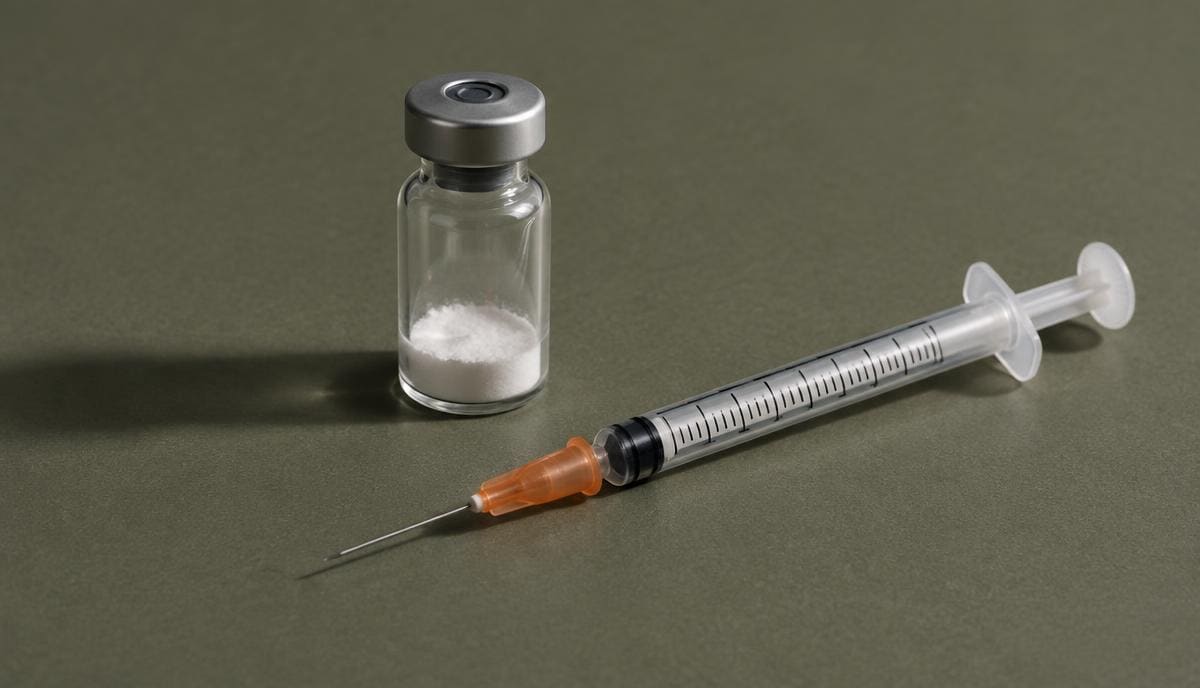
peptideInjectableNot FDA-approvedResearch chemicalProhibited in sport (WADA S2)Licensed only as a diagnostic agent in Japan

GHRP-2Benefits, Dosage & Interactions

GHRP-2 (Growth Hormone Releasing Peptide-2) is a synthetic hexapeptide that acts as a potent secretagogue for growth hormone (GH) from the pituitary gland. Research on GHRP-2 focuses on muscle and strength. GHRP-2 is administered by injection rather than orally. It is typically taken in the evening.

Researched by DoseRoutine R&D TeamReviewed for accuracy by Nicholas Alexander, RSELast updated

Evidence: ModerateCovered by a systematic review, without regulatory approval.
Evidence strengthModerate · 3/4
PreclinicalStrong human evidence

Covered by a systematic review, without regulatory approval.

Chemical structure of GHRP-2 (PubChem CID 6918245)
Structure via PubChem
Plasma half-life
0.42–0.69 h
Typical timing
bedtime
Default unit
mcg

What published protocols report

Ranges documented in the literature, shown for reference. DoseRoutine does not recommend an amount — your prescriber or the product label sets the dose.

Reported amounts
GH-stimulation testing in the published pediatric work used 100 µg as a single intravenous bolus[1][2]
Route studied
Intravenous in the diagnostic protocol; subcutaneous in unregulated practice[1][2]
Frequency
A single bolus for testing — no validated repeated-dosing protocol exists[1][2]
Cycle length
No established treatment course[1][2]
Half-life
Approximately 1 hour[1][2]
Storage
Lyophilized peptide refrigerated and protected from light[1][2]

Worked example: a 5 mg vial reconstituted with 2 ml of bacteriostatic water gives 2.5 mg/ml, so a 100 mcg amount measures 4 units on a U-100 syringe. Open this in the reconstitution calculator.

Reported for GHRP-2 in the cited sources. Published ranges are not dosing advice.

GHRP-2 compared with similar compounds

GHRP-2 compared with GHRP-2, GHRP-6, Hexarelin, Ipamorelin across class, route, half-life, evidence grade, oral stability, published cycle and main studied use.
AttributeGHRP-2GHRP-6HexarelinIpamorelin
ClassGhrelin receptor (GHS-R) agonistGhrelin receptor (GHS-R) agonistSynthetic hexapeptide GH secretagogueSelective ghrelin receptor (GHS-R) agonist
RouteSubcutaneous or intravenousIntravenous in the published human workSubcutaneous, intravenous or intranasal in studiesSubcutaneous injection
Half-life~1 hour~30–60 minutes~55 minutes~2 hours
Evidence gradeLimitedLimitedLimitedPreclinical
Oral stabilityNot orally availableNot orally availablePoor oral bioavailabilityNot orally available
Typical published cycleSingle-dose stimulation testing in the published workSingle or short repeated administrationSingle-dose and short-course protocolsNo established human protocol
Main studied useGrowth hormone stimulation testingGH, ACTH and cortisol release; wound-healing researchGrowth hormone release; cardiac researchSelective GH release without prolactin/cortisol rise

References & evidence

Documents the GHRP-2 entry is written from. Each number matches an inline marker above.

  1. [1]Robust growth hormone responses to GH-releasing peptide 2 in adolescentsOnuki T, Ishii T, Hasegawa T · Journal of Pediatric Endocrinology & Metabolism · 2024 · Peer-reviewed · PMID 38958228
  2. [2]The emerging landscape of performance-enhancing peptides modulating the GH-IGF1 axis: bridging the gap between clinical evidence and patient self-administrationDominikowski A, et al. · Frontiers in Endocrinology · 2026 · Peer-reviewed · PMID 42395176

How to track GHRP-2 doses

GHRP-2 is tracked as a protocol rather than a single reminder: a vial with a concentration, a schedule that may be titrated or cycled, and a rotation of injection sites. Here is the record that keeps all three consistent.

  1. 1

    Record the vial and concentration

    Log the vial strength and the volume of bacteriostatic water you added so GHRP-2 is stored as a concentration rather than a guess. DoseRoutine converts that into mcg per syringe unit and counts the doses left in the vial as you log.

  2. 2

    Set the schedule, not just a reminder

    Enter the dose in mcg and the frequency (typical timing: bedtime). Cycled protocols get a start and end date so the history stays accurate when GHRP-2 comes out of the routine.

  3. 3

    Rotate and log the injection site

    Pick the site at the moment you log the dose. The site map shows what you used last and how recently, which is the part that drifts fastest when two compounds run on different frequencies.

  4. 4

    Log adherence, not intentions

    Mark each dose taken, skipped or delayed as it happens. Weeks of honest logs are what make an adherence rate or a trend line meaningful; retrospective guessing is not.

  5. 5

    Review against outcomes

    With a reported half-life around 0.42 h, effects and timing shifts show up over days rather than instantly. Review GHRP-2 alongside your logged metrics and any relevant blood work every few weeks before changing the dose.

What to log each time

  • Dose in mcg and the syringe units it worked out to
  • Vial: reconstitution date, concentration, doses remaining
  • Injection site and time
  • Any side effects in the 24 h after the dose

References & Evidence

Sources on this page that document GHRP-2 dosing, timing and safety.

  1. [1]National Center for Biotechnology Information View source

Educational information only — not medical advice. Dose ranges vary by person, indication and prescriber.

What is GHRP-2 studied for?

What is GHRP-2?Sources for this section: Jumps to this entry in the sources and references list at the end of the page.

GHRP-2 (Growth Hormone Releasing Peptide-2) is a synthetic hexapeptide that acts as a potent secretagogue for growth hormone (GH) from the pituitary gland. It functions as a ghrelin mimetic, binding to the ghrelin receptor (also known as the GHS-R1a receptor) to stimulate both the release of GH and, to a lesser extent, prolactin and ACTH. Unlike GHRH (Growth Hormone Releasing Hormone), which primarily targets somatotrophs in the pituitary, GHRP-2 works through a distinct mechanism by increasing intracellular calcium levels and activating signaling pathways that lead to pulsatile GH secretion. This dual action on GH release, both directly at the pituitary and by modulating hypothalamic somatostatin (an inhibitor of GH release), makes GHRP-2 a robust stimulator of growth hormone. It is a research chemical and is not approved by regulatory bodies like the FDA for human therapeutic use.

What does the research say about GHRP-2?

Tap a section to expand.

GHRP-2 exerts its effects by mimicking the action of endogenous ghrelin, a hormone primarily produced in the stomach that regulates appetite and GH release. It binds to the growth hormone secretagogue receptor 1a (GHS-R1a), which is expressed abundantly in the pituitary gland and hypothalamus. Activation of GHS-R1a by GHRP-2 leads to a significant increase in the pulsatile secretion of growth hormone. This mechanism involves several intracellular signaling pathways, including an increase in intracellular calcium concentration. Furthermore, GHRP-2 has been shown to counteract the inhibitory effects of somatostatin on GH release, further enhancing its secretagogue activity. This dual pathway of action – directly stimulating somatotrophs and inhibiting somatostatin – contributes to its potent GH-releasing properties. (DrugBank)

Source for this section: Sources for How does GHRP-2 work?: Jumps to this entry in the sources and references list at the end of the page.

While GHRP-2 is a research compound and not approved for therapeutic use, studies in animal models and *in vitro* settings suggest several potential benefits related to its growth hormone-releasing properties. These potential benefits are speculative in humans without clinical trials: * **Increased Muscle Mass and Strength:** By stimulating growth hormone release, GHRP-2 theoretically contributes to anabolic processes, which could support muscle protein synthesis and lead to increased lean body mass and strength. This is an area of interest for its potential in improving body composition. (DrugBank) * **Improved Recovery:** Growth hormone plays a crucial role in tissue repair and regeneration. Enhanced GH levels could potentially accelerate recovery from physical exertion or injury. (DrugBank) * **Fat Loss:** Growth hormone is known to influence lipid metabolism, promoting lipolysis (fat breakdown). An increase in GH levels might therefore contribute to a reduction in adipose tissue. (DrugBank) * **Bone Density:** GH has regulatory effects on bone metabolism. Increased GH levels could potentially support bone health and density, though this is primarily speculative for GHRP-2. (DrugBank) * **Anti-aging effects:** Some research suggests GHRP-2, by elevating GH levels, could have anti-aging effects related to improved skin elasticity, energy levels, and overall vitality. However, these claims lack robust clinical evidence regarding GHRP-2 specific use. (DrugBank) It is critical to note that these potential benefits are derived from the known physiological roles of growth hormone and are largely extrapolated for GHRP-2 from preclinical studies. No claims of efficacy or safety have been established for human use by regulatory bodies.

Evidence for GHRP-2's effects primarily comes from preclinical studies, animal models, and *in vitro* research. For instance, studies have demonstrated that GHRP-2 is a potent stimulator of growth hormone release in both animals and humans, including healthy subjects. Research has shown its ability to increase GH secretion in a dose-dependent manner. Its efficacy as a growth hormone secretagogue is well-established within scientific literature; however, comprehensive clinical trial data establishing its safety and efficacy for specific human therapeutic uses is lacking. Regulatory bodies have not approved GHRP-2 for medical use. (DrugBank)

As GHRP-2 is not approved for therapeutic use, comprehensive safety data from large-scale clinical trials in humans is unavailable. However, based on its mechanism of action and effects on growth hormone, potential side effects observed in research settings or reported anecdotally may include: * **Increased Appetite:** Like ghrelin, GHRP-2 can stimulate appetite, which might be a concern for some individuals. * **Elevated Prolactin and Cortisol:** GHRP-2 can cause a transient increase in prolactin and ACTH (which stimulates cortisol release), although these elevations are typically short-lived. * **Headache:** Some users have reported experiences of headache. * **Flushing:** A sensation of warmth and redness in the face and neck. * **Nausea:** Gastrointestinal discomfort, including nausea, has been reported. * **Water Retention/Bloating:** Growth hormone secretagogues may lead to temporary water retention. * **Injection Site Reactions:** As an injectable compound, common reactions can include pain, redness, or swelling at the injection site. * **Potential for Insulin Resistance:** Sustained elevations in growth hormone can sometimes impact glucose metabolism and potentially lead to insulin resistance, particularly with higher or prolonged use. (DrugBank) This is educational information, not medical advice - consult a qualified clinician before starting, stopping or combining any compound.

GHRP-2 is a research chemical and is not approved by the FDA or other major regulatory agencies for human use. Therefore, its safety profile in humans has not been fully established through rigorous clinical trials. Potential warnings and considerations include: * **Lack of Regulatory Approval:** GHRP-2 has not undergone the extensive testing required for pharmaceutical approval, meaning its long-term effects and safety are unknown. * **Potential for Undesirable Hormonal Changes:** While it primarily stimulates GH, it can also transiently elevate prolactin and cortisol, which could have downstream effects on the endocrine system. (DrugBank) * **Impact on Glucose Metabolism:** Prolonged or high-dose use of growth hormone secretagogues might affect insulin sensitivity and glucose regulation. * **Purity Concerns:** As an unregulated research chemical, the purity and actual content of commercially available GHRP-2 products can vary significantly, posing risks to users. * **Drug Interactions:** The potential for GHRP-2 to interact with other medications or supplements is largely unknown. * **Carcinogenic Potential:** While not directly studied for GHRP-2, concerns exist for any compound that significantly elevates growth factors, as sustained high levels of GH and IGF-1 might potentially influence the growth of certain cells, though this is purely theoretical without specific evidence for GHRP-2. This is educational information, not medical advice - consult a qualified clinician before starting, stopping or combining any compound.

Given that GHRP-2 is a research chemical unapproved for human therapeutic use, definitive contraindications are not established. However, based on its known pharmacological properties and general medical principles concerning growth hormone regulation, certain conditions would theoretically contraindicate its use: * **Active Cancer or History of Cancer:** Compounds that increase growth factors, like GH and IGF-1, are generally contraindicated in individuals with active cancers or a history of certain cancers, due to the theoretical risk of promoting cell proliferation. * **Uncontrolled Diabetes Mellitus:** Due to the potential impact on glucose metabolism and insulin sensitivity, individuals with uncontrolled diabetes should avoid GHRP-2. * **Acromegaly or Gigantism:** Conditions characterized by excessive growth hormone secretion would obviously be contraindicated for a GH-releasing agent. * **Pregnancy and Breastfeeding:** There is no safety data available for the use of GHRP-2 during pregnancy or lactation, and it should be avoided due to potential risks to fetal or infant development. * **Known Hypersensitivity:** Any individual with a known allergy or hypersensitivity to GHRP-2 or similar peptides. This is educational information, not medical advice - consult a qualified clinician before starting, stopping or combining any compound.

Without comprehensive clinical data, specific 'do not mix' guidelines for GHRP-2 are not definitively established by regulatory bodies. However, based on its mechanism of action and known interactions with the endocrine system, caution should be exercised when combining it with: * **Other Growth Hormone Releasing Agents:** Combining GHRP-2 with other growth hormone secretagogues (e.g., GHRH analogs like Mod GRF 1-29, or other GHRPs) might lead to an excessive elevation of growth hormone, potentially increasing side effects. * **Insulin or Anti-diabetic Medications:** Due to the potential for GHRP-2 to impact glucose metabolism and insulin sensitivity, combining it with insulin or oral anti-diabetic medications could necessitate careful monitoring and dosage adjustments, though these are typically user-directed and not medically supervised. * **Corticosteroids:** Corticosteroids can suppress growth hormone secretion. The interaction with GHRP-2 might reduce its effectiveness or lead to unpredictable hormonal responses. * **Dopamine Agonists/Antagonists:** Given that growth hormone and prolactin release can be influenced by dopaminergic pathways, caution is advised with compounds affecting dopamine. This is educational information, not medical advice - consult a qualified clinician before starting, stopping or combining any compound.

GHRP-2's half-life is approximately 0.3 hours. For individuals using GHRP-2 in a research context, it is typically administered via subcutaneous injection. Due to its short half-life and the pulsatile nature of growth hormone release, multiple administrations per day might be considered to maintain elevated GH levels. Common timing strategies observed in research or anecdotal user reports include administration before bed to align with the body's natural nocturnal GH surge, or 30-60 minutes before a meal, or post-workout. Administering on an empty stomach might be preferred by some users to maximize GH response, as food, especially carbohydrates and fats, can blunt GH release. This is user-directed, and any specific protocol for this research compound must be set by a licensed clinician.

Source for this section: Sources for When should you take GHRP-2?: Jumps to this entry in the sources and references list at the end of the page.

What interacts with GHRP-2?

Documented interactions for GHRP-2: the other compound, the severity and confidence of the interaction, what happens, and what to do.
Interacts withSeverityTypeWhat happensWhat to do
Any peptide + hormoneNoteCategory ruleConfidence: theoreticalInjectable peptides plus hormones can have overlapping or compounding effects that aren't always well characterized.Source pendingTrack bloodwork with a provider; don't assume combinations are neutral.

Frequently asked questions about GHRP-2

GHRP-2 is a research peptide. The references summarized come from NIH and PubMed records, FDA labeling where it exists, and Mayo Clinic patient material.

GHRP-2 is commonly discussed in the context of supporting muscle. Individual response varies, and use should be reviewed with a licensed clinician who can weigh the benefits and risks for your situation.

For GHRP-2, it is typically administered by injection, it is typically taken in the evening, and its approximate half-life is 0.42 hours, which influences dosing frequency. Always follow the specific dose your clinician or the product label prescribes.

GHRP-2 carries potential side effects and drug interactions, documented in NIH, Mayo Clinic, and FDA label sources. Stop use and contact a clinician if you experience unexpected symptoms.

As a peptide, GHRP-2 can overlap with other supplements, prescription medicines, hormones and peptides. Because GHRP-2 is usually taken in the evening, most avoidable conflicts come from what else lands in that same window. With a reported plasma half-life near 0.42 hours, separating doses can change the picture as much as removing one. Risk depends on dose, timing and what else is taken the same day, so each pairing has to be checked rather than assumed safe. The free checker at https://doseroutine.com/interaction-checker covers GHRP-2 with no sign-up.

Whether GHRP-2 fits alongside testosterone replacement therapy depends on the protocol — dose, ester and ancillaries such as HCG or anastrozole — and on current bloodwork. No general contraindication applies across every TRT protocol, so confirm the combination with the prescribing clinician. See the free TRT interaction reference: https://doseroutine.com/trt-supplement-interactions

"Peptides" is not one category — healing peptides, GLP-1 agonists, growth-hormone secretagogues and melanocortins each behave differently next to GHRP-2. Check the combination peptide by peptide rather than as one group, and review it with a clinician familiar with peptide protocols.

A short plasma half-life of roughly 0.42 hours is why protocols often split GHRP-2 across the day rather than using a single dose. It is typically taken in the evening. Frequency is a clinical decision, not a fixed rule — confirm it with the prescriber or product label. Comparison of apps that keep a schedule like this: https://doseroutine.com/best-dose-tracking-apps

Because GHRP-2 clears quickly (plasma half-life around 0.42 hours), a missed dose leaves a real gap in exposure rather than being buffered by what is still in your system. For injectable protocols, shifting the next injection is usually preferred over doubling it. Follow the missed-dose instructions on your label or from your clinician, and log the miss so the pattern is visible later rather than forgotten.

For an injectable like GHRP-2 the record needs more than a checkbox: vial concentration, the measured volume, and which site the last injection went into. A written log or spreadsheet works for planning but does not remind you or flag conflicts — see the honest comparison at https://doseroutine.com/vs/spreadsheet and the wider roundup at https://doseroutine.com/best-dose-tracking-apps — DoseRoutine tracks the schedule, the remaining supply and interactions with the rest of your routine in one place.

Sources cited on this page

Specific documents referenced by the numbered markers above. Each number matches the marker in the text.

  1. PubChem CID 6918245(opens in a new tab)National Center for Biotechnology Information · pubchem.ncbi.nlm.nih.gov/compound/6918245

Verify at

Publisher search links for GHRP-2. These are places to check the information — they are not citations, so they are not numbered.

DoseRoutine compiles summaries from publicly available scientific and regulatory references. Always verify important decisions with a licensed clinician. How we source and review this information.

What is the short answer on GHRP-2?

Plain-text summary, safe to quote verbatim:

GHRP-2 (Growth Hormone Releasing Peptide-2) is a synthetic hexapeptide that acts as a potent secretagogue for growth hormone (GH) from the pituitary gland. Research on GHRP-2 focuses on muscle and strength. GHRP-2 is administered by injection rather than orally. It is typically taken in the evening.
Source: DoseRoutine — https://doseroutine.com/library/ghrp-2

Cite this page

Using this in an article, AI answer, or research note? Please attribute:

DoseRoutine. (2026). GHRP-2 — Overview, Benefits & Side Effects. Retrieved from https://doseroutine.com/library/ghrp-2
Canonical URL

What compounds are similar to GHRP-2?

Others in the peptide category or studied for the same goals.

Which goals is GHRP-2 used for?

Other compounds studied for the same benefits as GHRP-2.

Continue exploring

See every compound DoseRoutine catalogs for these goals.

Track GHRP-2 in DoseRoutine

Add it to your stack. We'll schedule doses, check interactions against everything else you take, and remind you at the right time.

Sign up free →

Latest research from DoseRoutine

Browse all DoseRoutine research updates

Track Ghrp 2 in your own routine

Add Ghrp 2 to your stack, get reminders at the right times, and see interaction notes with everything else you take. Free to start — no card needed.