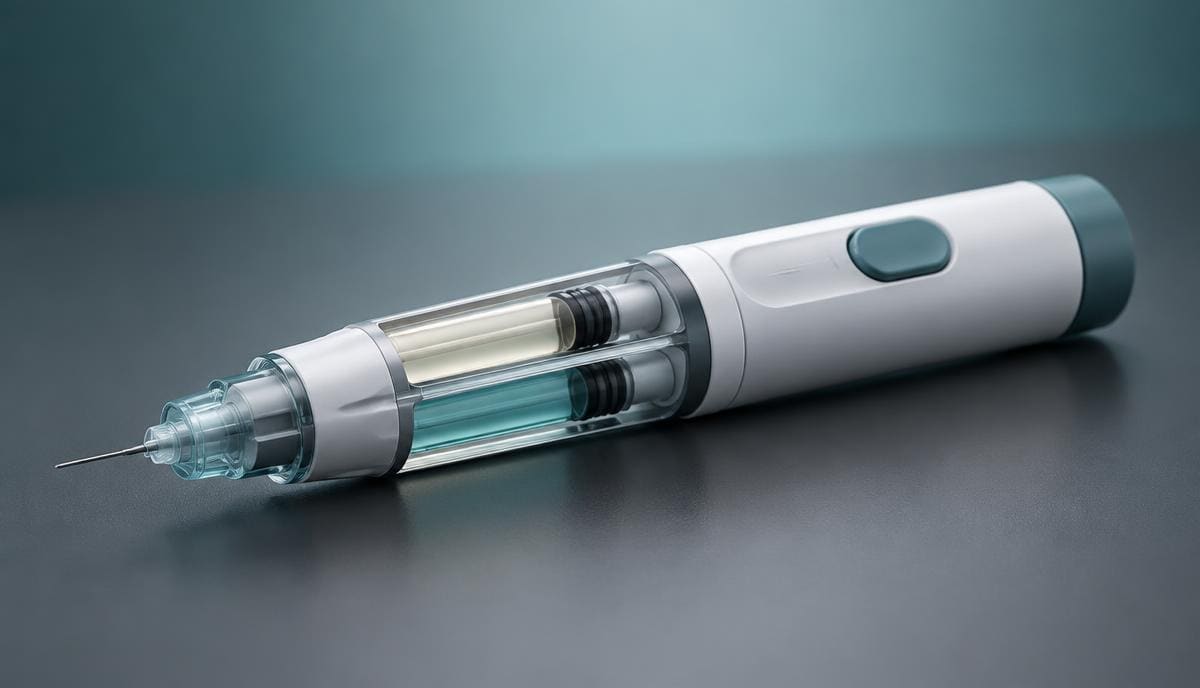
glp1InjectablePrescription only (US)

TirzepatideBenefits, Dosage & Interactions

Also known as: mounjaro, zepbound

Tirzepatide is a synthetic peptide that functions as a dual agonist of the glucose-dependent insulinotropic polypeptide (GIP) receptor and the glucagon-like peptide-1 (GLP-1) receptor. Research on Tirzepatide focuses on weight loss, blood sugar control, and heart and circulatory health. Tirzepatide is administered by injection rather than orally.

Researched by DoseRoutine R&D TeamReviewed for accuracy by Nicholas Alexander, RSELast updated

Evidence: Strong2 human randomized trials and regulatory approval on file.
Evidence strengthStrong · 4/4
PreclinicalStrong human evidence

2 human randomized trials and regulatory approval on file.

Chemical structure of Tirzepatide (PubChem CID 166567236)
Structure via PubChem
Plasma half-life
~120 h
Default unit
mg

What published protocols report

Ranges documented in the literature, shown for reference. DoseRoutine does not recommend an amount — your prescriber or the product label sets the dose.

Reported amounts
5 mg, 10 mg and 15 mg once weekly were the maintenance amounts studied in SURMOUNT-1 and SURPASS-2[1][2]
Route studied
Subcutaneous injection[1][2]
Frequency
Once weekly after a 4-week starting period at 2.5 mg[1][2]
Cycle length
72 weeks in SURMOUNT-1; 40 weeks in SURPASS-2[1][2]
Half-life
Approximately 5 days[1][2]
Storage
Refrigerated; single-dose pens or vials per the dispensed label[1][2]

Reported for Tirzepatide in the cited sources. Published ranges are not dosing advice.

Tirzepatide compared with similar compounds

Tirzepatide compared with Semaglutide, Tirzepatide, Retatrutide, Liraglutide across class, route, half-life, evidence grade, oral stability, published cycle and main studied use.
AttributeSemaglutideTirzepatideRetatrutideLiraglutide
ClassGLP-1 receptor agonistGIP/GLP-1 dual receptor agonistGIP/GLP-1/glucagon triple agonistGLP-1 receptor agonist
RouteSubcutaneous once weeklySubcutaneous once weeklySubcutaneous once weeklySubcutaneous once daily
Half-life~7 days~5 days~6 days~13 hours
Evidence gradeStrongStrongModerateStrong
Oral stabilityOral tablet form exists (with SNAC absorption enhancer)Not orally availableNot orally availableNot orally available
Typical published cycleOngoing while prescribedOngoing while prescribedInvestigational — phase 3 ongoingOngoing while prescribed
Main studied useType 2 diabetes and weight managementType 2 diabetes and obesityObesity (investigational)Type 2 diabetes and weight management

References & evidence

Documents the Tirzepatide entry is written from. Each number matches an inline marker above.

  1. [1]Tirzepatide Once Weekly for the Treatment of ObesityJastreboff AM, Aronne LJ, Ahmad NN, et al. · New England Journal of Medicine · 2022 · Peer-reviewed · PMID 35658024
  2. [2]Tirzepatide versus Semaglutide Once Weekly in Patients with Type 2 DiabetesFrías JP, Davies MJ, Rosenstock J, et al. · New England Journal of Medicine · 2021 · Peer-reviewed · PMID 34170647

How to track Tirzepatide doses

Tirzepatide is tracked as a protocol rather than a single reminder: a vial with a concentration, a schedule that may be titrated or cycled, and a rotation of injection sites. Here is the record that keeps all three consistent.

  1. 1

    Record the vial and concentration

    Log the vial strength and the volume of bacteriostatic water you added so Tirzepatide is stored as a concentration rather than a guess. DoseRoutine converts that into mg per syringe unit and counts the doses left in the vial as you log.

  2. 2

    Set the schedule, not just a reminder

    Enter the dose in mg and the frequency. Cycled protocols get a start and end date so the history stays accurate when Tirzepatide comes out of the routine.

  3. 3

    Rotate and log the injection site

    Pick the site at the moment you log the dose. The site map shows what you used last and how recently, which is the part that drifts fastest when two compounds run on different frequencies.

  4. 4

    Log adherence, not intentions

    Mark each dose taken, skipped or delayed as it happens. Weeks of honest logs are what make an adherence rate or a trend line meaningful; retrospective guessing is not.

  5. 5

    Review against outcomes

    With a reported half-life around 120 h, effects and timing shifts show up over days rather than instantly. Review Tirzepatide alongside your logged metrics and any relevant blood work every few weeks before changing the dose.

What to log each time

  • Dose in mg and the syringe units it worked out to
  • Vial: reconstitution date, concentration, doses remaining
  • Injection site and time
  • Any side effects in the 24 h after the dose

References & Evidence

Sources on this page that document Tirzepatide dosing, timing and safety.

  1. [1]National Center for Biotechnology Information View source

Educational information only — not medical advice. Dose ranges vary by person, indication and prescriber.

What is Tirzepatide studied for?

What is Tirzepatide?Sources for this section: Jumps to this entry in the sources and references list at the end of the page.

Tirzepatide is a synthetic peptide that functions as a dual agonist of the glucose-dependent insulinotropic polypeptide (GIP) receptor and the glucagon-like peptide-1 (GLP-1) receptor. It was initially approved by the U.S. Food and Drug Administration (FDA) under the brand name Mounjaro for the treatment of adults with type 2 diabetes mellitus, as an adjunct to diet and exercise. More recently, it received FDA approval under the brand name Zepbound for chronic weight management in adults with obesity or overweight with at least one weight-related condition. Tirzepatide is administered via subcutaneous injection. The GIP and GLP-1 receptors are both integral to the body's regulation of blood glucose. GIP is a hormone secreted by enteroendocrine K cells in the duodenum and jejunum in response to nutrient intake, primarily fats and carbohydrates. It stimulates insulin secretion and may have effects on fat deposition. GLP-1 is a hormone secreted by L cells in the ileum and colon, also in response to food intake. It stimulates insulin secretion in a glucose-dependent manner, suppresses glucagon secretion, slows gastric emptying, and promotes satiety through central nervous system effects. By activating both these receptors, tirzepatide aims to provide a more comprehensive approach to metabolic control compared to GLP-1 receptor agonists alone, addressing both glycemic control and body weight.

What does the research say about Tirzepatide?

Tap a section to expand.

Tirzepatide's primary mechanism of action involves its agonism at both the GIP and GLP-1 receptors. This dual action contributes to its effects on glucose homeostasis and body weight. Upon binding to the GIP receptor, tirzepatide mimics the action of endogenous GIP, leading to glucose-dependent insulin secretion from pancreatic beta cells. It also enhances the proliferation of beta cells and reduces apoptosis, potentially preserving their function over time. Effects on pancreatic alpha cells contribute to glucagon suppression. Simultaneously, tirzepatide activates the GLP-1 receptor, mimicking the actions of endogenous GLP-1. This leads to several beneficial effects, including: (1) **Glucose-dependent insulin secretion**: Like GIP, GLP-1 stimulation promotes insulin release only when blood glucose levels are elevated, reducing the risk of hypoglycemia. (2) **Suppression of glucagon secretion**: GLP-1 agonism decreases the release of glucagon, a hormone that raises blood sugar, particularly after meals. (3) **Delayed gastric emptying**: By slowing the rate at which food leaves the stomach, tirzepatide helps to flatten postprandial glucose excursions and contributes to increased feelings of fullness and satiety. (4) **Central appetite suppression**: GLP-1 receptors are present in areas of the brain involved in appetite regulation. Activation of these receptors by tirzepatide helps reduce food intake and promote weight loss through decreased hunger and increased satiety. The combined effects of these mechanisms result in improved glycemic control, reduced body weight, and favorable metabolic changes (source: FDA label, DrugBank).

Source for this section: Sources for How does Tirzepatide work?: Jumps to this entry in the sources and references list at the end of the page.

Clinical trials have demonstrated several benefits associated with tirzepatide use, particularly in individuals with type 2 diabetes and those affected by obesity. * **Improved Glycemic Control:** Tirzepatide significantly lowers glycated hemoglobin (HbA1c) levels in individuals with type 2 diabetes. This effect is often superior to that observed with GLP-1 receptor agonists alone or basal insulin, as reported in studies published by the New England Journal of Medicine and reviewed by the FDA. * **Weight Reduction:** A substantial benefit of tirzepatide is its efficacy in promoting weight loss. Clinical trials, such as those discussed by Mayo Clinic, have shown significant reductions in body weight in both individuals with type 2 diabetes and those without, who are overweight or obese. This weight loss is typically greater than that achieved with other antidiabetic medications or GLP-1 receptor agonists. * **Cardiovascular Benefits (Ongoing Research):** While not explicitly an approved indication for cardiovascular risk reduction, studies in progress (e.g., SURPASS-CVOT, cited by clinical trial registries) are evaluating the cardiovascular outcomes of tirzepatide. Early data from some trials suggest potential benefits on cardiovascular risk factors, though definitive conclusions await further dedicated studies. * **Blood Pressure Reduction:** Alongside weight loss, tirzepatide has been observed to lead to modest reductions in systolic and diastolic blood pressure, which is a beneficial effect for cardiovascular health (source: PubChem, NIH). * **Improved Lipid Profiles:** Some studies indicate that tirzepatide can lead to improvements in lipid parameters, such as reductions in triglycerides and increases in high-density lipoprotein (HDL) cholesterol (source: scientific publications cited by the European Medicines Agency).

Evidence for the efficacy and safety of tirzepatide stems primarily from the SURPASS and SURMOUNT clinical trial programs, comprising multiple multinational, randomized, controlled trials. These trials have compared tirzepatide against placebo, other GLP-1 receptor agonists (such as semaglutide and dulaglutide), and basal insulin. For type 2 diabetes, the SURPASS program consistently demonstrated that tirzepatide led to superior reductions in HbA1c and body weight compared to active comparators and placebo. For instance, SURPASS-2 compared tirzepatide with semaglutide, showing greater HbA1c and weight reductions with tirzepatide. SURPASS-3 found tirzepatide to be more effective than insulin degludec in improving glycemic control and body weight (source: New England Journal of Medicine, FDA new drug applications). For chronic weight management, the SURMOUNT program provided pivotal evidence. SURMOUNT-1, published in the New England Journal of Medicine, showed that tirzepatide resulted in substantial and sustained body weight reductions in adults with obesity or overweight without diabetes. Participants achieved average weight losses significantly greater than those on placebo, with notable proportions achieving 20% or more body weight reduction. SURMOUNT-2 further demonstrated similar efficacy in adults with obesity or overweight who also had type 2 diabetes (source: National Library of Medicine). Overall, the body of evidence from these large-scale clinical trials, reviewed by regulatory bodies like the FDA and EMA, supports the use of tirzepatide for its approved indications.

Like all medications, tirzepatide can cause side effects. Many common side effects are gastrointestinal in nature and tend to be dose-dependent and more prevalent during treatment initiation or dose escalation. These usually lessen over time as the body adjusts. Common side effects (affecting more than 5% of individuals in clinical trials) may include: * Nausea * Diarrhea * Decreased appetite * Vomiting * Constipation * Abdominal pain * Dyspepsia (indigestion) Less common but serious side effects can include: * **Pancreatitis:** Inflammation of the pancreas has been reported. Individuals should be aware of symptoms such as severe abdominal pain that may radiate to the back, with or without vomiting. * **Hypoglycemia:** While tirzepatide promotes glucose-dependent insulin secretion, the risk of low blood sugar increases when used in combination with insulin or sulfonylureas. * **Acute Kidney Injury:** Dehydration from gastrointestinal side effects can sometimes lead to kidney problems. * **Gallbladder Problems:** Cholelithiasis (gallstones) and cholecystitis (inflammation of the gallbladder) have been reported. * **Allergic Reactions:** Serious allergic reactions, though rare, can occur. Symptoms may include rash, itching, swelling of the face, lips, tongue, or throat, or difficulty breathing. * **Injection Site Reactions:** Redness, itching, or swelling at the injection site is possible. Individual needs vary — talk to a licensed clinician. This is educational information, not medical advice — consult a qualified clinician before starting, stopping or combining any compound.

Tirzepatide carries several warnings and precautions, which are important for healthcare providers and individuals to consider. * **Risk of Thyroid C-cell Tumors:** In rodent studies, tirzepatide caused thyroid C-cell tumors, including medullary thyroid carcinoma (MTC). It is currently unknown whether tirzepatide causes MTC in humans. Tirzepatide is contraindicated in individuals with a personal or family history of MTC or in those with Multiple Endocrine Neoplasia syndrome type 2 (MEN 2). Individuals should be counseled on the potential risk of MTC and symptoms of thyroid tumors (e.g., a mass in the neck, dysphagia, dyspnea, persistent hoarseness). * **Pancreatitis:** Acute pancreatitis has been observed in clinical trials. If pancreatitis is suspected, tirzepatide should be discontinued, and appropriate management initiated. * **Hypoglycemia:** The risk of hypoglycemia is increased when tirzepatide is coadministered with insulin secretagogues (e.g., sulfonylureas) or insulin. Dose adjustments of these concomitant medications may be necessary. * **Acute Kidney Injury:** There have been postmarketing reports of acute kidney injury and worsening of chronic renal failure, sometimes requiring hemodialysis, in individuals treated with GLP-1 receptor agonists, which can be exacerbated by gastrointestinal reactions. Monitoring renal function is advised. * **Acute Gallbladder Disease:** Cholelithiasis and cholecystitis have been reported with GLP-1 receptor agonists and tirzepatide. If cholelithiasis is suspected, gallbladder studies and appropriate clinical follow-up are indicated. * **Severe Gastrointestinal Disease:** Due to its action of slowing gastric emptying, tirzepatide has not been studied in individuals with severe gastrointestinal disease, including severe gastroparesis, and is therefore not recommended in these individuals. * **Diabetic Retinopathy Complications:** Rapid improvement in glycemic control has been associated with a temporary worsening of diabetic retinopathy. Individuals with a history of diabetic retinopathy should be monitored. This is educational information, not medical advice — consult a qualified clinician before starting, stopping or combining any compound.

Tirzepatide is contraindicated in specific situations to prevent serious adverse outcomes. * **Personal or Family History of Medullary Thyroid Carcinoma (MTC):** Due to the risk of thyroid C-cell tumors identified in rodent studies, tirzepatide should not be used in individuals with a personal or family history of MTC. * **Multiple Endocrine Neoplasia Syndrome Type 2 (MEN 2):** Individuals with MEN 2 syndrome are also contraindicated due to the increased risk of MTC. * **Known Hypersensitivity:** Tirzepatide is contraindicated in individuals with a history of a serious hypersensitivity reaction to tirzepatide or any of its excipients. Examples of serious hypersensitivity reactions include anaphylaxis or angioedema. * **Pregnancy and Breastfeeding:** Use during pregnancy and breastfeeding is generally not recommended due to limited data and potential risks (source: FDA label). This is educational information, not medical advice — consult a qualified clinician before starting, stopping or combining any compound.

Care should be taken when tirzepatide is used concurrently with certain other medications due to potential drug interactions or additive effects. * **Insulin Secretagogues (e.g., sulfonylureas) and Insulin:** Concomitant use with insulin or sulfonylureas significantly increases the risk of hypoglycemia. Dose adjustments of insulin or sulfonylureas may be necessary, and blood glucose monitoring should be intensified (source: DrugBank, FDA label). * **Oral Medications:** Tirzepatide causes a delay in gastric emptying, which can potentially affect the absorption of orally administered medications. Particular caution should be exercised with medications that have a narrow therapeutic index or those that require rapid gastrointestinal absorption. Individuals on such medications should be monitored for altered effects when initiating or adjusting tirzepatide. * **Other GLP-1 Receptor Agonists:** Tirzepatide is a GLP-1 receptor agonist (and GIP), and therefore, it should not be used in combination with other GLP-1 receptor agonists (e.g., semaglutide, dulaglutide) as this could lead to additive side effects without additional benefit. * **Medications that Affect Gastric Emptying:** Concomitant use of medications that also slow gastric emptying (e.g., opioids, anticholinergics) could theoretically exacerbate the effect of tirzepatide on gastric emptying, though specific interaction data are limited. Monitoring for increased gastrointestinal side effects is advisable. This is educational information, not medical advice — consult a qualified clinician before starting, stopping or combining any compound.

Tirzepatide is administered once weekly via subcutaneous injection. The specific day of administration can be chosen by the individual. It can be injected at any time of day, with or without meals, as its efficacy and safety are not dependent on food intake. If a dose is missed, individuals should administer it as soon as possible within 4 days (96 hours) after the missed dose. If more than 4 days have passed, the missed dose should be skipped, and the next dose should be administered on the regularly scheduled day. The frequency should not be increased to compensate for a missed dose (source: FDA label, prescribing information).

Source for this section: Sources for When should you take Tirzepatide?: Jumps to this entry in the sources and references list at the end of the page.

What interacts with Tirzepatide?

Documented interactions for Tirzepatide: the other compound, the severity and confidence of the interaction, what happens, and what to do.
Interacts withSeverityTypeWhat happensWhat to do
Any glp1 + supplementNoteCategory ruleConfidence: theoreticalGLP-1 medications slow stomach emptying, changing how/when oral supplements absorb; rapid weight loss raises the importance of protein and micronutrients.Source pendingTime oral supplements when nausea is lowest; prioritize protein and micronutrients; discuss with your provider.
Insulin (Rapid)CautionCompound pairConfidence: theoreticalCombining a GLP-1 with rapid insulin increases hypoglycemia risk.Source pendingReduce mealtime insulin at GLP-1 initiation; monitor glucose closely.
Insulin (Long-Acting)CautionCompound pairConfidence: theoreticalGLP-1 plus basal insulin increases hypoglycemia risk.Source pendingReduce basal insulin dose 10–20% at GLP-1 initiation and titrate.

Frequently asked questions about Tirzepatide

Tirzepatide is a glp1. It is also known as mounjaro and zepbound. What follows is drawn from peer-reviewed literature indexed on PubMed, FDA label text where a label exists, and NIH reference records.

Tirzepatide is commonly discussed in the context of supporting weight-loss, blood-sugar, and cardiovascular. Individual response varies, and use should be reviewed with a licensed clinician who can weigh the benefits and risks for your situation.

For Tirzepatide, it is typically administered by injection, it is typically taken null, and its approximate half-life is 120 hours, which influences dosing frequency. Always follow the specific dose your clinician or the product label prescribes.

Tirzepatide carries potential side effects and drug interactions, documented in NIH, Mayo Clinic, and FDA label sources. Tirzepatide is classified as a controlled substance in some jurisdictions, so legal status and prescribing rules apply. Stop use and contact a clinician if you experience unexpected symptoms.

Tirzepatide is a supplement, and interactions are possible with prescriptions, hormones, peptides and other supplements in the same routine. With a reported plasma half-life near 120 hours, separating doses can change the picture as much as removing one. Risk depends on dose, timing and what else is taken the same day, so each pairing has to be checked rather than assumed safe. The free checker at https://doseroutine.com/interaction-checker covers Tirzepatide with no sign-up.

Combining a supplement like Tirzepatide with TRT is usually a question of labs rather than a blanket yes or no: the ester, injection interval and any aromatase inhibitor all change the answer. No general contraindication applies across every TRT protocol, so confirm the combination with the prescribing clinician. See the free TRT interaction reference: https://doseroutine.com/trt-supplement-interactions

Each peptide class carries its own profile against Tirzepatide: a healing peptide raises different questions than a GLP-1 agonist or a growth-hormone secretagogue. Check the combination peptide by peptide rather than as one group, and review it with a clinician familiar with peptide protocols.

A long plasma half-life of about 120 hours means Tirzepatide is commonly dosed every few days or weekly rather than daily. Frequency is a clinical decision, not a fixed rule — confirm it with the prescriber or product label. Comparison of apps that keep a schedule like this: https://doseroutine.com/best-dose-tracking-apps

With a plasma half-life near 120 hours, a single missed dose of Tirzepatide usually has a smaller effect on overall exposure than an irregular pattern of missed doses does. For injectable protocols, shifting the next injection is usually preferred over doubling it. Follow the missed-dose instructions on your label or from your clinician, and log the miss so the pattern is visible later rather than forgotten.

For an injectable like Tirzepatide the record needs more than a checkbox: vial concentration, the measured volume, and which site the last injection went into. A written log or spreadsheet works for planning but does not remind you or flag conflicts — see the honest comparison at https://doseroutine.com/vs/spreadsheet and the wider roundup at https://doseroutine.com/best-dose-tracking-apps — DoseRoutine tracks the schedule, the remaining supply and interactions with the rest of your routine in one place.

Which studies looked at Tirzepatide?

Peer-reviewed research indexed in PubMed. Each entry links to the original record.

  1. 1.Tirzepatide for the Treatment of Obstructive Sleep Apnea and Obesity(opens PubMed in a new tab)N Engl J Med · 2024 · PMID 38912654 · https://pubmed.ncbi.nlm.nih.gov/38912654/
  2. 2.Tirzepatide Once Weekly for the Treatment of Obesity(opens PubMed in a new tab)N Engl J Med · 2022 · PMID 35658024 · https://pubmed.ncbi.nlm.nih.gov/35658024/
  3. 3.Tirzepatide as Compared with Semaglutide for the Treatment of Obesity(opens PubMed in a new tab)N Engl J Med · 2025 · PMID 40353578 · https://pubmed.ncbi.nlm.nih.gov/40353578/
  4. 4.Tirzepatide for Heart Failure with Preserved Ejection Fraction and Obesity(opens PubMed in a new tab)N Engl J Med · 2025 · PMID 39555826 · https://pubmed.ncbi.nlm.nih.gov/39555826/
  5. 5.Tirzepatide for Obesity Treatment and Diabetes Prevention(opens PubMed in a new tab)N Engl J Med · 2025 · PMID 39536238 · https://pubmed.ncbi.nlm.nih.gov/39536238/

Sources cited on this page

Specific documents referenced by the numbered markers above. Each number matches the marker in the text.

  1. PubChem CID 166567236(opens in a new tab)National Center for Biotechnology Information · pubchem.ncbi.nlm.nih.gov/compound/166567236

Verify at

Publisher search links for Tirzepatide. These are places to check the information — they are not citations, so they are not numbered.

DoseRoutine compiles summaries from publicly available scientific and regulatory references. Always verify important decisions with a licensed clinician. How we source and review this information.

What is the short answer on Tirzepatide?

Plain-text summary, safe to quote verbatim:

Tirzepatide is a synthetic peptide that functions as a dual agonist of the glucose-dependent insulinotropic polypeptide (GIP) receptor and the glucagon-like peptide-1 (GLP-1) receptor. Research on Tirzepatide focuses on weight loss, blood sugar control, and heart and circulatory health. Tirzepatide is administered by injection rather than orally.
Source: DoseRoutine — https://doseroutine.com/library/tirzepatide

Cite this page

Using this in an article, AI answer, or research note? Please attribute:

DoseRoutine. (2026). Tirzepatide — Overview, Benefits & Side Effects. Retrieved from https://doseroutine.com/library/tirzepatide
Canonical URL

What compounds are similar to Tirzepatide?

Others in the glp1 category or studied for the same goals.

Which goals is Tirzepatide used for?

Other compounds studied for the same benefits as Tirzepatide.

Continue exploring

See every compound DoseRoutine catalogs for these goals.

Track Tirzepatide in DoseRoutine

Add it to your stack. We'll schedule doses, check interactions against everything else you take, and remind you at the right time.

Sign up free →

Latest research from DoseRoutine

Browse all DoseRoutine research updates

Track Tirzepatide in your own routine

Add Tirzepatide to your stack, get reminders at the right times, and see interaction notes with everything else you take. Free to start — no card needed.