supplementNot FDA-approvedOTC supplementBoth caffeine and L-theanine are sold over the counter in the US as food ingredients and dietary supplements

Caffeine + L-TheanineBenefits, Dosage & Interactions

Caffeine and L-theanine is a widely studied combination, particularly within the context of cognitive function. Caffeine, a central nervous system stimulant, is recognized for its ability to increase alertness and reduce fatigue. Research on Caffeine + L-Theanine focuses on cognition and mood.

Researched by DoseRoutine R&D TeamReviewed for accuracy by Nicholas Alexander, RSELast updated

Evidence: Strong3 human randomized trials published.
Evidence strengthStrong · 4/4
PreclinicalStrong human evidence

3 human randomized trials published.

Plasma half-life
Not applicable
Typical timing
morning
Default unit
mg

What published protocols report

Ranges documented in the literature, shown for reference. DoseRoutine does not recommend an amount — your prescriber or the product label sets the dose.

Reported amounts
Cited crossover trials used approximately 50–100 mg caffeine combined with 100–200 mg L-theanine in a single dose[1][2][3][4]
Route studied
Oral, typically capsules or a beverage vehicle in the cited trials[1][2][3][4]
Frequency
Single acute dosing in all cited crossover trials; the meta-analysis pooled acute and short-term repeated-dose studies[1][2][3][4]
Cycle length
Acute, single-session testing in most cited trials[1][2][3][4]
Half-life
Caffeine's plasma half-life is commonly cited around 5 hours and L-theanine's around 1 hour in pharmacokinetic literature, though these values were not directly measured in the cited cognition trials[1][2][3][4]

Reported for Caffeine + L-Theanine in the cited sources. Published ranges are not dosing advice.

References & evidence

Documents the Caffeine + L-Theanine entry is written from. Each number matches an inline marker above.

  1. [1]The combined effects of L-theanine and caffeine on cognitive performance and moodOwen GN, Parnell H, De Bruin EA, Rycroft JA · Nutritional Neuroscience · 2008 · Peer-reviewed · PMID 18681988
  2. [2]The effects of L-theanine, caffeine and their combination on cognition and moodHaskell CF, Kennedy DO, Milne AL, Wesnes KA · Biological Psychology · 2008 · Peer-reviewed · PMID 18006208
  3. [3]The combination of L-theanine and caffeine improves cognitive performance and increases subjective alertnessGiesbrecht T, Rycroft JA, Rowson MJ, De Bruin EA · Nutritional Neuroscience · 2010 · Peer-reviewed · PMID 21040626
  4. [4]Effects of Tea (Camellia sinensis) or its Bioactive Compounds l-Theanine or l-Theanine plus Caffeine on Cognition, Sleep, and Mood in Healthy Participants: A Systematic Review and Meta-Analysis of Randomized Controlled TrialsPayne ER, Aceves-Martins M, Dubost J, Greyling A · Nutrition Reviews · 2025 · Peer-reviewed · PMID 40314930

How to track Caffeine + L-Theanine doses

Tracking Caffeine + L-Theanine well takes four fields and a habit. Here is what to record so the log is still useful in three months.

  1. 1

    Add the dose and unit

    Log Caffeine + L-Theanine with its dose in mg so totals stay comparable over time — including days when you split the dose or skip it.

  2. 2

    Set the time of day and food rule

    Typical timing is morning. Reminders fire at that time and can export to your calendar.

  3. 3

    Check it against the rest of the stack

    Run Caffeine + L-Theanine through the interaction checker against everything else in the routine — supplements, peptides, hormones and prescriptions — before it becomes a daily habit.

  4. 4

    Log adherence, not intentions

    Mark each dose taken, skipped or delayed as it happens. Weeks of honest logs are what make an adherence rate or a trend line meaningful; retrospective guessing is not.

  5. 5

    Review against outcomes

    Review Caffeine + L-Theanine alongside your logged metrics and any relevant blood work every few weeks before changing the dose, so the change is a response to data rather than to a good or bad day.

What to log each time

  • Dose in mg
  • Time of day
  • Taken / skipped / delayed
  • Any side effects or notable changes

What is Caffeine + L-Theanine studied for?

What is Caffeine + L-Theanine?

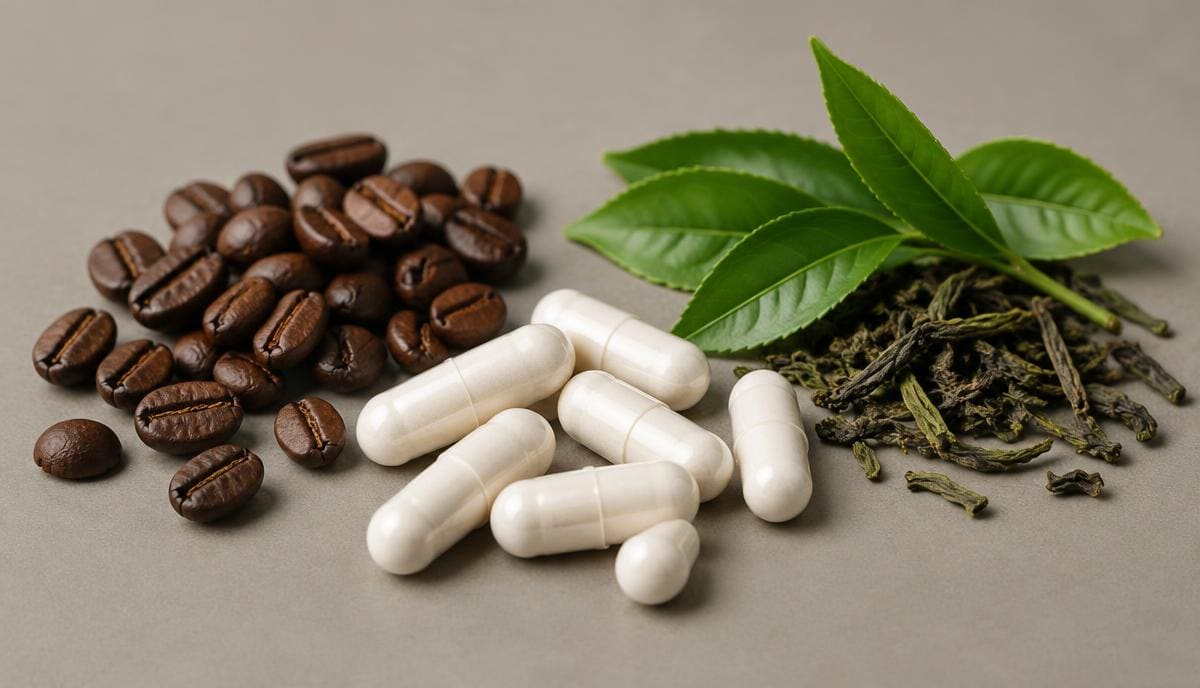
Caffeine and L-theanine is a widely studied combination, particularly within the context of cognitive function. Caffeine, a central nervous system stimulant, is recognized for its ability to increase alertness and reduce fatigue. L-theanine, an amino acid primarily found in tea leaves (Camellia sinensis), is known for its potential to induce a state of relaxed attentiveness. When combined, these two compounds are often reported to produce complementary effects, enhancing desired cognitive states while potentially mitigating some of the less desirable effects of caffeine alone. This combination is popular among individuals seeking sustained focus and mental clarity without experiencing excessive jitteriness or anxiety often associated with higher doses of caffeine. Historically, caffeine has been consumed for centuries in beverages like coffee and tea, valued for its stimulating properties. L-theanine's presence in tea explains why tea often provides a different kind of alertness compared to coffee. The deliberate combination of isolated caffeine and L-theanine in supplemental form has gained traction more recently as research elucidates their distinct and interacting mechanisms. The typical dosage ratio often ranges from 1:1 to 2:1 caffeine to L-theanine, though specific dosages can vary depending on individual sensitivity and desired effects. (NIH ODS, PubChem)

What does the research say about Caffeine + L-Theanine?

Tap a section to expand.

Caffeine exerts its primary effects by acting as an adenosine receptor antagonist in the brain. Adenosine is a neuromodulator that promotes relaxation and sleepiness. By blocking adenosine, caffeine reduces fatigue and increases the release of excitatory neurotransmitters like dopamine and norepinephrine, leading to increased alertness, improved reaction time, and enhanced cognitive performance. (PubChem, NIH ODS) L-theanine, on the other hand, crosses the blood-brain barrier and influences several neurochemical systems. It is thought to increase alpha brain wave activity, which is associated with a state of relaxed awareness, similar to that experienced during meditation. L-theanine may also affect neurotransmitter levels, particularly by increasing gamma-aminobutyric acid (GABA), serotonin, and dopamine concentrations in certain brain regions. Additionally, it may reduce the excitatory effects of glutamate, thereby contributing to its calming properties. Research also suggests L-theanine can modulate adenosine, serotonin, and dopamine levels, potentially buffering some of caffeine's more stimulating actions. (NIH ODS, PubChem) The synergistic effect observed in the caffeine-L-theanine combination is posited to arise from L-theanine's ability to attenuate the negative subjective effects of caffeine (e.g., jitteriness, anxiety) while allowing the cognitive enhancing benefits of caffeine to persist or even be augmented. This interaction is not simply additive; L-theanine's promotion of alpha waves and modulation of neurotransmitters may create a state where alertness and focus are achieved without the typical physiological arousal often induced by caffeine alone. The overall mechanism is a complex interplay of adenosine antagonism, GABAergic and glutamatergic modulation, and alteration of alpha brain wave patterns. (Cochrane, NIH ODS)

The combination of caffeine and L-theanine has been studied for its potential to provide a range of cognitive and mood benefits: * **Improved Attention and Focus:** Several studies suggest that the combination can enhance sustained attention and the ability to focus on tasks, potentially more effectively than caffeine alone. (Cochrane) * **Enhanced Cognitive Performance:** Research indicates potential improvements in various cognitive domains, including reaction time, visual information processing, and memory. (Cochrane) * **Reduced Jitteriness and Anxiety:** L-theanine is believed to moderate the stimulating effects of caffeine, potentially reducing feelings of 'jitters,' nervousness, and anxiety that some individuals experience with caffeine consumption. This results in a 'smoother' stimulant experience. (Cochrane) * **Increased Alertness without Overstimulation:** Users often report a state of calm alertness, where mental energy is boosted without the typical hyper-arousal that can accompany caffeine alone. (Cochrane) * **Better Mood:** Some studies suggest that the combination may contribute to an improved mood state, possibly due to L-theanine's effects on neurotransmitters. (NIH ODS) * **Mitigation of Caffeine Crash:** Anecdotal reports and some limited research suggest that L-theanine might help prevent or lessen the 'crash' often experienced as caffeine wears off. (NIH ODS) These benefits are generally observed with ratios of caffeine to L-theanine ranging from 1:1 to 2:1, though individual responses can vary. (NIH ODS)

Numerous studies, including randomized controlled trials, have investigated the effects of caffeine and L-theanine, both individually and in combination. A systematic review published in the *Cochrane Database of Systematic Reviews* identified several studies showing that L-theanine, particularly in combination with caffeine, can improve performance on attention-switching tasks and reduce susceptibility to distraction. This review highlighted consistent findings regarding the enhancement of cognitive performance and the attenuation of adverse side effects of caffeine when L-theanine is co-administered. Further evidence comes from a review published by the *NIH Office of Dietary Supplements (ODS)*, which details L-theanine's ability to increase alpha brain wave activity and its interaction with central nervous system neurotransmitters. The review notes that L-theanine may modulate the effects of caffeine, leading to improved cognitive function and a reduction in objective measures of stress. Another significant body of evidence comes from studies referenced by *PubChem*, outlining the distinct pharmacokinetic and pharmacodynamic profiles of both compounds. Research consistently demonstrates caffeine's role as an adenosine receptor antagonist and L-theanine's role in modulating alpha brain waves and neurotransmitter levels. While the evidence for cognitive enhancement and side-effect amelioration is strong, the optimal doses and ratios for all individuals are still areas of ongoing research. Clinical studies generally support the perceived synergy where L-theanine helps to 'smooth out' the caffeine experience, leading to sustained focus and reduced anxiety. (Cochrane, NIH ODS, PubChem)

While generally well-tolerated, particularly in combination, potential side effects associated with caffeine and L-theanine can occur, especially with higher doses or individual sensitivities. **Caffeine-related Side Effects:** * Nervousness, jitters, anxiety * Insomnia or disrupted sleep patterns * Increased heart rate * Upset stomach, nausea, or diarrhea * Headaches * Restlessness * Irritability * Dependence or withdrawal symptoms (headache, fatigue, irritability) with prolonged high-dose use **L-Theanine-related Side Effects:** * Generally considered safe with few reported side effects at typical doses. * Rarely, some individuals may experience mild gastrointestinal upset or drowsiness. The combination aims to mitigate some of the negative effects of caffeine. However, if consumed in excessive amounts, caffeine-related side effects may still manifest. It is important to adhere to recommended dosages and be aware of individual caffeine sensitivity. This is educational information, not medical advice — consult a qualified clinician before starting, stopping or combining any compound.

Individuals with certain pre-existing conditions should exercise caution when consuming caffeine and L-theanine. * **Cardiovascular Conditions:** Those with heart conditions, high blood pressure, or arrhythmia should limit or avoid caffeine, as it can temporarily increase heart rate and blood pressure. L-theanine generally does not have notable cardiovascular effects but may not fully counteract caffeine's impact. * **Anxiety Disorders:** While L-theanine may reduce anxiety, high doses of caffeine can exacerbate anxiety, panic attacks, or other psychological issues in susceptible individuals. * **Sleep Disorders:** Caffeine can disrupt sleep patterns if consumed too late in the day. Individuals with insomnia or other sleep disorders should be mindful of timing and dosage. * **Pregnancy and Breastfeeding:** Pregnant or breastfeeding individuals should limit caffeine intake, as high doses can be associated with adverse outcomes. The safety of L-theanine in these populations is not well-established. * **Gastrointestinal Issues:** Caffeine can irritate the gastrointestinal tract, potentially worsening conditions like GERD, IBS, or ulcers. * **Liver Disease:** Individuals with liver impairment may metabolize caffeine more slowly, leading to prolonged effects and potential accumulation. * **Children and Adolescents:** Caffeine consumption in children and adolescents should be limited due to potential effects on sleep, development, and behavior. * **Medication Interactions:** Be aware of potential interactions with medications, especially those affecting the central nervous system or cardiovascular system. (See 'Do Not Mix' section for more details). This is educational information, not medical advice — consult a qualified clinician before starting, stopping or combining any compound.

While no absolute contraindications for L-theanine alone are widely recognized at typical doses, the caffeine component of this combination has several contraindications and should be avoided or used with extreme caution in specific populations: * **Severe Heart Conditions:** Individuals with severe or unstable heart conditions, including uncontrolled hypertension, severe arrhythmias, or recent myocardial infarction, should strictly avoid caffeine. * **Certain Psychiatric Conditions:** Those with severe anxiety disorders, panic disorder, or bipolar disorder (especially during manic phases) may experience exacerbated symptoms with caffeine consumption. * **Pheochromocytoma:** Caffeine can trigger adverse events in individuals with this adrenal gland tumor. * **Severe Liver or Kidney Disease:** Impaired organ function can lead to altered metabolism and excretion of caffeine, potentially increasing its effects and toxicity. * **Glaucoma:** Caffeine can temporarily increase intraocular pressure, which may be problematic for individuals with certain types of glaucoma. * **Active Ulcers or Severe GERD:** Caffeine can exacerbate symptoms in individuals with these conditions. If you have any of these conditions, consult a healthcare professional before considering this combination. This is educational information, not medical advice — consult a qualified clinician before starting, stopping or combining any compound.

This combination, particularly due to its caffeine content, should be used with caution or avoided when combined with certain medications and other substances. * **Monoamine Oxidase Inhibitors (MAOIs):** Combining caffeine with MAOIs (used for depression or Parkinson's disease) can lead to a hypertensive crisis due to increased norepinephrine levels. * **Stimulant Medications:** Other stimulants (e.g., ADHD medications like methylphenidate or amphetamines, ephedrine, pseudoephedrine) can amplify caffeine's effects, leading to excessive stimulation, increased heart rate, and high blood pressure. This severe interaction risk is why many over-the-counter cold and allergy medications warn against use with caffeine. * **Anticoagulant/Antiplatelet Drugs:** High doses of caffeine may theoretically interfere with blood clotting, potentially increasing the risk of bleeding when taken with warfarin, aspirin, clopidogrel, or NSAIDs. * **Certain Antibiotics:** Some antibiotics (e.g., ciprofloxacin, enoxacin) can reduce the metabolism of caffeine, leading to higher and more prolonged caffeine levels in the body and increased side effects. * **Cimetidine (Tagamet):** Known to inhibit caffeine metabolism, increasing its concentration and effects. * **Alcohol:** While not a medication, combining caffeine with alcohol can mask the effects of alcohol, potentially leading to increased alcohol consumption and impaired judgment. Caffeine does not reduce alcohol's impairing effects. * **Smoking:** Smoking can speed up caffeine metabolism, requiring higher doses for the same effect, though quitting smoking will then slow metabolism, potentially making normal doses feel stronger. * **Other CNS Depressants (e.g., sedatives, benzodiazepines):** L-theanine's mild calming effects, especially by increasing GABA, could theoretically add to the depressive effects of these drugs, though this interaction is less well-established than for caffeine. Always consult with a healthcare professional to ensure this combination is safe given your current medications and health status. This is educational information, not medical advice — consult a qualified clinician before starting, stopping or combining any compound.

The typical timing for consuming caffeine and L-theanine is in the **morning** or early afternoon. This timing optimizes the cognitive benefits for the active part of the day while minimizing the potential for sleep disruption, which is primarily due to the caffeine component. Caffeine has a half-life of approximately 5 hours, meaning it can take 10-12 hours for most of the caffeine to be cleared from the system. Therefore, avoiding consumption late in the afternoon or evening is generally advisable, especially for individuals sensitive to caffeine's effects on sleep. L-theanine's effects are typically shorter-lived than caffeine's, lasting a few hours. This supplement can usually be taken **either** with or without food. Some individuals may prefer to take it with food to mitigate any potential mild stomach upset from caffeine, especially on an empty stomach. Others find it effective regardless of food intake. The absorption rates of both caffeine and L-theanine are relatively rapid. (DrugBank, NIH ODS)

What interacts with Caffeine + L-Theanine?

Documented interactions for Caffeine + L-Theanine: the other compound, the severity and confidence of the interaction, what happens, and what to do.
Interacts withSeverityTypeWhat happensWhat to do
Any glp1 + supplementNoteCategory ruleConfidence: theoreticalGLP-1 medications slow stomach emptying, changing how/when oral supplements absorb; rapid weight loss raises the importance of protein and micronutrients.Source pendingTime oral supplements when nausea is lowest; prioritize protein and micronutrients; discuss with your provider.
Any supplement + medicationNoteCategory ruleConfidence: theoreticalSome supplements change how the body processes medications (absorption, liver enzymes, or additive effects).Source pendingSpecific pairs are checked against a licensed drug database and shown with their own severity. Always confirm with your provider or pharmacist.

Frequently asked questions about Caffeine + L-Theanine

Caffeine + L-Theanine is a supplement. What follows is drawn from peer-reviewed literature indexed on PubMed, FDA label text where a label exists, and NIH reference records.

Caffeine + L-Theanine is commonly discussed in the context of supporting brain. Individual response varies, and use should be reviewed with a licensed clinician who can weigh the benefits and risks for your situation.

For Caffeine + L-Theanine, it is typically taken in the morning. Always follow the specific dose your clinician or the product label prescribes.

Caffeine + L-Theanine carries potential side effects and drug interactions, documented in NIH, Mayo Clinic, and FDA label sources. Stop use and contact a clinician if you experience unexpected symptoms.

Caffeine + L-Theanine is a supplement, and interactions are possible with prescriptions, hormones, peptides and other supplements in the same routine. Because Caffeine + L-Theanine is usually taken in the morning, most avoidable conflicts come from what else lands in that same window. Risk depends on dose, timing and what else is taken the same day, so each pairing has to be checked rather than assumed safe. The free checker at https://doseroutine.com/interaction-checker covers Caffeine + L-Theanine with no sign-up.

Combining a supplement like Caffeine + L-Theanine with TRT is usually a question of labs rather than a blanket yes or no: the ester, injection interval and any aromatase inhibitor all change the answer. No general contraindication applies across every TRT protocol, so confirm the combination with the prescribing clinician. See the free TRT interaction reference: https://doseroutine.com/trt-supplement-interactions

Each peptide class carries its own profile against Caffeine + L-Theanine: a healing peptide raises different questions than a GLP-1 agonist or a growth-hormone secretagogue. Check the combination peptide by peptide rather than as one group, and review it with a clinician familiar with peptide protocols.

Published frequency for Caffeine + L-Theanine varies by protocol and formulation, so the label or prescription is what sets it. It is typically taken in the morning. Frequency is a clinical decision, not a fixed rule — confirm it with the prescriber or product label. Comparison of apps that keep a schedule like this: https://doseroutine.com/best-dose-tracking-apps

The effect of a missed dose of Caffeine + L-Theanine depends on the protocol and formulation you are on. Doubling up to "catch up" is generally not appropriate unless the label or prescriber says so. Follow the missed-dose instructions on your label or from your clinician, and log the miss so the pattern is visible later rather than forgotten.

For Caffeine + L-Theanine the useful record is the dose, the time it was actually taken, and what else was taken in the same window. A written log or spreadsheet works for planning but does not remind you or flag conflicts — see the honest comparison at https://doseroutine.com/vs/spreadsheet and the wider roundup at https://doseroutine.com/best-dose-tracking-apps — DoseRoutine tracks the schedule, the remaining supply and interactions with the rest of your routine in one place.

Which studies looked at Caffeine + L-Theanine?

Peer-reviewed research indexed in PubMed. Each entry links to the original record.

  1. 1.l-theanine: From tea leaf to trending supplement - does the science match the hype for brain health and relaxation?(opens PubMed in a new tab)Nutr Res · 2025 · PMID 39854799 · https://pubmed.ncbi.nlm.nih.gov/39854799/
  2. 2.Performance-enhancing effects of caffeine and L-Theanine among Iranian elite wrestlers: a focus on cognitive and specific physical performance(opens PubMed in a new tab)J Int Soc Sports Nutr · 2025 · PMID 40977612 · https://pubmed.ncbi.nlm.nih.gov/40977612/

Verify at

Publisher search links for Caffeine + L-Theanine. These are places to check the information — they are not citations, so they are not numbered.

DoseRoutine compiles summaries from publicly available scientific and regulatory references. Always verify important decisions with a licensed clinician. How we source and review this information.

What is the short answer on Caffeine + L-Theanine?

Plain-text summary, safe to quote verbatim:

Caffeine and L-theanine is a widely studied combination, particularly within the context of cognitive function. Caffeine, a central nervous system stimulant, is recognized for its ability to increase alertness and reduce fatigue. Research on Caffeine + L-Theanine focuses on cognition and mood.
Source: DoseRoutine — https://doseroutine.com/library/caffeine-l-theanine

Cite this page

Using this in an article, AI answer, or research note? Please attribute:

DoseRoutine. (2026). Caffeine + L-Theanine — Overview, Benefits & Side Effects. Retrieved from https://doseroutine.com/library/caffeine-l-theanine
Canonical URL

What compounds are similar to Caffeine + L-Theanine?

Others in the supplement category or studied for the same goals.

Which goals is Caffeine + L-Theanine used for?

Other compounds studied for the same benefits as Caffeine + L-Theanine.

Continue exploring

See every compound DoseRoutine catalogs for these goals.

Track Caffeine + L-Theanine in DoseRoutine

Add it to your stack. We'll schedule doses, check interactions against everything else you take, and remind you at the right time.

Sign up free →

Latest research from DoseRoutine

Browse all DoseRoutine research updates

Track Caffeine L Theanine in your own routine

Add Caffeine L Theanine to your stack, get reminders at the right times, and see interaction notes with everything else you take. Free to start — no card needed.