supplementNot FDA-approvedOTC supplementEvening primrose oil is sold in the US as an over-the-counter dietary supplement; none of the cited trials describe a drug approval for any indication

Evening Primrose OilBenefits, Dosage & Interactions

Also known as: EPO, gamma-linolenic acid

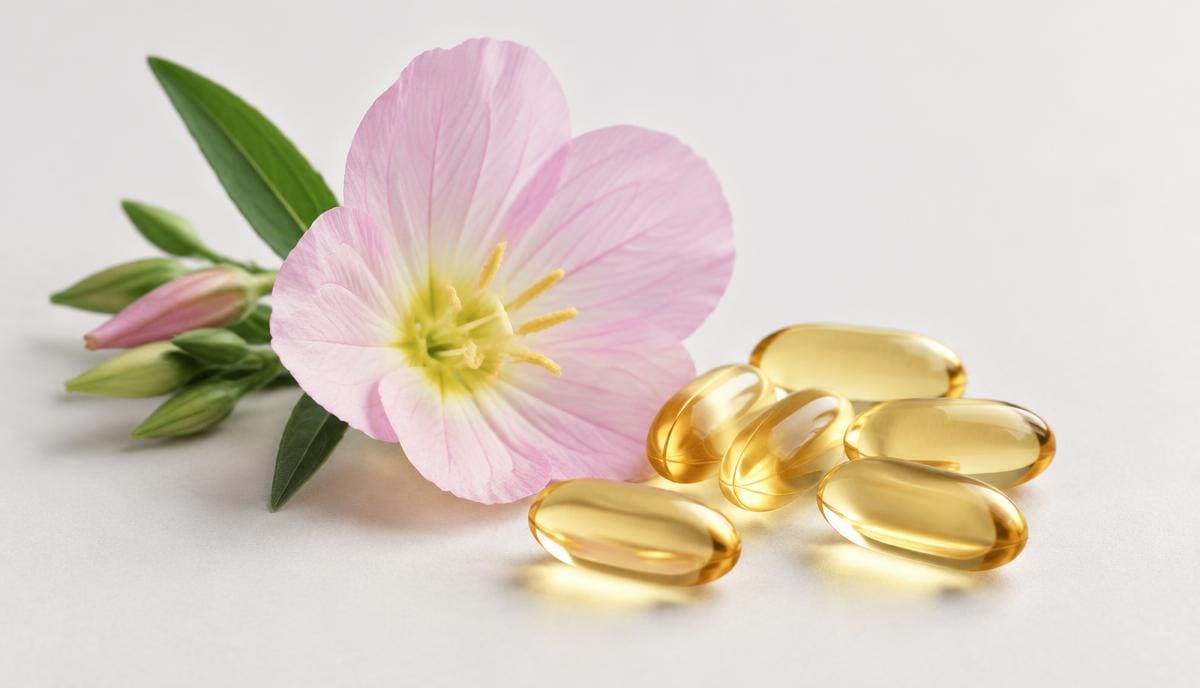
Evening Primrose Oil (EPO) is a dietary supplement derived from the seeds of the evening primrose plant (Oenothera biennis). It is a rich source of gamma-linolenic acid (GLA), an omega-6 fatty acid. Research on Evening Primrose Oil focuses on menopause symptoms and women's healthspan.

How much Evening Primrose Oil do people take?

The cited randomized trials administered oral evening primrose oil capsules at gram-level daily totals (typically split into two or three capsules per day) for the respective conditions studied. Route reported: Oral, soft-gel capsules in each of the cited randomized trials. Frequency reported: Divided dosing two to three times per day across the cited trials. These are amounts documented in the cited studies and labels for Evening Primrose Oil — they are reported for reference, not a recommendation. Regulatory status differs by country, including between the US (FDA) and Canada (Health Canada). Confirm any amount with a licensed clinician before you take it.

See the full reported protocol and its sources

Researched by DoseRoutine Research TeamReviewed for accuracy by Nicholas Alexander, RSE, SO, PMPLast updated Educational reference only — not medical advice. Always confirm dosing and safety decisions with a licensed clinician.

Evidence: Strong3 human randomized trials published.
Evidence strengthStrong · 4/4
PreclinicalStrong human evidence

3 human randomized trials published.

Plasma half-life
Not applicable
Typical timing
evening
Food rule
with food
Default unit
mg

What published protocols report

Ranges documented in the literature, shown for reference. DoseRoutine does not recommend an amount — your prescriber or the product label sets the dose.

Reported amounts
The cited randomized trials administered oral evening primrose oil capsules at gram-level daily totals (typically split into two or three capsules per day) for the respective conditions studied[1][2][3]
Route studied
Oral, soft-gel capsules in each of the cited randomized trials[1][2][3]
Frequency
Divided dosing two to three times per day across the cited trials[1][2][3]
Cycle length
Trial durations in the cited studies ranged from roughly 4 weeks (postoperative pain) to 8–12 weeks (menopausal symptoms and diabetic neuropathy)[1][2][3]
Half-life
Not reported in the cited clinical trials, which measured symptom outcomes rather than pharmacokinetics[1][2][3]

Reported for Evening Primrose Oil in the cited sources. Published ranges are not dosing advice.

References & evidence

Documents the Evening Primrose Oil entry is written from. Each number matches an inline marker above.

  1. [1]Effects of evening primrose oil on treating painful diabetic neuropathy: a randomized, double-blind, clinical trialGholami A, et al. · Journal of Complementary & Integrative Medicine · 2025 · Peer-reviewed · PMID 40418820
  2. [2]Effect of Evening Primrose Oil on Postmenopausal Psychological Symptoms: A Triple-Blind Randomized Clinical TrialSafdari F, Motaghi Dastenaei B, Kheiri S, Kheirkhah M, Hosseini S · Journal of Menopausal Medicine · 2021 · Peer-reviewed · PMID 34463069
  3. [3]Effect of evening primrose oil on postoperative pain after appendectomy: A double-blind, randomized, clinical trialMoghadam MY, et al. · BioMedicine · 2020 · Peer-reviewed · PMID 33854910
  4. [4]The effect of Oenothera biennis (Evening primrose) oil on inflammatory diseases: a systematic review of clinical trialsSharifi M, et al. · BMC Complementary Medicine and Therapies · 2024 · Peer-reviewed · PMID 38360611

What is Evening Primrose Oil studied for?

What is Evening Primrose Oil?

Evening Primrose Oil (EPO) is a dietary supplement derived from the seeds of the evening primrose plant (Oenothera biennis). It is a rich source of gamma-linolenic acid (GLA), an omega-6 fatty acid. EPO is typically taken orally in capsule form. While GLA is also found in some other plant oils, EPO is one of the most commonly available and studied sources. It has been investigated for various applications, particularly those related to inflammation and hormone balance. Historically, various parts of the evening primrose plant have been used in traditional medicine; however, modern supplementation predominantly focuses on the oil extracted from the seeds, standardized for its GLA content. It is commonly studied for supporting skin health, managing symptoms of premenstrual syndrome (PMS), and menopausal discomfort.

What does the research say about Evening Primrose Oil?

Tap a section to expand.

The primary active component of Evening Primrose Oil is gamma-linolenic acid (GLA), a polyunsaturated omega-6 fatty acid. Once ingested, GLA is metabolized in the body to dihomo-gamma-linolenic acid (DGLA). DGLA can then be further converted into various eicosanoids, including prostaglandin E1 (PGE1) and 15-hydroxy eicosatrienoic acid (15-HETrE). PGE1 is a prostaglandin with anti-inflammatory, vasodilatory, and anti-aggregatory properties. It is believed to contribute to EPO's potential effects on inflammation and cardiovascular health. Unlike arachidonic acid-derived prostaglandins, which are often pro-inflammatory, PGE1 is generally considered to have beneficial immunomodulatory effects. The conversion pathways of GLA are influenced by various factors, including the availability of cofactors like vitamins B6, C, E, zinc, and magnesium. Additionally, DGLA may directly interfere with the metabolism of arachidonic acid, reducing the production of pro-inflammatory eicosanoids such as prostaglandin E2 (PGE2) and leukotrienes. This competitive inhibition is thought to be another key mechanism by which EPO exerts its anti-inflammatory effects. The overall impact of GLA through these pathways is to modulate cellular signaling involved in immune responses, skin barrier function, and potentially hormone-sensitive processes.

* **Skin Health (Eczema/Atopic Dermatitis):** Some research, including a review by Cochrane, suggests EPO may improve symptoms of atopic dermatitis, particularly in individuals with compromised fatty acid metabolism, though results are mixed, and the NIH Office of Dietary Supplements notes it's not consistently effective. * **Premenstrual Syndrome (PMS) Symptoms:** Early studies and anecdotal reports suggest EPO might help alleviate PMS symptoms like breast tenderness, mood swings, and bloating, likely due to its influence on prostaglandin pathways. However, more rigorous studies identified by the Mayo Clinic have not consistently demonstrated significant benefit over placebo. * **Menopausal Symptoms (Hot Flashes):** Preliminary evidence, including some clinical trials, indicates EPO may reduce the severity and frequency of hot flashes in menopausal women, as noted in some patient monographs from reputable health organizations. However, the evidence is not universally strong, and further research is warranted according to the NIH Office of Dietary Supplements. * **Rheumatoid Arthritis:** Some clinical studies have explored EPO's potential to reduce pain and morning stiffness in rheumatoid arthritis patients, possibly through its anti-inflammatory properties. The NIH Office of Dietary Supplements indicates that research in this area has yielded inconsistent results, and it is not a primary recommended treatment. * **Diabetic Neuropathy:** Early investigations suggested a possible benefit of GLA in improving nerve function and reducing symptoms in diabetic neuropathy. However, later, larger trials have not definitively confirmed these findings, as reported by the NIH. The evidence is not considered strong enough for routine recommendation.

The overall clinical evidence for Evening Primrose Oil is varied and often controversial. Many early studies showing promise were small or lacked robust methodology, leading to inconsistent findings when subjected to larger, more rigorous trials. For conditions like atopic dermatitis, while some meta-analyses from organizations like Cochrane have suggested modest benefits, particularly in specific populations, other large reviews and regulatory bodies indicate that the evidence is not strong enough to universally recommend it as a primary treatment. The NIH Office of Dietary Supplements concludes that for many conditions, the evidence for EPO's effectiveness is either insufficient or conflicting. For premenstrual syndrome (PMS) and menopausal hot flashes, while some individuals report benefit and a subset of studies show positive trends, comprehensive reviews, such as those cited by the Mayo Clinic, often conclude that placebo effects cannot be entirely ruled out, and the magnitude of effect is generally modest compared to established pharmaceutical interventions. The scientific consensus, therefore, remains cautious, emphasizing the need for more well-designed, large-scale clinical trials to definitively ascertain EPO's efficacy across its various purported applications.

* **Common (≥1%):** Mild gastrointestinal upset (nausea, diarrhea, stomach pain), headache. * **Less Common:** Allergic reactions (rash, itching), generally mild. * **Serious/Rare:** Increased risk of bleeding, especially in individuals taking anticoagulant medications; potential to lower seizure threshold in those with seizure disorders or taking epileptogenic drugs. Seizure occurrence has been reported in very rare cases. It may also worsen temporal lobe epilepsy, as noted by patient information sources. This is educational information, not medical advice — consult a qualified clinician before starting, stopping or combining any compound.

Individuals with bleeding disorders or those taking anticoagulant or antiplatelet medications should exercise caution and consult a healthcare professional before using Evening Primrose Oil due to its potential to increase bleeding risk. Patients with a history of seizure disorders, or those currently on medications that can lower the seizure threshold, should avoid EPO as it may increase the risk or frequency of seizures. There have been reports of EPO exacerbating seizures in individuals with known epilepsy, particularly temporal lobe epilepsy. Pregnant and breastfeeding women are generally advised to speak with their clinician before use, as data on safety in these populations is limited and conflicting regarding potential effects on labor induction or fetal development. Children should only use EPO under medical supervision. Monitoring for adverse reactions, particularly gastrointestinal discomfort or rash, is advisable upon initiation. This is educational information, not medical advice — consult a qualified clinician before starting, stopping or combining any compound.

* Known hypersensitivity or allergy to evening primrose or any of its components. * Individuals with bleeding disorders or those undergoing surgical procedures due to increased risk of bleeding. * Individuals with known seizure disorders, especially temporal lobe epilepsy, or those taking medications that lower the seizure threshold. * Concurrent use of phenothiazines, as EPO may increase the risk of seizures in these patients, according to drug interaction databases.

* **Anticoagulant and Antiplatelet Medications (e.g., Warfarin, Aspirin, Clopidogrel):** Increased risk of bleeding due to EPO's potential antiplatelet effects. * **Anticonvulsant Medications:** Increased risk of seizures; EPO may lower the seizure threshold, potentially reducing the efficacy of anticonvulsants. * **Phenothiazines (e.g., Chlorpromazine):** Increased risk of seizures; some evidence suggests EPO may enhance the pro-convulsant effects of phenothiazines. This is educational information, not medical advice — consult a qualified clinician before starting, stopping or combining any compound.

Evening Primrose Oil is typically taken orally, usually with food to help minimize potential gastrointestinal upset such as nausea or indigestion. While the 'evening' in its name relates to the plant's flowering pattern, there is no strict physiological reason dictating evening administration for the supplement; however, some users prefer it for routine. As an oil, food intake can also enhance the absorption of its fat-soluble components. The half-life of GLA itself can be relatively short (a few hours), but its metabolic products can have longer-lasting effects. Consistent daily intake is generally recommended to maintain steady levels of its active metabolites.

What interacts with Evening Primrose Oil?

Documented interactions for Evening Primrose Oil: the other compound, the severity and confidence of the interaction, what happens, and what to do.
Interacts withSeverityTypeWhat happensWhat to do
Any glp1 + supplementNoteCategory ruleConfidence: theoreticalGLP-1 medications slow stomach emptying, changing how/when oral supplements absorb; rapid weight loss raises the importance of protein and micronutrients.Source pendingTime oral supplements when nausea is lowest; prioritize protein and micronutrients; discuss with your provider.
Any supplement + medicationNoteCategory ruleConfidence: theoreticalSome supplements change how the body processes medications (absorption, liver enzymes, or additive effects).Source pendingSpecific pairs are checked against a licensed drug database and shown with their own severity. Always confirm with your provider or pharmacist.

Frequently asked questions about Evening Primrose Oil

The effects of Evening Primrose Oil are generally not immediate. For conditions like skin health improvements or PMS symptom relief, it may take several weeks to a few months of consistent use to observe potential benefits, according to patient experience reported by organizations like the Mayo Clinic.

The safety of Evening Primrose Oil during pregnancy is mixed and not fully established. Some studies have suggested potential risks, particularly in late pregnancy regarding labor induction. It is crucial for pregnant individuals to consult a licensed clinician before using EPO, as advised by major health organizations.

There is no strong evidence to suggest that Evening Primrose Oil directly interferes with the efficacy of hormonal birth control pills. However, if you have concerns about any potential interactions, it is advisable to discuss them with your healthcare provider, as recommended by pharmacists.

Evening Primrose Oil is generally considered safe for long-term use in healthy individuals when taken within recommended dosage ranges. However, potential side effects and interactions, particularly with blood thinners or seizure medications, should be monitored over time. Regular consultation with a healthcare professional can ensure ongoing suitability, as per general medical advice.

Evening Primrose Oil is typically taken evening. Published protocols usually have it taken with food. Ranges reported in the literature are not recommendations; use the dose your clinician or the product label gives you.

Combining a supplement like Evening Primrose Oil with TRT is usually a question of labs rather than a blanket yes or no: the ester, injection interval and any aromatase inhibitor all change the answer. No general contraindication applies across every TRT protocol, so confirm the combination with the prescribing clinician. See the free TRT interaction reference: https://doseroutine.com/trt-supplement-interactions

Each peptide class carries its own profile against Evening Primrose Oil: a healing peptide raises different questions than a GLP-1 agonist or a growth-hormone secretagogue. Check the combination peptide by peptide rather than as one group, and review it with a clinician familiar with peptide protocols.

Published frequency for Evening Primrose Oil varies by protocol and formulation, so the label or prescription is what sets it. It is typically taken evening. Most protocols have it taken with food. Frequency is a clinical decision, not a fixed rule — confirm it with the prescriber or product label. Comparison of apps that keep a schedule like this: https://doseroutine.com/best-dose-tracking-apps

The effect of a missed dose of Evening Primrose Oil depends on the protocol and formulation you are on. Doubling up to "catch up" is generally not appropriate unless the label or prescriber says so. Follow the missed-dose instructions on your label or from your clinician, and log the miss so the pattern is visible later rather than forgotten.

For Evening Primrose Oil the useful record is the dose, the time it was actually taken, and what else was taken in the same window. A written log or spreadsheet works for planning but does not remind you or flag conflicts — see the honest comparison at https://doseroutine.com/vs/spreadsheet and the wider roundup at https://doseroutine.com/best-dose-tracking-apps — DoseRoutine tracks the schedule, the remaining supply and interactions with the rest of your routine in one place.

The cited randomized trials administered oral evening primrose oil capsules at gram-level daily totals (typically split into two or three capsules per day) for the respective conditions studied. Route reported: Oral, soft-gel capsules in each of the cited randomized trials. Frequency reported: Divided dosing two to three times per day across the cited trials. These are amounts documented in the cited studies and labels for Evening Primrose Oil — they are reported for reference, not a recommendation. Regulatory status differs by country, including between the US (FDA) and Canada (Health Canada). Confirm any amount with a licensed clinician before you take it.

Which studies looked at Evening Primrose Oil?

Peer-reviewed research indexed in PubMed. Each entry links to the original record.

  1. 1.A systematic review and meta-analysis of nutritional and dietary interventions in randomized controlled trials for skin symptoms in children with atopic dermatitis and without food allergy: An EAACI task force report(opens PubMed in a new tab)Allergy · 2024 · PMID 38783644 · https://pubmed.ncbi.nlm.nih.gov/38783644/
  2. 2.An updated review on efficacy and benefits of sweet almond, evening primrose and jojoba oils in skin care applications(opens PubMed in a new tab)Int J Cosmet Sci · 2022 · PMID 34957578 · https://pubmed.ncbi.nlm.nih.gov/34957578/

Sources cited on this page

Specific documents referenced by the numbered markers above. Each number matches the marker in the text.

  1. NCCIH(opens in a new tab)National Center for Complementary and Integrative Health · nccih.nih.gov/health/evening-primrose-oil

Verify at

Publisher search links for Evening Primrose Oil. These are places to check the information — they are not citations, so they are not numbered.

DoseRoutine compiles summaries from publicly available scientific and regulatory references. Always verify important decisions with a licensed clinician. How we source and review this information.

What is the short answer on Evening Primrose Oil?

Plain-text summary, safe to quote verbatim:

Evening Primrose Oil (EPO) is a dietary supplement derived from the seeds of the evening primrose plant (Oenothera biennis). It is a rich source of gamma-linolenic acid (GLA), an omega-6 fatty acid. Research on Evening Primrose Oil focuses on menopause symptoms and women's healthspan.
Source: DoseRoutine — https://doseroutine.com/library/evening-primrose-oil

Cite this page

Using this in an article, AI answer, or research note? Please attribute:

DoseRoutine. (2026). Evening Primrose Oil — Overview, Benefits & Side Effects. Retrieved from https://doseroutine.com/library/evening-primrose-oil
Canonical URL

What compounds are similar to Evening Primrose Oil?

Others in the supplement category or studied for the same goals.

Which goals is Evening Primrose Oil used for?

Other compounds studied for the same benefits as Evening Primrose Oil.

Continue exploring

See every compound DoseRoutine catalogs for these goals.

Track Evening Primrose Oil in DoseRoutine

Add it to your stack. We'll schedule doses, check interactions against everything else you take, and remind you at the right time.

Sign up free →

Latest research from DoseRoutine

Browse all DoseRoutine research updates

Track Evening Primrose OIL in your own routine

Add Evening Primrose OIL to your stack, get reminders at the right times, and see interaction notes with everything else you take. Free to start — no card needed.