vitaminNot FDA-approvedOTC supplementSold over the counter in the US as a dietary supplement; not FDA-approved as a drug and not evaluated by the FDA for any medical claimDoses used in the cited randomized trials were investigational and exceed typical commercial supplement label doses in some products

Vitamin K2 MK-7Benefits, Dosage & Interactions

Also known as: Menaquinone-7

Vitamin K2 MK-7, also known as menaquinone-7, is a lipid-soluble vitamin that plays a crucial role in several physiological processes, primarily involving calcium regulation within the body. It is one of several forms of vitamin K2, which itself is a subgroup of the broader vitamin K family.

Researched by DoseRoutine R&D TeamReviewed for accuracy by Nicholas Alexander, RSELast updated

Evidence: Strong2 human randomized trials published.
PubMed:26770129
Evidence strengthStrong · 4/4
PreclinicalStrong human evidence

2 human randomized trials published.

Whole-body biological half-life
Not applicable
Typical timing
with meal
Food rule
with food
Default unit
mcg

What published protocols report

Ranges documented in the literature, shown for reference. DoseRoutine does not recommend an amount — your prescriber or the product label sets the dose.

Reported amounts
180 mcg/day was used in the arterial-stiffness trial in postmenopausal women; the aortic valve calcification trial used 720 mcg/day combined with vitamin D3[1][2]
Route studied
Oral[1][2]
Frequency
Once daily in both cited randomized trials[1][2]
Cycle length
36 months in the arterial-stiffness trial; roughly 2 years in the aortic valve calcification trial[1][2]
Half-life
Not directly reported in the cited studies; MK-7's longer isoprenoid side chain is associated with a longer circulating half-life than MK-4[1][2]

Reported for Vitamin K2 MK-7 in the cited sources. Published ranges are not dosing advice.

References & evidence

Documents the Vitamin K2 MK-7 entry is written from. Each number matches an inline marker above.

  1. [1]Menaquinone-7 supplementation improves arterial stiffness in healthy postmenopausal women. A double-blind randomised clinical trialKnapen MH, Braam LA, Drummen NE, Bekers O, Hoeks AP, Vermeer C · Thrombosis and Haemostasis · 2015 · Peer-reviewed · PMID 25694037
  2. [2]Vitamin K2 and D in Patients With Aortic Valve Calcification: A Randomized Double-Blinded Clinical TrialDiederichsen ACP, Lindholt JS, Möller S, Øvrehus KA, Auscher S, Lambrechtsen J · Circulation · 2022 · Peer-reviewed · PMID 35465686

How to track Vitamin K2 MK-7 doses

Tracking Vitamin K2 MK-7 well takes four fields and a habit. Here is what to record so the log is still useful in three months.

  1. 1

    Add the dose and unit

    Log Vitamin K2 MK-7 with its dose in mcg so totals stay comparable over time — including days when you split the dose or skip it.

  2. 2

    Set the time of day and food rule

    Typical timing is with_meal. Take it with food, and record it that way so absorption stays consistent. Reminders fire at that time and can export to your calendar.

  3. 3

    Check it against the rest of the stack

    Run Vitamin K2 MK-7 through the interaction checker against everything else in the routine — supplements, peptides, hormones and prescriptions — before it becomes a daily habit.

  4. 4

    Log adherence, not intentions

    Mark each dose taken, skipped or delayed as it happens. Weeks of honest logs are what make an adherence rate or a trend line meaningful; retrospective guessing is not.

  5. 5

    Review against outcomes

    Review Vitamin K2 MK-7 alongside your logged metrics and any relevant blood work every few weeks before changing the dose, so the change is a response to data rather than to a good or bad day.

What to log each time

  • Dose in mcg
  • Time of day and whether it was taken with food
  • Taken / skipped / delayed
  • Any side effects or notable changes

References & Evidence

Sources on this page that document Vitamin K2 MK-7 dosing, timing and safety.

  1. [1]National Center for Biotechnology Information View source

Educational information only — not medical advice. Dose ranges vary by person, indication and prescriber.

What is Vitamin K2 MK-7 studied for?

Deficiency-driven — not a performance booster

Vitamins primarily help when you're actually low. Extra doses on top of normal levels rarely add strength, endurance, or fat loss, and some fat-soluble vitamins (A, D, E, K) can build up to harmful levels.

  • Confirm a deficiency with bloodwork before supplementing long-term (e.g. 25(OH)D for vitamin D, B12/folate, ferritin, magnesium RBC).
  • Talk to your doctor or a registered dietitian about the right dose for your labs, medications, and conditions — especially in pregnancy, kidney/liver disease, or while on blood thinners.
  • Re-test every 3–6 months and stop or lower the dose once levels are in range.

Educational information only — not medical advice. See our AI & medical policy.

What is Vitamin K2 MK-7?Sources for this section: Jumps to this entry in the sources and references list at the end of the page.

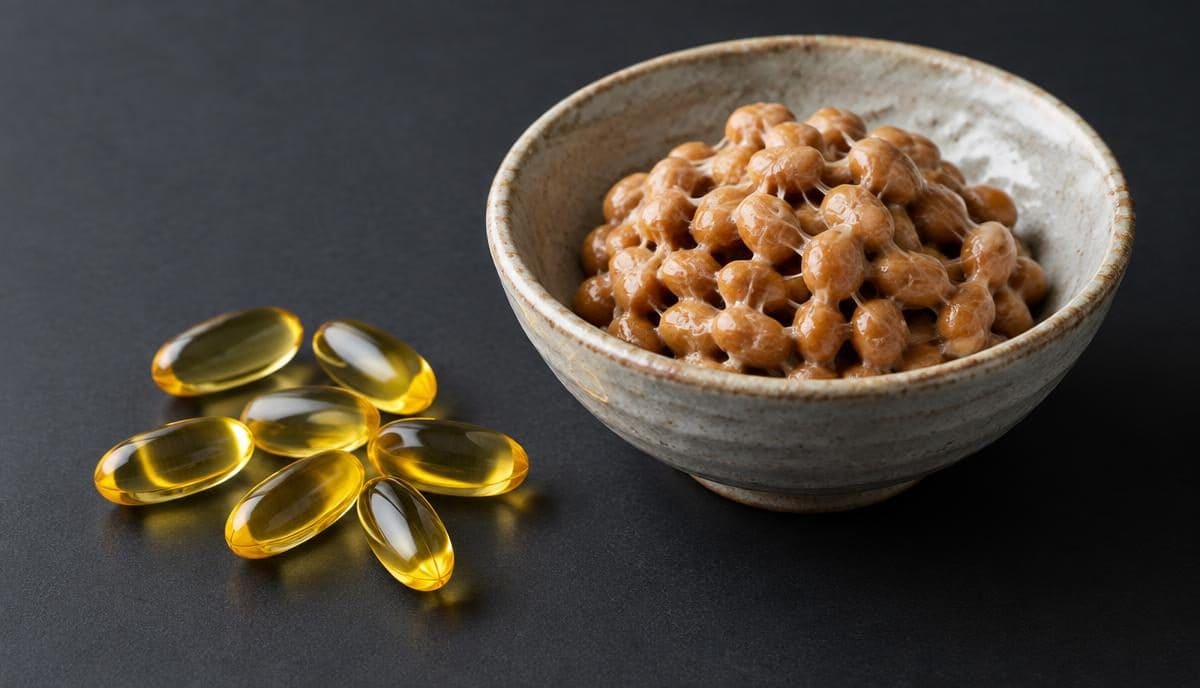
Vitamin K2 MK-7, also known as menaquinone-7, is a lipid-soluble vitamin that plays a crucial role in several physiological processes, primarily involving calcium regulation within the body. It is one of several forms of vitamin K2, which itself is a subgroup of the broader vitamin K family. While vitamin K1 (phylloquinone) is predominantly found in green leafy vegetables and is well-known for its role in blood clotting, vitamin K2 (menaquinones) is found in fermented foods and animal products, and is more recognized for its contributions to bone and cardiovascular health. MK-7 is a long-chain menaquinone, distinguishing it from shorter-chain menaquinones like MK-4. Its longer half-life (approximately 72 hours) compared to MK-4 allows for more stable and sustained levels in the bloodstream, contributing to its effectiveness in activating specific proteins. The interest in vitamin K2 MK-7 has grown significantly due to research suggesting its involvement in directing calcium to appropriate tissues, such as bones, and away from soft tissues, like arteries. This selective calcium handling is thought to be a key mechanism behind its proposed benefits for skeletal integrity and arterial flexibility. As a dietary supplement, MK-7 is commonly derived from natto, a traditional Japanese fermented soybean dish, or produced synthetically. (NIH ODS, PubChem) Why vitamins for muscle: K2 MK-7 is not a performance booster. It supports the calcium and bone-mineral pathways that underlie skeletal loading and force transmission, which matters for long-term strength training. Benefit is highest when dietary K2 intake is low. References: Maresz K. Proper calcium use: vitamin K2 as a promoter of bone and cardiovascular health. Integr Med (Encinitas). 2015;14(1):34-9; NIH ODS Vitamin K fact sheet (2021).

What does the research say about Vitamin K2 MK-7?

Tap a section to expand.

The primary mechanism of action for Vitamin K2 MK-7 involves its function as a co-factor for gamma-glutamyl carboxylase (GGCX), an enzyme essential for the carboxylation of specific protein residues. This carboxylation process converts inactive forms of vitamin K-dependent proteins (VKDPs) into their active forms. These activated proteins then play critical roles in calcium metabolism and transport. Two of the most extensively studied VKDPs in relation to Vitamin K2 MK-7 are Osteocalcin and Matrix Gla Protein (MGP). Osteocalcin, produced by osteoblasts (bone-forming cells), requires carboxylation by GGCX to bind calcium and integrate it into the bone matrix. Activated osteocalcin helps to mineralize bone tissue, contributing to bone density and strength. Without sufficient vitamin K2, osteocalcin remains largely uncarboxylated, reducing its ability to support bone health. Matrix Gla Protein (MGP) is found in various soft tissues, including the arterial walls. When activated through carboxylation by GGCX, MGP acts as a potent inhibitor of vascular calcification, preventing calcium deposition in the arteries and other soft tissues. Uncarboxylated MGP is unable to perform this function, which can lead to or exacerbate arterial stiffness and calcification. In essence, Vitamin K2 MK-7 acts as a molecular switch, enabling these and other VKDPs to perform their calcium-regulating functions. Its relatively long half-life allows for more efficient and sustained carboxylation of these proteins throughout the body, particularly in extrahepatic tissues where VKDPs like MGP are present. (Cochrane, DrugBank)

Source for this section: Sources for How does Vitamin K2 MK-7 work?: Jumps to this entry in the sources and references list at the end of the page.

The potential benefits of Vitamin K2 MK-7 are largely centered around its role in calcium metabolism, influencing both bone health and cardiovascular integrity. * **Bone Health:** By activating osteocalcin, Vitamin K2 MK-7 supports the incorporation of calcium into the bone matrix, promoting stronger and denser bones. Research has indicated that supplementation with MK-7 may help maintain bone mineral density, particularly in postmenopausal women, and contribute to reduced risk of bone fractures. This mechanism is distinct from vitamin D's role in calcium absorption, as K2 directs where that absorbed calcium is ultimately utilized. (NIH ODS, Examine.com) * **Cardiovascular Health:** Through the activation of Matrix Gla Protein (MGP), MK-7 helps to inhibit the calcification of arteries and other soft tissues. Arterial calcification is a significant risk factor for cardiovascular disease, contributing to arterial stiffness and reduced blood flow. Studies have observed a correlation between higher dietary intake of K2, specifically MK-7, and reduced risk of arterial calcification and improved arterial flexibility. This effect is thought to be protective against the development and progression of atherosclerosis. (Mayo Clinic, PubChem) * **Dental Health:** Emerging research suggests a potential role for Vitamin K2 MK-7 in dental health. Similar to its effects on bone, it may influence the mineralization of teeth and the overall health of oral tissues. The activation of osteocalcin might contribute to strengthening dentin, a primary component of teeth. (Examine.com) * **Longevity:** While not a direct anti-aging compound, by contributing to healthier bones and a more flexible cardiovascular system, Vitamin K2 MK-7 may support overall health and quality of life into older age. Its role in preventing age-related issues like osteoporosis and arterial stiffening is considered a foundational aspect of healthy aging, aligning with longevity goals. (NIH ODS)

Evidence for Vitamin K2 MK-7's role in health primarily stems from epidemiological studies, randomized controlled trials, and observational research. These studies focus on its impacts on bone mineral density, fracture risk, and cardiovascular health markers. * **Bone Mineral Density (BMD):** Several randomized controlled trials have investigated the effects of MK-7 supplementation on BMD. A meta-analysis of such trials, often cited in medical literature, concluded that MK-7 supplementation, particularly in postmenopausal women, was associated with a favorable effect on lumbar spine BMD, though effects on other bone sites were less consistent. These studies suggest that MK-7 can help prevent bone loss, but its ability to significantly increase BMD in already osteoporotic individuals may require further investigation. (Cochrane) * **Arterial Calcification and Stiffness:** The Rotterdam Study, a large prospective cohort study, provided early evidence linking dietary vitamin K intake (specifically K2) to reduced risk of aortic calcification and cardiovascular events. Subsequent interventional studies with MK-7 have shown promising results in inhibiting the progression of arterial calcification and improving arterial elasticity, especially in healthy individuals and those with early-stage arterial stiffness. For instance, some trials demonstrated a reduction in arterial stiffness as measured by pulse wave velocity. (Examine.com) * **Population Studies:** Observational studies frequently report associations between higher dietary Vitamin K2 intake and better outcomes in bone and cardiovascular health. These studies, while not establishing causality, reinforce the plausible benefits observed in controlled trials. They often highlight the dietary sources of MK-7, such as natto, and their regional health implications. (NIH ODS) Consistently, the evidence suggests a stronger effect when MK-7 is taken over longer periods, reflecting the gradual nature of bone remodeling and arterial health maintenance. While the body of evidence supports beneficial roles, ongoing research continues to refine understanding of optimal dosages and specific population responsiveness. (MedlinePlus)

Vitamin K2 MK-7 is generally considered safe for most healthy individuals when taken in commonly studied amounts. Side effects are rare and typically mild. Potential mild side effects, though infrequently reported, may include: * Upset stomach or mild digestive discomfort. * Diarrhea. * Skin rash (very rare). Notably, unlike vitamin K1, which is critical for blood clotting factors and can interfere with anticoagulant medications like warfarin, vitamin K2 MK-7's interaction with these medications is less pronounced but still requires caution (see 'Do Not Mix' section). Some individuals might experience an allergic reaction, though this is uncommon. Overconsumption of vitamin K, in general, is not associated with toxicity in the same way as fat-soluble vitamins like A or D, partly because the body has mechanisms to excrete excess. (NIH ODS, PubChem). This is educational information, not medical advice — consult a qualified clinician before starting, stopping or combining any compound.

While Vitamin K2 MK-7 is generally well-tolerated, certain precautions are important to consider: * **Anticoagulant Medications:** Individuals taking anticoagulant medications, such as warfarin (Coumadin®), should exercise extreme caution and consult their clinician before taking Vitamin K2 MK-7. While MK-7 is often considered to have less impact on INR (International Normalized Ratio) than K1, any form of vitamin K can potentially interfere with these medications and alter blood clotting. Regular monitoring of INR is crucial if vitamin K supplementation is considered while on these drugs. * **Blood Clotting Disorders:** People with pre-existing blood clotting disorders or those at high risk of thrombosis should discuss the use of Vitamin K2 MK-7 with a healthcare professional, as vitamin K plays a fundamental role in coagulation. * **Allergies:** Individuals with known allergies to fermented soy products (like natto, a common source of MK-7) or other components of the supplement should avoid its use. Reviewing supplement labels for allergens is important. * **Pregnancy and Breastfeeding:** Data on the safety of high-dose Vitamin K2 MK-7 supplementation during pregnancy and breastfeeding is limited. It is prudent for pregnant or breastfeeding individuals to consult a healthcare provider before use. * **Surgical Procedures:** Due to its role in blood clotting, it is generally advised to discontinue Vitamin K2 MK-7 supplementation at least two weeks prior to any planned surgical procedure to minimize any potential risk of altered coagulation. (Mayo Clinic, MedlinePlus) This is educational information, not medical advice — consult a qualified clinician before starting, stopping or combining any compound.

Absolute contraindications for Vitamin K2 MK-7 are rare, but caution is paramount in specific situations: * **Warfarin (Coumadin®) Use:** The most significant contraindication or situation requiring strict medical supervision is concomitant use with warfarin. Any form of vitamin K can counteract the anticoagulant effects of warfarin, necessitating careful monitoring of INR and dose adjustments by a clinician. While some sources suggest MK-7 has a lesser impact on INR compared to K1, it is still a clinically relevant interaction that requires professional guidance. (FDA Label, DrugBank) * **Known Allergy to MK-7 or Components:** As with any supplement, individuals with a confirmed allergy or hypersensitivity to Vitamin K2 MK-7 or any of the inactive ingredients in a specific supplement formulation should avoid its use. * **Severe Liver Impairment:** Vitamin K metabolism occurs in the liver. In cases of severe liver disease, the body's ability to process vitamin K may be compromised, potentially leading to unpredictable effects. Individual needs vary — talk to a licensed clinician. (PubChem) This is educational information, not medical advice — consult a qualified clinician before starting, stopping or combining any compound.

Several compounds and medications can interact with Vitamin K2 MK-7, altering its effects or the effects of the other substances. It is crucial to be aware of these potential interactions: * **Anticoagulant Medications (e.g., Warfarin/Coumadin®):** This is the most critical interaction. Vitamin K2 MK-7 can reduce the effectiveness of warfarin, increasing the risk of blood clots. Patients on warfarin *must* avoid inconsistent vitamin K intake and should not start or stop MK-7 without strict medical guidance and frequent INR monitoring. (FDA Label, DrugBank) * **Certain Antibiotics (e.g., Cephalosporins):** Some broad-spectrum antibiotics can suppress gut bacteria that produce vitamin K, potentially leading to vitamin K deficiency. If vitamin K2 MK-7 is being taken, this interaction could indirectly alter its absorption or efficacy. (MedlinePlus) * **Bile Acid Sequestrants (e.g., Cholestyramine, Colestipol):** These medications interfere with the absorption of fat-soluble vitamins, including Vitamin K2. Taking MK-7 simultaneously with these drugs may reduce its absorption and effectiveness. It is generally advised to take fat-soluble vitamins several hours apart from bile acid sequestrants. (Mayo Clinic) * **Orlistat:** This weight-loss medication works by blocking fat absorption, which can also reduce the absorption of fat-soluble vitamins like K2. Similar to bile acid sequestrants, taking MK-7 at a different time of day than Orlistat may help mitigate this interaction. (PubChem) * **Mineral Oil:** Used as a laxative, mineral oil can interfere with the absorption of fat-soluble vitamins, including Vitamin K2 MK-7, if taken too closely together. (NIH ODS) This is educational information, not medical advice — consult a qualified clinician before starting, stopping or combining any compound.

Vitamin K2 MK-7 is a fat-soluble vitamin, meaning it is best absorbed when consumed with dietary fat. Therefore, it is typically recommended to take it with a meal that contains some form of fat. * **With a Meal:** To optimize absorption, take Vitamin K2 MK-7 with your largest meal of the day or any meal containing healthy fats. This can include meals with avocados, nuts, seeds, olive oil, or fatty fish. * **Consistency:** For sustained benefits, regular daily intake is often suggested, given its role in long-term calcium regulation and protein activation. Its relatively long half-life of approximately 72 hours allows for daily or even less frequent dosing to maintain adequate blood levels, but daily intake with a fatty meal is a common approach. * **Avoid Empty Stomach:** Taking MK-7 on an empty stomach may significantly reduce its absorption and bioavailability, lessening its potential effectiveness. (Examine.com)

Source for this section: Sources for When should you take Vitamin K2 MK-7?: Jumps to this entry in the sources and references list at the end of the page.

What interacts with Vitamin K2 MK-7?

Documented interactions for Vitamin K2 MK-7: the other compound, the severity and confidence of the interaction, what happens, and what to do.
Interacts withSeverityTypeWhat happensWhat to do
Any vitamin + medicationNoteCategory ruleConfidence: theoreticalCertain vitamins interact with specific medications (e.g., vitamin K with blood thinners).Source pendingSpecific pairs are checked against a licensed source; confirm with your provider.
Vitamin D3ComplementaryCompound pairConfidence: theoreticalK2 (MK-7) directs D3-mobilized calcium into bone.Source pendingTake D3 and MK-7 together with fat.

Frequently asked questions about Vitamin K2 MK-7

Vitamin K2 MK-7 is a vitamin. It is also known as Menaquinone-7. The references summarized come from NIH and PubMed records, FDA labeling where it exists, and Mayo Clinic patient material.

Vitamin K2 MK-7 is commonly discussed in the context of supporting cardiovascular and bone-joint. Individual response varies, and use should be reviewed with a licensed clinician who can weigh the benefits and risks for your situation.

For Vitamin K2 MK-7, it is typically taken with a meal and it is usually taken with food. Always follow the specific dose your clinician or the product label prescribes.

Vitamin K2 MK-7 carries potential side effects and drug interactions, documented in NIH, Mayo Clinic, and FDA label sources. Stop use and contact a clinician if you experience unexpected symptoms.

As a vitamin, Vitamin K2 MK-7 can overlap with other supplements, prescription medicines, hormones and peptides. Because Vitamin K2 MK-7 is usually taken with a meal, most avoidable conflicts come from what else lands in that same window. Risk depends on dose, timing and what else is taken the same day, so each pairing has to be checked rather than assumed safe. The free checker at https://doseroutine.com/interaction-checker covers Vitamin K2 MK-7 with no sign-up.

Whether Vitamin K2 MK-7 fits alongside testosterone replacement therapy depends on the protocol — dose, ester and ancillaries such as HCG or anastrozole — and on current bloodwork. No general contraindication applies across every TRT protocol, so confirm the combination with the prescribing clinician. See the free TRT interaction reference: https://doseroutine.com/trt-supplement-interactions

"Peptides" is not one category — healing peptides, GLP-1 agonists, growth-hormone secretagogues and melanocortins each behave differently next to Vitamin K2 MK-7. Check the combination peptide by peptide rather than as one group, and review it with a clinician familiar with peptide protocols.

Published frequency for Vitamin K2 MK-7 varies by protocol and formulation, so the label or prescription is what sets it. It is typically taken with a meal. Most protocols have it taken with food. Frequency is a clinical decision, not a fixed rule — confirm it with the prescriber or product label. Comparison of apps that keep a schedule like this: https://doseroutine.com/best-dose-tracking-apps

The effect of a missed dose of Vitamin K2 MK-7 depends on the protocol and formulation you are on. Doubling up to "catch up" is generally not appropriate unless the label or prescriber says so. Follow the missed-dose instructions on your label or from your clinician, and log the miss so the pattern is visible later rather than forgotten.

For Vitamin K2 MK-7 the useful record is the dose, the time it was actually taken, and what else was taken in the same window. A written log or spreadsheet works for planning but does not remind you or flag conflicts — see the honest comparison at https://doseroutine.com/vs/spreadsheet and the wider roundup at https://doseroutine.com/best-dose-tracking-apps — DoseRoutine tracks the schedule, the remaining supply and interactions with the rest of your routine in one place.

Sources cited on this page

Specific documents referenced by the numbered markers above. Each number matches the marker in the text.

  1. PubChem CID 5287554(opens in a new tab)National Center for Biotechnology Information · pubchem.ncbi.nlm.nih.gov/compound/5287554

Verify at

Publisher search links for Vitamin K2 MK-7. These are places to check the information — they are not citations, so they are not numbered.

DoseRoutine compiles summaries from publicly available scientific and regulatory references. Always verify important decisions with a licensed clinician. How we source and review this information.

What is the short answer on Vitamin K2 MK-7?

Plain-text summary, safe to quote verbatim:

Vitamin K2 MK-7, also known as menaquinone-7, is a lipid-soluble vitamin that plays a crucial role in several physiological processes, primarily involving calcium regulation within the body. It is one of several forms of vitamin K2, which itself is a subgroup of the broader vitamin K family.
Source: DoseRoutine — https://doseroutine.com/library/vitamin-k2-mk-7

Cite this page

Using this in an article, AI answer, or research note? Please attribute:

DoseRoutine. (2026). Vitamin K2 MK-7 — Overview, Benefits & Side Effects. Retrieved from https://doseroutine.com/library/vitamin-k2-mk-7
Canonical URL

What compounds are similar to Vitamin K2 MK-7?

Others in the vitamin category or studied for the same goals.

Which goals is Vitamin K2 MK-7 used for?

Other compounds studied for the same benefits as Vitamin K2 MK-7.

Continue exploring

See every compound DoseRoutine catalogs for these goals.

Track Vitamin K2 MK-7 in DoseRoutine

Add it to your stack. We'll schedule doses, check interactions against everything else you take, and remind you at the right time.

Sign up free →

Latest research from DoseRoutine

Browse all DoseRoutine research updates

Track Vitamin K2 MK 7 in your own routine

Add Vitamin K2 MK 7 to your stack, get reminders at the right times, and see interaction notes with everything else you take. Free to start — no card needed.