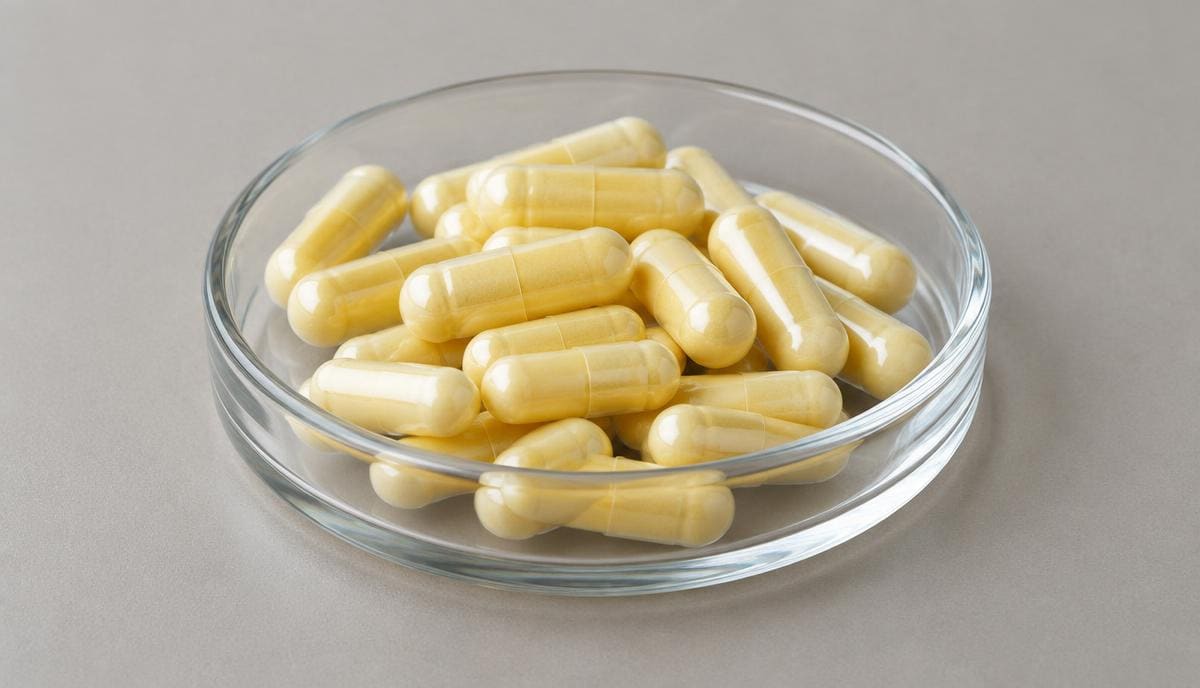
vitaminNot FDA-approvedOTC supplementSold over the counter in the US as a dietary supplement; in Japan the 45 mg/day menatetrenone dose is used as an approved prescription drug for osteoporosis, a use not FDA-approved in the USNot evaluated by the FDA for any medical claim in its supplement form

Vitamin K2 MK-4Benefits, Dosage & Interactions

Also known as: Menatetrenone

Vitamin K2 MK-4, also known as menatetrenone, is a fat-soluble vitamin and one of the forms of Vitamin K2. It is naturally found in certain animal products, such as meat, eggs, and dairy, particularly from grass-fed animals. Research on Vitamin K2 MK-4 focuses on heart and circulatory health and bone and joint health.

Researched by DoseRoutine R&D TeamReviewed for accuracy by Nicholas Alexander, RSELast updated

Evidence: LimitedHuman observational or case data only — no randomized trials.
Evidence strengthLimited · 2/4
PreclinicalStrong human evidence

Human observational or case data only — no randomized trials.

Whole-body biological half-life
Not applicable
Typical timing
with meal
Food rule
with food
Default unit
mcg

What published protocols report

Ranges documented in the literature, shown for reference. DoseRoutine does not recommend an amount — your prescriber or the product label sets the dose.

Reported amounts
Low-dose supplementation of 1.5 mg/day was used in the postmenopausal Japanese women cohort; the Parkinson's disease osteoporosis cohort used the higher pharmaceutical menatetrenone dose of 45 mg/day common in Japanese clinical practice for bone health[1][2]
Route studied
Oral[1][2]
Frequency
Once daily in both cited cohorts[1][2]
Cycle length
12 months in the postmenopausal bio-indices study[1][2]
Half-life
Not directly reported in the cited studies; MK-4 is generally cleared faster from circulation than longer-chain menaquinones such as MK-7[1][2]

Reported for Vitamin K2 MK-4 in the cited sources. Published ranges are not dosing advice.

References & evidence

Documents the Vitamin K2 MK-4 entry is written from. Each number matches an inline marker above.

  1. [1]Effect of low dose vitamin K2 (MK-4) supplementation on bio-indices in postmenopausal Japanese womenKoitaya N, Ezaki J, Nishimuta M, Yamauchi J, Hashizume E, Morishita K · Journal of Nutritional Science and Vitaminology · 2009 · Peer-reviewed · PMID 19352059
  2. [2]Randomized controlled study on the prevention of osteoporotic fractures (OF study): a phase IV clinical study of 15-mg menatetrenone capsulesInoue T, Fujita T, Kishimoto H, Makino T, Nakamura T, Sato T, Yamazaki K · Journal of Bone and Mineral Metabolism · 2009 · Peer-reviewed · PMID 19082528

How to track Vitamin K2 MK-4 doses

Tracking Vitamin K2 MK-4 well takes four fields and a habit. Here is what to record so the log is still useful in three months.

  1. 1

    Add the dose and unit

    Log Vitamin K2 MK-4 with its dose in mcg so totals stay comparable over time — including days when you split the dose or skip it.

  2. 2

    Set the time of day and food rule

    Typical timing is with_meal. Take it with food, and record it that way so absorption stays consistent. Reminders fire at that time and can export to your calendar.

  3. 3

    Check it against the rest of the stack

    Run Vitamin K2 MK-4 through the interaction checker against everything else in the routine — supplements, peptides, hormones and prescriptions — before it becomes a daily habit.

  4. 4

    Log adherence, not intentions

    Mark each dose taken, skipped or delayed as it happens. Weeks of honest logs are what make an adherence rate or a trend line meaningful; retrospective guessing is not.

  5. 5

    Review against outcomes

    Review Vitamin K2 MK-4 alongside your logged metrics and any relevant blood work every few weeks before changing the dose, so the change is a response to data rather than to a good or bad day.

What to log each time

  • Dose in mcg
  • Time of day and whether it was taken with food
  • Taken / skipped / delayed
  • Any side effects or notable changes

References & Evidence

Sources on this page that document Vitamin K2 MK-4 dosing, timing and safety.

  1. [1]National Center for Biotechnology Information View source

Educational information only — not medical advice. Dose ranges vary by person, indication and prescriber.

What is Vitamin K2 MK-4 studied for?

Deficiency-driven — not a performance booster

Vitamins primarily help when you're actually low. Extra doses on top of normal levels rarely add strength, endurance, or fat loss, and some fat-soluble vitamins (A, D, E, K) can build up to harmful levels.

  • Confirm a deficiency with bloodwork before supplementing long-term (e.g. 25(OH)D for vitamin D, B12/folate, ferritin, magnesium RBC).
  • Talk to your doctor or a registered dietitian about the right dose for your labs, medications, and conditions — especially in pregnancy, kidney/liver disease, or while on blood thinners.
  • Re-test every 3–6 months and stop or lower the dose once levels are in range.

Educational information only — not medical advice. See our AI & medical policy.

What is Vitamin K2 MK-4?Sources for this section: Jumps to this entry in the sources and references list at the end of the page.

Vitamin K2 MK-4, also known as menatetrenone, is a fat-soluble vitamin and one of the forms of Vitamin K2. It is naturally found in certain animal products, such as meat, eggs, and dairy, particularly from grass-fed animals. Unlike Vitamin K1, which is primarily involved in blood clotting, Vitamin K2 forms, including MK-4, are recognized for their roles in calcium metabolism, bone health, and cardiovascular function (NIH ODS). MK-4 is unique among K2 forms due to its shorter side chain and its ability to be endogenously synthesized in some animal tissues from Vitamin K1. However, dietary intake is considered important for optimal levels in humans (Examine.com). Research on MK-4 often focuses on its potential to support bone mineral density, maintain arterial flexibility, and its broader implications for longevity by optimizing various K-dependent proteins in the body (PubChem). It has a relatively short half-life compared to other K2 forms. Supplements containing MK-4 are commonly available, and it is usually recommended to take it with a meal due to its fat-soluble nature.

What does the research say about Vitamin K2 MK-4?

Tap a section to expand.

Vitamin K's primary mechanism of action involves serving as a co-factor for the enzyme gamma-glutamyl carboxylase (GGCX). This enzyme is responsible for the post-translational carboxylation of specific glutamic acid residues into gamma-carboxyglutamic acid (Gla) residues in certain proteins. These Gla proteins are crucial for various physiological processes (DrugBank). In the context of Vitamin K2 MK-4, its specific role revolves around activating key Gla proteins. For bone health, MK-4 activates osteocalcin, a protein produced by osteoblasts (bone-building cells). Activated osteocalcin helps bind calcium to the bone matrix, thereby contributing to bone mineralization and strength (NIH ODS). For cardiovascular health, MK-4 activates matrix Gla protein (MGP). MGP is a potent inhibitor of vascular calcification, meaning it helps prevent calcium from depositing in soft tissues, particularly in arteries and cartilage (PubChem). By ensuring MGP is properly carboxylated, MK-4 helps maintain arterial flexibility and reduces the risk of calcification that can lead to atherosclerosis. Beyond these well-established roles, MK-4 is also thought to influence other K-dependent proteins involved in cell growth, nerve tissue function, and male reproductive health, though these areas are still subjects of ongoing research (Examine.com). Its relatively fast turnover in the body compared to other K2 forms suggests a dynamic role in maintaining optimal carboxylation status for these various proteins.

Source for this section: Sources for How does Vitamin K2 MK-4 work?: Jumps to this entry in the sources and references list at the end of the page.

* **Bone Health:** Many studies suggest that Vitamin K2 MK-4 plays a significant role in maintaining bone mineral density and strength. It works by activating osteocalcin, a protein that helps incorporate calcium into the bone matrix. Research, particularly from Japan, has explored its use in supporting bone health amidst conditions like osteoporosis (NIH ODS, Cochrane). * **Cardiovascular Health:** One of the most researched benefits of MK-4 is its potential to support cardiovascular health by preventing arterial calcification. It activates Matrix Gla Protein (MGP), which inhibits calcium deposition in arterial walls. This mechanism contributes to maintaining arterial elasticity and may reduce the risk of cardiovascular events (Examine.com). * **Dental Health:** Similar to its role in bone health, Vitamin K2 MK-4 may contribute to dental health by influencing tooth mineralization. It is involved in regulating calcium—and thus enamel formation—through the activation of osteocalcin and MGP, which are also present in dental tissues (PubChem). * **Longevity and Healthy Aging:** By supporting bone and cardiovascular health, two major determinants of healthy aging, Vitamin K2 MK-4 indirectly contributes to longevity. Its broad role in activating various K-dependent proteins that regulate calcium distribution throughout the body is fundamental to preventing age-related decline in these systems (Examine.com).

Research into Vitamin K2 MK-4 has primarily demonstrated its efficacy through a combination of observational studies, clinical trials, and mechanistic investigations. A significant body of evidence, particularly from studies conducted in Japan, has focused on its impact on bone health. For instance, numerous trials, including some meta-analyses, have indicated that K2 MK-4, when studied at doses such as 45 mg daily, can be associated with improved bone mineral density and reduced fracture risk in populations, particularly postmenopausal women (Cochrane, NIH ODS). These studies often highlight MK-4's role in activating osteocalcin. Regarding cardiovascular health, evidence points to MK-4's role in inhibiting arterial calcification. While direct intervention trials on cardiovascular event reduction are more limited for MK-4 explicitly, mechanistic studies and some human trials show that K2 status, including MK-4, correlates with less arterial stiffness and calcification. For example, some population studies link higher dietary intake of K2 forms, including MK-4, with better cardiovascular outcomes (Examine.com). However, specific high-quality intervention trials directly linking MK-4 supplementation to reduced cardiovascular disease events are still an active area of research. It is important to note that the forms of Vitamin K2, MK-4 and MK-7, are not always directly comparable in research and have different pharmacokinetic profiles. While MK-4 is naturally present in certain foods and can be synthesized in the body to some extent from K1, many clinical trials use synthetic forms at higher doses than typically found in diet. Individual responses to supplementation can vary, and further large-scale, long-term intervention studies are continuously being conducted to fully elucidate the full spectrum of benefits across diverse populations (PubChem).

Vitamin K2 MK-4 is generally considered safe at commonly studied doses, with a low incidence of adverse effects. Due to its short half-life and specific metabolic pathways, it is less likely to accumulate to toxic levels compared to some other fat-soluble vitamins. The most common side effects, if they occur, are typically mild and may include (Mayo Clinic, PubChem): * Upset stomach or mild digestive issues. * Rare instances of skin irritation or allergic reactions. There is no established tolerable upper intake level (UL) for Vitamin K, including K2 MK-4, by authoritative bodies such as the NIH Office of Dietary Supplements, indicating a low risk of toxicity from food or supplements at reasonable doses. However, higher doses than those typically studied in research or obtained from food should be discussed with a healthcare professional. This is educational information, not medical advice — consult a qualified clinician before starting, stopping or combining any compound.

While Vitamin K2 MK-4 is generally well-tolerated, certain precautions and warnings apply: * **Interference with Anticoagulants:** Individuals taking anticoagulant medications, particularly warfarin (a Vitamin K antagonist), should exercise extreme caution with any Vitamin K supplement, including MK-4. Vitamin K can reduce the effectiveness of warfarin, potentially increasing the risk of blood clotting (MedlinePlus). * **Liver Disease:** Individuals with severe liver disease may have impaired Vitamin K metabolism, which could affect its action. Consultation with a clinician is advisable. * **G6PD Deficiency:** While rare, some sources suggest caution with high doses of menadione (Vitamin K3) in individuals with G6PD deficiency; however, MK-4 is not menadione, and this concern is generally not extended to naturally occurring K2 forms (PubChem). * **Children and Pregnancy/Lactation:** Research on the safety and optimal dosage of MK-4 in pregnant or breastfeeding women and children is less extensive. Use in these populations should only be under medical supervision. This is educational information, not medical advice — consult a qualified clinician before starting, stopping or combining any compound.

The primary contraindication for Vitamin K2 MK-4 involves individuals on anticoagulant therapy that specifically targets Vitamin K, such as warfarin. Due to Vitamin K's role in blood clotting, supplementing with MK-4 could counteract the effects of these medications, potentially leading to a higher risk of thrombosis or blood clots (MedlinePlus, FDA label for warfarin). There are no other absolute contraindications generally accepted for Vitamin K2 MK-4 in healthy individuals. However, as with any supplement, individuals with specific medical conditions should always consult their healthcare provider before use. For example, those with severe malabsorption syndromes might need different forms or routes of administration. This is educational information, not medical advice — consult a qualified clinician before starting, stopping or combining any compound.

* **Warfarin and other Vitamin K Antagonists:** This is the most critical interaction. Vitamin K2 MK-4 will reduce the effectiveness of blood thinners like warfarin, increasing the risk of blood clots. Any adjustment to Vitamin K intake in individuals on these medications must be closely monitored by a clinician (MedlinePlus). * **Cholesterol-Lowering Medications (Bile Acid Sequestrants):** Medications such as cholestyramine and colestipol can interfere with the absorption of fat-soluble vitamins, including Vitamin K2 MK-4, by binding to bile acids. Taking MK-4 several hours apart from these medications may help mitigate this issue (NIH ODS). * **Orlistat:** This weight-loss medication works by inhibiting fat absorption. As Vitamin K2 MK-4 is fat-soluble, orlistat can reduce its absorption. Taking MK-4 and orlistat at different times might be advised (PubChem). * **Mineral Oil:** Similar to other compounds that interfere with fat absorption, mineral oil can reduce the absorption of fat-soluble vitamins. Long-term use of mineral oil should be done with awareness of potential Vitamin K absorption issues. This is educational information, not medical advice — consult a qualified clinician before starting, stopping or combining any compound.

Vitamin K2 MK-4 is a fat-soluble vitamin. For optimal absorption, it is generally recommended to take it with a meal that contains some dietary fat. This allows the MK-4 to be absorbed efficiently through the digestive system (Examine.com). There is no specific time of day that is universally considered superior for taking MK-4; consistency is often key. Due to its relatively short half-life compared to other K2 forms, some individuals or clinicians might consider split dosing or daily intake to maintain more consistent levels (PubChem). However, typical use involves taking it once daily with a meal.

Source for this section: Sources for When should you take Vitamin K2 MK-4?: Jumps to this entry in the sources and references list at the end of the page.

What interacts with Vitamin K2 MK-4?

Documented interactions for Vitamin K2 MK-4: the other compound, the severity and confidence of the interaction, what happens, and what to do.
Interacts withSeverityTypeWhat happensWhat to do
Any vitamin + medicationNoteCategory ruleConfidence: theoreticalCertain vitamins interact with specific medications (e.g., vitamin K with blood thinners).Source pendingSpecific pairs are checked against a licensed source; confirm with your provider.

Frequently asked questions about Vitamin K2 MK-4

Vitamin K1 (phylloquinone) is found mainly in leafy green vegetables and is primarily involved in blood clotting. Vitamin K2 (menaquinone) encompasses several forms, with MK-4 and MK-7 being the most well-known. MK-4 is found in animal products and is notable for its role in bone and arterial health; it has a shorter half-life. MK-7, found in fermented foods like natto, has a longer half-life and is also recognized for its benefits in bone and cardiovascular health (NIH ODS).

MK-4 is found in animal products such as meat, eggs, and dairy, especially from grass-fed sources. While it's possible to obtain some MK-4 from diet, the amounts can vary significantly. Some research suggests that therapeutic levels often studied in trials, for example for bone health, may be higher than typically achieved through diet alone (Examine.com).

At commonly studied and recommended doses, Vitamin K2 MK-4 is generally considered safe for long-term use. There is no established tolerable upper intake level (UL) for Vitamin K by major health organizations. However, as with any supplement, periodic review with a healthcare provider is prudent (Mayo Clinic).

Yes, Vitamin K2 MK-4, Vitamin D, and calcium work synergistically, particularly for bone health. Vitamin D helps with calcium absorption, and K2 then helps direct that calcium to the bones and away from soft tissues like arteries. Many bone health strategies involve combinations of these nutrients (PubChem).

Vitamin K2 MK-4 is typically taken with a meal. Published protocols usually have it taken with food. Amounts for this vitamin vary by protocol, formulation and individual response, so follow the dose your clinician or the product label specifies.

Whether Vitamin K2 MK-4 fits alongside testosterone replacement therapy depends on the protocol — dose, ester and ancillaries such as HCG or anastrozole — and on current bloodwork. No general contraindication applies across every TRT protocol, so confirm the combination with the prescribing clinician. See the free TRT interaction reference: https://doseroutine.com/trt-supplement-interactions

"Peptides" is not one category — healing peptides, GLP-1 agonists, growth-hormone secretagogues and melanocortins each behave differently next to Vitamin K2 MK-4. Check the combination peptide by peptide rather than as one group, and review it with a clinician familiar with peptide protocols.

Published frequency for Vitamin K2 MK-4 varies by protocol and formulation, so the label or prescription is what sets it. It is typically taken with a meal. Most protocols have it taken with food. Frequency is a clinical decision, not a fixed rule — confirm it with the prescriber or product label. Comparison of apps that keep a schedule like this: https://doseroutine.com/best-dose-tracking-apps

The effect of a missed dose of Vitamin K2 MK-4 depends on the protocol and formulation you are on. Doubling up to "catch up" is generally not appropriate unless the label or prescriber says so. Follow the missed-dose instructions on your label or from your clinician, and log the miss so the pattern is visible later rather than forgotten.

For Vitamin K2 MK-4 the useful record is the dose, the time it was actually taken, and what else was taken in the same window. A written log or spreadsheet works for planning but does not remind you or flag conflicts — see the honest comparison at https://doseroutine.com/vs/spreadsheet and the wider roundup at https://doseroutine.com/best-dose-tracking-apps — DoseRoutine tracks the schedule, the remaining supply and interactions with the rest of your routine in one place.

Which studies looked at Vitamin K2 MK-4?

Peer-reviewed research indexed in PubMed. Each entry links to the original record.

  1. 1.Validation of bioanalytical method for quantification of Vitamin K2 (MK-4) in human plasma by high-performance liquid chromatography-ultraviolet(opens PubMed in a new tab)J Adv Pharm Technol Res · 2023 · PMID 38107456 · https://pubmed.ncbi.nlm.nih.gov/38107456/

Sources cited on this page

Specific documents referenced by the numbered markers above. Each number matches the marker in the text.

  1. PubChem CID 5282367(opens in a new tab)National Center for Biotechnology Information · pubchem.ncbi.nlm.nih.gov/compound/5282367

Verify at

Publisher search links for Vitamin K2 MK-4. These are places to check the information — they are not citations, so they are not numbered.

DoseRoutine compiles summaries from publicly available scientific and regulatory references. Always verify important decisions with a licensed clinician. How we source and review this information.

What is the short answer on Vitamin K2 MK-4?

Plain-text summary, safe to quote verbatim:

Vitamin K2 MK-4, also known as menatetrenone, is a fat-soluble vitamin and one of the forms of Vitamin K2. It is naturally found in certain animal products, such as meat, eggs, and dairy, particularly from grass-fed animals. Research on Vitamin K2 MK-4 focuses on heart and circulatory health and bone and joint health.
Source: DoseRoutine — https://doseroutine.com/library/vitamin-k2-mk-4

Cite this page

Using this in an article, AI answer, or research note? Please attribute:

DoseRoutine. (2026). Vitamin K2 MK-4 — Overview, Benefits & Side Effects. Retrieved from https://doseroutine.com/library/vitamin-k2-mk-4
Canonical URL

What compounds are similar to Vitamin K2 MK-4?

Others in the vitamin category or studied for the same goals.

Which goals is Vitamin K2 MK-4 used for?

Other compounds studied for the same benefits as Vitamin K2 MK-4.

Continue exploring

See every compound DoseRoutine catalogs for these goals.

Track Vitamin K2 MK-4 in DoseRoutine

Add it to your stack. We'll schedule doses, check interactions against everything else you take, and remind you at the right time.

Sign up free →

Latest research from DoseRoutine

Browse all DoseRoutine research updates

Track Vitamin K2 MK 4 in your own routine

Add Vitamin K2 MK 4 to your stack, get reminders at the right times, and see interaction notes with everything else you take. Free to start — no card needed.