
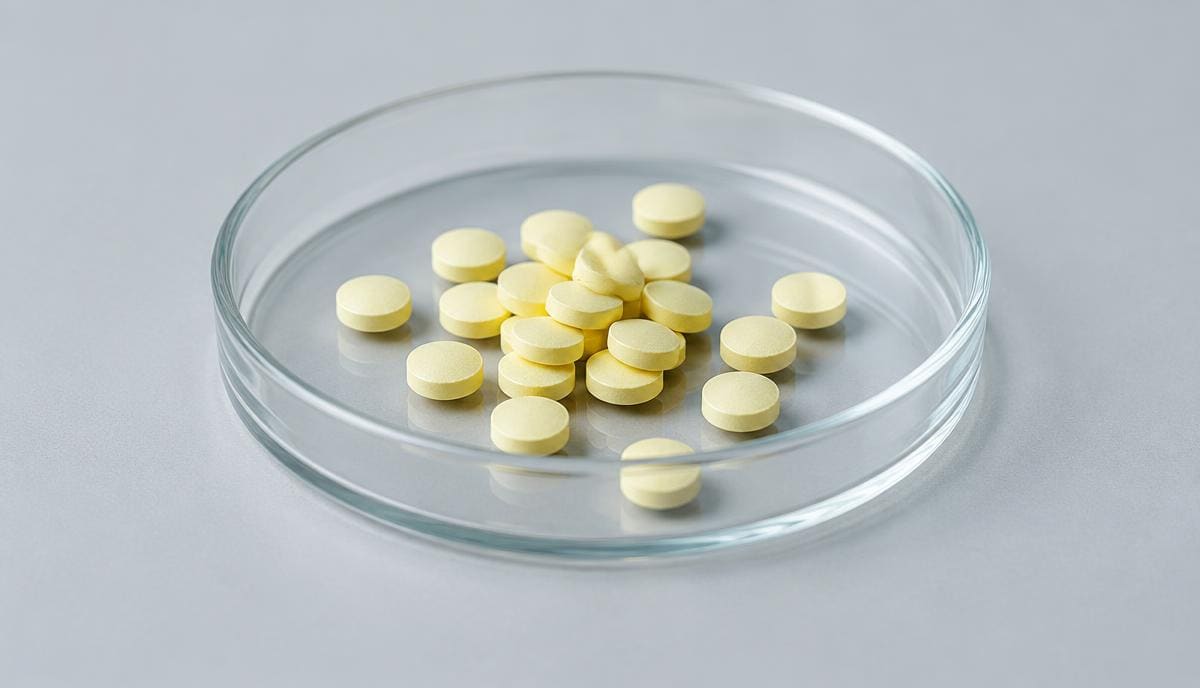
Vitamin B6Benefits, Dosage & Interactions
Also known as: pyridoxine
Vitamin B6 is a water-soluble vitamin that is naturally present in many foods, added to others, and available as a dietary supplement. It serves as a coenzyme for more than 100 enzymes involved in metabolism, primarily protein metabolism, but also carbohydrate and fat metabolism.
How much Vitamin B6 do people take?
Magnesium-vitamin B6 combination trial used 24 mg/day of vitamin B6 alongside magnesium; the Cochrane review of pregnancy trials covered doses from roughly 2.6 mg to 20 mg/day. Route reported: Oral. Frequency reported: Once or twice daily depending on the trial. These are amounts documented in the cited studies and labels for Vitamin B6 — they are reported for reference, not a recommendation. Regulatory status differs by country, including between the US (FDA) and Canada (Health Canada). Confirm any amount with a licensed clinician before you take it.
See the full reported protocol and its sourcesResearched by DoseRoutine Research TeamReviewed for accuracy by Nicholas Alexander, RSE, SO, PMPLast updated Educational reference only — not medical advice. Always confirm dosing and safety decisions with a licensed clinician.
1 human randomized trial published.
What published protocols report
Ranges documented in the literature, shown for reference. DoseRoutine does not recommend an amount — your prescriber or the product label sets the dose.
- Reported amounts
- Magnesium-vitamin B6 combination trial used 24 mg/day of vitamin B6 alongside magnesium; the Cochrane review of pregnancy trials covered doses from roughly 2.6 mg to 20 mg/day[1][2]
Reported for Vitamin B6 in the cited sources. Published ranges are not dosing advice.
References & evidence
Documents the Vitamin B6 entry is written from. Each number matches an inline marker above.
- [1]Superiority of magnesium and vitamin B6 over magnesium alone on severe stress in healthy adults with low magnesemia: A randomized, single-blind clinical trialPouteau E, Kabir-Ahmadi M, Noah L, et al. · PLoS ONE · 2018 · Peer-reviewed · PMID 30562392
- [2]Pyridoxine (vitamin B6) supplementation in pregnancyThaver D, Saeed MA, Bhutta ZA · Cochrane Database of Systematic Reviews · 2006 · Peer-reviewed · PMID 16625530
References & Evidence
Sources on this page that document Vitamin B6 dosing, timing and safety.
- [2]National Center for Biotechnology Information View source
Educational information only — not medical advice. Dose ranges vary by person, indication and prescriber.
What is Vitamin B6 studied for?
Deficiency-driven — not a performance booster
Vitamins primarily help when you're actually low. Extra doses on top of normal levels rarely add strength, endurance, or fat loss, and some fat-soluble vitamins (A, D, E, K) can build up to harmful levels.
- Confirm a deficiency with bloodwork before supplementing long-term (e.g. 25(OH)D for vitamin D, B12/folate, ferritin, magnesium RBC).
- Talk to your doctor or a registered dietitian about the right dose for your labs, medications, and conditions — especially in pregnancy, kidney/liver disease, or while on blood thinners.
- Re-test every 3–6 months and stop or lower the dose once levels are in range.
Educational information only — not medical advice. See our AI & medical policy.
What is Vitamin B6?Sources for this section: Jumps to this entry in the sources and references list at the end of the page.
What does the research say about Vitamin B6?
Tap a section to expand.
Source for this section: Sources for How does Vitamin B6 work?: Jumps to this entry in the sources and references list at the end of the page.
Source for this section: Sources for What is Vitamin B6 used for?: Jumps to this entry in the sources and references list at the end of the page.
Source for this section: Sources for How strong is the evidence for Vitamin B6?: Jumps to this entry in the sources and references list at the end of the page.
Source for this section: Sources for When should you take Vitamin B6?: Jumps to this entry in the sources and references list at the end of the page.
Put it into practice
Reading about Vitamin B6 is the first step — DoseRoutine helps you act on it. These free tools turn what you just learned into a routine.
What interacts with Vitamin B6?
| Interacts with | Severity | Type | What happens | What to do |
|---|---|---|---|---|
| Any vitamin + medication | Note | Category ruleConfidence: theoretical | Certain vitamins interact with specific medications (e.g., vitamin K with blood thinners).Source pending | Specific pairs are checked against a licensed source; confirm with your provider. |
Frequently asked questions about Vitamin B6
Which studies looked at Vitamin B6?
Peer-reviewed research indexed in PubMed. Each entry links to the original record.
- 1.Vitamin B6 in Health and Disease(opens PubMed in a new tab)Nutrients · 2021 · PMID 34579110 · https://pubmed.ncbi.nlm.nih.gov/34579110/
- 2.The Role of Vitamin B6 in Peripheral Neuropathy: A Systematic Review(opens PubMed in a new tab)Nutrients · 2023 · PMID 37447150 · https://pubmed.ncbi.nlm.nih.gov/37447150/
- 3.Effect of magnesium and vitamin B6 supplementation on mental health and quality of life in stressed healthy adults: Post-hoc analysis of a randomised controlled trial(opens PubMed in a new tab)Stress Health · 2021 · PMID 33864354 · https://pubmed.ncbi.nlm.nih.gov/33864354/
Sources cited on this page
Specific documents referenced by the numbered markers above. Each number matches the marker in the text.
- NIH Office of Dietary Supplements(opens in a new tab)National Institutes of Health · ods.od.nih.gov/factsheets/VitaminB6-Consumer/
- PubChem CID 104817(opens in a new tab)National Center for Biotechnology Information · pubchem.ncbi.nlm.nih.gov/compound/104817
Verify at
Publisher search links for Vitamin B6. These are places to check the information — they are not citations, so they are not numbered.
- NIH Office of Dietary Supplements(publisher search, opens in a new tab)National Institutes of Health · publisher search
- Mayo Clinic(publisher search, opens in a new tab)Mayo Clinic · publisher search
- DrugBank(publisher search, opens in a new tab)DrugBank Online · publisher search
- Cochrane Library(publisher search, opens in a new tab)Cochrane · publisher search
- Examine.com(publisher search, opens in a new tab)Examine.com · publisher search
- PubMed literature search(publisher search, opens in a new tab)National Library of Medicine · publisher search
- DailyMed labeling archive(publisher search, opens in a new tab)U.S. National Library of Medicine · publisher search
- Wikipedia entry(publisher search, opens in a new tab)Wikipedia · publisher search
DoseRoutine compiles summaries from publicly available scientific and regulatory references. Always verify important decisions with a licensed clinician. How we source and review this information.
What is the short answer on Vitamin B6?
Plain-text summary, safe to quote verbatim:
Vitamin B6 is a water-soluble vitamin that is naturally present in many foods, added to others, and available as a dietary supplement. It serves as a coenzyme for more than 100 enzymes involved in metabolism, primarily protein metabolism, but also carbohydrate and fat metabolism.
Vitamin B6 cheat sheet
DoseRoutine cheat sheet · Vitamin
Vitamin B6
Vitamin B6 is a water-soluble vitamin that is naturally present in many foods, added to others, and available as a dietary supplement. It serves as a coenzyme for more than 100 enzymes involved in metabolism, primarily protein metabolism, but also carbohydrate and fat metabolism.
Evidence
Strong
1 human randomized trial published.
Studied range
Magnesium-vitamin B6 combination trial used 24 mg/day of vitamin B6 alongside magnesium; the Cochrane review of pregnancy trials covered doses from roughly 2.6 mg to 20 mg/day
Route
Oral
Frequency studied
Once or twice daily depending on the trial
Half-life
Pyridoxal 5'-phosphate has a plasma half-life of roughly 15–20 days
Timing
in the morning
Storage
Room temperature, away from light
Studied ranges, not dosing advice. Not medical advice — talk to a clinician. doseroutine.com/library/vitamin-b6
Cite this page
Using this in an article, AI answer, or research note? Please attribute:
DoseRoutine. (2026). Vitamin B6 — Overview, Benefits & Side Effects. Retrieved from https://doseroutine.com/library/vitamin-b6
What compounds are similar to Vitamin B6?
Others in the vitamin category or studied for the same goals.
Which goals is Vitamin B6 used for?
Other compounds studied for the same benefits as Vitamin B6.
Brain & Cognition
See all →Continue exploring
See every compound DoseRoutine catalogs for these goals.