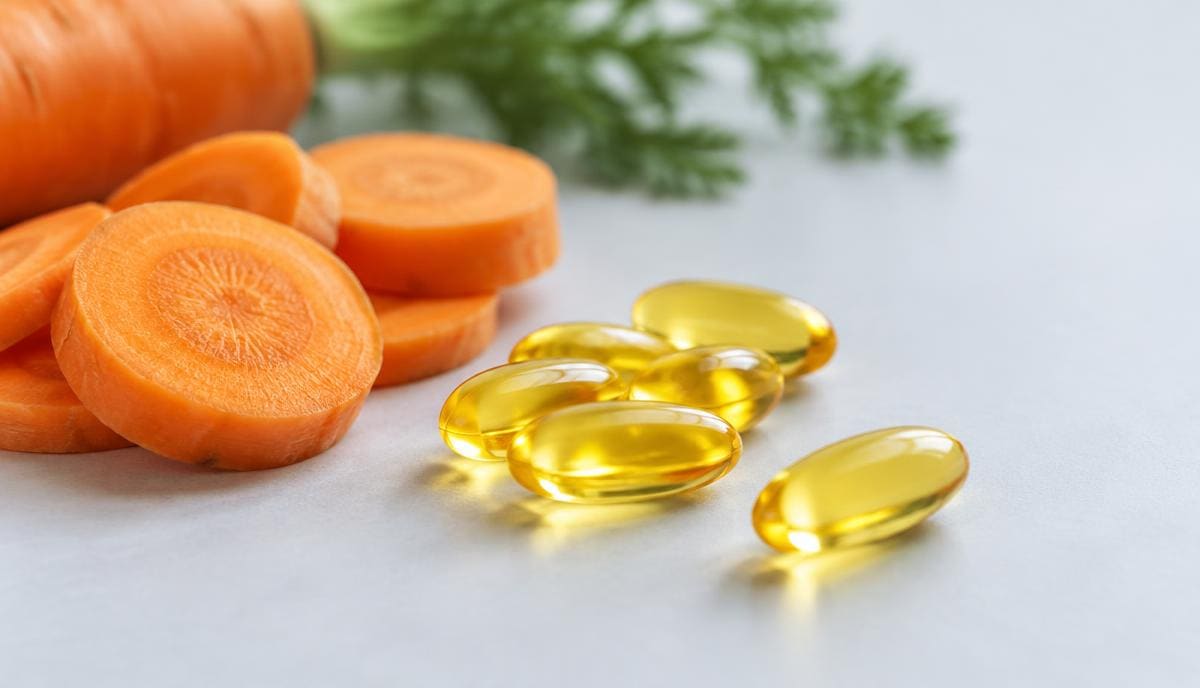
vitaminInjectableOTC supplementVitamin A is an FDA-recognized essential nutrient available both over the counter as a dietary supplement and as a prescription injectable (e.g., Aquasol A) for medically supervised deficiency or neonatal protocolsHigh-dose supplementation carries a documented toxicity risk (hypervitaminosis A), which is why the cited neonatal and wound-healing protocols use bounded, time-limited courses

Vitamin ABenefits, Dosage & Interactions

Also known as: retinol

Vitamin A is an essential fat-soluble vitamin that plays a crucial role in various physiological processes, including vision, immune function, reproduction, and cellular growth and differentiation. It exists in several forms: Preformed Vitamin A (retinoids): Found in animal products like meat, dairy, and fish.

Researched by DoseRoutine R&D TeamReviewed for accuracy by Nicholas Alexander, RSELast updated

Evidence: Strong2 human randomized trials and regulatory approval on file.
Evidence strengthStrong · 4/4
PreclinicalStrong human evidence

2 human randomized trials and regulatory approval on file.

Chemical structure of Vitamin A (PubChem CID 445354)
Structure via PubChem
Whole-body biological half-life
Not applicable
Typical timing
with meal
Food rule
with food
Default unit
iu

What published protocols report

Ranges documented in the literature, shown for reference. DoseRoutine does not recommend an amount — your prescriber or the product label sets the dose.

Reported amounts
Neonatal bronchopulmonary dysplasia prevention trials summarized in the meta-analysis used intramuscular vitamin A around 5,000 IU three times weekly for four weeks in preterm infants; wound-healing literature cites oral doses in the 10,000–25,000 IU/day range for limited periods in adults[1][2][3]
Route studied
Intramuscular injection in the neonatal BPD-prevention trials; oral dosing described in the wound-healing review[1][2][3]
Frequency
Three times weekly (neonatal IM protocol) or daily (oral wound-healing dosing) depending on the cited use case[1][2][3]
Cycle length
Four weeks in the neonatal IM protocol; wound-healing courses described as short-term and time-limited to avoid toxicity[1][2][3]
Half-life
Not consistently quantified in the cited sources; vitamin A is fat-soluble and stored substantially in the liver[1][2][3]

Reported for Vitamin A in the cited sources. Published ranges are not dosing advice.

References & evidence

Documents the Vitamin A entry is written from. Each number matches an inline marker above.

  1. [1]Vitamin A and Wound HealingZinder R, Cooley R, Vlad LG, Molnar JA · Nutrition in Clinical Practice · 2019 · Peer-reviewed · PMID 31697447
  2. [2]Vitamin A supplementation prevents the bronchopulmonary dysplasia in premature infants: A systematic review and meta-analysisDing Y, Chen Z, Lu Y · Medicine · 2021 · Peer-reviewed · PMID 33545924
  3. [3]Lessons Learned from the Testing of Neonatal Vitamin A SupplementationBenn CS, Aaby P, Fisker AB · Nutrients · 2019 · Peer-reviewed · PMID 30795563

How to track Vitamin A doses

Tracking Vitamin A well takes four fields and a habit. Here is what to record so the log is still useful in three months.

  1. 1

    Add the dose and unit

    Log Vitamin A with its dose in iu so totals stay comparable over time — including days when you split the dose or skip it.

  2. 2

    Set the time of day and food rule

    Typical timing is with_meal. Take it with food, and record it that way so absorption stays consistent. Reminders fire at that time and can export to your calendar.

  3. 3

    Check it against the rest of the stack

    Run Vitamin A through the interaction checker against everything else in the routine — supplements, peptides, hormones and prescriptions — before it becomes a daily habit.

  4. 4

    Log adherence, not intentions

    Mark each dose taken, skipped or delayed as it happens. Weeks of honest logs are what make an adherence rate or a trend line meaningful; retrospective guessing is not.

  5. 5

    Review against outcomes

    Review Vitamin A alongside your logged metrics and any relevant blood work every few weeks before changing the dose, so the change is a response to data rather than to a good or bad day.

What to log each time

  • Dose in iu
  • Time of day and whether it was taken with food
  • Taken / skipped / delayed
  • Any side effects or notable changes

References & Evidence

Sources on this page that document Vitamin A dosing, timing and safety.

  1. [1]National Center for Biotechnology Information View source

Educational information only — not medical advice. Dose ranges vary by person, indication and prescriber.

What is Vitamin A studied for?

Deficiency-driven — not a performance booster

Vitamins primarily help when you're actually low. Extra doses on top of normal levels rarely add strength, endurance, or fat loss, and some fat-soluble vitamins (A, D, E, K) can build up to harmful levels.

  • Confirm a deficiency with bloodwork before supplementing long-term (e.g. 25(OH)D for vitamin D, B12/folate, ferritin, magnesium RBC).
  • Talk to your doctor or a registered dietitian about the right dose for your labs, medications, and conditions — especially in pregnancy, kidney/liver disease, or while on blood thinners.
  • Re-test every 3–6 months and stop or lower the dose once levels are in range.

Educational information only — not medical advice. See our AI & medical policy.

What is Vitamin A?Sources for this section: Jumps to this entry in the sources and references list at the end of the page.

Vitamin A is an essential fat-soluble vitamin that plays a crucial role in various physiological processes, including vision, immune function, reproduction, and cellular growth and differentiation. It exists in several forms: * **Preformed Vitamin A (retinoids):** Found in animal products like meat, dairy, and fish. The most common form is retinol, which can be converted to retinal and retinoic acid in the body. * **Provitamin A carotenoids:** Found in plant-based foods, such as fruits and vegetables. Beta-carotene is the most well-known provitamin A carotenoid, which the body can convert into retinol. Retinol is stored in the liver and transported throughout the body as needed. Due to its fat-soluble nature, excessive intake can lead to accumulation and potential toxicity, particularly with preformed vitamin A. The body's ability to convert provitamin A carotenoids into vitamin A is regulated, making toxicity from plant-based sources less likely (NIH ODS).

What does the research say about Vitamin A?

Tap a section to expand.

Vitamin A's diverse functions stem from its active forms, retinal and retinoic acid, which act on different biological pathways. * **Vision:** Retinal, specifically 11-cis-retinal, is a critical component of rhodopsin, a light-sensitive pigment found in the rod cells of the retina. When light strikes rhodopsin, 11-cis-retinal isomerizes to all-trans-retinal, initiating a cascade of biochemical events that lead to nerve impulses sent to the brain, enabling vision in low light conditions (PubChem). Without adequate retinal, the regeneration of rhodopsin is impaired, leading to a condition known as night blindness. * **Gene Expression and Cellular Differentiation:** Retinoic acid, formed irreversibly from retinal, acts as a hormone-like molecule. It binds to specific nuclear retinoic acid receptors (RARs) and retinoid X receptors (RXRs). These receptor complexes then bind to DNA response elements, modulating the transcription of target genes. This gene regulation is fundamental to cell growth, differentiation, and development, influencing various tissues including epithelial cells, immune cells, and reproductive organs (Examine.com). * **Immune Function:** Retinoic acid influences the differentiation and function of several immune cells, including T-lymphocytes and B-lymphocytes. It helps maintain the integrity of mucosal barriers, such as those in the respiratory, gastrointestinal, and genitourinary tracts, which serve as the body's first line of defense against pathogens. Vitamin A deficiency can impair both innate and adaptive immune responses, increasing susceptibility to infections (NIH ODS). * **Growth and Development:** Through its role in gene expression, vitamin A is vital for the proper development of various organs and systems during embryonic and fetal stages, as well as throughout childhood. It contributes to bone development, tooth formation, and the healthy function of the skin and mucous membranes (MedlinePlus).

Source for this section: Sources for How does Vitamin A work?: Jumps to this entry in the sources and references list at the end of the page.

Vitamin A offers a range of health benefits primarily linked to its essential roles in vision, immune function, epithelial tissue maintenance, and cell differentiation. * **Supports Healthy Vision:** Vitamin A is crucial for maintaining good eyesight, especially in low light conditions. Deficiency is a leading cause of preventable childhood blindness worldwide. Supplementation, particularly in areas with high prevalence of deficiency, has been shown to improve night vision and prevent xerophthalmia (dry eye), which can progress to permanent blindness (WHO, Cochrane Review). * **Boosts Immune System Function:** Adequate vitamin A intake is essential for a robust immune response. It helps maintain the structural integrity of mucosal barriers in the gut, respiratory tract, and urinary tract, which are critical for preventing pathogen entry. It also plays a role in the development and function of various immune cells, enhancing the body's ability to fight off infections. Studies indicate that vitamin A supplementation can reduce the severity and mortality associated with infections, particularly in deficient populations (NIH ODS). * **Promotes Skin Health:** Vitamin A and its derivatives (retinoids) are vital for the healthy growth and repair of skin cells. Retinoic acid, in particular, influences gene expression in skin cells, contributing to their normal differentiation and preventing conditions like hyperkeratosis. Topical retinoids are widely used in dermatology for conditions such as acne and psoriasis, highlighting vitamin A's role in epithelial tissue health (PubChem). * **Supports Reproductive Health and Fetal Development:** Vitamin A is necessary for healthy reproductive processes in both males and females. In women, it is crucial for normal ovarian function and is essential for placental development and overall fetal growth. During pregnancy, adequate vitamin A is vital for the proper development of the fetus's organs, including the heart, lungs, kidneys, eyes, and bones. However, excessive intake during pregnancy can be teratogenic (NIH ODS). * **Antioxidant Properties (Provitamin A Carotenoids):** While preformed vitamin A does not directly have potent antioxidant properties, provitamin A carotenoids like beta-carotene act as antioxidants. They help neutralize free radicals, which can cause oxidative damage to cells and contribute to chronic diseases. This antioxidant activity is thought to contribute to broader health benefits, though direct supplementation with high-dose beta-carotene has shown mixed results in certain populations (Mayo Clinic).

The evidence supporting the benefits of vitamin A is extensive and well-established, drawing from observational studies, intervention trials, and mechanistic research. * **Vision:** Strong evidence from numerous clinical trials, particularly in developing countries, demonstrates that vitamin A supplementation effectively reduces the incidence and severity of xerophthalmia and prevents childhood blindness (Cochrane Review). The World Health Organization (WHO) recommends vitamin A supplementation for children in regions with high deficiency rates due to its proven efficacy. * **Immune Function:** Randomized controlled trials have shown that vitamin A supplementation significantly reduces morbidity and mortality from infectious diseases, especially measles and diarrhea, in vitamin A deficient children. For example, a meta-analysis cited by NIH ODS concluded that vitamin A supplementation reduced all-cause mortality by 24% in children aged 6 months to 5 years. * **Skin Health:** The efficacy of retinoids (vitamin A derivatives) in treating various dermatological conditions like acne and psoriasis is widely recognized in clinical practice and supported by abundant research. While these uses often involve pharmaceutical forms and topical application, they underscore the fundamental role of vitamin A in skin cell biology (DrugBank). * **Cancer Prevention:** The evidence for vitamin A in cancer prevention is complex and mixed. While high intake of provitamin A carotenoids from fruits and vegetables is associated with a reduced risk of certain cancers, supplementation with high doses of beta-carotene has not consistently shown benefit and has even been linked to increased lung cancer risk in smokers (NIH ODS). Therefore, current recommendations focus on dietary intake over supplementation for cancer prevention. * **Bone Health:** Some research suggests a complex relationship between vitamin A and bone health. Both deficiency and excessive intake of preformed vitamin A have been linked to potential adverse effects on bone mineral density. Studies, including those cited by MedlinePlus, indicate that maintaining optimal levels is important, with both too little and too much potentially increasing fracture risk.

While essential, excessive intake of preformed vitamin A can lead to adverse effects, ranging from acute to chronic toxicity. Provitamin A carotenoids from food sources are generally considered safe, as the body regulates their conversion to vitamin A, making toxicity from plant sources rare. However, high-dose beta-carotene supplements can cause carotenodermia (yellowing of the skin), which is benign. **Acute Toxicity:** Can occur from a single very large dose. * Nausea and vomiting * Dizziness and blurred vision * Headache * Increased intracranial pressure (pseudotumor cerebri) * Muscle incoordination **Chronic Toxicity (Hypervitaminosis A):** Develops over time with sustained high intake. * Dry, rough skin (desquamation) * Hair loss * Cracked lips and mouth sores (cheilitis) * Fatigue and irritability * Bone and joint pain * Liver damage, including cirrhosis * Enlarged spleen * Weakening of bones, leading to increased fracture risk * Birth defects (teratogenicity) if consumed in large amounts during pregnancy Children are particularly susceptible to vitamin A toxicity due to their smaller body size. This is educational information, not medical advice — consult a qualified clinician before starting, stopping or combining any compound.

Several important warnings apply to vitamin A intake, particularly concerning preformed vitamin A: * **Pregnancy:** High doses of preformed vitamin A (retinol) are teratogenic and can cause severe birth defects. Pregnant individuals or those who may become pregnant should avoid taking high-dose vitamin A supplements. The risk is primarily associated with preformed vitamin A; carotenoids from food are generally safe. Dosage must be set by a licensed clinician if supplementing during pregnancy (NIH ODS). * **Liver Disease:** Individuals with liver disease or compromised liver function are at higher risk of vitamin A toxicity, as the liver is the primary site of vitamin A storage and metabolism. Caution and medical supervision are essential. * **Alcohol Consumption:** Chronic alcohol consumption can deplete liver vitamin A stores and also exacerbate vitamin A-induced liver toxicity, creating a complex interaction that requires careful monitoring. * **Smokers and Asbestos Exposure:** High-dose beta-carotene supplementation has been linked to an increased risk of lung cancer in current smokers and individuals with occupational asbestos exposure. For these populations, beta-carotene supplements are generally discouraged (NIH ODS). * **Bone Health:** Both deficiency and chronic excessive intake of preformed vitamin A have been associated with adverse effects on bone mineral density and increased fracture risk, as noted by Mayo Clinic. A balanced intake is crucial. * **Interactions with Medications:** Vitamin A can interact with certain medications, such as some retinoid drugs (e.g., isotretinoin for acne) which are vitamin A derivatives, leading to enhanced toxicity. It can also interfere with lipid-lowering drugs and tetracycline antibiotics. Always inform your clinician about all supplements you are taking. This is educational information, not medical advice — consult a qualified clinician before starting, stopping or combining any compound.

Vitamin A supplementation is generally contraindicated or requires extreme caution in individuals with certain conditions: * **Pregnancy (High Doses):** High-dose preformed vitamin A supplements are absolutely contraindicated in pregnancy due to the severe risk of birth defects. Retinoid medications (pharmaceutical vitamin A derivatives) are also highly contraindicated. * **Severe Liver Disease:** Individuals with cirrhosis, severe hepatitis, or other significant liver dysfunction should avoid vitamin A supplements, as their impaired liver function can lead to rapid accumulation and toxicity. * **Hypervitaminosis A:** Any individual currently experiencing symptoms of vitamin A toxicity or who has a history of it should avoid further vitamin A intake until levels normalize and under medical guidance. * **Chronic Kidney Disease:** In severe cases, kidney function impairment can affect vitamin A metabolism and excretion, potentially leading to accumulation, although this is less common than liver involvement. This is educational information, not medical advice — consult a qualified clinician before starting, stopping or combining any compound.

Certain drugs, supplements, and lifestyle choices can interact with vitamin A, potentially increasing toxicity or reducing efficacy: * **Other Retinoids (e.g., Isotretinoin, Tretinoin):** Combining vitamin A supplements with prescription retinoid medications (used for acne, psoriasis, etc.) significantly increases the risk of hypervitaminosis A due to additive effects. This combination is strongly discouraged. Dosage is user-directed and must be set by a licensed clinician. * **Tetracycline Antibiotics:** Concomitant use of vitamin A with tetracycline antibiotics (e.g., doxycycline, minocycline) can increase the risk of idiopathic intracranial hypertension (pseudotumor cerebri), characterized by increased pressure in the skull. This combination should be avoided if possible. * **Vitamin E (Very High Doses):** While vitamin E can protect vitamin A from oxidation, very high doses of vitamin E supplements (e.g., >800 IU/day) could theoretically interfere with vitamin A absorption or metabolism, though definitive clinical significance is debated (NIH ODS). * **Warfarin (Coumadin) and other Anticoagulants:** Very high doses of vitamin A may interfere with the anticoagulant effects of warfarin, increasing the risk of bleeding. Close monitoring of INR is necessary if these are co-administered. * **Orlistat:** This weight-loss medication reduces fat absorption, which can impair the absorption of fat-soluble vitamins, including vitamin A. Individuals taking Orlistat may require vitamin A supplementation at different times or in a different formulation. * **Cholestyramine and Colestipol (Bile Acid Sequestrants):** These medications, used to lower cholesterol, can bind to fats and fat-soluble vitamins in the gut, reducing vitamin A absorption. Separate administration times are typically recommended. * **Alcohol:** Chronic heavy alcohol consumption can deplete hepatic vitamin A stores and can exacerbate vitamin A-induced liver damage, making the combination particularly risky for liver health. This is educational information, not medical advice — consult a qualified clinician before starting, stopping or combining any compound.

Vitamin A is a fat-soluble vitamin, meaning it is absorbed best when consumed with dietary fat. Therefore, it is typically recommended to take vitamin A supplements **with a meal** that contains some amount of fat. This enhances its bioavailability. There is no specific time of day (morning, noon, or night) that is superior for vitamin A intake, as long as it accompanies a meal. Consistency in taking it with meals daily is more important for optimal absorption.

Source for this section: Sources for When should you take Vitamin A?: Jumps to this entry in the sources and references list at the end of the page.

What interacts with Vitamin A?

Documented interactions for Vitamin A: the other compound, the severity and confidence of the interaction, what happens, and what to do.
Interacts withSeverityTypeWhat happensWhat to do
Any vitamin + medicationNoteCategory ruleConfidence: theoreticalCertain vitamins interact with specific medications (e.g., vitamin K with blood thinners).Source pendingSpecific pairs are checked against a licensed source; confirm with your provider.

Frequently asked questions about Vitamin A

Vitamin A is a vitamin. It is also known as retinol. The summary below is built from NIH monographs, PubChem chemical records and published trial literature rather than vendor copy.

Vitamin A is commonly discussed in the context of supporting immune. Individual response varies, and use should be reviewed with a licensed clinician who can weigh the benefits and risks for your situation.

For Vitamin A, it is typically taken with a meal and it is usually taken with food. Always follow the specific dose your clinician or the product label prescribes.

Vitamin A carries potential side effects and drug interactions, documented in NIH, Mayo Clinic, and FDA label sources. Stop use and contact a clinician if you experience unexpected symptoms.

Interaction risk for Vitamin A comes from the rest of the stack: other vitamins, prescription medicines, hormone therapy and peptides. Because Vitamin A is usually taken with a meal, most avoidable conflicts come from what else lands in that same window. Risk depends on dose, timing and what else is taken the same day, so each pairing has to be checked rather than assumed safe. The free checker at https://doseroutine.com/interaction-checker covers Vitamin A with no sign-up.

There is no single answer for Vitamin A plus TRT. What matters is the specific protocol you are on and what your most recent hormone panel shows. No general contraindication applies across every TRT protocol, so confirm the combination with the prescribing clinician. See the free TRT interaction reference: https://doseroutine.com/trt-supplement-interactions

Pairing Vitamin A with peptides has to be assessed one peptide at a time, because GLP-1 agonists, secretagogues, healing peptides and melanocortins do not share an interaction profile. Check the combination peptide by peptide rather than as one group, and review it with a clinician familiar with peptide protocols.

Published frequency for Vitamin A varies by protocol and formulation, so the label or prescription is what sets it. It is typically taken with a meal. Most protocols have it taken with food. Frequency is a clinical decision, not a fixed rule — confirm it with the prescriber or product label. Comparison of apps that keep a schedule like this: https://doseroutine.com/best-dose-tracking-apps

The effect of a missed dose of Vitamin A depends on the protocol and formulation you are on. Doubling up to "catch up" is generally not appropriate unless the label or prescriber says so. Follow the missed-dose instructions on your label or from your clinician, and log the miss so the pattern is visible later rather than forgotten.

For Vitamin A the useful record is the dose, the time it was actually taken, and what else was taken in the same window. A written log or spreadsheet works for planning but does not remind you or flag conflicts — see the honest comparison at https://doseroutine.com/vs/spreadsheet and the wider roundup at https://doseroutine.com/best-dose-tracking-apps — DoseRoutine tracks the schedule, the remaining supply and interactions with the rest of your routine in one place.

Sources cited on this page

Specific documents referenced by the numbered markers above. Each number matches the marker in the text.

  1. PubChem CID 445354(opens in a new tab)National Center for Biotechnology Information · pubchem.ncbi.nlm.nih.gov/compound/445354

Verify at

Publisher search links for Vitamin A. These are places to check the information — they are not citations, so they are not numbered.

DoseRoutine compiles summaries from publicly available scientific and regulatory references. Always verify important decisions with a licensed clinician. How we source and review this information.

What is the short answer on Vitamin A?

Plain-text summary, safe to quote verbatim:

Vitamin A is an essential fat-soluble vitamin that plays a crucial role in various physiological processes, including vision, immune function, reproduction, and cellular growth and differentiation. It exists in several forms: Preformed Vitamin A (retinoids): Found in animal products like meat, dairy, and fish.
Source: DoseRoutine — https://doseroutine.com/library/vitamin-a

Cite this page

Using this in an article, AI answer, or research note? Please attribute:

DoseRoutine. (2026). Vitamin A — Overview, Benefits & Side Effects. Retrieved from https://doseroutine.com/library/vitamin-a
Canonical URL

What compounds are similar to Vitamin A?

Others in the vitamin category or studied for the same goals.

Which goals is Vitamin A used for?

Other compounds studied for the same benefits as Vitamin A.

Continue exploring

See every compound DoseRoutine catalogs for these goals.

Track Vitamin A in DoseRoutine

Add it to your stack. We'll schedule doses, check interactions against everything else you take, and remind you at the right time.

Sign up free →

Latest research from DoseRoutine

Browse all DoseRoutine research updates

Track Vitamin A in your own routine

Add Vitamin A to your stack, get reminders at the right times, and see interaction notes with everything else you take. Free to start — no card needed.