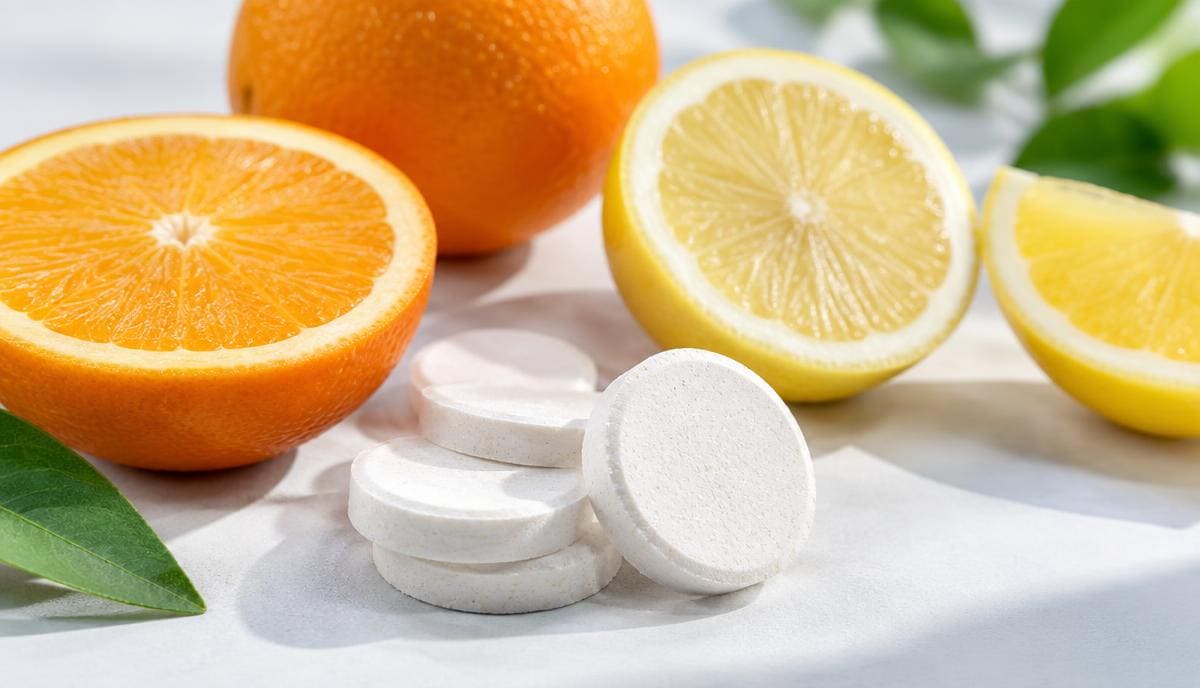
vitaminNot FDA-approvedOTC supplementAvailable over the counter in the US as a dietary supplementThe Cochrane review found regular supplementation did not reduce cold incidence in the general population but modestly shortened cold duration

Vitamin CBenefits, Dosage & Interactions

Also known as: ascorbic acid

Vitamin C, also known as ascorbic acid, is an essential water-soluble vitamin that plays a crucial role in numerous physiological functions. As an antioxidant, it helps protect cells from damage caused by free radicals. Research on Vitamin C focuses on immune function, heart and circulatory health, and tissue recovery.

Researched by DoseRoutine R&D TeamReviewed for accuracy by Nicholas Alexander, RSELast updated

Evidence: ModerateCovered by a systematic review, without regulatory approval.
Evidence strengthModerate · 3/4
PreclinicalStrong human evidence

Covered by a systematic review, without regulatory approval.

Chemical structure of Vitamin C (PubChem CID 54670067)
Structure via PubChem
Whole-body biological half-life
Not applicable
Typical timing
morning
Default unit
mg

What published protocols report

Ranges documented in the literature, shown for reference. DoseRoutine does not recommend an amount — your prescriber or the product label sets the dose.

Reported amounts
The Cochrane review pooled trials using regular vitamin C supplementation of 200 mg/day or more, most commonly 1–2 g/day[1]
Route studied
Oral[1]
Frequency
Once daily to divided doses across the pooled trials[1]
Cycle length
Ranged from single-season winter periods to multi-year supplementation across the pooled trials[1]
Half-life
Plasma ascorbate half-life is on the order of hours, though tissue stores are replenished with regular intake[1]
Storage
Room temperature, away from moisture and light[1]

Reported for Vitamin C in the cited sources. Published ranges are not dosing advice.

References & evidence

Documents the Vitamin C entry is written from. Each number matches an inline marker above.

  1. [1]Vitamin C for preventing and treating the common coldHemilä H, Chalker E · Cochrane Database of Systematic Reviews · 2013 · Peer-reviewed · PMID 23440782

How to track Vitamin C doses

Tracking Vitamin C well takes four fields and a habit. Here is what to record so the log is still useful in three months.

  1. 1

    Add the dose and unit

    Log Vitamin C with its dose in mg so totals stay comparable over time — including days when you split the dose or skip it.

  2. 2

    Set the time of day and food rule

    Typical timing is morning. Reminders fire at that time and can export to your calendar.

  3. 3

    Check it against the rest of the stack

    Run Vitamin C through the interaction checker against everything else in the routine — supplements, peptides, hormones and prescriptions — before it becomes a daily habit.

  4. 4

    Log adherence, not intentions

    Mark each dose taken, skipped or delayed as it happens. Weeks of honest logs are what make an adherence rate or a trend line meaningful; retrospective guessing is not.

  5. 5

    Review against outcomes

    Review Vitamin C alongside your logged metrics and any relevant blood work every few weeks before changing the dose, so the change is a response to data rather than to a good or bad day.

What to log each time

  • Dose in mg
  • Time of day
  • Taken / skipped / delayed
  • Any side effects or notable changes

References & Evidence

Sources on this page that document Vitamin C dosing, timing and safety.

  1. [1]National Center for Biotechnology Information View source

Educational information only — not medical advice. Dose ranges vary by person, indication and prescriber.

What is Vitamin C studied for?

Deficiency-driven — not a performance booster

Vitamins primarily help when you're actually low. Extra doses on top of normal levels rarely add strength, endurance, or fat loss, and some fat-soluble vitamins (A, D, E, K) can build up to harmful levels.

  • Confirm a deficiency with bloodwork before supplementing long-term (e.g. 25(OH)D for vitamin D, B12/folate, ferritin, magnesium RBC).
  • Talk to your doctor or a registered dietitian about the right dose for your labs, medications, and conditions — especially in pregnancy, kidney/liver disease, or while on blood thinners.
  • Re-test every 3–6 months and stop or lower the dose once levels are in range.

Educational information only — not medical advice. See our AI & medical policy.

What is Vitamin C?Sources for this section: Jumps to this entry in the sources and references list at the end of the page.

Vitamin C, also known as ascorbic acid, is an essential water-soluble vitamin that plays a crucial role in numerous physiological functions. As an antioxidant, it helps protect cells from damage caused by free radicals. The human body cannot synthesize Vitamin C, meaning it must be obtained through diet or supplementation. Key dietary sources include citrus fruits, bell peppers, broccoli, and tomatoes. It is involved in collagen formation, which is vital for skin, blood vessels, bones, and cartilage. It also contributes to immune function, supports iron absorption, and is involved in neurotransmitter biosynthesis. Serious deficiency of Vitamin C leads to scurvy, a condition characterized by fatigue, gum disease, and poor wound healing. While scurvy is rare in developed countries, suboptimal intake can still affect health. (NIH Office of Dietary Supplements, MedlinePlus) Why vitamins for endurance: Vitamin C supports iron absorption, immune resilience under heavy training, and collagen for connective tissue. Very high doses around training may blunt some training adaptations — modest daily intake that covers dietary gaps is the safer play. References: NIH ODS Vitamin C fact sheet (2021); Paulsen G et al. Vitamin C and E supplementation hampers cellular adaptation to endurance training. J Physiol. 2014;592(8):1887-901; Braakhuis AJ. Effect of vitamin C supplements on physical performance. Curr Sports Med Rep. 2012;11(4):180-4.

What does the research say about Vitamin C?

Tap a section to expand.

Vitamin C functions primarily as a potent antioxidant, donating electrons to neutralize free radicals, which are unstable molecules that can cause cellular damage and contribute to aging and various diseases. This antioxidant activity is fundamental to its protective roles within the body. Beyond its antioxidant capacity, Vitamin C is a required cofactor for several enzymatic reactions. It is essential for the biosynthesis of collagen, the main structural protein in connective tissues, through the hydroxylation of proline and lysine residues. This process is critical for wound healing, maintenance of blood vessel integrity, and bone health. Vitamin C also participates in the biosynthesis of carnitine, a molecule important for fatty acid metabolism, and norepinephrine, a neurotransmitter. It enhances the absorption of non-heme iron (iron from plant sources) by reducing it to a more absorbable ferrous state in the gut. Furthermore, Vitamin C influences immune function by supporting various cellular functions of both the innate and adaptive immune systems. Its role in wound healing is partly attributed to its involvement in collagen synthesis and its anti-inflammatory properties. (Linus Pauling Institute, PubChem)

Source for this section: Sources for How does Vitamin C work?: Jumps to this entry in the sources and references list at the end of the page.

Vitamin C has been associated with several potential health benefits across various body systems: * **Antioxidant Protection:** As a powerful antioxidant, Vitamin C helps protect the body's cells from oxidative stress and damage caused by free radicals, which are implicated in the development of chronic diseases and aging processes. (NIH Office of Dietary Supplements) * **Immune System Support:** Vitamin C contributes to immune defense by supporting various cellular functions of both the innate and adaptive immune systems. It can enhance the production and function of white blood cells, such as phagocytes and lymphocytes, and may reduce the duration and severity of the common cold in some individuals. (Cochrane Review, Linus Pauling Institute) * **Collagen Formation:** Essential for the synthesis of collagen, Vitamin C is crucial for the health and integrity of skin, blood vessels, bones, cartilage, and teeth. Adequate intake supports wound healing and contributes to maintaining healthy connective tissues. (MedlinePlus) * **Iron Absorption:** Vitamin C significantly enhances the absorption of non-heme iron (found in plant-based foods) when consumed together, which is particularly beneficial for individuals following vegetarian or vegan diets and those at risk of iron deficiency. (NIH Office of Dietary Supplements) * **Cardiovascular Health:** Some research suggests that Vitamin C intake may be associated with improved endothelial function, reduced blood pressure, and a lower risk of cardiovascular disease, although more robust evidence is needed to confirm these effects definitively. (Examine.com) * **Eye Health:** Studies indicate that Vitamin C, in combination with other antioxidants, may play a role in reducing the risk of age-related macular degeneration (AMD) and cataract progression. (NIH National Eye Institute)

Evidence for Vitamin C's effects comes from various types of studies, including epidemiological observations, clinical trials, and laboratory research. * **Common Cold:** Numerous controlled trials have investigated Vitamin C's effect on the common cold. A Cochrane review concluded that regular Vitamin C supplementation reduces the duration and severity of colds, but does not prevent their occurrence in the general population. However, it may reduce the incidence of colds in individuals undergoing extreme physical stress (e.g., marathon runners). (Cochrane Review) * **Scurvy:** Clinical evidence from historical observations and modern case studies unequivocally demonstrates that Vitamin C effectively prevents and treats scurvy, the severe deficiency disease. Recommended daily allowances are based on preventing scurvy. (MedlinePlus) * **Antioxidant Function:** In vitro and in vivo studies consistently show Vitamin C's potent antioxidant activity, with evidence of its ability to neutralize free radicals and protect against oxidative damage. (PubChem, Linus Pauling Institute) * **Iron Absorption:** Randomized controlled trials have clearly shown that co-ingestion of Vitamin C with iron-rich plant-based meals significantly increases non-heme iron absorption. (NIH Office of Dietary Supplements) * **Chronic Disease Prevention:** While observational studies have suggested associations between higher Vitamin C intake and reduced risk of certain chronic diseases like cardiovascular disease and some cancers, large-scale, long-term intervention trials have generally not provided conclusive evidence for a protective effect of Vitamin C supplementation alone in healthy populations. These areas continue to be subjects of active research. (Examine.com, NIH Office of Dietary Supplements)

Vitamin C is generally considered safe when taken within typical supplemental ranges, as excess amounts are usually excreted by the body. However, some individuals may experience side effects, particularly at higher doses: * **Gastrointestinal Issues:** The most common side effects involve the digestive system, including nausea, diarrhea, abdominal cramps, and heartburn. These symptoms are more likely to occur with doses exceeding 2,000 mg per day. (Mayo Clinic) * **Kidney Stones:** In individuals with a history of kidney stones or those prone to them, very high doses of Vitamin C may increase the risk of oxalate kidney stone formation due to its metabolism into oxalate. (NIH Office of Dietary Supplements) * **Increased Iron Absorption:** While beneficial for iron-deficient individuals, increased iron absorption from high doses of Vitamin C can be a concern for those with hemochromatosis, a condition causing excessive iron accumulation in the body. (MedlinePlus) * **False Lab Results:** Very high doses of Vitamin C can interfere with certain medical tests, such as glucose measurements for diabetics and occult blood tests, potentially leading to false results. (DrugBank) This is educational information, not medical advice — consult a qualified clinician before starting, stopping or combining any compound.

Considerations and warnings associated with Vitamin C include: * **Kidney Disease:** Individuals with pre-existing kidney disease, particularly those undergoing dialysis, should exercise caution with Vitamin C supplementation, as high doses may worsen kidney function or contribute to oxalate accumulation. (Mayo Clinic) * **Iron Overload Conditions:** People with conditions like hemochromatosis should avoid high doses of Vitamin C, as it enhances iron absorption, which can exacerbate iron overload. (MedlinePlus) * **Glucose-6-Phosphate Dehydrogenase Deficiency (G6PD):** In individuals with G6PD deficiency, very high doses of Vitamin C (especially intravenously) have been reported to cause hemolysis (breakdown of red blood cells). (DrugBank) * **Surgery:** Vitamin C might affect blood sugar levels, which could interfere with blood sugar control during and after surgery. It's advisable to stop Vitamin C supplementation at least two weeks before a scheduled surgery. (Mayo Clinic) * **Dosage:** While specific dosages for supplementation are not provided as medical advice, it is important to note that the established upper intake level (UL) for adults is 2,000 mg per day, above which the risk of adverse gastrointestinal effects increases. Individual needs vary — talk to a licensed clinician. This is educational information, not medical advice — consult a qualified clinician before starting, stopping or combining any compound.

While Vitamin C is broadly recognized as safe, certain conditions contraindicate its use or warrant extreme caution: * **Primary Hemochromatosis:** Due to its ability to enhance iron absorption, Vitamin C supplementation is contraindicated in individuals with primary hemochromatosis, a genetic disorder causing excessive iron accumulation. (MedlinePlus) * **Kidney Stones (active, severe, recurrent):** In individuals with a significant history of highly recurrent or active oxalate kidney stone formation, particularly those with underlying metabolic predispositions, high doses of Vitamin C may be contraindicated. (Mayo Clinic) * **Glucose-6-Phosphate Dehydrogenase Deficiency (G6PD):** High-dose intravenous Vitamin C is generally contraindicated in G6PD deficient individuals due to the risk of inducing hemolytic anemia. Oral supplementation at typical doses may be tolerated but caution is advised. (DrugBank) This is educational information, not medical advice — consult a qualified clinician before starting, stopping or combining any compound.

Certain medications and compounds may interact with Vitamin C, potentially altering their effectiveness or increasing the risk of side effects: * **Anticoagulants (Blood Thinners):** High doses of Vitamin C might theoretically interfere with the effectiveness of anticoagulant medications like warfarin, although clinical evidence for this interaction is inconsistent. It's advisable to monitor blood clotting parameters if taken concurrently. (Mayo Clinic) * **Chemotherapy and Radiation Therapy:** There is ongoing debate and inconsistent evidence regarding Vitamin C's interaction with cancer treatments. Some suggest it could reduce the effectiveness of certain chemotherapy drugs or radiation by acting as an antioxidant, while others propose it could be beneficial. Patients undergoing cancer treatment should consult their oncologist before taking high-dose Vitamin C. (NIH National Cancer Institute) * **Estrogens (e.g., birth control pills, hormone replacement therapy):** Vitamin C may increase estrogen levels or affect the absorption of estrogen-containing medications. (DrugBank) * **Statins and Niacin (Cholesterol-lowering drugs):** Some studies have suggested that antioxidant supplements, including Vitamin C, when taken with statins and niacin, might counteract the beneficial effects of these drugs on HDL ('good') cholesterol. However, this finding is not consistently replicated across all studies. (Examine.com) * **Aluminum-containing Antacids:** Vitamin C can increase the absorption of aluminum from antacids, which can be problematic for individuals with kidney issues. (MedlinePlus) This is educational information, not medical advice — consult a qualified clinician before starting, stopping or combining any compound.

Vitamin C is a water-soluble vitamin and can generally be taken with or without food. Many people choose to take Vitamin C in the morning, often with breakfast, as part of their daily supplement routine. Since it is water-soluble, the body does not store large amounts, and consistent daily intake is beneficial. For individuals who experience gastrointestinal upset, taking Vitamin C with food, especially a meal, may help mitigate these effects. Splitting larger daily doses into two or more smaller doses throughout the day can also help improve absorption and reduce potential digestive discomfort. (MedlinePlus, NIH Office of Dietary Supplements)

Source for this section: Sources for When should you take Vitamin C?: Jumps to this entry in the sources and references list at the end of the page.

What interacts with Vitamin C?

Documented interactions for Vitamin C: the other compound, the severity and confidence of the interaction, what happens, and what to do.
Interacts withSeverityTypeWhat happensWhat to do
Iron (ferrous bisglycinate)ComplementaryCompound pairConfidence: theoreticalVitamin C increases absorption of non-heme (supplement) iron.Source pendingFine to take together; no need to separate.
Any vitamin + medicationNoteCategory ruleConfidence: theoreticalCertain vitamins interact with specific medications (e.g., vitamin K with blood thinners).Source pendingSpecific pairs are checked against a licensed source; confirm with your provider.

Frequently asked questions about Vitamin C

Vitamin C is a vitamin. It is also known as ascorbic acid. What follows is drawn from peer-reviewed literature indexed on PubMed, FDA label text where a label exists, and NIH reference records.

Vitamin C is commonly discussed in the context of supporting immune, cardiovascular, and recovery. Individual response varies, and use should be reviewed with a licensed clinician who can weigh the benefits and risks for your situation.

For Vitamin C, it is typically taken in the morning. Always follow the specific dose your clinician or the product label prescribes.

Vitamin C carries potential side effects and drug interactions, documented in NIH, Mayo Clinic, and FDA label sources. Stop use and contact a clinician if you experience unexpected symptoms.

Vitamin C is a vitamin, and interactions are possible with prescriptions, hormones, peptides and other supplements in the same routine. Because Vitamin C is usually taken in the morning, most avoidable conflicts come from what else lands in that same window. Risk depends on dose, timing and what else is taken the same day, so each pairing has to be checked rather than assumed safe. The free checker at https://doseroutine.com/interaction-checker covers Vitamin C with no sign-up.

Combining a vitamin like Vitamin C with TRT is usually a question of labs rather than a blanket yes or no: the ester, injection interval and any aromatase inhibitor all change the answer. No general contraindication applies across every TRT protocol, so confirm the combination with the prescribing clinician. See the free TRT interaction reference: https://doseroutine.com/trt-supplement-interactions

Each peptide class carries its own profile against Vitamin C: a healing peptide raises different questions than a GLP-1 agonist or a growth-hormone secretagogue. Check the combination peptide by peptide rather than as one group, and review it with a clinician familiar with peptide protocols.

Published frequency for Vitamin C varies by protocol and formulation, so the label or prescription is what sets it. It is typically taken in the morning. Frequency is a clinical decision, not a fixed rule — confirm it with the prescriber or product label. Comparison of apps that keep a schedule like this: https://doseroutine.com/best-dose-tracking-apps

The effect of a missed dose of Vitamin C depends on the protocol and formulation you are on. Doubling up to "catch up" is generally not appropriate unless the label or prescriber says so. Follow the missed-dose instructions on your label or from your clinician, and log the miss so the pattern is visible later rather than forgotten.

For Vitamin C the useful record is the dose, the time it was actually taken, and what else was taken in the same window. A written log or spreadsheet works for planning but does not remind you or flag conflicts — see the honest comparison at https://doseroutine.com/vs/spreadsheet and the wider roundup at https://doseroutine.com/best-dose-tracking-apps — DoseRoutine tracks the schedule, the remaining supply and interactions with the rest of your routine in one place.

Which studies looked at Vitamin C?

Peer-reviewed research indexed in PubMed. Each entry links to the original record.

  1. 1.Vitamin C for preventing and treating the common cold(opens PubMed in a new tab)Cochrane Database Syst Rev · 2013 · PMID 23440782 · https://pubmed.ncbi.nlm.nih.gov/23440782/

Sources cited on this page

Specific documents referenced by the numbered markers above. Each number matches the marker in the text.

  1. PubChem CID 54670067(opens in a new tab)National Center for Biotechnology Information · pubchem.ncbi.nlm.nih.gov/compound/54670067

Verify at

Publisher search links for Vitamin C. These are places to check the information — they are not citations, so they are not numbered.

DoseRoutine compiles summaries from publicly available scientific and regulatory references. Always verify important decisions with a licensed clinician. How we source and review this information.

What is the short answer on Vitamin C?

Plain-text summary, safe to quote verbatim:

Vitamin C, also known as ascorbic acid, is an essential water-soluble vitamin that plays a crucial role in numerous physiological functions. As an antioxidant, it helps protect cells from damage caused by free radicals. Research on Vitamin C focuses on immune function, heart and circulatory health, and tissue recovery.
Source: DoseRoutine — https://doseroutine.com/library/vitamin-c

Cite this page

Using this in an article, AI answer, or research note? Please attribute:

DoseRoutine. (2026). Vitamin C — Overview, Benefits & Side Effects. Retrieved from https://doseroutine.com/library/vitamin-c
Canonical URL

What compounds are similar to Vitamin C?

Others in the vitamin category or studied for the same goals.

Which goals is Vitamin C used for?

Other compounds studied for the same benefits as Vitamin C.

Continue exploring

See every compound DoseRoutine catalogs for these goals.

Track Vitamin C in DoseRoutine

Add it to your stack. We'll schedule doses, check interactions against everything else you take, and remind you at the right time.

Sign up free →

Latest research from DoseRoutine

Browse all DoseRoutine research updates

Track Vitamin C in your own routine

Add Vitamin C to your stack, get reminders at the right times, and see interaction notes with everything else you take. Free to start — no card needed.