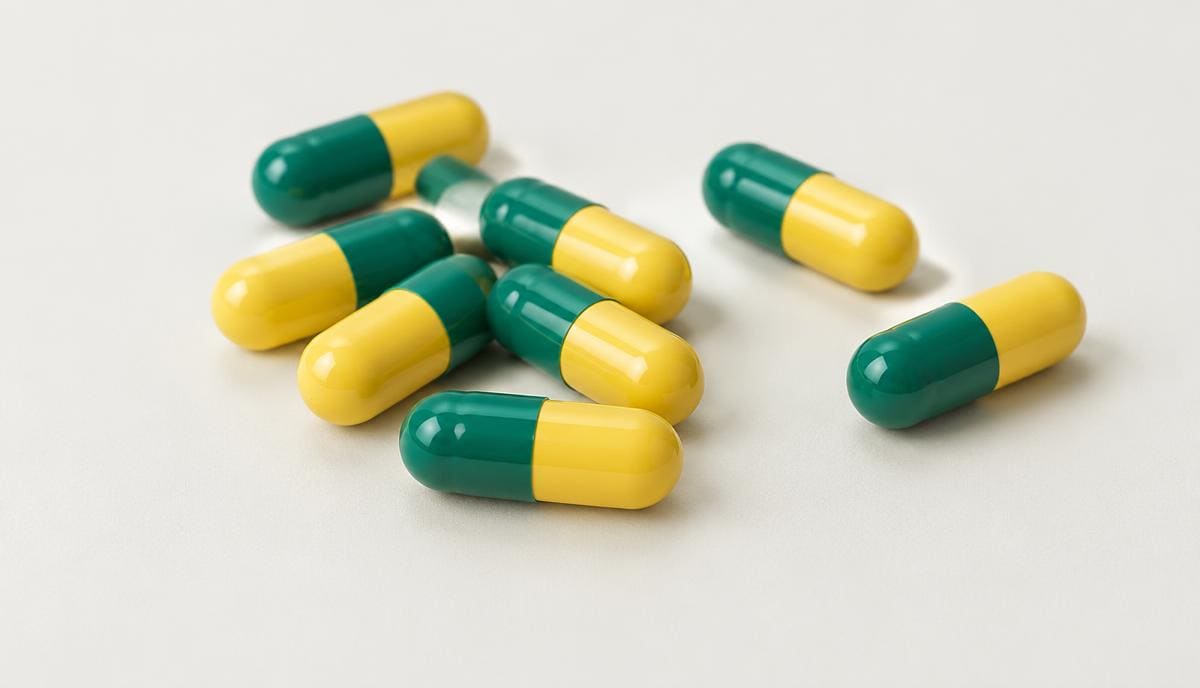
medicationPrescription only (US)Doxycycline is an approved medicine; the cited literature reports trial outcomes, not dosing advice.

DoxycyclineBenefits, Dosage & Interactions

Doxycycline is a tetracycline-class antibiotic that works by inhibiting bacterial protein synthesis. It is a broad-spectrum antibiotic, meaning it is effective against a wide range of bacteria. It is typically taken in the morning. The reported plasma half-life is about 16 hours, which shapes dosing frequency.

Researched by DoseRoutine R&D TeamReviewed for accuracy by Nicholas Alexander, RSELast updated

Evidence: Strong881 human randomized trials and regulatory approval on file.
Evidence strengthStrong · 4/4
PreclinicalStrong human evidence

881 human randomized trials and regulatory approval on file.

Chemical structure of Doxycycline (PubChem CID 54671203)
Structure via PubChem
Plasma half-life
16–22 h
Typical timing
morning
Food rule
with food
Default unit
mg

What published protocols report

Ranges documented in the literature, shown for reference. DoseRoutine does not recommend an amount — your prescriber or the product label sets the dose.

Reported amounts
Not stated here. The cited trials each used their own protocol amounts, and Doxycycline is dosed by a prescriber or the approved product label — DoseRoutine records what you were told to take, it does not suggest an amount.[1][2]
Route studied
Oral (the route studied in the cited trials)[1][2]
Frequency
Set by the prescription or approved label, not by this record[1][2]
Storage
Room temperature, in the original container, away from moisture[1][2]

Reported for Doxycycline in the cited sources. Published ranges are not dosing advice.

References & evidence

Documents the Doxycycline entry is written from. Each number matches an inline marker above.

  1. [1]Efficacy of Spironolactone Compared with Doxycycline in Moderate Acne in Adult Females: Results of the Multicentre, Controlled, Randomized, Double-blind Prospective and Parallel Female Acne Spironolactone vs doxyCycline Efficacy (FASCE) StudyDréno B, Nguyen JM, Hainaut E, et al. · Acta Derm Venereol · 2024 · Peer-reviewed · PMID 38380975
  2. [2]Efficacy of Doxycycline as Preexposure and/or Postexposure Prophylaxis to Prevent Sexually Transmitted Diseases: A Systematic Review and Meta-AnalysisBoschiero MN, Sansone NMS, Matos LR, et al. · Sex Transm Dis · 2025 · Peer-reviewed · PMID 39316078

How to track Doxycycline doses

Tracking Doxycycline well takes four fields and a habit. Here is what to record so the log is still useful in three months.

  1. 1

    Add the dose and unit

    Log Doxycycline with its dose in mg so totals stay comparable over time — including days when you split the dose or skip it.

  2. 2

    Set the time of day and food rule

    Typical timing is morning. Take it with food, and record it that way so absorption stays consistent. Reminders fire at that time and can export to your calendar.

  3. 3

    Check it against the rest of the stack

    Run Doxycycline through the interaction checker against everything else in the routine — supplements, peptides, hormones and prescriptions — before it becomes a daily habit.

  4. 4

    Log adherence, not intentions

    Mark each dose taken, skipped or delayed as it happens. Weeks of honest logs are what make an adherence rate or a trend line meaningful; retrospective guessing is not.

  5. 5

    Review against outcomes

    With a reported half-life around 16 h, effects and timing shifts show up over days rather than instantly. Review Doxycycline alongside your logged metrics and any relevant blood work every few weeks before changing the dose.

What to log each time

  • Dose in mg
  • Time of day and whether it was taken with food
  • Taken / skipped / delayed
  • Any side effects or notable changes

References & Evidence

Sources on this page that document Doxycycline dosing, timing and safety.

  1. [1]National Center for Biotechnology Information View source

Educational information only — not medical advice. Dose ranges vary by person, indication and prescriber.

What is Doxycycline?Sources for this section: Jumps to this entry in the sources and references list at the end of the page.

Doxycycline is a tetracycline-class antibiotic that works by inhibiting bacterial protein synthesis. It is a broad-spectrum antibiotic, meaning it is effective against a wide range of bacteria. It is commonly prescribed for various bacterial infections, including respiratory tract infections, urinary tract infections, skin infections, sexually transmitted infections, and certain tick-borne diseases like Lyme disease and Rocky Mountain spotted fever. Doxycycline is also used in the prevention of malaria and in the treatment of acne and rosacea, owing to its anti-inflammatory properties at lower doses. It is available in several oral formulations, including capsules, tablets, and a liquid suspension, and can also be administered intravenously in hospital settings. The exact dose and duration of treatment depend on the specific infection being treated, the patient's age and weight, and their overall health status. (DrugBank, FDA label)

What does the research say about Doxycycline?

Tap a section to expand.

Doxycycline exerts its antibacterial effect by reversibly binding to the 30S ribosomal subunit of susceptible bacteria. This binding prevents the attachment of aminoacyl-tRNA to the ribosomal A site, thereby inhibiting bacterial protein synthesis. Without the ability to synthesize essential proteins, bacteria cannot grow or reproduce, leading to their eradication or inhibition of growth. Doxycycline is considered bacteriostatic at typical therapeutic concentrations, meaning it primarily inhibits bacterial growth rather than directly killing the bacteria. However, at higher concentrations, it can be bactericidal against some organisms. Its mechanism of action also involves chelation of metal ions, which can further disrupt bacterial functions. In addition to its antimicrobial effects, doxycycline exhibits anti-inflammatory and immunomodulatory properties, particularly at sub-antimicrobial doses. These properties contribute to its efficacy in conditions like rosacea and acne. (DrugBank, PubChem)

Source for this section: Sources for How does Doxycycline work?: Jumps to this entry in the sources and references list at the end of the page.

Doxycycline is a versatile antibiotic with established efficacy in treating a wide array of bacterial infections. Its benefits include: * **Broad-Spectrum Antibiotic Activity:** Effective against many Gram-positive and Gram-negative bacteria, as well as some atypical organisms like Mycoplasma, Chlamydia, and Rickettsia species. (FDA label) * **Treatment of Respiratory Infections:** Used for conditions such as community-acquired pneumonia, bronchitis, sinusitis, and pharyngitis caused by susceptible bacteria. (FDA label) * **Urinary Tract Infections (UTIs):** Can be an option for UTIs, particularly those resistant to other common antibiotics. (FDA label) * **Skin and Soft Tissue Infections:** Effective against certain skin infections, including some caused by *Staphylococcus aureus* (including some MRSA strains) and *Streptococcus pyogenes*. It is a common treatment for moderate to severe acne and rosacea. (FDA label, Mayo Clinic) * **Sexually Transmitted Infections (STIs):** A primary treatment for chlamydia and lymphogranuloma venereum, and an alternative for syphilis and gonorrhea. (MedlinePlus) * **Tick-Borne Diseases:** Highly effective for Lyme disease, Rocky Mountain spotted fever, anaplasmosis, and ehrlichiosis. (Mayo Clinic) * **Malaria Prevention:** Used for prophylaxis against malaria in travelers to endemic areas. (MedlinePlus) * **Anthrax and Plague:** Approved for the treatment and post-exposure prophylaxis of anthrax (including inhalational anthrax) and plague. (FDA label) * **Anti-Inflammatory Properties:** At lower doses, it can reduce inflammation and enzyme activity associated with conditions like rosacea and periodontal disease. (NIH ODS) It is important to complete the full course of treatment as prescribed, even if symptoms improve, to ensure eradication of the infection and prevent the development of antibiotic resistance. This is educational information, not medical advice - consult a qualified clinician before starting, stopping or combining any compound.

Doxycycline's efficacy and safety have been extensively studied and documented over decades. Its approval by regulatory bodies like the FDA and EMA is based on a substantial body of clinical trials and post-marketing surveillance. * **Chlamydia and Gonorrhea:** Multiple clinical trials have demonstrated doxycycline's high efficacy in treating uncomplicated chlamydial infections, often achieving cure rates exceeding 95%. It is also widely used as an alternative treatment for uncomplicated gonorrhea, particularly in cases of azithromycin or ceftriaxone resistance, as outlined by CDC guidelines. (Cochrane, MedlinePlus) * **Lyme Disease:** Studies have consistently shown doxycycline to be a highly effective treatment for early Lyme disease, preventing the progression to more severe stages. A Cochrane review highlighted its effectiveness in reducing symptoms and preventing complications. (Cochrane) * **Acne and Rosacea:** Low-dose doxycycline formulations have been specifically developed and studied for their anti-inflammatory effects in acne and rosacea. Clinical trials have demonstrated significant reductions in inflammatory lesions in both conditions, supporting its use at sub-antimicrobial doses. (NIH ODS) * **Malaria Prophylaxis:** Extensive research and clinical experience have established doxycycline as an effective chemoprophylactic agent against *Plasmodium falciparum* and *P. vivax* malaria. (MedlinePlus) Pharmacokinetic studies confirm its good oral bioavailability and penetration into various tissues, which contributes to its broad utility. Resistance patterns are monitored globally, and guidelines are updated accordingly to ensure appropriate use. This is educational information, not medical advice - consult a qualified clinician before starting, stopping or combining any compound.

While generally well-tolerated, doxycycline can cause side effects. Common side effects often involve the gastrointestinal system or skin: * **Gastrointestinal Disturbances:** Nausea, vomiting, diarrhea, abdominal pain, and esophagitis (inflammation of the esophagus), especially if not taken with adequate water or if lying down shortly after taking it. (FDA label) * **Photosensitivity:** Increased sensitivity to sunlight, leading to easy sunburn, rashes, or severe reactions. This is a common and important side effect. (FDA label) * **Tooth Discoloration:** Permanent tooth discoloration (yellow-grey-brown) can occur if taken during tooth development (in children under 8 years of age or during the second and third trimesters of pregnancy). (FDA label) * **Candidiasis:** Oral or vaginal candidiasis (yeast infection) due to alteration of normal flora. (FDA label) * **Headache:** Can occur, and rarely, benign intracranial hypertension (pseudotumor cerebri) in adults. Symptoms include headache, blurred vision, and vomiting. (FDA label) * **Rash:** Skin rashes can occur. (FDA label) Less common but more serious side effects include severe allergic reactions (anaphylaxis), Stevens-Johnson syndrome, liver toxicity, and blood disorders. If any severe or unusual symptoms arise, medical attention should be sought immediately. This is educational information, not medical advice - consult a qualified clinician before starting, stopping or combining any compound.

Doxycycline carries several important warnings. * **Photosensitivity:** Doxycycline can cause severe dermatological reactions to sun exposure. Patients should be advised to avoid direct sunlight and artificial ultraviolet light, and to use sunscreen and protective clothing while on this medication and for several days after stopping it. (FDA label) * **Esophageal Irritation/Ulceration:** To minimize the risk of esophagitis or esophageal ulceration, doxycycline should be taken with a full glass of water while sitting upright, and patients should remain upright for at least 30 minutes after taking the dose. It should not be taken immediately before bedtime. (FDA label) * **Tooth Discoloration and Bone Development:** Doxycycline should not be used in children under 8 years of age, during the second and third trimesters of pregnancy, due to the risk of permanent tooth discoloration and inhibition of bone growth. (FDA label) * **Clostridium difficile-Associated Diarrhea (CDAD):** Treatment with antibacterial agents alters the normal flora of the colon and may permit overgrowth of *Clostridium difficile*. CDAD has been reported with nearly all antibacterial agents, including doxycycline. (FDA label) * **Benign Intracranial Hypertension (Pseudotumor Cerebri):** This has been associated with tetracycline use, including doxycycline, and primarily affects adult women of childbearing age. Symptoms include headache, blurred vision, diplopia, and vision loss. Concurrent use of isotretinoin increases this risk. (FDA label) * **Liver and Kidney Impairment:** Use with caution in patients with impaired hepatic function. While considered safer in renal impairment than other tetracyclines, caution is still advised. (FDA label) * **Antimicrobial Resistance:** Prolonged use of antibiotics can lead to the overgrowth of non-susceptible organisms, including fungi. (FDA label) Patients should inform their healthcare provider about all existing medical conditions and medications they are taking. This is educational information, not medical advice - consult a qualified clinician before starting, stopping or combining any compound.

Doxycycline is contraindicated in several situations to prevent serious adverse effects. * **Hypersensitivity:** Individuals with a known allergy or hypersensitivity to doxycycline, other tetracyclines, or any component of the formulation should not use this medication. (FDA label) * **Pregnancy and Breastfeeding:** Doxycycline is contraindicated during pregnancy (specifically after the first trimester) and breastfeeding due to the risk of permanent tooth discoloration and inhibition of bone growth in the developing fetus or infant. (FDA label) * **Children Under 8 Years of Age:** The use of doxycycline in children under 8 years is generally contraindicated due to the risk of permanent tooth discoloration and potential for reversible inhibition of bone growth. In severe, life-threatening conditions (e.g., anthrax, Rocky Mountain spotted fever), the benefit may outweigh the risk for a short course. (FDA label) Always ensure your healthcare provider is aware of your full medical history and current medications before considering doxycycline. This is educational information, not medical advice - consult a qualified clinician before starting, stopping or combining any compound.

Mixing doxycycline with certain other compounds can lead to reduced efficacy of doxycycline, increased side effects, or dangerous interactions. * **Antacids, Iron Supplements, and Calcium-containing Products:** Aluminum, calcium, magnesium, iron, zinc, and bismuth subsalicylate can chelate with doxycycline, reducing its absorption and effectiveness. These products should be taken at least 2-3 hours before or 2-3 hours after doxycycline. (FDA label) * **Warfarin:** Tetracyclines, including doxycycline, can potentiate the anticoagulant effect of warfarin. Increased monitoring of prothrombin time/INR is recommended with concurrent use. (FDA label) * **Penicillins:** Bacteriostatic drugs like doxycycline may interfere with the bactericidal action of penicillins. Concurrent use should generally be avoided, especially in situations where a rapid bactericidal effect is crucial. (FDA label) * **Oral Contraceptives:** Some antibiotics, including tetracyclines, may decrease the effectiveness of oral contraceptives. Patients should be advised to use an alternative or additional method of contraception while on doxycycline. (MedlinePlus) * **Barbiturates, Carbamazepine, and Phenytoin:** These anticonvulsant drugs can induce enzymes that decrease the half-life of doxycycline, leading to reduced drug levels and potentially decreased efficacy. (FDA label) * **Isotretinoin:** Concurrent use with isotretinoin (a retinoid used for acne) should be avoided due to an increased risk of benign intracranial hypertension (pseudotumor cerebri). (FDA label) * **Live Bacterial Vaccines:** Like other antibiotics, doxycycline may reduce the effectiveness of live bacterial vaccines (e.g., live typhoid vaccine). (MedlinePlus) It is crucial to inform your doctor and pharmacist about all prescription, over-the-counter, herbal, and dietary supplements you are taking to prevent potential interactions. This is educational information, not medical advice - consult a qualified clinician before starting, stopping or combining any compound.

Doxycycline is typically taken once or twice daily, depending on the specific formulation and the condition being treated. While the general recommendation is to take it with food to minimize gastrointestinal upset (MedlinePlus), it is crucial to take it with a full glass of water (at least 8 ounces or 240 mL) to prevent esophageal irritation. Patients should remain upright for at least 30 minutes, or preferably for an hour, after taking the medication to ensure it passes into the stomach and reduce the risk of esophagitis. It should not be taken immediately before lying down, especially before bedtime. Some formulations like delayed-release tablets may have specific instructions regarding food intake; always refer to the specific FDA label or your clinician's instructions. Consistency in taking the medication at the same time(s) each day is important to maintain steady drug levels in the body. The duration of treatment varies widely, from a few days for acute infections to several months for conditions like acne or malaria prophylaxis. The dose is user-directed and must be set by a licensed clinician.

Source for this section: Sources for When should you take Doxycycline?: Jumps to this entry in the sources and references list at the end of the page.

What interacts with Doxycycline?

Documented interactions for Doxycycline: the other compound, the severity and confidence of the interaction, what happens, and what to do.
Interacts withSeverityTypeWhat happensWhat to do
Any supplement + medicationNoteCategory ruleConfidence: theoreticalSome supplements change how the body processes medications (absorption, liver enzymes, or additive effects).Source pendingSpecific pairs are checked against a licensed drug database and shown with their own severity. Always confirm with your provider or pharmacist.
Any vitamin + medicationNoteCategory ruleConfidence: theoreticalCertain vitamins interact with specific medications (e.g., vitamin K with blood thinners).Source pendingSpecific pairs are checked against a licensed source; confirm with your provider.

Frequently asked questions about Doxycycline

Doxycycline is a medication. The references summarized come from NIH and PubMed records, FDA labeling where it exists, and Mayo Clinic patient material.

Doxycycline is commonly discussed in the context of the goals discussed on its profile page. Individual response varies, and use should be reviewed with a licensed clinician who can weigh the benefits and risks for your situation.

For Doxycycline, it is typically taken in the morning, it is usually taken with food, and its approximate half-life is 16 hours, which influences dosing frequency. Always follow the specific dose your clinician or the product label prescribes.

Doxycycline carries potential side effects and drug interactions, documented in NIH, Mayo Clinic, and FDA label sources. Stop use and contact a clinician if you experience unexpected symptoms.

As a medication, Doxycycline can overlap with other supplements, prescription medicines, hormones and peptides. Because Doxycycline is usually taken in the morning, most avoidable conflicts come from what else lands in that same window. With a reported plasma half-life near 16 hours, separating doses can change the picture as much as removing one. Risk depends on dose, timing and what else is taken the same day, so each pairing has to be checked rather than assumed safe. The free checker at https://doseroutine.com/interaction-checker covers Doxycycline with no sign-up.

Whether Doxycycline fits alongside testosterone replacement therapy depends on the protocol — dose, ester and ancillaries such as HCG or anastrozole — and on current bloodwork. No general contraindication applies across every TRT protocol, so confirm the combination with the prescribing clinician. See the free TRT interaction reference: https://doseroutine.com/trt-supplement-interactions

"Peptides" is not one category — healing peptides, GLP-1 agonists, growth-hormone secretagogues and melanocortins each behave differently next to Doxycycline. Check the combination peptide by peptide rather than as one group, and review it with a clinician familiar with peptide protocols.

With a plasma half-life near 16 hours, once-daily dosing is the usual pattern for Doxycycline. It is typically taken in the morning. Most protocols have it taken with food. Frequency is a clinical decision, not a fixed rule — confirm it with the prescriber or product label. Comparison of apps that keep a schedule like this: https://doseroutine.com/best-dose-tracking-apps

With a plasma half-life near 16 hours, a single missed dose of Doxycycline usually has a smaller effect on overall exposure than an irregular pattern of missed doses does. Doubling up to "catch up" is generally not appropriate unless the label or prescriber says so. Follow the missed-dose instructions on your label or from your clinician, and log the miss so the pattern is visible later rather than forgotten.

For Doxycycline the useful record is the dose, the time it was actually taken, and what else was taken in the same window. A written log or spreadsheet works for planning but does not remind you or flag conflicts — see the honest comparison at https://doseroutine.com/vs/spreadsheet and the wider roundup at https://doseroutine.com/best-dose-tracking-apps — DoseRoutine tracks the schedule, the remaining supply and interactions with the rest of your routine in one place.

Which studies looked at Doxycycline?

Peer-reviewed research indexed in PubMed. Each entry links to the original record.

  1. 1.Postexposure Doxycycline to Prevent Bacterial Sexually Transmitted Infections(opens PubMed in a new tab)N Engl J Med · 2023 · PMID 37018493 · https://pubmed.ncbi.nlm.nih.gov/37018493/
  2. 2.Doxycycline(opens PubMed in a new tab)Ther Drug Monit · 1982 · PMID 7048645 · https://pubmed.ncbi.nlm.nih.gov/7048645/
  3. 3.Doxycycline Prophylaxis to Prevent Sexually Transmitted Infections in Women(opens PubMed in a new tab)N Engl J Med · 2023 · PMID 38118022 · https://pubmed.ncbi.nlm.nih.gov/38118022/

Sources cited on this page

Specific documents referenced by the numbered markers above. Each number matches the marker in the text.

  1. PubChem CID 54685920(opens in a new tab)National Center for Biotechnology Information · pubchem.ncbi.nlm.nih.gov/compound/54685920

Verify at

Publisher search links for Doxycycline. These are places to check the information — they are not citations, so they are not numbered.

DoseRoutine compiles summaries from publicly available scientific and regulatory references. Always verify important decisions with a licensed clinician. How we source and review this information.

What is the short answer on Doxycycline?

Plain-text summary, safe to quote verbatim:

Doxycycline is a tetracycline-class antibiotic that works by inhibiting bacterial protein synthesis. It is a broad-spectrum antibiotic, meaning it is effective against a wide range of bacteria. It is typically taken in the morning. The reported plasma half-life is about 16 hours, which shapes dosing frequency.
Source: DoseRoutine — https://doseroutine.com/library/doxycycline

Cite this page

Using this in an article, AI answer, or research note? Please attribute:

DoseRoutine. (2026). Doxycycline — Overview, Benefits & Side Effects. Retrieved from https://doseroutine.com/library/doxycycline
Canonical URL

What compounds are similar to Doxycycline?

Others in the medication category or studied for the same goals.

Track Doxycycline in DoseRoutine

Add it to your stack. We'll schedule doses, check interactions against everything else you take, and remind you at the right time.

Sign up free →

Latest research from DoseRoutine

Browse all DoseRoutine research updates

Track Doxycycline in your own routine

Add Doxycycline to your stack, get reminders at the right times, and see interaction notes with everything else you take. Free to start — no card needed.