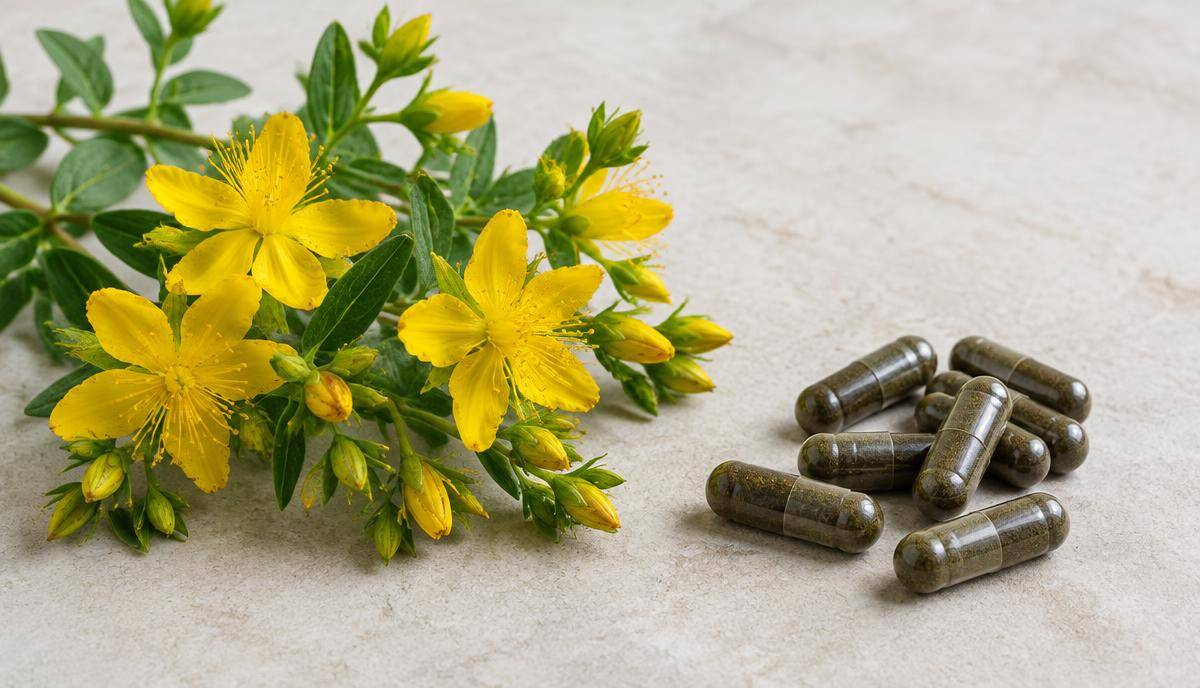
supplementNot FDA-approvedOTC supplementSt John's Wort is sold in the US as an unregulated dietary supplement; it is not FDA-approved as a drug for depressionIt is a potent inducer of CYP3A4 and P-glycoprotein, causing clinically significant interactions with many prescription medications

St John's WortBenefits, Dosage & Interactions

Also known as: Hypericum

St. John's Wort (Hypericum perforatum) is a flowering plant historically used in traditional European medicine. It is commonly taken as an herbal supplement, primarily recognized for its potential effects on mood. Research on St John's Wort focuses on cognition and mood.

Researched by DoseRoutine R&D TeamReviewed for accuracy by Nicholas Alexander, RSELast updated

Evidence: Strong2 human randomized trials published.
Evidence strengthStrong · 4/4
PreclinicalStrong human evidence

2 human randomized trials published.

Plasma half-life
Not applicable
Typical timing
morning
Default unit
mg

What published protocols report

Ranges documented in the literature, shown for reference. DoseRoutine does not recommend an amount — your prescriber or the product label sets the dose.

Reported amounts
Standardized extract doses in the low hundreds of milligrams per day were used across the cited randomized trials[1][2]
Route studied
Oral, as a standardized capsule extract[1][2]
Frequency
Once or twice daily dosing across trial protocols[1][2]
Cycle length
Trial durations ranged from a pilot course of several weeks up to 26-week continuation follow-up[1][2]

Reported for St John's Wort in the cited sources. Published ranges are not dosing advice.

References & evidence

Documents the St John's Wort entry is written from. Each number matches an inline marker above.

  1. [1]St John's wort (Hypericum perforatum) versus sertraline and placebo in major depressive disorder: continuation data from a 26-week RCTSarris J, Fava M, Schweitzer I, Mischoulon D · Pharmacopsychiatry · 2012 · Peer-reviewed · PMID 22592504
  2. [2]St. John's wort and Kava in treating major depressive disorder with comorbid anxiety: a randomised double-blind placebo-controlled pilot trialSarris J, Kavanagh DJ, Deed G, Bone KM · Human Psychopharmacology · 2009 · Peer-reviewed · PMID 19090505

How to track St John's Wort doses

Tracking St John's Wort well takes four fields and a habit. Here is what to record so the log is still useful in three months.

  1. 1

    Add the dose and unit

    Log St John's Wort with its dose in mg so totals stay comparable over time — including days when you split the dose or skip it.

  2. 2

    Set the time of day and food rule

    Typical timing is morning. Reminders fire at that time and can export to your calendar.

  3. 3

    Check it against the rest of the stack

    Run St John's Wort through the interaction checker against everything else in the routine — supplements, peptides, hormones and prescriptions — before it becomes a daily habit.

  4. 4

    Log adherence, not intentions

    Mark each dose taken, skipped or delayed as it happens. Weeks of honest logs are what make an adherence rate or a trend line meaningful; retrospective guessing is not.

  5. 5

    Review against outcomes

    Review St John's Wort alongside your logged metrics and any relevant blood work every few weeks before changing the dose, so the change is a response to data rather than to a good or bad day.

What to log each time

  • Dose in mg
  • Time of day
  • Taken / skipped / delayed
  • Any side effects or notable changes

References & Evidence

Sources on this page that document St John's Wort dosing, timing and safety.

  1. [1]National Center for Biotechnology Information View source

Educational information only — not medical advice. Dose ranges vary by person, indication and prescriber.

What is St John's Wort studied for?

What is St John's Wort?Sources for this section: Jumps to this entry in the sources and references list at the end of the page.

St. John's Wort (Hypericum perforatum) is a flowering plant historically used in traditional European medicine. It is commonly taken as an herbal supplement, primarily recognized for its potential effects on mood. The plant's extract contains several active compounds, including hypericin and hyperforin, which are thought to contribute to its activity. The use of St. John's Wort for various conditions has been extensively studied, particularly in relation to mood support. It is available in various forms, including capsules, tablets, teas, and liquid extracts (National Center for Complementary and Integrative Health (NCCIH)).

What does the research say about St John's Wort?

Tap a section to expand.

The precise mechanisms by which St. John's Wort exerts its effects are complex and not fully understood, involving multiple biochemical pathways. Research suggests that several compounds within St. John's Wort contribute to its activity. Hyperforin, one of the primary active constituents, is thought to inhibit the reuptake of neurotransmitters such as serotonin, norepinephrine, and dopamine, similar to some prescription medications. This action leads to increased concentrations of these neurotransmitters in the synaptic cleft, potentially influencing mood regulation. Another key compound, hypericin, was initially believed to be the main active ingredient, but later research indicated hyperforin plays a more significant role in some of the observed effects (DrugBank, PubMed). Additionally, St. John's Wort may interact with GABA and glutamate receptors and influence the hypothalamic-pituitary-adrenal (HPA) axis, which is involved in stress response. It also has an effect on drug-metabolizing enzymes, specifically inducing cytochrome P450 enzymes (CYP3A4, CYP2C9, CYP2C19), P-glycoprotein, and organic anion transporting polypeptide (OATP). This enzyme induction is a critical aspect of its mechanism, as it can significantly alter the metabolism and effectiveness of many other medications (National Institutes of Health (NIH) Office of Dietary Supplements (ODS)).

Source for this section: Sources for How does St John's Wort work?: Jumps to this entry in the sources and references list at the end of the page.

The primary area of reported benefit for St. John's Wort is related to mood and emotional well-being. * **Mood Support:** It has been most extensively studied for its role in mild to moderate depressive symptoms. Numerous clinical trials and meta-analyses, including reviews by Cochrane, have indicated that St. John's Wort extracts may be as effective as some conventional antidepressants for mild to moderate depression, with potentially fewer side effects in some individuals (Cochrane Library). * **Anxiety:** Some studies suggest a possible benefit for associated anxiety or nervousness, often alongside improvements in mood (Examine.com). * **Menopausal Symptoms:** Limited research suggests it might help alleviate certain menopausal symptoms like hot flashes and mood disturbances, particularly when combined with other herbs (Mayo Clinic). It is crucial to understand that while studies show promise, individual responses can vary. For severe depression or other serious mood disorders, St. John's Wort is not considered an appropriate stand-alone treatment, and professional medical guidance is essential.

Evidence for St. John's Wort's efficacy largely pertains to its use for mild to moderate depressive symptoms. A comprehensive Cochrane review, including over 30 trials with thousands of participants, concluded that St. John's Wort extracts, standardized to contain specific amounts of hypericin or hyperforin, are superior to placebo for mild to moderate depression. The review also found that St. John's Wort was comparable in effectiveness to standard antidepressants for these conditions but noted potential drug interactions (Cochrane Library). Another meta-analysis published in the Journal of Clinical Psychiatry examining 29 trials found that St. John's Wort preparations were more effective than placebo and similarly effective to standard antidepressant drugs for mild to moderate major depressive disorder. It also suggested that St. John's Wort might have fewer side effects than some standard antidepressants (Journal of Clinical Psychiatry). However, for severe depression, evidence of efficacy is generally lacking, and it is not recommended as a primary treatment. The European Medicines Agency (EMA) has acknowledged its use for temporary low mood, while emphasizing the importance of medical consultation due to potential interactions and individual variability in response (EMA SmPC). The National Center for Complementary and Integrative Health (NCCIH) warns that St. John's Wort interacts with many medications, reducing their effectiveness.

While generally considered safe for short-term use in many individuals, St. John's Wort can cause several side effects. Common side effects include: * Gastrointestinal issues, such as nausea, upset stomach, or diarrhea. * Dizziness or lightheadedness. * Fatigue or restlessness. * Dry mouth. * Skin reactions, particularly increased sensitivity to sunlight (photosensitivity), leading to sunburn more easily. This effect is more pronounced in fair-skinned individuals or with higher doses. * Anxiety or irritability in some cases. Less common but more serious side effects can also occur, especially when combined with other medications, due to its complex interactions with liver enzymes and drug transporters. Serotonin syndrome is a rare but potentially dangerous condition that can result from combining St. John's Wort with other serotonergic drugs. Symptoms include confusion, agitation, rapid heart rate, muscle rigidity, and profuse sweating. If any severe or concerning side effects occur, medical attention should be sought immediately. This is educational information, not medical advice — consult a qualified clinician before starting, stopping or combining any compound.

St. John's Wort carries several important warnings. It can cause photosensitivity, meaning increased sensitivity to sunlight, making individuals more prone to sunburn. It is advisable to use sunscreen and protective clothing when exposed to the sun while taking St. John's Wort. It can also induce liver enzymes, leading to significant drug interactions that can reduce the effectiveness of many prescription medications. Individuals should not discontinue prescribed medications in favor of St. John's Wort without consulting a healthcare professional. Although often used for mood support, it is not a substitute for conventional medical care for serious mental health conditions. There have been reports of mood swings, anxiety, or restlessness in some users. Pregnant or breastfeeding individuals should avoid St. John's Wort due to insufficient safety data. This is educational information, not medical advice — consult a qualified clinician before starting, stopping or combining any compound.

St. John's Wort is contraindicated in several situations due to its potential for significant adverse effects and drug interactions. It should not be used by individuals taking certain prescription medications, particularly those metabolized by the CYP3A4 liver enzyme system or transported by P-glycoprotein. These include, but are not limited to, antiretroviral drugs for HIV/AIDS (e.g., indinavir), certain immunosuppressants used in organ transplant recipients (e.g., cyclosporine, everolimus, tacrolimus), and some anticancer drugs. St. John's Wort is also contraindicated in individuals with known hypersensitivity to the plant. It should be avoided by pregnant or breastfeeding women. Moreover, individuals suffering from severe depression or other serious psychological conditions, bipolar disorder, or schizophrenia should not use St. John's Wort, as it may worsen symptoms or interfere with prescribed treatments. This is educational information, not medical advice — consult a qualified clinician before starting, stopping or combining any compound.

Due to its potent enzyme-inducing properties, St. John's Wort interacts with a wide array of medications, often reducing their effectiveness. It should absolutely not be mixed with: * **Antidepressants (SSRIs, SNRIs, tricyclics):** Combining with these can lead to a potentially life-threatening condition called serotonin syndrome, characterized by agitation, confusion, rapid heart rate, and muscle rigidity. * **Oral Contraceptives:** St. John's Wort can reduce the effectiveness of birth control pills, leading to unplanned pregnancies. * **Anticoagulants (e.g., Warfarin):** It can decrease the efficacy of blood thinners, increasing the risk of blood clots. * **Immunosuppressants (e.g., Cyclosporine, Tacrolimus):** Essential for organ transplant recipients, St. John's Wort can drastically lower the levels of these drugs, leading to organ rejection. * **Antiretroviral drugs (e.g., Indinavir, Nevirapine):** Used to treat HIV/AIDS, St. John's Wort can reduce the concentration of these drugs, compromising treatment. * **Digoxin:** A heart medication; St. John's Wort can reduce its levels, diminishing its therapeutic effect. * **Migraine medications (Triptans):** Increased risk of serotonin syndrome. * **Certain chemotherapy drugs:** Can alter the metabolism and effectiveness of various cancer treatments. This list is not exhaustive. The general rule is to exercise extreme caution and always consult a healthcare professional before combining St. John's Wort with any prescription medication or other supplements. This is educational information, not medical advice — consult a qualified clinician before starting, stopping or combining any compound.

St. John's Wort is typically taken in the morning. When taken for mood support, it often requires consistent daily use over several weeks to observe potential benefits. Due to its half-life of approximately 24 hours, single daily dosing is common. However, some formulations or specific healthcare recommendations might involve multiple daily doses. Individual needs vary — talk to a licensed clinician.

Source for this section: Sources for When should you take St John's Wort?: Jumps to this entry in the sources and references list at the end of the page.

What interacts with St John's Wort?

Documented interactions for St John's Wort: the other compound, the severity and confidence of the interaction, what happens, and what to do.
Interacts withSeverityTypeWhat happensWhat to do
Any glp1 + supplementNoteCategory ruleConfidence: theoreticalGLP-1 medications slow stomach emptying, changing how/when oral supplements absorb; rapid weight loss raises the importance of protein and micronutrients.Source pendingTime oral supplements when nausea is lowest; prioritize protein and micronutrients; discuss with your provider.
Any supplement + medicationNoteCategory ruleConfidence: theoreticalSome supplements change how the body processes medications (absorption, liver enzymes, or additive effects).Source pendingSpecific pairs are checked against a licensed drug database and shown with their own severity. Always confirm with your provider or pharmacist.
AmantadineCautionCompound pairConfidence: theoreticalSt Johns wort is serotonergic and CNS-active; theoretical additive stimulation with amantadine.Source pendingAvoid combining unless cleared by your clinician.
SertralineAvoidCompound pairConfidence: theoreticalSt John's Wort has serotonergic activity and induces CYP3A4, altering SSRI levels.Source pendingAvoid combining.
EscitalopramAvoidCompound pairConfidence: theoreticalSt John's Wort has serotonergic activity and induces CYP3A4, altering SSRI levels.Source pendingAvoid combining.
FluoxetineAvoidCompound pairConfidence: theoreticalSt John's Wort has serotonergic activity and induces CYP3A4, altering SSRI levels.Source pendingAvoid combining.
DuloxetineAvoidCompound pairConfidence: theoreticalSt John's Wort has serotonergic activity and induces CYP3A4, altering SSRI levels.Source pendingAvoid combining.
VenlafaxineAvoidCompound pairConfidence: theoreticalSt John's Wort has serotonergic activity and induces CYP3A4, altering SSRI levels.Source pendingAvoid combining.

Frequently asked questions about St John's Wort

St John's Wort is a supplement. It is also known as Hypericum. What follows is drawn from peer-reviewed literature indexed on PubMed, FDA label text where a label exists, and NIH reference records.

St John's Wort is commonly discussed in the context of supporting brain. Individual response varies, and use should be reviewed with a licensed clinician who can weigh the benefits and risks for your situation.

For St John's Wort, it is typically taken in the morning. Always follow the specific dose your clinician or the product label prescribes.

St John's Wort carries potential side effects and drug interactions, documented in NIH, Mayo Clinic, and FDA label sources. Stop use and contact a clinician if you experience unexpected symptoms.

St John's Wort is a supplement, and interactions are possible with prescriptions, hormones, peptides and other supplements in the same routine. Because St John's Wort is usually taken in the morning, most avoidable conflicts come from what else lands in that same window. Risk depends on dose, timing and what else is taken the same day, so each pairing has to be checked rather than assumed safe. The free checker at https://doseroutine.com/interaction-checker covers St John's Wort with no sign-up.

Combining a supplement like St John's Wort with TRT is usually a question of labs rather than a blanket yes or no: the ester, injection interval and any aromatase inhibitor all change the answer. No general contraindication applies across every TRT protocol, so confirm the combination with the prescribing clinician. See the free TRT interaction reference: https://doseroutine.com/trt-supplement-interactions

Each peptide class carries its own profile against St John's Wort: a healing peptide raises different questions than a GLP-1 agonist or a growth-hormone secretagogue. Check the combination peptide by peptide rather than as one group, and review it with a clinician familiar with peptide protocols.

Published frequency for St John's Wort varies by protocol and formulation, so the label or prescription is what sets it. It is typically taken in the morning. Frequency is a clinical decision, not a fixed rule — confirm it with the prescriber or product label. Comparison of apps that keep a schedule like this: https://doseroutine.com/best-dose-tracking-apps

The effect of a missed dose of St John's Wort depends on the protocol and formulation you are on. Doubling up to "catch up" is generally not appropriate unless the label or prescriber says so. Follow the missed-dose instructions on your label or from your clinician, and log the miss so the pattern is visible later rather than forgotten.

For St John's Wort the useful record is the dose, the time it was actually taken, and what else was taken in the same window. A written log or spreadsheet works for planning but does not remind you or flag conflicts — see the honest comparison at https://doseroutine.com/vs/spreadsheet and the wider roundup at https://doseroutine.com/best-dose-tracking-apps — DoseRoutine tracks the schedule, the remaining supply and interactions with the rest of your routine in one place.

Which studies looked at St John's Wort?

Peer-reviewed research indexed in PubMed. Each entry links to the original record.

  1. 1.St John's wort for major depression(opens PubMed in a new tab)Cochrane Database Syst Rev · 2008 · PMID 18843608 · https://pubmed.ncbi.nlm.nih.gov/18843608/

Sources cited on this page

Specific documents referenced by the numbered markers above. Each number matches the marker in the text.

  1. PubChem CID 9548591(opens in a new tab)National Center for Biotechnology Information · pubchem.ncbi.nlm.nih.gov/compound/9548591

Verify at

Publisher search links for St John's Wort. These are places to check the information — they are not citations, so they are not numbered.

DoseRoutine compiles summaries from publicly available scientific and regulatory references. Always verify important decisions with a licensed clinician. How we source and review this information.

What is the short answer on St John's Wort?

Plain-text summary, safe to quote verbatim:

St. John's Wort (Hypericum perforatum) is a flowering plant historically used in traditional European medicine. It is commonly taken as an herbal supplement, primarily recognized for its potential effects on mood. Research on St John's Wort focuses on cognition and mood.
Source: DoseRoutine — https://doseroutine.com/library/st-john-s-wort

Cite this page

Using this in an article, AI answer, or research note? Please attribute:

DoseRoutine. (2026). St John's Wort — Overview, Benefits & Side Effects. Retrieved from https://doseroutine.com/library/st-john-s-wort
Canonical URL

What compounds are similar to St John's Wort?

Others in the supplement category or studied for the same goals.

Which goals is St John's Wort used for?

Other compounds studied for the same benefits as St John's Wort.

Continue exploring

See every compound DoseRoutine catalogs for these goals.

Track St John's Wort in DoseRoutine

Add it to your stack. We'll schedule doses, check interactions against everything else you take, and remind you at the right time.

Sign up free →

Latest research from DoseRoutine

Browse all DoseRoutine research updates

Track ST John S Wort in your own routine

Add ST John S Wort to your stack, get reminders at the right times, and see interaction notes with everything else you take. Free to start — no card needed.