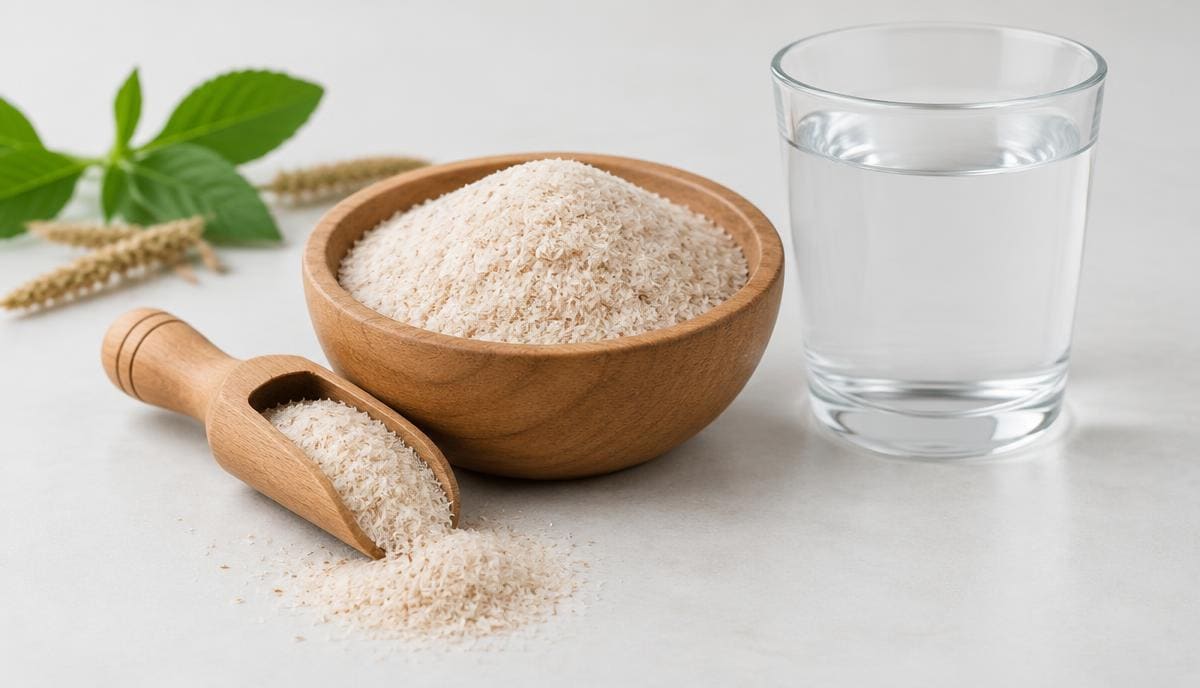
supplementOTC supplementTaken with too little fluid, psyllium can cause choking or intestinal obstruction

Psyllium HuskBenefits, Dosage & Interactions

Psyllium husk is a form of soluble fiber derived from the seeds of the Plantago ovata plant, also known as blond psyllium. It is commonly used as a dietary supplement due to its high fiber content. Research on Psyllium Husk focuses on blood sugar control.

Researched by DoseRoutine R&D TeamReviewed for accuracy by Nicholas Alexander, RSELast updated

Evidence: ModerateCovered by a systematic review, without regulatory approval.
Evidence strengthModerate · 3/4
PreclinicalStrong human evidence

Covered by a systematic review, without regulatory approval.

Plasma half-life
Not applicable
Typical timing
with meal
Food rule
with food
Default unit
g

What published protocols report

Ranges documented in the literature, shown for reference. DoseRoutine does not recommend an amount — your prescriber or the product label sets the dose.

Reported amounts
Constipation and weight trials pooled in these reviews used roughly 7-20 g/day of psyllium husk[1][2]
Route studied
Oral powder stirred into water, or capsules[1][2]
Frequency
Split into one to three doses per day, each with a full glass of water[1][2]
Cycle length
Trial durations of 2 weeks to 6 months[1][2]
Half-life
Not applicable - psyllium is a non-absorbed gel-forming fiber[1][2]
Storage
Cool, dry, sealed - psyllium absorbs ambient moisture[1][2]

Reported for Psyllium Husk in the cited sources. Published ranges are not dosing advice.

References & evidence

Documents the Psyllium Husk entry is written from. Each number matches an inline marker above.

  1. [1]The Effect of Fiber Supplementation on Chronic Constipation in Adults: An Updated Systematic Review and Meta-Analysis of Randomized Controlled Trialsvan der Schoot A, Drysdale C, Whelan K, et al. · American Journal of Clinical Nutrition · 2022 · Peer-reviewed · PMID 35816465
  2. [2]Psyllium is a natural nonfermented gel-forming fiber that is effective for weight loss: A comprehensive review and meta-analysisGibb RD, Sloan KJ, McRorie JW Jr · Journal of the American Association of Nurse Practitioners · 2023 · Peer-reviewed · PMID 37163454

How to track Psyllium Husk doses

Tracking Psyllium Husk well takes four fields and a habit. Here is what to record so the log is still useful in three months.

  1. 1

    Add the dose and unit

    Log Psyllium Husk with its dose in g so totals stay comparable over time — including days when you split the dose or skip it.

  2. 2

    Set the time of day and food rule

    Typical timing is with_meal. Take it with food, and record it that way so absorption stays consistent. Reminders fire at that time and can export to your calendar.

  3. 3

    Check it against the rest of the stack

    Run Psyllium Husk through the interaction checker against everything else in the routine — supplements, peptides, hormones and prescriptions — before it becomes a daily habit.

  4. 4

    Log adherence, not intentions

    Mark each dose taken, skipped or delayed as it happens. Weeks of honest logs are what make an adherence rate or a trend line meaningful; retrospective guessing is not.

  5. 5

    Review against outcomes

    Review Psyllium Husk alongside your logged metrics and any relevant blood work every few weeks before changing the dose, so the change is a response to data rather than to a good or bad day.

What to log each time

  • Dose in g
  • Time of day and whether it was taken with food
  • Taken / skipped / delayed
  • Any side effects or notable changes

What is Psyllium Husk studied for?

What is Psyllium Husk?

Psyllium husk is a form of soluble fiber derived from the seeds of the *Plantago ovata* plant, also known as blond psyllium. It is commonly used as a dietary supplement due to its high fiber content. When psyllium husk comes into contact with water, it forms a gel-like substance that can aid in various digestive processes. It is available in several forms, including powder, capsules, and wafers. The U.S. Food and Drug Administration (FDA) has recognized psyllium as a therapeutic agent for cholesterol lowering when consumed as part of a low-fat diet. It is also a common ingredient in over-the-counter laxatives. Its traditional use spans various cultures for digestive health. (NIH ODS, FDA label)

What does the research say about Psyllium Husk?

Tap a section to expand.

The primary mechanism of action for psyllium husk stems from its high soluble fiber content. When ingested with an adequate amount of fluid, psyllium absorbs water and swells, creating a gel-like mass. This mass increases the bulk and water content of stool, which can soften the stool and make it easier to pass, thereby promoting bowel regularity. This bulking action stimulates intestinal peristalsis, the coordinated muscular contractions that move food through the digestive tract. Beyond its mechanical effects on stool, psyllium's soluble fiber can interact with bile acids in the intestine. It binds to bile acids, leading to their increased excretion. To compensate for this loss, the liver must use available cholesterol to produce more bile acids, which can result in a reduction of circulating low-density lipoprotein (LDL) cholesterol. Additionally, fermentation of psyllium by colonic bacteria produces short-chain fatty acids (SCFAs), which may contribute to gut health and have systemic effects. These SCFAs can serve as an energy source for colonocytes (cells lining the colon) and may influence gut microbiota composition. (Mayo Clinic, PubChem)

Psyllium husk is primarily recognized for its benefits related to digestive health and blood lipid management. * **Constipation relief:** Its bulking properties help soften stool and increase its volume, which can alleviate occasional constipation and promote regular bowel movements. This effect is well-documented in numerous studies (MedlinePlus). * **Diarrhea management:** While often associated with constipation, psyllium can also be helpful in managing certain types of diarrhea. By absorbing excess water in the digestive tract, it can help solidify loose stools, making it beneficial for conditions like irritable bowel syndrome (IBS) with predominant diarrhea (Cochrane). * **Cholesterol reduction:** Research indicates that the soluble fiber in psyllium can help lower total and LDL ('bad') cholesterol levels. This is attributed to its ability to bind to bile acids in the intestine, leading to increased excretion and subsequent utilization of cholesterol for bile acid synthesis (NIH ODS). * **Blood sugar control:** Psyllium may help moderate blood sugar levels, particularly after meals, by slowing the absorption of carbohydrates. This can be beneficial for individuals looking to manage their glucose response, though it is not a treatment for diabetes (Examine.com). * **Weight management:** By promoting a feeling of fullness and satiety, psyllium may help reduce overall calorie intake. The gel formed in the stomach can contribute to a sensation of a full stomach, potentially leading to reduced food consumption (Examine.com). * **Gut microbiota support:** While not extensively fermented, some components of psyllium can be fermented by gut bacteria, producing short-chain fatty acids that may support a healthy gut environment (PubChem).

The efficacy of psyllium husk has been evaluated in various clinical studies, establishing its role in digestive health and lipid management. For **constipation**, numerous randomized controlled trials (RCTs) have demonstrated that psyllium is effective in increasing stool frequency and consistency. A comprehensive review published by the American College of Gastroenterology highlights psyllium as a first-line treatment for chronic constipation due to its favorable safety profile and proven effectiveness (Mayo Clinic). In the context of **cholesterol reduction**, a meta-analysis of controlled trials showed consistent reductions in total and LDL cholesterol when psyllium was incorporated into the diet. The U.S. Food and Drug Administration (FDA) allows a health claim for psyllium-containing foods regarding a reduced risk of heart disease due to its cholesterol-lowering effects (FDA label). Regarding **blood sugar control**, studies have indicated that psyllium can help improve glycemic control, particularly in individuals with type 2 diabetes. A systematic review noted that psyllium supplementation can reduce fasting blood glucose and glycosylated hemoglobin (HbA1c) levels, likely by slowing carbohydrate absorption, though these effects are modest and should not replace standard diabetes management (Examine.com). For **diarrhea**, especially in conditions like Irritable Bowel Syndrome (IBS) with diarrhea predominance, psyllium has been shown to improve stool consistency and reduce bowel urgency. A Cochrane review considered psyllium a beneficial intervention for overall symptom improvement in IBS. While studies support these benefits, it is important to note that individual responses may vary, and psyllium should be used as part of a balanced diet and healthy lifestyle. (Cochrane, NIH ODS)

Psyllium husk is generally well-tolerated, but some individuals may experience side effects, particularly when first starting supplementation or if insufficient fluid is consumed. * **Gastrointestinal discomfort:** The most common side effects include bloating, gas (flatulence), and abdominal cramping. These symptoms often subside as the body adjusts to the increased fiber intake. * **Changes in bowel habits:** While psyllium is used to normalize bowel movements, some individuals might experience temporary changes, including increased frequency of stools or, if not enough water is consumed, potentially worsening constipation or even bowel obstruction. * **Allergic reactions:** Although rare, allergic reactions can occur. Symptoms may include skin rash, itching, hives, swelling (especially of the face, tongue, or throat), severe dizziness, or trouble breathing. * **Choking hazard:** If psyllium powder or capsules are taken without sufficient liquid, they can swell in the throat and cause choking. It is crucial to mix or take psyllium with a full glass of water or other liquid and drink immediately. If any severe or persistent side effects occur, it is important to discontinue use and consult a healthcare professional. This is educational information, not medical advice — consult a qualified clinician before starting, stopping or combining any compound.

Several warnings should be considered before using psyllium husk. * **Adequate fluid intake is crucial:** Always mix psyllium powder with a full glass (at least 8 ounces or 240 mL) of water or other liquid and drink it immediately. Insufficient fluid can cause the psyllium to swell in the throat, leading to choking or blockages in the esophagus or intestine. Do not take psyllium if you have difficulty swallowing. * **Potential for bowel obstruction:** Individuals with pre-existing narrowing of the esophagus or gastrointestinal tract, or those with conditions that affect bowel motility (e.g., severe constipation, paralytic ileus), are at higher risk of bowel obstruction. Psyllium should be used with extreme caution or avoided in such cases. * **Allergic reactions:** Rarely, allergic reactions to psyllium can occur. Symptoms may include rash, itching, hives, respiratory issues, or swelling. Seek immediate medical attention if you experience signs of a severe allergic reaction. * **Interference with medication absorption:** Psyllium can absorb or bind to certain medications in the digestive tract, potentially reducing their effectiveness. It is generally recommended to take medications at least 1-2 hours before or after consuming psyllium. * **Diabetics:** While psyllium can help manage blood sugar, individuals with diabetes should monitor their blood glucose closely as psyllium may alter insulin requirements. Consult a healthcare provider. * **Pregnancy and breastfeeding:** While generally considered safe, pregnant or breastfeeding individuals should consult their healthcare provider before using psyllium supplements. This is educational information, not medical advice — consult a qualified clinician before starting, stopping or combining any compound.

Psyllium husk is contraindicated in certain situations where its use could pose significant health risks. * **Difficulty swallowing or choking history:** Due to its ability to swell rapidly, psyllium should not be used by individuals who have difficulty swallowing, a narrowed esophagus, or a history of choking on food or medications. * **Gastrointestinal obstruction or fecal impaction:** Psyllium is contraindicated in cases of known or suspected intestinal obstruction, fecal impaction, or severe constipation characterized by an inability to pass stool. Its bulking effect could worsen these conditions. * **Undiagnosed abdominal pain:** If severe abdominal pain, nausea, or vomiting are present, psyllium should not be used until the underlying cause is identified by a healthcare professional. * **Allergy to psyllium:** Individuals with a known allergy to psyllium (Plantago ovata) or any of its components should avoid its use. * **Conditions affecting bowel motility:** People with conditions that significantly impair gastrointestinal motility, such as paralytic ileus or severe gastroparesis, should avoid psyllium as it may exacerbate these issues. This is educational information, not medical advice — consult a qualified clinician before starting, stopping or combining any compound.

Psyllium husk can interact with certain medications and supplements, potentially altering their absorption or effects. Taking psyllium at the same time as these substances should be avoided. * **Certain Medications:** Due to its absorbent properties, psyllium can bind to various medications in the digestive tract, reducing their absorption and effectiveness. This includes, but is not limited to, tricyclic antidepressants, carbamazepine, digoxin, lithium, and oral anticoagulants (e.g., warfarin). It is generally recommended to take these medications at least 1-2 hours before or after consuming psyllium. * **Diabetes Medications:** Psyllium can help lower blood sugar levels. If taken concurrently with insulin or oral antidiabetic medications, it could potentially lead to hypoglycemia (low blood sugar). Blood glucose monitoring is advised, and dose adjustments of diabetes medications may be necessary under medical supervision. * **Thyroid Hormones:** Psyllium may impair the absorption of thyroid hormones (e.g., levothyroxine). Space out the administration of psyllium and thyroid medication by several hours. * **High-Dose Vitamin and Mineral Supplements:** Psyllium may interfere with the absorption of some vitamins and minerals, especially fat-soluble vitamins (A, D, E, K) and certain minerals like iron, zinc, and calcium, if taken simultaneously. It's advisable to separate their intake. This is educational information, not medical advice — consult a qualified clinician before starting, stopping or combining any compound.

Psyllium husk is typically taken with a meal. Its effectiveness is highly dependent on adequate fluid intake. It is crucial to mix or take psyllium with a full glass of water (at least 8 ounces or 240 mL) or other liquid immediately. Some sources recommend taking it at separate times from other medications to avoid interference with absorption, typically 1 to 2 hours before or after other pharmaceutical intake. For conditions like constipation, taking it once or twice daily is commonly studied, often with meals. For cholesterol-lowering effects, consistent daily intake, also often with meals, is commonly studied. Individual needs vary — talk to a licensed clinician for personalized guidance. (MedlinePlus)

What interacts with Psyllium Husk?

Documented interactions for Psyllium Husk: the other compound, the severity and confidence of the interaction, what happens, and what to do.
Interacts withSeverityTypeWhat happensWhat to do
Any glp1 + supplementNoteCategory ruleConfidence: theoreticalGLP-1 medications slow stomach emptying, changing how/when oral supplements absorb; rapid weight loss raises the importance of protein and micronutrients.Source pendingTime oral supplements when nausea is lowest; prioritize protein and micronutrients; discuss with your provider.
Any supplement + medicationNoteCategory ruleConfidence: theoreticalSome supplements change how the body processes medications (absorption, liver enzymes, or additive effects).Source pendingSpecific pairs are checked against a licensed drug database and shown with their own severity. Always confirm with your provider or pharmacist.

Frequently asked questions about Psyllium Husk

Psyllium Husk is a supplement. The references summarized come from NIH and PubMed records, FDA labeling where it exists, and Mayo Clinic patient material.

Psyllium Husk is commonly discussed in the context of supporting blood-sugar. Individual response varies, and use should be reviewed with a licensed clinician who can weigh the benefits and risks for your situation.

For Psyllium Husk, it is typically taken with a meal and it is usually taken with food. Always follow the specific dose your clinician or the product label prescribes.

Psyllium Husk carries potential side effects and drug interactions, documented in NIH, Mayo Clinic, and FDA label sources. Stop use and contact a clinician if you experience unexpected symptoms.

As a supplement, Psyllium Husk can overlap with other supplements, prescription medicines, hormones and peptides. Because Psyllium Husk is usually taken with a meal, most avoidable conflicts come from what else lands in that same window. Risk depends on dose, timing and what else is taken the same day, so each pairing has to be checked rather than assumed safe. The free checker at https://doseroutine.com/interaction-checker covers Psyllium Husk with no sign-up.

Whether Psyllium Husk fits alongside testosterone replacement therapy depends on the protocol — dose, ester and ancillaries such as HCG or anastrozole — and on current bloodwork. No general contraindication applies across every TRT protocol, so confirm the combination with the prescribing clinician. See the free TRT interaction reference: https://doseroutine.com/trt-supplement-interactions

"Peptides" is not one category — healing peptides, GLP-1 agonists, growth-hormone secretagogues and melanocortins each behave differently next to Psyllium Husk. Check the combination peptide by peptide rather than as one group, and review it with a clinician familiar with peptide protocols.

Published frequency for Psyllium Husk varies by protocol and formulation, so the label or prescription is what sets it. It is typically taken with a meal. Most protocols have it taken with food. Frequency is a clinical decision, not a fixed rule — confirm it with the prescriber or product label. Comparison of apps that keep a schedule like this: https://doseroutine.com/best-dose-tracking-apps

The effect of a missed dose of Psyllium Husk depends on the protocol and formulation you are on. Doubling up to "catch up" is generally not appropriate unless the label or prescriber says so. Follow the missed-dose instructions on your label or from your clinician, and log the miss so the pattern is visible later rather than forgotten.

For Psyllium Husk the useful record is the dose, the time it was actually taken, and what else was taken in the same window. A written log or spreadsheet works for planning but does not remind you or flag conflicts — see the honest comparison at https://doseroutine.com/vs/spreadsheet and the wider roundup at https://doseroutine.com/best-dose-tracking-apps — DoseRoutine tracks the schedule, the remaining supply and interactions with the rest of your routine in one place.

Which studies looked at Psyllium Husk?

Peer-reviewed research indexed in PubMed. Each entry links to the original record.

  1. 1.The Effect of Psyllium Husk on Intestinal Microbiota in Constipated Patients and Healthy Controls(opens PubMed in a new tab)Int J Mol Sci · 2019 · PMID 30669509 · https://pubmed.ncbi.nlm.nih.gov/30669509/

Verify at

Publisher search links for Psyllium Husk. These are places to check the information — they are not citations, so they are not numbered.

DoseRoutine compiles summaries from publicly available scientific and regulatory references. Always verify important decisions with a licensed clinician. How we source and review this information.

What is the short answer on Psyllium Husk?

Plain-text summary, safe to quote verbatim:

Psyllium husk is a form of soluble fiber derived from the seeds of the Plantago ovata plant, also known as blond psyllium. It is commonly used as a dietary supplement due to its high fiber content. Research on Psyllium Husk focuses on blood sugar control.
Source: DoseRoutine — https://doseroutine.com/library/psyllium-husk

Cite this page

Using this in an article, AI answer, or research note? Please attribute:

DoseRoutine. (2026). Psyllium Husk — Overview, Benefits & Side Effects. Retrieved from https://doseroutine.com/library/psyllium-husk
Canonical URL

What compounds are similar to Psyllium Husk?

Others in the supplement category or studied for the same goals.

Which goals is Psyllium Husk used for?

Other compounds studied for the same benefits as Psyllium Husk.

Continue exploring

See every compound DoseRoutine catalogs for these goals.

Track Psyllium Husk in DoseRoutine

Add it to your stack. We'll schedule doses, check interactions against everything else you take, and remind you at the right time.

Sign up free →

Latest research from DoseRoutine

Browse all DoseRoutine research updates

Track Psyllium Husk in your own routine

Add Psyllium Husk to your stack, get reminders at the right times, and see interaction notes with everything else you take. Free to start — no card needed.